Multi-storey apartments

Candlebark
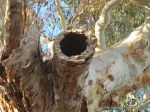
With overnight temperatures as low as -4°C and 11 frosts in a row in late June our thoughts turned to the small creatures that have to survive out there in such harsh conditions. Old trees with multiple hollows, such as the Candlebark (Eucalyptus rubida) pictured at left, offer a chance for animals to stay snug and warm. Sometimes lumped together with Manna Gum (E. viminalis) and derided by farmers and others as a “bloody white gum” because of its habit of shedding branches when older, the Candlebark is nevertheless one of the grandest and most wildlife-friendly trees in the Flowerdale-Strath Creek district.
This particular tree, with a diameter at breast height (DBH) of over 1.6 metres, is clearly many generations old and may even pre-date European occupation. Interestingly, there are three other old-growth trees with a DBH of more than 1m (Grey Box, Red Stringybark and a fallen Yellow Box) within a radius of 25m, but the Candlebark is the only one with a significant number of hollows and spouts. Known occupants of the hollows include Striated Pardalotes, Tree Martins and (unwelcome) Common Starlings, but Sugar Gliders and a Brush-tailed Phascogale have been recorded on remote camera a short distance away, so are likely to be utilising the tree hollows. This tree has also been host to nesting Brown Falcons and Nankeen Kestrels in the past.


-
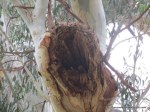
- Tree Martins’ nest hollow
-
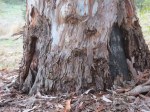
- Signs of a long-ago fire at the base
.




 Focus On Fauna