Large scale discovery

A recent early spring-clean of my kitchen unearthed the desiccated body of an Imperial Jezebel (Delias harpalyce) butterfly under a shelving unit. Given that these are on the scene during summer my spring-clean was obviously not early enough. It was also an opportunity to have a closer look.
The Imperial Jezebel (pictured left) is one of the more colourful butterflies in the district and is endemic to Australia being distributed along the coast and ranges of NSW and Victoria. The eggs are laid on mistletoe plants with cocoons being formed in early autumn and the adults emerging in the spring.
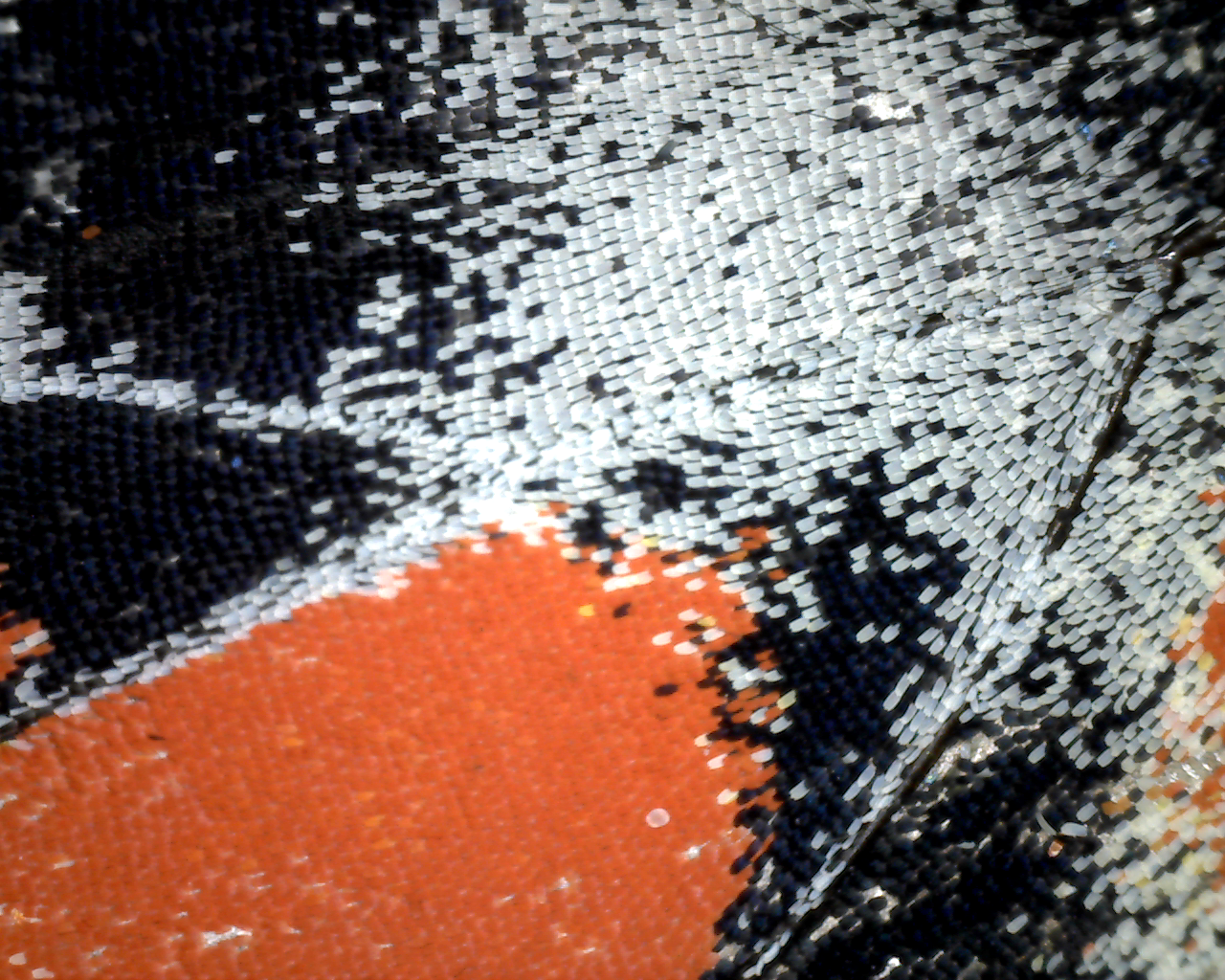
As with all butterflies and moths the wings are flattened membranous sacs covered in scales (pictured right). The scales provide the butterfly with both protection against the elements and thermal regulation. Scales are attached to individual slots on the wing in overlapping transverse rows and are easily detached, particularly useful if caught in a spider’s web! Marginal scales on the wing edges are longer and form a fringing effect (pictured below left). In addition the male butterflies have sex scales that are associated with pheromone producing glands.
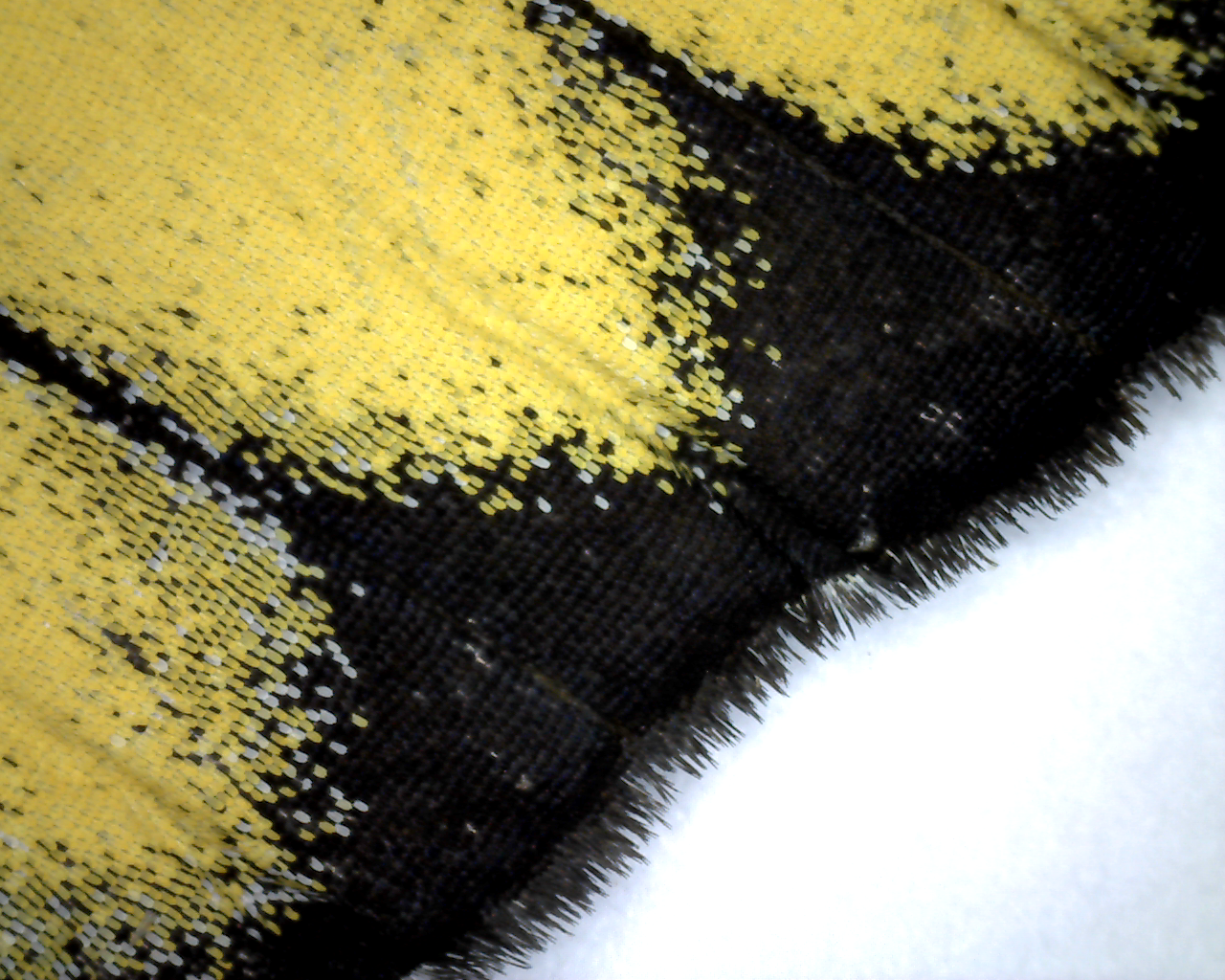
The Imperial Jezebel males and females have different coloured wings. Scale colours are either due to pigmentation in the scale or diffraction of light from minute structures on the scale surface. In addition to colour difference based on gender this butterfly has different colouration due to season, there being a summer form and a spring form.
A wardrobe of a grand scale.




 Focus On Fauna