Open for inspection
Australian has unique fauna in that many of it’s birds and animal use tree hollows for breeding or shelter sometime in their lifecycles. Seventeen percent of bird species, 42% of mammals and 28% of reptiles use tree hollows (Gibbons and Lindenmayer 1997). They include bats, possums, gliders (pictured below left), owls, parrots, ducks and kingfishers.
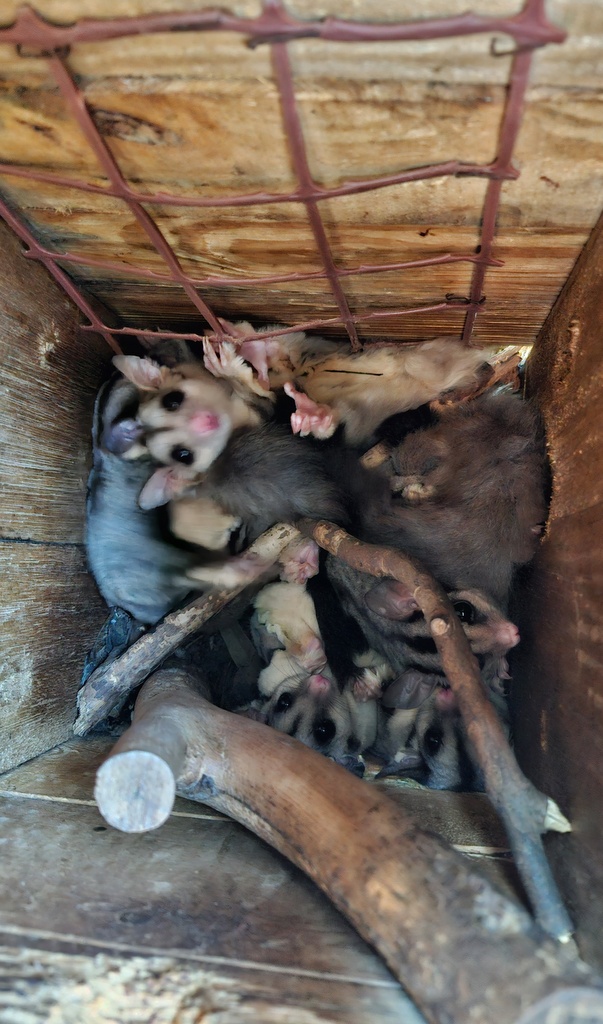
There is however an increasing dearth of tree hollows in our landscape. Depending on the tree species it takes over 100 years to develop a ‘decent’ tree hollow for fauna to live in. Old trees are disappearing due to old age, logging of old growth forests, land clearing for agriculture and housing and bushfire.
Recently several of our neighbouring Landcare groups have embarked on projects to increase the number of usable hollows in their area by installing nest boxes. Earlier this year Yea River Catchment Landcare Group purchased 105 nest boxes using a Habitat For Wildlife grant from the GBCMA. Last week Kinglake Landcare Group launched their Boxes for Birds project, a collaboration with Birdlife Australia’s Yarra to Yea bird conservation effort. They acquired 105 nest boxes using a Victorian Government Landcare grant. The boxes will be distributed across 21 private and public sites.
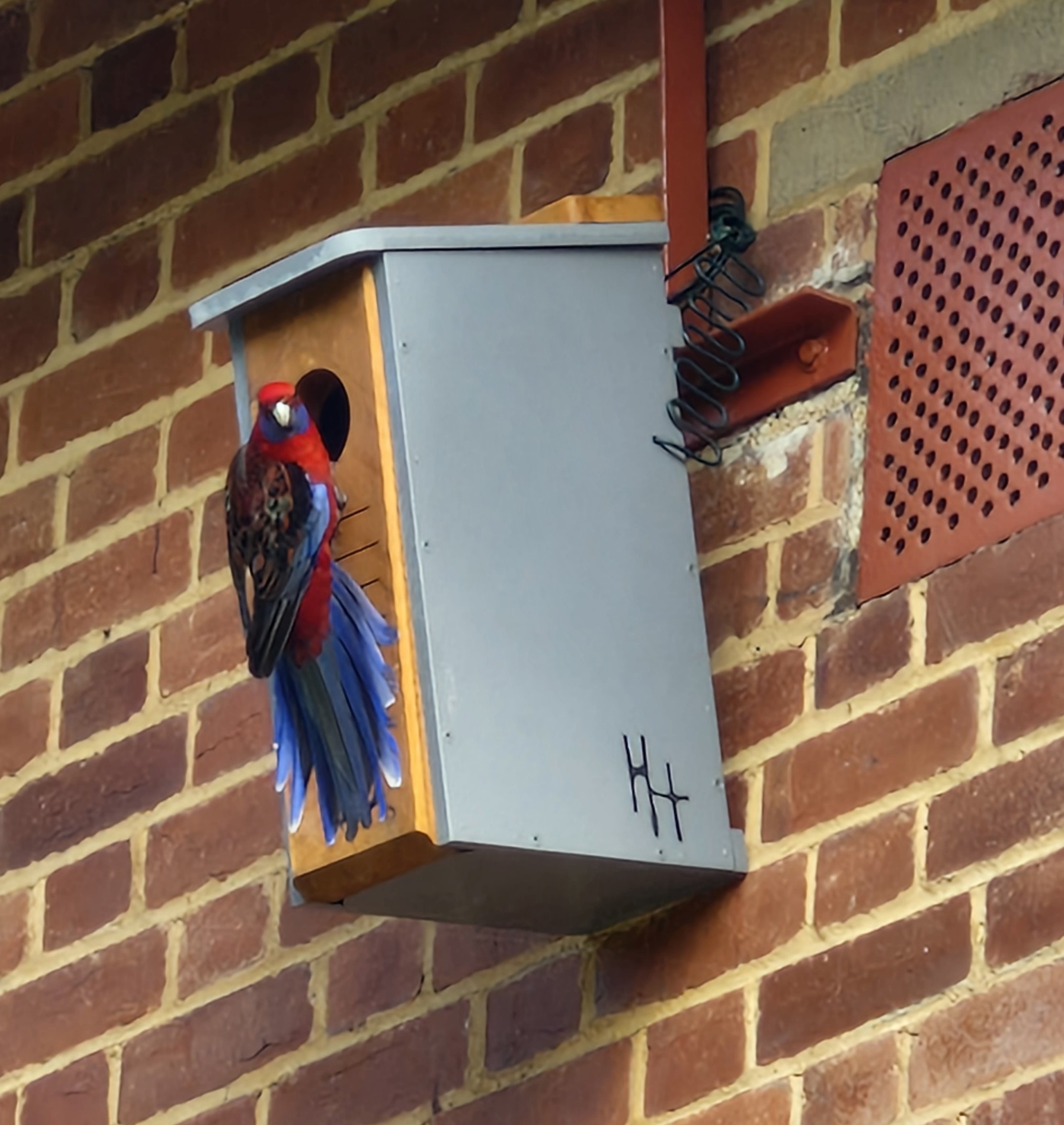
In autumn I installed nest boxes from the Yea River Landcare project and today I observed the first visit (that I know of) of a prospective tenant to one of those boxes (pictured above). Crimson Rosellas (Platycercus elegans) breed between September and January producing 5 – 8 white rounded eggs. They nest in tree hollows and cavities in buildings. The reason the nest box has been placed 7 metres up on the side of my building is to encourage them not the nest in the roof space, again!
Looks like it is working.



 Focus On Fauna