The case for hairy toes
Hairy feet have generally been frowned upon as a physical attribute, unless you live in Hobbit-town. But for some creatures having them is a real asset.

The warm weather has seen the early emergence of some of the reptiles, in particular geckos. It is only early September but they are already prowling about the windows at night hunting unwary insects. The Marbled Gecko (Christinus marmoratus), pictured left, is Australia’s southern-most dwelling gecko and is the species that has staked its territory around my kitchen window. Like all geckos in the Gekkonidae family it uses its tongue to clean the lenses of the eye, has a pre-weakened cleavage points in its tail so that when attacked it doesn’t necessarily have to lose the entire tail and has the amazing ability to walk on walls, ceilings and even vertical glass.
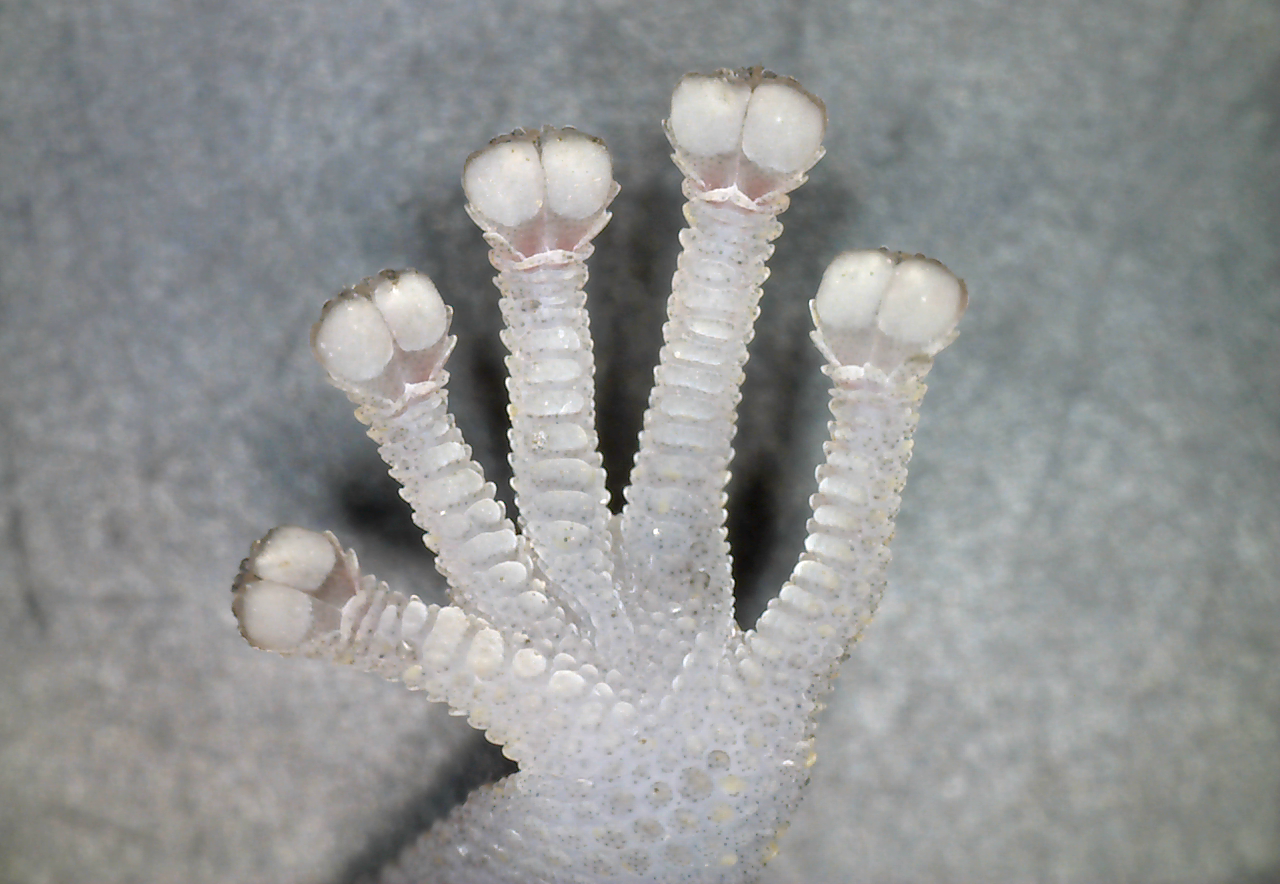
It turns out the geckos ability to walk up windows is not due to suction cups on its toes as I thought as a kid but is due to millions of tiny hair-like structures called setae under each foot. The setae are made of similar materials as our finger nails and are tiny – much tinier than can be observed on the underside of the gecko’s foot pictured right. On each toe between each of the pads is a tiny retractable claw. Each setae has thousands of flat structures on them that further increase the contact surface area between the gecko and the glass. So effective is the arrangement that a gecko’s feet can support well over 100kgs.
So it appears that a way to ‘rock’ hairy feet is to have the hair under the foot.




 Focus On Fauna