Core Cormorants
The easiest way to think of the cormorants in Australia is that we have 2 large and 2 small: Large Pied and Little Pied, Large Black and Little Black. Except that those names aren’t used exactly anymore. The Large Black is properly called Great Cormorant (Phalacrocorax carbo) and the larger of the pied cormorants is just called Pied Cormorant (Phalacrocorax varius). The sizes are as indicated – the 2 species called ‘Little’ are smaller than the other two but that’s not helpful when you see just one. However, there are two other rules that make identification easier:
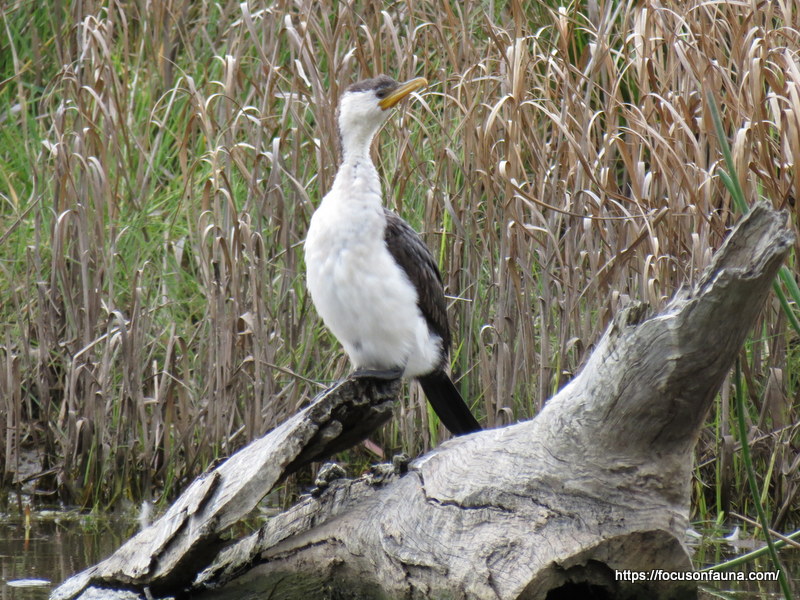
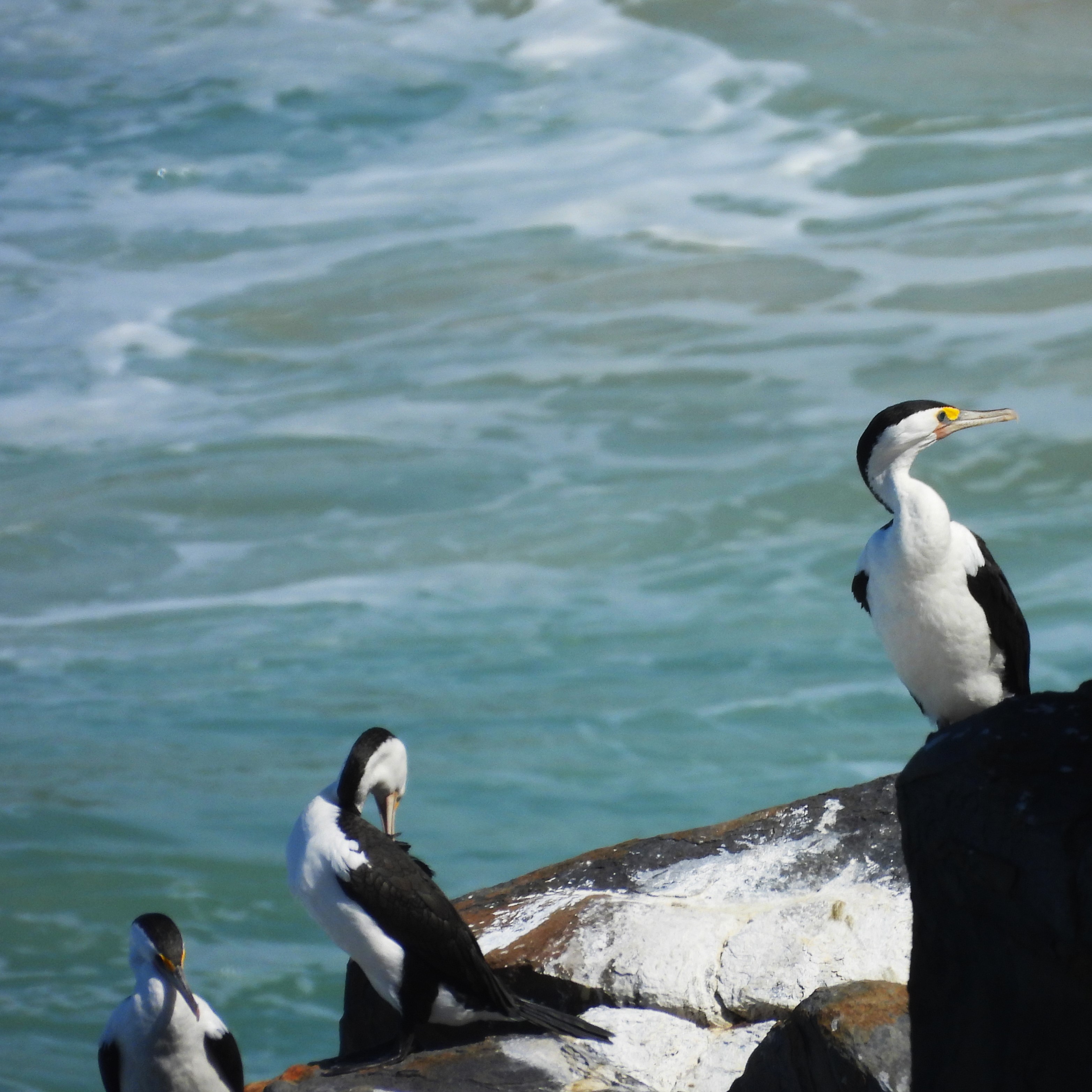
1. Of the pied cormorants – ie, those with a black back and a white front – only the Little Pied Cormorant (Microcarbo melanoleucos) is common in inland waters. This is the cormorant found sitting on logs, dam banks, channels, bridges, trees around lakes.
The Pied Cormorant, on the other hand, mainly sticks to the coast (though to be fair, it is occasionally found on large reservoirs and rivers inland).*
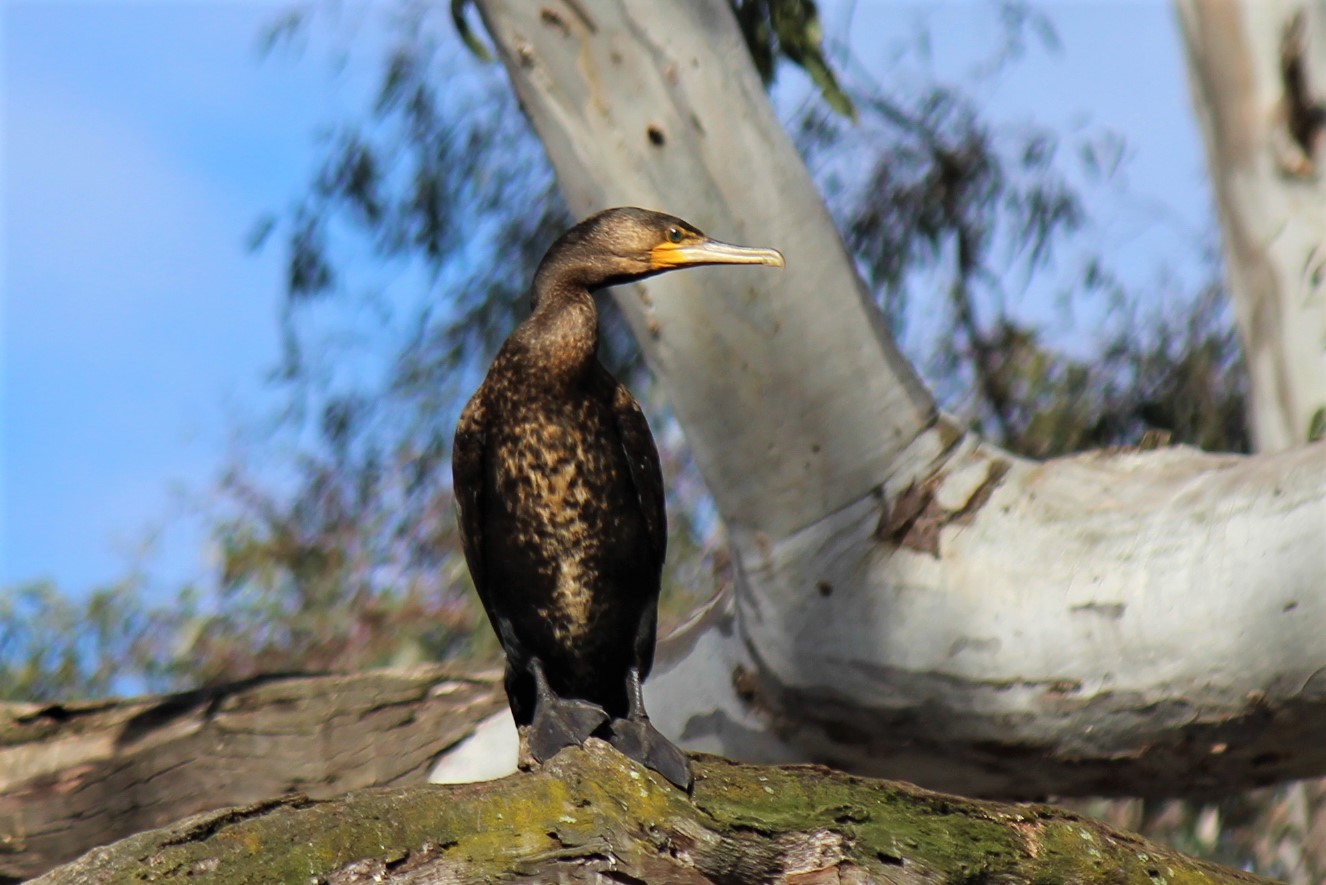
2. Of the 2 black cormorants, one is all-black (the Little Black Cormorant Phalacrocorax sulcirostris), the other (the Great Cormorant) has a yellow face – and in juvenile phases has various patches of white or off-white that can be confusing.

So, a cormorant that is pied is almost certainly a Little Pied; a black cormorant can be quickly distinguished by whether it is all black around the face and bill (Little Black) or has some yellow around the face (Great Cormorant).
Wonderful birds, these. Great fliers, great swimmers, great fishers. When it comes to our district and which ones are regular residents, three out of four ain’t bad.
*There is a fifth species, the Black-faced Shag, found around rocky cliffs and ocean fronts along the Southern Coast, especially in Tasmania.




 Focus On Fauna
I am still confused… I know I have a cormorant visit our dam occasionally. what type? I have no idea!
good work Ron.
Probably a Little Pied Cormorant on a farm dam. Unless it is black all over…..(re-read the blog!)