Lock up your larvae
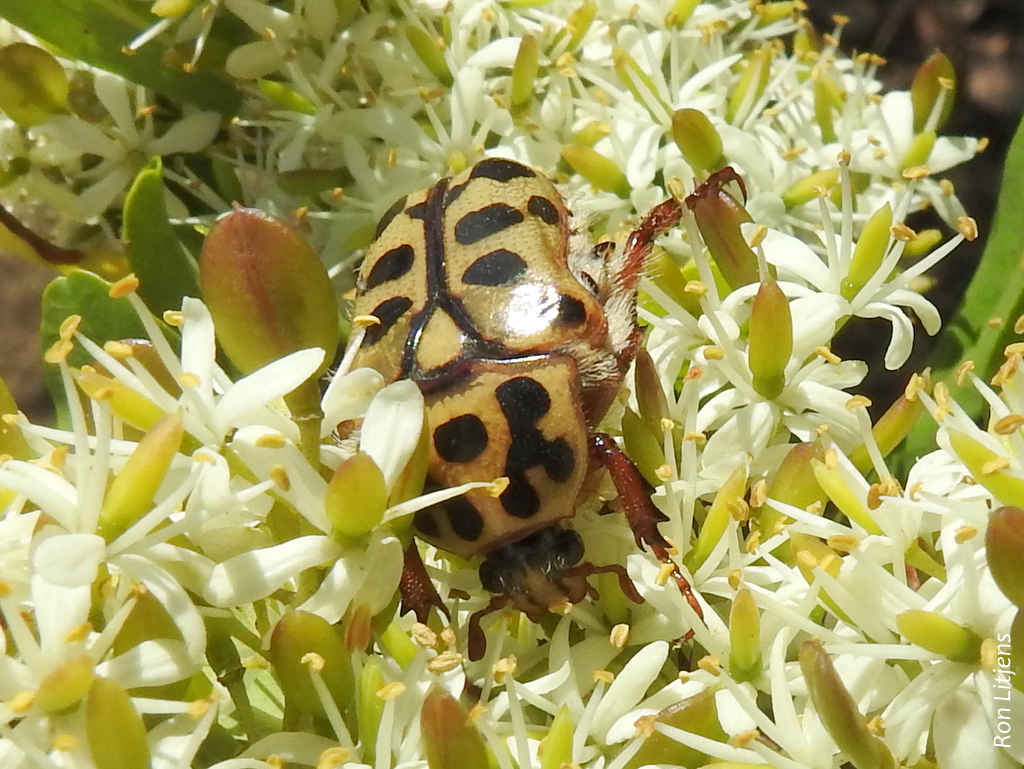
Christmas time is the time of the Scarabs – think Xmas Beetles, Fiddler Beetles and Spotted Flower Chafers (Neorrhina punctata), pictured left. I have childhood memories of there being are lots of them around at Xmas but there don’t seem so many around any more. It is also the time of the year when scarab beetle grubs, those big white grubs that live in the ground get nervous (I am anthropomorphising a bit).
Major predators of scarab grubs are Hairy Flower Wasps. These are largish sized wasps and some, like the Yellow Hairy Flower Wasp (Radumeris radula) pictured below, quite frankly are very hairy. The adult wasps feed on the nectar. After mating the female wasp searches for scarab larvae in the ground. When found the wasp paralyses the scarab grub and lays a single egg on it. When the egg hatches the wasp larva devours the still living but paralysed beetle grub.


Hairy Flower Wasps come in several colours. Black Hairy Flower Wasps (Austroscolia soror) pictured right, typical fly low over piles of mulch or wood chips in the search for grubs.
Scarab grubs can do a lot of damage in agriculture and agroforestry if out of balance. As scary as the wasps look we should encourage these hairy friends to hang around.




 Focus On Fauna