Squatting is the easiest
For the humble bee there is a range of accommodation options to house your young. Social bees such as the Western Honey Bee (Apis melifera) are social creatures and build large communal hives that house the queen, drones and worker bees who look after the young. However of the 1700 species of Australian native bees only 11 are social. The rest are solitary.
These bees individually build nests to house their young. The Blue-banded Bee (Amegila sp.) for example builds its nest as a tunnel in the ground (or in the lime mortar of very old building, click HERE to view). Each egg is provisioned with a pollen food store and sealed with a series of sealed cells filling the tunnel. Other species bore holes in wood or in the fleshy stems of plants. It’s a lot of work.
Cuckoo Bees (and a whole range of native wasps) bypass this building effort by laying their eggs in the nests of other bees before the cells are sealed. After the nest is sealed the cuckoo bee larvae hatch and consume the eggs of the original bee and the associated food stores. Though this strategy bypasses the nest building effort it is fraught with danger as laying the eggs in another’s nest can lead to ugly confrontations.
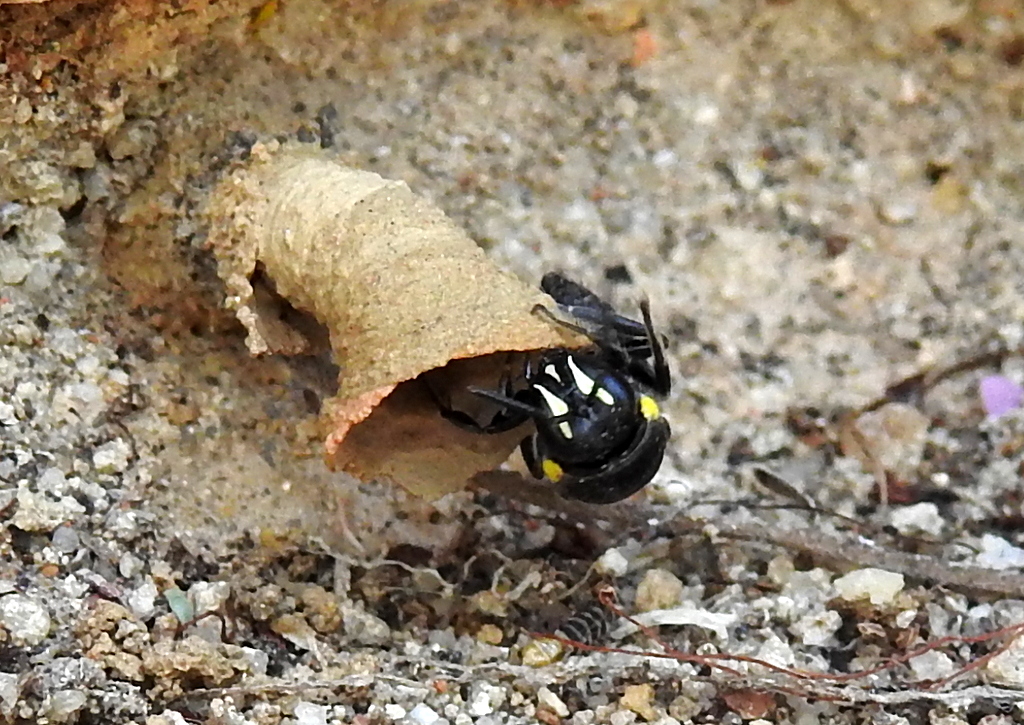
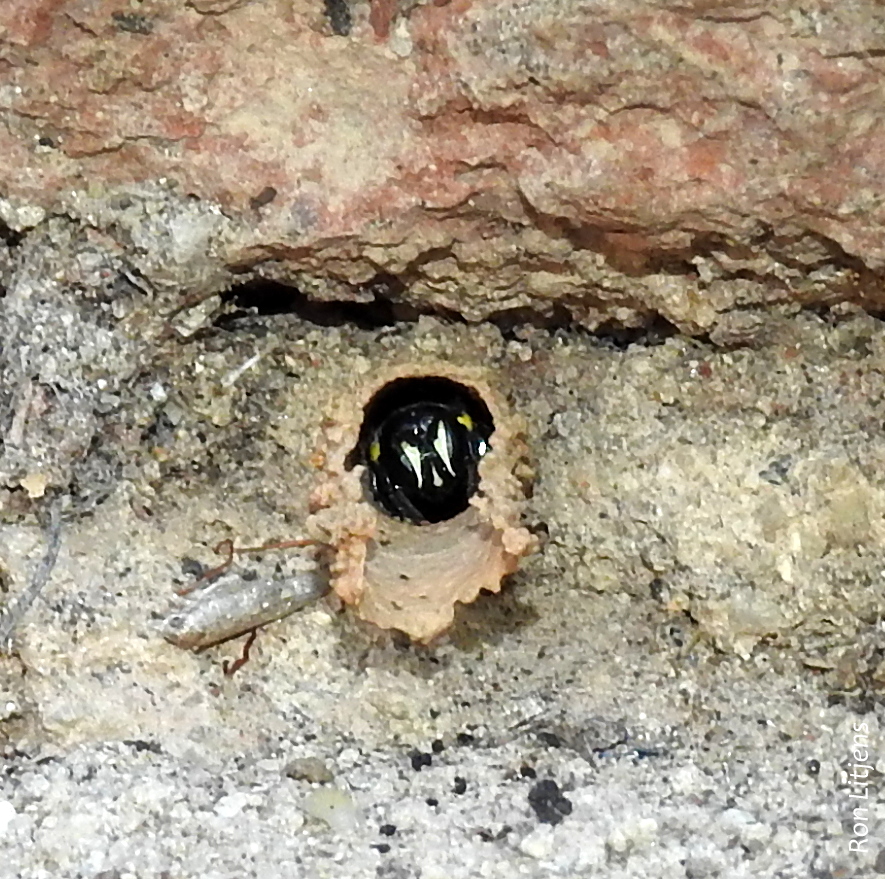
One species of bees has an easier strategy still. The Cloudy Masked Bee (Hylaeus nubilosus) finds an abandoned nest of a potter or mud dauber wasp and moves in. No construction costs, no fighting with the neighbours (or the residents).
Squatting has its advantages.




 Focus On Fauna