Rabbits Digest
A frequent sight on farmland is a patch of rabbit droppings. They have their favourite spots – usually open and clear, often with a nice view across the valley. This site is not simply where they go to be tidy and keep their droppings in one place. They also eat them.

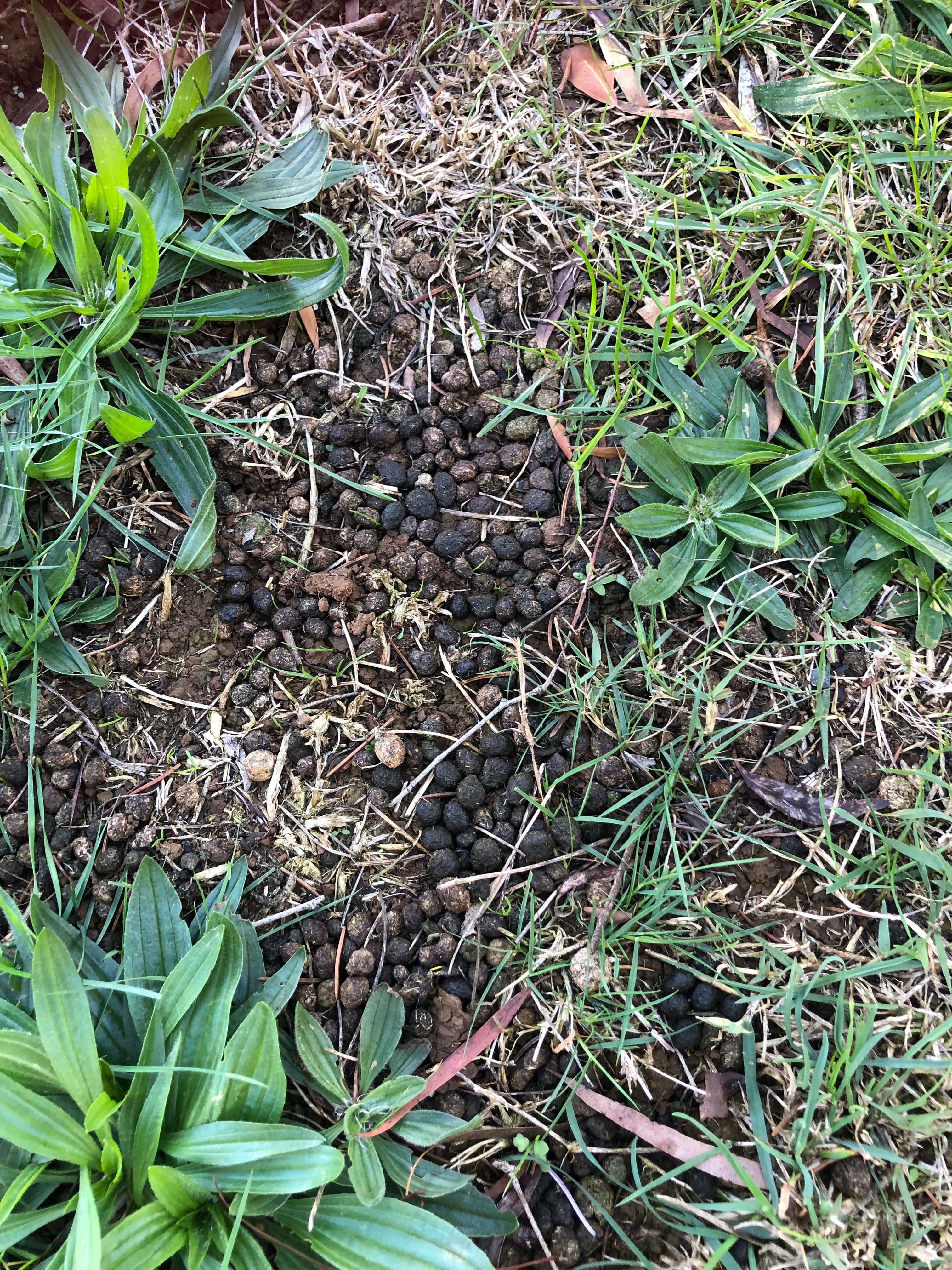

The European rabbit (Oryctolagus cuniculus) employs this method of digestion as their solution to the problem that grass with its high fibre and cellulose is a reluctant contributor to nutrition. Cows and deer solve the problem by chewing the cud. Horses have a long complex digestive tract. Rabbits have kept their small size and nimbleness by eating the grass twice. It is called caecotrophy (or cecotrophy in the US).
The droppings shown in the photos are not the pellets that are eaten. The caecotroph poo is black and covered in mucus and usually eaten immediately. The second time through, the indigestible parts and waste products emerge in the familiar balls that accumulate on the patches and mounds where they sit at night.
Not all rabbits live in the burrow. Older rabbits, especially males, hide out in the grass like hares during the day only scurrying to a burrow when threatened.
But come the night, when the moon is blessing the landscape, each rabbit will graze for a while then move to a dropping mound, sit back, survey the beautiful surroundings and munch on some fresh poo.
Ahh! the serenity!




 Focus On Fauna