The reed section
Now that Spring has arrived, today I encountered my first Australian Reed Warbler (Acrocephalus australis). If they are found in Victoria in Winter, they’re hard to find. I have always assumed they are Spring migrants but it is possible some individuals lurk silent and hidden in the off-season. They turn up at the same patch of reeds each season and call loudly, only occasionally rising to the top of the reeds.

The Reed Warbler’s loud ‘chuck chuck chuck krutchy-krutchy’ call is the sound of Summer for me and it carries loudly from every decent patch of Phragmites reeds. In this video, it is hard to see the bird (right on top of the reeds) but it is a typical environment and you can hear that call.
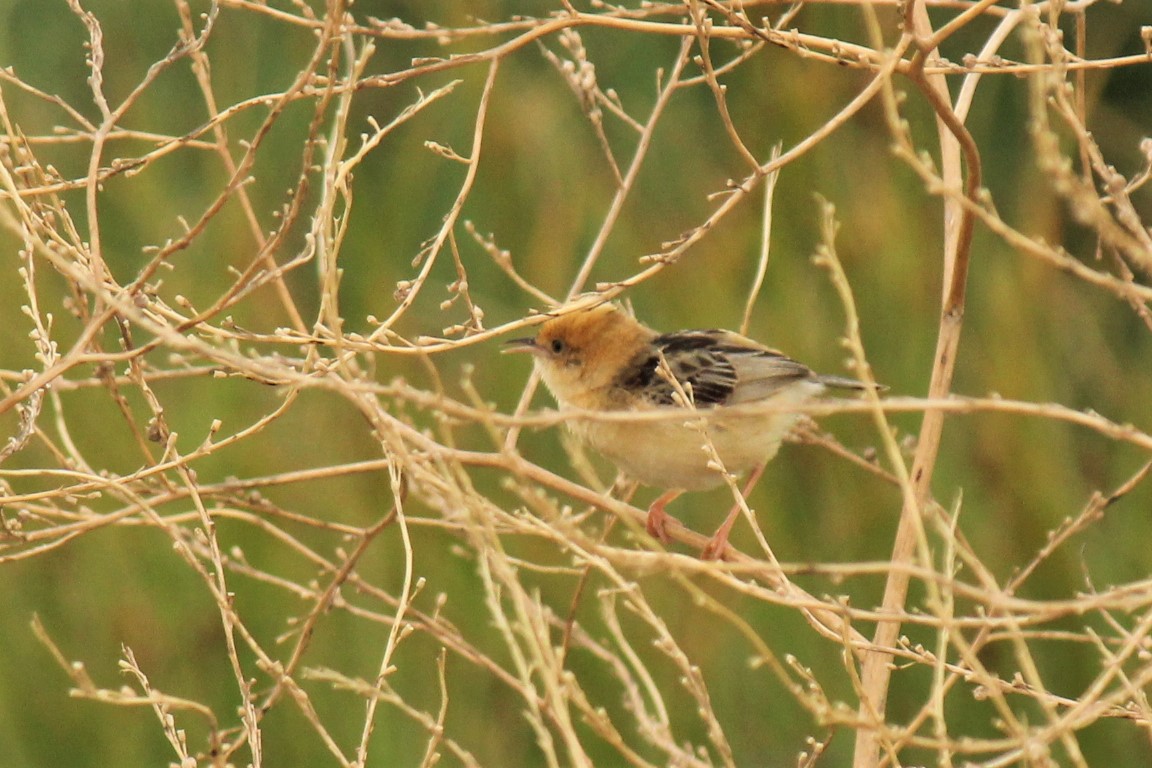
Another reed bird is the Golden-headed Cisticola (Cisticola exilis). (It is pronounced ‘sis-TICKle-er’). I usually detect their presence by their little buzzing call which may be heard in reed beds near water, or sometimes in long grass – even Phalaris – well away from it. I have sometimes been able to make a kissing noise with my lips and they will rise to the top of the grass or reeds to see who is calling. In non-breeding season, cisticolas have a black-streaked head and are a very handsome little bird. In breeding season, their head turns a rich gold colour from whence their name derives.


If beautiful birds like these are to become more widespread in any district, the habitat must be regenerated. They like beds of reeds, swamps, rank grasses and sedges, marshy places. They don’t need many trees. If we can (re-)generate acres of such places, we may even get other denizens of reedbeds: the booming bittern, the incredibly rare Painted Snipe, button-quail, waders, chats and fieldwrens, not to mention more variety of turtles, frogs and insects. This would enrich our local environment and help to secure their fragile hold on existence.




 Focus On Fauna