Microbat
We could often hear the squeak and movement of small bats in the mud-brick building of Seymour Baptist church and one day I found a dead one. I am not very good at microbat identification but I can narrow this to down to one of the Freetail Bats which the books say are difficult to be specific about, because taxonomists are still sorting them out. Probably Ozimops planiceps the Southern Freetail Bat. It might have helped if I photographed its face but it was not very attractive.
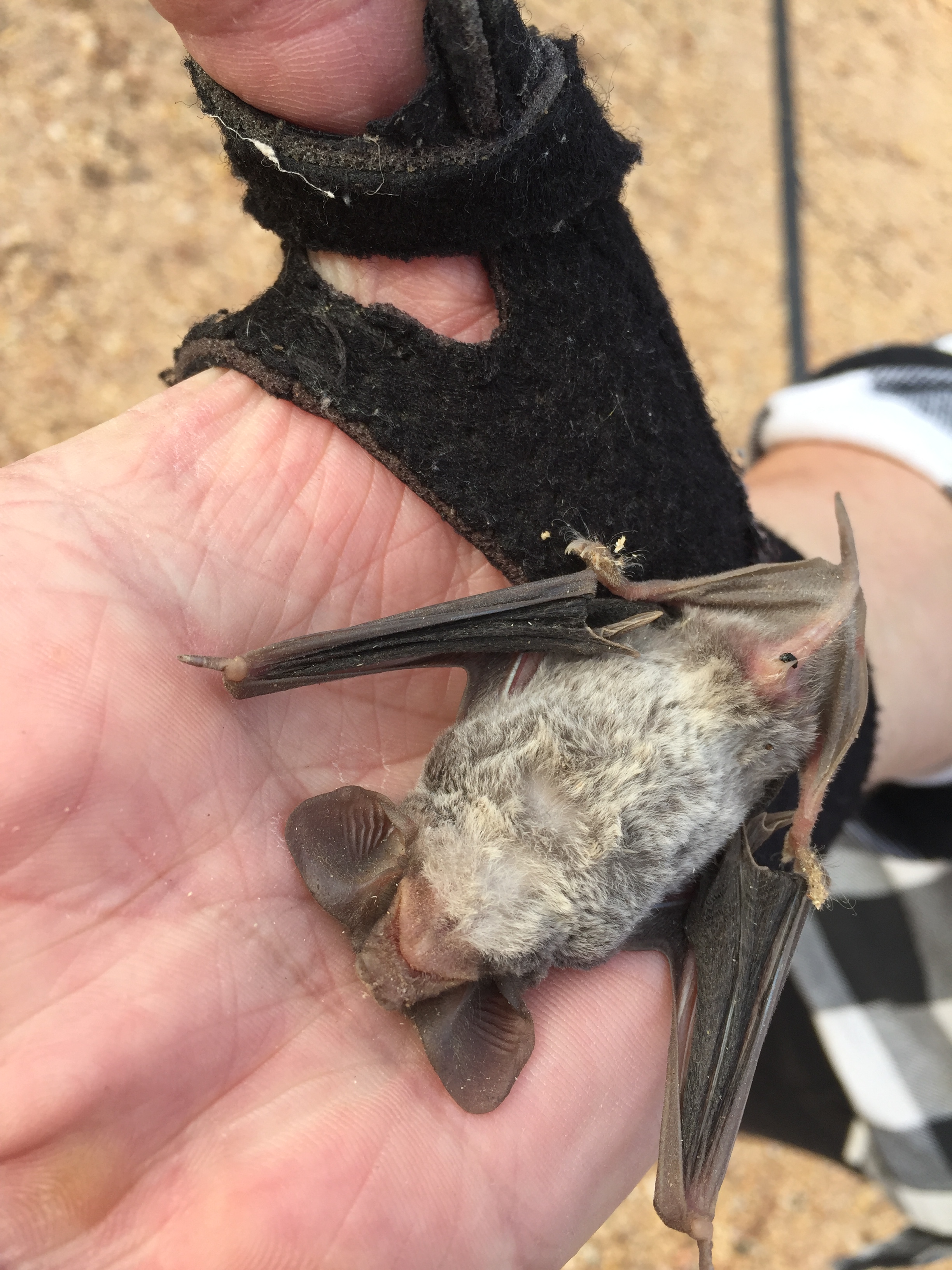
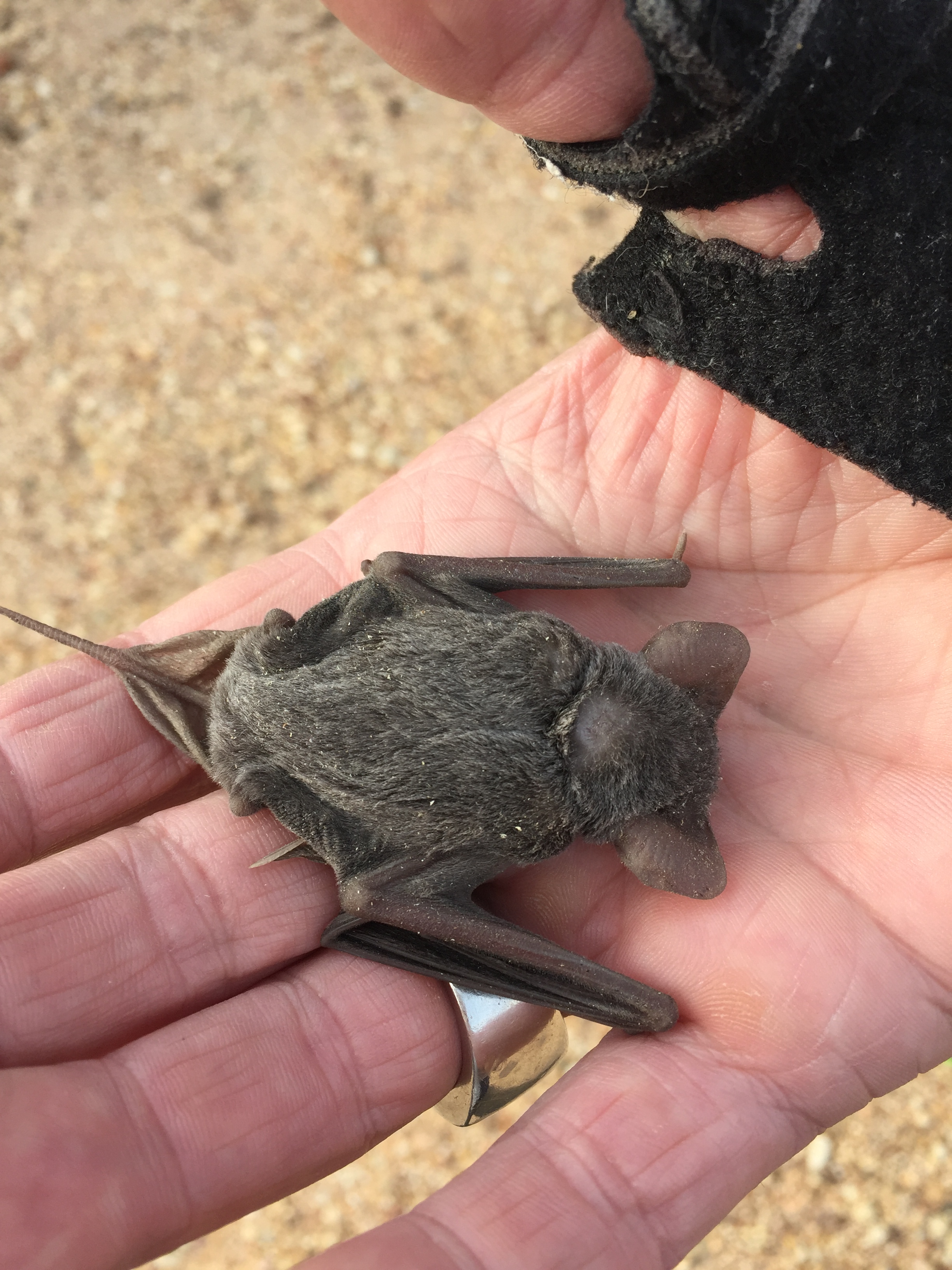
Anyway the large ears and the little rat-tail are typical of Freetail bats – hence the name; other bats have the tail encased in sheaths or retractable or absent. It is believed the tail serves as a rudder for quick direction changes.
These remarkable little creatures use echolocation to catch moths, mosquitoes, flying ants or beetles. They are very important in the ecosystem for this reason. They also have a high-pitched call when they are flying which I frequently heard on Summer nights when I was a child, but alas that part of my hearing range seems to have dropped off.
At the bend in the wing you can see the ‘thumb’ which is used like a claw for walking on the ground or moving around in the roost. There are many fascinating features in a microbat’s anatomy and behaviour. Their eyes, ears, noses, feet and those amazing wings are all very specialised.
The one thing Nature forgot to bother about was to make their faces pretty. Only the fruit bats have a face that could be called ‘cute’ like this Grey-headed Flying Fox (Pteropus poliocephalus) at Lake Guyatt, Sale, Victoria.

Microbats lack the large eyes and smooth snout that the megabats sport. They are much too specialised for insect-hunting in the dark to worry about appearance.




 Focus On Fauna