Keyhole gazing
A close look at the insect world will reveal species acting with what appears to be voyeuristic intent. In areas where Blue-banded Bees are industriously working to construct nests, provision them with food and lays eggs, there are several parasitoid wasp and bees species hovering around BBB nest entrances and peering inside.
The difference between a parasitic and a parasitoid relationship is that in the former the parasite usually lives together with the host in ‘mutual’ harmony. In a parasitoid relationship the host (in this case the BBB eggs) are killed by the parasite. These parasitoid insects will lay their eggs in the BBB egg chamber and when those eggs hatch the larvae will devour the BBB eggs and the provided food stores.
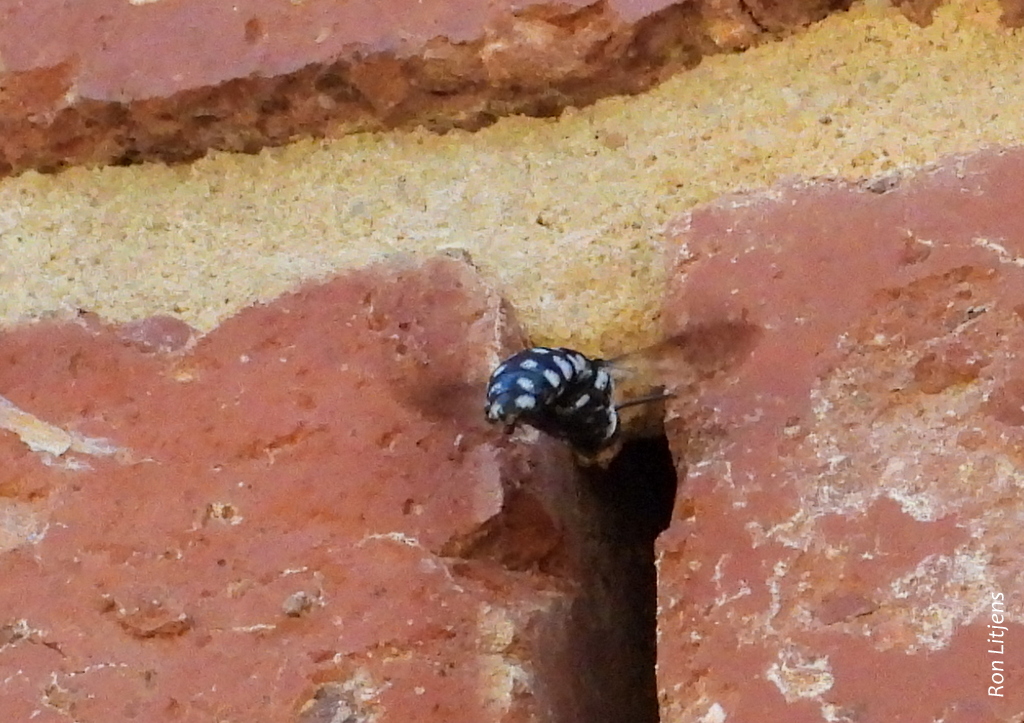
Pictured above is a Chequered Cuckoo Bee (Thyreus caeruleopunctatus) looking into a nest entrance. The scientific name is derived from the Latin caerulus meaning blue and punctatus meaning spotted. As the common name suggests the insects act like a cuckoos, birds that substitute their eggs into the nests of other birds. If the Cuckoo Bee finds an unattended BBB nest it quickly crawls inside and deposits its eggs before the BBB comes back. Sometimes it is not quick enough (click HERE).
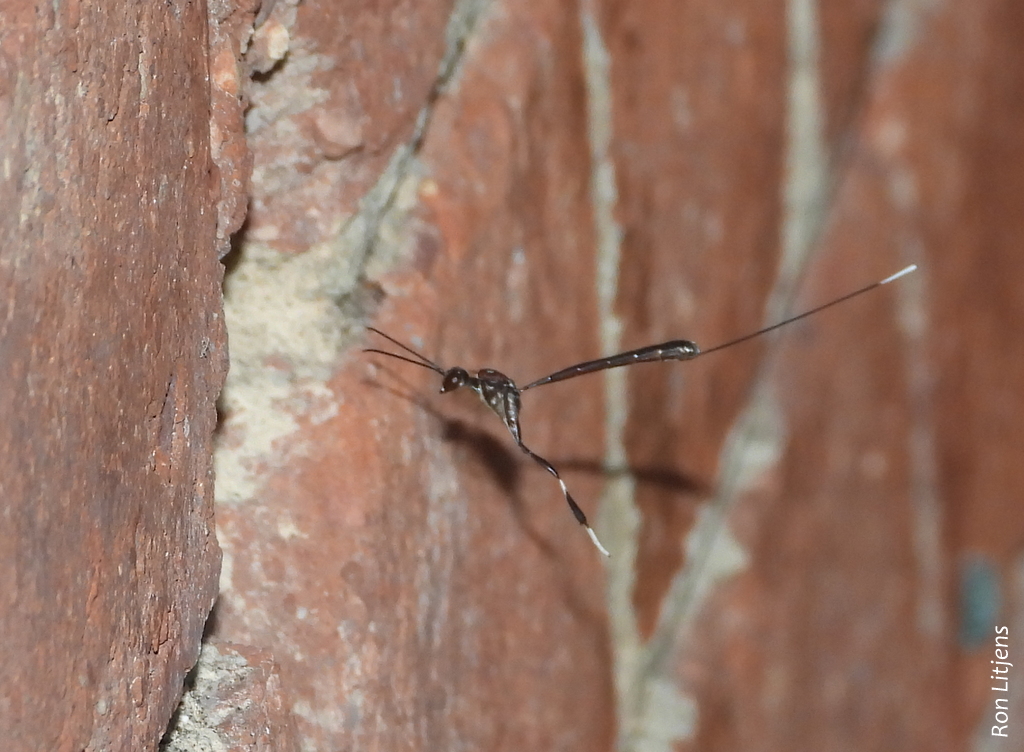
Pictured right is a female Gasteruptid Wasp. In flight mode it is characterised by its long black and white rear legs hanging down and white tipped ovipositor. When it finds an unattended nest it swings its ovipositor around into the hole and lays eggs whilst still being outside the nest.
Sometimes Nature seems unfair.



 Focus On Fauna