Don’t Miss the Mistletoebird
Last week I was out birding in pouring rain with a group from the local Field Nats. Somebody cried, I can hear a Mistletoebird. I couldn’t hear a thing except raindrops. These birds are elusive, beautiful, tricky, and important. But here is a female I was able to photograph last month who kindly perched on a dead branch for a little longer than the usual millisecond though she wouldn’t come out from behind a twig.
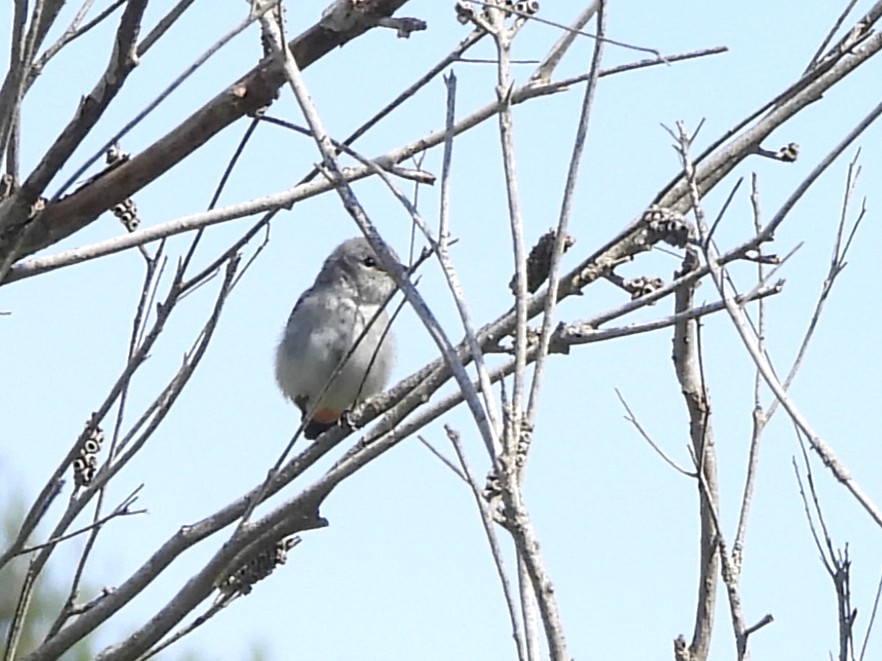
I had no idea what species it was until I could detect the red patch at her vent which this photo barely shows. The male of course is much more colourful and unmistakeable and there are many excellent photos on Ebird of this fellow. Mine below is very poor:
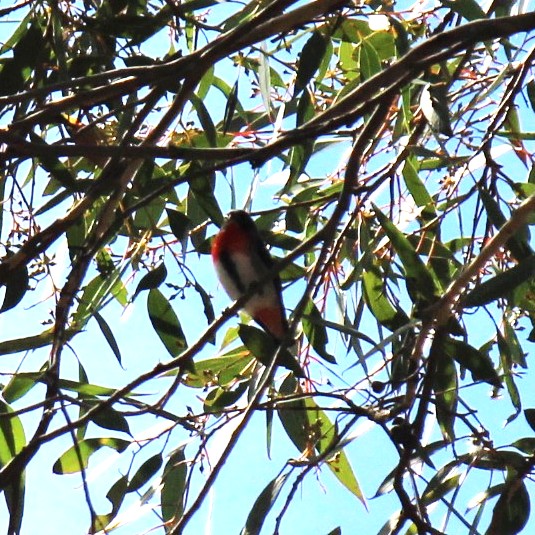
For more information on this fantastic bird, David Wakefield wrote a great resume for them in 2013 here, and you need to watch this amazing YouTube of how they feed and how they spread mistletoes by wiping their sticky droppings on branches. [Of course, it is no longer believed that mistletoes are a harmful parasite on trees; instead, they provide considerable value in the landscape and have been proven to provide more benefit than harm to their host trees. (David Watson, Mistletoes of Southern Australia, CSIRO 2019)]
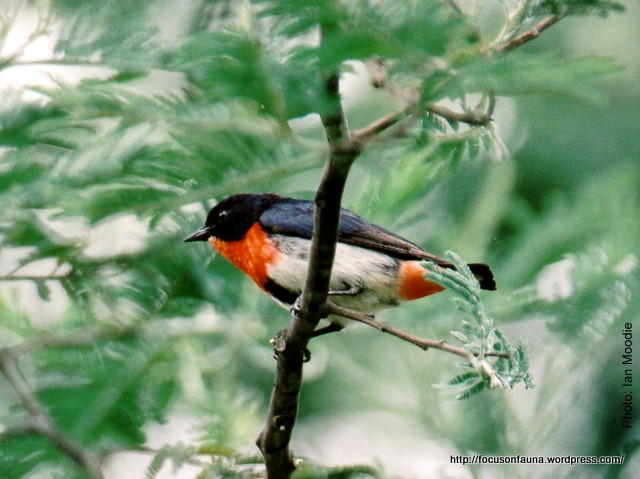
It seems Mistletoebirds have a super simplified digestive tract, lacking a crop or gizzard. The large seed is popped out of the mistletoe berry by nipping the top and squeezing it and is swallowed with its sticky sweet covering. The seed passes right through the bird within 4 to 12 minutes before being defecated with much of the sticky covering intact. The dropping clings to the bird’s vent by sticky strands and the bird performs a little dance to wipe it off, leaving the seed attached to the branch of the next tree host for the mistletoe.
The adaptation is perfect, its place in the ecosystem is vital; its beautiful nest, appearance and call are all bonuses for our enjoyment. If only we could find them more easily.




 Focus On Fauna