Quit while you’re a head
The presence of Common Garden Skinks (Lampropholis guichenoti) in the garden (pictured below) is the sign of a healthy ecosystem. As is the appearance of butterflies. And whilst the presence of both may bring a thrill to the heart you know that Mother Nature can be cruel.

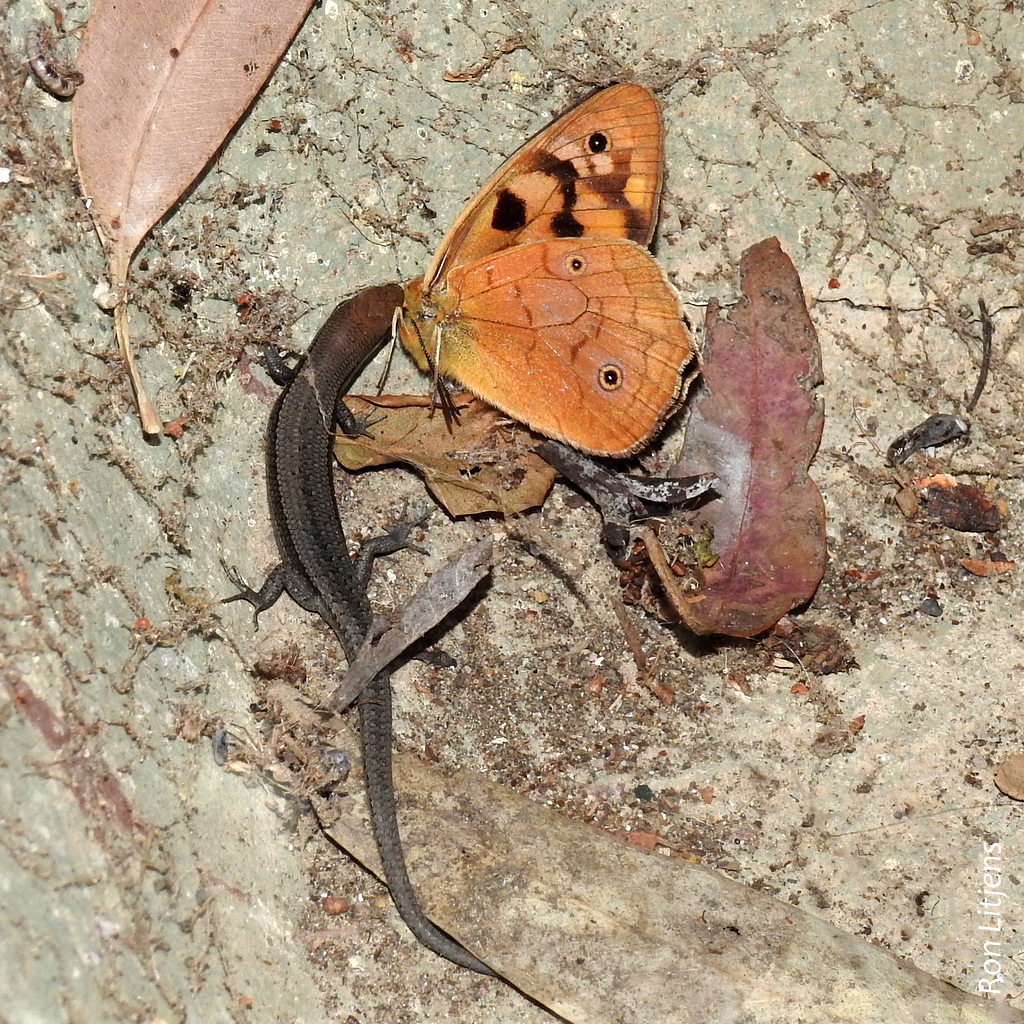
I hadn’t really thought about it but lizards are carnivores, in particular insectivores. They will eat caterpillars, grasshoppers, flies and cockroaches as well as other invertebrates such as worms, slaters and spiders. This was forcefully brought home when I witnessed a mighty struggle between a skink and a Shouldered Brown (Heteronympha penelope) butterfly (pictured left). The spectacle lasted over a minute but in the end the skink managed to bite off the head of the butterfly. Lizard 1, Butterfly 0. Unfortunately my attempt to photograph the scene disturbed the lizard and it disappeared into the garden leaving what I thought was a headless butterfly corpse.

The next day the headless butterfly body was still alive walking and flapping around (pictured right). For many creatures the respiratory system is controlled by the brain and the head contains the respiratory opening. Removing the head results in rapid suffocation. However this is not true for insects. They breathe through holes on the side of their bodies, called spiracles. Respiration and other functions are controlled by brain cells (ganglia) distributed throughout the body. So for a short period of time the butterfly can continue to function.
What about the butterfly? Well, it won’t suffocate but it will probably die of starvation – its mouth was in its head!



 Focus On Fauna
So interesting. I still love to see skinks, AND butterflies with heads on. But can’t starve one to save the other. 🦋