The Duettists
I have been able to identify three species of birds that sing duets for various reasons, and they are each fairly common.
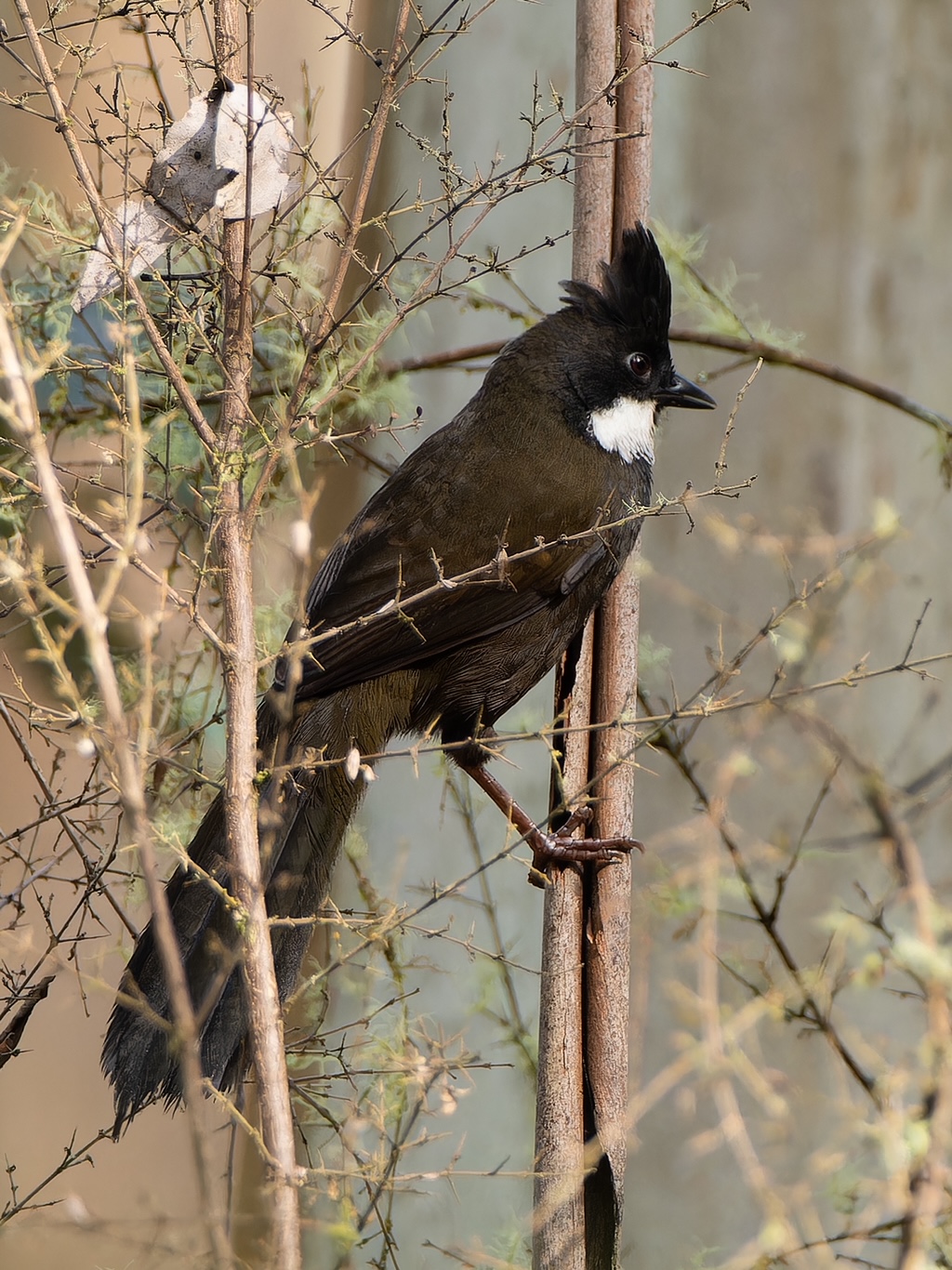
Eastern Whipbird
First, there is the Eastern Whipbird (Psophodes olivacaeus) . As they skulk around in thick growth on the ground floor of forests they seem to use the duet as a way of keeping in touch. One will call with the famous whip-crack call and it is immediately answered with a two note ‘psiew-psiew’. The books say with confidence that the male cracks the whip and the female submissively responds, but since it is impossible to tell male from female by appearance, I wonder if anyone has seriously studied if the calls are so gendered? Maybe it’s any two whipbirds foraging in the forest? Maybe the female calls first? Anyway, that it is a duet is undoubted. In David Wakefield’s recording here, there are some calls unanswered and some with the classic duet, and at the end there are some other strange churring calls that Whipbirds make.
Magpie-larks
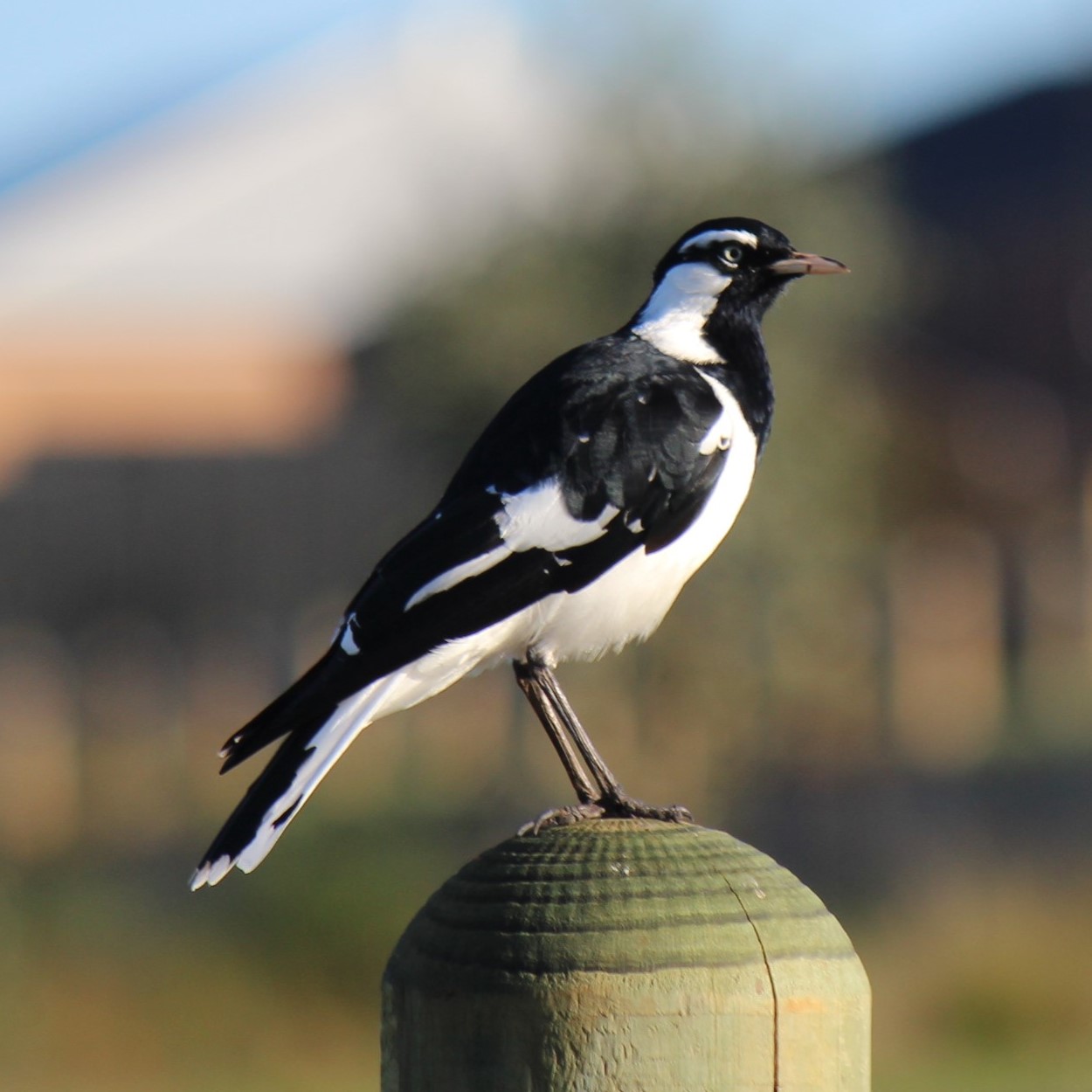
Another famous duettist is the Magpie-Lark (Grallina cyanoleuca). They often duet as they strut around on roadsides and prepare their mud nests. You can hear in David Wakefield’s recording, there are two singers at least:
“Research on Australian magpie-larks has documented clear boundaries between duet dialects, with pairs at the edges of dialect zones sometimes producing hybrid duet forms that incorporate elements from both traditions. When birds disperse across dialect boundaries and form pairs with mates from different acoustic traditions, they must negotiate a common duetting pattern, often adopting elements from both partners’ backgrounds.”
From International Bird-life

Grey Butcherbird
I was unaware that the glorious, rollicking call of the Grey Butcherbird (Cracticus torquatus) is actually often a duet. According to Birdlife Australia,
“Some Grey Butcherbirds, for example, sing a melodious tune that sounds very much like “whistle while you work”. This is answered by a second bird with “tool-to-tool”, all of the same note, to which the first bird responds with a lilting “tool-till-tooool”, and then the second bird repeats “tool-to-tool”. It all flows so easily that it sounds like a single call. Magic!”
I’m not sure that I can work out the alleged phrases the Birdlife quotation above detects, but in this David Wakefield recording from 2017 careful listening definitely discerns at least two birds overlapping.
Various reasons have been proposed for duetting: establishing territories, maintaining pair bonds, signalling partnerships to rivals. The precision of the duets is sometimes astoundingly precise. I have sung harmony in duets with other singers and it reminds me that in nature, as with humans, the most beautiful achievements arise when individuals work together in perfect synchrony.




 Focus On Fauna
Hi Geoff, thanks for this. A lovely and fitting 5th anniversary memorial to David and Laurie
Peter
Thanks, Peter. We are indebted to David’s astute observations and science and there is a fitting sense of ‘duetting’ about his partnership with Laurie.
The eastern whipbird is so cool this is my first time learning about them the kind of remind me of the stellar jays here in my backyard.
My backyard is in the San Francisco Bay area, the oak and eucalyptus covered east bay hills overlooking the town of Lafayette and mount diablo
Eucalypt forests are full of interesting birds and wildlife. Unfortunately when they are transplanted, the ecological network does not come with them and on their own, eucalyptus trees with their flammability and inedible leaves can cause problems. In Australia, every leaf on a healthy eucalypt will have an insect bite or nibble or eggs or larvae. Beautiful and fascinating trees.