The Fine Art of Platypus Watching
Platypus (Ornithorhynchus anatinus), pictured below, photographed recently in the nearby Yea River, are egg-laying mammals found in permanent freshwater along the east coast of Australia and Tasmania. They are semi-aquatic, residing in burrows in riverbanks and hunting food in the water. Platypus hunt with their eyes and ears closed. They detect prey via a row of electroreceptors along the front of their bills which detect the muscular contractions of their prey. They also have mechanical pressure sensors distributed across the bill.
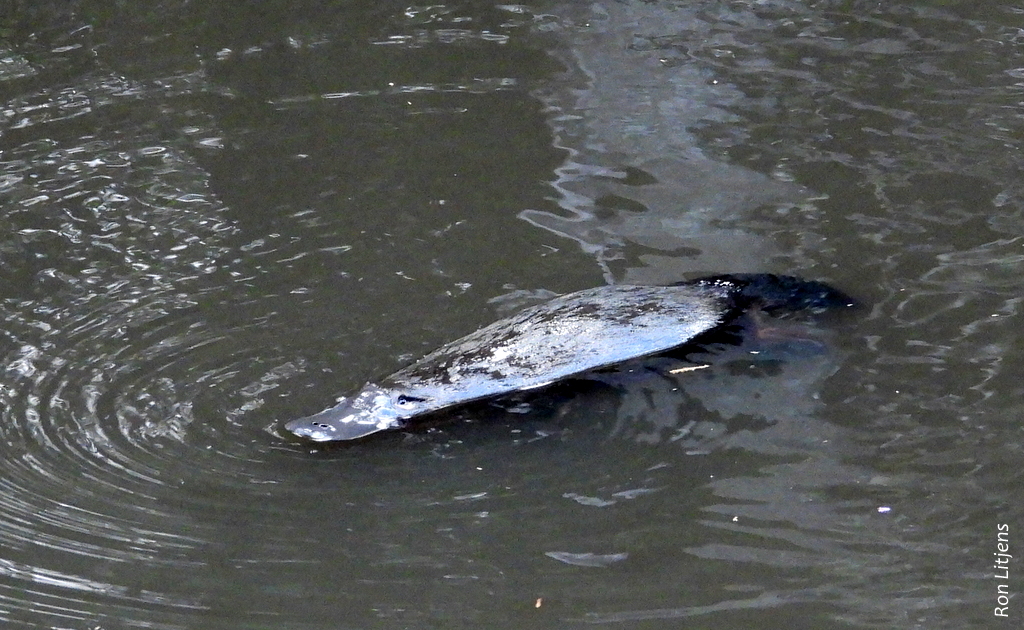
Like many Australian fauna the platypus is mainly nocturnal although it can be seen during the day in winter and at dusk in summer. For those keen to see one, August and September are the months that coincide with the peak platypus breeding season. Adult males are out and actively looking for females.
The platypus population peaks in February and March when the juveniles appear. This should, but doesn’t, result in more sightings because the juveniles seem reluctant, for safety reasons to forage in daylight hours.
Many Landcare groups have platypus watching events during the year – an hour of sitting silently on a riverbank looking for the tell-tale shapes in the water. In our Landcare Group in Strath Creek we sit on the banks of the King Parrot Creek. And we are truly spoilt. Not only does the organiser locate the best possible spots with which to view the creature, he also mows a path from the nearest parking area to that spot and provides chairs to sit on whilst watching. The night finishes with wine and food provided at his place by he and his partner.
Does all this preparation guarantee that a platypus will be seen? Not at all. One hour of watching a year doesn’t guarantee you anything. In narrow streams like the King Parrot Creek the platypus have to travel long distances to get the food they need. The chances that you are at the exact platypus location for the hour that you are there watching is not high but in our experience rarely a year goes by when at least one person (of about 16) doesn’t see the elusive creature. You are much more likely to see Rakali (Hydromys chrysogaster) – our native water rat, turtles or even snakes swimming by.
Is platypus watching an artform? No, it’s a meditation. Your chances of seeing one goes up the more times you spend at dusk on the riverbank. But you won’t always get the mowed path and the comfy chairs!