Wow. Pollinating and pest control
I’m guessing but I think that after the European Honeybee (Apis mellifera) the most prolific pollinator of the flowers in my garden is the Common Hoverfly (Melangyna viridiceps), pictured below.
As the name suggests hoverflies are flies i.e. they have two wings, and their flight pattern is characterised by hovering. Adults hover in front of flowers to locate the nectar and pollen on which they feed. Female hoverflies will also hover when scoping out a site to lay her eggs whilst the males will hover when looking for a female. Although they do not actively collect pollen the number of hoverflies and the sheer number of flowers that they visit make them great pollinators.

Common Hoverflies are black and yellow in colour and look a lot like bees. This is called Batesian mimicry whereby a harmless creature has evolved to look like a dangerous one to ward off its predator.
The hoverfly lays its eggs on the leaves and stems of plants. When hatched the young maggots actively hunt and eat aphids in your garden. So hoverflies are beneficial in your garden on two fronts.
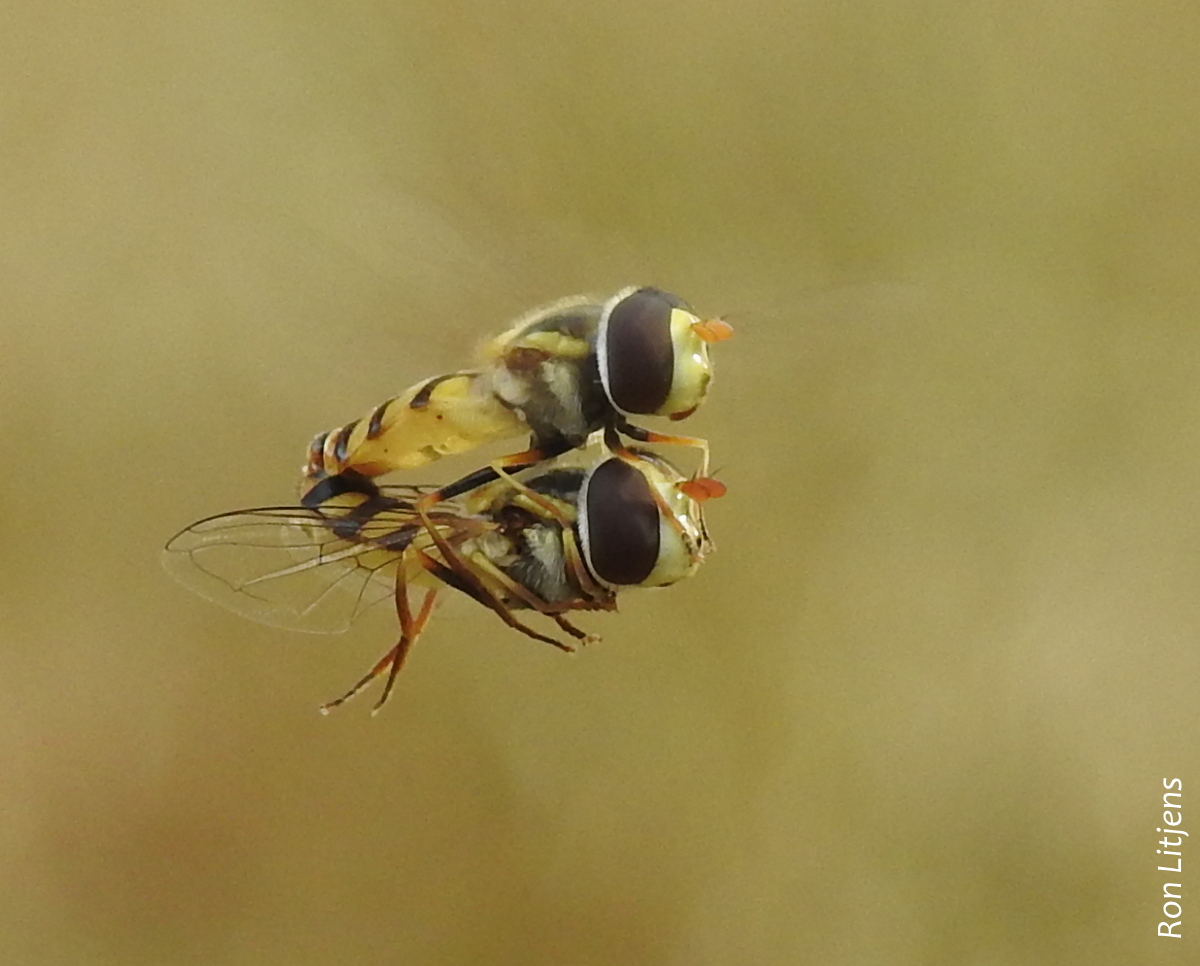
P.S. It’s not just when they are looking for food that they hover (pictured right).
Honeyeater’s Yalta
One of the most famous photos from World War II is called ‘The Big Three’. It is a picture of Churchill, Roosevelt and Stalin at a conference held in Yalta, Crimea just before the end of the war.
The photo below (entitled ‘The Big Two out of Five’) is of an equivalent meeting but for honeyeaters. The meeting was held on a street lamp in Yea, Victoria. It features a Blue-faced Honeyeater (Entomyzon cyanotis) on the left and a Red Wattlebird (Anthochaera carunculata) on the right. The latter is the second largest of the Australian honeyeaters and the BFH sits in the top five in terms of size. The largest Australia honeyeater, the Yellow Wattlebird (Anthochaera paradoxa) is endemic to Tasmania and could not make the flight across Bass Strait for the conference.
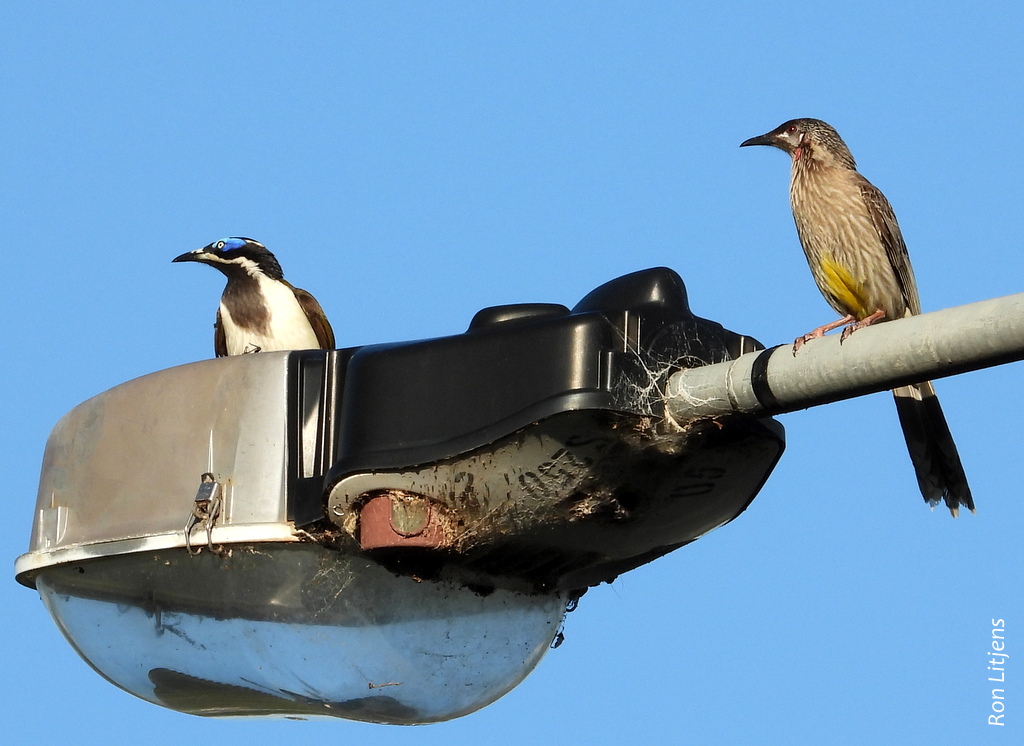

After the conference the Blue-faced Honeyeater was seen having a light meal of a cicada.
Which came first…
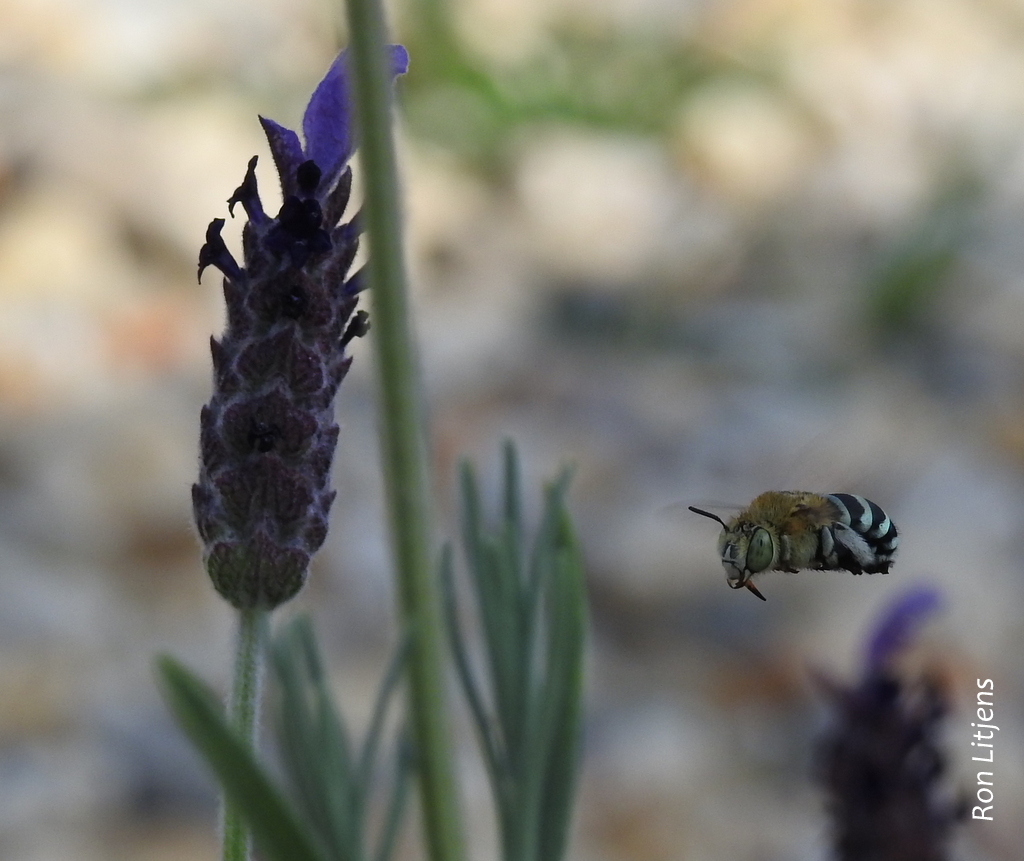
Flowering plants first occurred in the fossil record about 100 million years ago, at the same time that bees appeared. Theory says that the two co-evolved i.e. bees responding to changes in the flowers and vice versa. Today flowers come in all different shapes ranging from flat daisy-like flowers to tubular-like flowers of heath and correa. It is not surprising therefore that the insects that visit them have different adaptions to access the nectar and pollen.
One of the physical characteristics that distinguish bees from each other for example is the length of their tongues. Long-tongued bees have mouth parts designed for sipping, like through a straw. These bees are good at extracting nectar from deep throated flowers such as lavender and salvia. The Blue-banded Bee (Amegilla sp.), pictured above with its tongue protruding is a long-tongued Australian native bee. Short-tongued bees have mouth parts adapted more for lapping from flowers such as eucalypts that have a shallow nectar bowl.

Like bees, some flies are also good pollinators of plants and consume nectar from a range of flowers. They also have mouth parts adapted for different shaped flowers. Under the category of blowflies is a genus of fly called Stomorhina (from the Greek stoma meaning mouth and rhino meaning nose). They are commonly called Snout Flies or Nose Flies (pictured above) because of their long probosces.
These flies (pictured above) are often found feeding on the nectar of flowers and are effective pollinators. Due to the length of their probosces, they can access the pollen in tubular flowers that normal flies cannot -probably an evolutionary tactic as well.
It raises the age-old evolutionary question – Which came first – the flowering plant or the pollinator?
Microbat
We could often hear the squeak and movement of small bats in the mud-brick building of Seymour Baptist church and one day I found a dead one. I am not very good at microbat identification but I can narrow this to down to one of the Freetail Bats which the books say are difficult to be specific about, because taxonomists are still sorting them out. Probably Ozimops planiceps the Southern Freetail Bat. It might have helped if I photographed its face but it was not very attractive.
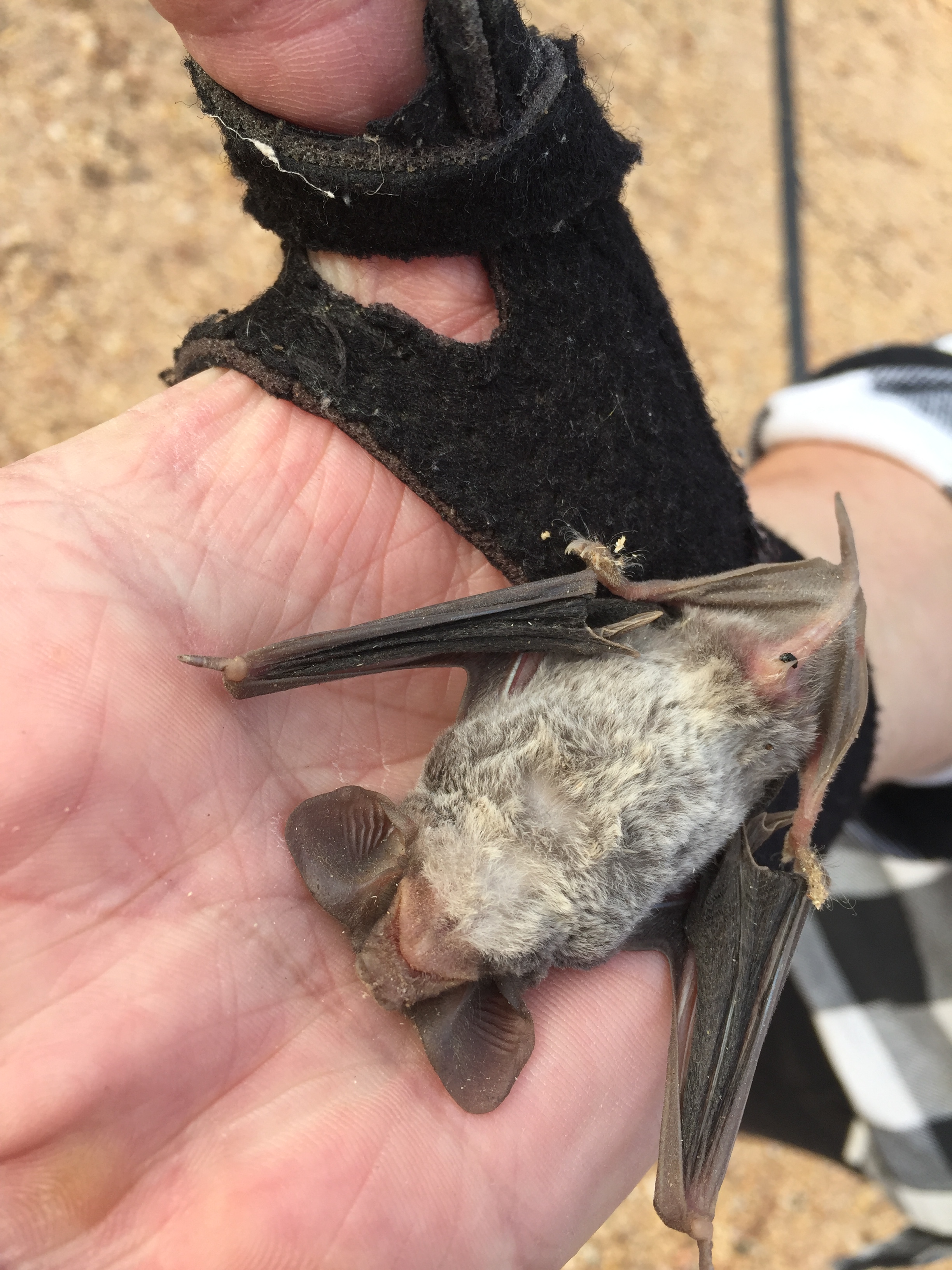
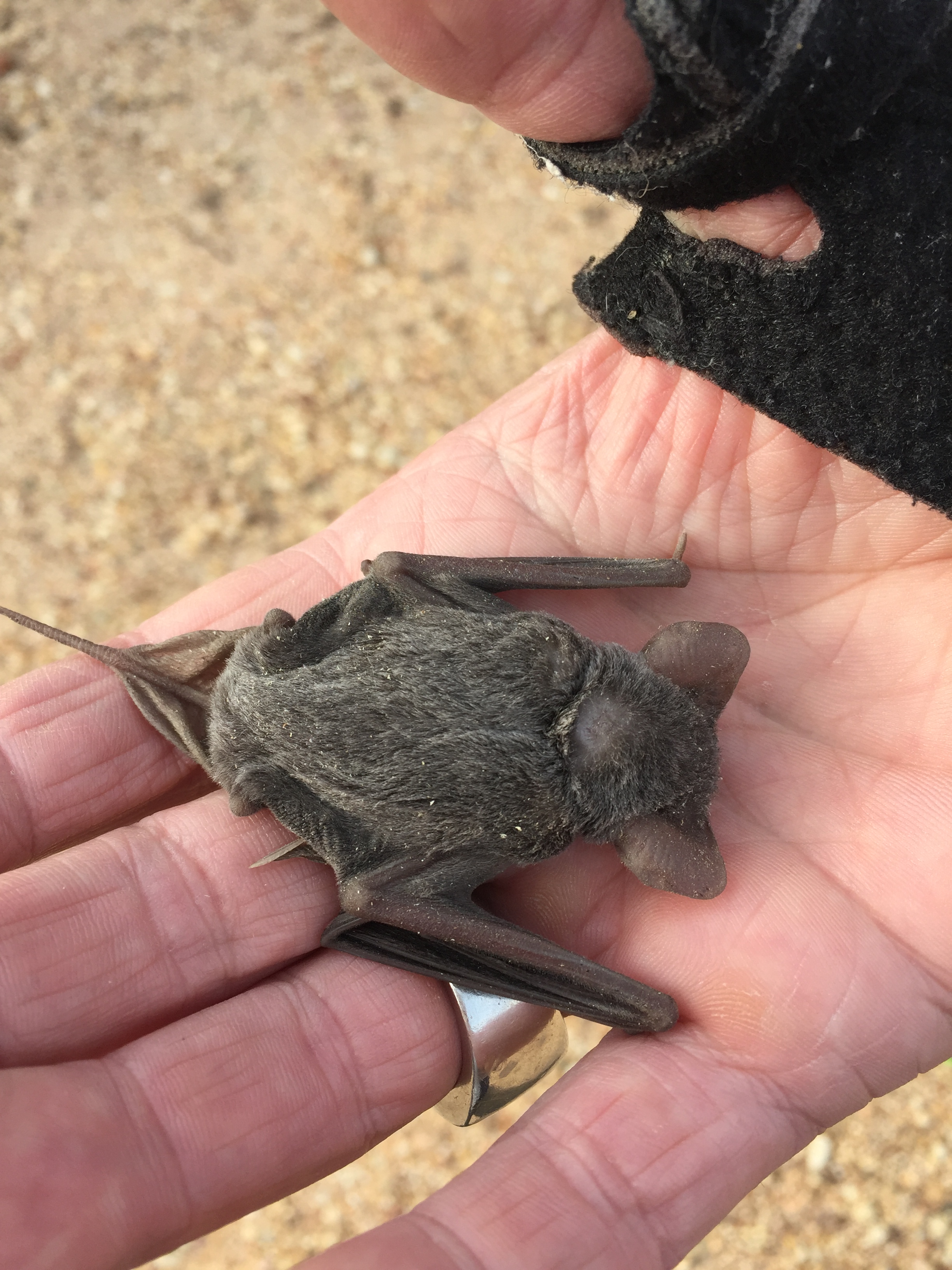
Anyway the large ears and the little rat-tail are typical of Freetail bats – hence the name; other bats have the tail encased in sheaths or retractable or absent. It is believed the tail serves as a rudder for quick direction changes.
These remarkable little creatures use echolocation to catch moths, mosquitoes, flying ants or beetles. They are very important in the ecosystem for this reason. They also have a high-pitched call when they are flying which I frequently heard on Summer nights when I was a child, but alas that part of my hearing range seems to have dropped off.
At the bend in the wing you can see the ‘thumb’ which is used like a claw for walking on the ground or moving around in the roost. There are many fascinating features in a microbat’s anatomy and behaviour. Their eyes, ears, noses, feet and those amazing wings are all very specialised.
The one thing Nature forgot to bother about was to make their faces pretty. Only the fruit bats have a face that could be called ‘cute’ like this Grey-headed Flying Fox (Pteropus poliocephalus) at Lake Guyatt, Sale, Victoria.

Microbats lack the large eyes and smooth snout that the megabats sport. They are much too specialised for insect-hunting in the dark to worry about appearance.
The war is over.

Last year our local Landcare group offered its members nesting boxes to instal on their properties. One of the boxes I’d received was a ‘Rosella Box’ that I installed 7 metres up on the east side of the building. Within six months a pair of Crimson Rosellas (Platycercus elegans) had moved in and successfully raised a brood of chicks (pictured left). In early spring this year rosellas were again checking out the nestbox.
But this year things are different. For the first time that I can remember the district has been overrun by Indian Mynas (Acridotheres tristis). These birds were first introduced from India to Victoria in the 1860’s to control insect pests and have since thrived. They are listed as one of the world’s most invasive species.

The nestbox on the wall was hot property. For about five weeks the Crimson Rosellas and the Indian Mynas were at war over it. It didn’t seem like a fair fight – a pair of rosellas against a flock of mynas. And in the end the numbers won out (pictured right).
The internet is filled with suggestions about how to remedy the situation including midnight raids on the nestbox to ‘remove’ an adult myna on successive nights and then removing the eggs. I suspect the word ‘remove’ is a euphemism for something far worse that I don’t wish to contemplate. My excuse for inaction is that the nestbox is too high for me to access unless I reconstruct the scaffolding I used to first instal it.
My myna problem still remains a major one.
Release the hounds, sorry, bugs
T’is the season that avid vegie gardeners look towards with mixed emotions. Spring is the time when much of the vegie garden comes to life but it is also the time that insect pests do their dastardly deeds. Shield bugs such as the Southern Green Shield Bug (Nezara viridula) (click HERE for more info) can do a lot of damage to vegetables such as tomatoes.
However not all shield bugs are bad. Some predate the very pests that we want to get rid of. Pictured below is a hatching of Spined Predatory Sheild Bugs (Oechalia schellenbergii) in my garden. These bugs have sucking mouthparts which they insert into other insects, inject enzymes and then suck out the juices. And the good news is that one of their known prey is the caterpillar of the Cabbage White Butterfly (Pieris rapae).
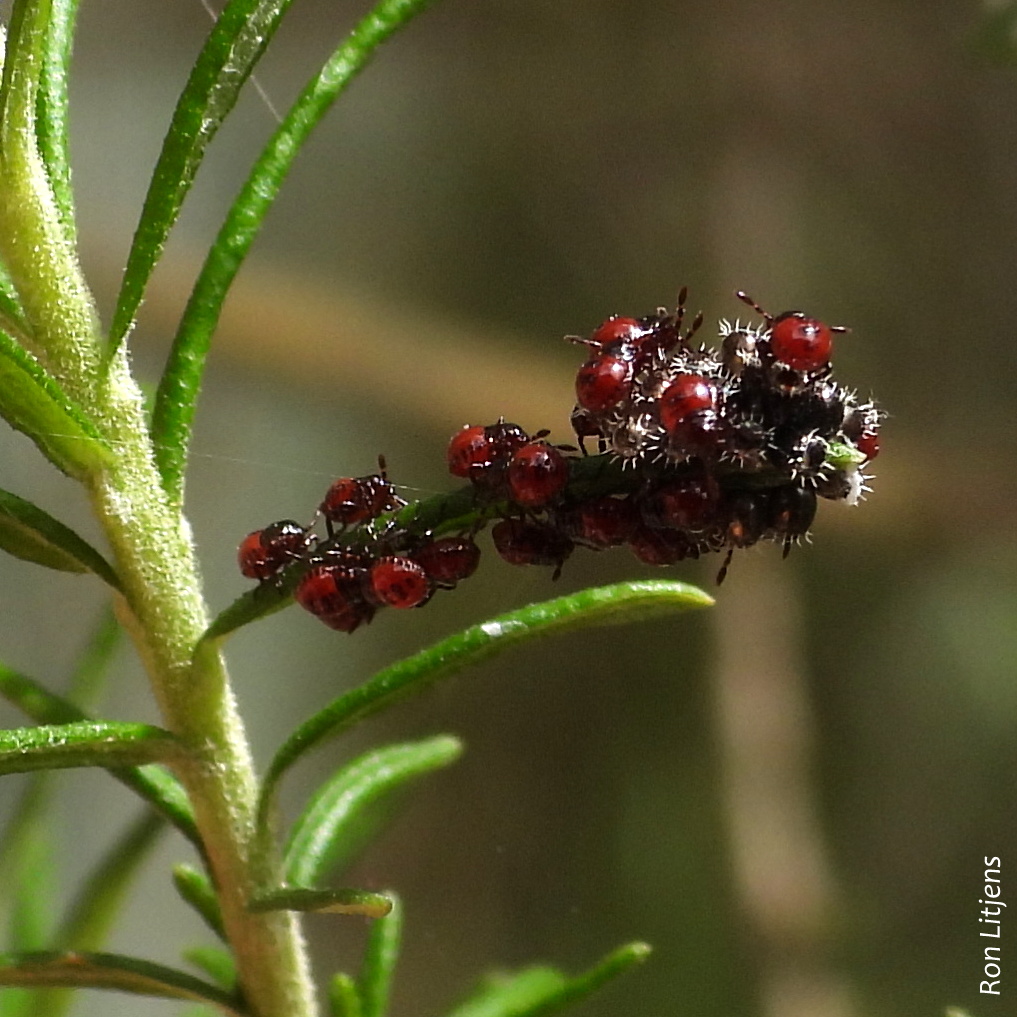
This shield bug undergoes five moulting stages before becoming an adult. The first instar (pictured above) is the only stage that is not predatory. That’s OK. I am prepared to wait for it to grow up a little before it tackles those caterpillars.
Release the bugs!
Bioblitz
The weekend of 24-27th October 2025 saw an event for nature lovers all over the Southern Hemishphere of our planet called the Great Southern Bioblitz and as part of it, a project was launched by Michael Cincotta and Chris Cobern to see whether we could amass a large number of records for Murrundindi Shire. There were spotlighting walks, bird surveys, fungi walks and activities from Eildon to Kinglake, Molesworth to Kanumbra, including Yea and Alexandra. The one condition was that observations had to be actual physical records – either a recording or a photo – and uploaded to the international website iNaturalist.
At the time of writing – and some late entries may yet be uploaded – there have been 3,103 osbservations of 1,012 different species, which includes plants, insects, birds, reptiles and animals of all kinds.
It was a huge effort and credit and thanks are due to Michael and Chris. This kind of blitz provides good raw data for research. Personally, my favourite observation was a pair of Dollarbirds (Eurystomus orientalis) patrolling the Goulburn River at Molesworth in the dusk. This bird is a Summer visitor from New Guinea which migrates South to breed. Ian Hunt in Highlands has a pair that nest each year in a hollow high in a dead tree on his farm.
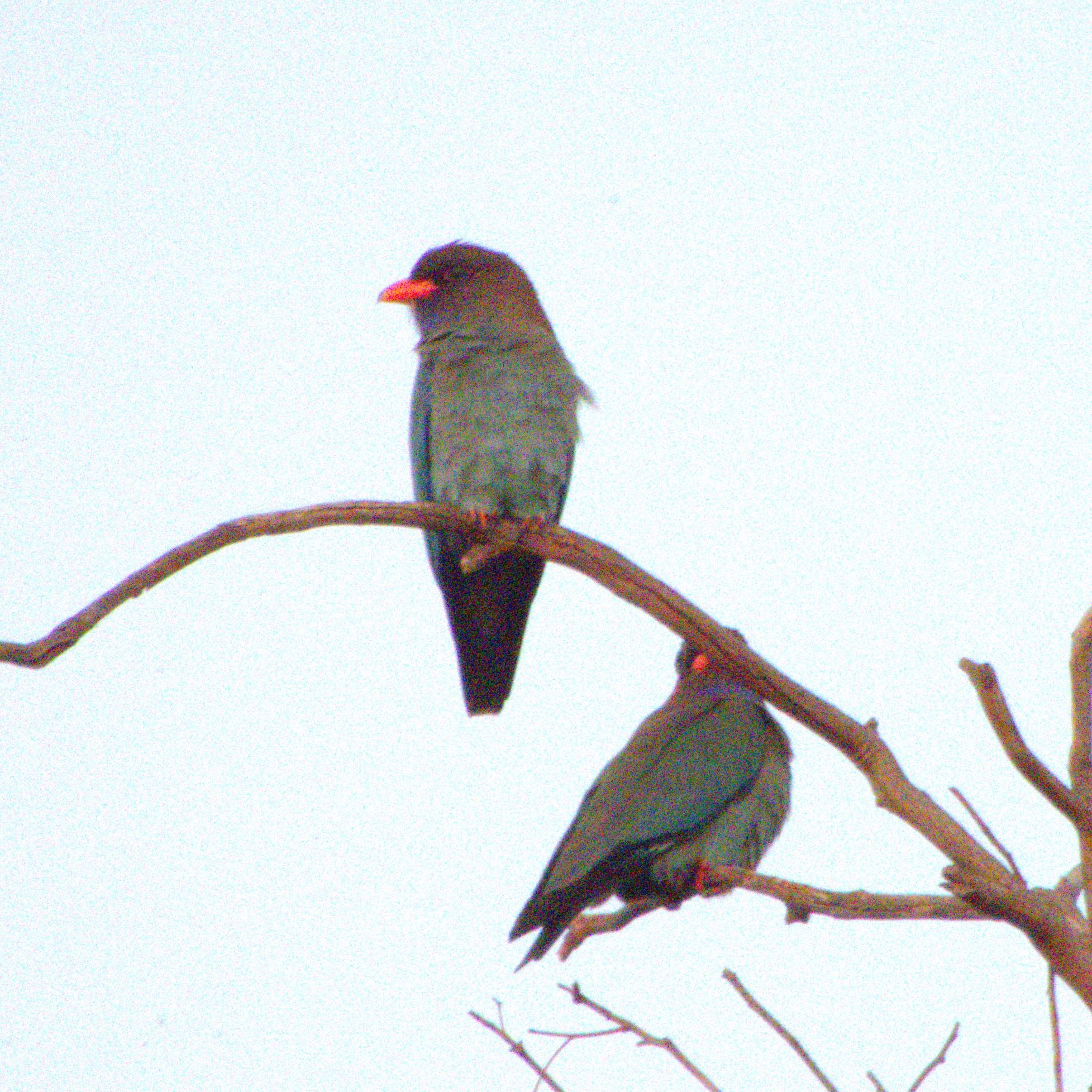
Other interesting photos I managed to take are shown here but they represent a very small proportion of the work done by many others. Michael Cincotta captured 804 species, many of them plants.

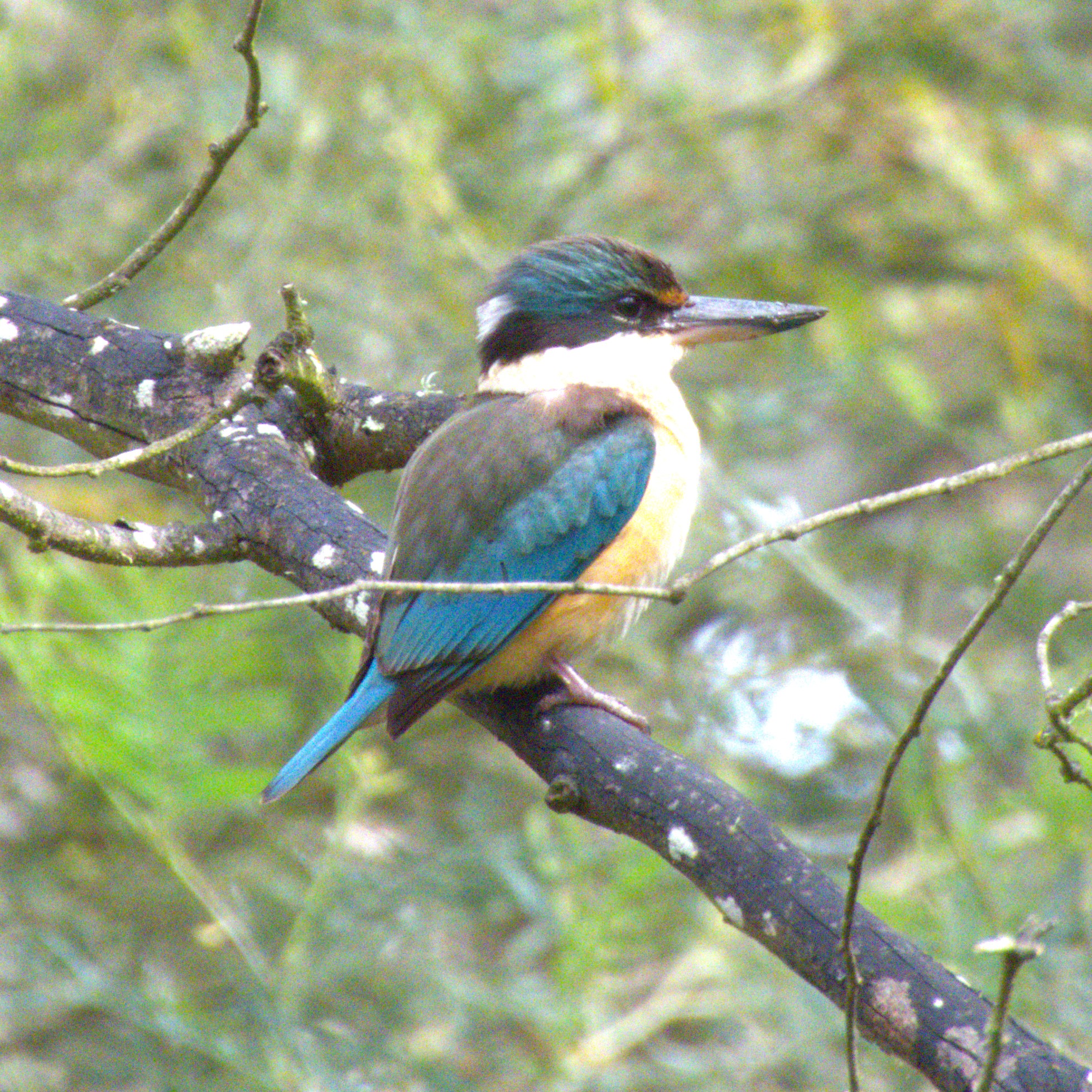
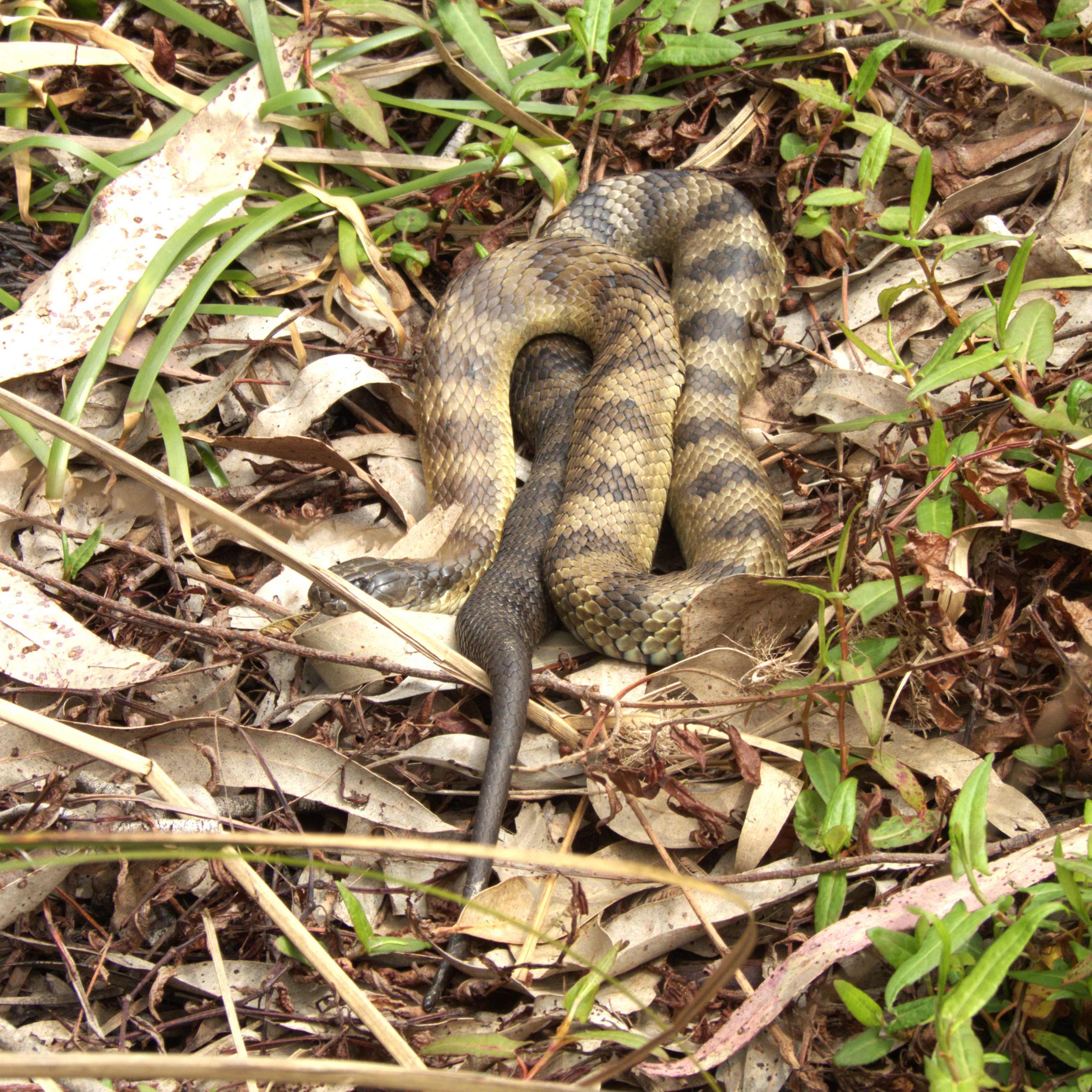

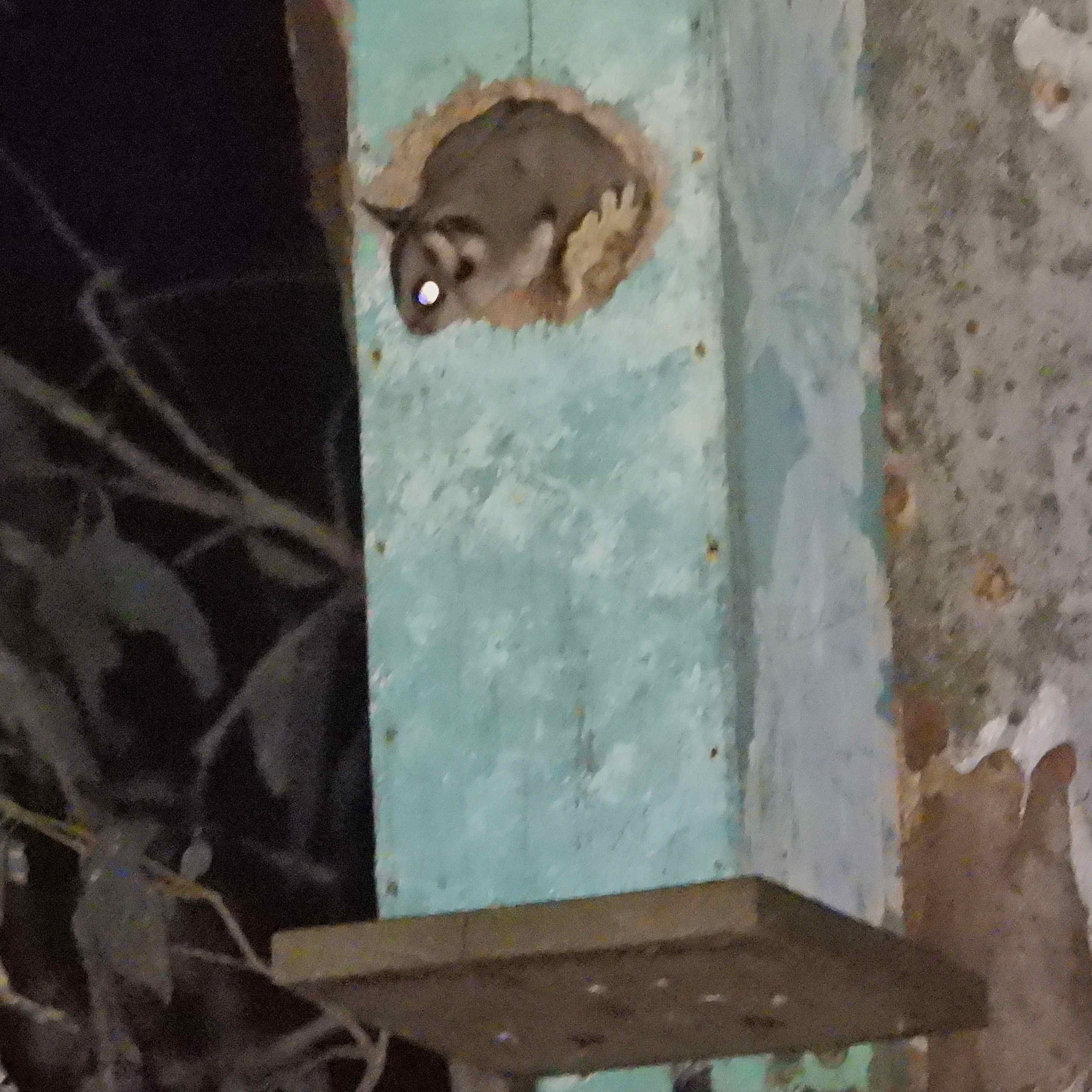

These are the ones I got. I wish I could show you ‘the ones that got away’. We were aware of cuckoos, flycatchers, a goshawk on a nest (I don’t think my photo of his tail counts), gerygones and zimming dragonflies and butterflies that wouldn’t perch for us. Better luck next year.
I’ll huff and I’ll puff
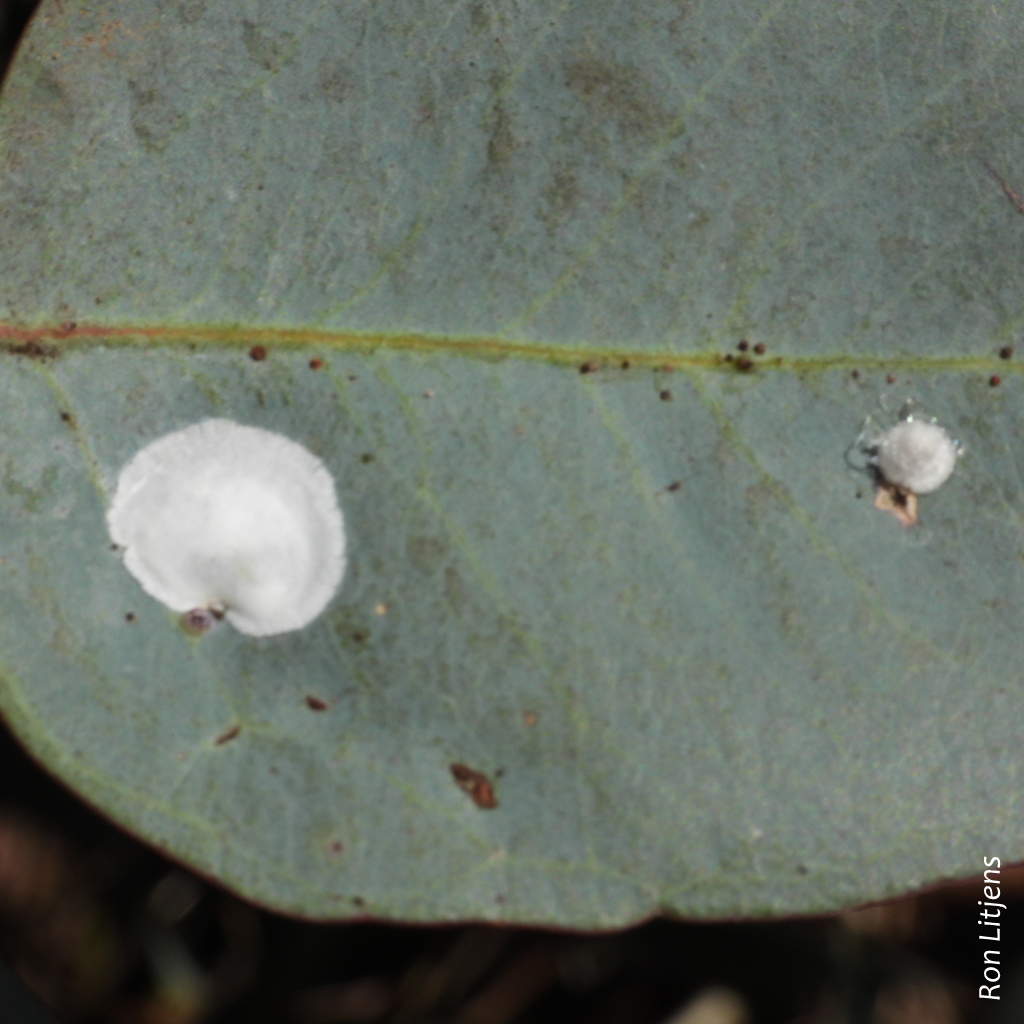
Psyllids are small ‘cicada-looking’ insects that suck sap out of leaves (Click HERE for more info). When psyllid eggs hatch the nymphs also suck sap. As they do they extrude a sugar/wax type substance known as honeydew. They fashion this substance into protective houses under which they live. The houses are known as lerps and different psyllid species construct different shaped lerps. Pictured left are the White Clam lerp (Hyalinaspis sp.), left and the Sugar lerp (Glycaspis sp.), right. Lerps offer the nymph a humidity-controlled environment and shelter from predators. And there are many of those.
Ants are commonly found around lerps. The conical pyramid construction of the Sugar lerp is quite solid. Ants usually try to remove sugar from the wall of the lerp to take back to the nest. The roof of the White Clam lerp however is less sturdy.
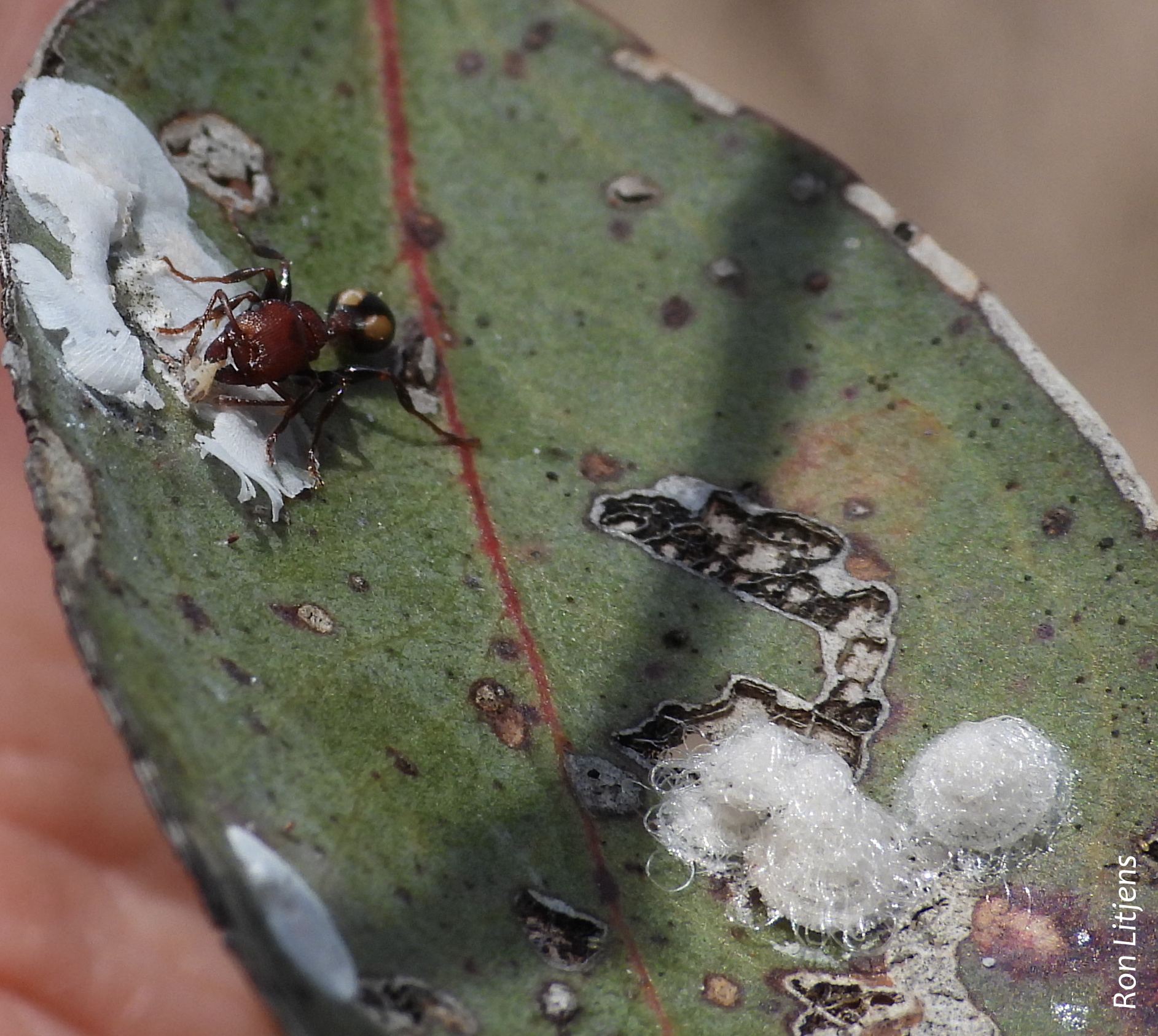
Pictured above is an ant (Chelander rubriceps) devouring a psyllid nymph after breaking through the roof of the lerp.
Somehow it reminds me of a porcine childhood fable.
Sighting Sittellas
It is always a joy to find a flock of Varied Sittellas (Daphoenositta chrysoptera) and we have mentioned them in blogs here over the years. Recently, my photographer friend Chris Rowney shared with me some stunning photos.
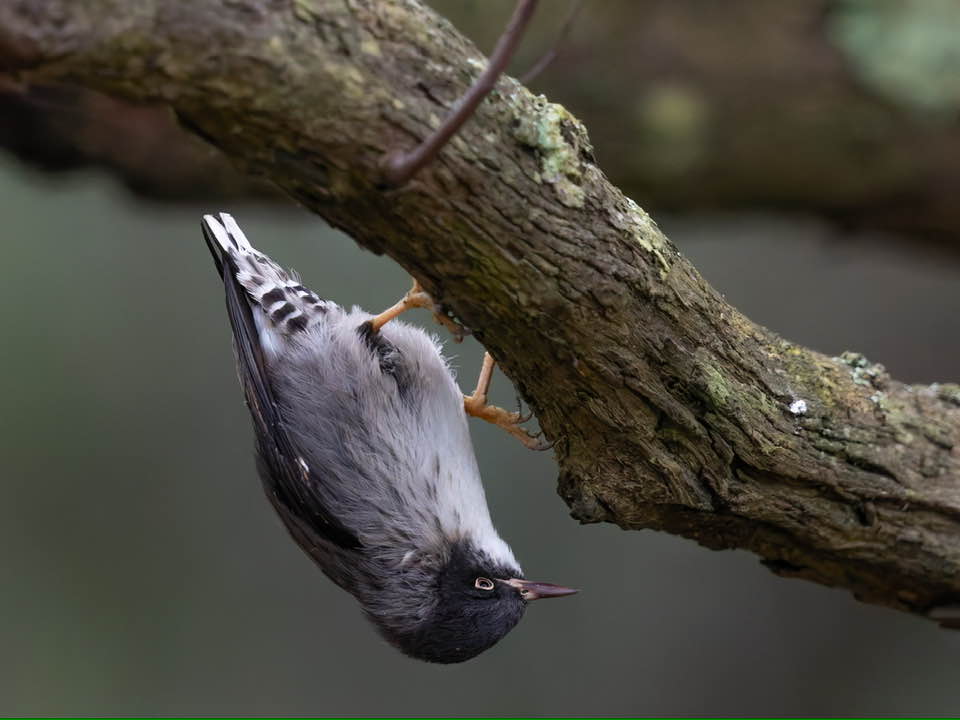
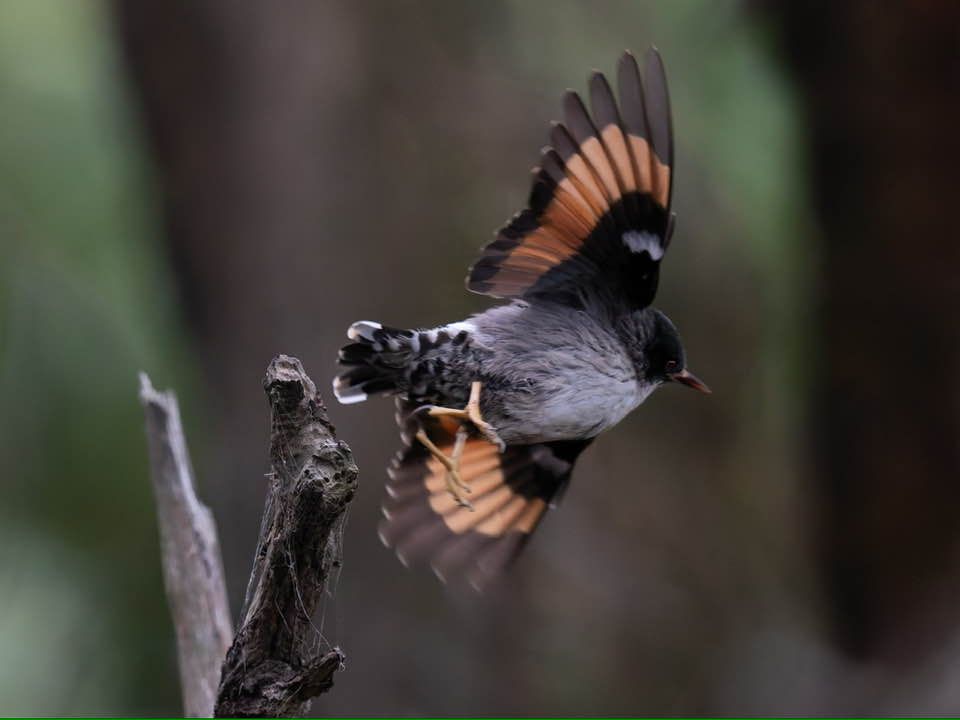
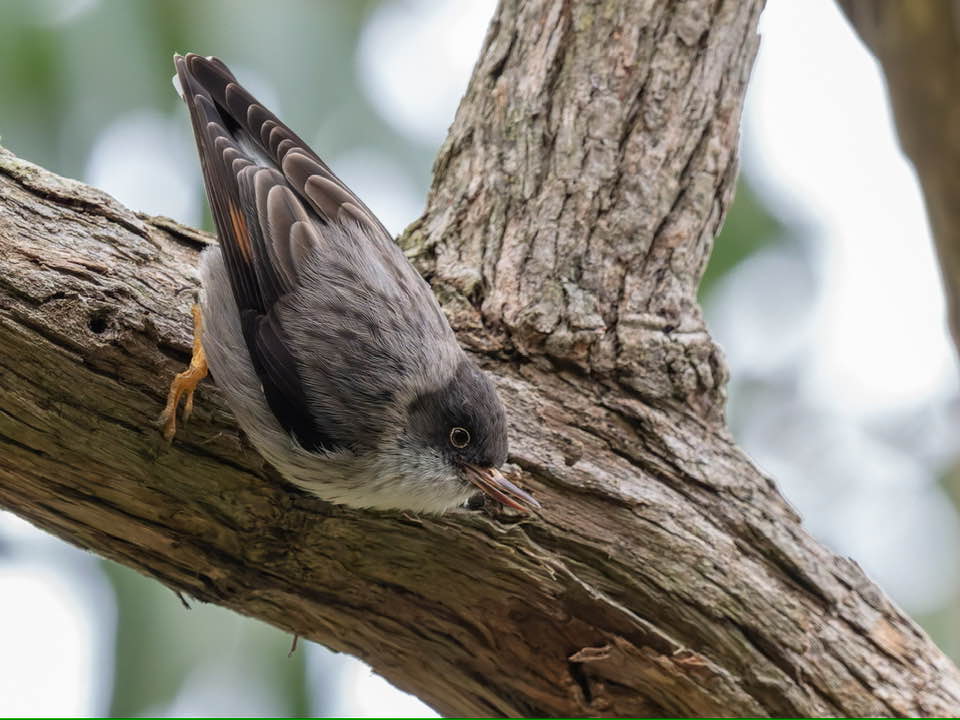
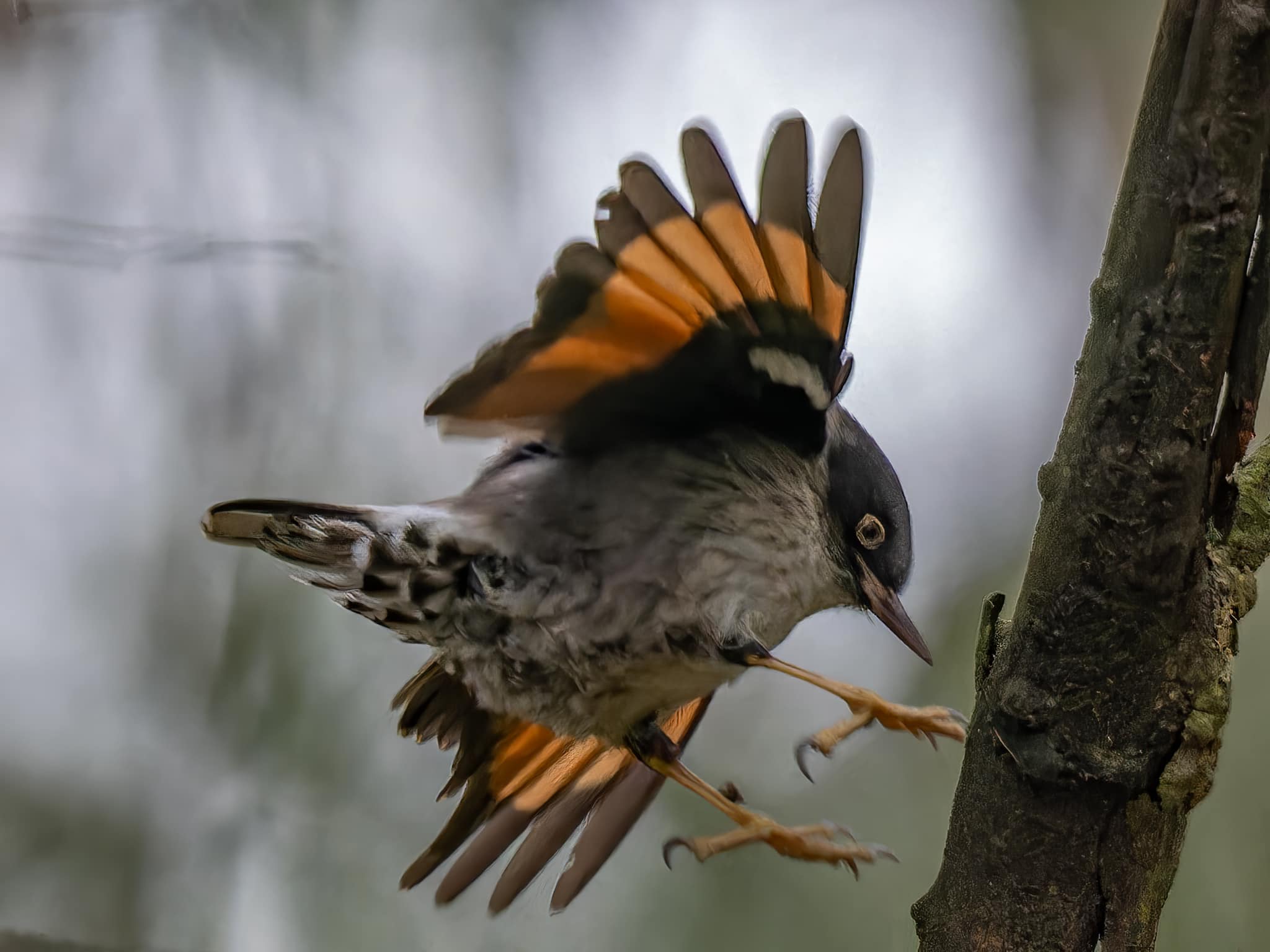

What other bird can hop along the underside of a branch? Think of the physics of that! They feed on the bark of trees, usually hopping headfirst downwards, and if you can ever find a nest they are incredibly well-disguised with moss and bark, pasted onto a fork or branch often quite high in the tree.
This bird has completely different colours in other states – I have seen them with pure white heads in Qld. In the Northern Territory they have a jet black cap. Our Victorian one used to be called the Orange-winged Sittella – appropriately, as the photos show. Now they’re all lumped into ‘Varied Sittella’.
Sittellas do remind people who have travelled in North America or Europe of the Nuthatch which also has the pointed beak, is small and hops around on bark. It seems that they are not related at all genetically but any bird making a living on the bark of trees benefits from specialised feet, a needle beak and small size, so it is not surprising they look alike. The Nuthatch is called Sitta in Greek, so Sittella means ‘little nuthatch’.
I saw Sittellas this week and it never fails to cause great pleasure. I hope many readers can share that joy as they get out and wander the woodlands of our great land.
Welcome to the Country, Goldfinch
Once a creature has been introduced and settled in to a new environment, there must come a time when they are regarded as part of the local ecology. I heard a scientist say that even Cane Toads have caused no harm to native frogs – and the predators that die eating the poisonous critters soon learn to avoid them or at least avoid the poisonous bits. This is an introduction to my opinion that I don’t mind the European Goldfinch (Carduelis carduelis). A cheerful whistle, bright colours and causing no obvious harm, these English songsters are a happy find when I’m out in nature.


The name finch is given to birds that have a heavy triangular beak and eat seeds. Worldwide the group is complex and vast with many birds granted the name and many other finches being called something else. These finch-type birds are usually very social (congregating in flocks except for the breeding period), colourful and cheerful. Australian finches (Estrildidae – a different family) are represented only by the Red-browed firetail in central Victoria, while the introduced ‘finches’ include the House Sparrow, the Greenfinch and the Goldfinch.
A farmer once told me how he shot 7 sparrows with one shotgun cartridge – he put out some wheat and had the gun poking through a hole in the shearing shed at the line of House Sparrows that came to eat it. I have other friends that call all introduced birds ‘weeds’. I certainly feel little love for the Common Miner or the Starling but there comes a point where the creatures and plants naturalised in an environment have to be accepted and respected, albeit controlled if they are causing damage.
We all live on the one small planet and while every arrival and introduction causes some disruption and anxiety in a place, these changes cannot be reversed easily. Attempts to control horses, deer, feral cats, fire-ants, black berries, rats, wheel cactus or serrated tussock are undoubtedly important but costly and difficult. However, some introductions seem to cause little harm and perhaps we then need to trust in nature’s capacity to adapt and accommodate. I regard the Goldfinch as a pleasant newcomer not a weed.




 Focus On Fauna