Who needs trees?

Peron’s Tree Frog
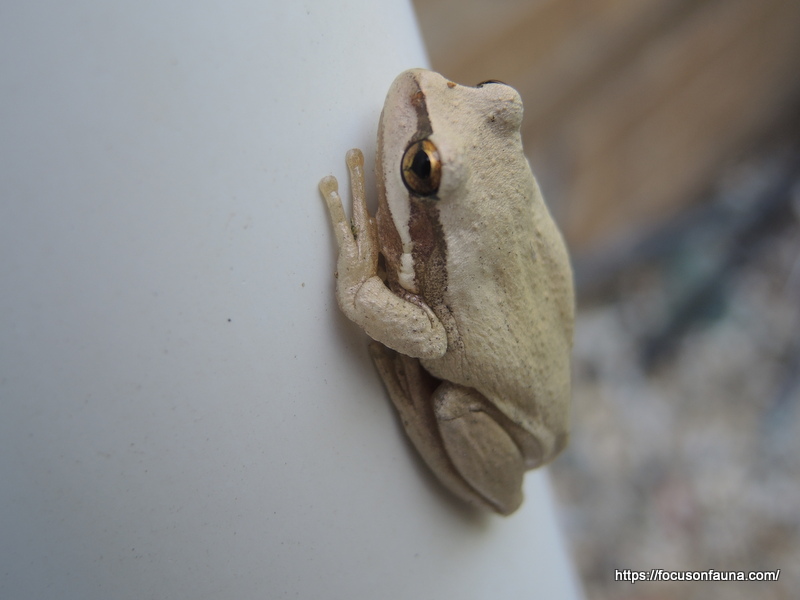

At least we think it’s Plains Brown Tree Frog – a species that is difficult to distinguish from the closely related Southern Brown Tree Frog, Litoria ewingii. The skin markings are variable in both and the main differentiation is in the call and the distribution, although the Plains is reported to be slightly smaller. We have been told that we are in an overlapping zone of the two species, and if the frogs aren’t calling, it makes identification difficult.
We hear frogs all the time, but it’s not often we are able to get up close enough for clear photos. This hideout of the frogs between pipes was an ideal opportunity to show some of their identifying features, such as the tympanum (ear), the foot-webbing and digit pads, the eye pupil etc. The Peron’s Tree Frog, for instance, is immediately recognisable by its cross-shaped pupil, if not from its weird call. Now, if only the other little frog had a name-tag!
Listen to the calls previously recorded locally by clicking on the sound bars below:
Peron’s Tree Frog –
Plains Brown Tree Frog –
Insect onesies
Unlike humans, insects have external skeletons (exoskeletons). One of the advantages this offers is that internal organs are well protected from injury and damage. However the downside is that for those insects that do not go through a caterpillar/cocoon stage, that is, they mature as a series of nymphs (or instars), they periodically need to moult their external skeleton and grow a bigger one. These insects include true bugs (hemiptera), grasshoppers, dragonflies and cockroaches (see photos).
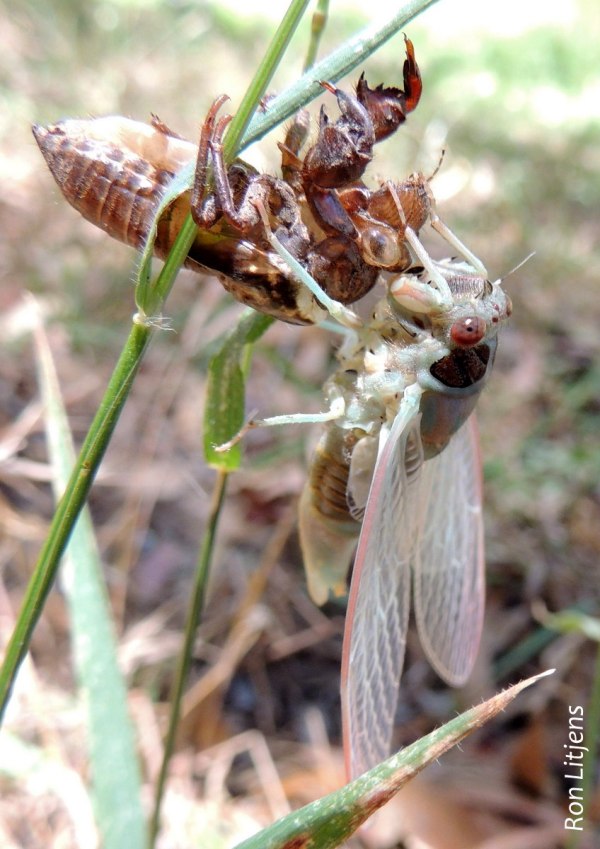
Cicada
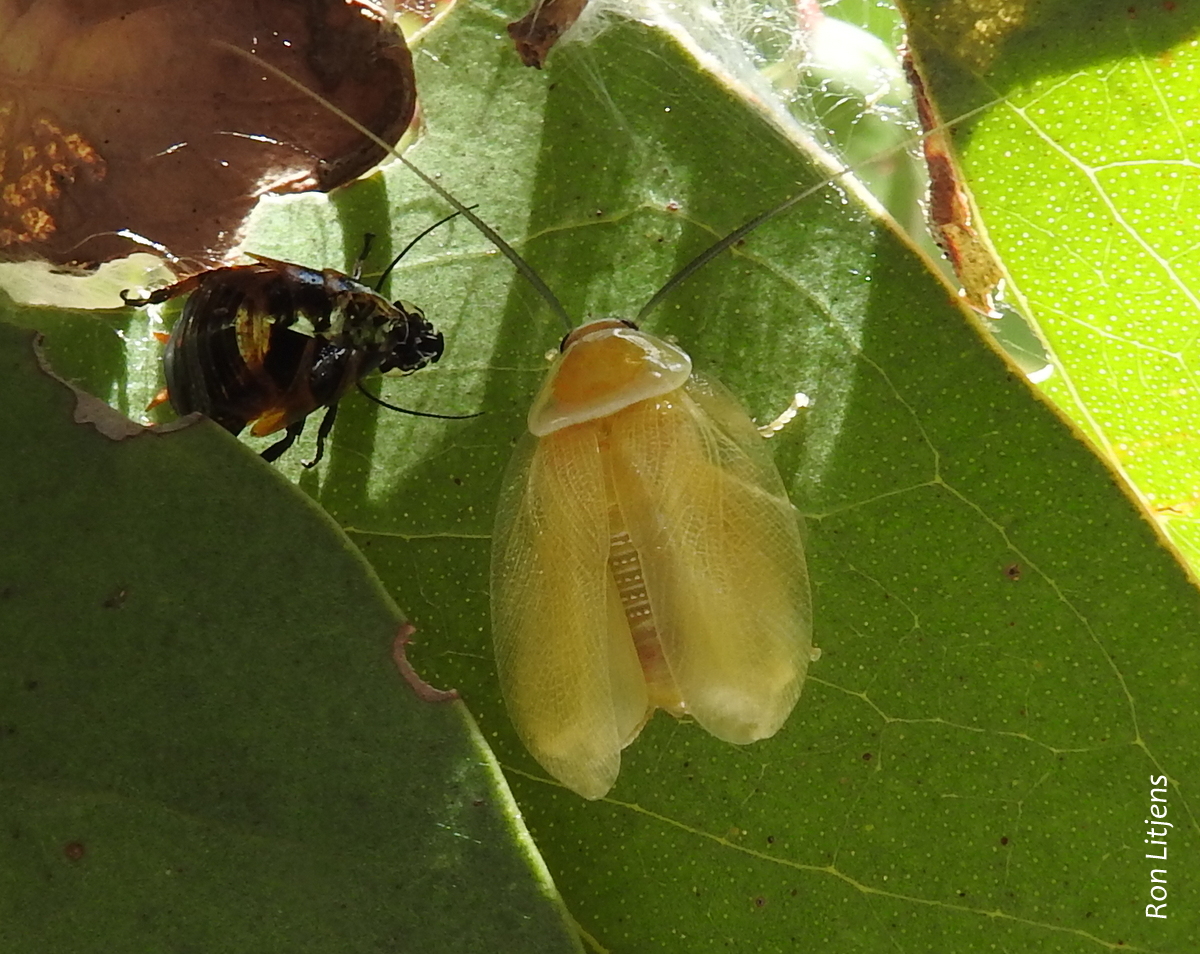
Native Cockroach
Spring and summer are when most insects hatch and grow. It is common at this time of the year to see the discarded insect skeletons hanging around, like abandoned onesies. The process of shedding the skin is called ecdysis. Seeing ecdysis in action though is not so common. One needs to look carefully through the vegetation.
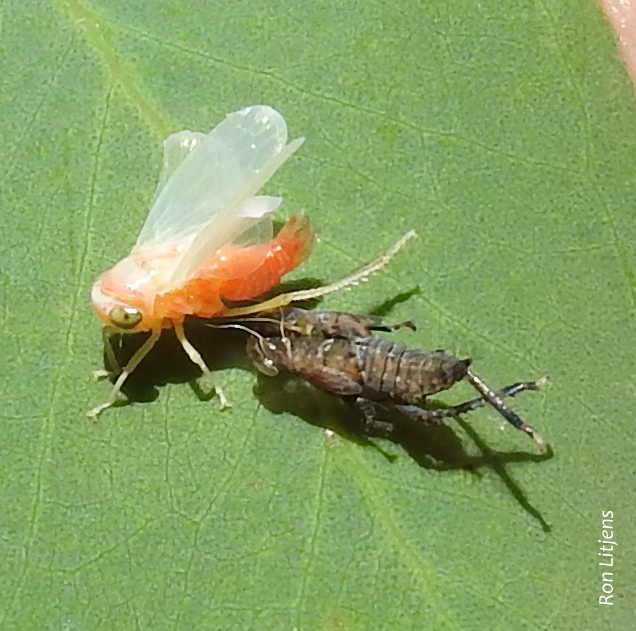
During ecdysis the emerging insect does not breathe. During this time it is most vulnerable to attack as it is pale in colour (i.e. not camouflaged) and the exoskeleton is soft. After shedding the old shell, the insect pumps itself up to maximum size using air and bodily fluids whilst the new shell hardens, after which it relaxes giving itself room to grow. The shell develops its colours on exposure to sunlight.
When you see the insect next to its discarded onesie you can only wonder how it fitted in the shell in the first place. It’s strange because my West Coast Eagles onesie looks too big whether I am wearing it or not.
One lump is all you need
As an amateur photographer I rely on seeing things to take a picture. Recently I have participated in a number of bird surveys where the expert twitchers marked down that a bird had been ‘sighted’ when they have heard its call. This initially astounded me but of course it makes sense that if bird calls are unique to a species then hearing the call is just as valid as seeing the bird…and far more productive. It has opened up a whole new dimension as to how I ‘view’ nature.

Last week I HEARD a bird call I did not recognise emanating from the top of an old pine tree. In the uppermost branches sat a bird which was hard to photograph because of the bright sky background and the fact the camera kept focussing on the multitude of branches between me and the bird. What I did notice in profile however was the lump on its beak and that was all I needed to identify it (see picture above). In this part of the country it could only be a Noisy Friarbird (Philemon corniculatus). Australia has several species of friarbirds with bill knobs but the others are restricted to northern Australia.
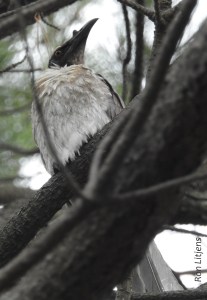 Friarbirds are species of honeyeaters so called because their heads are bald, similar to the friars of old, and in large groups create a lot of noise with their constant chatter. Their alternative name is Leatherhead. In spring/summer they migrate down the east coast to breed in southern Australia. They feed on insects, fruit and nectar.
Even though the call was quite distinctive I don’t think I would recognise it again. I think I’ll stick to visual identification. Seeing is believing.
Stick nest

Recently we received a couple of queries about birds seen around Strath Creek which turned out to be Dusky Woodswallows. We then encountered the same species towards the end of the Upper Goulburn Landcare Network’s Rail Trail Nature Walk on 8th December. The walk was part of Birdlife Australia’s annual Challenge Count where teams of observers count the number of bird species and individuals in a chosen area during early December. It is the third year that the UGLN’s Chris Cobern has organised the event along a section of the Great Victorian Rail Trail near Cheviot, east of Yea.
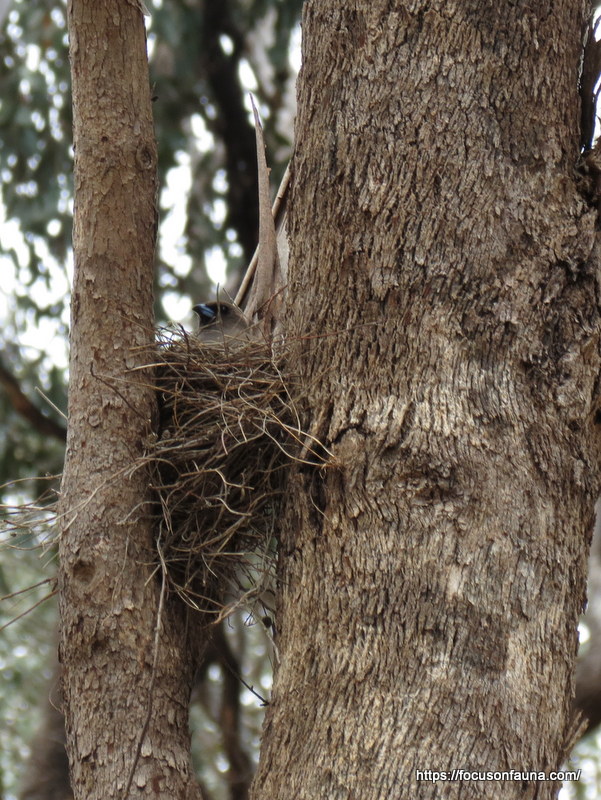
Our small team was close to beating the 2015 species total of 35 when we came across a flock of woodswallows. We then noticed one visiting what appeared to be just a small bunch of sticks caught above the fork of a tree just a metre off the edge of the rail trail (photo at right). This was in fact the nest of a Dusky Woodswallow, and despite its dishevelled outer appearance and precarious position, it would actually be a neatly shaped and lined bowl for the bird to nestle into (main photo above).

A short distance further on we came across a second nest, again only a metre or so off the path, but this time in a more stable position. Foot and bike traffic is obviously not a deterrent to these nesting woodswallows!
And for the record, we ended up with a count of 208 birds of 36 different species.
To see a picture of what the juvenile birds will look like if the breeding is successful, see a previous post Woodswallows around.
Neither Mantis nor Fly…but feisty enough
This is the time of the year that insectophiles like myself start closely examining the young leaves of eucalypt trees. The leaves are a mecca for insects like eucalyptus beetles, emperor gum moths and cup moths to eat, play and mate on.
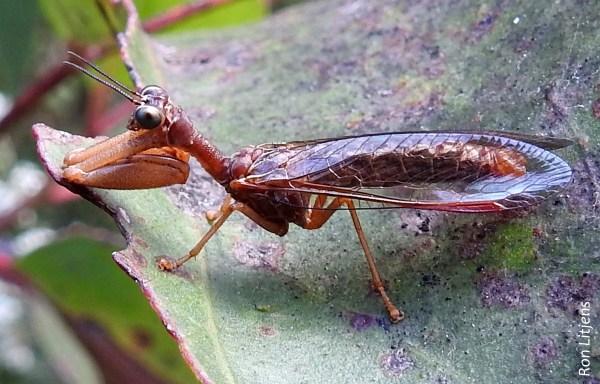
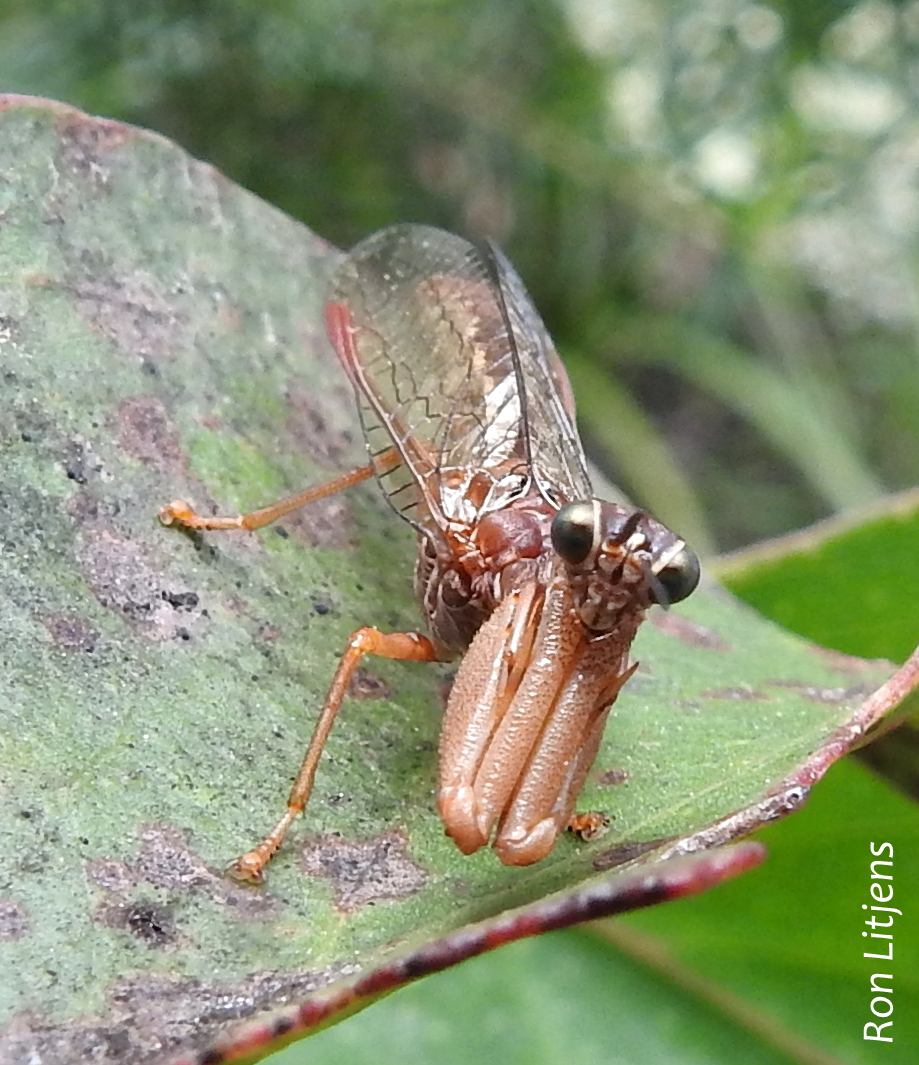 It was on one casual gum leaf observation trip I came across the insect pictured above. It is a Mantis Fly (order Neuroptera) but it is neither a mantis nor a fly. The Mantis Fly is a type of lacewing. The mantis reference pertains to the large raptorial forelegs which the mantis fly uses to grasp prey. They are most active at night and are active predators hunting sizable insects.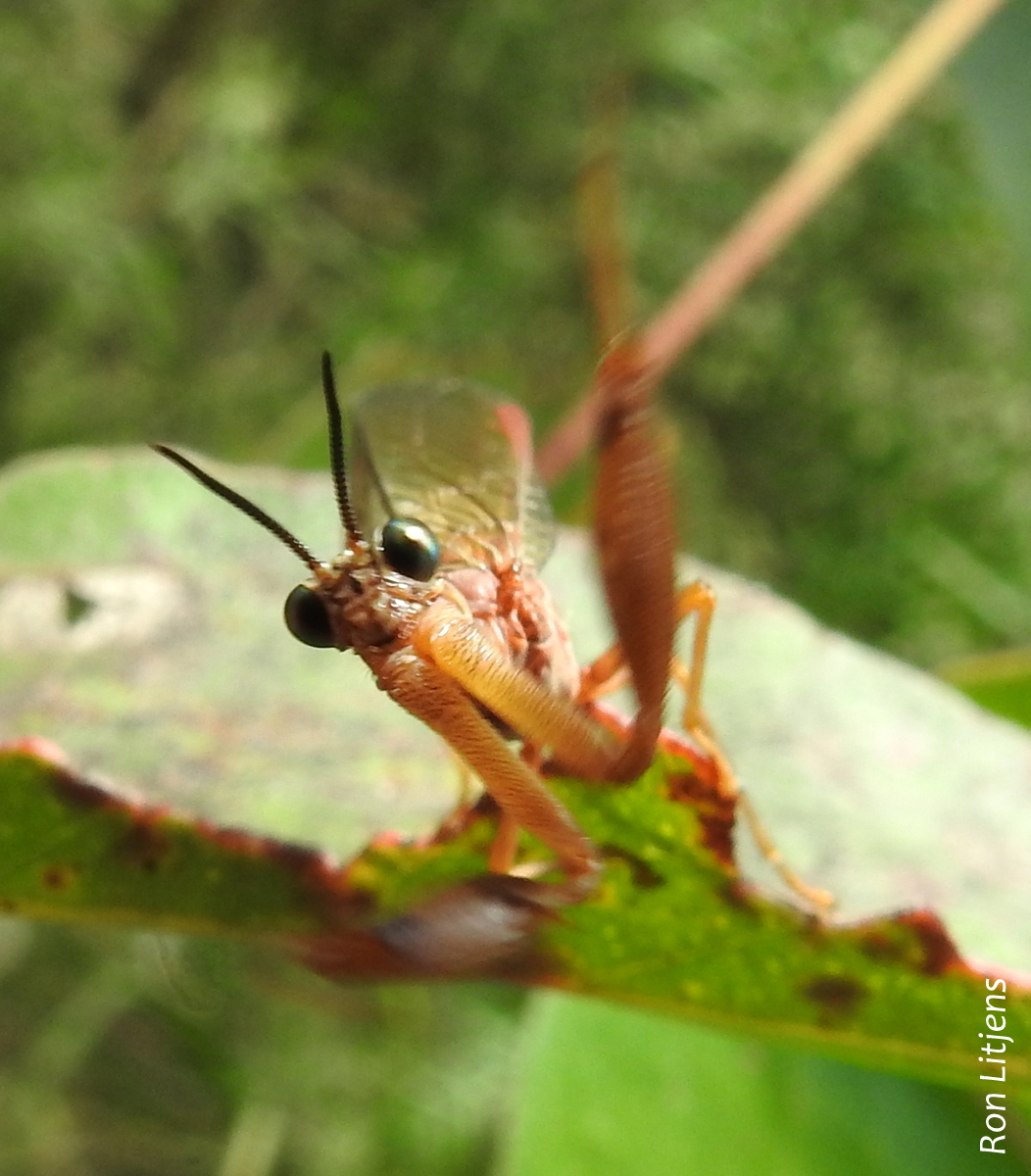
.
.
.
.
.
Usually when photographing insects, at some point in time the insect gets sick of the camera lens getting closer and closer and takes off either by flying or crawling away or dropping to the ground. I was therefore surprised when this Mantis Fly decided that the best form of defense is attack and started to rake the lens with its forelegs (pictured right). Feisty!
I must learn to pick on someone my own size next time.
Fly on the wall
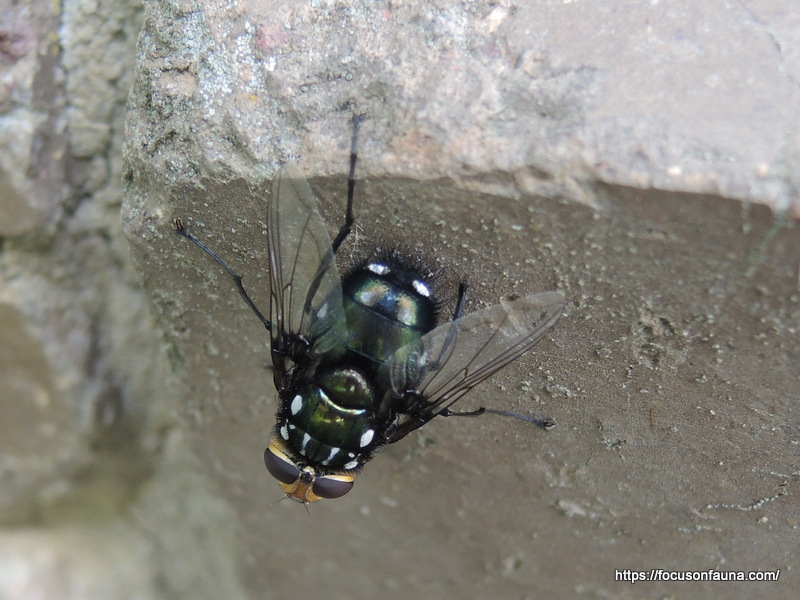 This rather large and strikingly-patterned fly was spotted resting on the brick wall of our house the other day. Thanks to fellow Focus on Fauna blogger Ronlit, we think it is a Golden Head Rutilia Fly, Rutilia argentifera. The species name argentifera would suggest silver, not gold, but perhaps it refers to the whitish/silver spots on the body, rather than the yellow head.
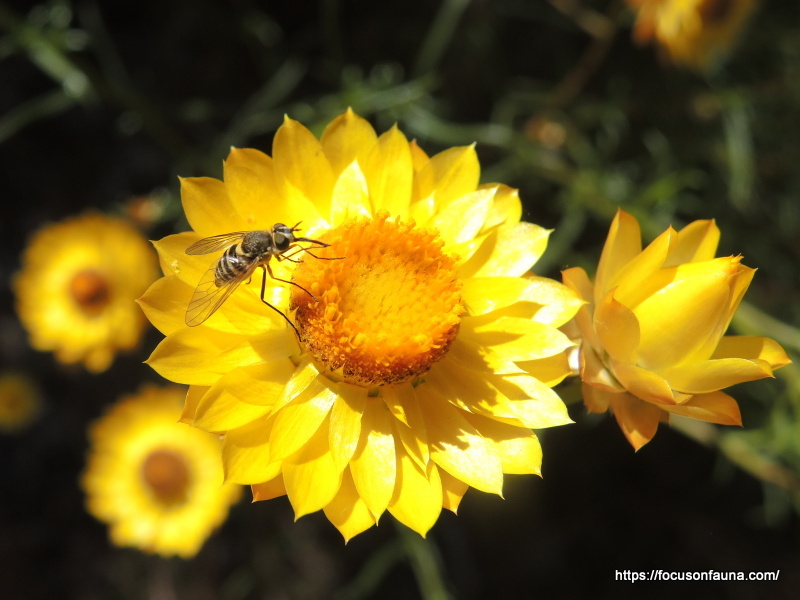
The Golden Head Rutilia Fly is primarily a nectar feeder, but was unfortunately not seen during our participation in the recent Wild Pollinator Count, a citizen science project which involves observing which insects visit a selected flower or group of flowers over a ten-minute period. What we did see is the native bee fly pictured at right (click on the photo for a closer look) which, with the help of Karen at the WPC, we think may be an Australiphthiria species. Bee flies (family Bombyliidae) are also nectar and pollen feeders and our example was seen on Sticky Everlasting, Xerochrysum viscosum. We tend to think of bees and perhaps wasps as the main plant pollinators, but flies also play a major role. In fact we’ve just learnt that flies won the most numbers in this spring’s Wild Pollinator Count!
Together with Ronlit’s previous post on Long-legged Flies, you can begin to get an idea of the wonderful diversity and value of flies (order Diptera) – there’s a great deal more than just blowies and bushflies!
Fairies in the foliage
I always thought that there were fairies in the foliage at my place. Quite often, especially whilst walking through grasses in Spring I would notice brief flashes of colour out of the corner of my eye but when I looked around saw nothing – until I looked closely.
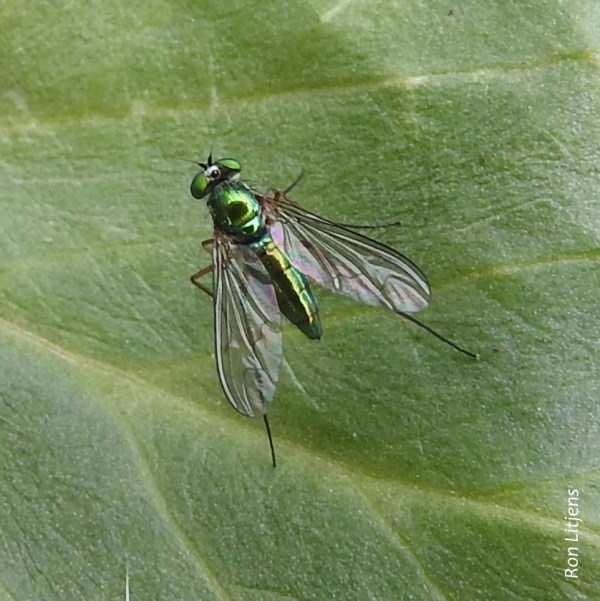
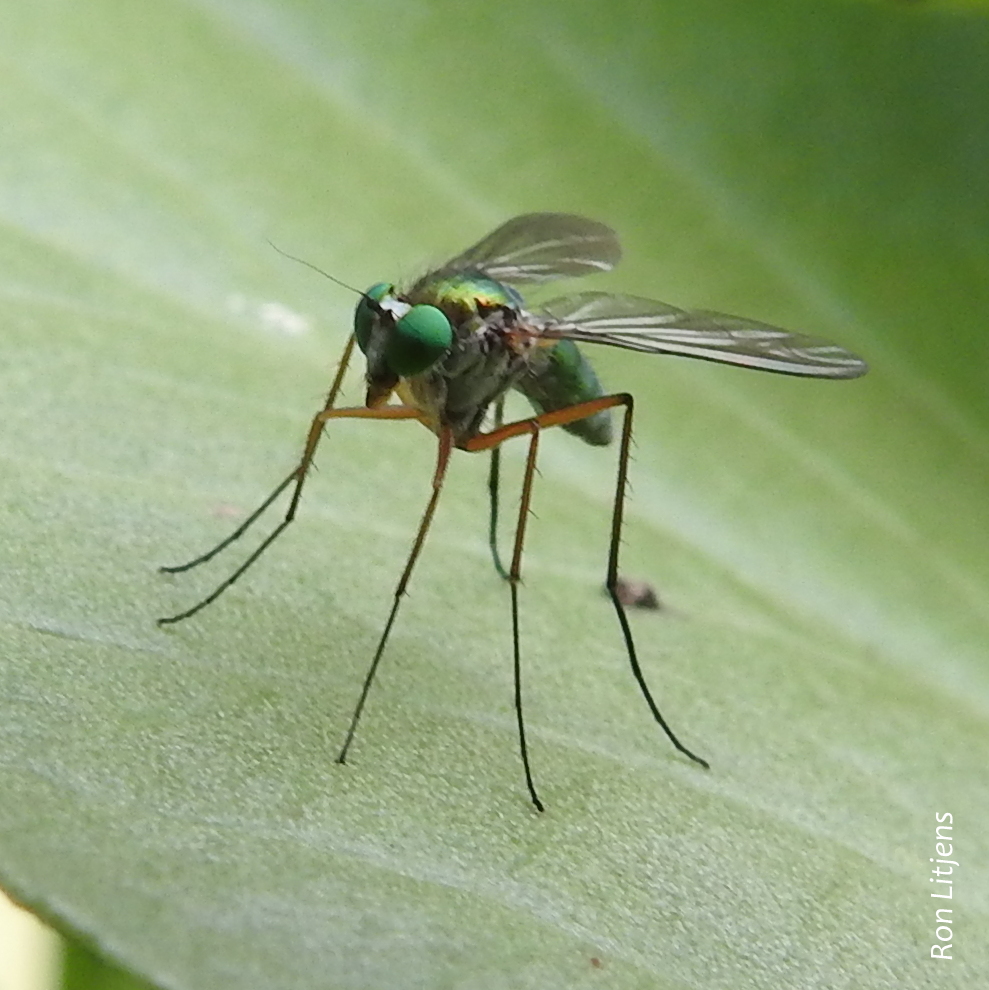 The flashes of colour weren’t from fairies at all but from a group of insects known as Dolichopodid Flies (pictured). These flies have long legs, hence the alternative name of Long-legged Flies, and bright iridescent green bodies which when they are not moving seem to blend in perfectly with the foliage on which they are sitting.
The adults are predators feeding on soft-bodied insects such as aphids and mosquito larvae (depending on species). The larvae are ground dwelling and are also predatory.
So, they are not fairies but just like fairies are kind of pretty and useful to have around the garden.
Looks can be deceiving
Spring is the time for planting the vegie garden and with that comes the influx of insects all keen to lay eggs on the lush new vegetation. But not all insects are pests in the garden. Some insects and their young are beneficial and predate on those things that harm your plants. The difficulty is telling apart the good guys from the bad. This is made all the more complex because different insects develop in different ways.

The vegie patch – a predator playground
 Take the preying mantis for example, one of the good guys in the garden. The mantis is an ambush predator. Both the nymphs and the adults wait motionless until prey comes within reach and then grab it with their raptorial forearms. Baby mantis are easy to recognise because they look exactly like the parent, only wingless and smaller (see picture left). Their lifecycle is known as partial metamorphosis (hemimetabolism). The young are called nymphs and hatch looking very similar to the adult. They grow larger through a series of moultings until the final moult when the winged adult emerges. Other insects that develop in this way include grasshoppers, crickets and earwigs.

Common Spotted Ladybird (Harmonia conformis) larva
So be aware when you wage war on insect pests in your garden that you don’t kill your allies with friendly fire. Looks can be deceiving.
Now you see ’em…
The basic survival skills in nature are the ability to elude the predators hunting you and to remain unseen by the prey that you are stalking. There are many ways animals can do this but one of them is by camouflage, using shapes and colour to blend into the background. One has to wonder then what is happening when you see an extremely white spider sitting on a brown stalk of vegetation trying to catch a meal. Has evolution gone astray?
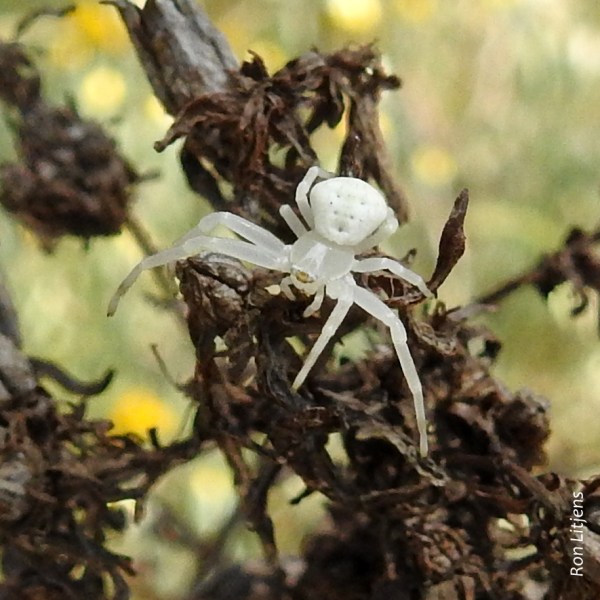
Observed at Murchisons Gap Lookout, the spider in question was a White Crab Spider (Thomisus spectabilis), pictured above. The White Crab Spider is an ambush predator. It waits within the structure of a flower and then grabs any pollinator that stops by. This may seem at odds with its striking white colour. This spider however belongs to a family of spiders, Thomisidae, which can change colour from white to yellow depending on the colour of the flower on which it is hiding. It does this by secreting a yellow pigment into the outer skin layers. The colour change can take up to three weeks to complete and about a week to reverse.
So on what was this spider perched? A dead stalk of St John’s Wort, a striking but unwanted yellow-flowered plant in the district. Like my dress sense, this spider’s colour is out of season. My next challenge will be to try and find one of these critters in full yellow dress.
Not more about lerps!
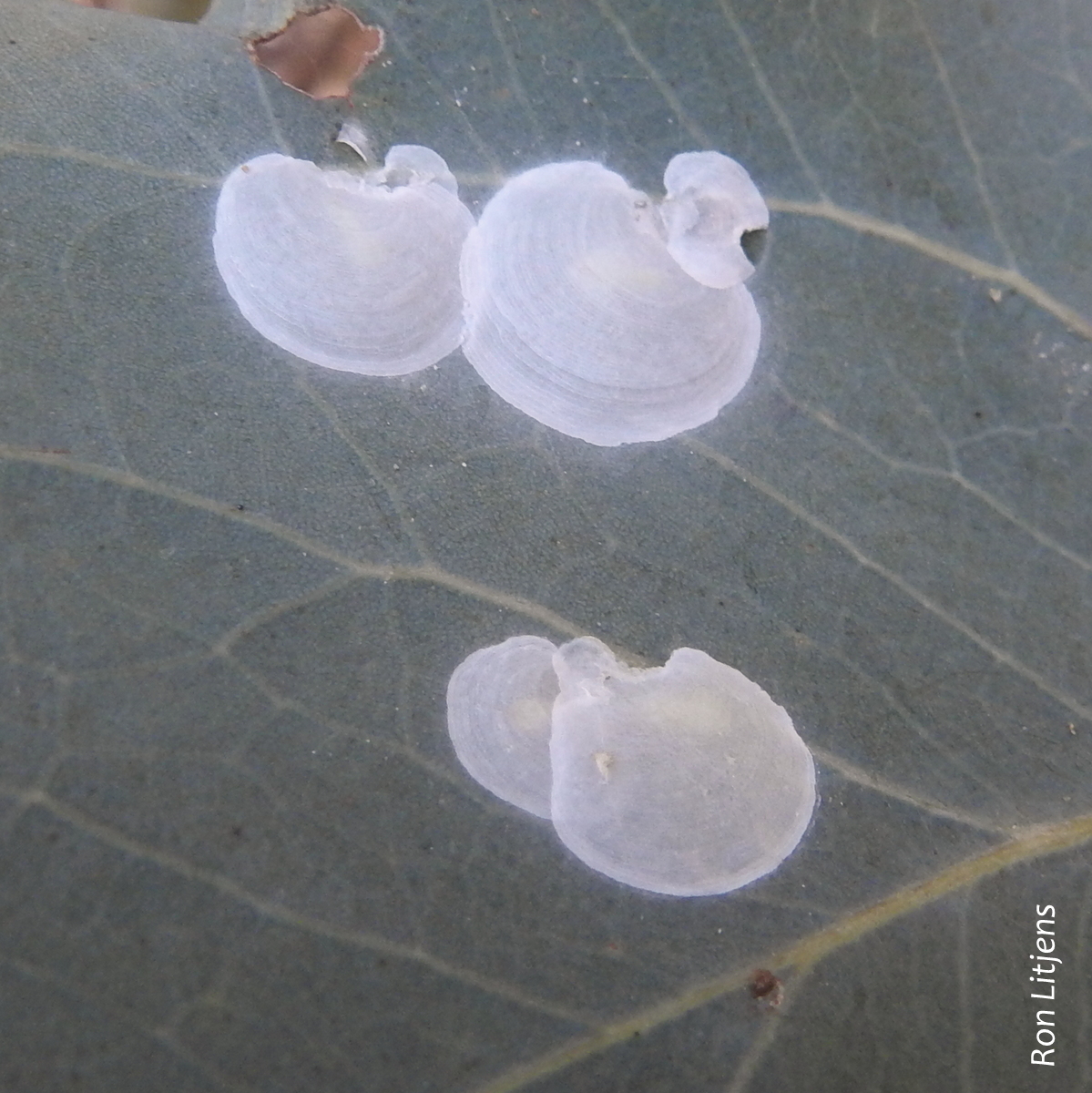 Psyllids are tiny winged insects that look like small cicadas. In fact both psyllids and cicadas are Hemipterans meaning that they are characterised by sucking mouthparts. Adult and nymph psyllids suck the sap of plants. The psyllid nymph extrudes a mix of wax and sugar-rich honeydew from which it constructs a shelter under which it hides from predators and parasites. This ‘house’ is called a lerp. Lerps provide a food source for a variety of birds such as pardalotes and bell miners and are also an indigenous food source.
Different species of psyllids build lerps of different structures and composition. The Sugar Psyllid (Glycaspis sp.) builds a conical sugar-rich lerp. The Lace or Basket Psyllids (Cardiaspina sp.) builds a scallop-shaped lerp. A current infestation of them is causing the large-scale browning of eucalypt leaves in the district.
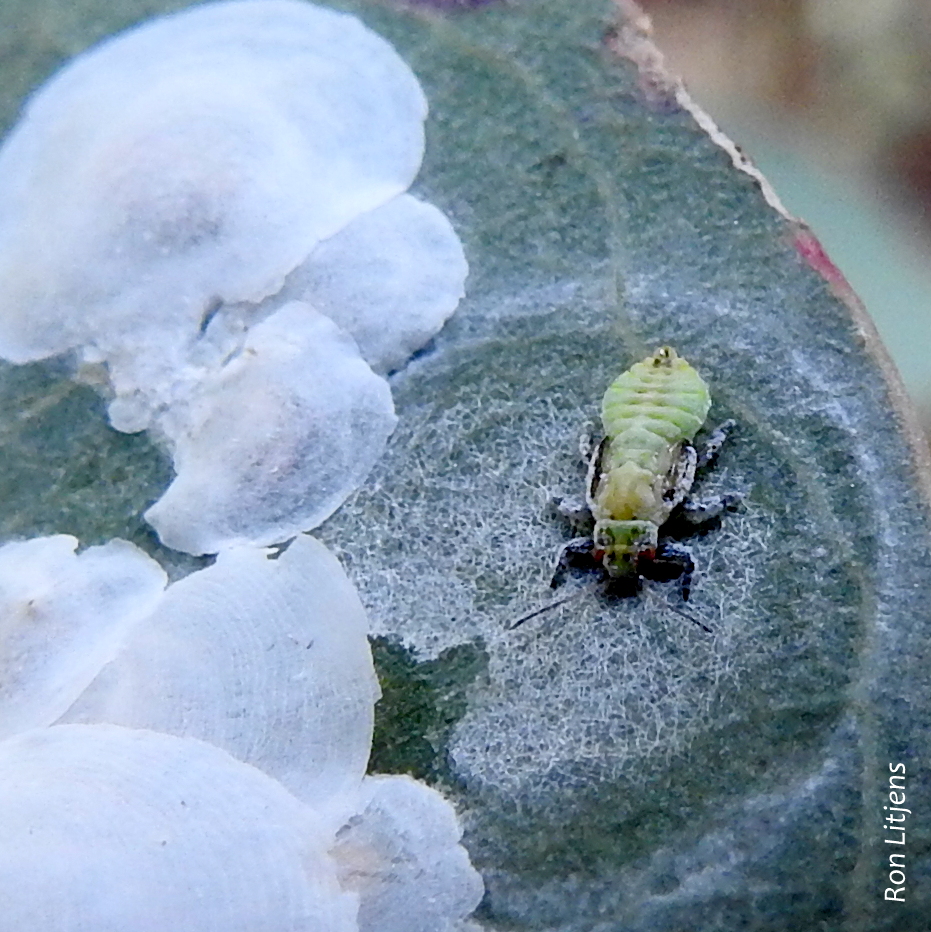 While on a bird survey with the Murrindindi Birdwatchers last weekend we found a grove of Red Box supporting a large population of White Clam Psyllids (Hyalinaspis sp.). If you look carefully in the photo above you can just make out the nymph underneath the lerp. The White Clam Lerp presents as a white, flat structure and although there were many of them the trees and their leaves did not seem to be affected.
Peeling back the lerp revealed the psyllid nymph underneath (pictured right). It didn’t harm the nymph but there is a spot of house reconstruction needed!




 Focus On Fauna