A Grey Fan-tale
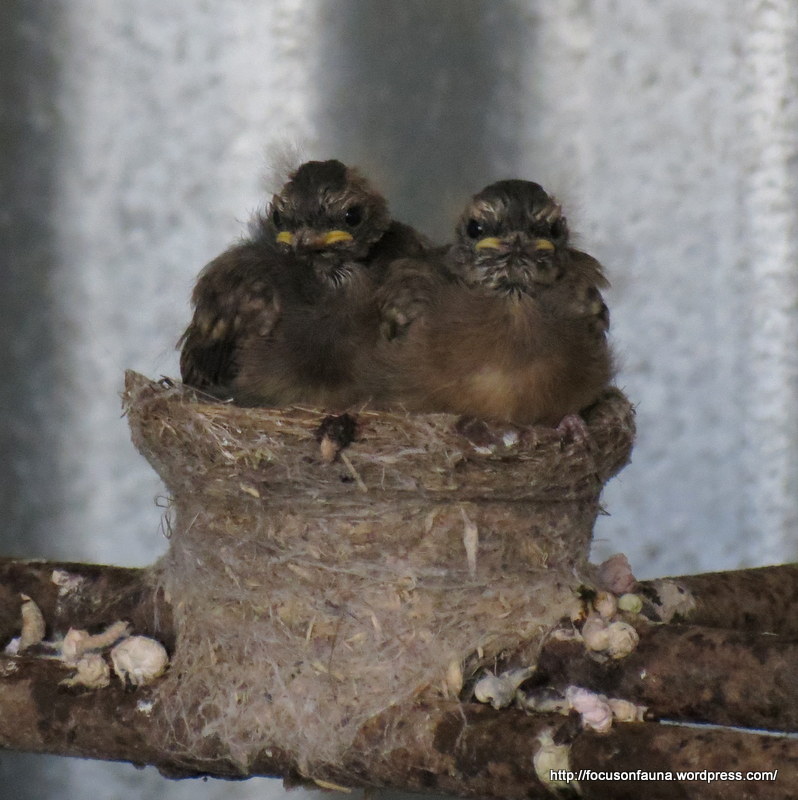 A previous post in November showed a Grey Fantail nest with a single egg. This nest was subsequently abandoned, we suspect due to either storm damage or the constant presence of a Grey Currawong. Not to be deterred, a week later the same pair of Grey Fantails started to build a nest in the corner of our large farm shed, on an old wool-pack frame. Interestingly, the nest did not have the usual ‘tail’ of a Grey Fantail’s nest, probably because it was built to span two parallel bars, rather than being built on and around a single thin branch. The normal nest is described as being like ‘a wine-glass without a base’.
The birds were completely unconcerned by humans and vehicles coming and going, which allowed us to set up a tripod and camera just a few metres from the nest, and record over several weeks various stages of breeding, from nest-building, incubating, hatching, feeding, right through to fledging.
A selection of photos is shown in the slideshow below.
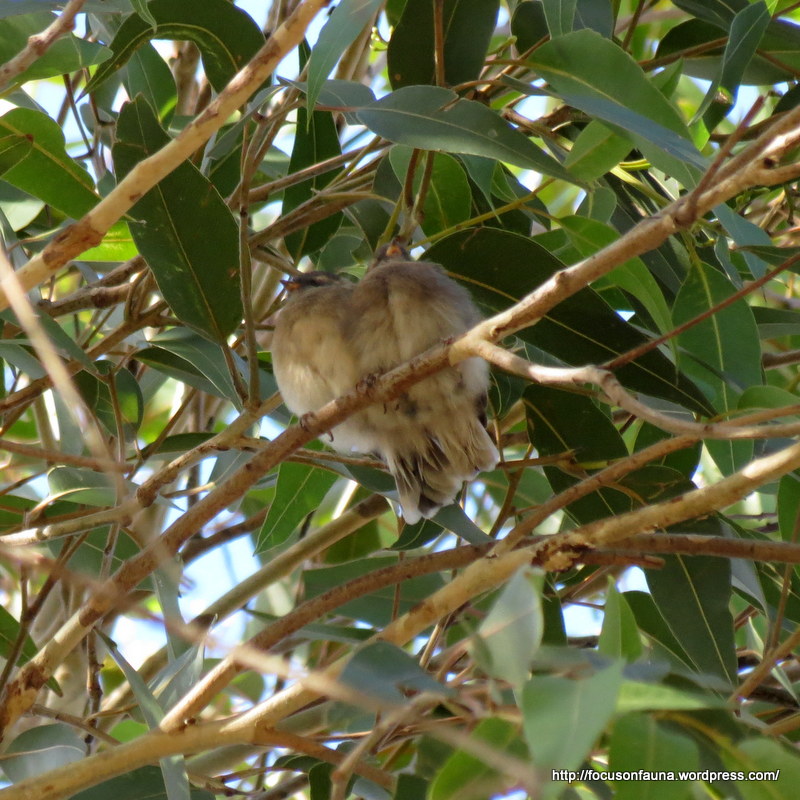
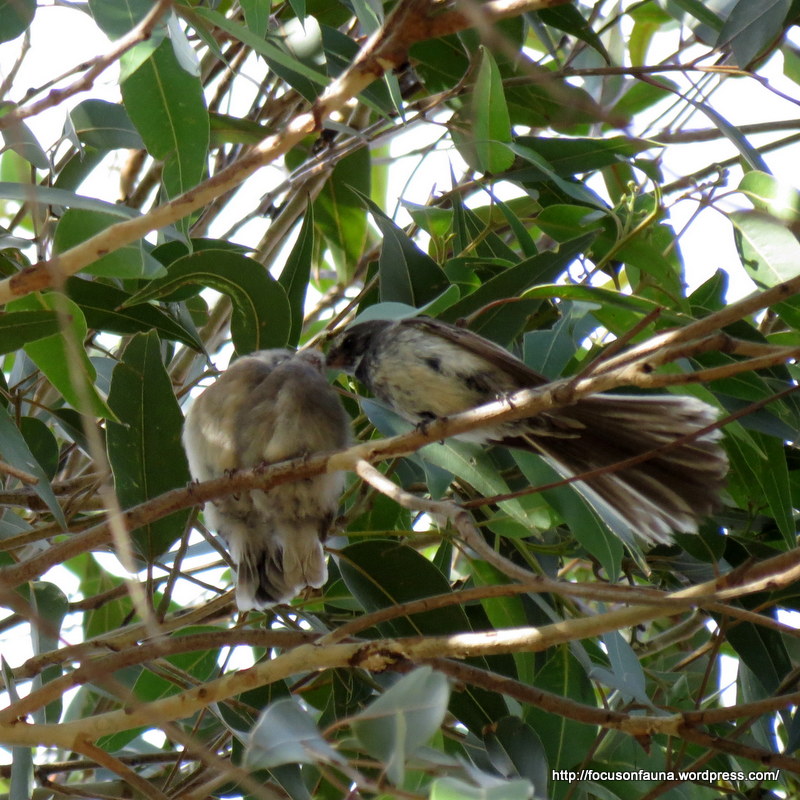
After the fledgelings left the shed we lost track of them for a couple of days and feared for their survival, with strong winds and high temperatures and the everpresent threat of predation by butcherbirds, currawongs, kookaburras and ravens. But late yesterday we were delighted to locate them together in the branches of a nearby eucalypt and watched as they were being regularly fed by the adults. A happy ending to the tale!?
Young Plumage II
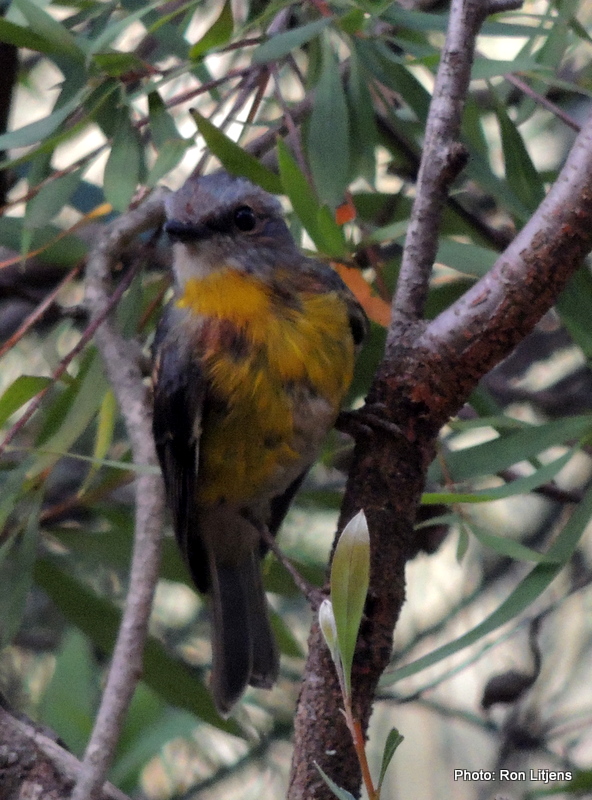 A recent post described the marked difference in the plumage of immature or juvenile birds compared to the adults. For the past few weeks I have been spending some time in the ‘play-pen’ – a tumbled-down thicket of wattles and hakeas that seems to be the favoured hang-out of young birds of a variety of species awaiting the return of their parent bearing food. For some birds such as the Eastern Yellow Robin (Eopsaltria australis), pictured left, the immature bird looks just like the grown up, only more ‘manky’. The loss of a few more of those grey chest feathers and the bird pictured will almost look like a grown up.
 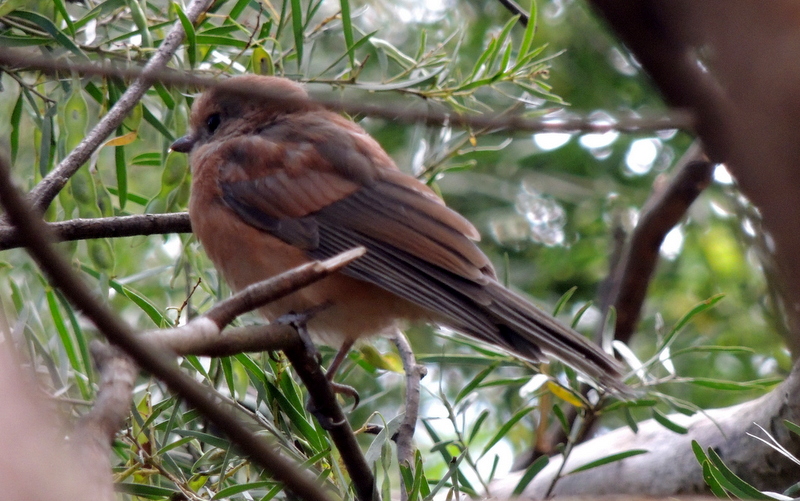 What was harder to pick (for me at least) was the identity of the chick pictured right. As ever, our local birdos Dave and Geoff came to the rescue with the answer (the same one in fact) – a juvenile Golden Whistler (Pachycephala pectoralis). The terms juvenile and immature are important in Golden Whistlers because the juvenile bird sheds its brown feathers for grey as it transitions to immature.
 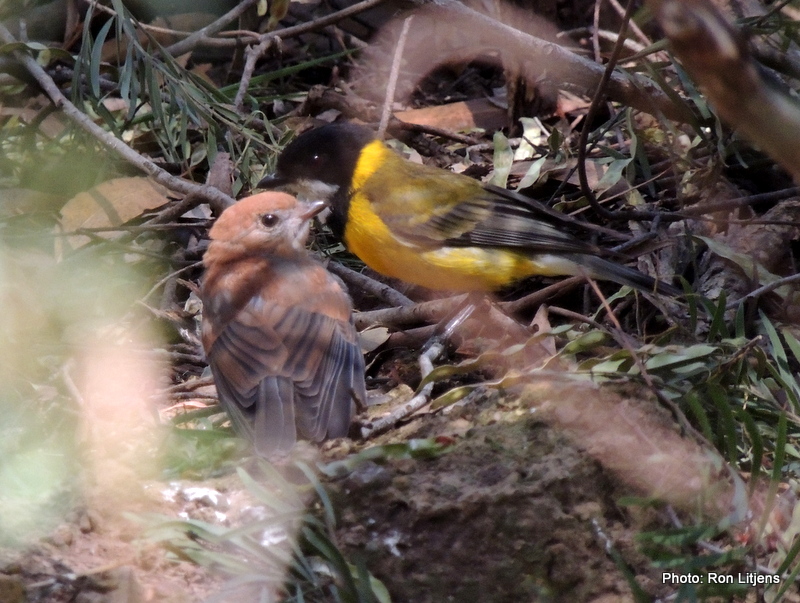 As the picture to the left shows I should have waited for the parent to show up to identify the chick.
Furry huddles
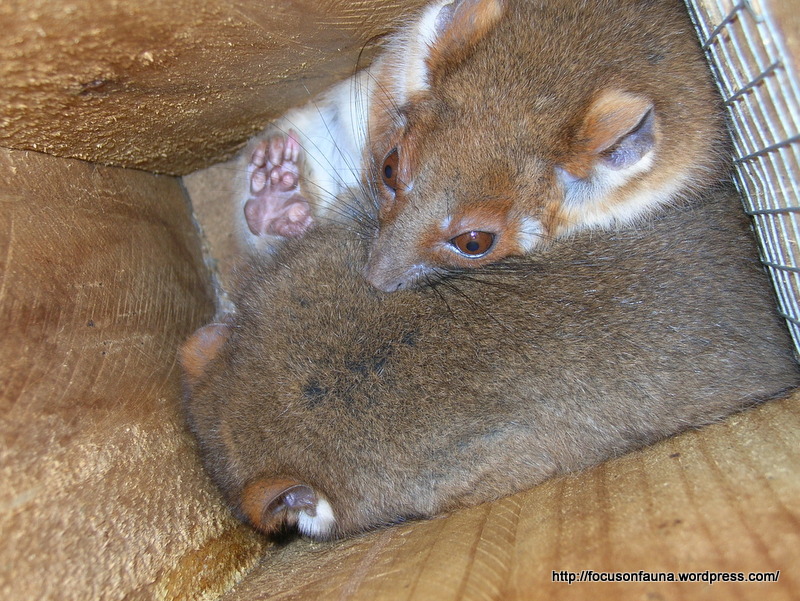 As a contrast to Ronlit’s recent fascinating posts on wasps and spiders, we thought we’d show a few cute and furry nocturnal mammals, and a check of local nest-boxes during the daylight hours is usually a sure way of finding some. The pair of Common Ringtail Possums (Pseudocheirus peregrinus) pictured at left was a nice example.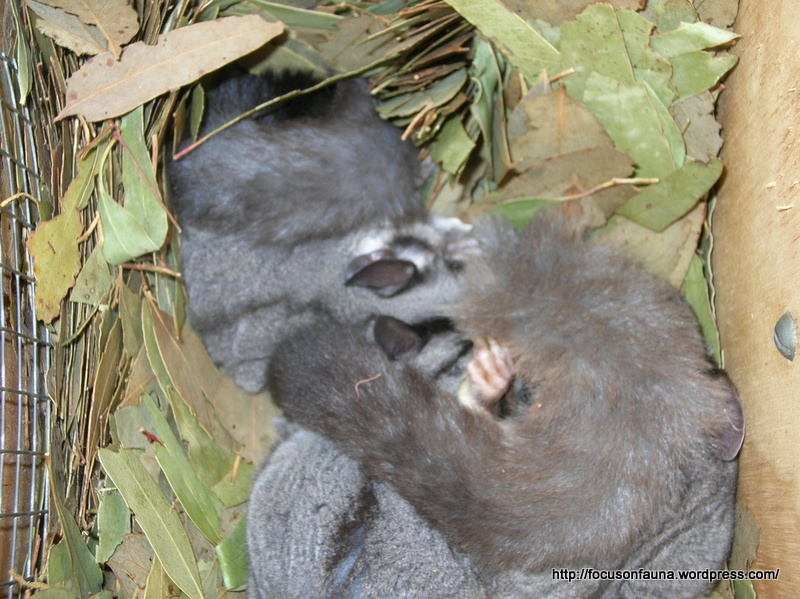
With a bit of care and caution it is usually possible to lift the lid, inspect the box and take a digital camera photo with minimal disturbance to the occupant(s), as was the case with this cluster of Sugar Gliders (Pretaurus breviceps) at right, all of whom remained fast asleep! It is interesting that these animals still huddle together despite the summer heat. It must get pretty hot in the boxes so we generally try to mount them facing east to be in shade most of the day.
A specialised nest-box camera mounted on a pole can be inserted in the entrance hole and eliminate the need for a ladder. This is generally less intrusive than physically inspecting the nest-box, but the image quality is poorer – see the photo at left of another group of Sugar Gliders.
Come on. Give us a hug.
 Spiders have not featured regularly in this blog. If they have, the post has been accompanied by dire warnings of the images to follow (click HERE). The truth is though, that most spiders in Australia are not poisonous to humans and are beneficial because they remove (eat) pests such as flies and mosquitoes. Some spiders are even really pretty.
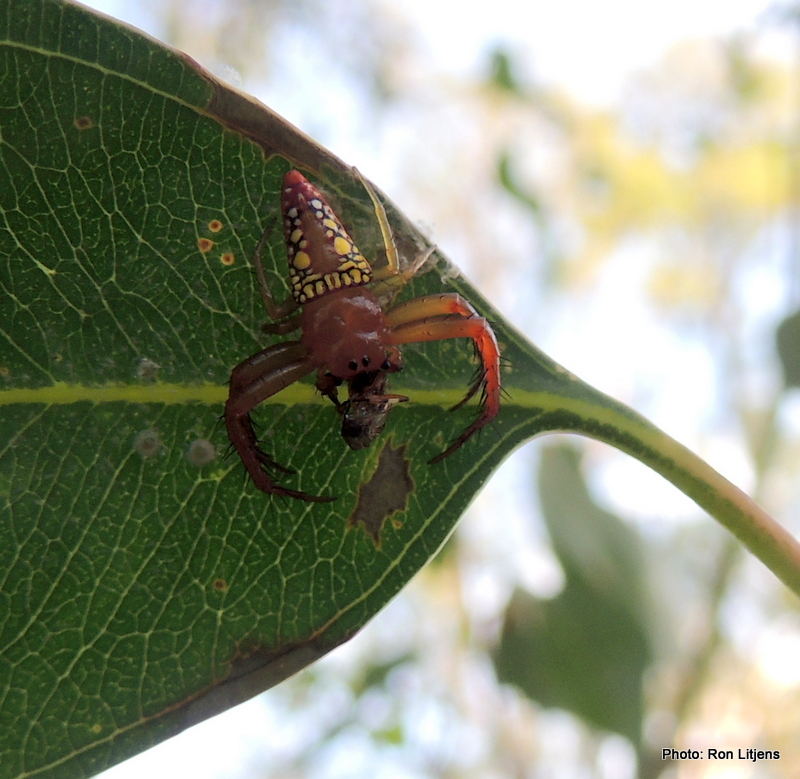
 A case in point is the Triangular Spider (Arkys lancearius) pictured above. Named because of its triangular-shaped abdomen, many spiders of this genus are brightly coloured with patterns of red, white and yellow dots.
These spiders do not make webs. They are ambush hunters, preying on small insects and flies, which they catch by sitting
Gottcha!
motionless on a leaf with their front two pairs of legs extended and grabbing their victims when they fly past.
How could you not love a creature with such a welcoming embrace?
A Potter Wasp’s Guide to Child-rearing
During the last Total Fire Ban day I was looking out of the bedroom window at the distant heat haze when an Orange Potter Wasp (Eumenes latreilli) commenced building its nest on the ledge outside. As it was 40+ degrees Celsius outside, watching the wasp’s efforts from the relatively cooler space inside my house seemed a cruisey way for me to spend the afternoon. It struck me that Potter Wasps have whittled child-rearing down to four simple steps, and have it all done and dusted within an afternoon.
 Step 1. Build the nursery.
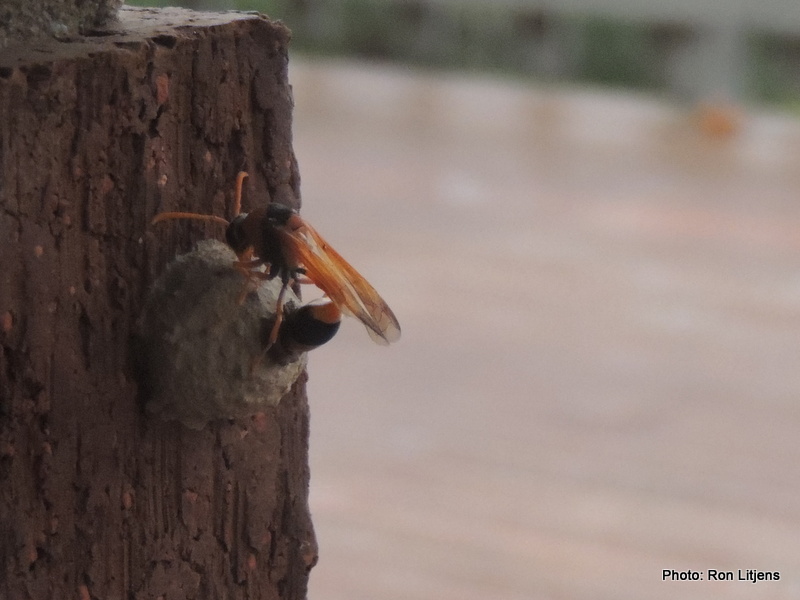
Over a two and a half hour period the wasp flew several times to the nearest mud source (probably our dam) and came back each time with a ball of mud clutched between the front pair of legs (pictured left). On nearing the nest it gripped the rim of the nest with its middle pair of legs to settle and using its jaws proceeded to mould the mud into shape, extending the size of the nursery.
 Step 2. Lay eggs in nursery
After the eleventh delivery of mud the nest was complete apart from a small opening at the front. The wasp then took about two minutes to lay egg/s in the structure (pictured right).
Step 3. Stock nursery with food.
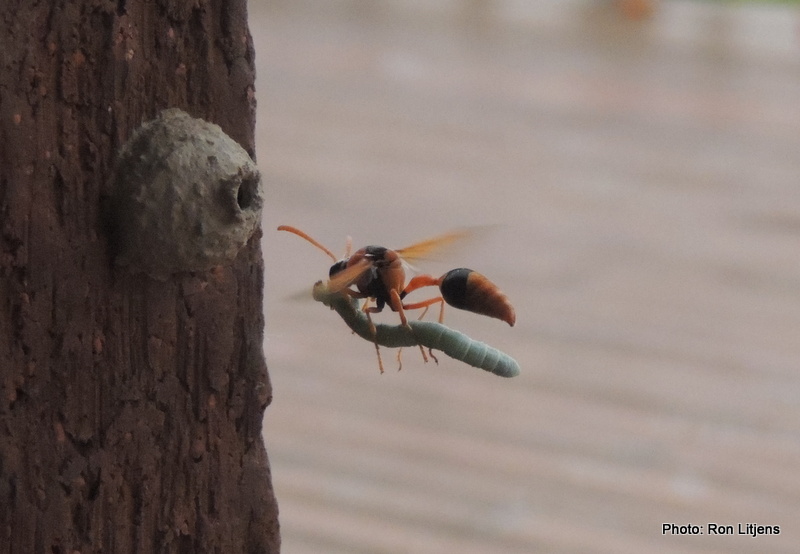
Potter Wasps use paralysed butterfly or moth caterpillars as the food of choice for the larvae when they hatch. During the next hour, three caterpillars were placed in the nest (pictured below).
 Step 4. Seal nursery with mud and start again.
Unfortunately this step never happened. After three caterpillars had been placed into the nest the wasp left and never returned. I suspected the hunter had become the hunted. Then three days later the nest was sealed. I don’t know whether the same wasp came back to finish the job or whether another Potter Wasp opportunistically did. Maybe it was a Cuckoo Wasp. I’ll have to watch what emerges.
Another reason to sit inside this summer looking out the window!
Splish, splash too
Following up on the recent post Splish, splash …, it is not just the birds that appreciate bird-baths in this hot weather – mammals and reptiles will readily take to them as well.
Chris Cobern, a coordinator with the Upper Goulburn Landcare Network, has recently recorded a Short-beaked Echidna and a Red-bellied Black Snake on remote camera at Kinglake West.
We currently have a Sugar Glider that frequents one of our bird-baths, and phascogales, possums and antechinuses have previously been shown at baths on this blog.
Also, Lesley commented on the Splish, splash … post that, as well as a wide array of birds visiting her baths, she has a Blue-tongue Lizard that likes to lie in a bird-bath on the ground in her garden near Seymour.


What’s the buzz?
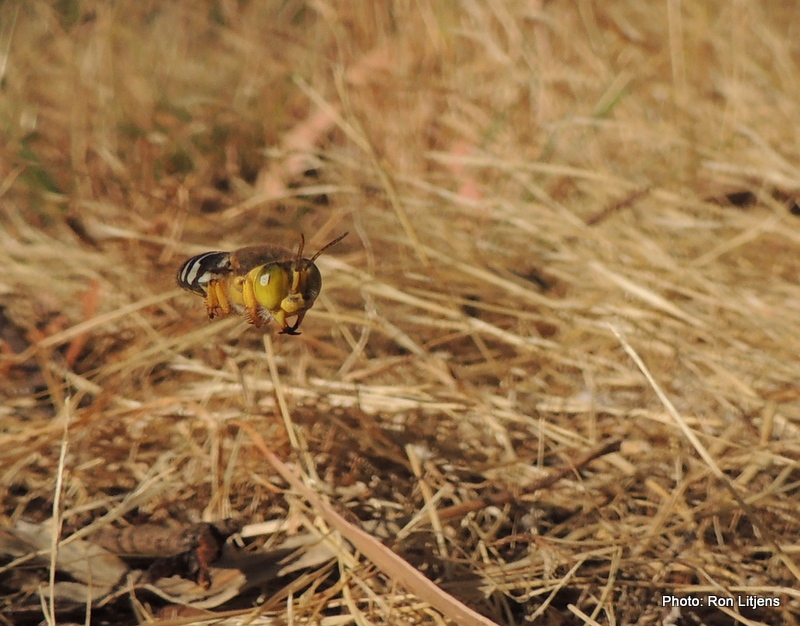 Summer brings with it the familiar drone of insects. Earlier this week an unfamiliar humming sound brought my attention to a group of insects hovering low to the ground over a patch of sand. They looked like a cross between bees and large blowflies and turned out to be Sand Wasps, pictured left (click to enlarge).
Sand Wasps (Bembix sp.) are a genus of solitary hunting wasps found throughout Australia. They are characterised by large mandibles which the female uses to dig tunnels and catch prey. The adult insects are nectar feeders. The female wasp can deliver a painful sting but these wasps are not aggressive when disturbed.
 During breeding season the female wasp will dig short tunnels in the sand using its large mandibles and legs (picture right). In this burrow it will lay an egg and subsequently will hunt for flies, catching them on the wing and paralysing them. The flies are deposited in the burrows and the hatched larvae feed on them. The burrow is sealed to prevent intruders eating either the flies or the larvae. A group of sand wasps may build a series of burrows close together but there is no cooperation between them.
 I noticed several things while watching the activity. The sand obviously has to be the right consistency to build a tunnel. In many cases the sand collapsed into the tunnel as quickly as it was being excavated and a new tunnel had to be started again where the sand was more solid. Secondly, the wasps seemed to fly around in pairs and while one wasp landed to commence digging the other maintained a hovering vigil above. The photo to the left shows one wasp digging with a second wasp hovering above.
I know which job I would ‘bags’.
Splish, splash …
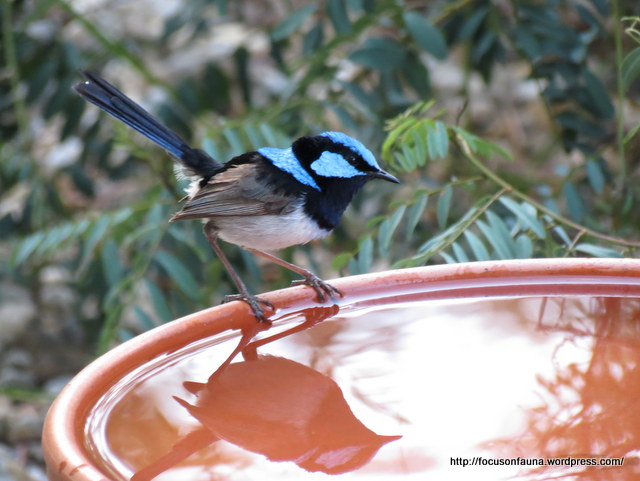
Male Superb Fairy-wren
For a better look, click on any of the photos below and then scroll through using the side arrows.


What birds tweet each other #1
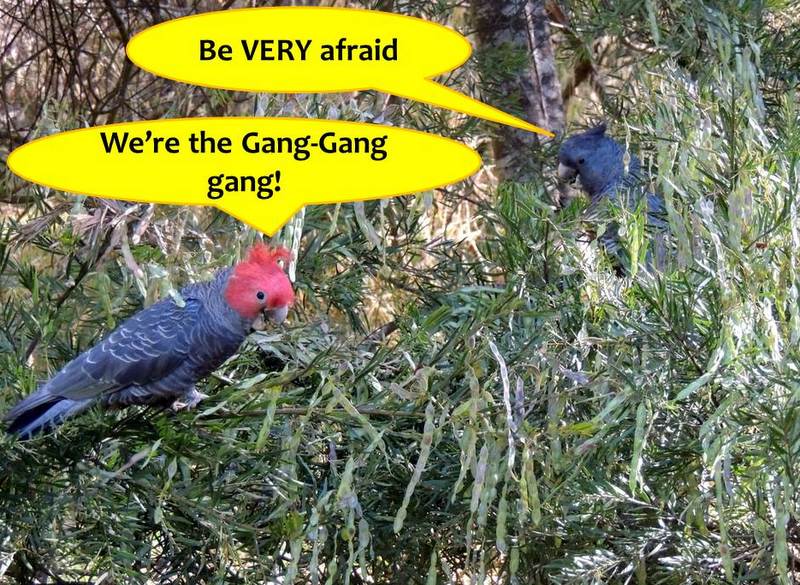
Gang-gang Cockatoo (Callocephalon fimbriatum), male (left), female (right)
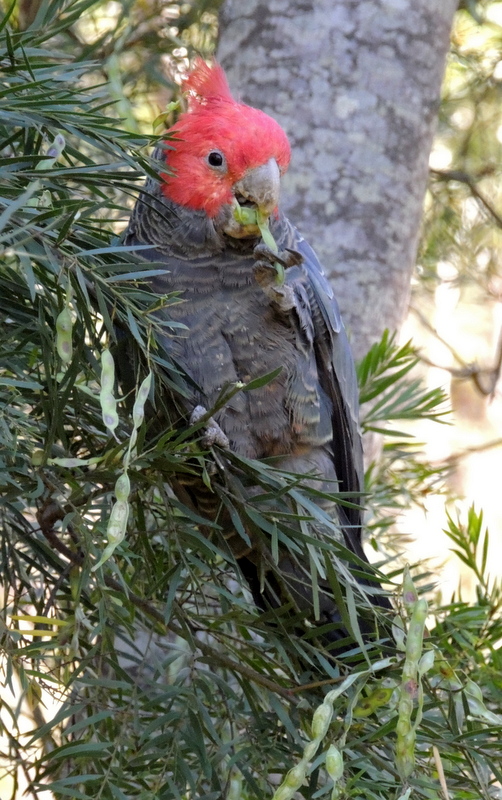
Mister

Missus
Young plumage

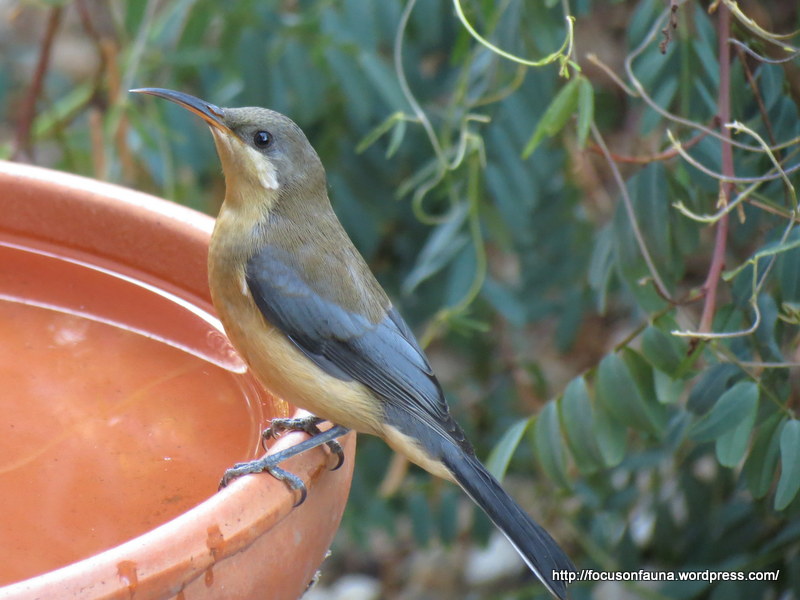
 At this time of year, there are plenty of juvenile and immature birds around, some of which have plumage that differs quite markedly from that of their parents. An example is seen at left, which could qualify for a “name the mystery bird” competition because of its unfamiliar colouring. Its identity is only revealed in profile (see photo below) when its unmistakable fine-curved bill is seen.
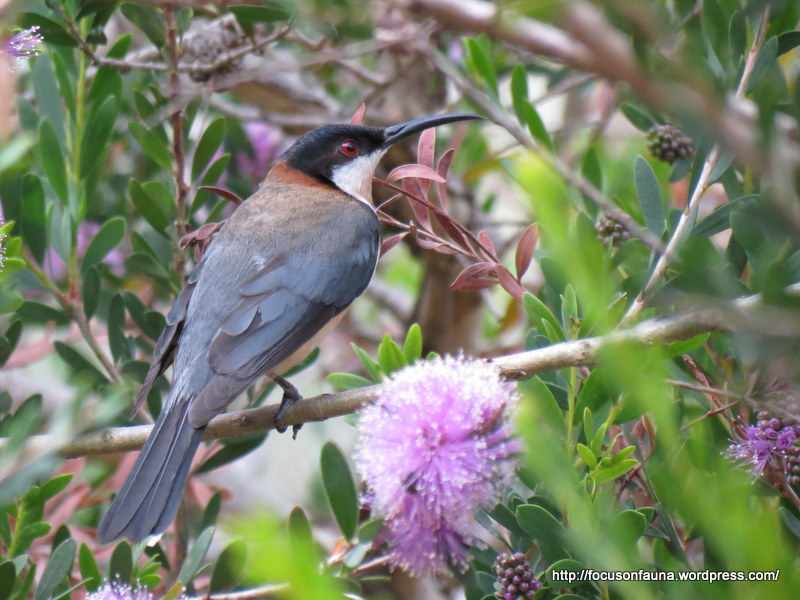
It is an immature Eastern Spinebill, which lacks the white throat and chestnut “bib”, flanked by a black crescent, of the adult birds. The photo below is of an adult male – the female has a grey crown instead of black. Click on any of the photos for a close-up look.
The Eastern Spinebill is one of the commonest and most colourful honeyeaters of this district.
In surveys conducted as part of the Strath Creek Biodiversity Project, its frequency of occurrence was only exceeded by Red Wattlebird and Yellow-faced Honeyeater.
It seems to be constantly active, darting around, hovering and probing flowers with its long bill and tongue.
It is also noisy, not only vocally (click on audio below) but with its clip-clop sounding wing-beats as well.




 Focus On Fauna