Percy gets raided
 I know them as Bull Ants, or Percy Bull Ants, to borrow the name of a character from the Dorothy Wall Australian classic Blinky Bill but they go by a variety of names. At the bottom of a recently excavated echidna digging I found several bull ants hefting huge chunks of gravel in their jaws, obviously trying to put some order to the recent devastation and rebuild their house.
All but one species of Bull Ant of the genus Myrmecia are found in Australia. They are aggressive hunters with excellent eyesight. Many a time I have been bailed up by soldier ants 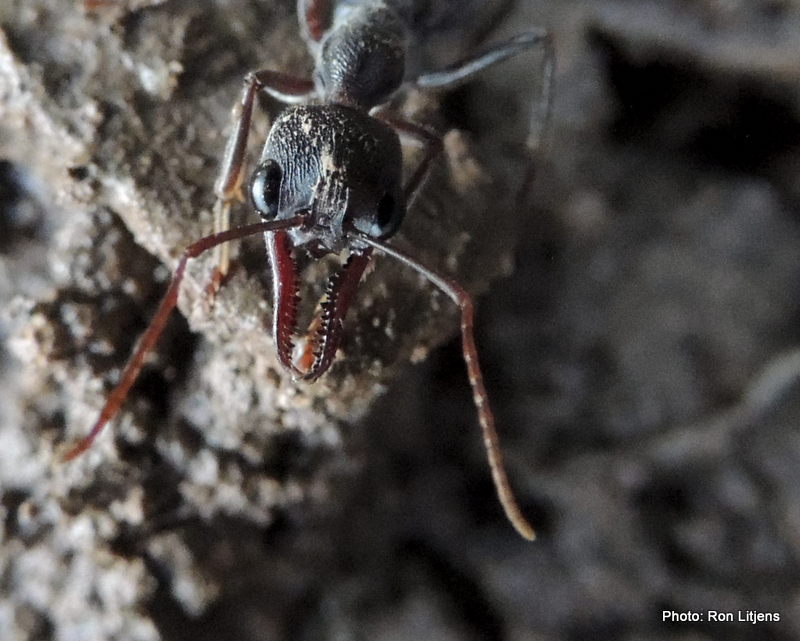 guarding the entrance to their nest. The enormous jaws (pictured right) are not the primary weapon of defence: it is the sting in the tail. The ants use their large jaws to grasp their prey or their tormentors (as I found out when I was younger) which then enables them to curl their abdomen and deliver the sting. These ants will attack creatures far greater in size than themselves. Last summer I observed bull ants driving off an echidna intent on digging up their nest. Bull ants’ greatest enemies are several species of smaller ants, which make up in numbers what they lack in size.
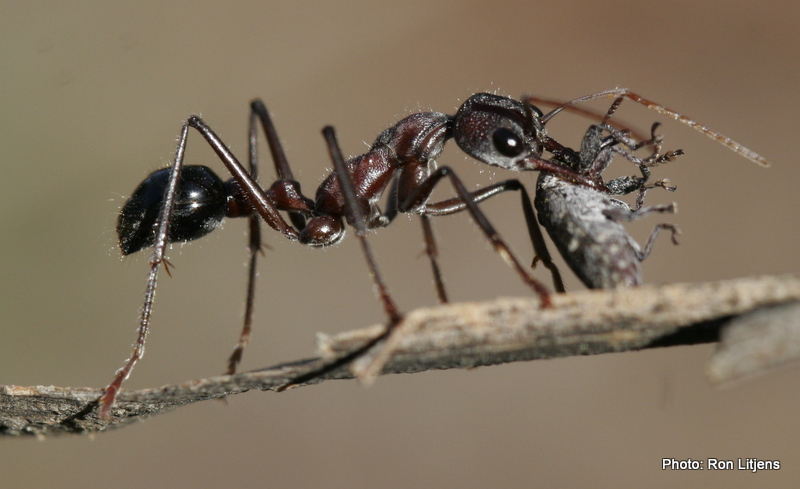
Anyone here order bug?
Despite their formidable appearance the adult insect feeds mainly on nectar, seeds, fungi and honeydew excreted by insects such as leaf hoppers and scale insects. The larvae are carnivores. Worker ants are sent out to forage and bring prey back into the nest for them to eat. Sort of like home delivery.
Things that go thump – in the day
 We live in a house perched at the head of a valley. This affords us views of the distant mountains and the upcoming weather. Most of the walls are glass. From one side of the house you can see out through the other side. The problem is that birds see the same thing – but not the glass. Sometimes they hit the glass with that sickening thump we have come to dread.

Beautiful plumage (not a Norwegian Blue)
Feathered torpedoes like the Crimson Rosella (Platycercus elegans) seem robust enough to survive the impact. They are generally dazed but are off and flying within a minute or so. Others such as members of the cuckoo family are usually killed instantly.
After the latest thump we found a male Golden Whistler (Pachycephala pectoralis) lying on the deck. As it was still alive, I picked it up to keep it warm (I’m not sure if that’s what you’re supposed to do).
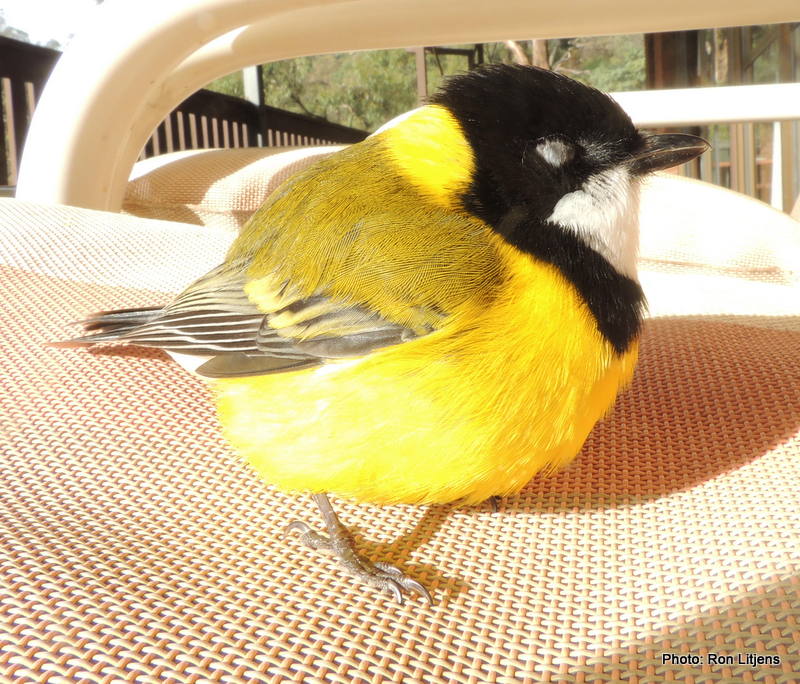
Upsy-daisy!
Golden Whistlers, particularly the males, are a handsome bird (see picture above) with a melodious call – hence their name. They are hard to see or photograph because they spend their time flitting high in the treetops. This accident gave me a rare chance to appreciate one up close.
In my hand the bird closed its eyes and clenched its feet. Fearing the worst I kept holding it and after about half an hour it opened its eyes, one at a time, and struggled upright. I left it sitting on one of the outdoor deck chairs.
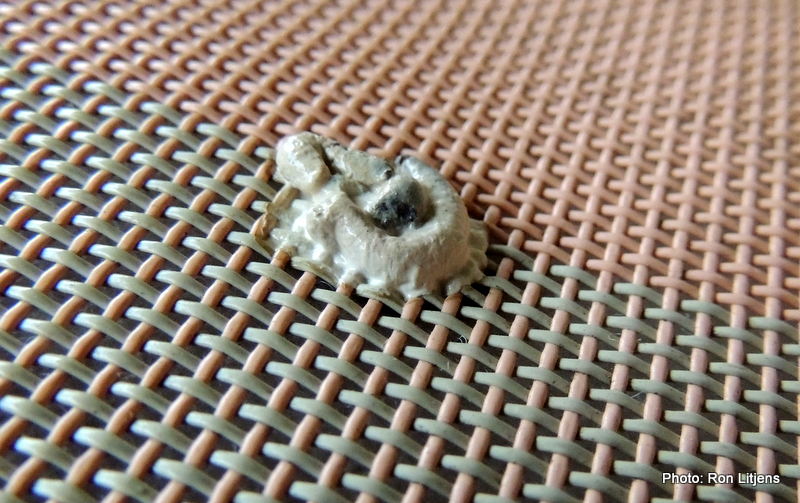
Thanks
Thankfully, three hours later it was gone leaving nothing but an artfully arranged poo. It must have mistakenly thought it was sitting on the ‘throne’ and left the deposit either in thanks or in disgust. A happy ending, but we wait with dread for the next thump.
Motto: People in glass houses should not stow thrones.
Tales from the woodpile #4
 Well, it is that time of the year again. The mercury has plummeted to single digits overnight (almost hitting zero already) and regular pilgrimages to the woodpile begin for another year. Last year we discovered a whole range of critters in the woodpile when splitting logs. This year is no different.
Last year Ms Bark Cockroach (Laxta granicollis) was found hiding in the narrow splits in the logs and featured on this blog. This year Mr Bark Cockroach (pictured above) has put in an appearance. The male is just as flat but the obvious difference is that it has wings.
 Interestingly, the logs are now the substrate for many species of fungi. This mushroom (Mycena sp.) growing out of a Long-leaved Box (Eucalyptus goniocalyx) log was covered in six-legged invertebrates known as Springtails (click on the photo right for a larger image). Last month we featured an article on grey aquatic Springtails that spend their lives on or in water – in particular in the bucket of rainwater beneath our eaves. These red mushroom dwellers are terrestrial Springtails. There are several species of springtails that are red. To tell them apart, you have to check out the length of the legs and antennae and the configuration of the body segments. But by the time I had raced back to the house, picked up the microscope and raced back, the springtails had moved on.
I can’t wait to see what the woodpile turns up next week.
Rosella repast
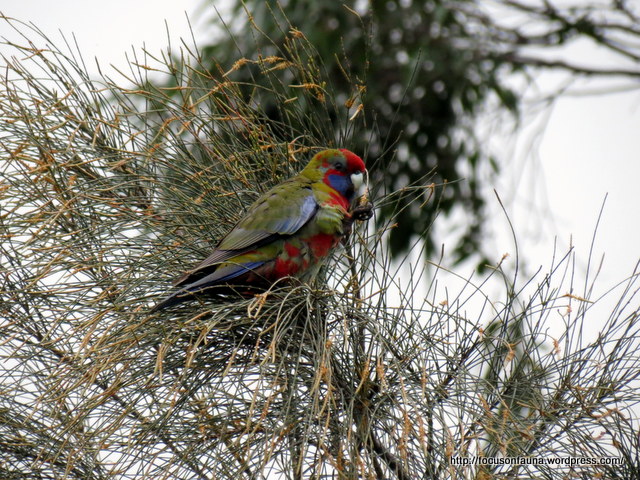 One of the more abundant and ubiquitous birds around this district at present is the Crimson Rosella, with many small, and some not so small, flocks roaming around in search of winter food. With introduced fruit trees and vines now bare, they resort to a range of native tucker. It is fascinating to watch them eating seed from Callistemon and Melaleuca shrubs, holding small branchlets in one claw and nibbling at the woody seed capsules like corn on the cob. We also observed a couple of richly coloured adult birds spending ages delicately feeding on Yellow Box, Eucalyptus melliodora, seed. All these seeds are extremely fine (up to 400 per gram for Yellow Box) and lengthy periods of feeding are required for birds the size of rosellas to get a decent feed – the ripe seeds are presumably highly nutritious to make it worthwhile for them.
The few local indigenous plants flowering at present also attract Crimson Rosellas, who can devastate isolated specimens, such as the Common Correa, Correa reflexa, pictured below in our garden. A Drooping She-oak, Allocasuarina verticillata, has been a target, with 13 of the rosellas counted in the small tree the other day.


See also a recent post by Ronlit on Crimson Rosellas: Manky and moth-eaten.
What’s black and red with a potent attack?
Essendon? You are kidding — not since Matty Lloyd. It’s the Redback Spider (Latrodectus hasseltii).
 I grew up in Ringwood on a half-acre block through which flowed the Mullum Mullum Creek. My childhood was spent racing through the creek-side bush collecting bugs. In those days I was warned of only two dangers – snakes and Redback Spiders. The latter inhabited our outside toilet (in the days when you had outside toilets). I had not thought about Redbacks for 30 years or more until last Saturday when I opened up our water pump housing and met one eye-to-eyes.

Messy, messy, messy
Redbacks, closely related to the Black Widow spider of North America, are so called because the female spider is glossy black with a red stripe down the back and a red hour-glass shape underneath the abdomen (see picture above). The male is smaller and brown. They build ‘messy’ webs in quiet and dark places. Another reason for wearing gloves when gardening! White egg sacs are often suspended in the web, pictured right.
The venom is neurotoxic and though dangerous to humans, of the hundreds of bites reported every year there have been no reported human deaths since the anti-venom was developed. You are in more danger of dying if you are the male spider. During mating the male offers itself for sacrifice and is consumed by the female. This act is thought to increase the chances of his genes being propagated by prolonging the act of copulation (it takes longer to eat and mate at the same time).
As I am thinking of the past I am going to complete my nostalgic tour by searching through my cassette collection for the album Welcome to my Nightmare by Alice Cooper, Track 3: The Black Widow. Oh to be young again.
New focus on flora and fungi
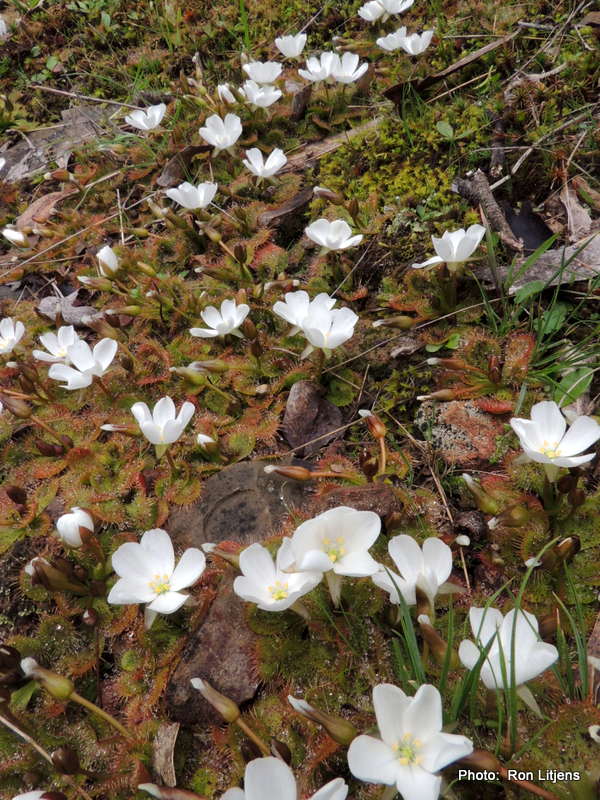
Scented Sundew, Drosera whittakeri
When the Focus on Fauna project was conceived by the Upper Goulburn Landcare Network coordinator Bertram Lobert back in late 2010, it was envisaged that monitoring of post-fire flora (and fungi) recovery would also form a part, albeit a minor part, of the project. However, once we had come up with the catchy title of Focus on Fauna (Focus on Fauna, Flora and Fungi seemed a bit long-winded!), the flora/fungi side seemed to take a back seat, and the project concentrated mainly on fauna, as does this continuing blog.
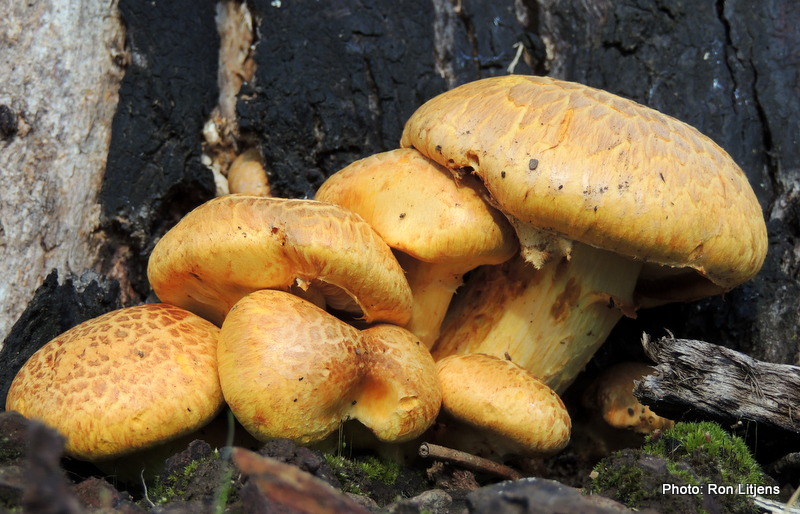
Spectacular Rustgill, Gymnopilus junonius
However, regular blogger on this site, Ronlit, has now started his own blog which should fill the gap. Titled Focus on flora and fungi, the blog will cover species found in the local area, including his bush block just east of Flowerdale on Junction Hill.
The local Flowerdale-Strath Creek area will now have at least four nature websites/blogs running: Focus on Fauna, Strath Creek Biodiversity Project, King Parrot Creek Environment Group and Focus on flora and fungi– all with their own individual character. And the beauty of the internet is that they are only a click away – see the right-hand sidebar for the respective links. As well as his own new blog, Ronlit will continue to post snippets about fauna for Focus on Fauna.
Endangered or elusive?
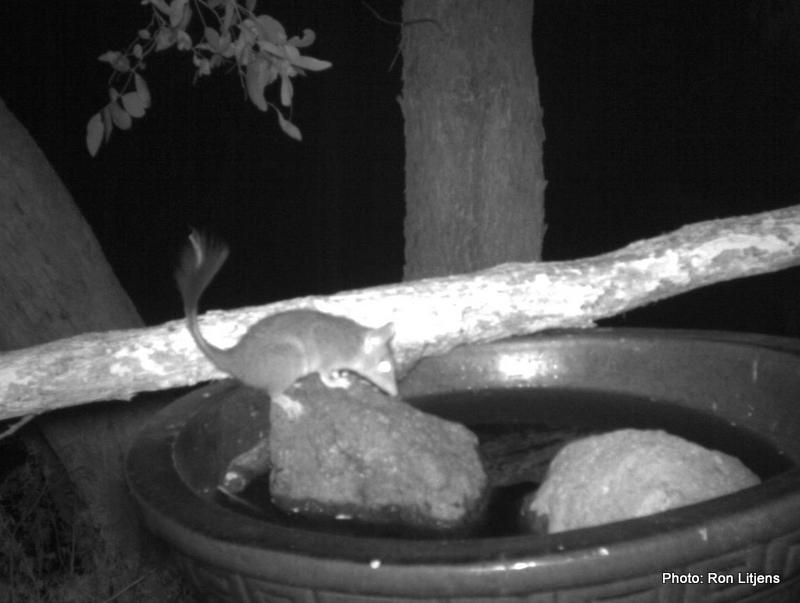
Stumpy looking for a re-tail store
When we arrived in Flowerdale the Brush-tailed Phascogale (Phascogale tapoatafa) had mythical status, sort of like a Bunyip. Published reports variously classified it as rare, threatened or vulnerable. Indeed bushfires, the loss and fragmentation of its forest habitat and its unusual breeding cycle mean it is a ‘species in decline’. After the ’09 fires we installed a remote sensing camera on our birdbath and were thrilled when we photographed one of these critters having a drink (click HERE to view). We considered ourselves lucky to have seen it.
 However, in recent times up to three or four phascogales are turning up at our birdbath on a nightly basis. They can be identified individually by their physical differences. Take ‘Stumpy’ for example, pictured above. Presumably an altercation with another phascogale has left it with a defect on the very feature that provides its name.
.
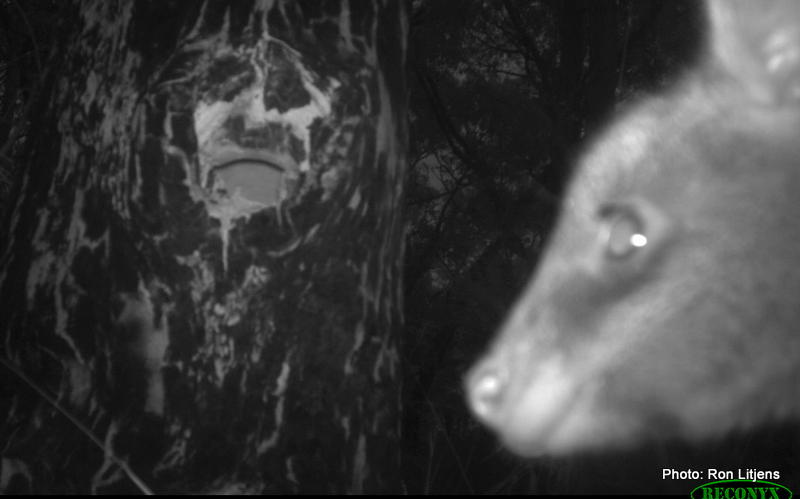
 A couple of week ago we discovered an unusual looking opening in the trunk of a Long-leaved Box (Eucalyptus goniocalyx). The cavity behind the entrance extended upwards so we guessed it was not the home of a possum or phascogale but could be the possible living quarters of bats. A week of monitoring with the remote camera turned up no bats, only a curious Eastern Grey Kangaroo (Macropus giganteus) joey, pictured above, and, you guessed it, a phascogale, pictured left.
Now, either phascogales are endangered and we have been extremely fortunate to have photographed the one creature in the area on the very tree we were interested in. Or they are as common as rabbits but are elusive, and because they get around at night, rarely seen. The truth probably lies somewhere in the middle … at least in our area.
A visitor from Queensland ?
 This photo was sent in by our regular contributors from “Three Sisters”, Flowerdale, with the question “What is it, worm or leech?” It had us baffled, so it was another case of consult the experts, and the obvious person to ask was Max Campbell, the speaker at the most recent Focus on Fauna presentation on Invertebrates. Max identified the creature as a terrestrial flatworm, or land planarian, and put us in contact with Dr Leigh Winsor, a world authority on flatworms, who confirmed that it was indeed a flatworm, Caenoplana coerulea Moseley, which is in fact a complex of 3 or 4 closely related species, one of which is native to Queensland but has proved to be a great traveller in potted plants, and has turned up in many parts of the world, becoming a pest in some places by seriously depleting earthworm numbers.
Given that the pictured specimen (about 10 cm long) was found in a domestic setting with a predominately exotic garden, it is almost certainly the Queensland species of “Caenoplana coerulea“. It is nocturnal and shelters by day beneath pot plants or pavers, or in cracks in stone walls. It is generally beneficial around the garden and has been reported to be a predator of the introduced pest, the black Portuguese millipede.
Leigh also provided us with a wonderfully informative fact sheet which can be viewed by clicking on INFOSHEET Terrestrial Flatworms.
Six legs and not an insect in sight
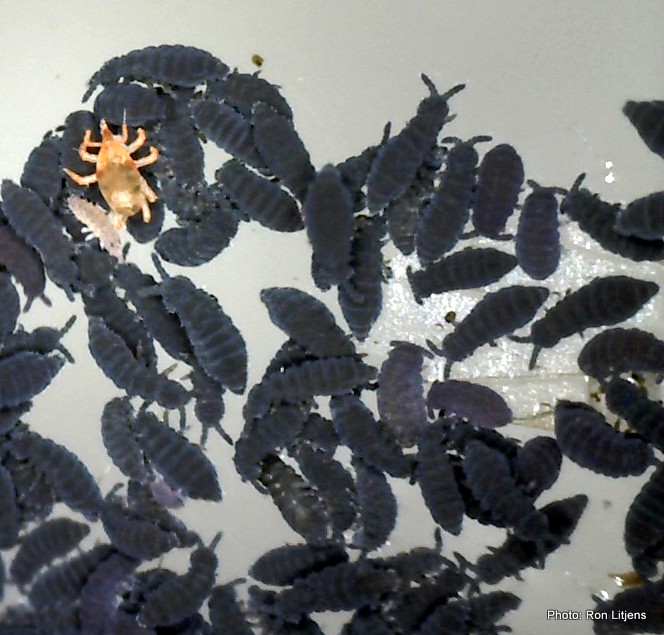
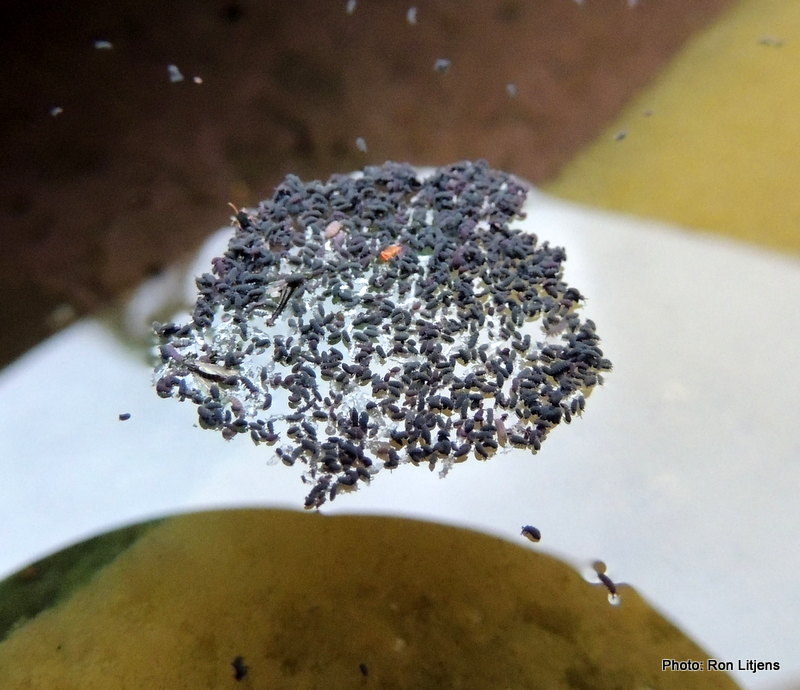 During winter we place buckets around our backyard to collect the rain. The water collected is used to top up the bird bath and fill the ‘bushfire-ready’ wheelie bins around the house in preparation for the next fire season. If the buckets are left for a few days the water surface becomes populated with a writhing mass of grey bugs (see picture left). In close up (pictured below) these creatures have six legs. For the last three weeks I have been poring over my insect books trying to identify them, to no avail.
.
Springtails and their mitey friend
But on Friday night at the Focus on Fauna talk entitled Leaf Litter Invertebrates a photo of the very same animal was shown. And they are not insects at all (despite the six legs). They are commonly known as Springtails, one of the most abundant animals on the planet. From a classification perspective they have been moved from Class Insecta to Class Entognatha because, unlike insects, they have internal mouth-parts.
Springtails are so called because they have an appendage under the body that they can use to fling themselves through the air if threatened. Most springtails are terrestrial, living their lives in the leaf litter and soil. Some spend their lives on the surface of water. The eggs when laid sink to the bottom and when the instars (larvae) hatch, they float to the surface. Sometimes I have seen Springtails hanging out on the water surface with a number of mates including Red Mites. It’s safer to go swimming with friends.
Done it again !
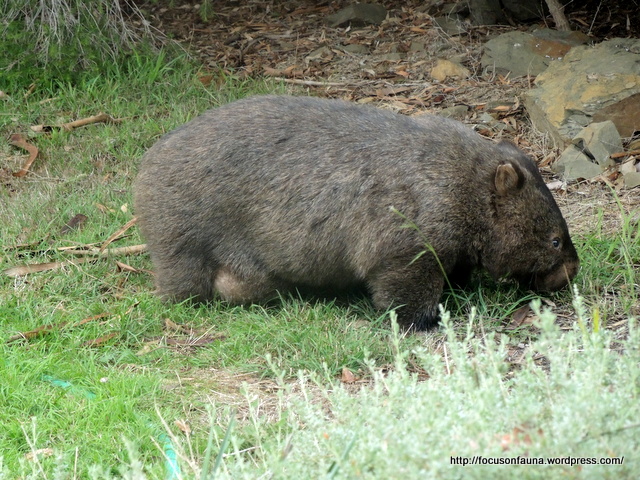 Our resident Common Wombat hadn’t been seen for a while, but she turned up the other day with what is becoming a familiar bulge! When we managed to get close enough, a small pink nose confirmed what we suspected – another youngster in the pouch (see photo below).
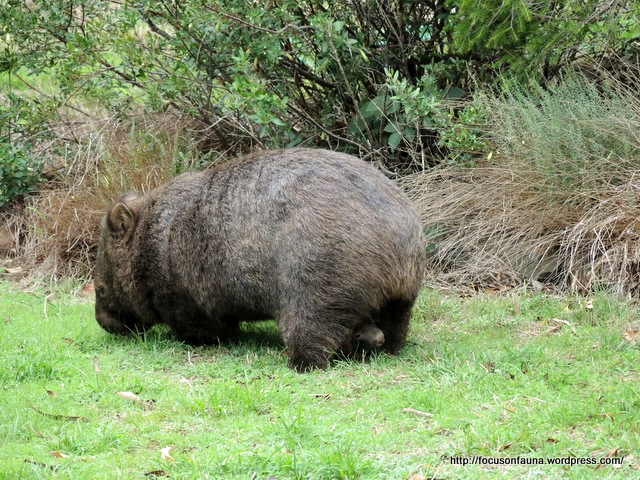
She hasn’t been tagged, nor does she have any obvious identifying marks, but we are fairly sure it is the same wombat we first photographed with young in 2005, and have subsequently recorded with offspring in 2009, 2011, 2013 and now 2014 – fecund indeed!




 Focus On Fauna