Follow the clues
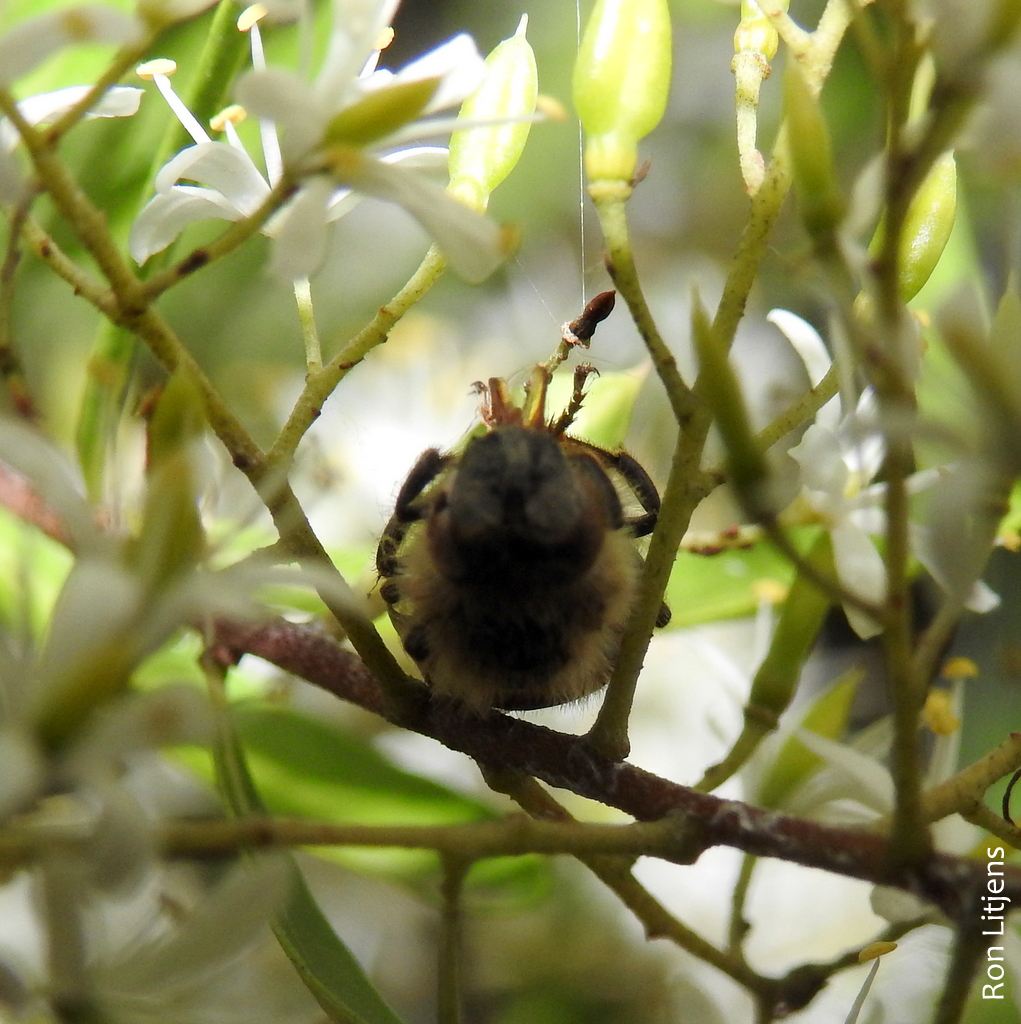
The flowering of the Cassinia has finished. My next go to plant for insect photography is Sweet Bursaria (Bursaria spinosa). Its flowers also attract a whirlwind of insects although of a different kind. There are no Jewel Beetles but Ladybirds abound.
The sighting of a motionless Western Honeybee (Apis mellifera), pictured left can only mean one of two things. Either it is tired and is having a sleep (unlikely) or it is dead having been ambush by a predator. If it is the latter the finger is firmly pointed at a Spectacular Crab Spider (Thomisus spectabilis) as being the perp.
The Spectacular Crab Spider is a noted ambush hunter of bees. It hides amongst flowers until a bee approaches and then pounces and kills it. And it does not just hunt in white flowers. This spider can over time change its colour to yellow to hunt in yellow flowers as well. More than that, as most insect have vision stretching into the ultraviolet the spider can match its UV reflectance with that of the surrounding flowers.
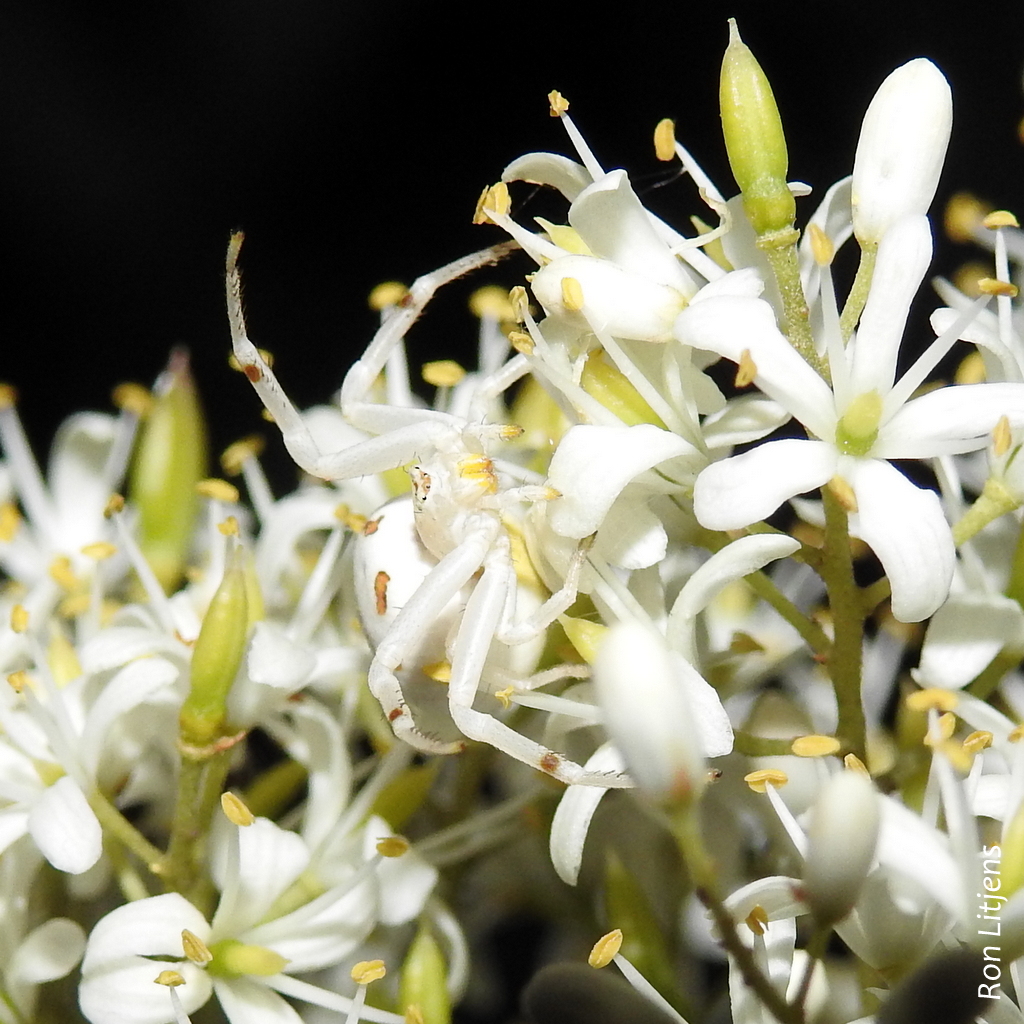
A search of the flowers around the dead bee revealed no lurking spider. But after another 30 minutes of searching the accused was located on another flower bract (pictured above).
I can barely see it. It is lucky I am not a bee.
Jewel Boxes of Nature
Most plants are pollinated by insects so it is not usual to see Western Honey Bees (Apis mellifera) for example visiting their flowers. In some cases however the sheer number of flowers or the amount of pollen and nectar a plant produces creates an environment attracting hundreds of insects. I call these Jewel Boxes because they are attract a diversity of animals. Common Cassinia (Cassinia aculeata) is one of these. At the moment it is covered with all manner of flies, moths, beetles and spiders. Not all these invertebrates are pollinators. To be true pollinators they would need to have hair or combs on the legs with which to first trap pollen and then transport it to the next flower. A lot of these critters are there just to feed.


The most stunning of the visitors are the Jewel Beetles (pictured above). Jewel Beetles are a large family of beetles many of which are noted for their iridescent wing cases. There are about 1200 known species in Australia. The adults feed on nectar but the larvae are wood borers.
The young might be boring but the adults are not.
That’ll be a Cattle Egret
There were no cattle egrets in Australia until the cattle arrived. The cattle egret (Ardea ibis) was native to Africa 150 years ago where it wandered behind elephants and other herbivores. Then it started to turn up in other places – Spain, Southeast Asia, the Caribbean in the late 1800s. In 1940 it appeared in Florida and Texas, and then it arrived in Australia as well. It is a “natural introduction” – nobody brought it here. The first Victorian record is near Lake Colac in 1949.
As the name implies, cattle egrets like to hang around cattle. You see them in the paddocks in conjunction with flocks of domestic cattle where it feeds on small invertebrates, worms, frogs and lizards stirred up by the feet of the moving cattle. It is also not unusual to see the bird on the backs of cattle taking ticks and flies from the hide.

In late Spring the male transforms into its golden-headed form which is quite a striking contrast.

While our other Australian egrets – called rather unimaginatively Great, Intermediate and Little – are not faring so well and are possibly in decline, the Cattle Egret is thriving. We provide them with cows and green grass and that’s all they require.
Not all froth and bubble

Both adult and young Spittlebugs suck the sap of plants. Young nymphs create a protective environment in which to live by excreting the excess water from the sap in the form of a foam, pictured left. The foam serves several purposes. Firstly it creates a moist environment to live in so that the nymphs don’t dehydrate. Secondly the foam acts as a thermally insulative barrier from the outside world and lastly the foam gives the young spittlebugs a place to hide.
.

Not all spittlebugs however live in the froth and bubble. There is a small family of spittlebugs known as Tube Spittlebugs that suck the sap of eucalyptus trees. They extract calcium from the sap and construct a calcareous tube or cone that is attached to the tree, pictured right. The cone is filled with excreted fluid in which the spittlebug lives. The nymph has to leave the cone to moult at which time it creates a temporary foam ‘dressing room’ for itself to change in.
Such modest creatures.
Cute Summer Visitor
Not many people actually get to see the White-throated Gerygone (Gerygone olivacea), but they might hear its beautiful warbling song. Gerygone (pronounced Jer-i-gon-ee) means ‘children of song’ which is highly suitable. Seymour Bushland Park is frequently visited by the Western Gerygone, (which is tiny and completely plain in colour) but the White-throated spreads further through the Highlands to Trawool, Yea Wetlands, and the forests.
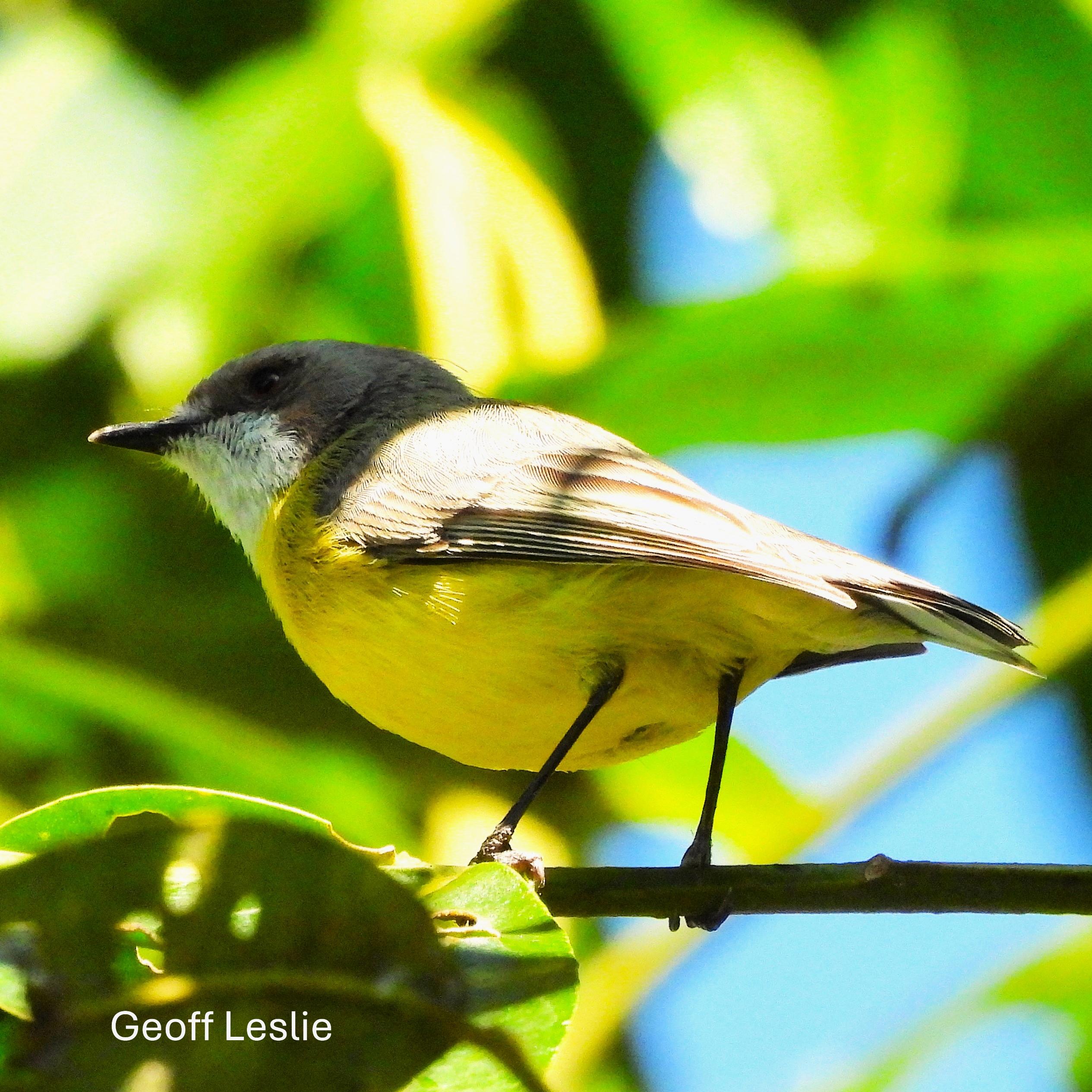
Both gerygones have an amazing up-and-down call that carries quite a long way. Once I was out with a group of birders in Seymour Bushland Park and I witnessed an elderly lady whistle the call of the Western Gerygone whereupon one flew into view. Then she altered the whistle slightly to mimic the White-throated and one of them obligingly flew to a nearby tree and replied. It was an astonishing performance! I’m not sure I can tell the difference in the bush, as they both have a beautiful up-and-down clear whistle. Below is a wonderful recording by David Wakefield of the White-throated.
It is always a wonderful thing to hear a Gerygone, but it is plain lucky to get a good look at one.
AI or Alien?
These days in this AI world it is hard to determine if a photograph is real or just some computer-generated image. And sometimes when you actually see something it’s still hard to believe it exists.
The Common Cassinia (Cassinia aceulata) on the property are in full flower and the insects and arachnids are flocking to them. The flower heads are festooned with beetles, spiders, moths and flies. One beastie that has turned up that I have never seen before is pictured below, a Small-headed Fly (Ogcodes sp.). As the name suggests the head looks small when compared to the rest of the body giving it an otherworldly hunched-back appearance. It almost looks AI-generated.

And if the looks aren’t weird enough the lifestyle is like something out of Alien the Movie. The Small-headed Fly is a parasitoid of spiders meaning its young prey on spiders for food. But rather than lay the eggs on a paralysed spider as is the case with wasps the adult fly deposits the eggs in the vicinity of spiders. When the eggs hatch the larvae (maggots) actively hunt down any nearby spiders, climb up their leg and bury themselves in the spiders body where they continue to grow. Less AI and more Alien.
I think the answer to the title question is a bit of both.
Core Cormorants
The easiest way to think of the cormorants in Australia is that we have 2 large and 2 small: Large Pied and Little Pied, Large Black and Little Black. Except that those names aren’t used exactly anymore. The Large Black is properly called Great Cormorant (Phalacrocorax carbo) and the larger of the pied cormorants is just called Pied Cormorant (Phalacrocorax varius). The sizes are as indicated – the 2 species called ‘Little’ are smaller than the other two but that’s not helpful when you see just one. However, there are two other rules that make identification easier:
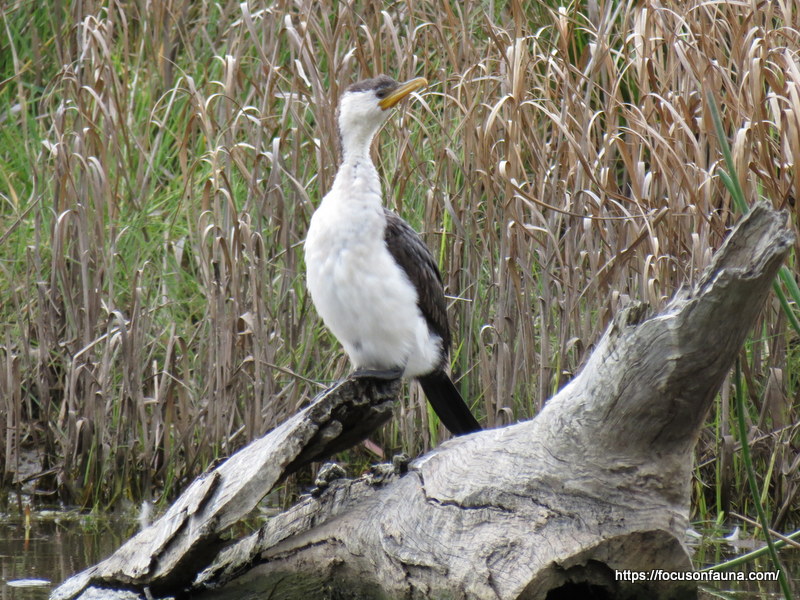
1. Of the pied cormorants – ie, those with a black back and a white front – only the Little Pied Cormorant (Microcarbo melanoleucos) is common in inland waters. This is the cormorant found sitting on logs, dam banks, channels, bridges, trees around lakes.
The Pied Cormorant, on the other hand, mainly sticks to the coast (though to be fair, it is occasionally found on large reservoirs and rivers inland).*
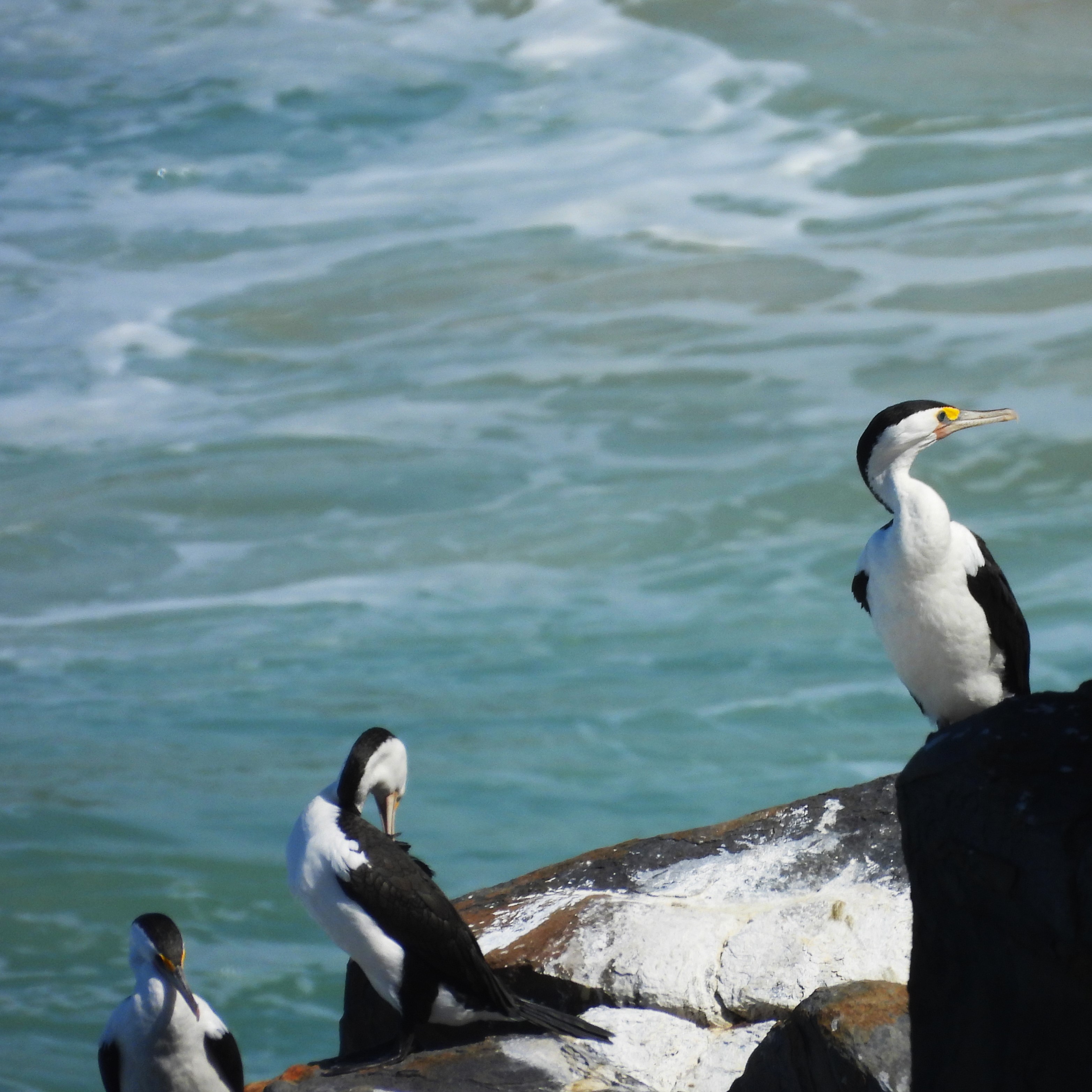
2. Of the 2 black cormorants, one is all-black (the Little Black Cormorant Phalacrocorax sulcirostris), the other (the Great Cormorant) has a yellow face – and in juvenile phases has various patches of white or off-white that can be confusing.

So, a cormorant that is pied is almost certainly a Little Pied; a black cormorant can be quickly distinguished by whether it is all black around the face and bill (Little Black) or has some yellow around the face (Great Cormorant).
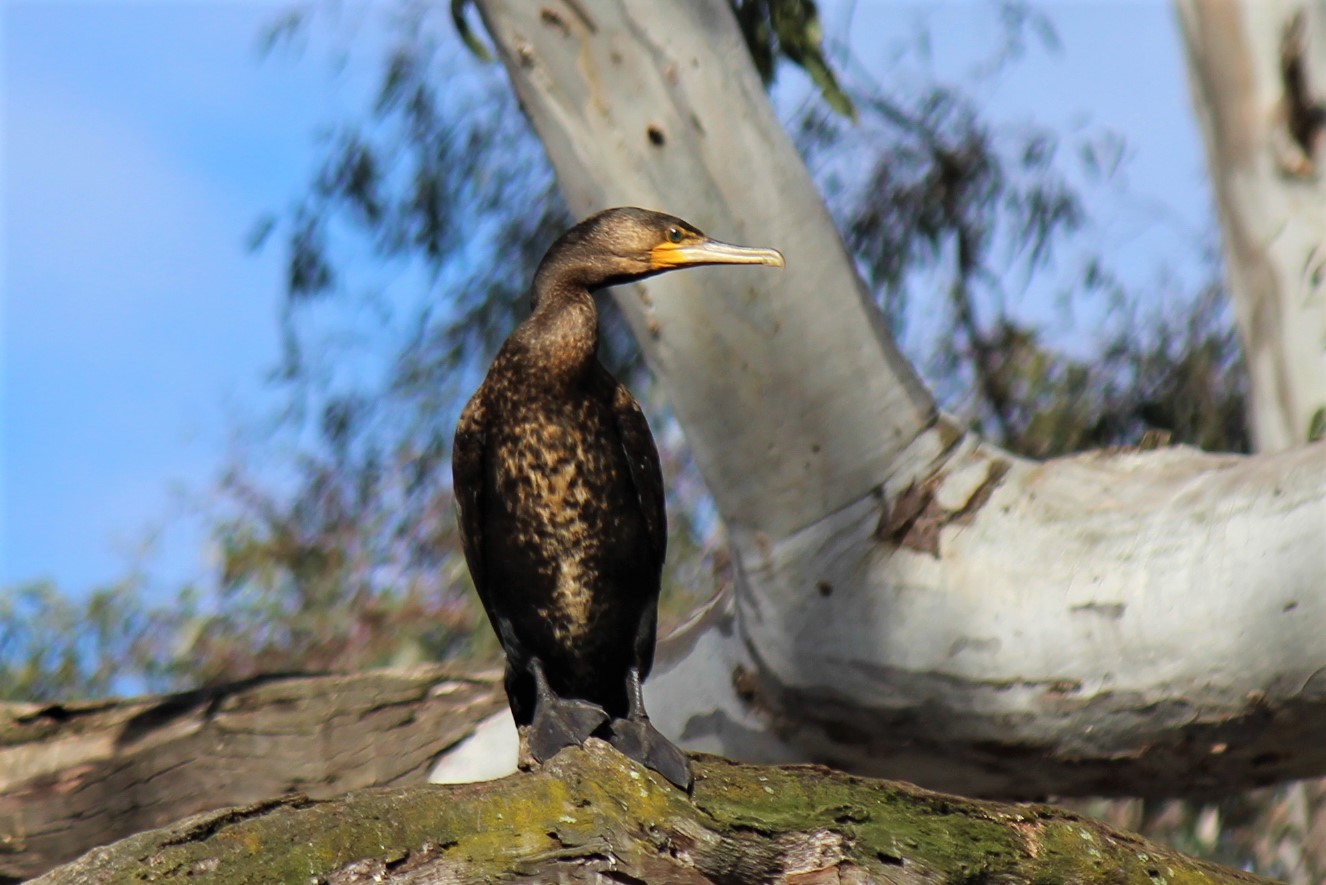
Wonderful birds, these. Great fliers, great swimmers, great fishers. When it comes to our district and which ones are regular residents, three out of four ain’t bad.
*There is a fifth species, the Black-faced Shag, found around rocky cliffs and ocean fronts along the Southern Coast, especially in Tasmania.
Don’t take it as read
Ladybird Beetles belong to the family Coccinellidae. There are several proposed origins of this word one of which is that it is derived from the Latin ‘coccinus’ meaning ‘scarlet’. The common view is that the ladybird is predominantly red with black spots. There are about 500 species of ladybird in Australia but not all of them are red and black.
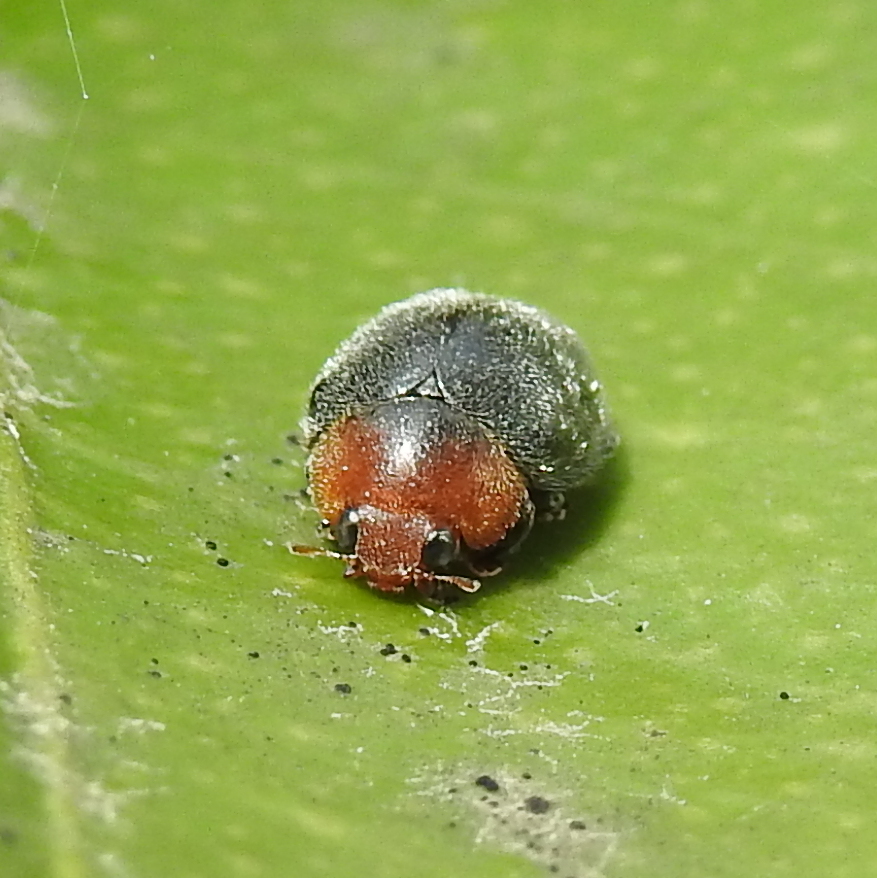
The beetle pictured left is a Mealybug Ladybird (Cryptolaemus montrouzieri). Like most ladybirds this species in both the adult and nymphal forms are highly predatory of soft-bodied sap-sucking insects such as scale insects, aphids, etc. This one has a penchant for mealybugs. The female ladybird lays her eggs amongst the mealybug eggs and the hatched ladybird nymphs attack both the eggs and the emerging nymphs of the mealy bug.
.
.
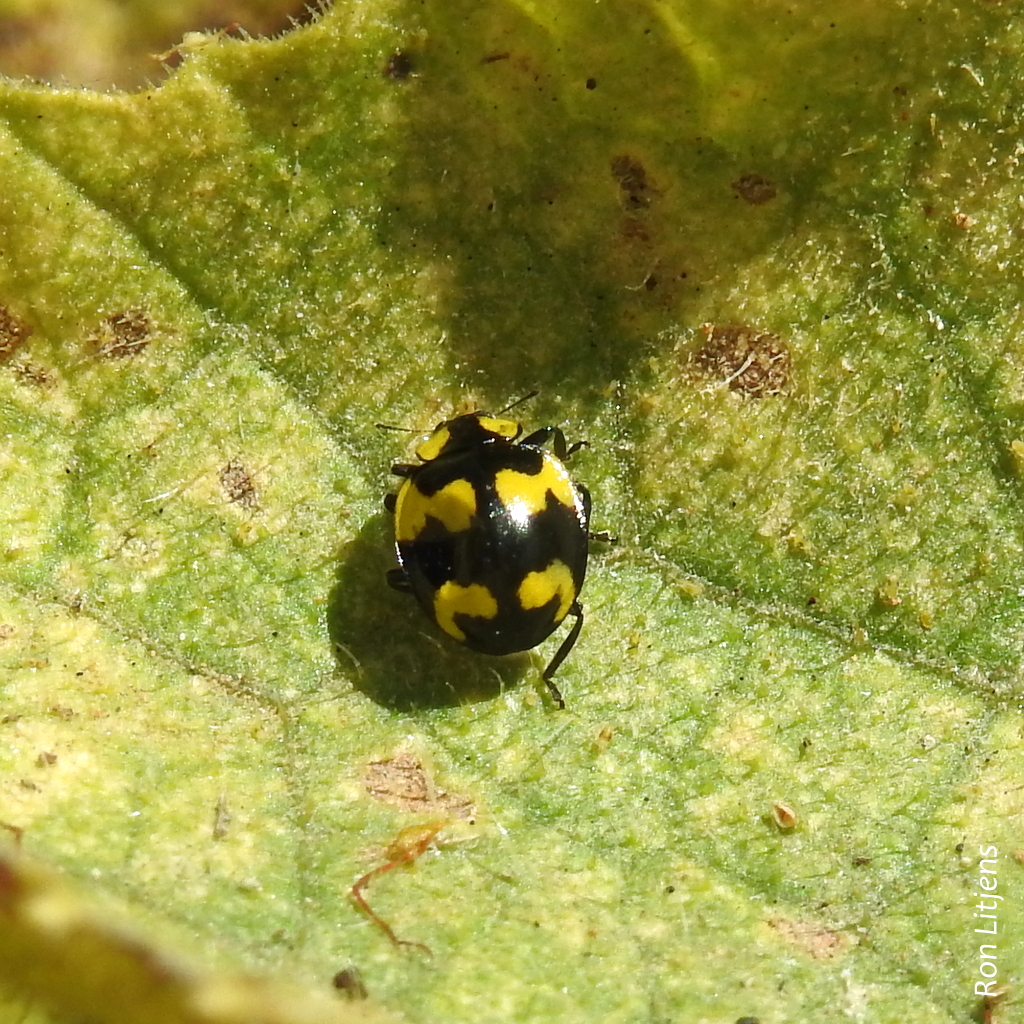
The black and yellow ladybird pictured right is a Fungus-eating Ladybird Beetle (Illeis galbula). It is a vegetarian feeding on pollen in Spring but on powdery mildew at other times. Powdery mildew is a type of fungus that forms on the surface of leaves. The mouthparts of the Fungus-eating Ladybird are modified to be able to scrape the leaf surface. The FELB are commonly found on the leaves of cucurbits – zucchinis, pumpkins, squashes, etc.

For those whose world view has collapsed at seeing ladybirds that are other than red and black, here’s a picture for you (below).
Aussies of international reknown
The Cottony Cushion Scale (Icerya purchasi), pictured below, is one of Australia’s more infamous exports. It is an Hemiptera i.e. a sap-sucking bug that has a liking for many Australian woody plants (particularly Pittosporum) but loves citrus plants in general. Both the adult and the nymph insects suck on sap of the leaves and woody material of the food plants. The adult, pictured, is reddish-brown in colour and crusted with waxy secretions.
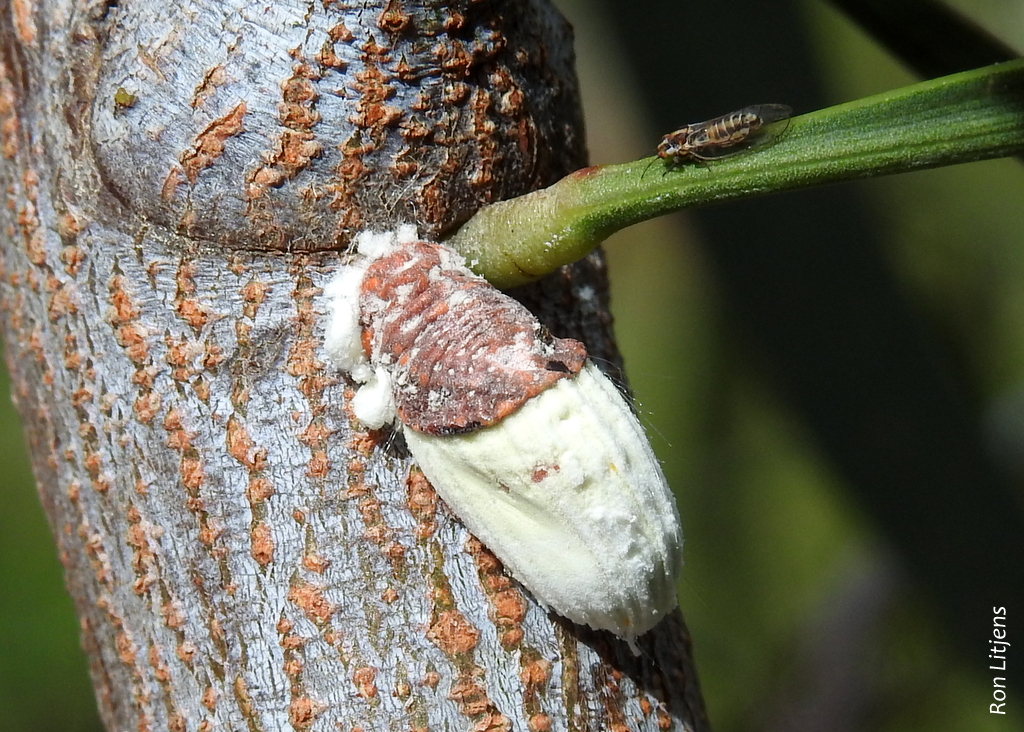
This insect is a true hermaphrodite having both male and female organs within one body. When the female is ready to breed she will attach herself to a piece of vegetation and extrude a white egg case several times the size of her body (pictured above). This case contains hundreds of eggs. The nymphs when hatched disperse and find another site at which to suck sap. After each moult the nymphs move on leaving their ‘cottony cushion’ shell attached to the plant.
The Cottony Cushion Scale has caused a lot of damage to the citrus industry in the United States. A particular species of Australian ladybird imported into the US has been successful in controlling the scale.
Who said we aren’t an exporting nation.
Just passin’ thru
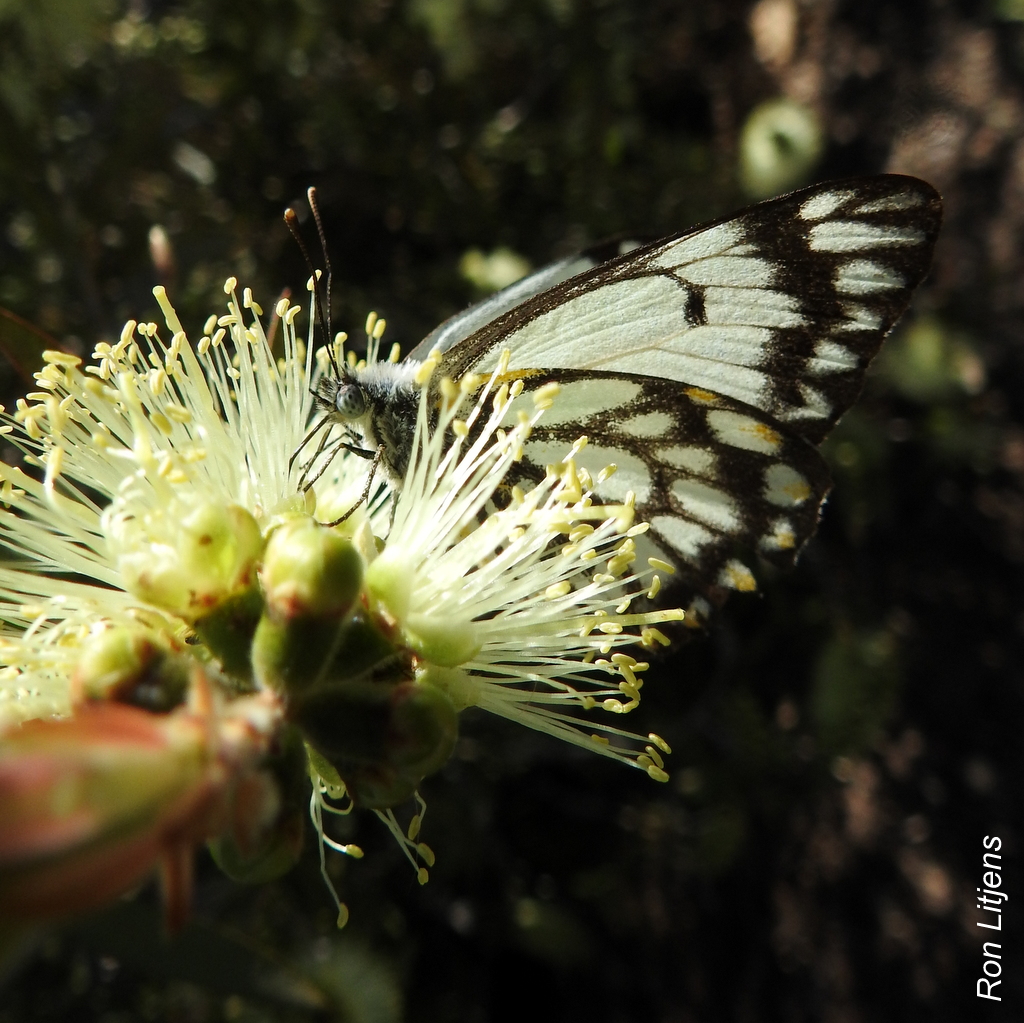
Some butterfly species are known for their long annual migrations. Each year the Monarch Butterfly (Danaus plexippus) makes a 3000km long flight from Canada to Mexico. The Painted Lady butterfly undertakes an even longer 9000km journey from Europe to Africa every year. This trip spans several generations. Australian butterflies such as the Meadow Argus, the Australian Painted Lady and the Caper White are known for their annual treks spanning thousands of kilometres.
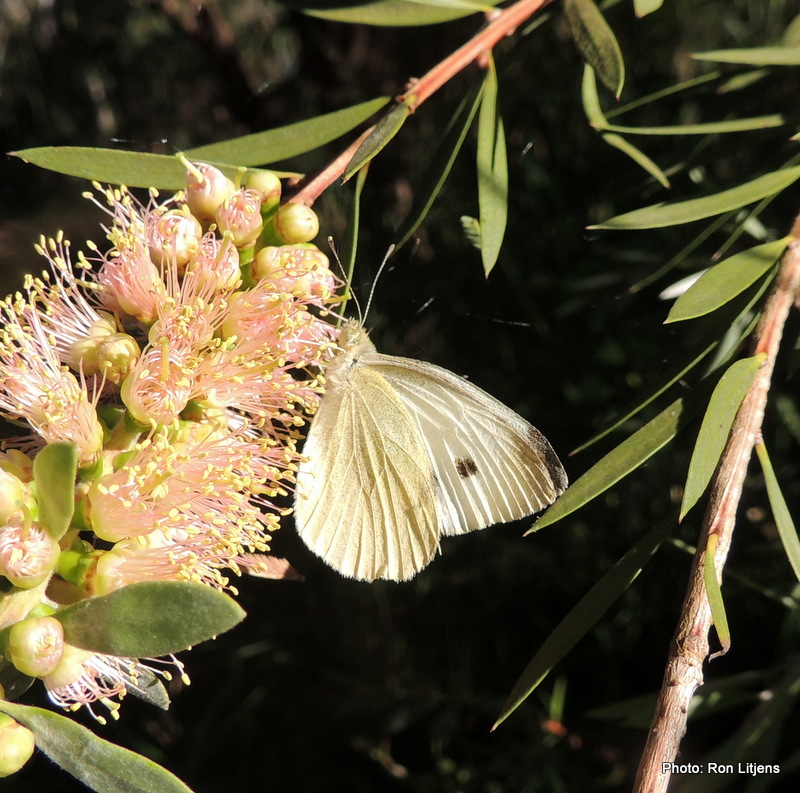
The Caper White butterfly (Belenois java) (male is pictured above and below) is a primarily white butterfly that is often mistaken for the Cabbage White (Pieris rapae), pictured right. It is distinguished from the latter by having black wing margins and veining and orange marks that can easily be seen when the butterfly is at rest with its wings closed. The butterfly is named for the Caper bushes (Capparis sp.) that it lays its eggs on.
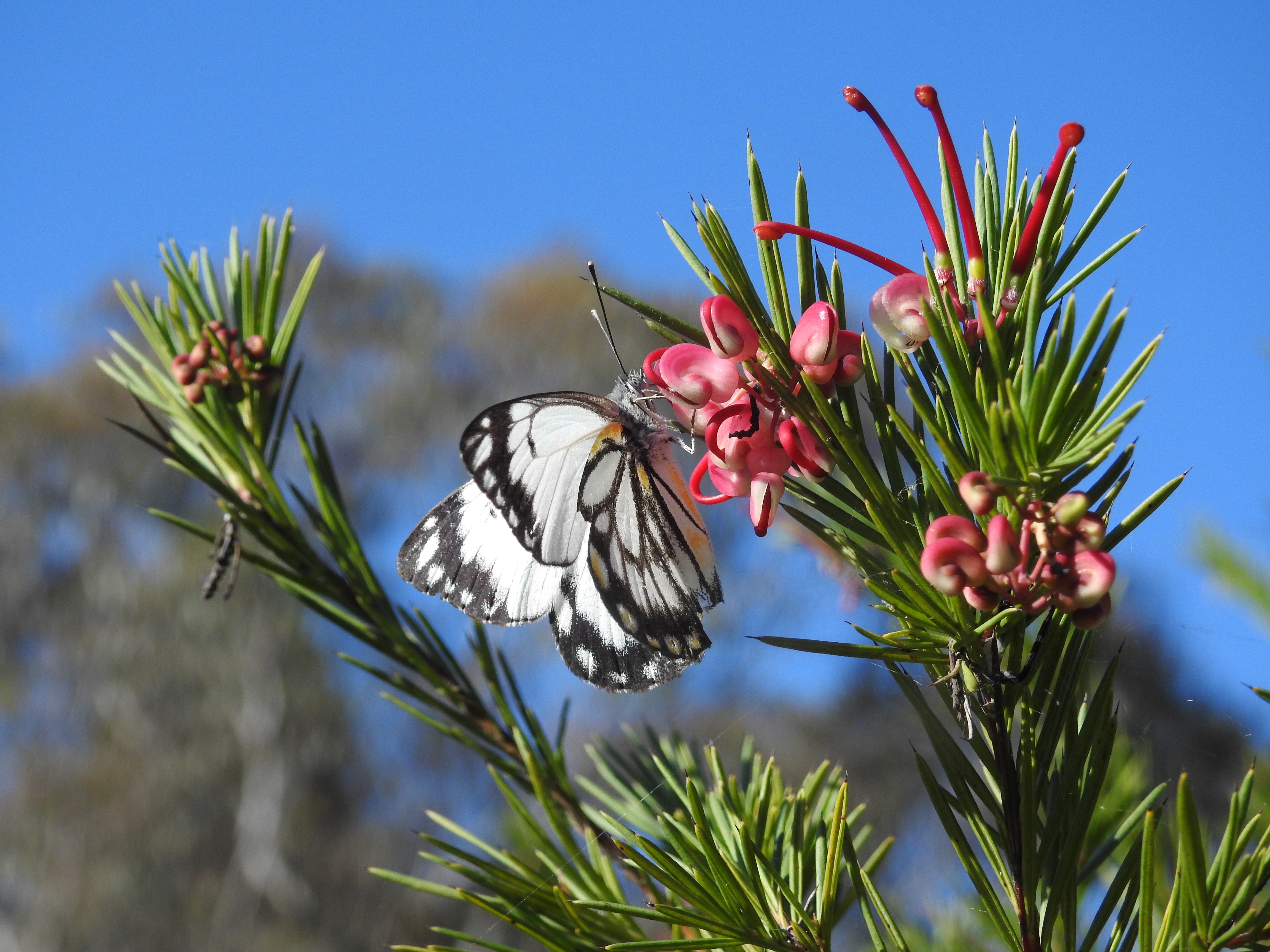
Caper Whites have several migration routes within Australia. The one that brings these butterflies our way starts each Spring when they leave their breeding grounds in the northern Flinders Ranges and head south. Their trek covers several thousand kilometres but how far they actually travel and in which direction depends on the weather, particularly the prevailing winds. A couple of times a decade very large populations of Caper Whites migrate together.
This year there seems to be a higher than normal number of Caper Whites in the district. Mass migration or tail winds? We’ll have to see.




 Focus On Fauna