When you’re on a good thing …
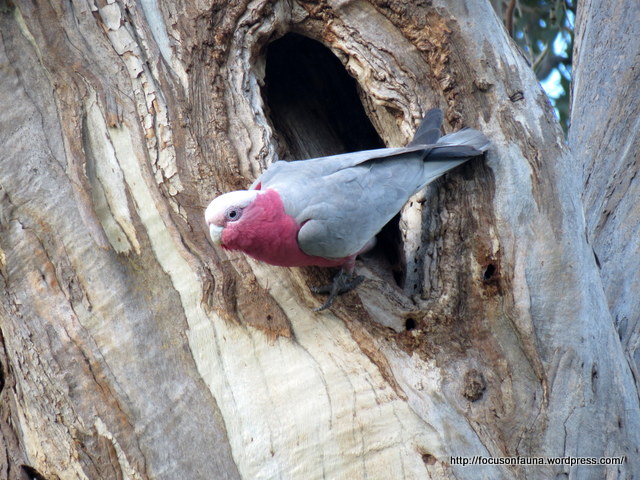
Galah 2013
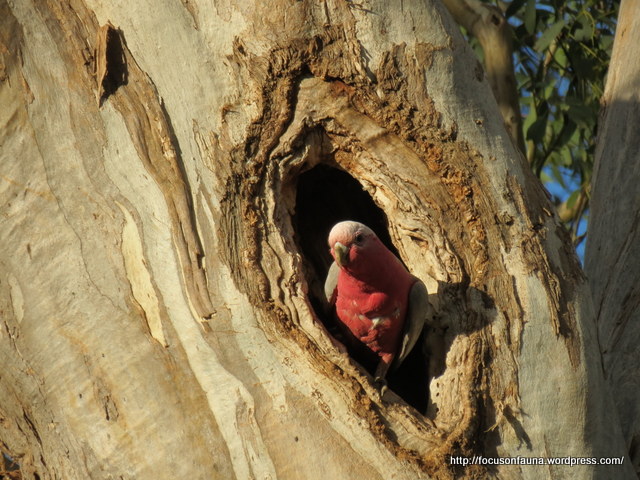
Galah 2012
The Galah is one of 52 birds chosen by BirdLife Australia for inclusion in a poll to decide Australia’s favourite bird, as part of this year’s Bird Week celebrations starting on 19th October. You can cast a vote for your favourite bird at http://www.australiasfavouritebird.org.au/. Some of the birds included in the list of candidates have been photographed locally and are shown below.
We find it hard to select one particular ‘favourite’ bird, but the gorgeous Galah would have to be well in the running.
Excuse me. I’ve got a frog in my throat
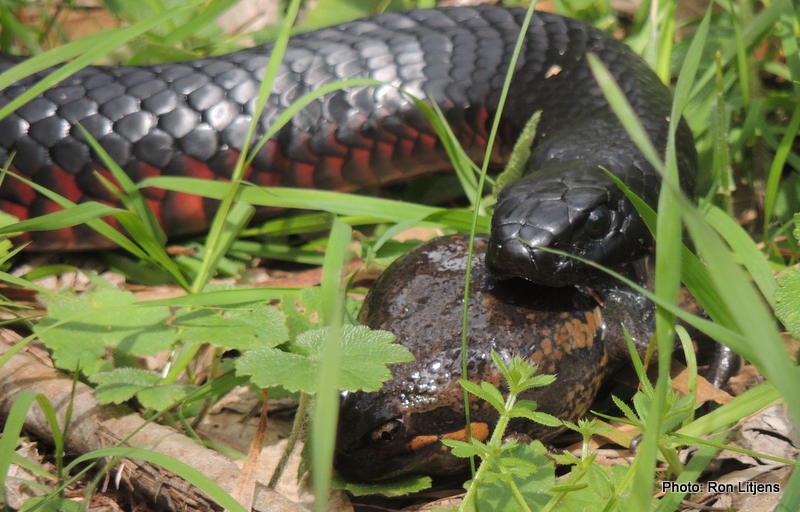 The reptiles have awoken from their winter torpor and are hungry. Walking next to the dam on the weekend we came across this Red-bellied Black Snake (Pseudechis porphyriacus) with a penchant for French food – frog legs, no less. Frogs are the main diet of these snakes. They also prey on other reptiles and small mammals. The snake wasn’t saying much — it’s rude to talk with your mouth full.

Finger lickin’ good (if I had any)
The Pobblebonk Frog (Limnodynastes dumerilii) wasn’t ‘bonking’ either. The neurotoxins in the snake venom are rarely life-threatening to humans but of course are deadly to frogs. We left the snake to enjoy its lunch in peace.
Another koala

Koala
A Koala (Phascolarctos cinereus) is an uncommon visitor to the Flowerdale-Strath Creek area, but we do get reports of sightings from time to time. This one was photographed by Don on Upper King Parrot Creek Road. It doesn’t show in the photo, but the koala had a blue ear-tag which we think means it was one of a group transferred from French Island and released into Mt. Disappointment State Forest in 2004 – click on From French Island to Flowerdale to see an earlier post about the translocation (and a really cute photo!).
We spotted another koala trotting along the Whittlesea-Yea Road on Junction Hill late afternoon a few weeks ago – a very dangerous spot for a koala! But with a guard rail and double lines there was no way of stopping to try and herd it into the roadside vegetation.
It is good to know there are some koalas around, as they would have had little hope of escaping the Black Saturday fires and those that survived would have struggled to avoid starvation before fresh growth was established on eucalypt trees.
The mystery of the hole in one
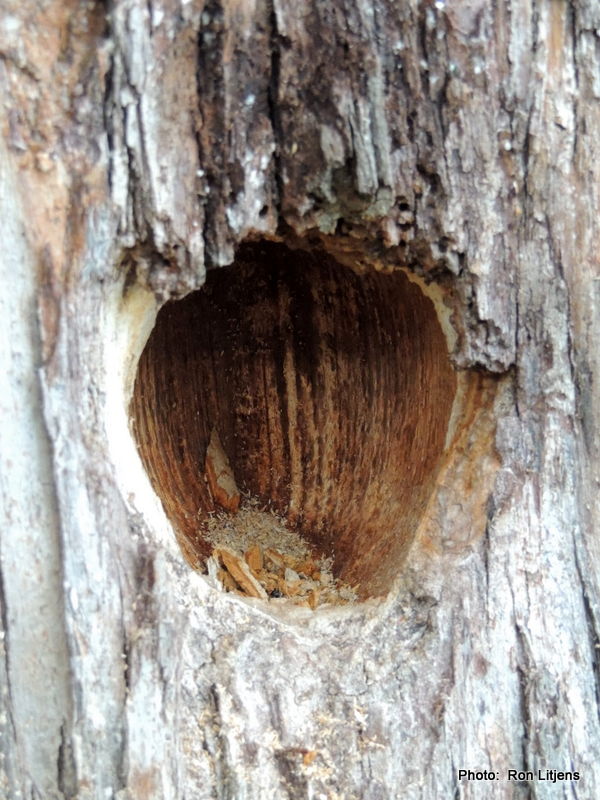 The white wood chips lying on the grass at the base of a coppiced Long-leaved Box (Eucalyptus goniocalyx) were a dead give-away that something was afoot. Inspection of the upper branches revealed nothing amiss. However, examining the three trunks I found a hole in one. The hole was about 1.5 metres off the ground, with a cavity about 12 cm deep and perfectly smooth inside. The wood chips looked to originate from something gnawing at the bark around the opening, presumably to make it bigger. As there was nothing to indicate who the mystery builder was, I mounted a remote camera on one of the other trunks.
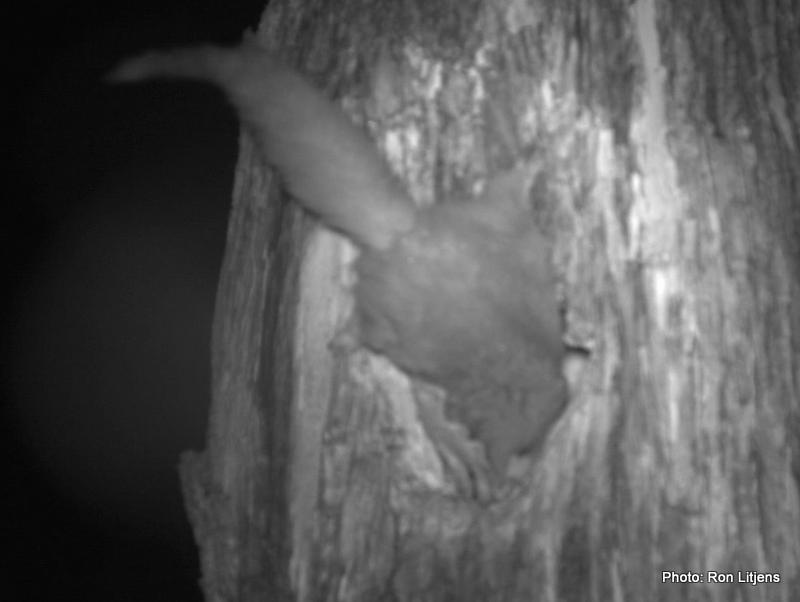
Doing some ceiling work
Over the course of a week several birds visited the cavity during the day either looking for food (White-throated Treecreeper, Cormbates leucophaea) or a place to stay (Crimson Rosella, Platycercus elegans). On the first few nights a Sugar Glider (Petaurus breviceps) appeared at the hole, looked at the camera and just as quickly disappeared. Now, however, it spends a lot of time working on the cavity oblivious to being photographed. Its ability to renovate while upside down, sideways or right side up is an ability wish I had. Occasionally the Sugar Glider tries the cavity on for size. From
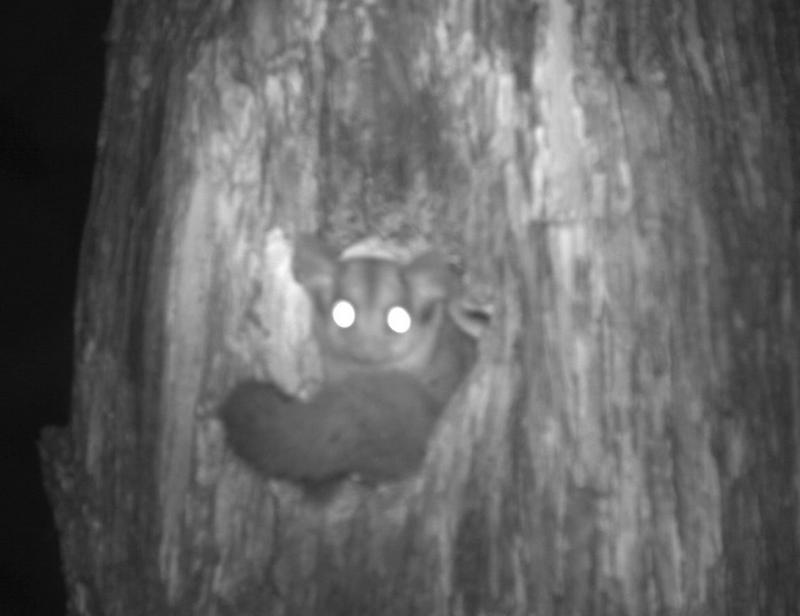
Still need that extension
the picture left, it still has some work to do. But as anyone who has renovated a house before will tell you, the job is never done.
Whistler’s return

Rufous Whistler
One of the delights of spring for us is the return of the Rufous Whistler (Pachycephala rufiventris) and, following the example of Ronlit, we should tell you that the scientific name means ‘rufous-bellied thick-head’, an unkind name for a beautiful bird, even though it does describe its rather large round head. Its ringing song heralds the breeding season.
In south-east Australia Rufous Whistlers generally migrate north in autumn, although we have had a report of them over-wintering at Flowerdale. At our place they have never been recorded in the period May to July. This year the whistler was first heard here on 23rd September, but its return has varied from late August to early October in recent years. At present there are several of the whistlers chasing each other around the garden.
One of the advantages of keeping monthly bird records is that you can compare the presence of birds from year to year and the arrivals and departures of migratory birds. The chart below shows that for much of the year the Rufous Whistler tends not to co-exist here with the other local whistler – the Golden Whistler. Another interesting observation from the chart is that February 2009, when the Black Saturday fires occurred, was the only February when neither whistler was present.
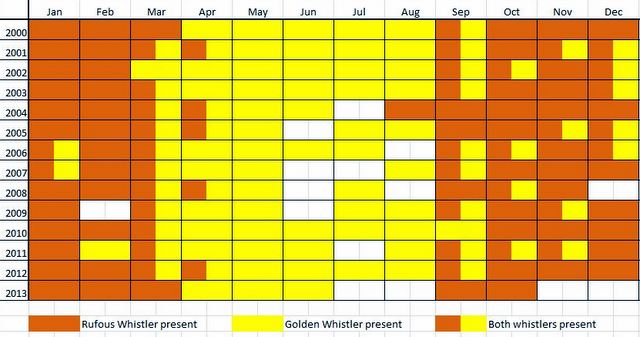
The Rufous Whistler is common and widespread over much of mainland Australia, but absent from Tasmania. To hear some typical phrases from the Rufous Whistler’s song book, click on the audio bar below.
The soap opera continues
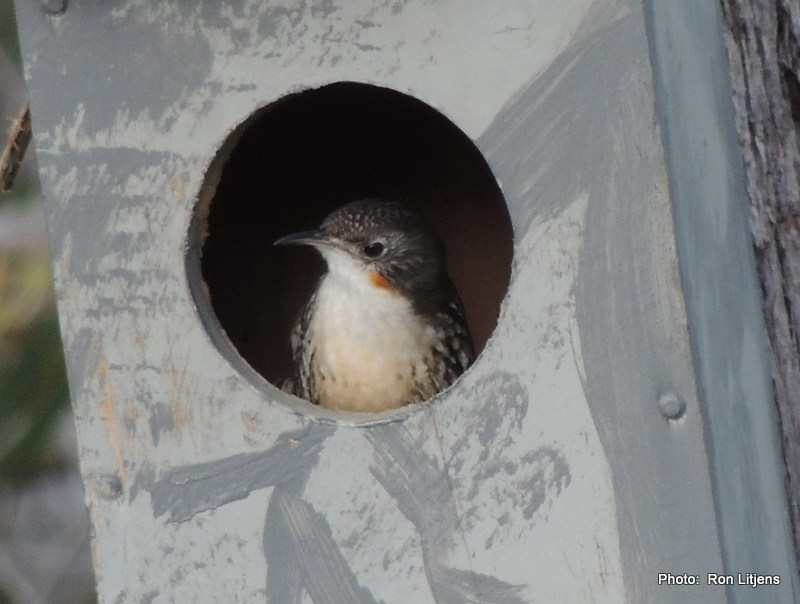
Female Treecreeper – note the ochre neck spot
With nesting season upon us we have been waiting to find out what the latest residents in our much-blogged about (click HERE to view) nest-box are. I am writing a soap opera about the comings and goings of both the furred and the feathered in this piece of real estate. It will be called The Box, in honour of the ground-breaking 1970s TV soap. Some of you will be old enough to remember it (I am) and were allowed to watch it (I wasn’t). This season a pair of White-throated Treecreepers (Cormobates leucophaea) has moved in. 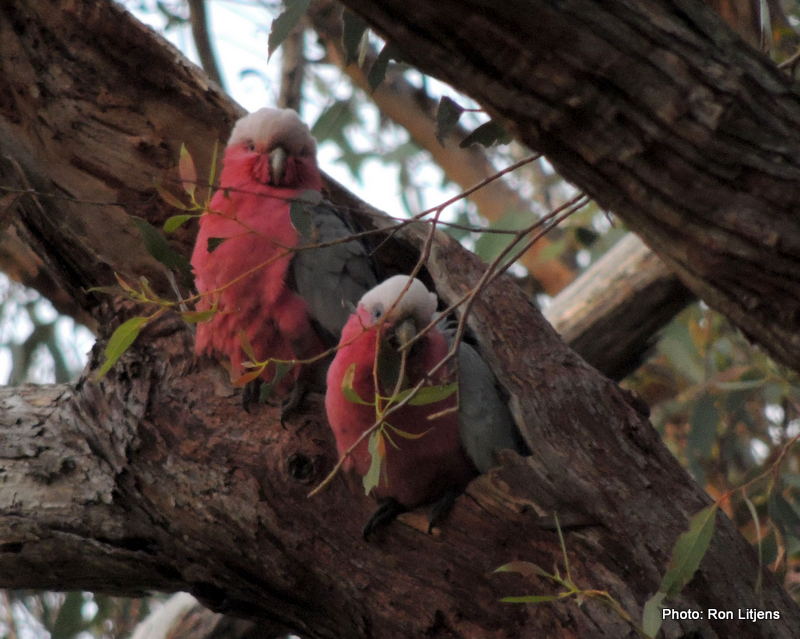 Normally they would nest in a hollow branch or cavity in a tree trunk. The birds had been casing the joint for several weeks but last weekend they spent the day removing rubbish from within the nest-box and replacing it with new bedding.
Not 20 metres away a pair of Galahs (Eolophus roseicapilla) has taken up residence in the hollow limb of an old Red Stringybark (Eucalyptus macrorhyncha). The racket coming from that direction over the past month attests to the fact that it was also hotly contested real estate.
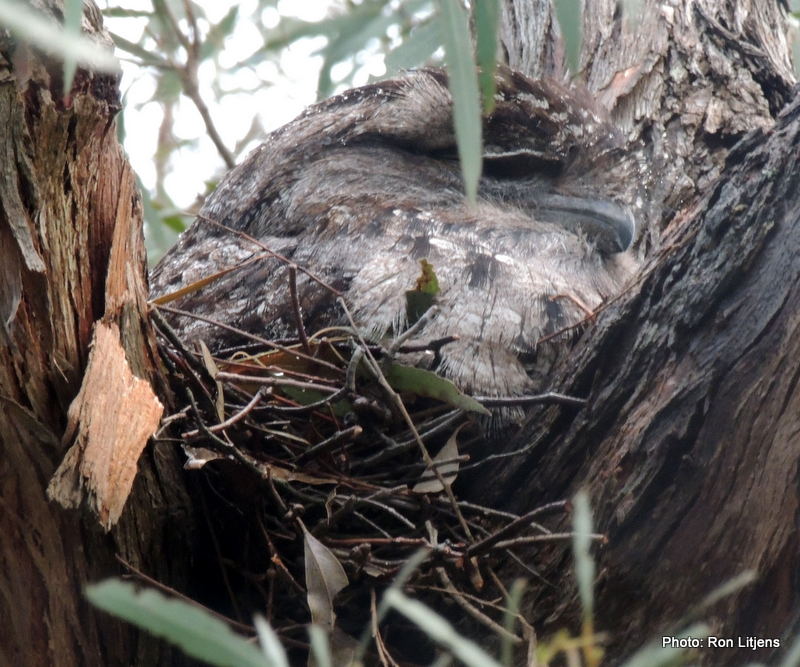
Tawny Frogmouth
While over at Len and Trude’s place, the recently sighted (click HERE to view post) Tawny Frogmouths (Podargus strigoides) have built their typical flimsy nest of twigs and leaves and have started sitting. I will watch this nest with interest because it doesn’t look like it could withstand a breath of wind.
Spring is here.
Growling frogs
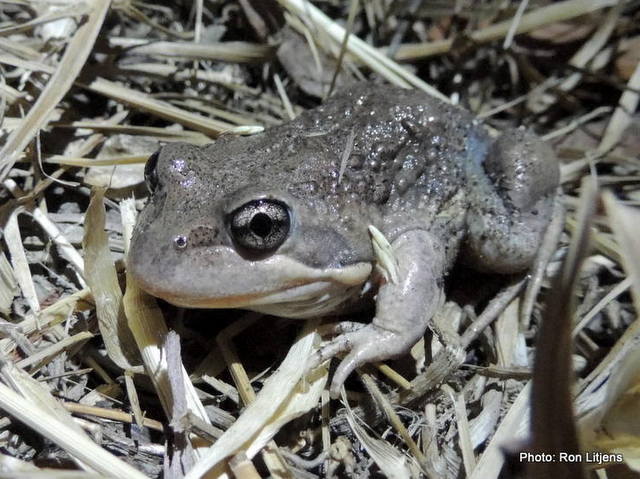 We have had a couple of reports of frogs heard growling recently. Much as we would like to put the reports down to the endangered Growling Grass Frog (Litoria raniformis), we suspect the culprit is the Pobblebonk, aka Eastern Banjo Frog (Limnodynastes dumerilii), as was the case with the soft growl we recorded at our own wetland area the other day – click on the audio bar below to hear the call.
The identification of this call was confirmed by Jo Wood at the Goulburn Broken Catchment Management Authority, who has also had several reports of growling Pobblebonks which can be heard below.
The actual call of the Growling Grass Frog is a much more robust growl which can be heard on the Frogs of Australia website by clicking HERE. A reminder that all the frogs of the Goulburn Broken Catchment can be heard by downloading free the CMA’s iSpy Frogs app from the iTunes store.
If you find the growls too much, try listening to this soothing recording of a range of the frogs calling at the moment.
A magpie by any other name

Black-backed
On a recent trip to Canberra I noticed many magpies patrolling public spaces (and stealing peoples’ lunches). They looked slightly different from the ones at home but I couldn’t work out why. When I came back I looked carefully at the magpies living in the hills around our place and there was a difference. In Canberra the magpies have a black head, a white back of the neck and an almost exclusively black back (see picture left). Even though I see magpies like these in Flowerdale, I predominantly see magpies that have a black head, but the white extends from the neck all the way down the back (see picture right).

White-backed
Apparently a magpie is not a magpie is not a magpie. The Australian Magpie (Cracticus tibicen) (from the Greek word kraktikos meaning noisy and the Latin word tibicen meaning flute-player) is a species with three different forms – the Black-backed (made up of three different races), the White-backed (three races) and the Western (two races) forms. Based on geographical location the Black-backed Magpie we see around here is most likely the race terrareginae and the White-backed Magpie is most likely the race tyrannica. As they can interbreed, the distinction between the races is not that clear. So when you next see a magpie, look out for what form it is.
The difference matters little to me. During the fast-approaching nesting season, black-backed and white-backed magpies alike will dive-bomb me as I ride my bicycle down Spring Valley Road on the way to the Post Office.
P.S. The first magpie swoop of the season was recorded at Moores Reserve at 1713 on 27th August 2013.
Birds calling
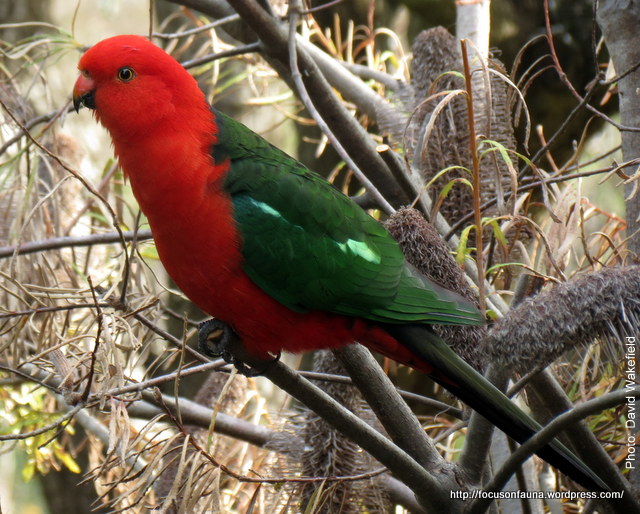
Australian King Parrot
The Strath Creek Landcare group has just released a CD for local distribution titled ‘Bird Calls of the lower King Parrot Valley‘. The CD is intended as a companion to a booklet about birds produced in 2007 and follows the same format as the booklet. Birds, probably more so than any other animals, produce an extraordinary array of sounds and, apart from appreciating their intrinsic beauty, learning the various calls is a valuable means of identifying individual species.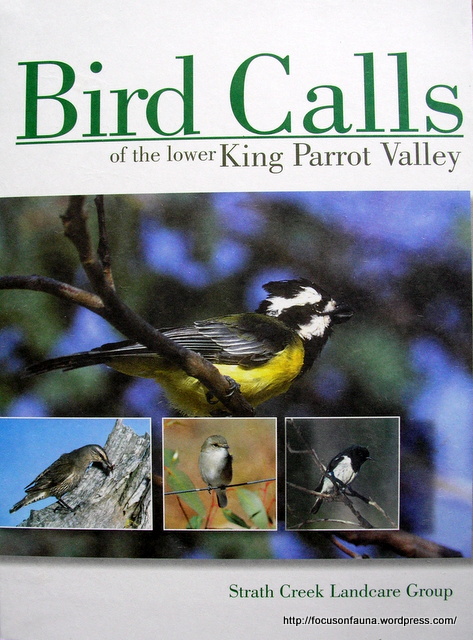
The CD should probably have been titled ‘Bird Vocalisations of …’ since purists distinguish between ‘calls’ and ‘songs’, the former usually being brief, acoustically simple sounds and the latter involving more complex series of varied notes with a recognisable pattern. But it can be a fine distinction and in any case ‘vocalisation’ seems clumsy for a title, so ‘calls’ it is.
Like humans, birds can have slight variations (dialects) between different regions, so we tried wherever possible to record the calls locally.
Birds are unique in possessing an organ called a syrinx. (Unlike us, their larynx serves only to stop food and water entering the windpipe and lungs.) The syrinx or voice-box is a structure at the base of the windpipe where it divides into two bronchial tubes. Rapid contraction of the bird’s lungs forces air through these tubes, and muscles and vibrating membranes within the syrinx create a musical sound. Each tube can be conrolled separately, allowing variations in the sound – one tube may be used mainly for breathing, or both may be used to produce different sounds that either combine or interact. Very rapid shallow breaths coordinated with the call notes allow some birds to sing for lengthy periods without a discernible break. Variations in the structure of the syrinx, as well as the length and diameter of the wind-pipe, account for the great diversity in bird calls/songs.
[For the technically-minded the calls were mostly recorded with a Zoom H4n recorder coupled to a Rode NTG-2 directional microphone.]
Copies of the CD are available free of charge at the Goulburn Broken Catchment Management Authority office in Yea. Click on the audio bars below for a couple of samples of the calls.
Tales from the woodpile #3
In the list of the ‘cellar-dwellers’ of public opinion would have to be spiders, used- car salesmen and politicians. In most cases these group reputations have resulted from the actions of a few. My uncle was a used-car salesman and he was one of the nicest, funniest people you could ever hope to meet. I have never met a ‘real’ politician but after watching ‘Kitchen Cabinet’ on ABC1 it appears that politicians are ordinary people who find it hard to cook a decent meal without the help of friends and family…just like me. And as for spiders, a previous post (click HERE to view, if you dare) showed them to be not the ugly, horrible hairy creatures people make out but rather, in close-up, cute, almost comical hairy creatures, what with their hairy lips and googly eyes.

Bark Cockroach
An addition to the ‘cellar-dweller’ list would have to be cockroaches. Their reputation for spreading dirt and disease has been unfairly garnered from the few imported species that have sneaked onto our shores. Australian bush cockroaches are nature’s garbage collectors and are themselves an important (and crunchy) food source for a lot of other Australian fauna.
Anyone who stacks wood in preparation for the following winter will know that after a period of time logs gradually split, the bark starts to come loose and eventually falls off. This process creates lots of nooks and crannies for insects to hide in and the cockroach is ideally suited to live in these spaces. During my recent visit to the woodpile I disturbed two species of cockroach. Pictured left is the Bark (or Flat or Trilobite) Cockroach (Laxta granicollis). They are communal insects that live in small colonies and communicate using smell. Pictured left is a female. The male is narrower and is winged. Their flat, almost two-dimensional bodies make them ideally suited to live in splitting logs.
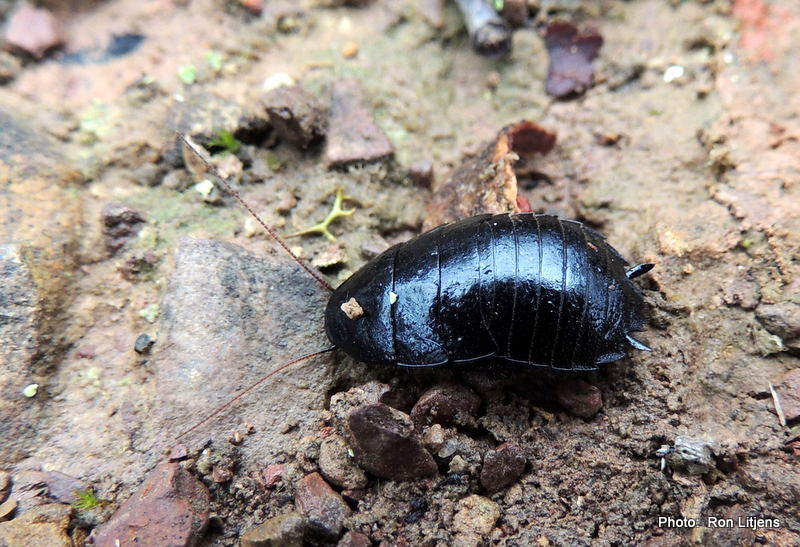
Black Woodland Cockroach
Slightly more robust in form is the Black Woodland Cockroach (Platyzosteria melanaria), pictured right. Their glossy black colour distinguishes them from the dark reddish-brown Oval Woodland Cockroach.
These woodpile residents are not as sexy as other woodpile co-habitants like the Brush-tailed Phascogale, for example, but none the less are just as valuable a contributor to the ecosystem. Don’t squash them.




 Focus On Fauna