Where have all the blokes gone?
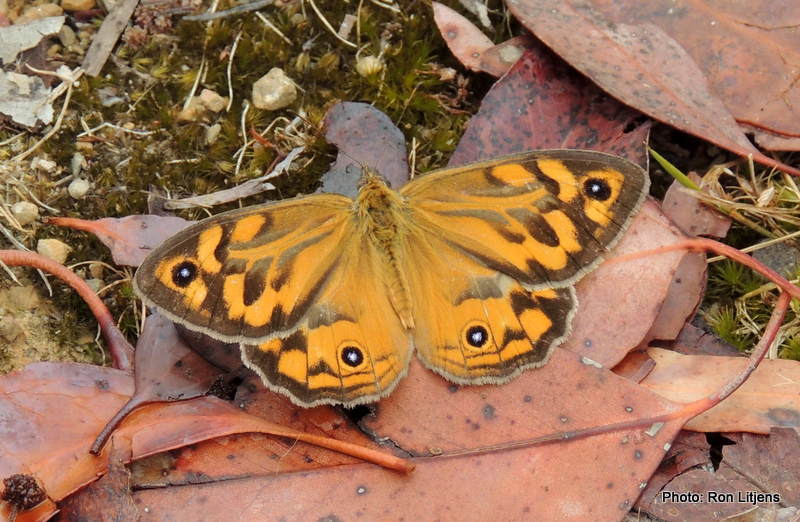
Male Common Brown – R.I.P.
The Common Brown Butterfly (Heteronympha merope) is a common sight in our district at various times of the year. We usually see them on the ground regulating their body temperatures by angling their wings to the sun. In late spring and early autumn the air is thick with males (left) frantically searching the bush for elusive females with which to mate. The females (pictured below) remain hidden in the grass and cool shady areas. And then over summer the Common Browns disappear.
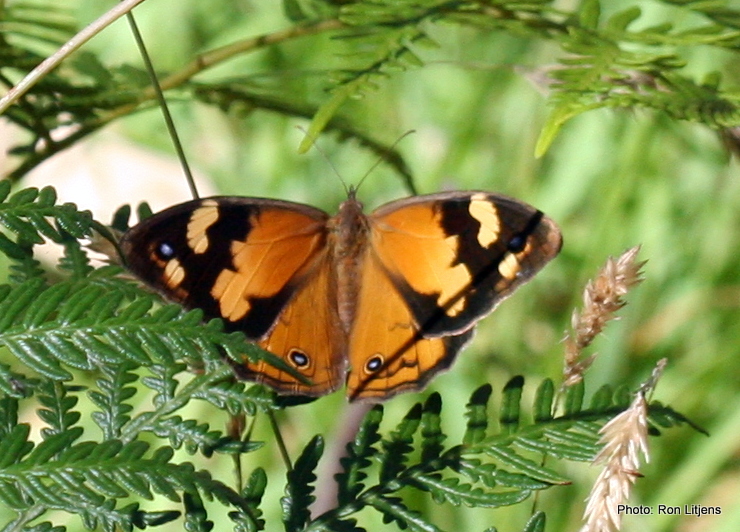
Female Common Brown – Kicking on
Recently we noticed that the Common Browns have again appeared in large numbers. The difference is that now they all appear to be female. Further investigation revealed that after mating in early summer the male butterflies die and the females go into aestivation (the summer equivalent of hibernation in winter). Then from late summer to early autumn the females again become active and begin laying their eggs. Unlike some other butterflies the eggs are not carefully laid on plant leaves but rather are dropped randomly on the future caterpillar food plants (mainly native grasses, Poaceae family).
So if you see a flurry of butterfly activity in the bush it’s just the Common Browns having a “girls’ day out”.
P.S. The Common Browns like most butterflies of the same family have only four legs. There goes my Rule 513 – All insects have six legs (see previous post).
Dam birds
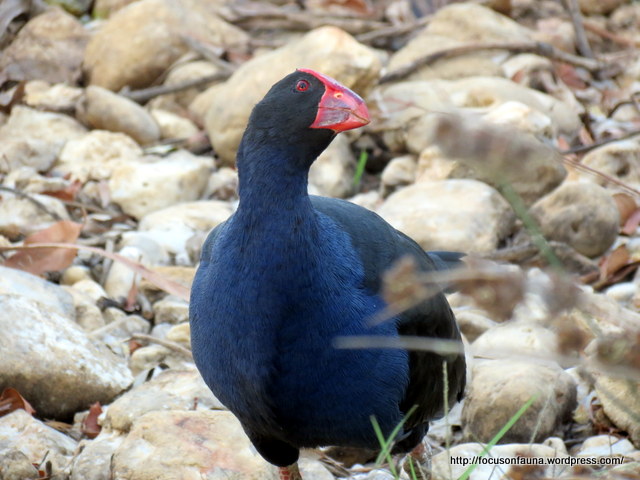
Purple Swamphen up close
As a follow-up to the recent post on improving the biodiversity of farm dams [see Dam right!], we thought we would put together some pictures of water-birds that we have seen on our dams/wetland near Strath Creek, and which may be found in and around a fenced-off and well-vegetated farm dam, attracted by the rich diversity of freshwater macroinvertebrates.
Some of the photos are not great quality, but are sufficient for identification – a few were taken with a remote camera and some were photographed at other locations. Birds like the Australian Reed-Warbler and Little Grassbird have proved too quick and elusive among the rushes for our limited photographic skills. Other birds such as Yellow-billed Spoonbill and Great Cormorant have only made sporadic appearances and have also eluded the camera.
When beliefs are shattered
I love nature. The laws and rules that govern it provide structure to the world in which I live. Take my Rule 3–Gravity for example. If I release something it will fall. It never fails.

Wandering Ringtails
My Rule 649–Dragonflies and Damselflies says one of the differentiating features between dragonflies and damselflies is that dragonflies rest with their wings flat (open) and damselflies rest with their closed, as shown by the Wandering Ringtails (Austrolestes leda) pictured left. This is a natural law I have always believed, and of course have catalogued and given a number. But sitting on the edge of the King Parrot Creek at dusk last week waiting for the elusive platypus to appear, I noticed an insect resting on a branch with its wings flat.

Bronze Needle
Obviously my first thoughts were, ‘It’s a dragonfly’. However further investigation revealed it to be a Bronze Needle Damselfly (Synlestes weyersii), a species that inhabits rocky stream margins. The female (pictured right, lower) is distinguished from the male (upper) by its shorter and relatively thicker abdomen. Part of the Megapodagrionidae family, all these damselflies are known as ‘Flat-wings’ because of the habit of resting with the wings open … a whole group of insects challenging life as I know it.
So there goes Rule 649. Shattered. If the sun does not come up tomorrow (opposite of my Rule 5–Day-follows-night) I won’t be surprised.
Close call !
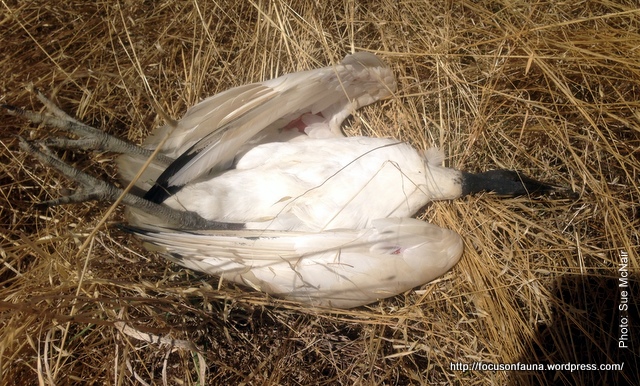
Australian White Ibis (deceased)
Here’s an unusual little tale from further afield. Sue McNair, Environment Project Officer with Murrindindi Shire, was walking up a hill in the protected woodlands above McKenzie Reserve, Alexandra, next to the landfill site. As Sue tells it:
“All of a sudden, with a woooosh and a loud bang, an ibis fell dead out of the sky, plummeting and crashing to the ground about 20m away. Had it hit me on the head, it would have knocked me out (or perhaps knocked some sense into me !). There were no other birds visible in the sky at the time, although a flock of ibis had departed when I arrived about 10 – 15 minutes earlier. I saw no mid-air attack and can only conclude that the bird died in flight from an unknown cause (old age perhaps, or maybe the smell emanating from the tip !!?). I was astounded as I had never witnessed anything of the sort before.”

A very much alive Australian White Ibis family at Strath Creek
It was a particularly hot day, so another possible cause of death of Sue’s Australian White Ibis might be heat-stress or dehydration. Hopefully it wasn’t a duck shooter with poor identification skills! We have occasionally wondered why, with the very large number of birds that must die of natural causes each year, even those of us who are regularly out and about see so few carcasses on the ground, and certainly witnessing the result of a mid-air death, as Sue did, would be a rare event. Consumption of dead birds by scavengers large and small can of course be swift, especially with small birds, but it is perhaps surprising that we don’t come across more remains of larger birds such as ibis.
‘You look more beautiful when you’re angry’…
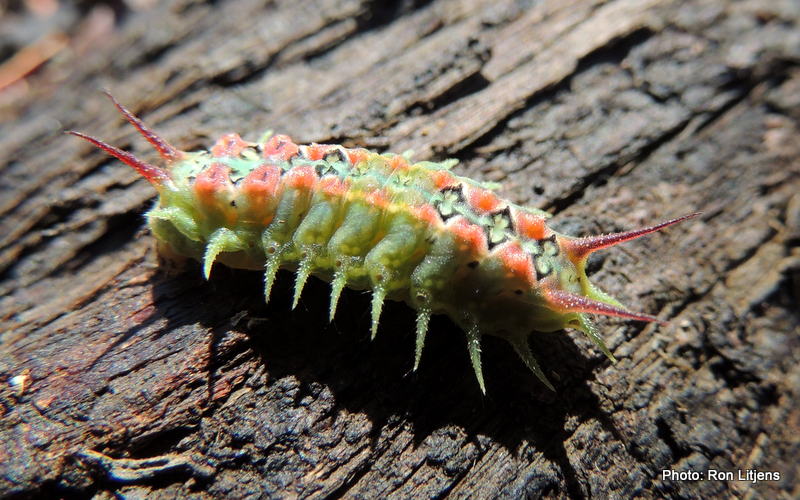
Beautiful
… is a great line used in Hollywood movies. It never fails to disarm a tense situation between feuding parties. Personally when I have used the line it has had quite the opposite effect. The statement is true, though, for a number of caterpillars of the Limacodidae family.
A recent post (click HERE to view) highlighted some of the amazingly intricate caterpillars cruising our district. After a recent storm I noticed many Four Spotted Cup Moth caterpillars (Doratifera quadriguttata) (from

More beautiful
the Latin quadri = four, gutta = spot) munching on eucalyptus leaves at ground level. They no doubt were knocked off their aerial cafeterias by the strong winds. The picture above shows the caterpillar when it is undisturbed. If however the caterpillar feels threatened, four knobs swell on its back and from these, red spikes protrude (pictured right). Other species of the Doratifera genus have up to eight of these knobs. The spikes are tubular structures containing irritant chemicals. Brushing against the spikes breaks them, releasing the chemicals which can cause skin irritations and rashes.

Look, no legs
It just proves what I have learned. It doesn’t matter how beautiful something is, if it’s angry, don’t touch.
P.S. The legs of this caterpillar are almost non-existent (see picture left) and they use their under-bodies to move, much the way a slug does.
Wonderful wedgies
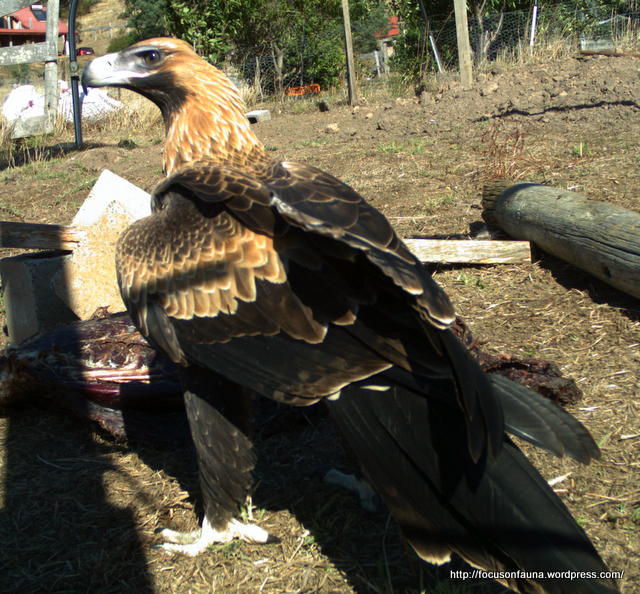 Wedge-tailed Eagles (Aquila audax) are a familiar sight around Trent and Vikki’s Flowerdale property at the base of the Three Sisters hills. Recently some close encounters have provided Trent with some good photographic opportunities, but have been to the detriment of their small flock of hens !
The eagle shown at left is an immature bird with its golden brown nape. The birds become darker with age, and those over about five years old appear almost black, with just some russet colouring on the nape and across the wings.
Trent has discovered two nests in the neighbouring patch of forest on ‘Three Sisters’, which is protected under a Trust for Nature covenant. This area was extensively burnt in the Black Saturday fires, but is now densely vegetated with young regrowth. Wedgies often have several nests in their territory, and choose one for breeding each season. The extraordinary nest in the right-hand image was photographed on ‘Three Sisters’ in 2007. At about 3m deep it must have been built up over many years. Unfortunately it was later destroyed in a wind-storm. Click on the images for a better look.
-

- In full flight
-

- Perched – mind that barbed wire!
-

- Current nest
-

- Old nest, now destroyed
Trent’s keen interest in wildlife and photography led him to set up remote motion-sensor cameras around the carcass of a roadkill Sambar. The resulting photos in the slide-show below include close-ups of a young eagle feeding on the carcass. Carrion can form a significant part of the diet of wedge-tailed eagles. In the past they were erroneously thought to be responsible for the deaths of large numbers of sheep and lambs, and bounties were paid for their destruction. The statistics are shocking: in one year in Queensland 10,000 bounties were paid, and betwen 1927 and 1968 in Western Australia a further 150,000 were paid (source: Reader’s Digest Complete Book of Australian Birds). Fortunately (but perhaps not for Trent’s chooks!) the magnificent Wedge-tailed Eagle is now protected in all states.
Wedgies are mostly silent, but at times they have a surprisingly high-pitched call for such a large bird. Click on the arrowhead on the sound bar below to hear a sample of the call.
The ups and downs of twitching
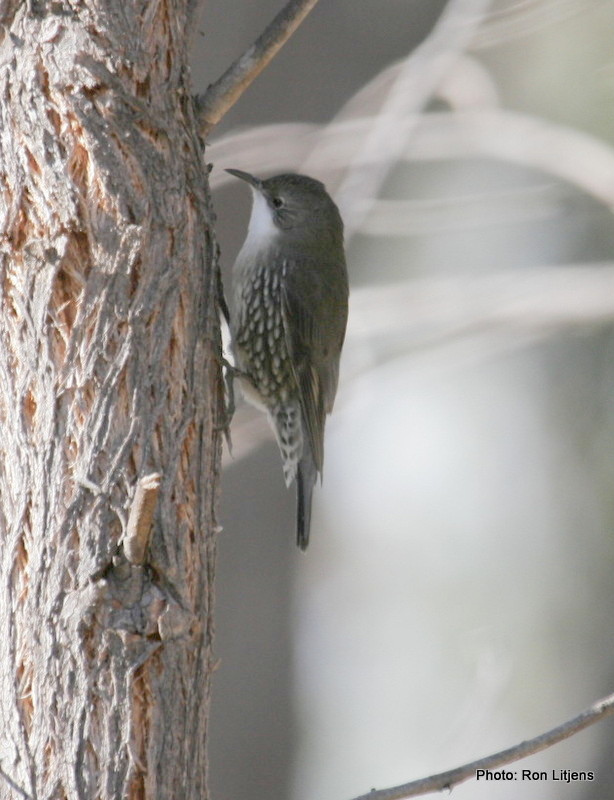
White-throated Treecreeper
Our property, and probably yours, is inhabited by ‘the tribe’. This is what we call the group of birds that, as a wave, traverse the slopes several times a day. You can hear them coming and if you position yourself in the right spot and sit very still, the tribe will engulf you with a cacophony of different birdcalls.
In the past we have identified members of the tribe by colour and form – for example the robins have coloured breasts, the finches gaudy eyebrows and the fantails and wrens distinctive tails, and by behaviour – the treecreepers move up tree trunks. All the other birds we had consigned to the ‘LBJ’ (little brown job) category.

Varied Sittella
However in recent times, as we have attempted to tick more birds off our list, we have become more discriminating of the LBJs. I was reminded of a ‘rule-of-thumb’ a knowledgeable twitcher called Laurie once taught me – watch the birds on the tree trunks. White-throated Treecreepers (Cormobates leucophaea) hop up the tree trunk, and Sittellas hop down the tree trunk. So with these words in mind, last week as I watched the tribe go past one of the LBJs did indeed hop down the tree trunk – a Varied Sittella (Daphoenositta chrysoptera). Not a great photo, but another bird ticked off the list and out of LBJ obscurity.
Dam right !

An ideal dam at Flowerdale
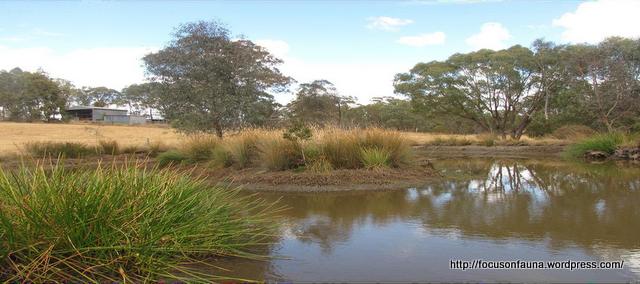
A wildlife wetland near Strath Creek
Last Saturday the Strath Creek Landcare Group, assisted by the Upper Goulburn Landcare Network, hosted a field day at our Strath Creek property that focused on improving the habitat value of farm dams. Twenty people – local landholders and some from the neighbouring Yea River catchment – heard environmental consultant Peter Mitchell explain what is meant by biodiversity in relation to farm dams, and the benefits of, and various means of achieving, improved biodiversity.
After a stroll around our farm dam and the adjacent specially-developed wildlife wetland, Danielle Beischer from the Waterwatch program talked about water quality and the role of Waterwatch – she even recruited a couple of volunteers for monitoring the King Parrot Creek. Danielle had on display water sample trays with an amazing array of aquatic macro-invertebrates obtained from our dam (see the slide show below for just a few of them). With magnifying glasses and identification sheets provided, the group was kept fascinated by these little creatures that indicate a healthy dam, and which attract a wide range of water-birds and other wildlife.
You know what it’s like…
It’s 36 degrees in the shade.
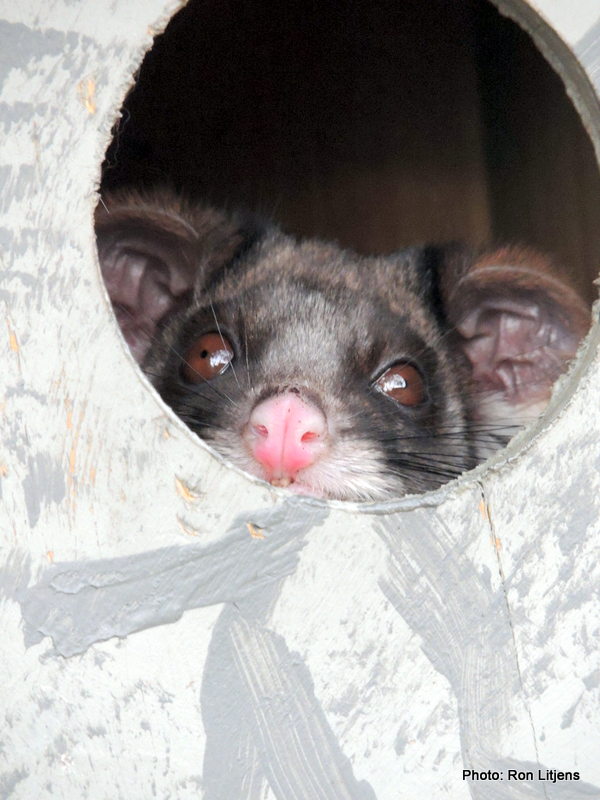
Just waiting for the cool change
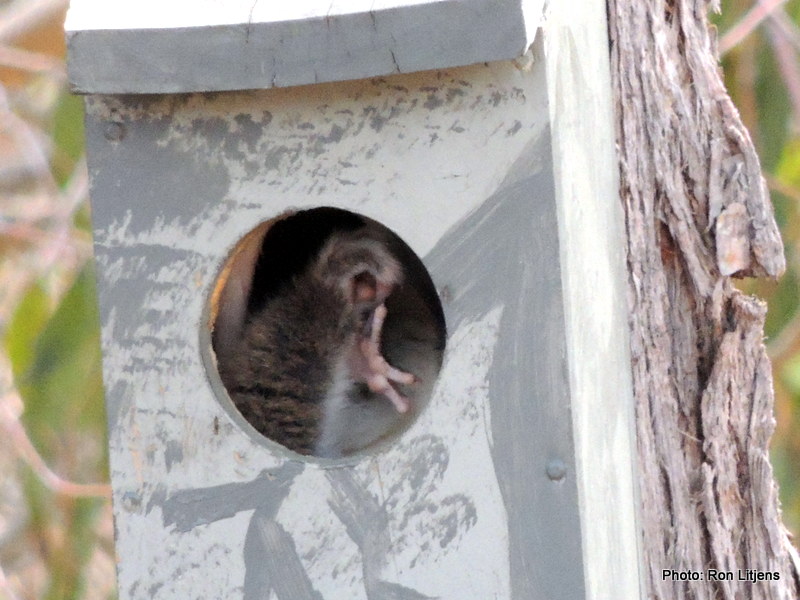
Trying to sleep in the afternoon…..
.
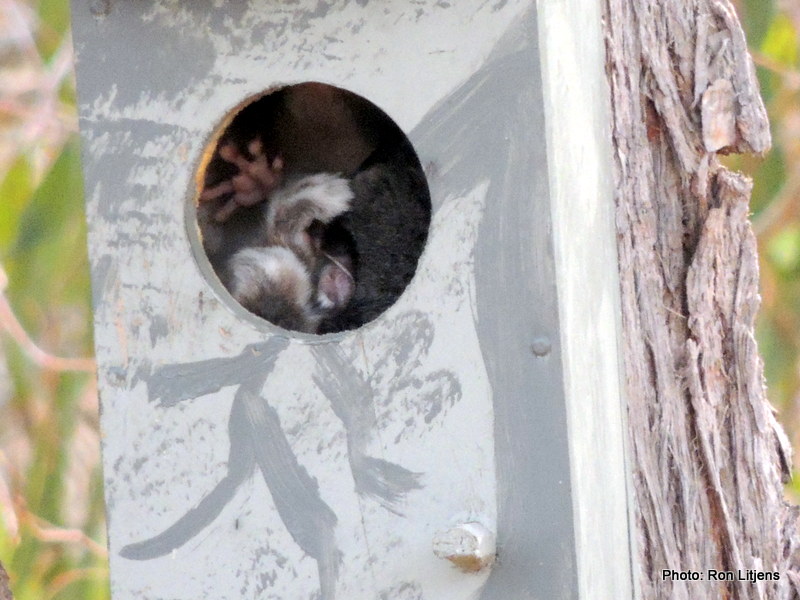
Tossing…..
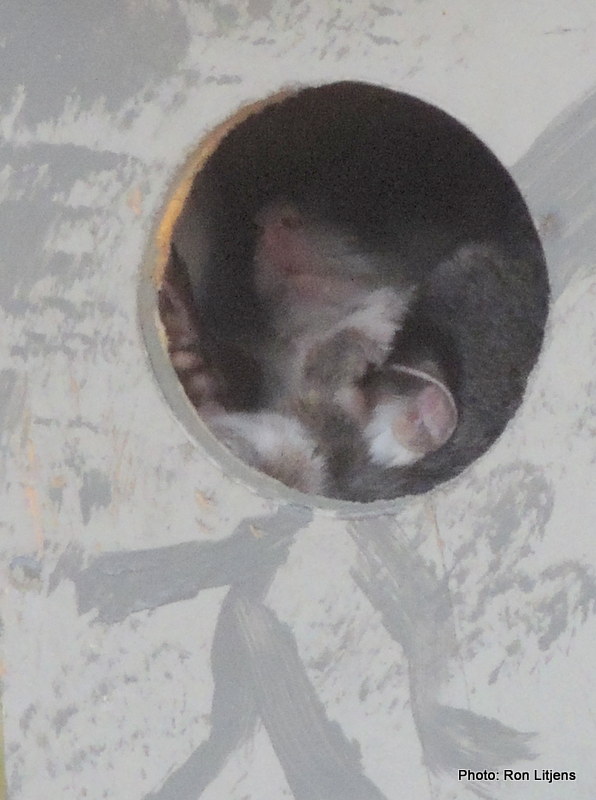
and turning…
.
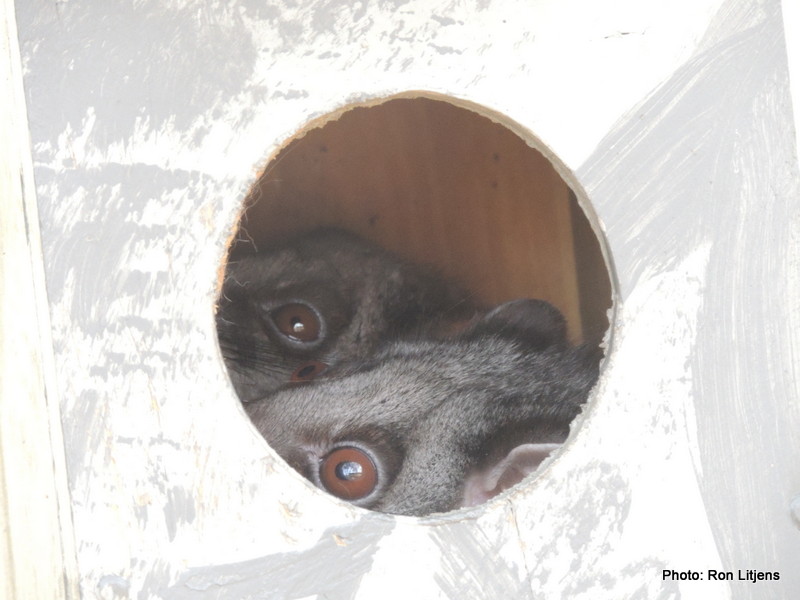
I think we’re right. Just lie still, close your eyes and go to sleep
Mum, why aren’t the birds scared?
Sacred Kingfisher
I distinctly remember asking my mother this question when I was young while we were feeding the ibis at Healesville sanctuary. The sign said ‘Sacred Ibis’ (I know, dyslexic at such a young age – that’s why I date an editor). But they didn’t look scared to me. In fact I remember having to protect my lunch from them all afternoon.
Cousin kookaburra
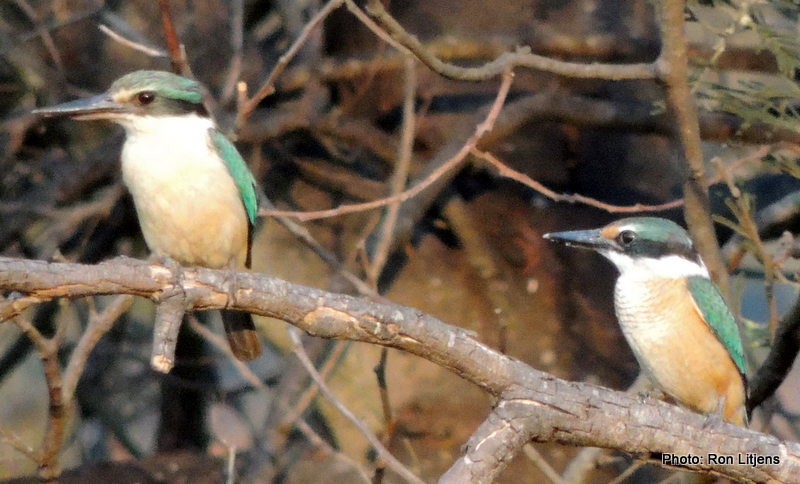
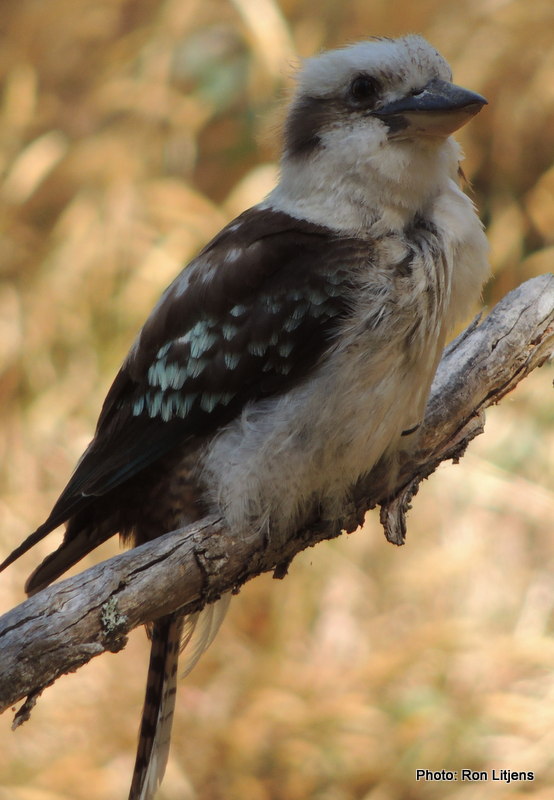
I was reminded of this when walking to my assigned platypus-watching position in Coonans Reserve at the recent King Parrot Creek Environment Group outing. Not too far from me, searching the ground for dinner, were two peacock-green, none-too-scared Sacred Kingfishers (Todiramphus sanctus). In the same family as the Laughing Kookaburras (Dacelo novaeguineae), these kingfishers inhabit creek margins, feeding on aquatic life from the creek as well as insects and small reptiles. The male, female and juveniles look very similar. The bird on the left (pictured above) was feeding the other at the time.

Wakey, wakey
Searching using thermal imaging we later found (and woke) a kingfisher (pictured left) sleeping on a low-hanging branch. It didn’t seem too scared either.




 Focus On Fauna