How sweet it is!
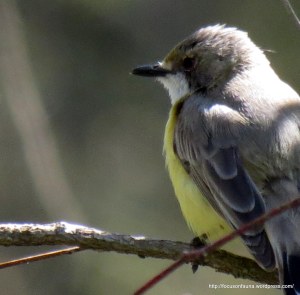
White-throated Gerygone
It’s well worthwhile keeping an eye out for this lovely little bird – a regular visitor to the Upper Goulburn catchment at this time of year. In fact, you are far more likely to hear it rather than see it during breeding time in spring and early summer. It’s a White-throated Gerygone (pronounced jer-rig-ony, not jerry-gone) and it has what is surely one of the sweetest songs of all our native birds.
If you do catch a glimpse of this colourful bird, it is likely to be flitting among the upper canopy of a eucalypt. However, we were lucky to come across one at the Yea Wetlands recently which was so absorbed with feeding and singing on low branches, it was quite unconcerned by our presence just meters away.
Click on the icon below to hear its silvery song.
Fauna Survey Weekend – Toolangi
Over the weekend of 23-25 November members of the Kinglake Landcare Group and local residents carried out a fauna survey at a bushland property in Toolangi.
Led by Peter Homan from RMIT and the Field Naturalist Club of Victoria the volunteers carried out trapping for small mammals and bats, spotlighting for possums and gliders, bird watching and reptile searches.

Voluteers setting up the harp trap.
Over the weekend we were lucky enough to capture native Bush Rats and Agile Antechinus in the Elliott Traps and five different species of small insectivorous bats in the Harp Trap including Southern Forest Bat and Lesser Long-eared Bat.
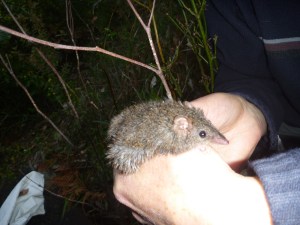
Agile Antechinus
Spotlighting observations included Sugar Gliders , Ringtail Possums, Common Wombats and Swamp Wallabies.
The reptile searches turned up McCoy’s Skink and Southern Water Skink and bird watching resulted in the recording of 17 species of birds including Rufous Whistler and Tawny Frogmouth.

Native Bush Rat
Remote sensor cameras were also set up and we were able to get some great footage of Long-nosed Bandicoots.

Volunteers weighing trapped mammals
This fauna survey event was funded by the Victorian Bushfire Appeal Fund.
All field work was conducted under a DSE issued Scientific Research Permit.

Bat in harp trap
Chris Cobern
Landcare Coordinator
Upper Goulburn Landcare Network
Once bittern, twice shy
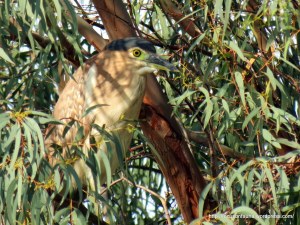
Nankeen Night-Heron
Actually, the bird shown here is neither a bittern nor particularly shy. There were unconfirmed reports of a bittern seen in the Strath Creek area earlier this year – perhaps an unlikely sighting given the shaky conservation status of the two bittern species that may be found in Victoria. We suspect the bird in question may have been a Nankeen Night-Heron.
The one in these photos was spotted by Brian and Jim one morning recently on a wooden fence at ‘Callandoon’, not far from King Parrot Creek. It then spent much of the day perched in a nearby tree in full view of interested observers and photographers.
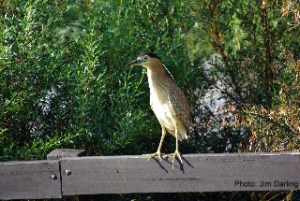
This chunky bird is in breeding plumage, with a couple of slender white plumes coming from the back of its head. Although not often seen around here, it is widespread and nomadic, and can congregate in large breeding colonies in the Murray Valley.
Talking of strangers …
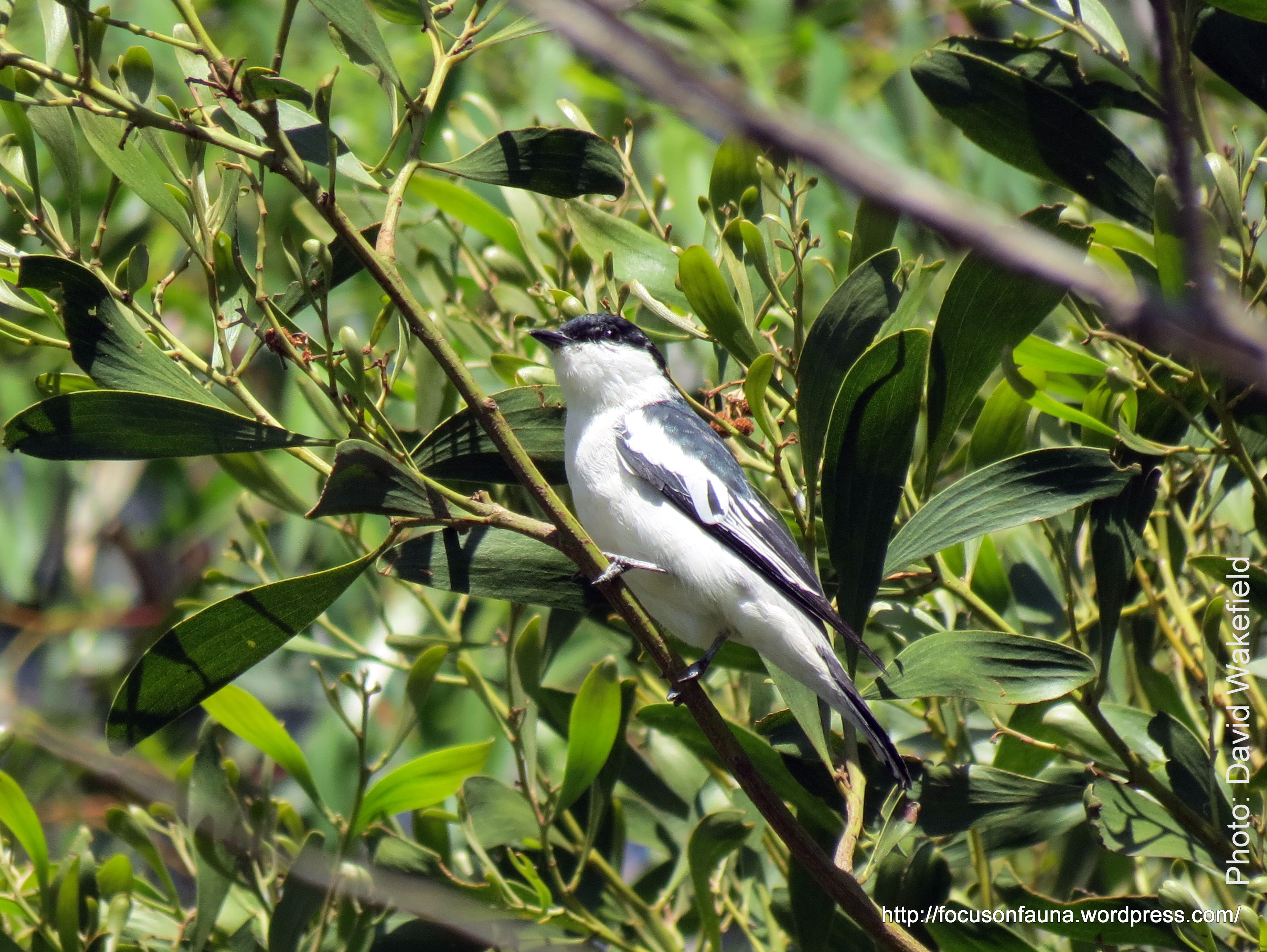
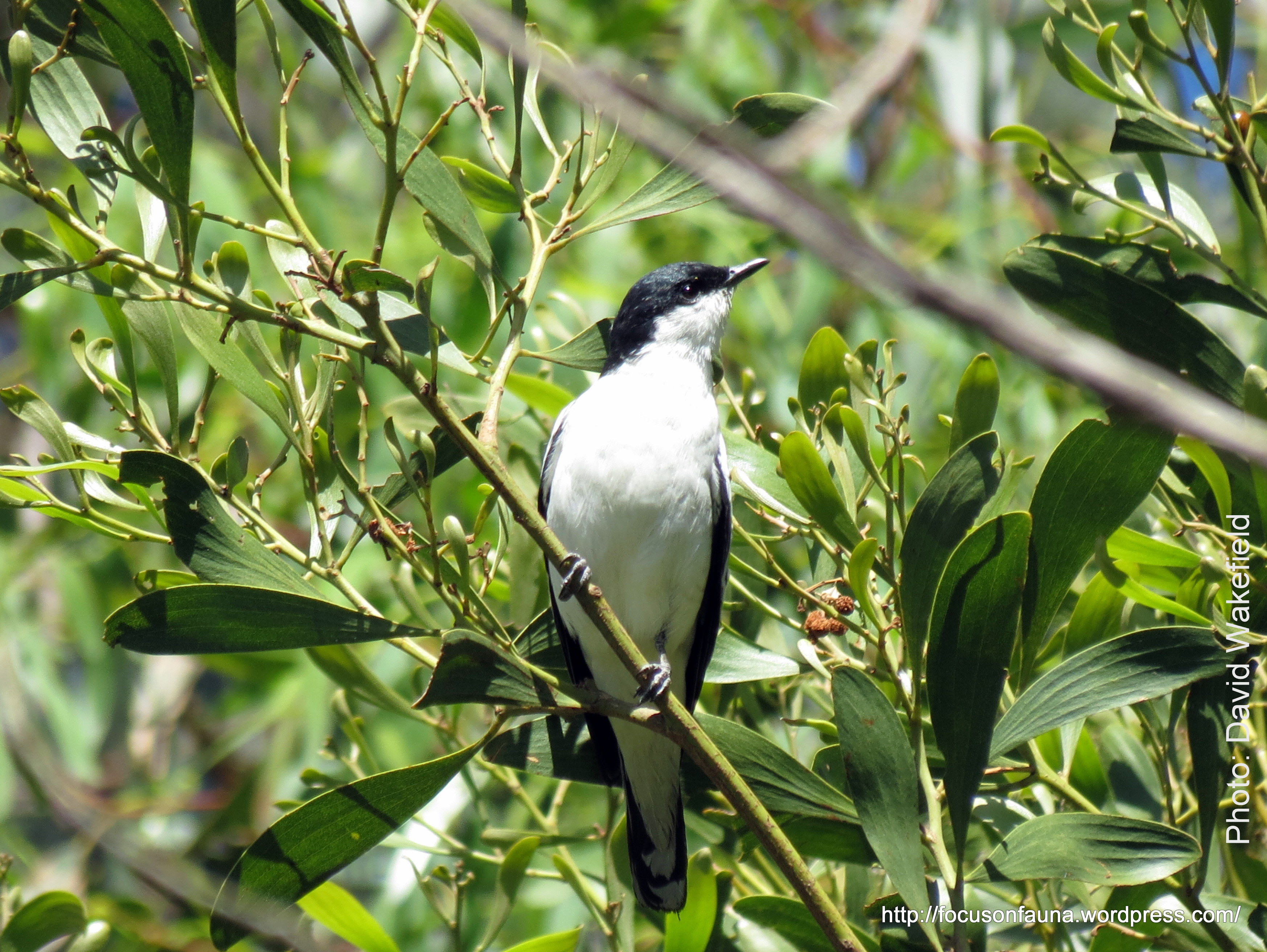
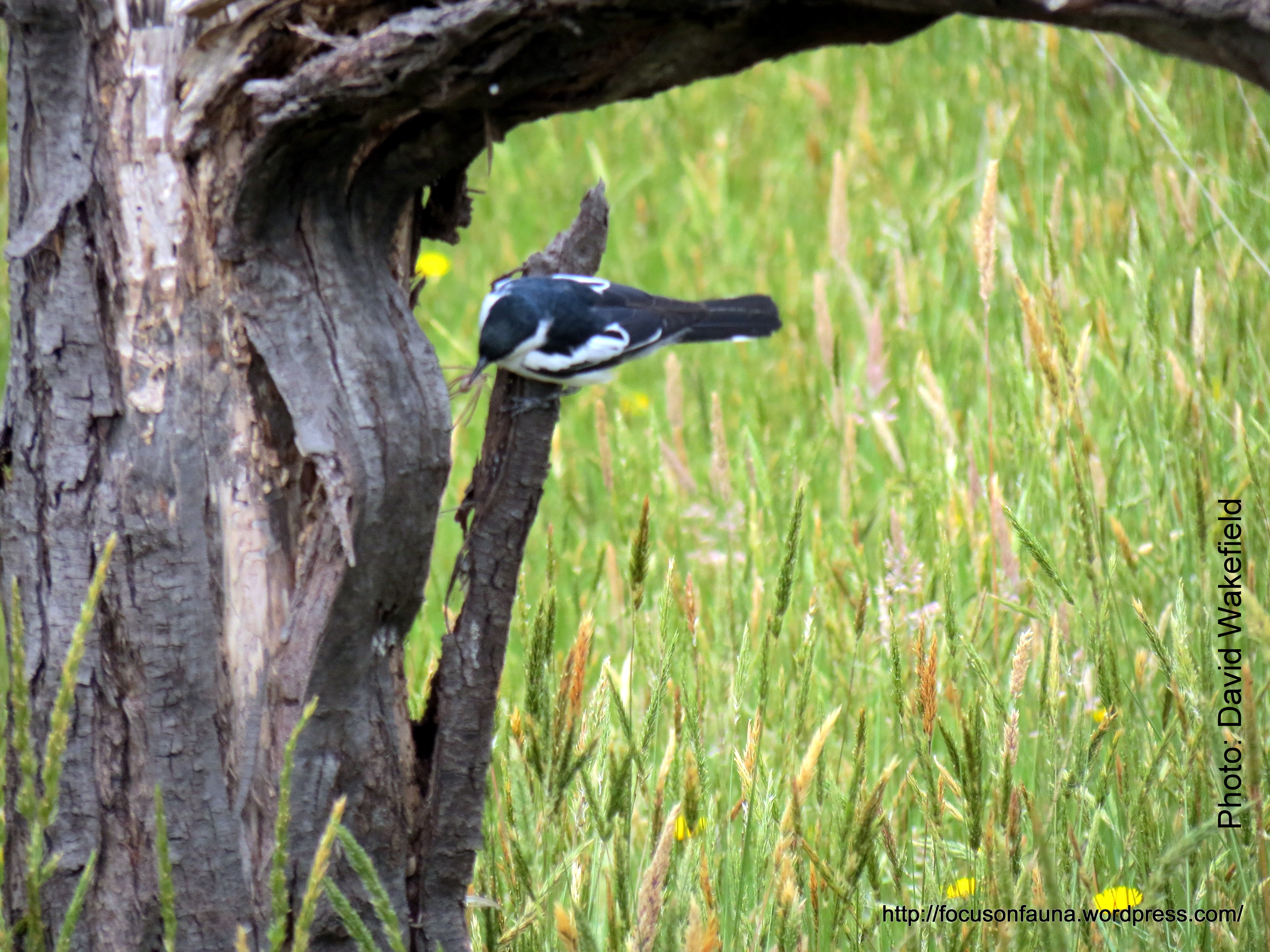
Male White-winged Triller
A couple of weeks ago, we were assisting Landcare coordinator Cathy Olive to assess farm dams for a local Landcare project, and told her of a somewhat uncommon sighting of White-winged Trillers on a property at Strath Creek. Just as we were telling her, a triller started calling nearby. After we subsequently saw White-winged Trillers at 5 out of the 7 properties we visited on 2 consecutive days, Cath understandably refused to believe it was any sort of rarity for the district. But in fact we have not seen one on our place since late 2009, and Steve Joblin, the Strath Creek Biodiversity Project Officer, has not recorded one on his Flowerdale property since 2008.
The pictured showy male triller turned up a week ago on our property. It will lose most of its black and white plumage in autumn and become more like the rather dull-plumaged female. Trillers are mostly migratory, spending the winter in northern Australia, then arriving back right across southern Australia to breed in spring. The numbers settling in a particular area vary from year to year, according to local conditions – so with the numbers around the Flowerdale/Strath Creek area this year, we must be doing something right !
To learn more about the White-winged Triller, visit Birdlife Australia’s Birds in Backyards website.
We recorded the triller’s lovely call on Neil and Kay’s Strath Creek property – click on the icon below to hear the call.
Welcome back stranger

In times gone by, that is before the big barbie of 2009, the Eastern Yellow Robin (Eopsaltria griseogularis) was a steadfast companion during my outdoor activities. Whether I was digging in the garden or sawing firewood for the winter, this bird was never far away. In fact often it sat within easy grasp, probably waiting for a juicy meal to be uncovered. We have spent many hours together in companionable silence. After the fires, however, they disappeared from our property, to be replaced in great numbers by its longer wavelength cousin, the Scarlet Robin (Petroica multicolor). These were rare on the hill before the fires. But this year we have seen the Eastern Yellow Robin again in the bushland around our home. Welcome back.
Insect thick-shake anyone?
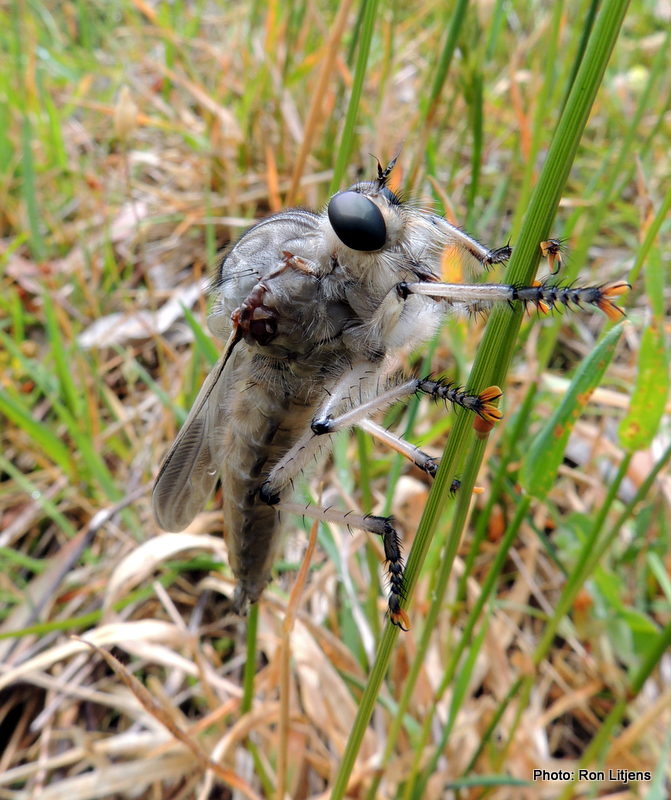
If you have been accosted recently by a fly-like insect the size of a small helicopter then you have probably encountered a robber fly (family Asilidae). Don’t kill it. It is an important natural weapon in the effort to keep insect pest populations down.
Highly predatory, robber flies use their legs to catch insects while in flight. The stout bristles in the moustache, which are a feature of the fly are designed to protect the eyes and face from the legs of the flailing prey. The flies paralyse their prey by puncturing them with their short proboscis and injecting saliva. The saliva also has the effect of dissolving the victims from the inside out. The robber flies then simply suck out the juices – just like an insect thick-shake, only crunchy.
And a word from the insect fashionistas: if you’re going to draw attention to yourself by wearing three pairs of bright yellow shoes the least you could do is to wax your legs.
Tiny turtle !
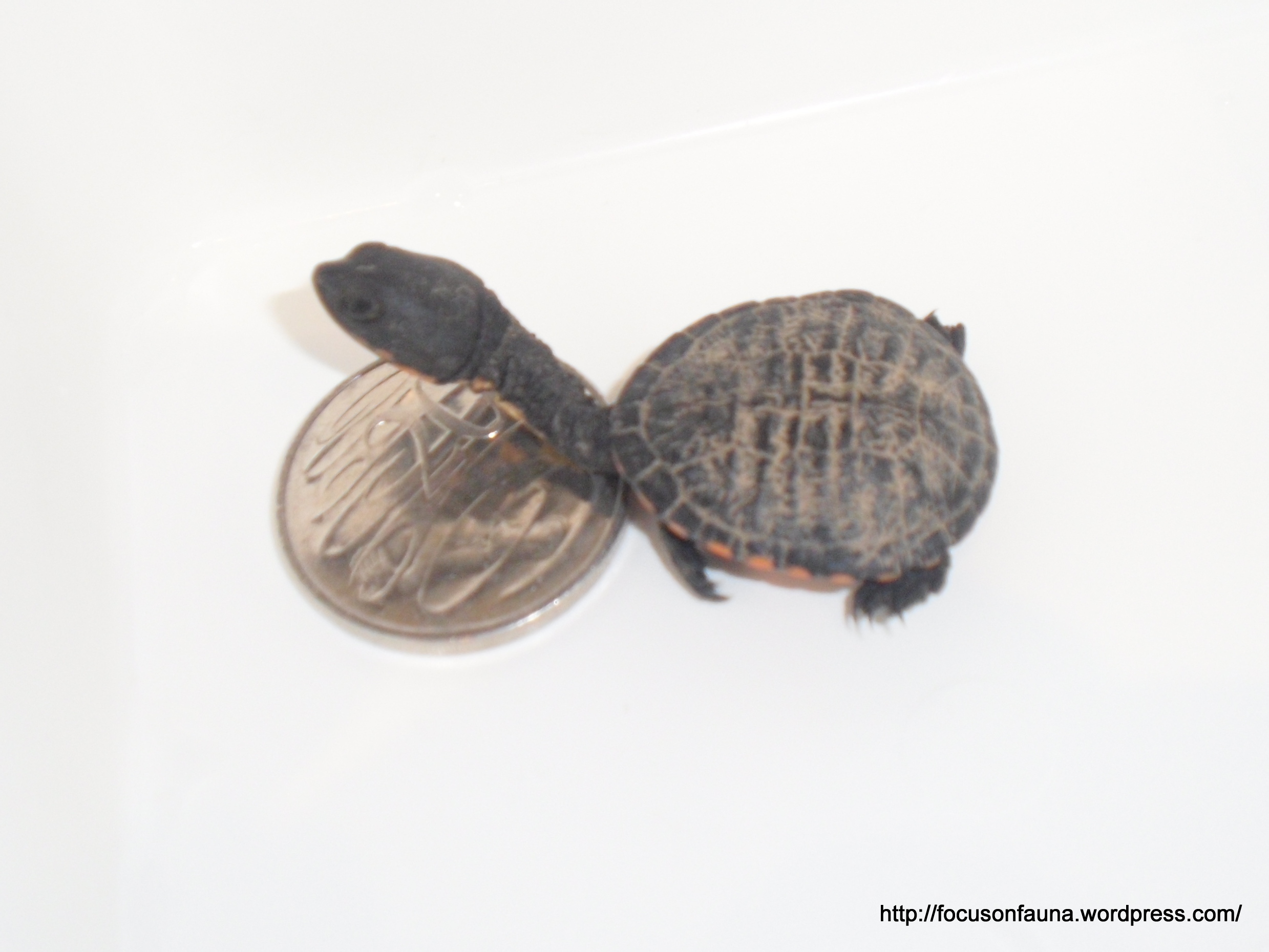 Not content with, or perhaps inspired by, finding Strath Creek’s first Striped Legless Lizard on their property, Neil, Kay and the kids have now sent in a report and photos of another rather unusual find, which looks to us like a hatchling Eastern Snake-necked Turtle (Chelodina longicollis) (post a comment below if we’ve got it wrong!). Neil dismissed it as a plastic toy when he first saw it while mowing, but the girls insisted it was alive. After inspecting and photographing it, they released it into their nearby dam, and last seen it was happily swimming around, diving and occasionally coming up for air. They were most impressed by the lovely orange/black colouring on the plastron (belly shell), typical of juveniles of this species.

It is not uncommon to come across adult Eastern Snake-necked (or Long-necked) Turtles wandering overland, not always near water, and sometimes perilously across roadways. It’s worth knowing they can release a pungent smell when handled! Females lay up to 24 eggs (usually 6-10) in a hole dug close to water and cover them up, leaving the hatchlings to fend for themselves. The main breeding season is in early summer with a usual incubation period of about 3-5 months, so this little turtle must have been the result of a second breeding event in autumn or a particularly long incubation. It is certainly quite young, having been the size of a 10 cent piece at birth. If it survives it has a long road ahead; maturity is reached after about 10 years, and longevity in the wild is reported to be up to 35 years and some accounts estimate up to 80 years!
Birds do it, bees do it…
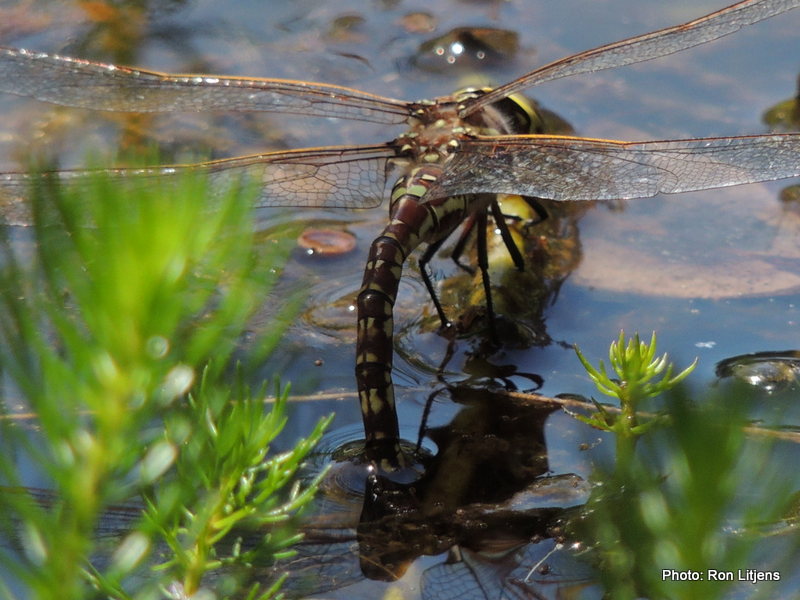
Blue Spotted Hawker dragonfly
Even dragonflies and damselflies do it. At the moment the air-space above our dam is more crowded than over Heathrow. The air is alive with dragonflies and damselflies and mating is the name of the game.
Highly territorial, the males can be seen patrolling their part of the dam driving off intruding males and courting females at the same time. During mating the male grasps the female behind the neck using appendages on the end of his abdomen. The female in turn curls her abdomen under the male to receive the sperm, which fertilises the eggs. The eggs are then laid on submerged plants. Sometimes this is done while the male and female are still in tandem. The hatched nymphs remain underwater where they moult many times before crawling out on a reed and emerging as adults.
Pictured (above) is a female Blue-spotted Hawker (Aeshna brevistyla) dragonfly laying eggs on a submerged plant. Similarly (pictured below) are a blue male and a grey female Wandering Ringtail (Austrolestes leda) damselfly laying eggs ‘in tandem’.
It’s all so dam interesting.
(Species names are advisory only!)

Wandering Ringtail damselflies
Striped Legless Lizard at Strath Creek – yes!
- Legless lizard, but what sort?

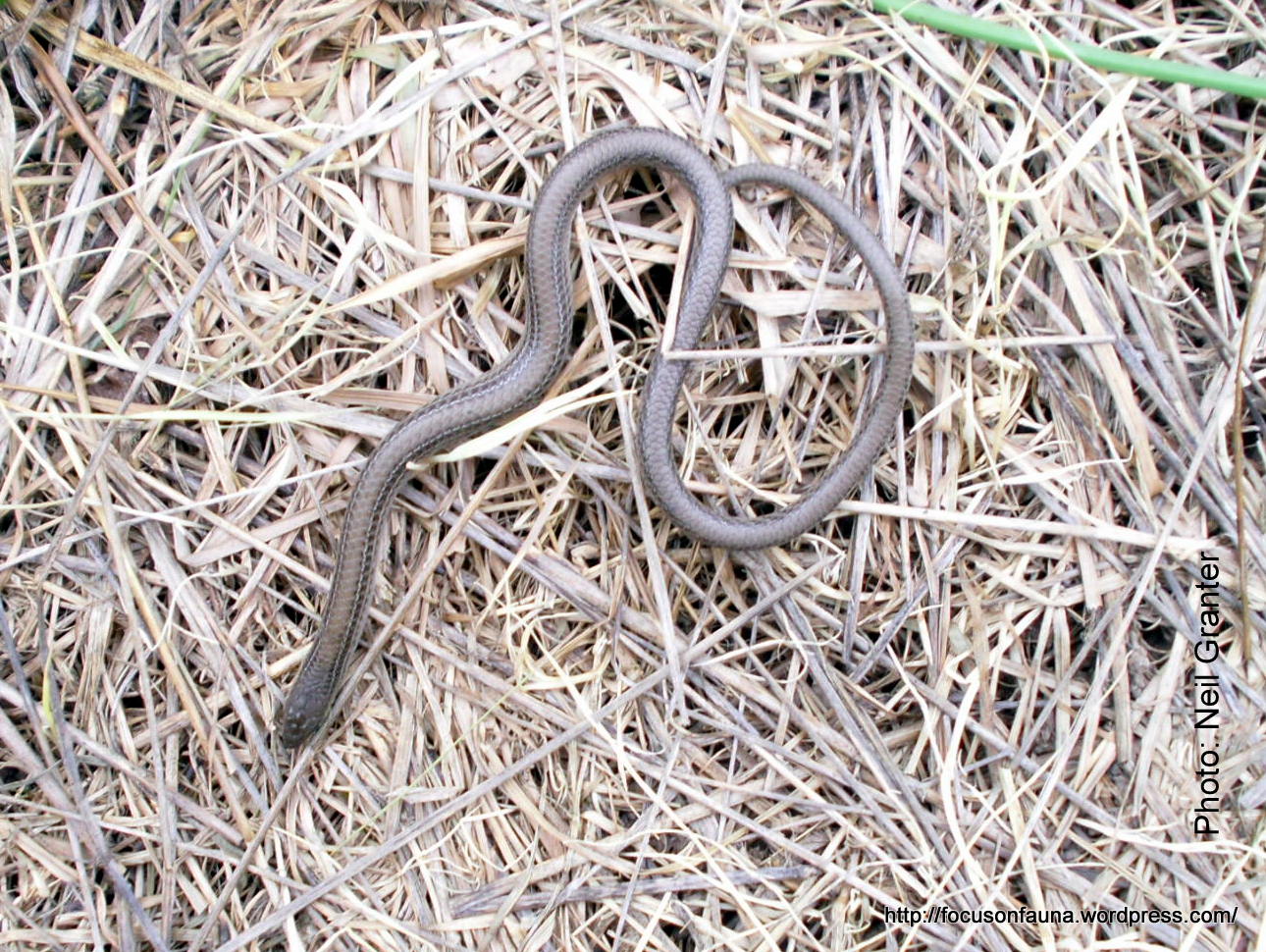
In a previous post on the discovery of a rare lizard near Broadford, we mentioned that Kay had turned up a small snake-like lizard earlier this year at her and Neil’s Strath Creek property while planting trees. The lizard squeaked when disturbed, a sure indication it was a species of legless lizard. Following Kay’s discovery, we laid down roof tiles as artificial shelter at the site, which is generally lacking fallen timber and loose surface rocks where lizards can hide. Roof tiles laid in a standardised grid pattern have proved successful as a survey and research tool, but we only had a few tiles laid randomly.
Periodic monitoring of the tiles over the past few months had only turned up an occasional small skink until the other day, when we lifted a tile to reveal a legless lizard, to the delight of Neil and young son William. But which species was it ?
Although there are 35 species of legless lizard found in Australia and Papua New Guinea, in this district there are only two likely candidates: the Striped Legless Lizard (Delma impar), found in native grasslands, and the more common Olive Legless Lizard (Delma inornata) which lacks stripes, is a bit larger than the SLL, and is usually found in woodlands. Identification is made more difficult by the fact that some SLLs have only very faint stripes, and Bertram Lobert, coordinator of the Upper Goulburn Striped Legless Lizard Project, was unable to make a positive id from Neil’s photo above.

- Almost!
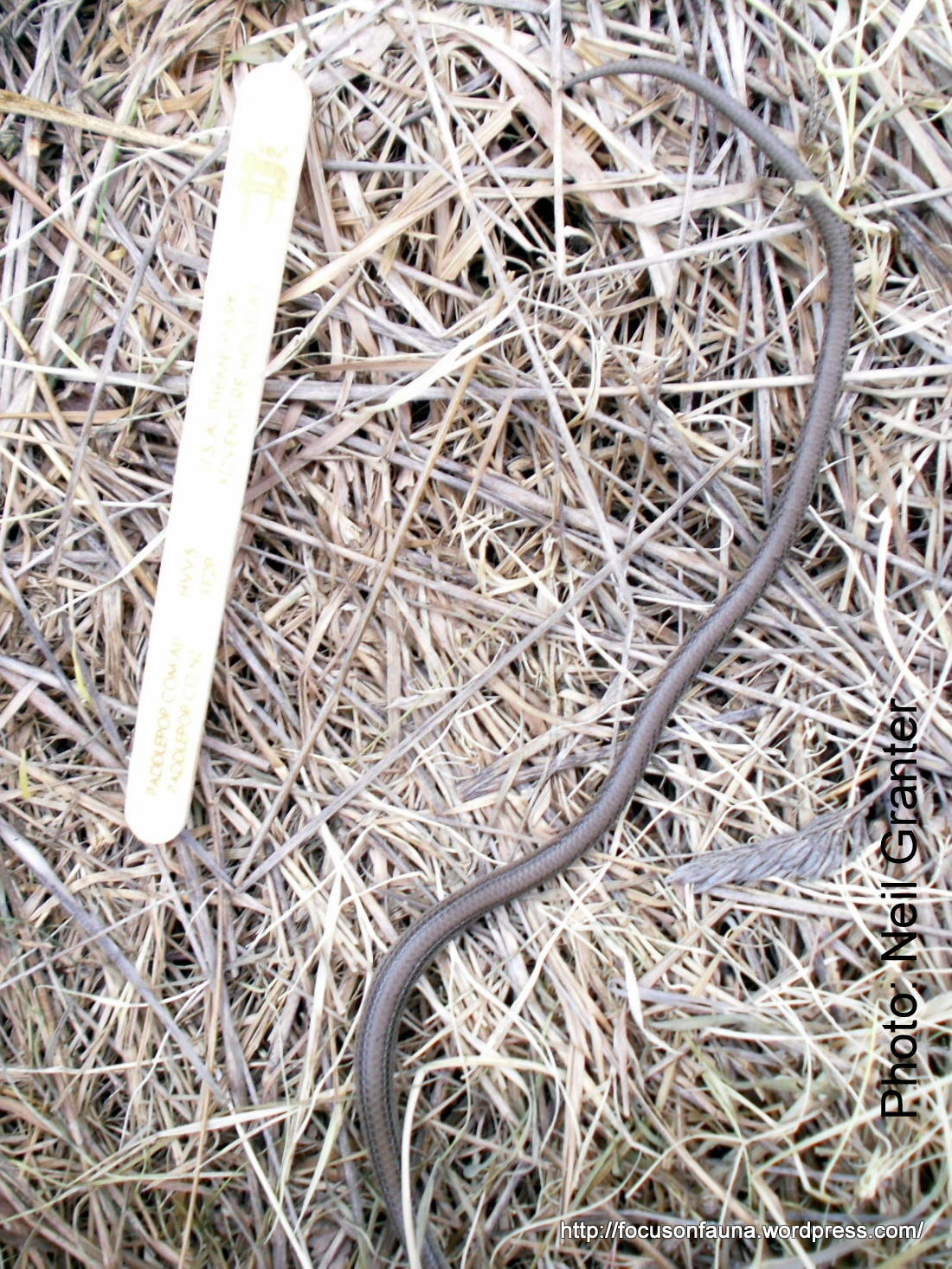
However, a few days later, Neil turned up not one but two legless lizards, one of which darted away, leaving Neil with a headless (as well as legless) lizard in his photo. But the other was clearly striped (see photo below) and was unmistakably a Striped Legless Lizard, as confirmed by Bertram.
So, Kay and Neil (and the kids) can now proudly boast of the first confirmed sighting of the threatened species in Strath Creek. As Kay remarked, ‘It’s lucky I didn’t squash the first one I found!’. And it’s lucky for us she reported it to Focus on Fauna.
If you’d like more information on this threatened species in the catchment, visit Striped Legless Lizards in the Goulburn Broken.

- Bingo! – a clearly striped SLL
Buxton wetland fauna survey
The UGLN fire recovery fauna project has now extended into the Buxton area.
We recently installed our remote sensor cameras at the property of Buxton residents Anthony and Tracy who have a wonderful wetland area on their farm.
The wetland was fenced off a couple of years ago with the assistance of funding provided by the DPI.
The area has regenerated well since the fires and is providing great habitat already to many birds.
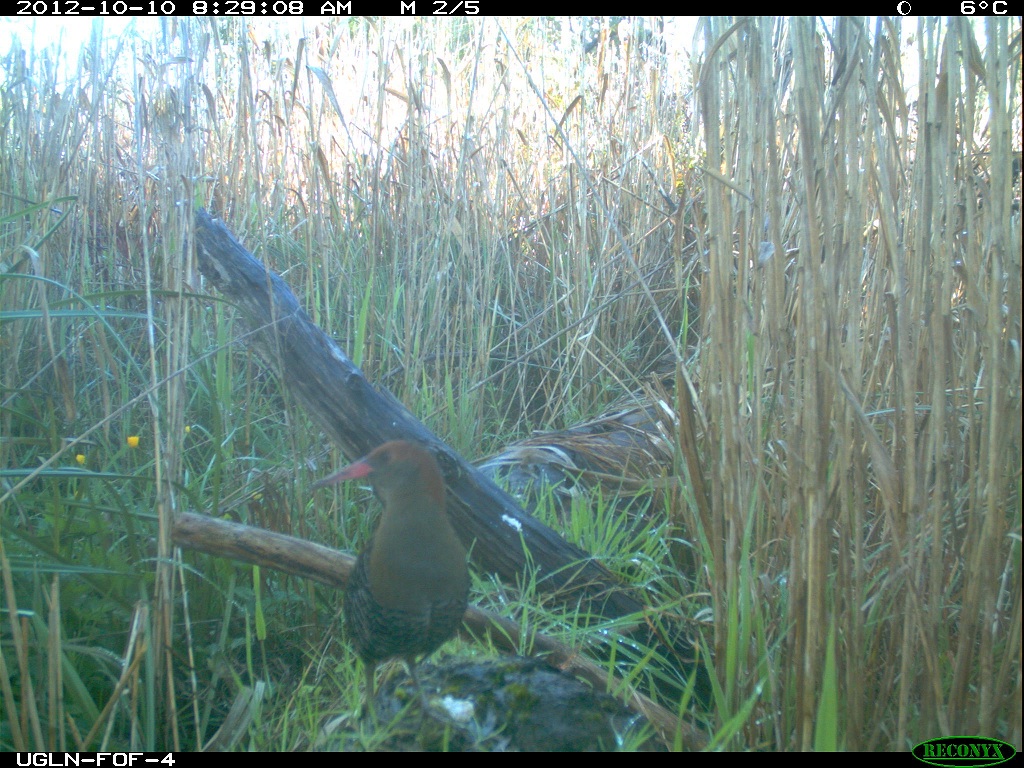
Lewin’s Rail at Buxton
Anthony had recently found a road-kill Long-nosed Bandicoot on the adjacent roadside and I found what appeared to be Long-nosed Bandicoot diggings around the wetland.
Unfortunately we weren’t able to get any photo’s of bandicoots. We were lucky enough however to capture photographs of the threatened Lewin’s Rail (Lewinia pectoralis) and also a pair of the more common Buff-banded Rail (Gallirallus philippensis).
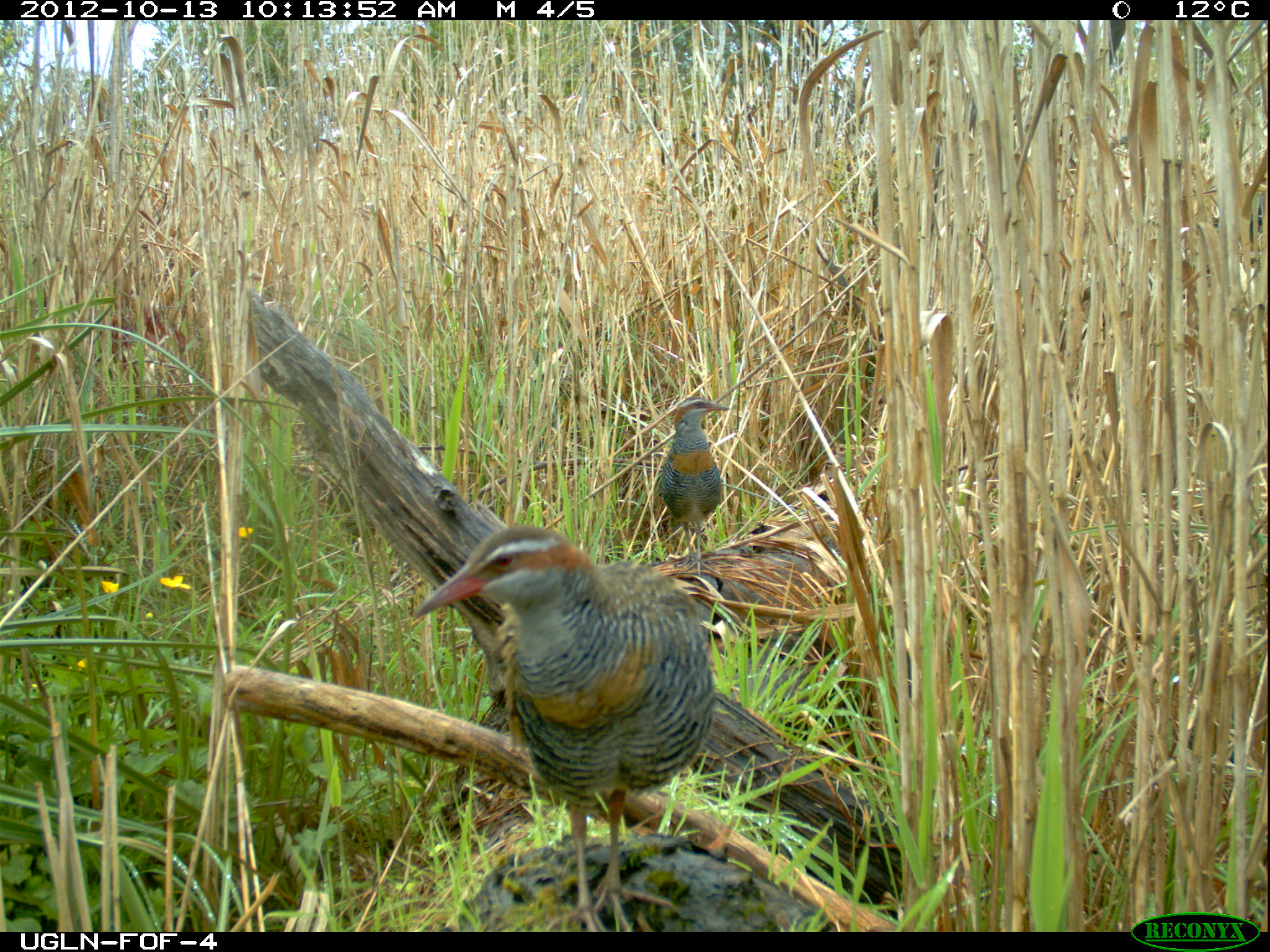
Pair of Buff-banded Rail
As well as many native Bush Rats (Rattus fuscipes) and a wombat. We also installed six nest boxes built by the Kinglake Scouts and Rotary on the surrounding Swamp Gums. The boxes are designed for Sugar Gliders and Brush-tailed Phascogales.
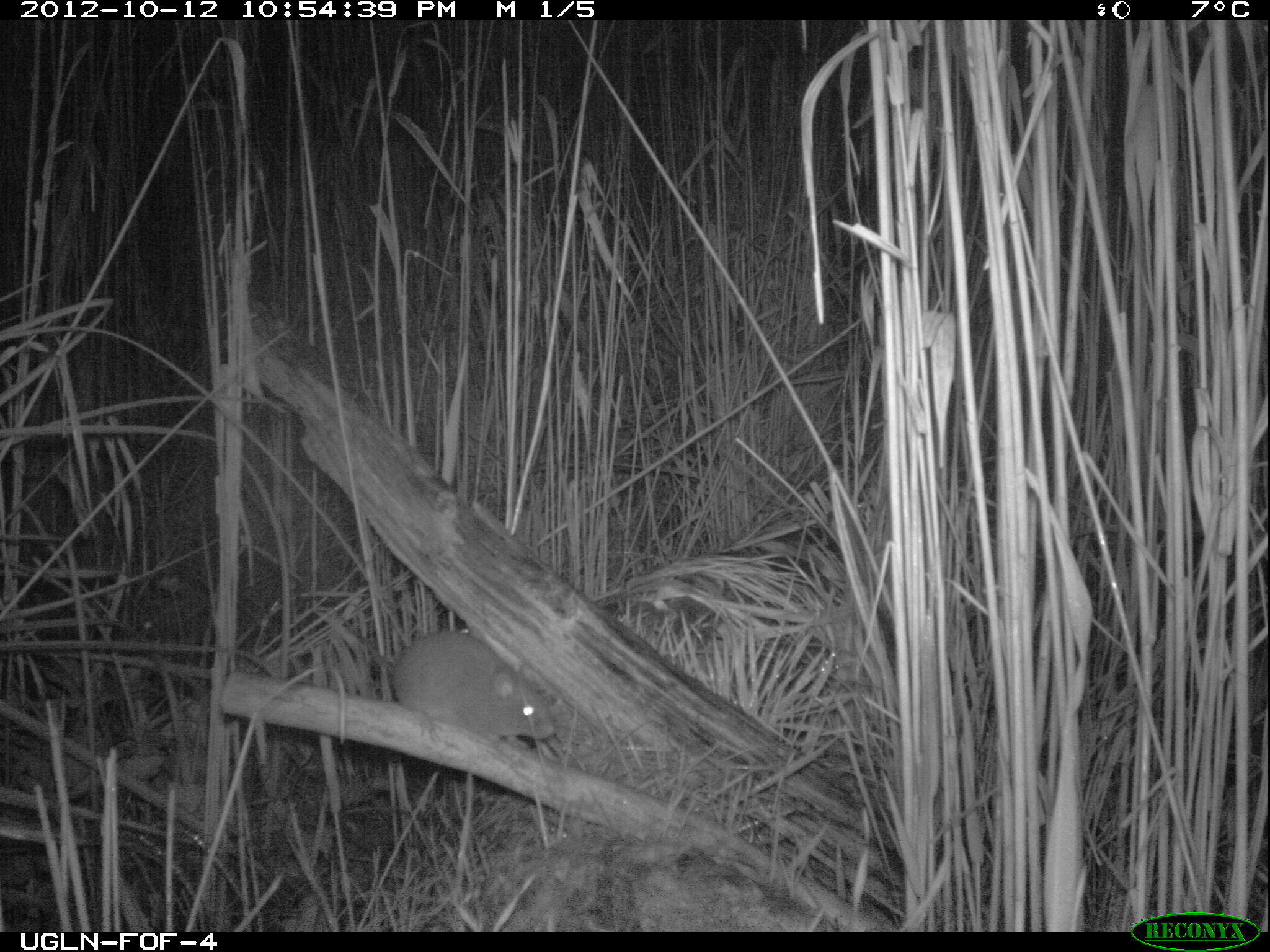
The native Bush Rat
Chris Cobern
Fire Recovery Landcare Coordinator
Upper Goulburn Landcare Network




 Focus On Fauna