An ancient owl & a spooky coincidence.

Owl, Chauvet Cave, France; 28-30,000 years old!
This is the oldest known human depiction of an owl anywhere in the world- about 30,000 years old! It comes from one of the limestone caves in southern France, inhabited by humans during the last ice age.
Last Friday, Friday the 13th of April, was the final fling for our Focus on Fauna project. Despite the ominous overtones provided by the date, the night was a great success. There’ll be more written about it later, but I thought I’d share this with you. The last presentation of the evening was given by Ron Litjens, about the recent fascination that he and Kate have developed for a pair of Powerful Owls that regularly roost on their property. Ron is collecting some really interesting data about the habits of this pair of owls and it was a thoroughly enjoyable talk – you can see some of Ron’s owl pics on previous posts on this site.
I got home late that night and only then noticed the image on the daily calendar we keep (above) – an owl on Friday the 13th, the night I’d just heard a talk about owls – spooky!! They are awake when we’re asleep, have silent flight, can rotate their heads through 360 degrees, their large eyes make them appear wise and they’re constantly asking the question “who?’. Little wonder that owls figure large in human mythology and Ron, and Kate, can take comfort in being part of a long tradition of humans being fascinated by these remarkable creatures.
For more about Chauvet Cave, the owl and the humans that lived there, you can ‘visit’ the cave and see the owl for yourself, or read about the cave on Wikipedia.
Falcons too …
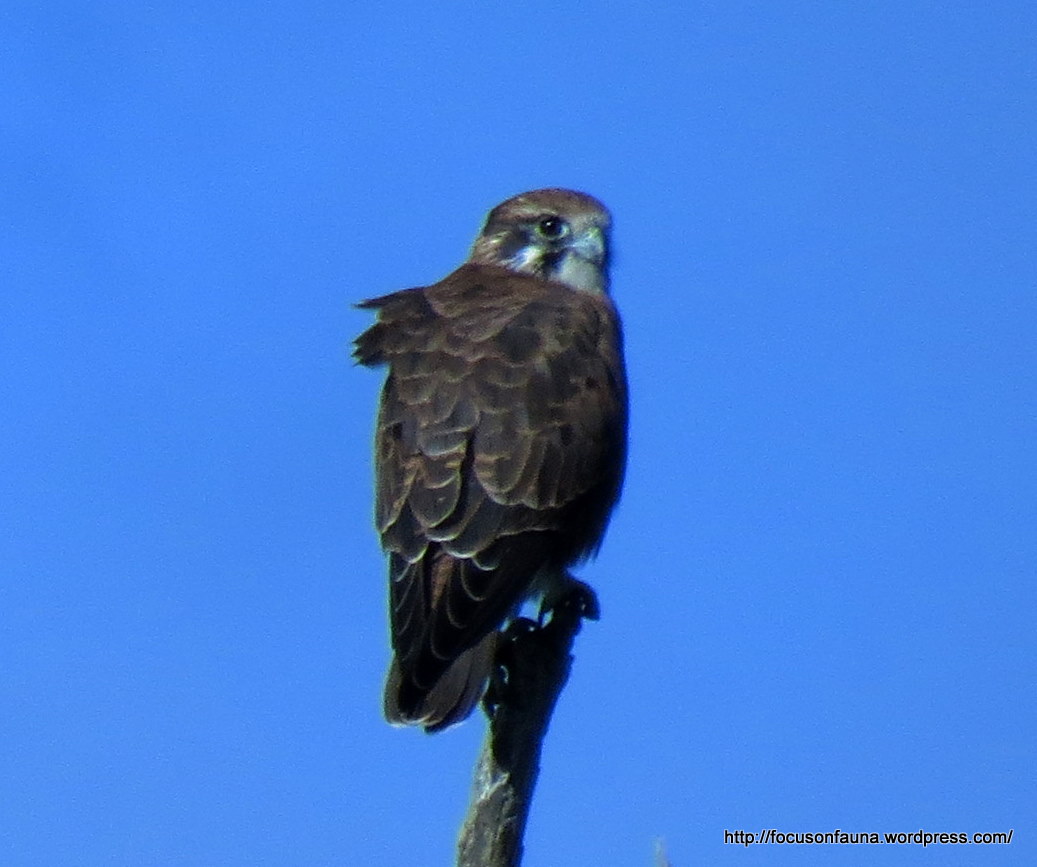
 Just to emphasise the value of isolated paddock trees, even dead ones, as perches for birds of prey, this pair of Brown Falcons was spotted in the same dead tree as the Black-shouldered Kite featured in the post “Top of the tree” on 29th March.

Further phascogale photos
The Brush-tailed Phascogale featured in an earlier post (click HERE to view) has become a fairly regular night-time visitor to our bird-bath, and the remote camera set up there has recorded a series of photos which are displayed as a video below.
Focus on Fauna – final fling
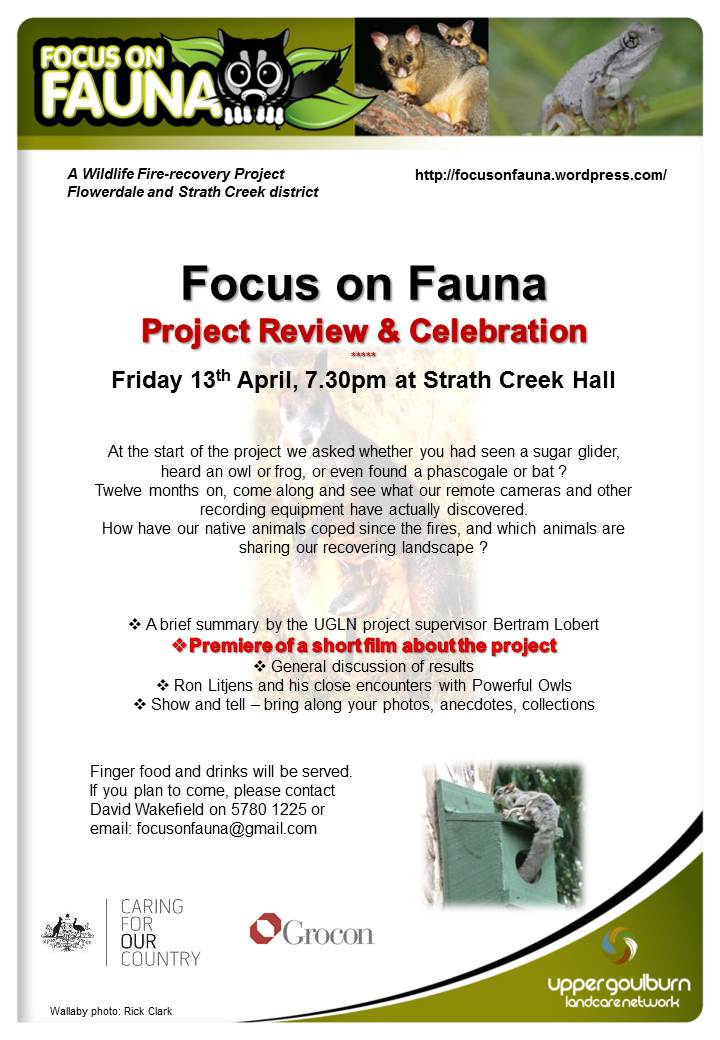
 To mark the end of the Focus on Fauna project, the Upper Goulburn Landcare Network is launching a short film about what we have been doing for the past year or so. We invite you to join us at Strath Creek Hall on Friday 13th April at 7.30pm to see and hear what we have found.
If you’ve been involved in any way in the project, or just taken an interest in the blog, why not join us – click on the flier below for full details.
Top of the tree
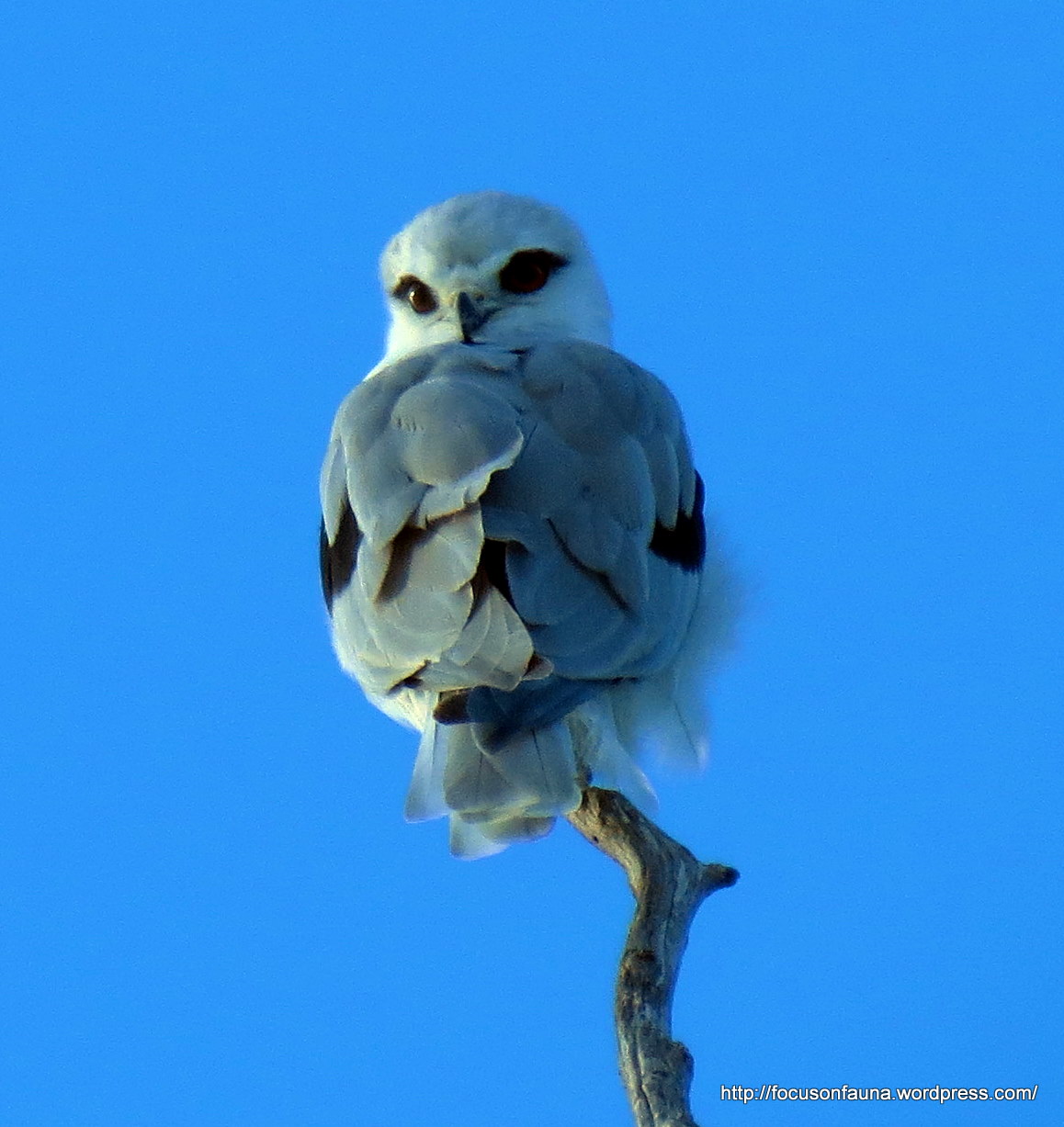
 This beautiful Black-shouldered Kite has been spotted several times recently perched in characterstic pose on the topmost branch of a dead tree in the middle of a paddock above King Parrot Creek. Just before these shots were taken, it was swooped by a passing Grey Butcherbird. After raising its wings and giving a little squeal, the kite settled back and seemed unperturbed.
Thanks also to John for his report of a pair of Black-shouldered Kites in a tree-top near the Falls Road junction just out of Strath Creek. The kites are no doubt taking advantage of the large numbers of mice and rats that seem to be around at present.
The perching habits of the kite (and the Nankeen Kestrel) highlight the value of leaving dead standing trees in open farmland.
Pterolocera at Strath Creek
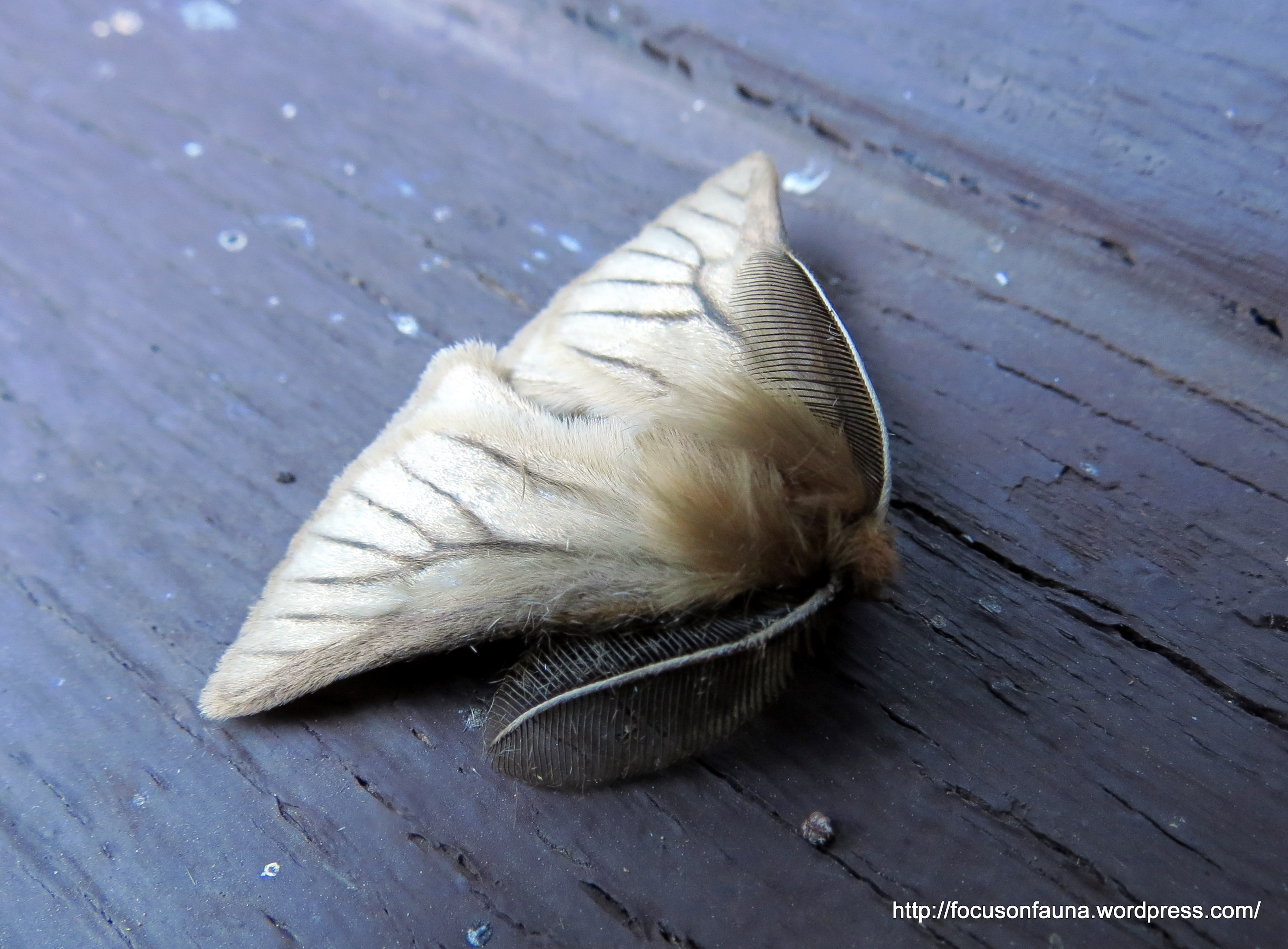
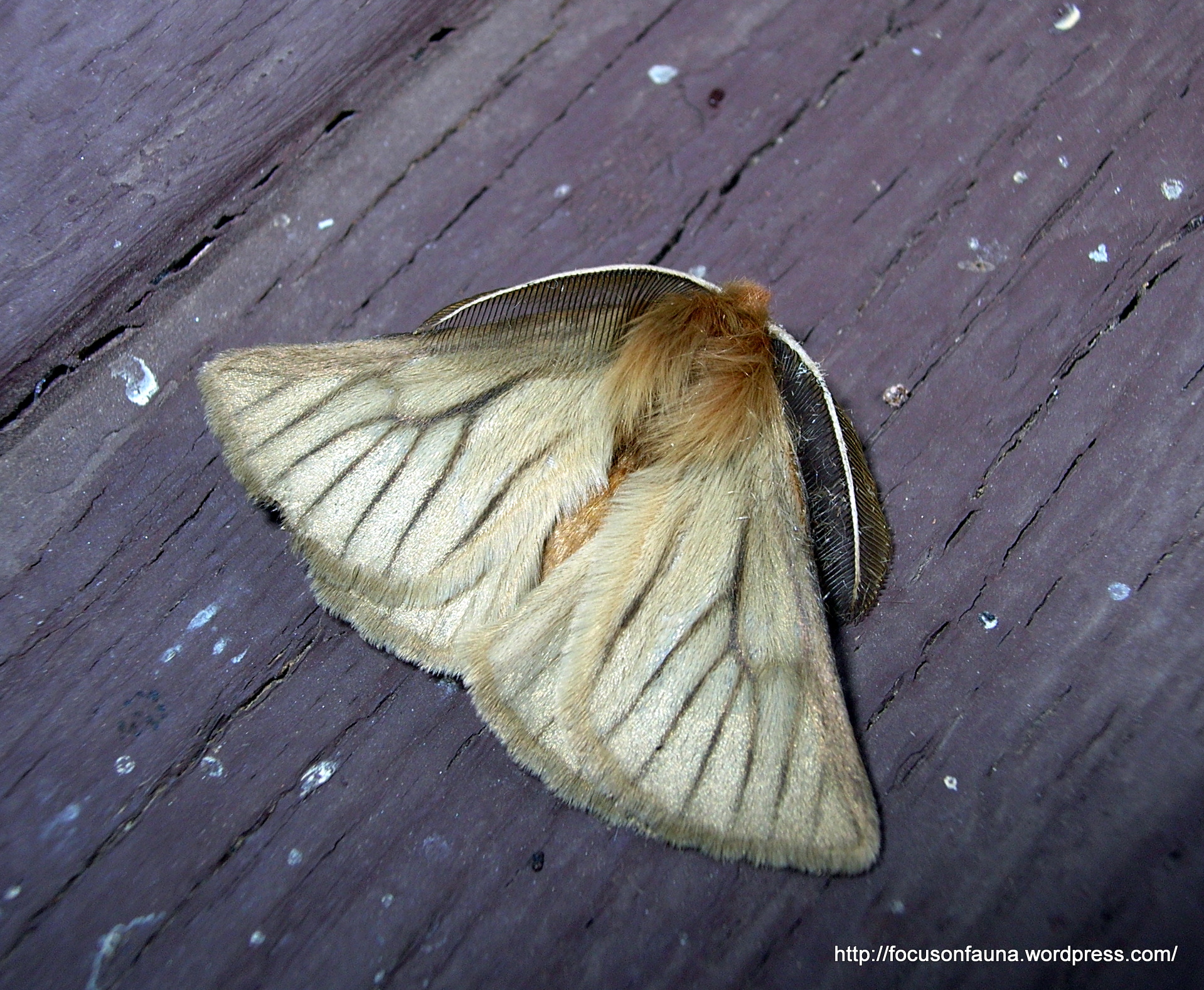 This handsome moth landed on our window sill the other day. We were readily able to identify it as an Anthelid moth, Pterolocera sp. Lined Group, from Peter Marriots’s Moths of Victoria – Part 1 . (Surely someone will let us know if we are wrong ?) Peter gave a very informative Focus on Fauna talk at Flowerdale in May last year – click HERE to see previous post.
The genus Pterolocera comprises somewhere between 6 and 30 species, those in Victoria apparently all yet to be named. It is divided into 3 groups based on appearance – the Lined Group, Reddish Group and Plain Group.
Pterolocera can be found in most habitats. The species shown here likes open grasslands, where its larvae (hairy caterpillars) find plenty to feed on. The photos show a male moth with a wingspan of about 30-35mm. The female is flightless.
Thirsty Sugar Glider
Here are some interesting infra-red images of a Sugar Glider (Petaurus breviceps) that recently visited our regularly monitored bird-bath at ‘Flowerdale Heights’. At one stage there is a flash above the bath that could well be a bat flying over.
What do we have here ?

Spot the insect ! – and what is it ? Knowing little about insects, we consulted a local guru who assured us it is a species of grasshopper, not a stick or leaf insect as we initially thought.
Can anyone confirm or dispute this ?
When amongst bark and leaf litter it was close to invisible, but lost much of its camouflage effect when it hopped on to our gravel driveway.
Spectacular butterfly in Flowerdale
We recently received this lovely photo of a male Orchard Swallowtail or Large Citrus Butterfly (Papilio aegeus) from Heather and Steve in Flowerdale. With a wing span of 120mm (females are even larger at 140mm), this is the largest butterfly likely to be found in the Flowerdale/Strath Creek area. Although called a swallowtail, it in fact lacks the true swallow tail characteristic.
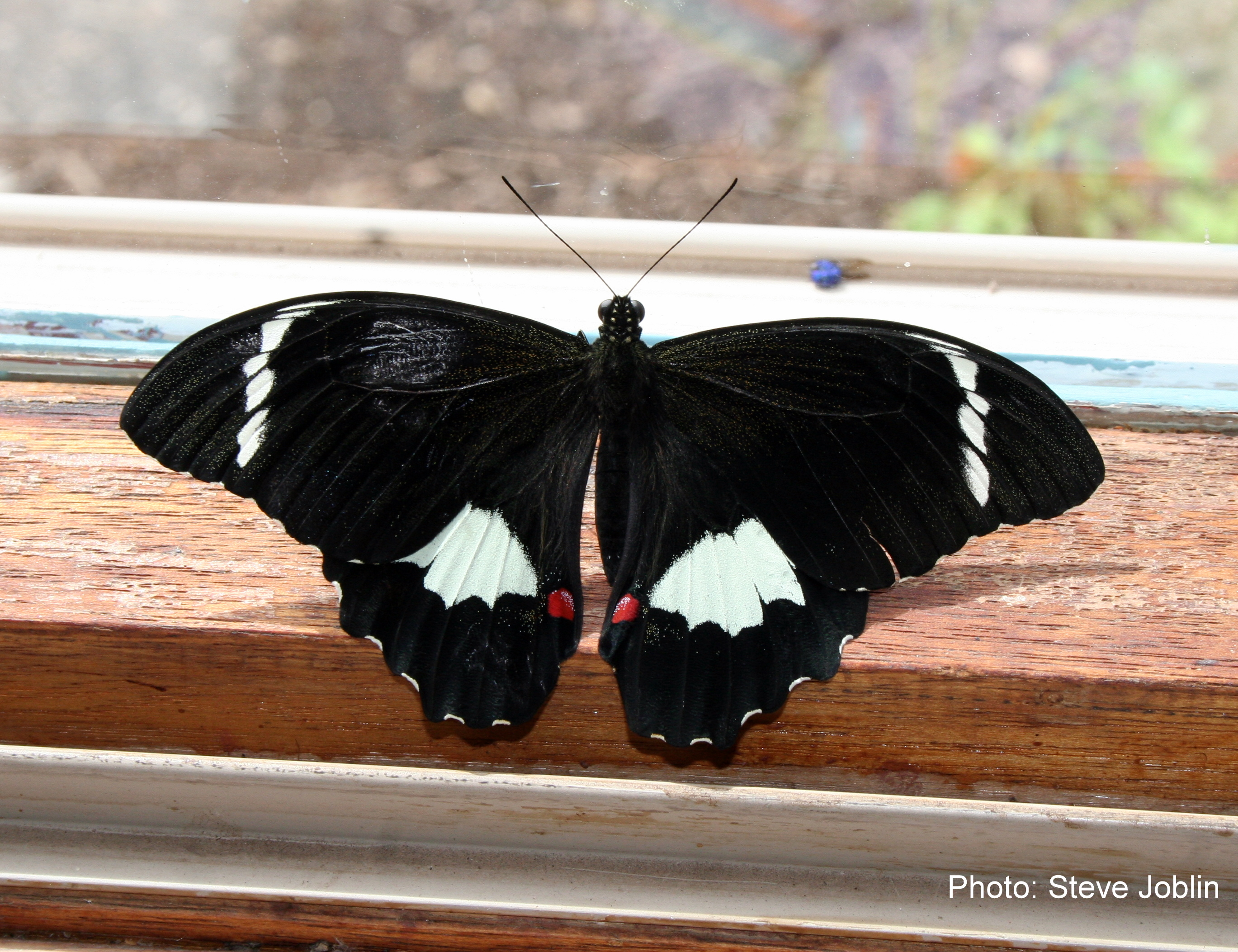
Click HERE to view a fascinating post on the metamorphosis of the Orchard Swallowtail caterpillar on the Strathbogie Ranges Nature View blog.
Another Tuan caught on camera
Inspired by the variety of wildlife turning up at the bird-bath on Ron and Kate’s Flowerdale property, we installed a new bath close to some eucalypts and a firewood stack in our front yard, and set up one of our motion-sensor cameras. Lo and behold, on the very first night, we recorded a very healthy-looking Brush-tailed Phascogale. This site is about 10km from Ron and Kate’s, so we can safely assume it is a different animal from the one recorded there. It is in fact very close to the nest-box where we first recorded a phascogale in February last year. Click HERE to view the post featuring that sighting.
The results from our camera surveys are starting to show that the Brush-tailed Phascogale may be more common and widespread than we first thought.




 Focus On Fauna