Birds of prey

Little Eagle
One of the joys of coordinating the Focus on Fauna project has been the wonderful wildlife photos that have been sent to us by members of the local community, and from others elsewhere who have learnt of the project through the blog or word-of-mouth. As an example, the two magnificent photos shown here of a Little Eagle and a Collared Sparrowhawk were sent in recently by email from a couple in Rutherglen. We thank them for their contribution.

Collared Sparrowhawk
Bandicoot update
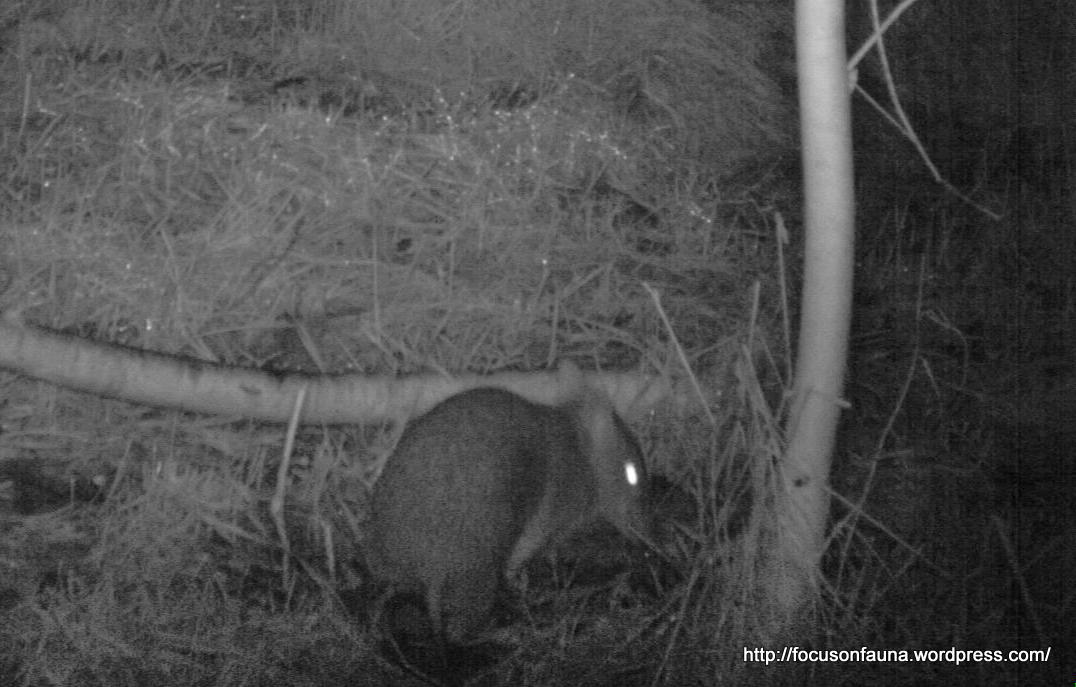 Following our previous post on the Long-nosed Bandicoot, the good news is that Chris Cobern, the Landcare Fire Recovery Coordinator, has successfully recorded a live bandicoot on a remote camera between Kinglake West and Flowerdale, close to where the roadkill bandicoots have recently been found.
Look out for bandicoots!
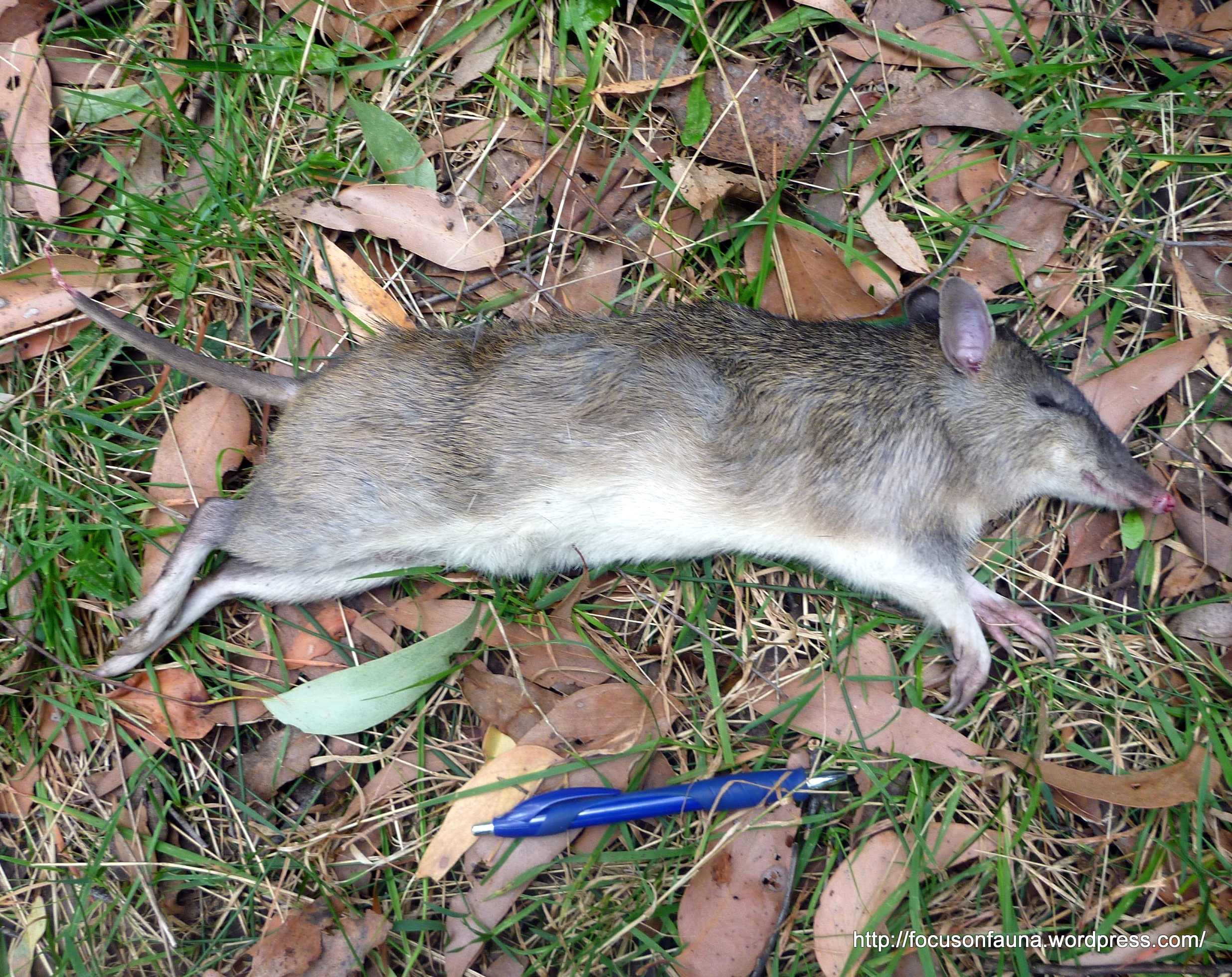 The Long-nosed Bandicoot (Perameles nasuta) pictured here was killed by a vehicle on the Whittlesea-Yea Road at Flowerdale in April and is unfortunately one of five known roadkill bandicoots in the past few months, mostly in the Stony Creek area towards Kinglake West.
There is conjecture about the reasons for this spate of road deaths. Flowerdale farmer and naturalist Steve has been travelling along this road almost daily for 14 years, and, despite carefully monitoring roadkills (for possible young in pouch), had never seen a bandicoot until recently. One theory, looking on the positive side, is that, although disturbing to see these lovely animals being killed, it may indicate a large increase in the local bandicoot population following the catastrophic bushfires in the area in 2009. This may be as a result of the past two relatively wet years providing soft earth to dig in and a flush of insects and fungi, which constitute a large part of the bandicoot’s diet. Long-nosed bandicoots forage in leaf litter and often dig characteristic conical holes to locate invertebrates and underground-fruiting mychorrhizal fungi. The bandicoot also eats lush plant material and the prolific regrowth of vegetation after the fires provides both food and cover from predators.
The night-time shots in the slide-show below were taken on remote cameras set up at Toolangi in April this year.
If you do see a bandicoot, alive or dead, please let us know, either by posting a comment or by emailing focusonfauna@gmail.com.
Focus on Fauna gets REAL!
 Focus on Fauna recently teamed up with Michigan State University’s Remote Environmental Assessment Laboratory (REAL) to analyse some of the bird/frog audio files recorded by our remote Song Meter during surveys on private properties around Flowerdale/Strath Creek last year (click on Project Activities for a description and photos of the Song Meter). Jo Wood from the Goulburn Broken Catchment Management Authority instigated the contact with Professor Stuart Gage at MSU; Jo was previously involved in a joint project with Stuart to analyse frog recordings at Tahbilk Lagoon near Nagambie.
Stuart and his team at REAL specialise in “soundscape ecology”. Soundscape is a term for all the diverse sounds that emanate from a landscape, including biological, geophysical (wind, running water, thunder etc.) and anthropogenic (planes, vehicles, air-conditioners etc.) sounds. Biophony (biological sound sources) can be influenced by other sound sources; an example being birds that alter the loudness or frequency of their calls in urban environments to compensate for traffic noise. Frogs, birds and insects often cease calling when it is windy or raining heavily, and excessive background noise can disrupt frogs from finding mates.
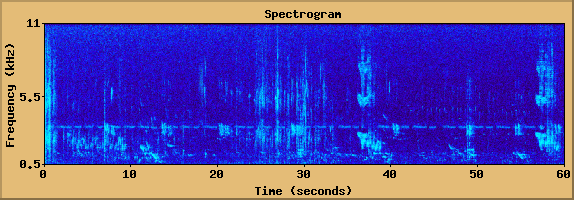
Soundscape ecology is a complex and emerging new science with potential applications in developing conservation strategies. To learn more, click on the link to the REAL website:
http://real.msu.edu/projects/one_proj.php?proj=wfrp
Here Stuart has analysed dawn chorus recordings from 11 Flowerdale/Strath Creek properties and assigned a “normalised differential sound index” (NDSI), which attempts to quantify the soundscape of each survey site. Jo has emphasised that the index does not necessarily reflect the conservation value or management practices of each property, since it can be influenced by factors beyond the control of the landholder; however it can give us an idea of what is present, and the diversity at a site. Also at this stage the analysis is based on only a single one-hour dawn recording for each of the Focus on Fauna sites.
To access the sound recordings, click on ACCESS DATA and then SEARCH. For an explanation of soundscape interpretation, go to the HOME page.
Not just trees for this bird !
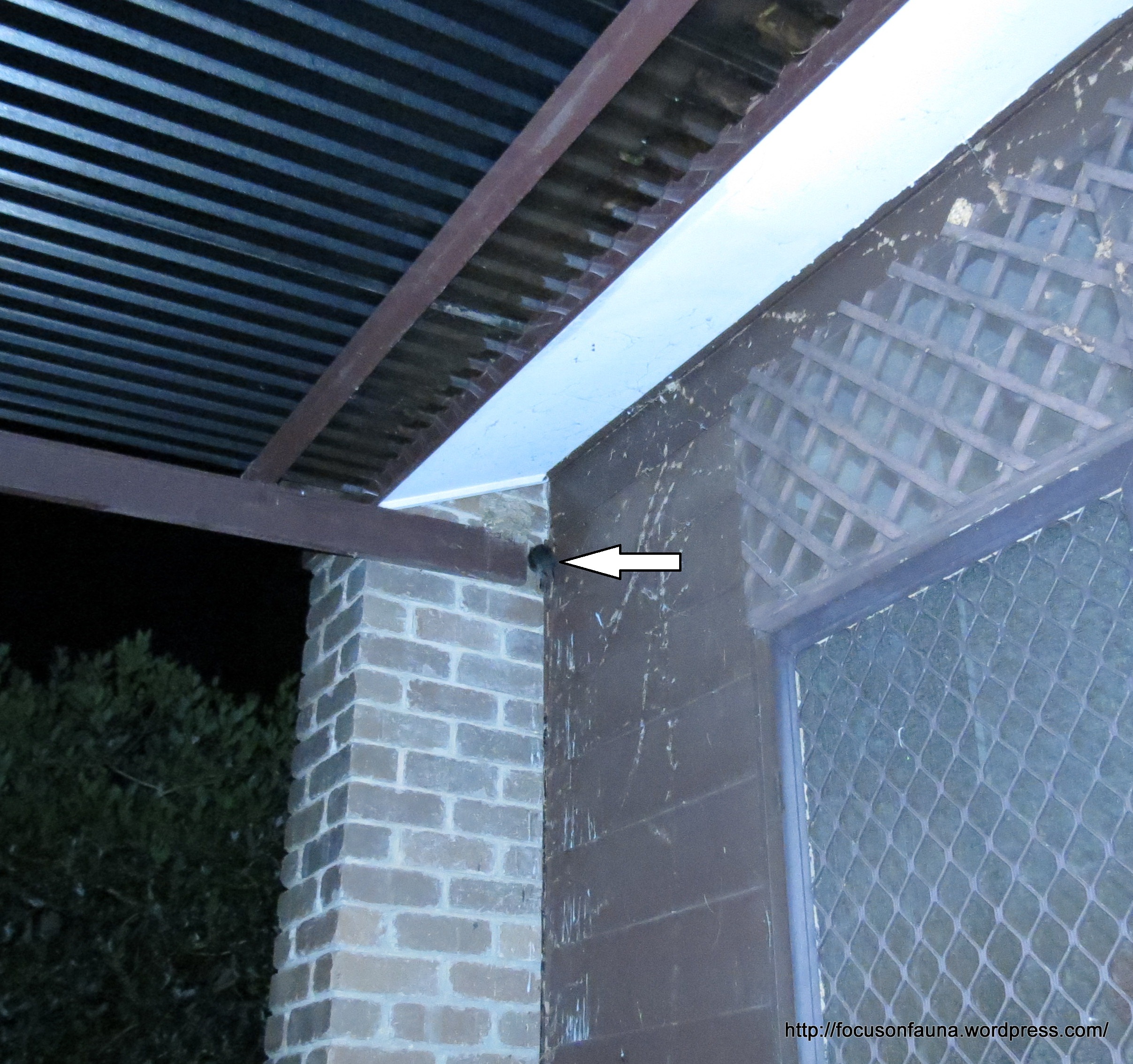
 This White-throated Treecreeper spends most nights of the year clinging to the brick wall of our house, and it has been doing so for at least the past 8 years. (The nest seen above the bird is an old swallow’s nest). We assume it’s the same individual as it’s always solitary, and it is hard to imagine how it would pass on the habit to any offspring. The treecreeper has a clever technique of locking the tendons in its legs so that, with its strong feet and claws, it can sleep while clinging upright to a tree trunk – or a brick wall !
This particular bird has about five alternative sites for roosting in the angled brickwork; next to the chimney seems to be a favourite one in winter, or when disturbed near the front door.
We think the bird is a male, but once it has settled in at dusk it is too dark to see if it has the tell-tale orange cheek-spot of the female.
It is worth mentioning the unusual climbing technique of treecreepers. They put one foot ahead of the other, then move the lower foot up level with the front one, and continue in this manner so that the same foot always takes the lead. The leading foot may be either the left or right, but the bird does not hop like some other birds, nor does it “walk” in the usual manner of one foot ahead of the other in sequence. It cannot hang downwards like a sittella, so that, apart from an occasional shuffle backwards down a tree, it only moves upwards, eventually flying down to a low point on a nearby tree trunk. [Reference: Reader’s Digest Complete Book of Australian Birds]
Treecreepers have quite a range of calls/songs. The call recorded here is given as it leaves the brick wall outside our bedroom at dawn, which can act as a useful alarm clock – or an annoying intrusion if we wish to sleep in!
It can also give a lovely mellow trill, as recorded here
Phascogale, fox and an old Lightwood tree
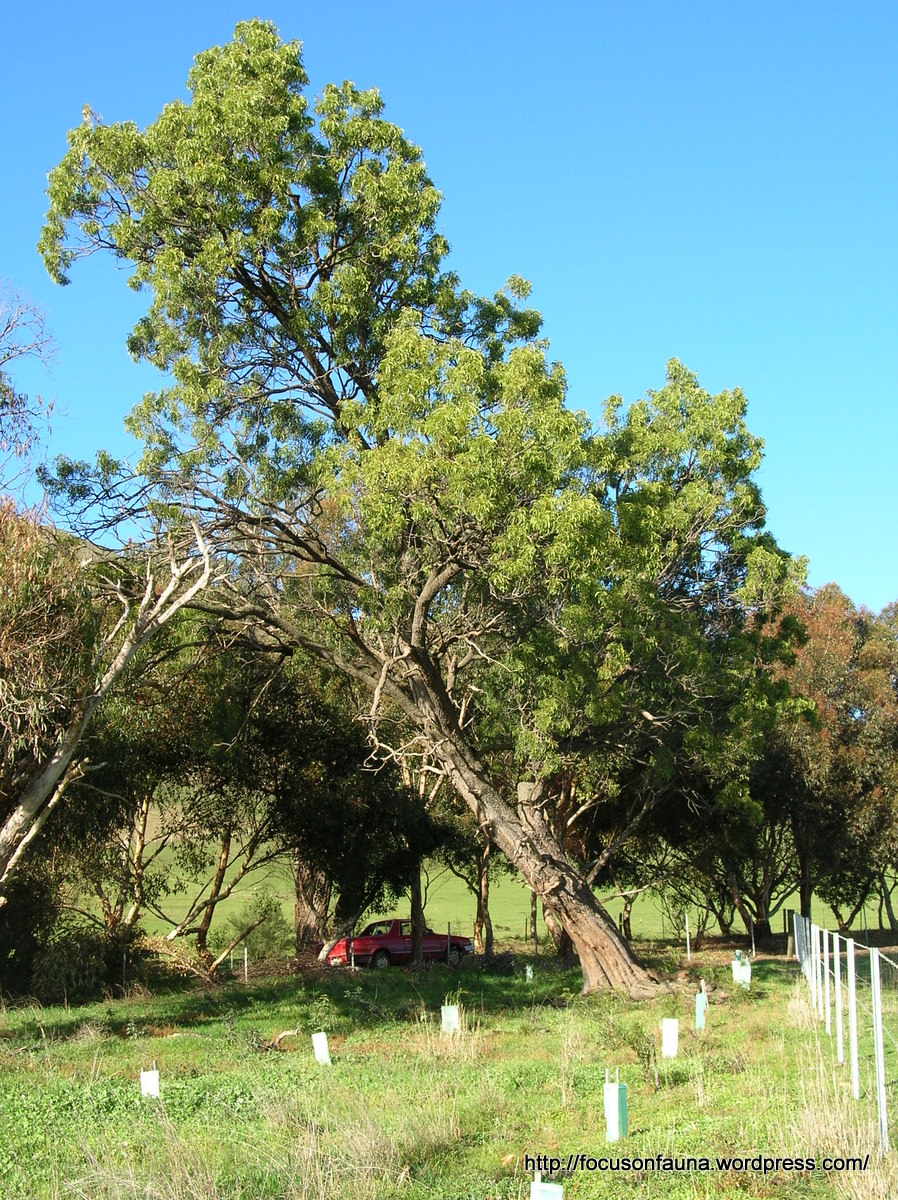 This large and very old Lightwood (Acacia implexa) 0n “Three Sisters” at Flowerdale disproves the often-heard saying that “wattles are all short-lived and not worth planting”. The landholders have now protected this beautiful tree from livestock and planted out a significant area around it as a revegetation project.
The area has obvious value as wildlife habitat. The property’s owners were driving past the other night and were thrilled to spot a Brush-tailed Phascogale (Phascogale tapoatafa) scurrying around in a planted Sugar Gum along their driveway, close to the Lightwood and some old Long-leaf Box trees. We set up a camera trained on a fallen log in the area, and sure enough recorded a short video of the phascogale.
However, as is the case with so many of our Focus on Fauna camera deployments, we also recorded a fox. We can only hope that the phascogale is too quick and nimble for the fox!
A hard day’s work …. and lunch provided
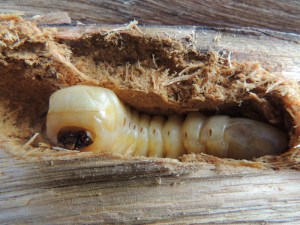
Last week I spent some time splitting wood and came across several grubs (see picture) that had eaten themselves a cosy hideaway within a stringybark log.
As kids we called these Witchetty Grubs. This is a misnomer as the term Witchetty Grub applies specifically to the larvae of the cossid moth Endoxyla leucomochla. It is found in Central Australia and feeds on the roots of the Witchetty bush (Acacia kempeana).
This specimen is most likely the larvae of a Longhorn Beetle (family Cerambycidae).
Either way, it tastes like chicken.
So they say.
Winter tucker
 On a cold, drizzly winter’s day this Hairpin Banksia (Banksia spinulosa) provides a welcome food supply for honeyeaters such as the New Holland Honeyeater . This handsome spreading shrub is actually a planted garden specimen. Hairpin Banksia has a scattered natural distribution across eastern Victoria, but doesn’t quite extend to the Flowerdale-Strath Creek area.
Our local banksia representative is the larger and once-widespread Silver Banksia (Banksia marginata) which, in the Goulburn-Broken catchment, is now confined to a few isolated patches, although it is often included in revegetation plantings. Apart from extensive clearing for agriculture, one of the reasons that naturally-occurring banksias have largely disappeared is their sensitivity to elevated phosphorus levels in the soil resulting from the use of superphosphate as a fertiliser.
Snuggle up!
 As a follow-up to the previous post, here’s another nest-box installed as part of the fire-recovery project. We noticed signs of gnawing around the entrance hole and thought we should check inside it, even though it had only been installed fairly recently. Sure enough, inside was a huddle of Sugar Gliders (Petaurus breviceps) snuggled into a nest of eucalyptus leaves – what better way to spend a cold, foggy day in Strath Creek?!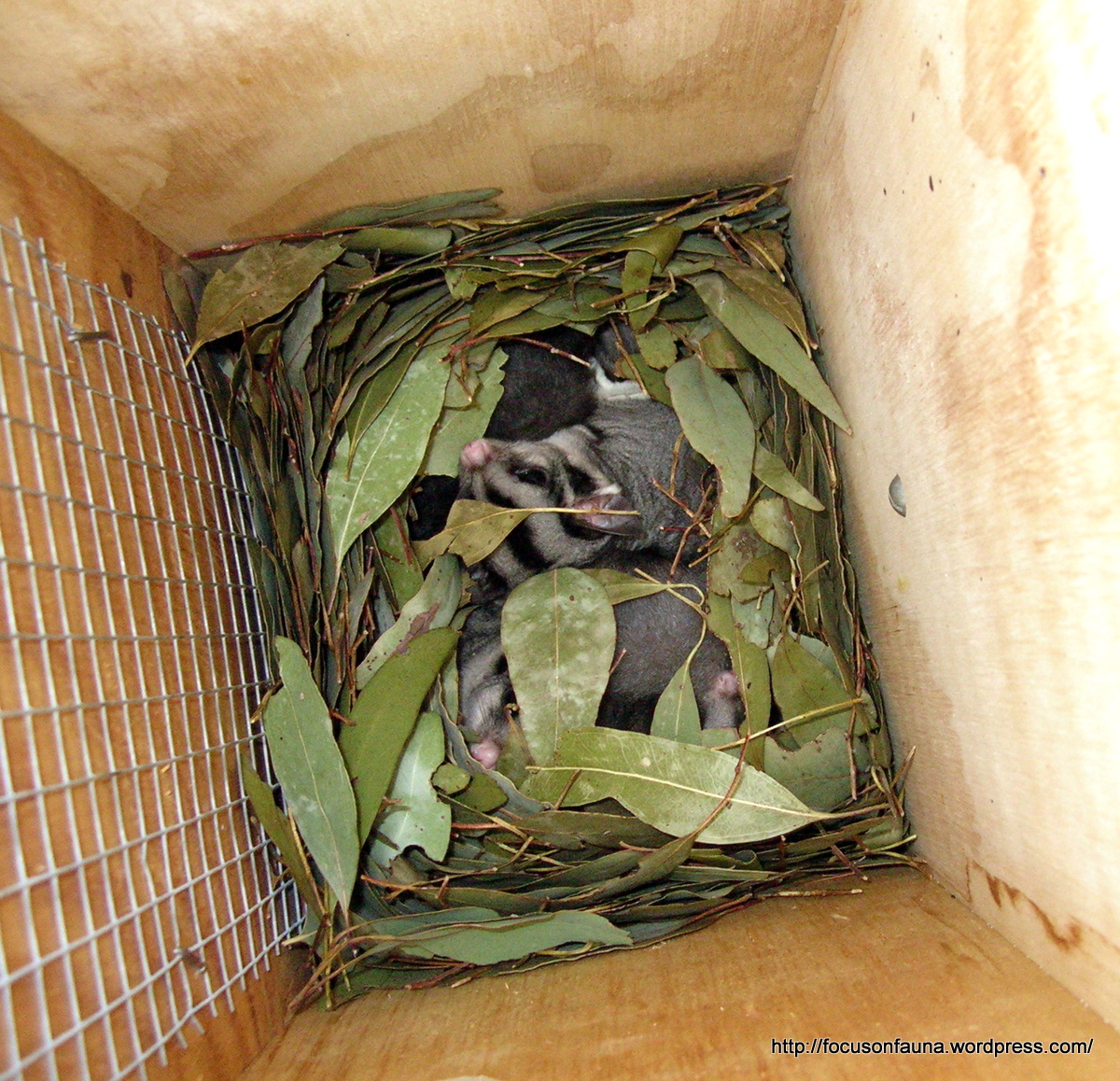
At a very informative nest-box forum held at Violet Town recently, high occupancy rates ( up to 80%) were reported for areas around Lurg/Greta, Warrenbayne/Boho and Whroo/Goldfields in Central Victoria. As one of the presenters said, “… you can never have enough nest boxes!” That certainly applies in our area where so many old hollow-bearing trees were destroyed in the Black Saturday fires.
Click HERE for more information about nest-boxes in the Strathbogie Ranges.
UGLN fire recovery nest-box project
Of the many who lost their homes on Black Saturday, our smallest and neediest have required as much help as others in finding and rebuilding a new home. The destruction of so many hollow-bearing trees in the 2009 fires meant the loss of sanctuary for much of our native wildlife.
In November 2009 the Upper Goulburn Landcare Network Fire Recovery Program set about providing new homes for some of our furry and feathered friends. We embarked on a project to install nest-boxes in the blackened trees, providing new artificial homes for these animals.
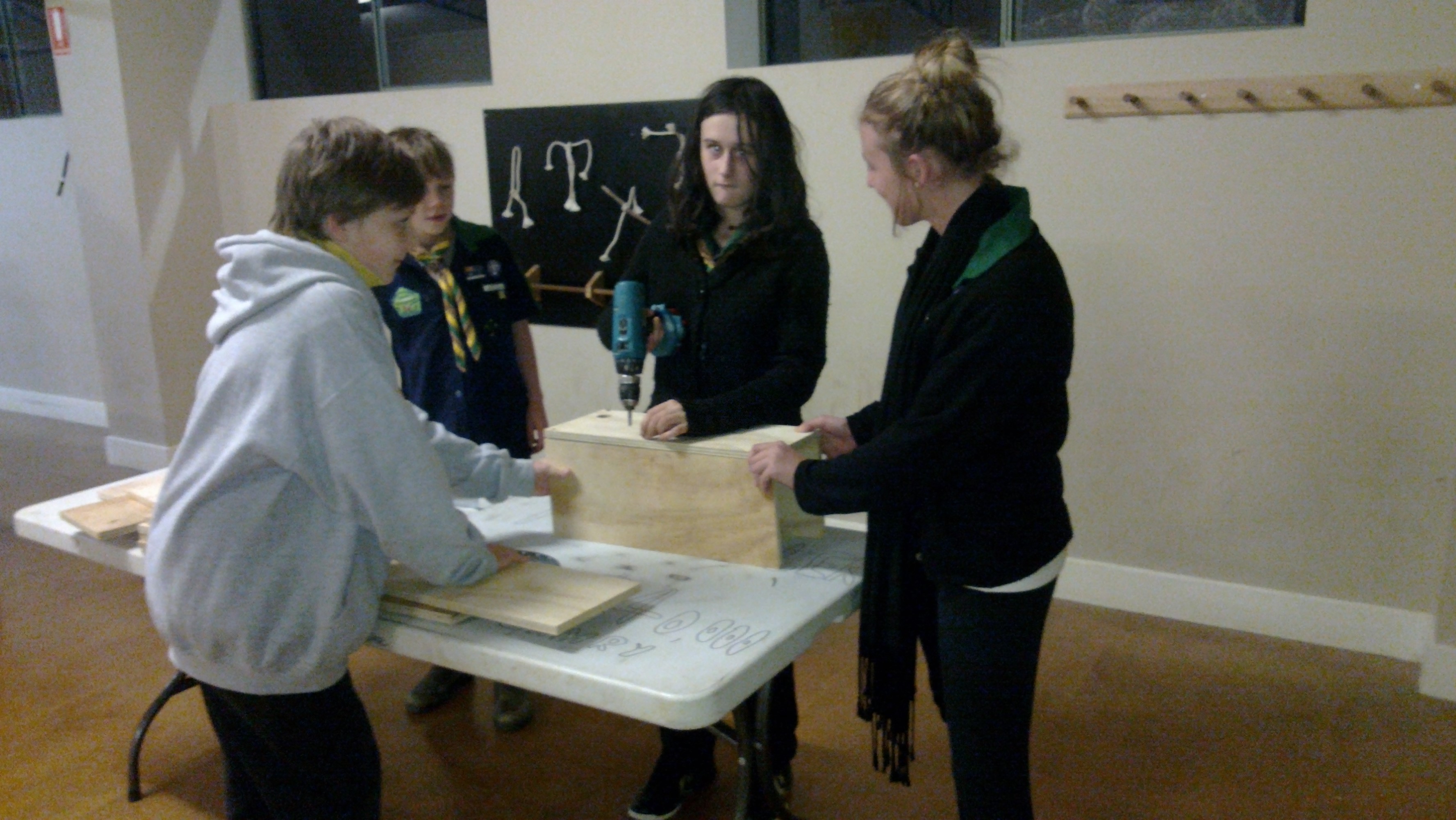
Kinglake Scouts building nest-boxes
We have received help from many varied groups of volunteers, including Kinglake Scouts, students from Yea High School and Greensborough Secondary College, Shepparton Mens’ Shed and Conservation Volunteers Australia.
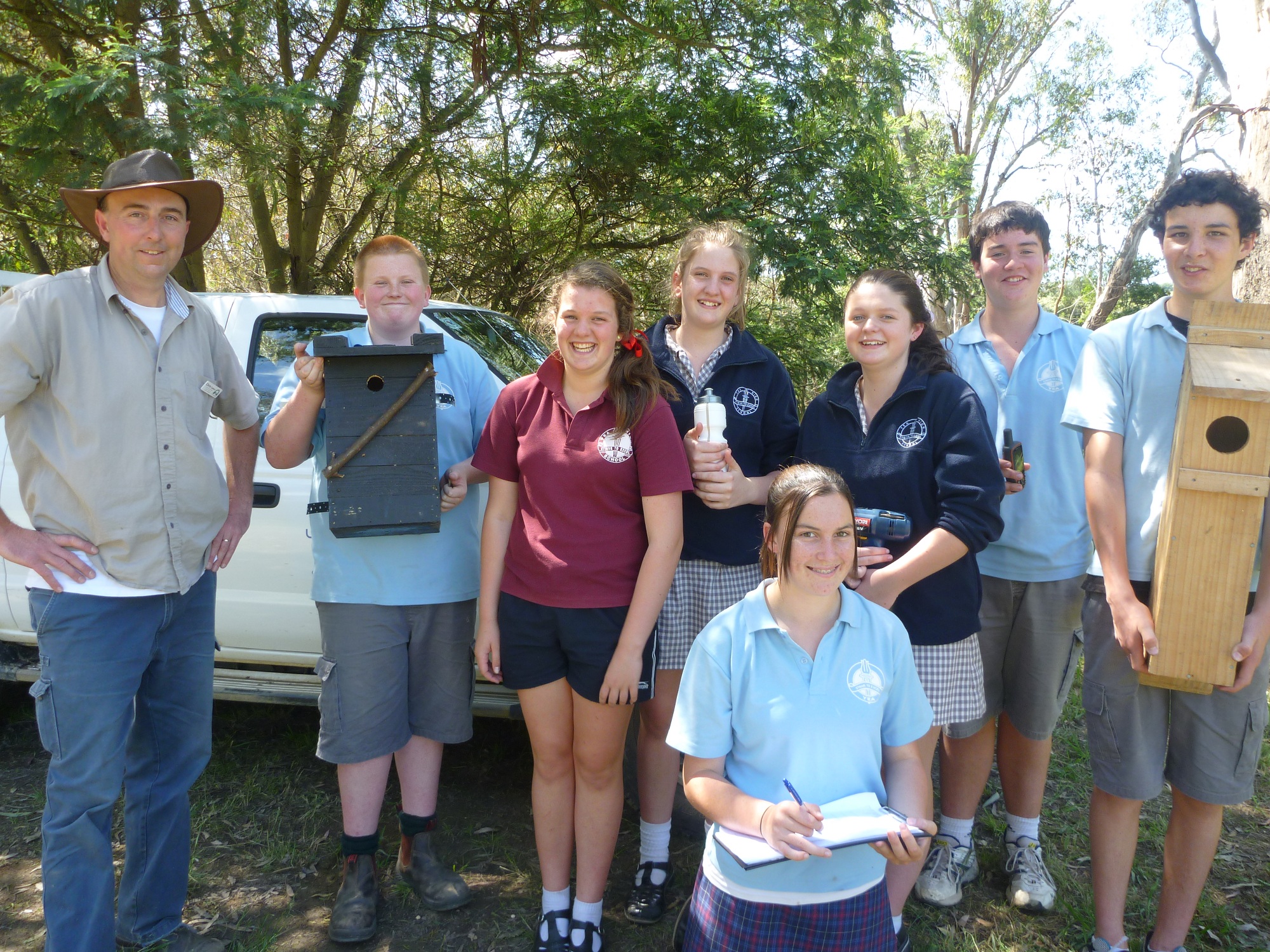
Chris Cobern with Yea High School Students
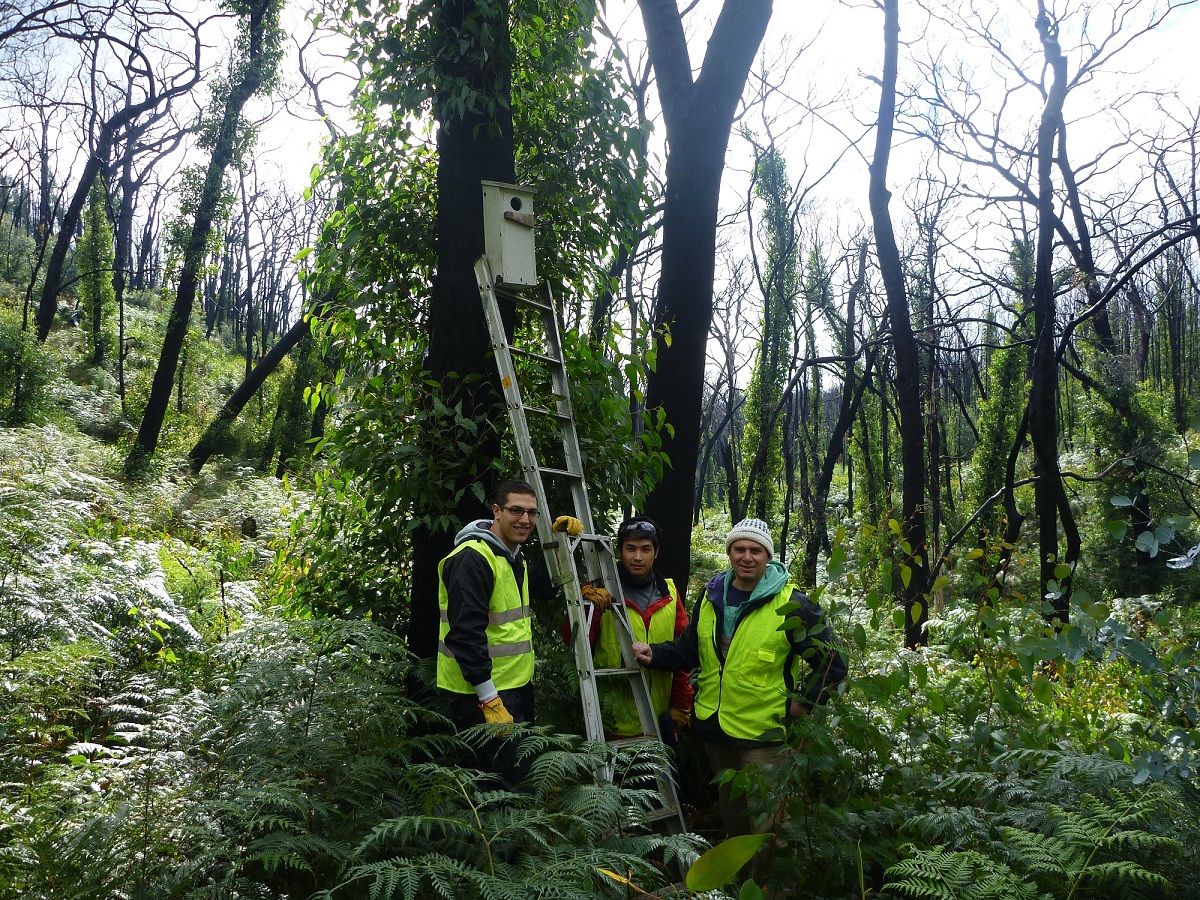
Volunteers at Flowerdale
So far we have installed 322 nest-boxes throughout Flowerdale, Toolangi, Glenburn and Kinglake. Of the boxes installed, our monitoring has shown that approximately one third have been used by wildlife. Tenants have included many Sugar Gliders and Agile Antechinus, as well as the occasional Brush-tailed Phascogale, Common Ringtail Possum, Brush-tailed Possum, Owlet Nightjar and small insectivorous bats.
For more information phone UGLN Coordinator Chris Cobern on 5736 0104.

Ringtail Possum at Kinglake
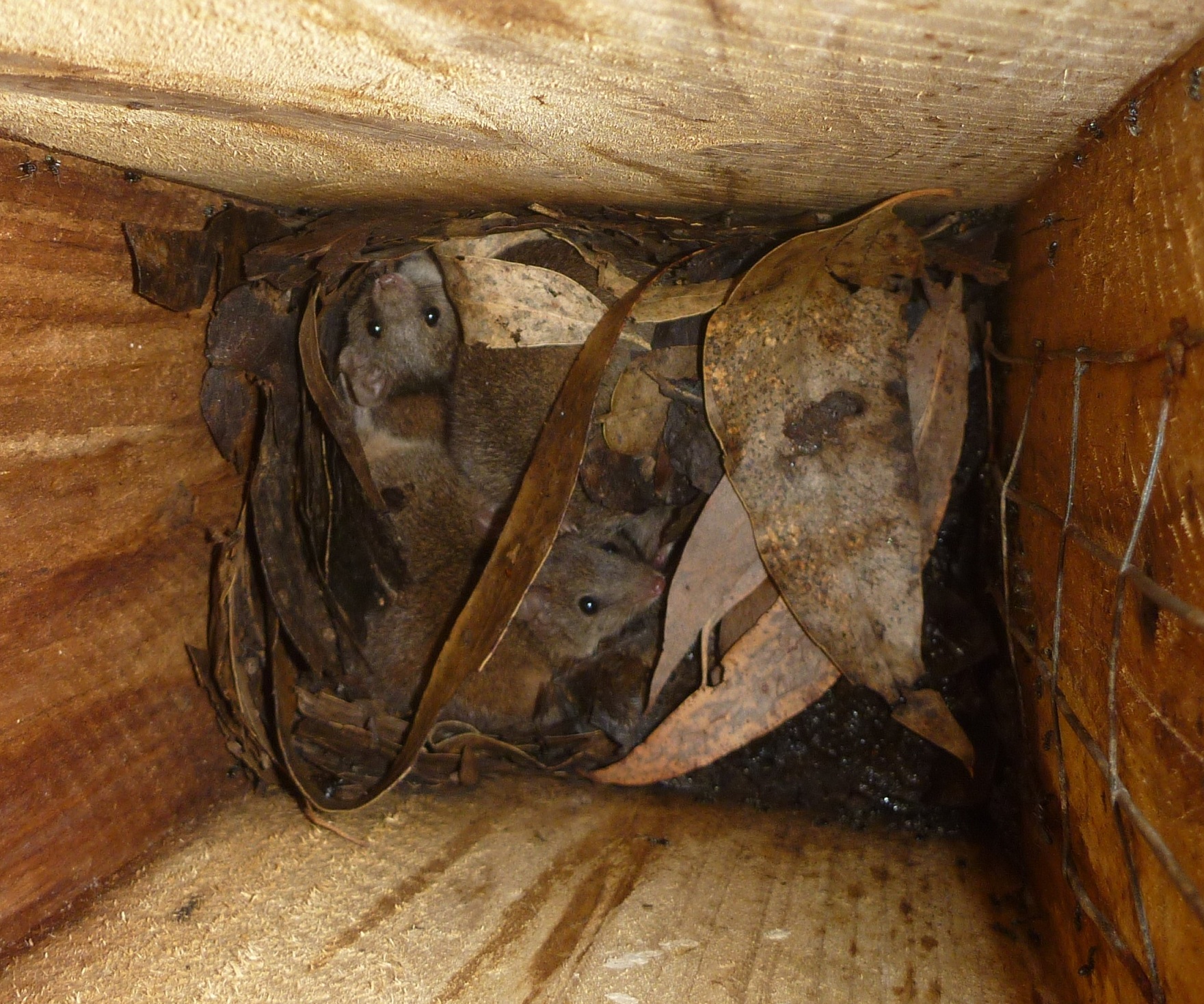
Agile Antechinus at Flowerdale




 Focus On Fauna