A cross to bear

One of the most striking of the orb-weaver spiders is the St Andrew’s Cross Spider (Argiope keyserlingi) pictured left. It is distributed along the east coast of Australia. Although I have seen many photos of them I had never seen one until last week when I came across a hakea festooned with them.
Although when at rest the spider holds its legs in the shape of a St Andrew’s Cross it is named for the zig zag ribbons of silk it weaves into its web in the shape of that cross. In the picture below right the beginnings of the cross can be seen in the bottom left.
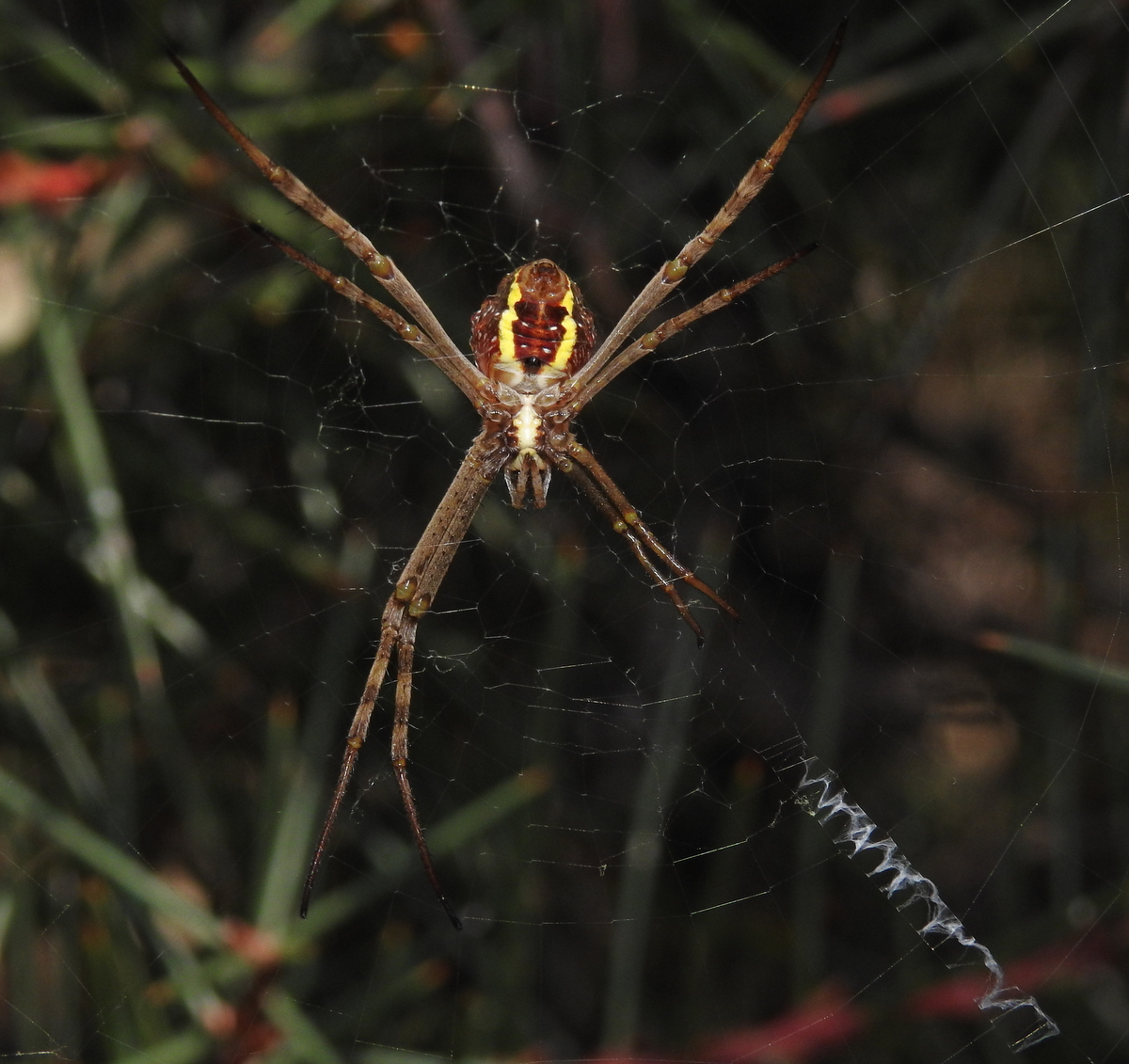
The reasons for the web decoration are not understood. One theory is that the silken cross is where the spider places its legs when on the web. Another theory proposes that the silken ribbon reflects extra UV light which is an attractant for insects. The cross could also be a device to make the web more obvious so that larger creatures such as birds don’t fly into it.
What we do know is that if we found a St George’s Cross Spider the web design will be a monochrome Union Jack.
No bees in here
It is summer. That means the Blue-banded Bees are in town and busily tunnelling into the lime mortar of the Butter Factory a.k.a. the Blue-banded B&B. Previous blogs have chronicled the comings and goings of these native bees and their attendant parasitoid entourage of cuckoo bees, cuckoo wasps and gasteruptid wasps.
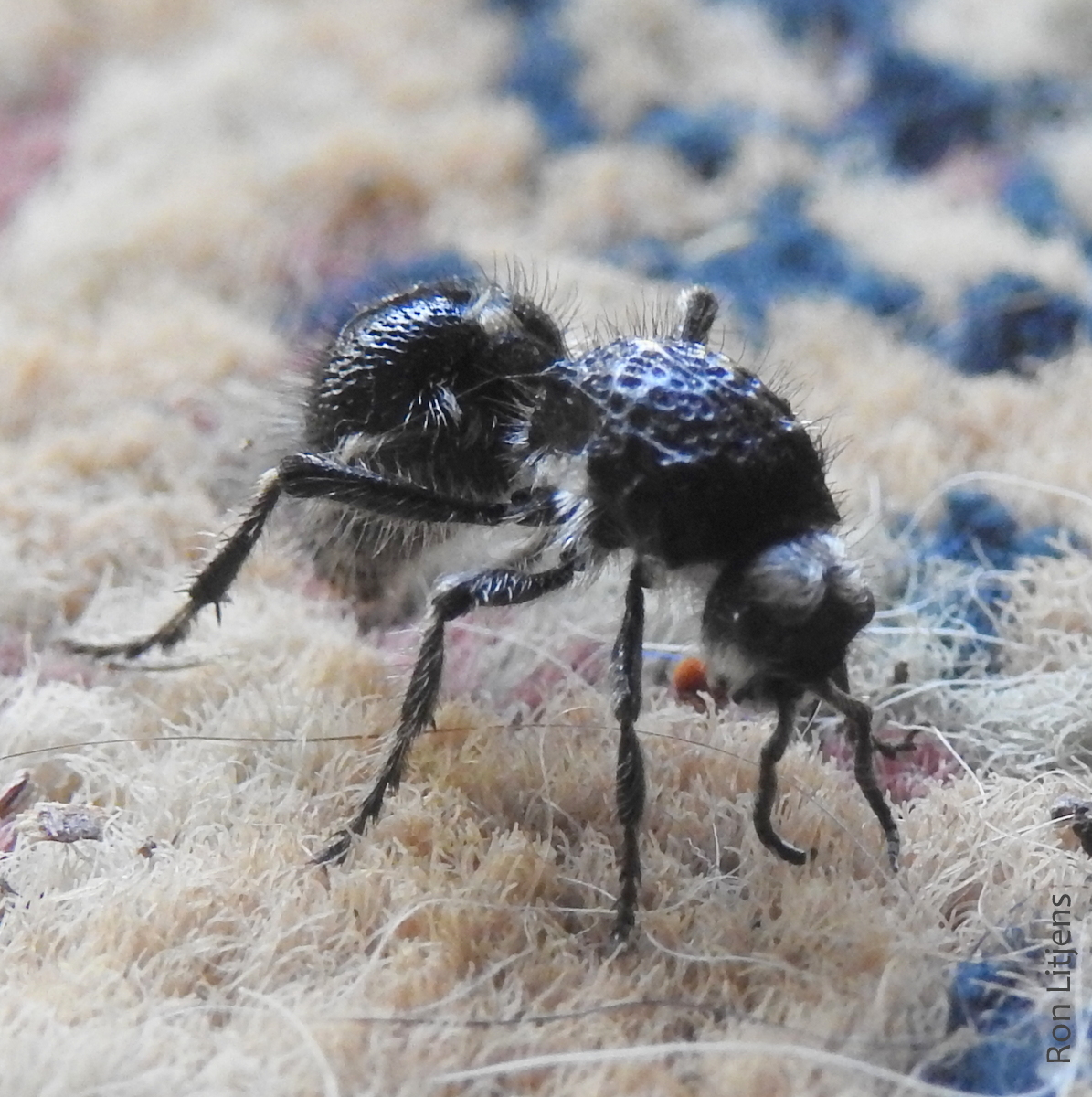
Whilst sitting down for a coffee I noticed that a hairy insect (pictured) had wandered in from outside and across the carpet. Close examination showed that it was wingless and extremely hairy. It is because of the hair that this insect is known as a Velvet Ant (Bothriomutilla rugicollis). Velvet ant is the generic term for wasps of the family Mutillidae. As mentioned they are hairy, the male is winged and the female is wingless.
Adult velvet ants are nectar feeders however they are parasitoid in nature. After mating the female wasp searches for the nesting sites of ground-nesting bees and wasps. When it finds a nest it lays an egg near each host egg or larva. The velvet ant larvae hatch first and consume the host egg, larvae and/or food supply. These wasps are well equipped to survive the attention of predators. In addition to having an armour-plated exoskeleton, they have warning colourations, a warning sound and the female wasp has a potent sting.
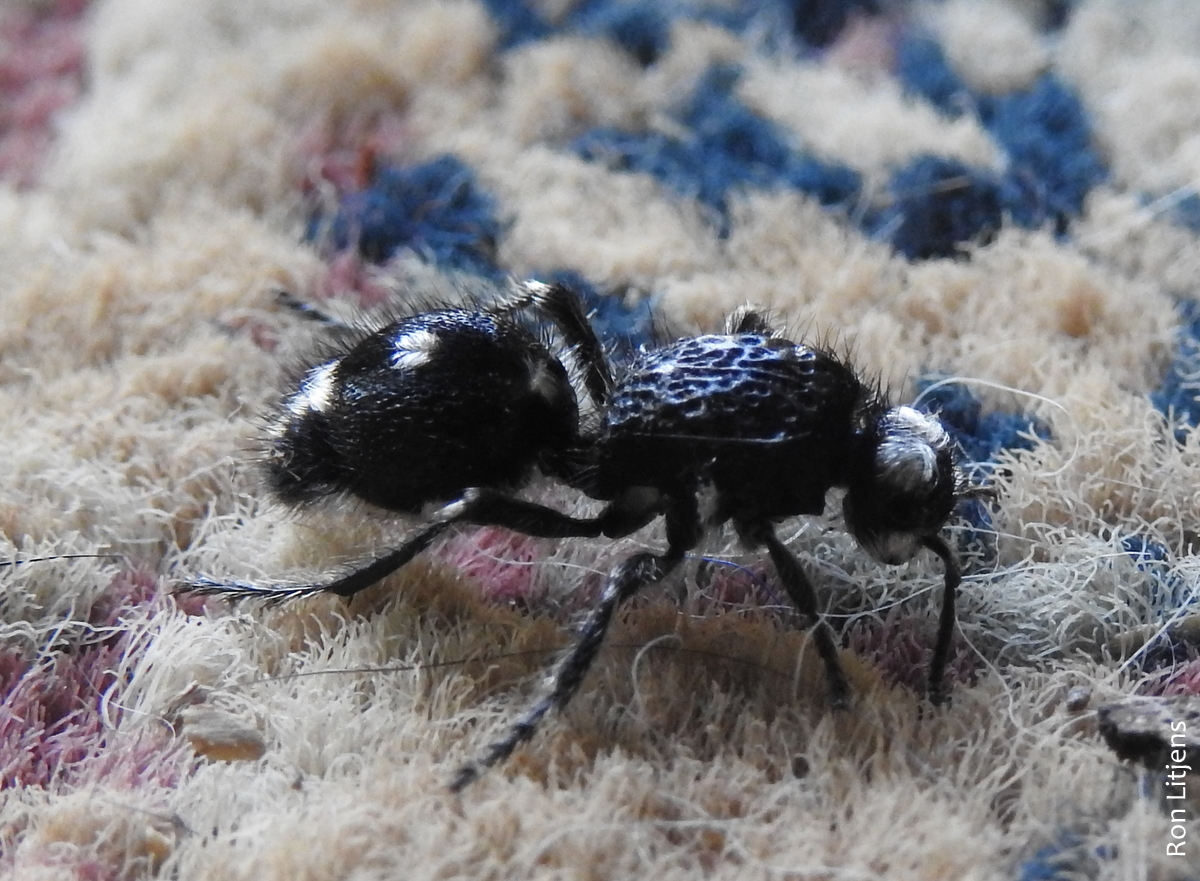
The insect in question was obviously looking for the Blue-banded Bee nests but took a wrong turn and wandered inside.
Obviously better signage at the door is needed. Something like ‘Blue-banded Bees this way’ with an arrow.
Flight of the fledglings
I have never had kids but I imagine watching them drive off with their P-plates for the first time is a time of mixed emotions – pride and trepidation maybe. I experienced this recently watching two tiny Eastern Spinebills fly for the first time.

Eastern Spinebills (Acanthorhynchus tenuirostris) are a species of small honeyeater found in south-eastern Australia. In summer the female bird builds a nest and incubates the eggs for about two weeks after which time both parents feed the chicks. When the chicks are 2 weeks old they are ready to leave the nest.
This week two fledglings tried their luck at taking flight. Chick 1 (pictured left) displayed more ‘plummet’ than flight and with a furious flap of wings crash landed in the middle of the driveway. Chick 2 flew a bit further. Their incessant chirping combined with encouraging vocals from the nearby parents attracted the attention of the dog and the chickens who raced over for a look. To rescue them I placed both birds back in the nest but chick 2 launched itself in flight again with the same results. It was placed in the nearby tree (pictured below) out of harm’s way. For the rest of the afternoon I left them to it. Chick 2 I observed undertook little flights from branch to branch with the parents hovering nearby.

I prefer to let nature take its course. Normally my only intervention would be to maybe name them but I couldn’t let these two aviator-wannabes become chook food. I hope both chicks are now happily flying around my garden.
By the way I named them Wilbur and Orville.
How many legs is enough?
There are creepy crawlies out there with many legs. Centipedes (from the Latin centi meaning hundred and pedis meaning foot) and millipedes (from the Latin milli meaning thousand) do not literally live up to their names, but they certainly have many pairs of legs.
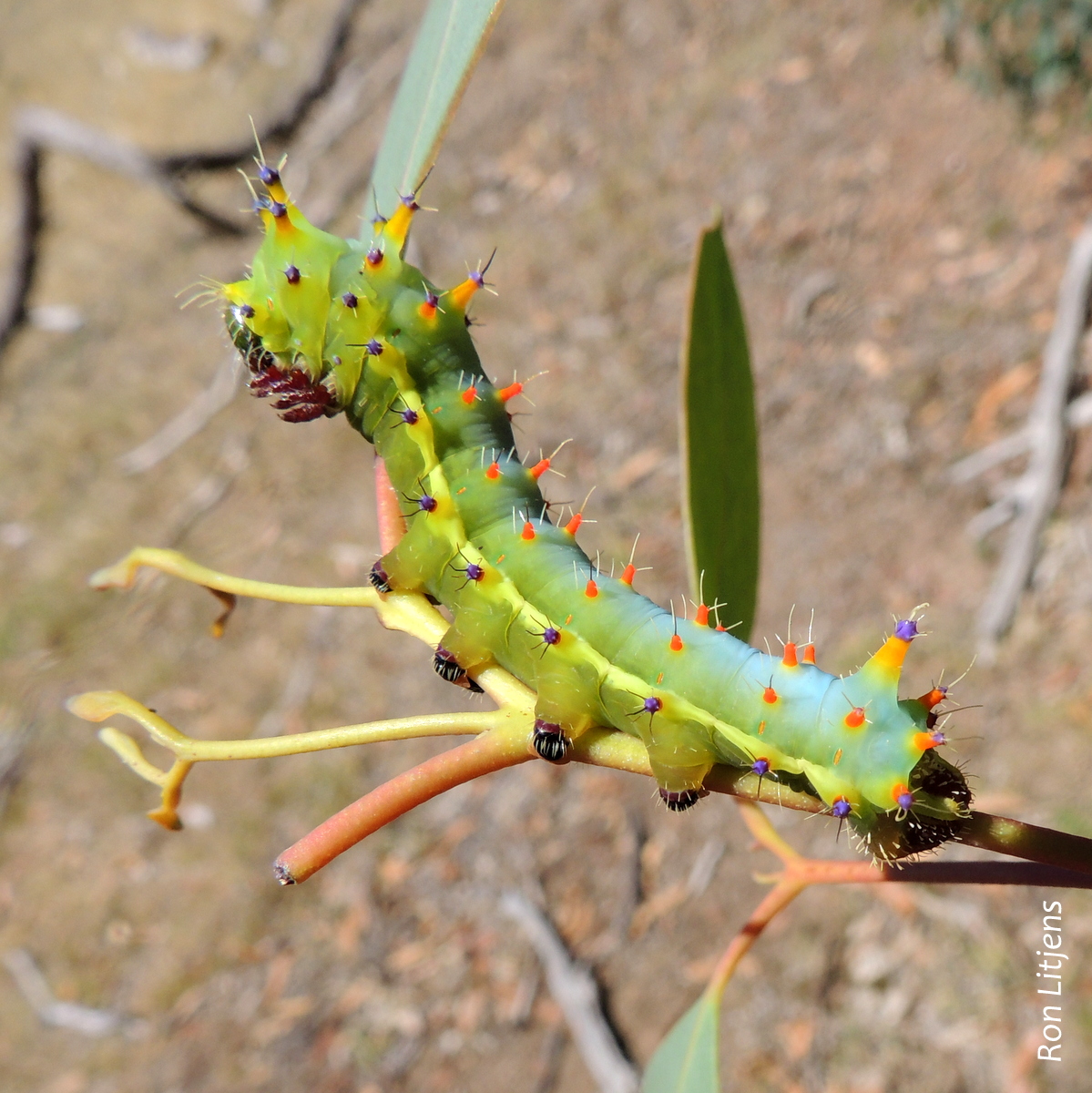
But how many legs does a caterpillar have (see photos)? Being insects caterpillars have six legs but appear to have a lot more. The six ‘true’ legs are those situated on the thorax near the head. The other leg-like appendages are called prolegs and are used for walking and clinging.
Most caterpillars have a pair of anal prolegs (known as claspers) at the end of their bodies and several pairs of medial prolegs half way down their bodies. Each proleg contains a series of hooks. When the caterpillar is moving fluid is pumped into the proleg to expand the hooks. Once the proleg hits the surface the fluid pressure is released and the hook closes attaching the caterpillar to the surface.

For caterpillars the difference between a ‘true’ leg and a proleg is that the former is jointed into five segments whereas the proleg is a fleshy structure with minimal musculature.
Other insect larvae also have prolegs. The larvae of sawflies (called spitfires) have prolegs on each abdominal segment, a minimum of six pairs.
Imagine tying your shoe-laces.
Funeral for a friend
Sometime animal behaviour seems almost human.

I was sitting outside watching the landscape change colour during ‘golden light’ time when I heard a loud squawk and an Australian Magpie (Gymnorhina tibicen) fell out of a nearby tree and landed on its back. It gave three feeble flaps of its wings and then died on the spot. Scanning the branches there was no sign of a snake, goanna or other reason for its demise.
Almost immediately another magpie flew down to the body and gave a loud, raucous call. In response about a dozen magpies arrived and formed a rough circle around the body. One by one each magpie approached the body looked down at it for a few seconds and then wandered off to do its magpie thing.
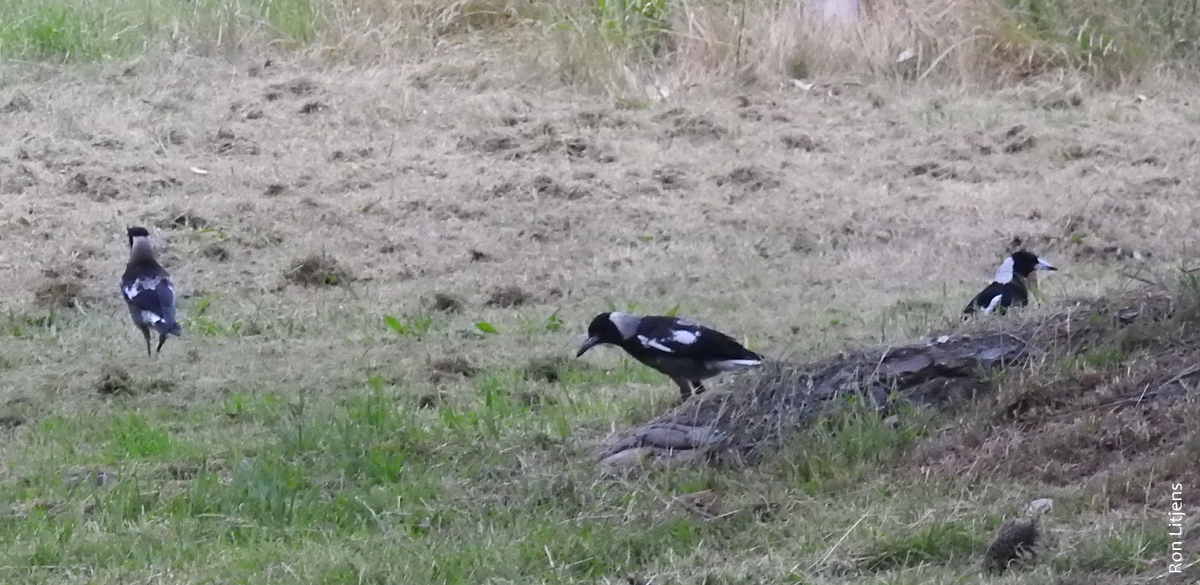
I am loathe to attribute anything anthropomorphic to the scene but it did seem like I was witness to a ritual of some sort…. and that felt ok.
The Emperor’s New Clothes
The Emperor Gum Moth (Austrocaligula eucalypti) – previously Opodiphthera eucalypti, pictured below is one of our largest summer moths. Like all butterflies and moths its lifecycle consists of four major steps – egg, larva (known as a caterpillar), pupa and adult. This is known as complete metamorphosis (i.e. incorporates all four steps). Some insects undergo fewer steps in their lifecycle e.g. grasshoppers and cockroaches. This is termed incomplete metamorphosis.
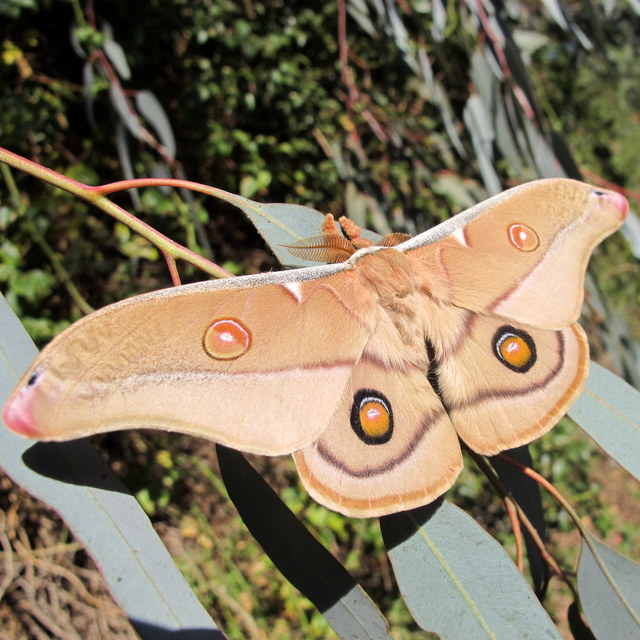
During the larval stage, caterpillars grow and then have to moult as they become too large for their skins. Emperor Gum Moth caterpillars go through five such stages. In many caterpillars, each stage or instar looks like the previous one only bigger. However the Emperor Gum Moth caterpillar changes its livery with every moult.
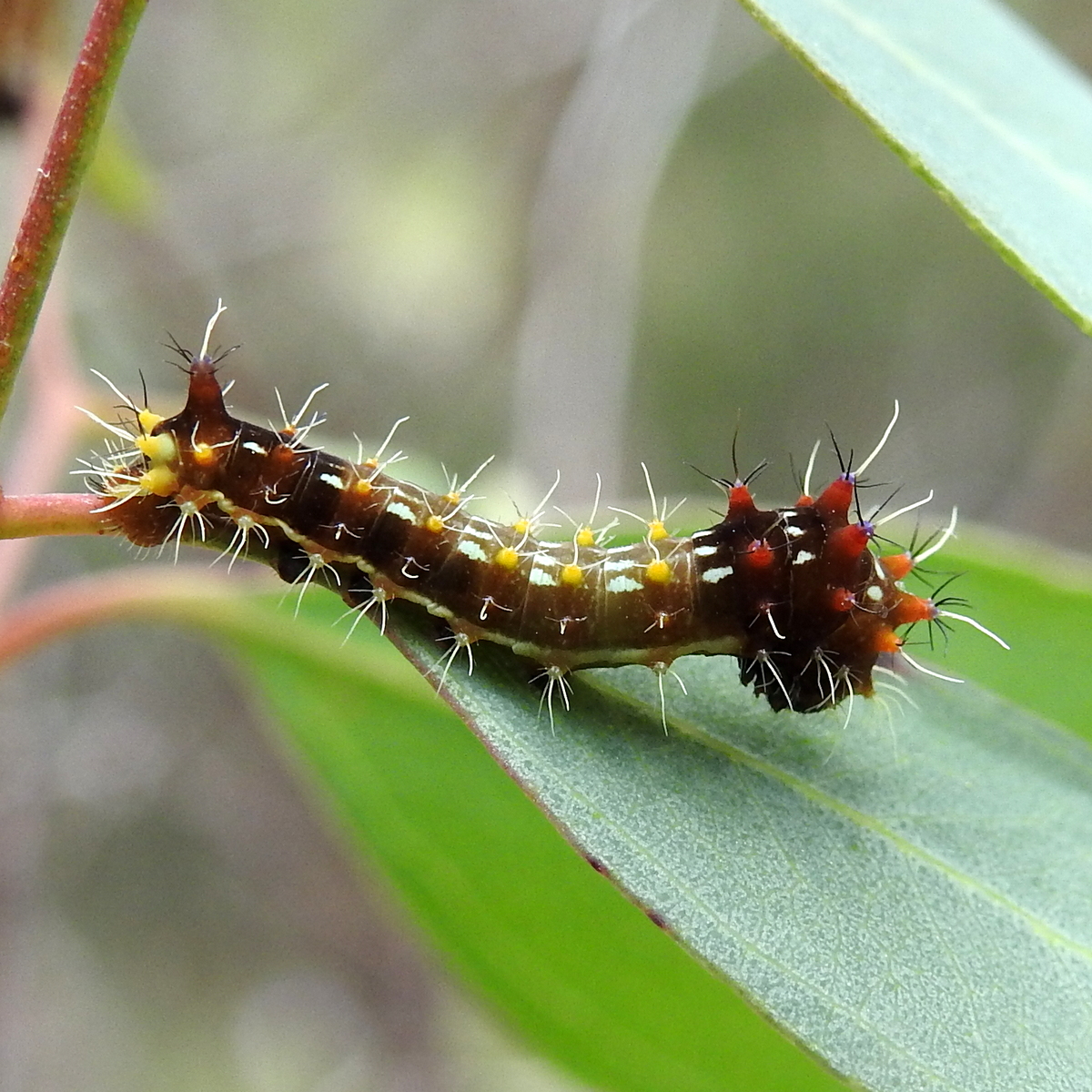
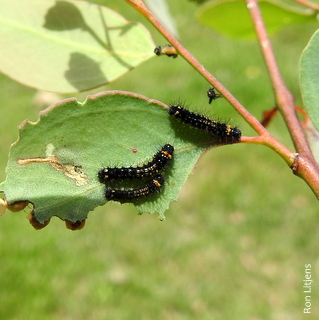

The first instars are almost entirely black, pictured above right. With successive moults the caterpillars become more colourful and develop the characteristic tubercules and spikes. Last week I discovered young gums trees festooned with 3rd stage instars, pictured above left. During the fifth (last) stage the caterpillar takes on the familiar lime-green colour with a yellow stripe (pictured left).
The Emperor does indeed have new clothes.
Reflections on Ten Years
I have been living in Yea for ten years taking notes on bird populations. It is endlessly fascinating to watch the seasonal flow of bird populations.
- The creaky Gang-gangs that drop in for a few weeks,
- The majestic Yellow-tailed Black Cockatoos that visit with their ponderous looping flight
- The feverish calling of Rufous Whistlers and Yellow-faced honeyeaters that begins in September and continues over Summer
- The arrival of cuckoos and kingfishers
- The fleets of ducklings trailing behind watchful parent Wood Ducks or Black Ducks.
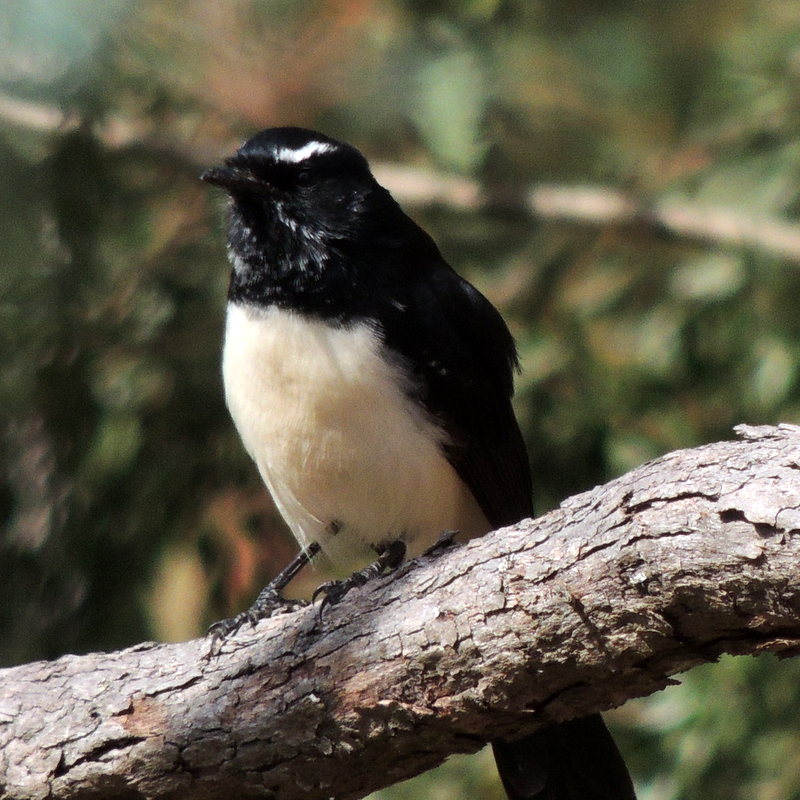
However, it saddens me that I have witnessed in this short period a clear decline in some once-common birds. The Willie Wagtail was often considered the most ubiquitous bird in Australia – easily observed from every highway in Australia. It’s getting hard to find them around the district now. Their cheery call, sometimes described as “Sweet-and-pretty-little-creature” can sometimes extend into the night time in Spring and they should be companions in every farm and park. Why are they declining? One factor is the increased presence of Pied Currawongs which ruthlessly predate their nests and eat the chicks. This large scavenger used to spend warm seasons in the high country and only roam lowland towns between May and September. Now they are present all year (some researchers name 1985 as the first year of their refusal to migrate) and could well be a primary cause of decline in many small bird populations. Incidentally, Currawongs also eat berries of weeds like Privet, Hawthorn and Cottoneaster, contributing to their dispersal. They do control destructive insects in the forest as well, so they are not all bad.
Magpie larks are also declining. Once an annual event in Yea Wetlands, the construction of their unique mud bowl nest has ceased. They can still be found around the district but in smaller numbers. I used to love the arrival of Scarlet Robins around the farming district each Winter, I rarely see them now. However, the Flame Robin seems to have increased in number to compensate.
When i first bought my house in Yea, we had a resident Boobook owl whose roost could be discovered by following the outraged calls of small birds that love to mob owls when they are discovered in their territory. Owls have become seriously rare. Some commentators blame rat poison – Ratsak changed their formula to a faster-acting chemical that results in the death of owls that eat the dying rat.
It has been good to watch White-faced Herons and Australian Ravens become customary breeders in Yea Wetlands. This has only been the last few years, they were rarely seen there in 2014. But back then, Australasian Swamphens and Great Egrets were more common and now they are rarely seen. I think these reflect local variation not population decline. When conditions are right they should return.
I note that, this year, the Northern visitors that were seldom seen have been more common – Noisy Friarbirds and Blue-faced honeyeaters have both been breeding here. There were no lorikeets in Yea ten years ago; Rainbow Lorikeets are now resident.
The first thing I did in my house in Yea was to plant locally-native plants in the garden and reduce the dominance of useless introduced plants like Kikuyu grass, English box or Photinia hedges. These plants, along with flaxes, agapanthus, palms and pittosporum attract no insects, are boring to most wildlife and produce desert conditions for birds. It is such a joy to see the return of pollinators and many small birds to my revegetated small urban block.
These ten years have been wonderful indeed, and I am sad as I prepare to leave Yea and move to Warragul. I take with me a suitcase of great experiences and precious friendships from which I hope to draw to enrich the new community I will call home.


Lifecycle in five pictures
The Dotted Paropsine Leaf Beetle (Paropsis atomaria), pictured below, is one of many species of Eucalyptus Beetle feeding on our gum trees at the moment. Atomaria refers to the speckled colours on the wing cases.
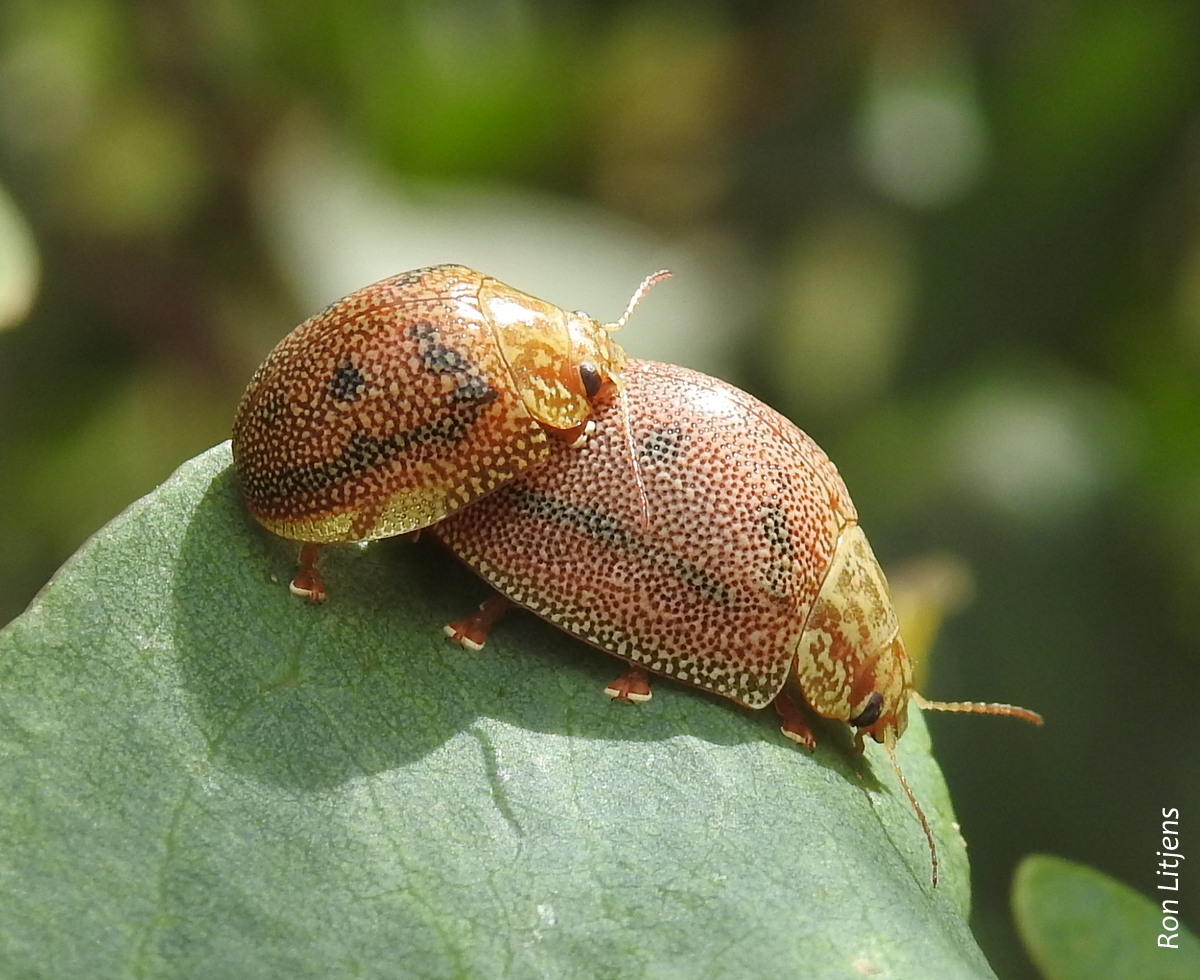
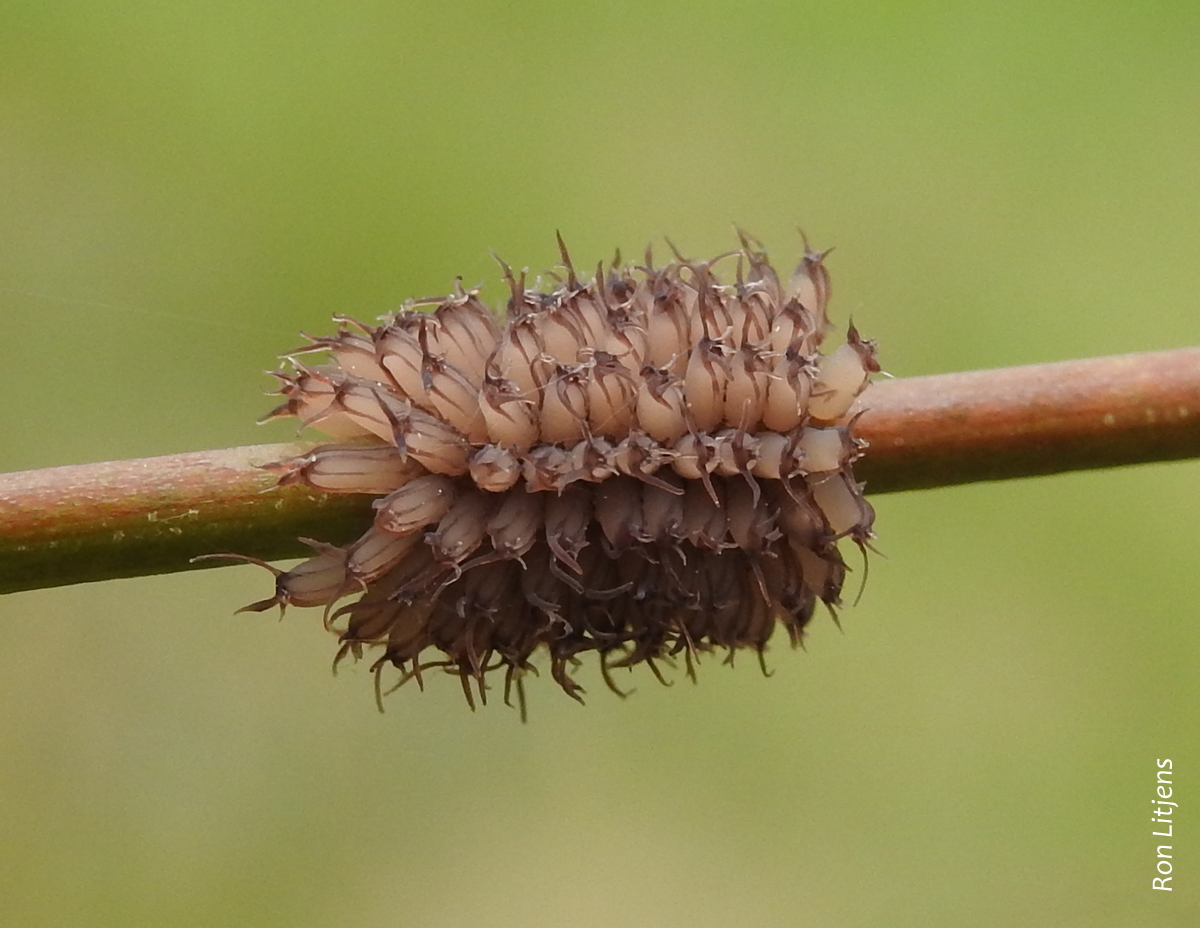
After mating tubular eggs are laid in a cluster around a gum twig by the female beetle. The larvae when hatched are yellow with a black head and tail and covered in small black dots.
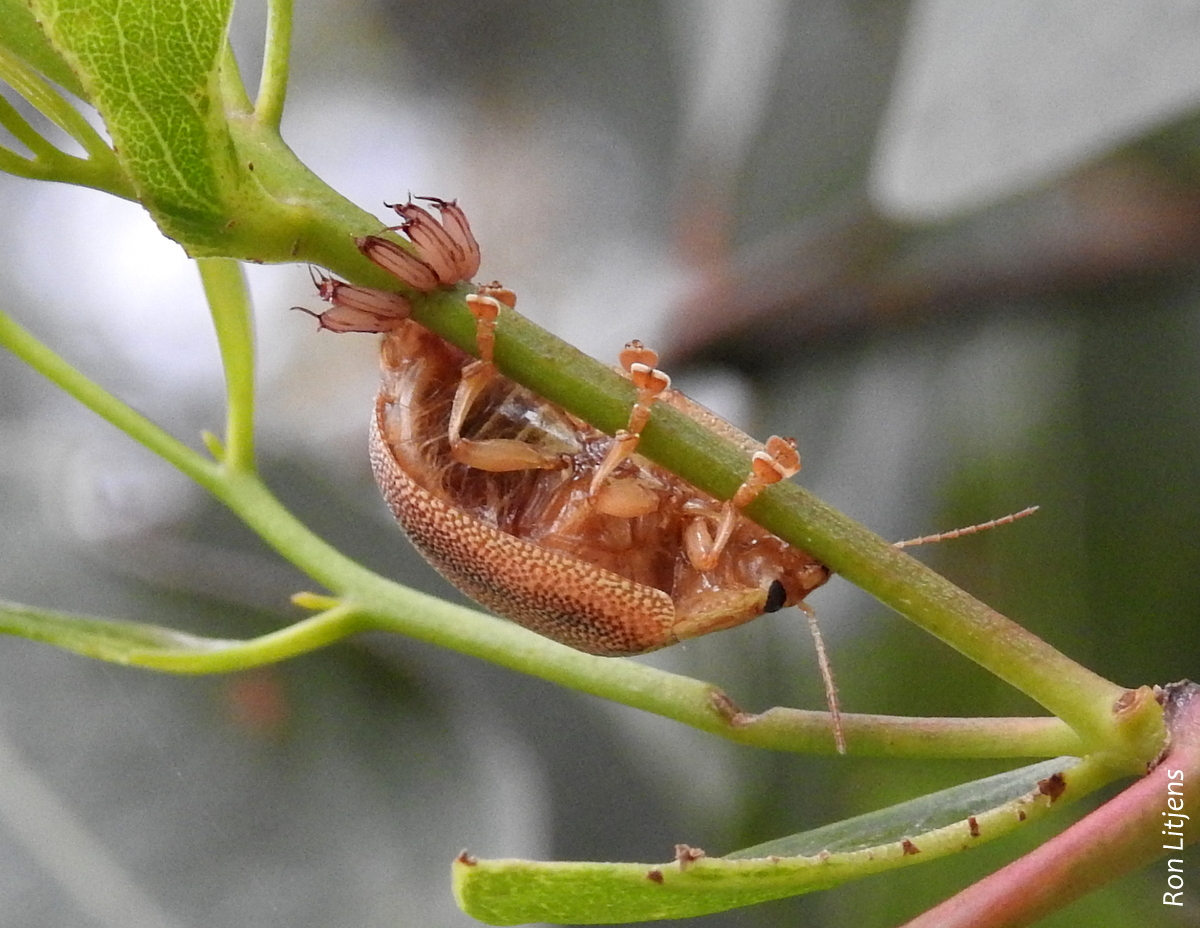
Both the adult and larval forms are herbaceous. The larvae form groups that entirely devour young gum leaves. They pupate in the ground and emerge as adults, which feed on more mature leaves, creating semi-circular shapes in the leaf margins.
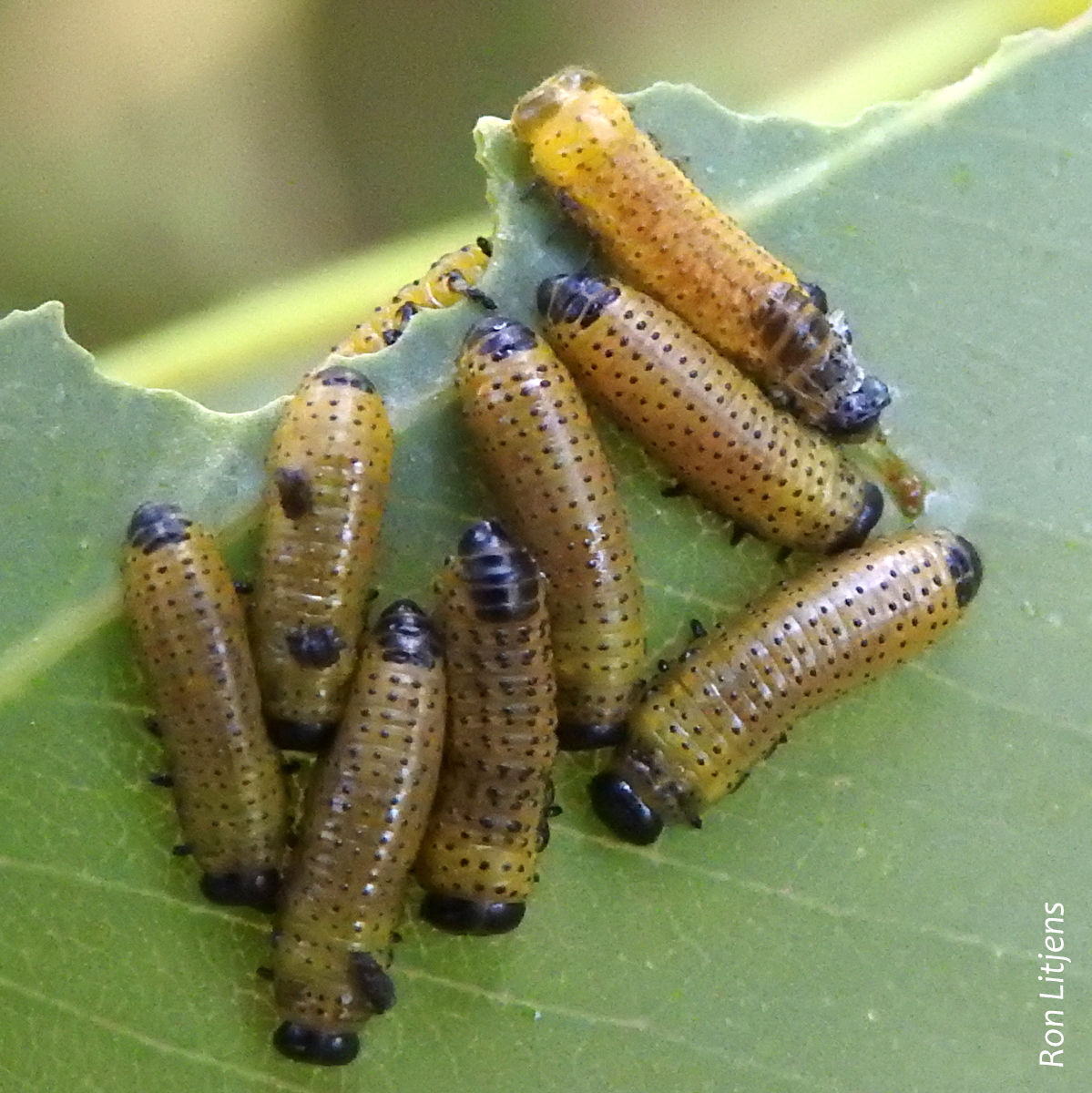
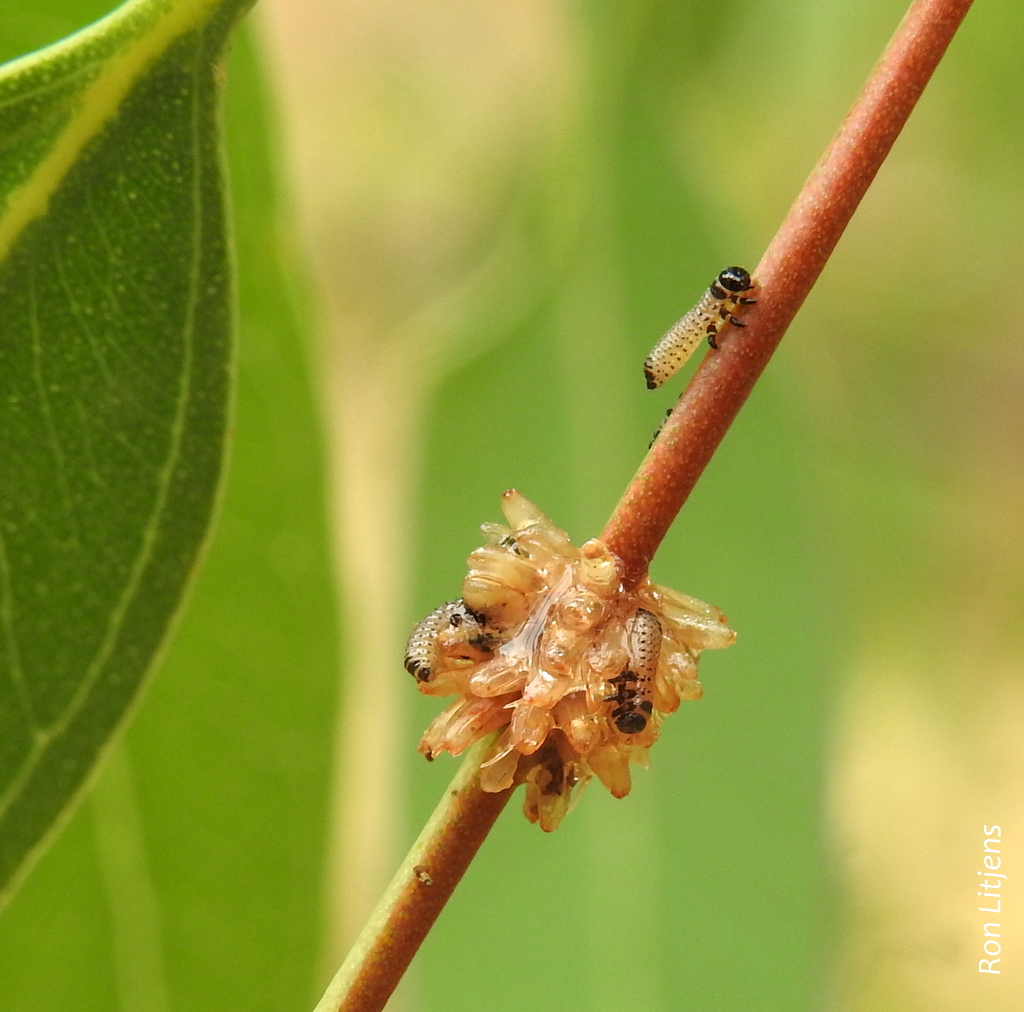
The many species of Leaf Beetle come in a range of colours. At this time of the year they provide welcome mobile tree decorations – unless you are a tree grower!
Koel Calling
A few people contacted me this week about a strange bird-call ringing constantly from various places in Yea.
The call is an Eastern Koel Eudynamis orientalis– a type of large cuckoo. The male is black, the female is mottled brown. During the breeding season the male calls loudly and incessantly, day and night, so to hear this bird call while it visited Yea was not difficult. In Queensland they are sometimes called the Brainfever Bird because they don’t let up and people can’t sleep.
And visit Yea it did. They spend Winter in New Guinea or Indonesia where they are mostly silent and migrate to Australia for breeding, usually confining their visit to Queensland and northern NSW. Lately, individuals have been turning up in Victoria at various places – Benalla, Mallacoota, Melbourne Botanical Gardens. A few years ago I saw one at Melbourne Cemetery. This is the first time one has been recorded in Yea. It doesn’t seem to have stayed very long.
Koels are a large cuckoo and look to lay their egg in open nests of birds such as magpie larks and wattlebirds. I think this one caused no harm because no female was with it. It was just a lonely male crying out to the Universe in the hope of getting a response.
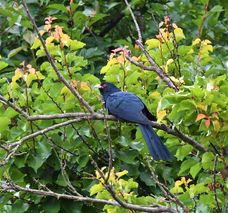
Photo by facebooker Robert Anderson
who stopped in Yea to use the toilets.
Beware of the pointy ends
Eastern Long-necked Turtles (Chelodina longicollis), alternatively known as Snake-necked Turtles are one of 23 species of turtles in Australia (we don’t have any Australian tortoises). During the hot summer months these turtles bury themselves in the mud of dried up water bodies but heavy rain triggers them to migrate over land to find new food sources. Given our current weather it is no surprise then that recently turtles have been on the move – lots of them.
Long-necked turtles can be found in slow moving or still water bodies. A quick trip along the Goulburn River at the moment where a many billabongs have be filled by the recent flooding will reveal many turtles either floating on the surface or sunning themselves on nearby logs (see photo below).
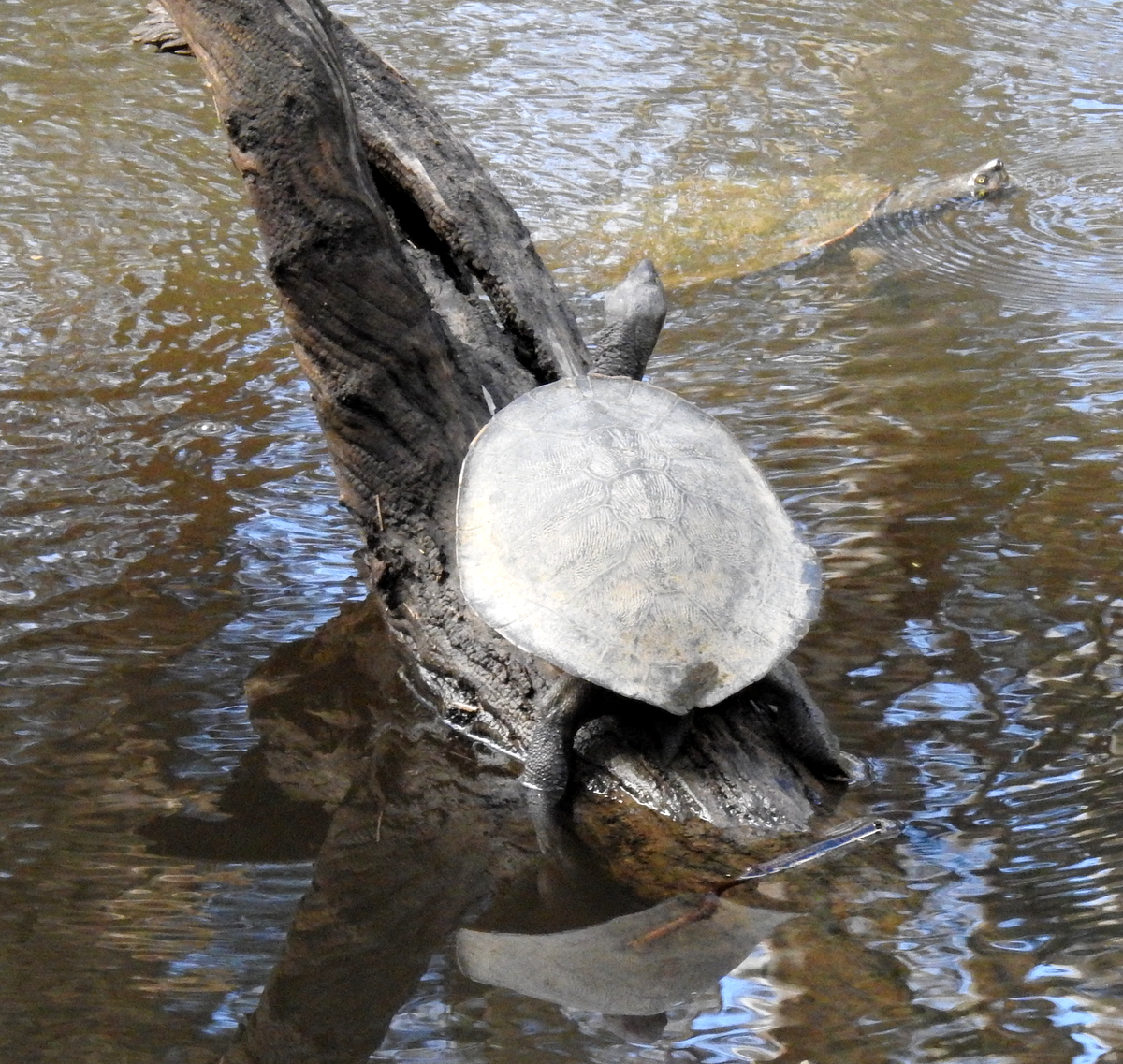
The turtle’s life is not all sun and swimming. In their moves to greener pasture they are often killed crossing roads as they are very slow moving and their colour makes them hard for drivers to see. ‘Helping’ a turtle cross the road is fraught with dangers for the uninitiated. Turtles are carnivorous eating fish, frogs, tadpoles and yabbies using there sharp claws to capture and then tear apart the prey and even though humans are not in their diet they can deliver a painful nip if picked up incorrectly.
If annoyed long-necks can also emit an offensive spray from the anus so when picking up a turtle, orientation is everything. Beware of the pointy ends!


 Focus On Fauna