Different species, same story
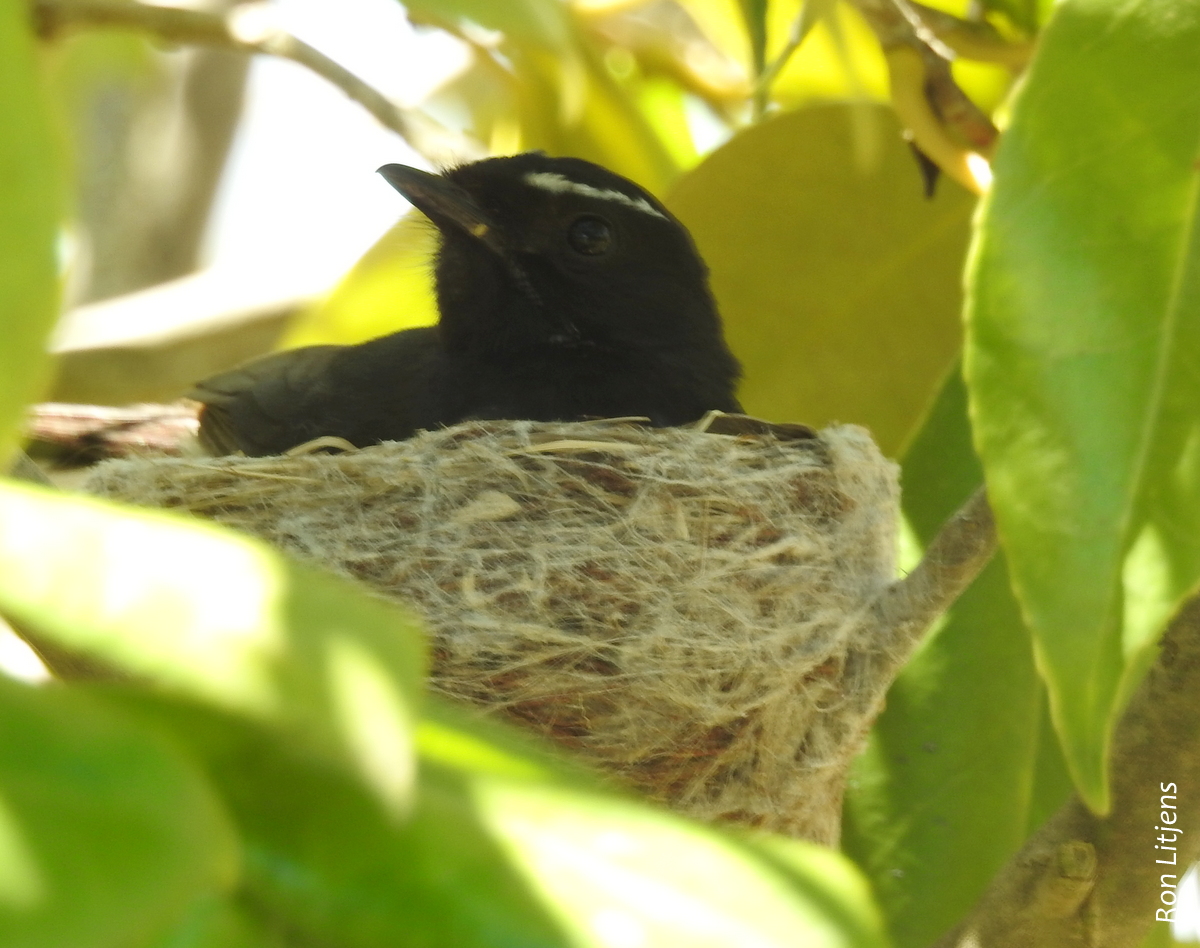 Last year I blogged about watching Grey Fantails (Rhipidura albiscapa) build a nest in the vines outside the kitchen window. This year they have not returned but my ‘neighbour’ Corrine has had a pair of Willie Wagtails (Rhipidura leucophrys), pictured left, nesting in a tree next to her house and I have been gaining vicarious pleasure from listening to the reports of their progress. The scientific name is derived from the Greek words rhipis (fan), oura (tail), leukos (white) and ophrus (eyebrow) – a ‘white-eyebrowed fantail’.
 Willy Wagtails inhabit most areas except dense forest. In 15 years we have never observed them on our bush block though they are plentiful in the neighbour’s paddocks. The birds are aggressive and territorial and are one of those you see harassing eagles and the like to protect their territory. Like Fantail nests, Wagtail nests are built of grass and bark held together with spider web and lined with animal fur. They do not however have the wine-glass shape. This nest in question was in a citrus tree 2 metres above the ground.
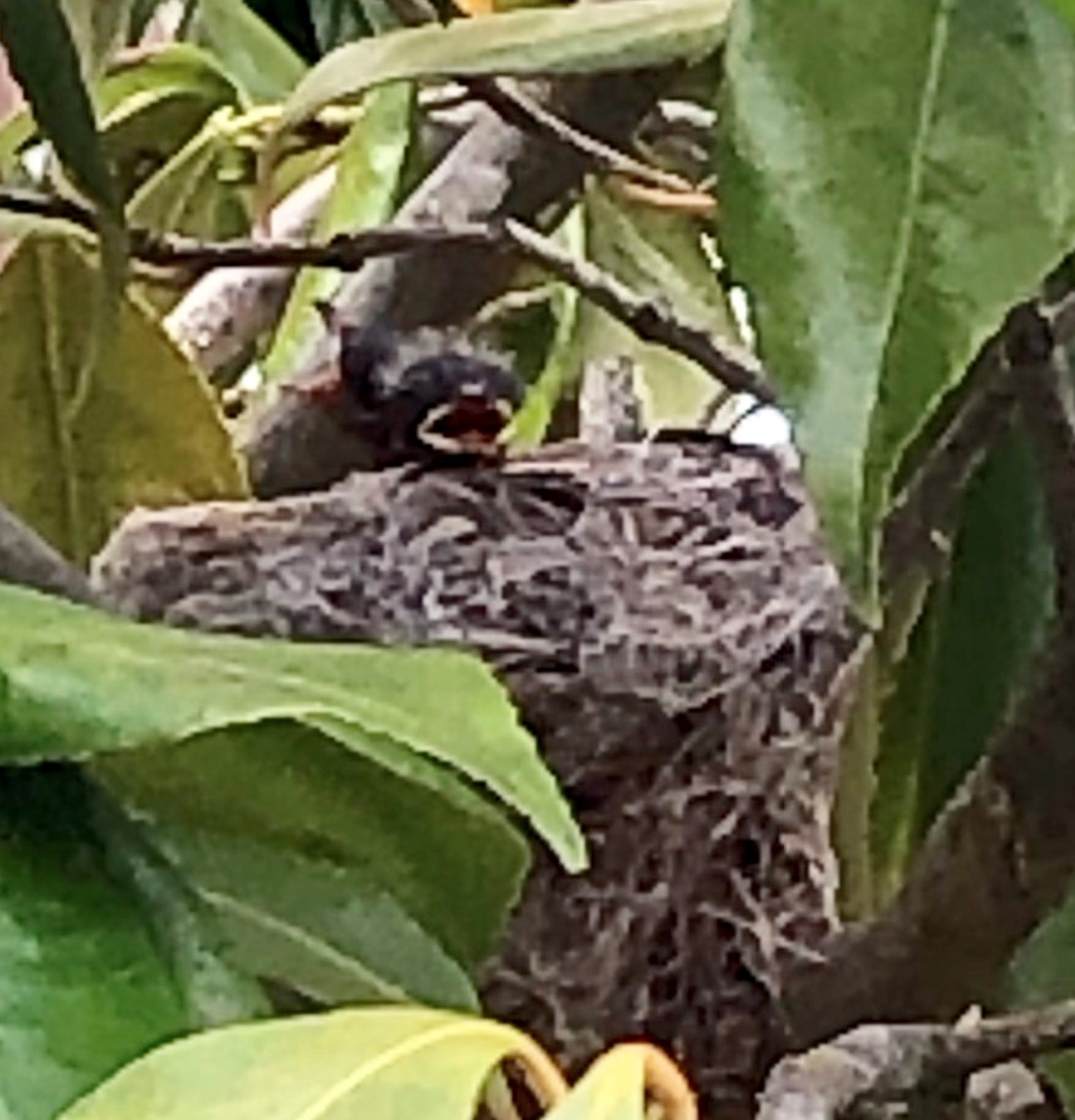
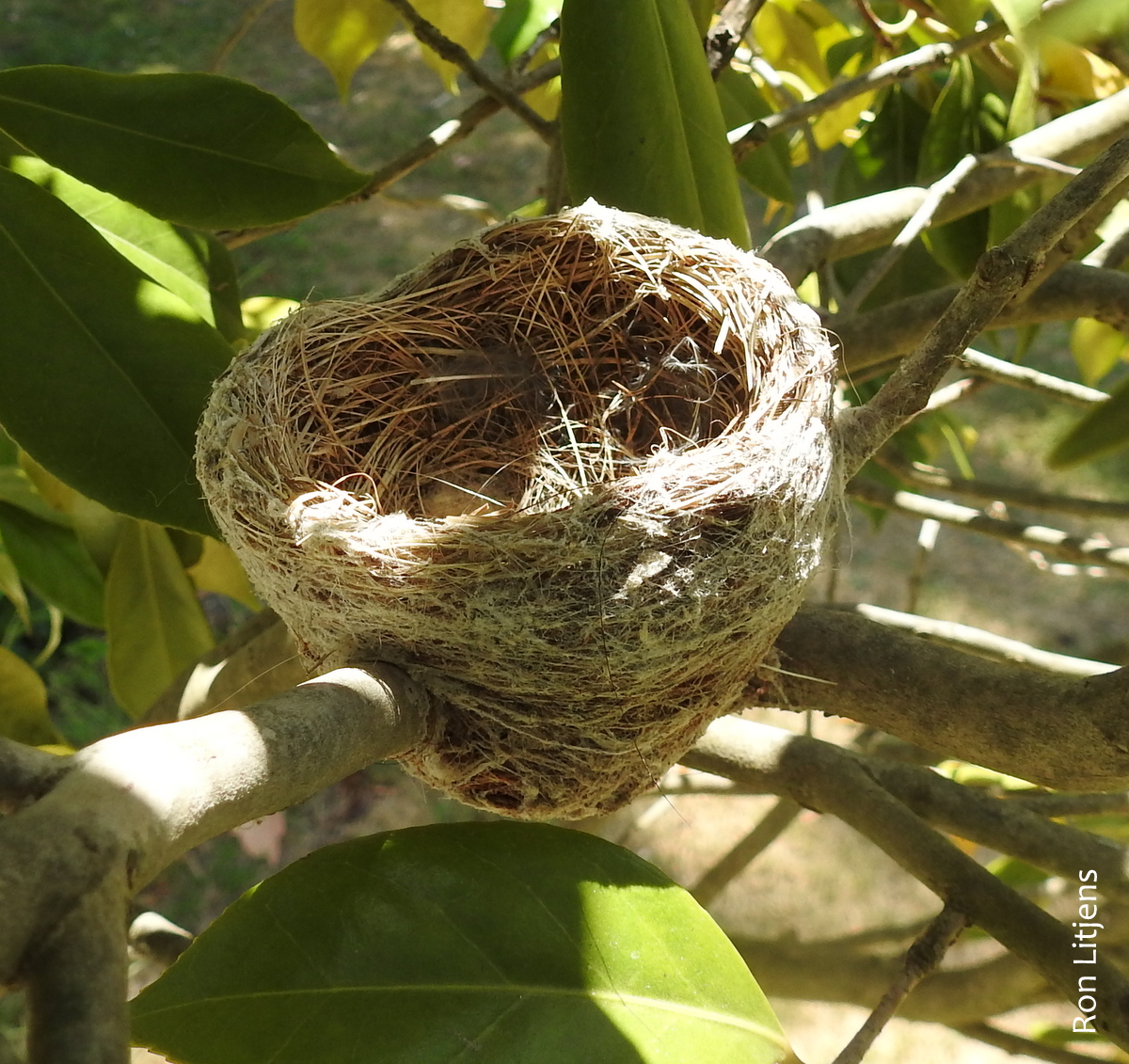 Last night an SMS accompanied with a photo, see picture right, proclaimed that two chicks had hatched and that I was invited to come around and take some photos with a ‘proper’ camera which I duly did. The resulting photograph (left) revealed an empty nest. Known predators include feral cats (unlikely), rats (maybe) or Pied Currawongs (most likely). Nature is nature!
Same story as last year, different bird.
The deal
 On Xmas arvo Mac and I were sitting at the dam in Flowerdale – well Mac was laying in the dam and I was sitting on the slope watching. I noticed a wasp struggling on the surface of the water. Normally I would let nature take this course but I made a deal with the wasp that if I fished it out, it would sit still long enough for me to get a good photograph, something I find difficult to do with wasps. I don’t know whether it heard but it took a considerable amount of time de-watering itself before flying off, enough time for me to get a photo or two. It was a Common Paper Wasp (Polistes humilis), pictured left and below, which has been described in a previous blog.
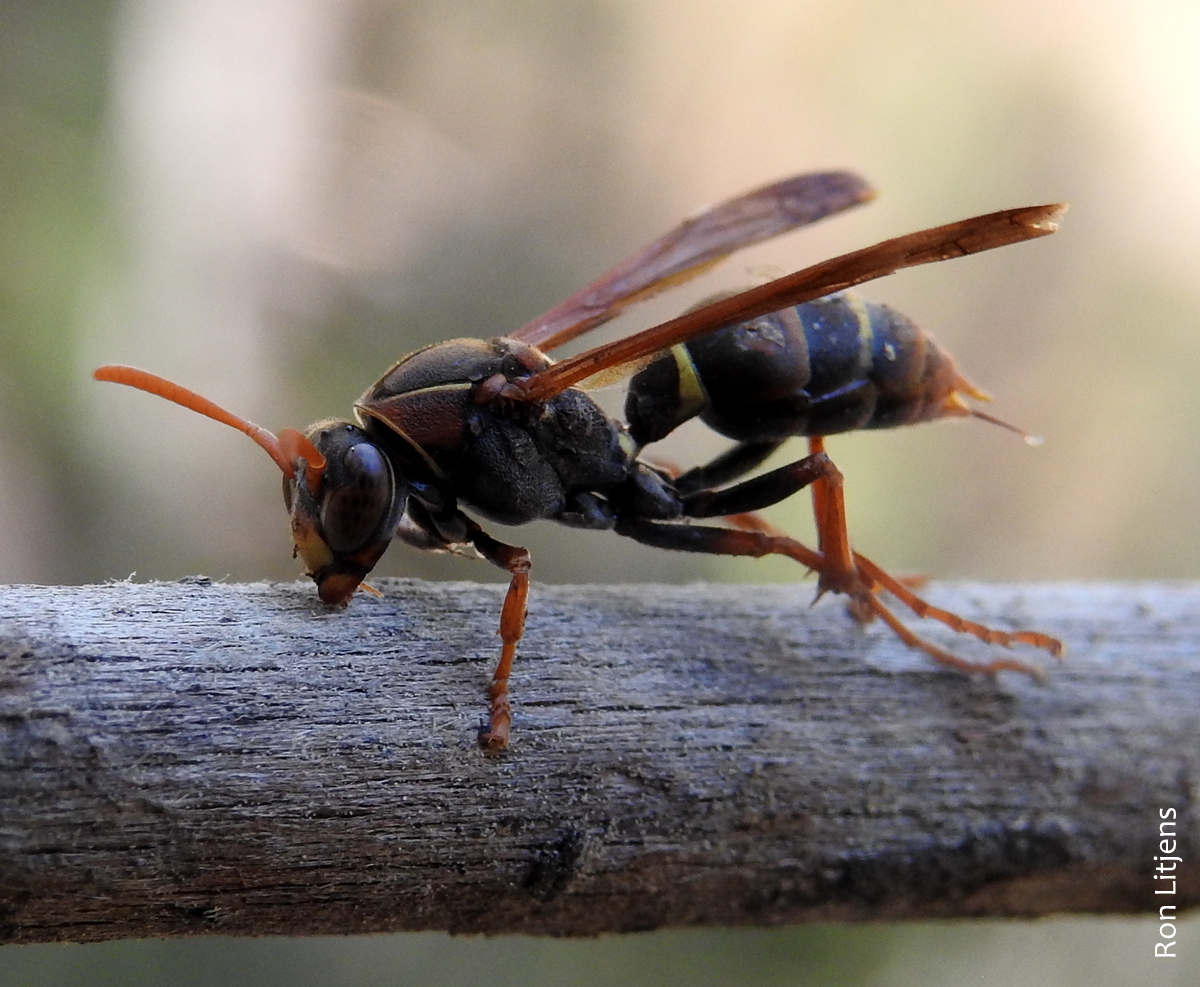
Ants, bees and wasps are of the order Hymenoptera (membrane-winged insects), and in the sub-order Apocrita, derived from the Greek word apokritos meaning separated. This refers to the ‘narrow waist’ these insects have. In evolutionary terms the narrow waist is beneficial as it allows flexibility when using an ovipositor when laying eggs or a sting when defending itself. The picture above clearly shows just how narrow the waist is compared to the rest of the insect. The same characteristic can be found, though sometimes not as obviously, in ants and bees.
Presuming that the wasp did not get eaten immediately after it flew away I think we both did OK out of the deal.
Gone in 60 seconds
If I tell you that the movie Gone in 60 Seconds (the original, not the remake) was one of my favourite movies as a youth, it will tell you something about how I spent my time. Not car-jacking, but certainly tinkering with fast cars. Unfortunately, as much as I tried mine was not one of them.
 Last week it took a lot less than 60 seconds for me to take a hen’s egg out of the chicken coop, put it down, walk the chooks around to their run and return. In that time a Little Raven (Corvus mellori), pictured left, had found the egg and was having breakfast.
Corvids (ravens and crows) are omnivorous. Depending on the season they will feed on invertebrates such as caterpillars, spiders, centipedes and grasshoppers, plant material and carrion. In late spring and early summer they will explore trees looking for bird’s nests and take the chicks and eggs. As with raptors such as eagles you will often see ravens being harassed by other birds protecting their nests. They are opportunistic feeders and whilst not hunters of chicken eggs will certainly feed on them if they chance upon it.
They are sort of like a ‘reverse Easter Bunny’.
It’s lucky they’re small
Irrespective of the size of your backyard fauna can turn up at any time. Granted, if you live on a small block that is completely fenced you may not get Eastern Greys cruising through (or you might!) but fauna will be out there.
 A trip to the clothes line this week brought me up close and personal with a Mantis Fly (see picture left). Mantis Flies have been previously blogged about. They look like a Preying Mantis but are neither a mantis nor a fly. In fact they are a type of lacewing.
In close up they look kind of ferocious (see below).
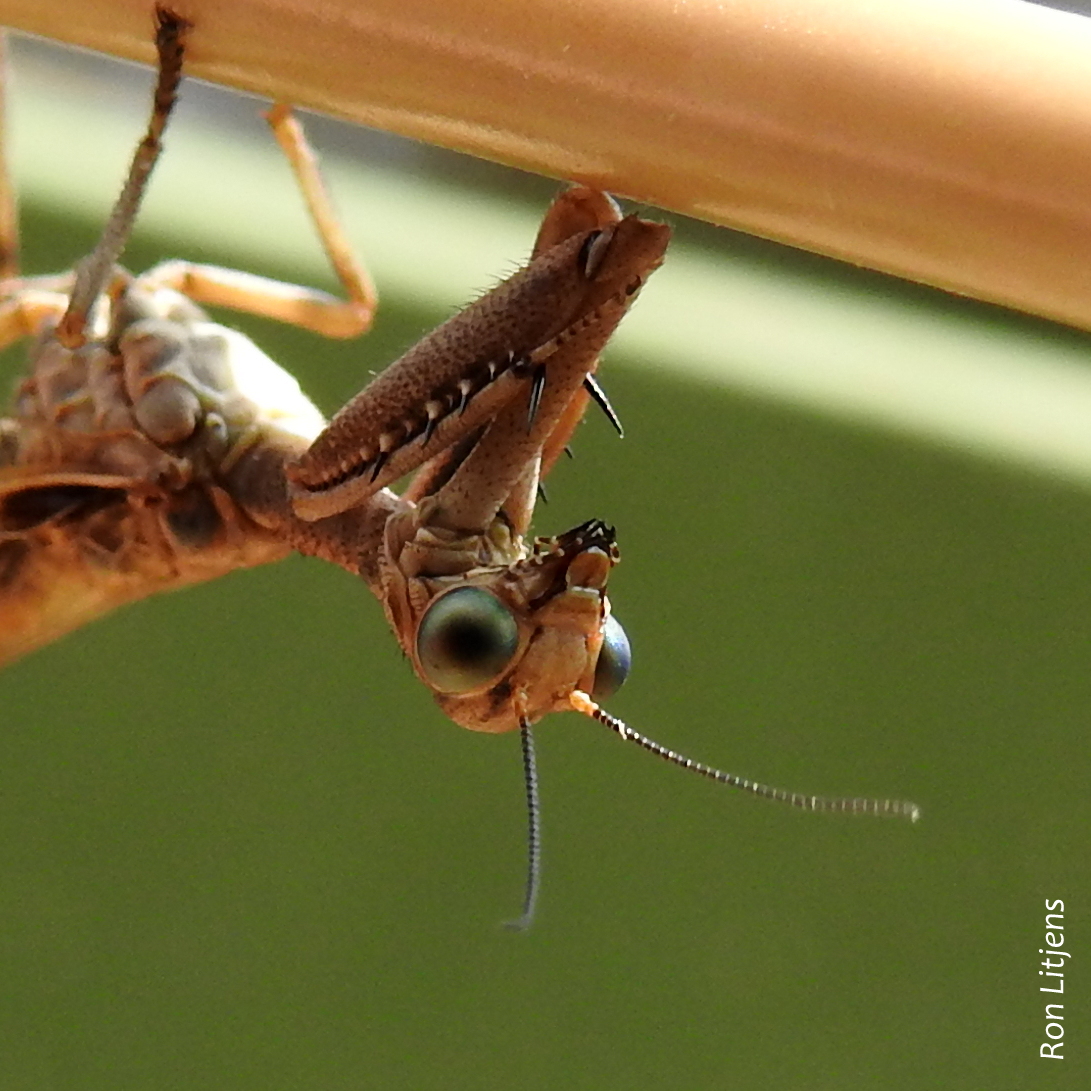
It is lucky that they are small. If I had to confront a large version of one every time I hung my clothes out to dry I think I would not bother clothes washing and become a nudist – probably just as terrifying to look at!
There’s always a down side
I like to look after the environment and eat healthily. That’s why I try to as much as possible buy organic or biodynamic food and collect it in my own containers. The downside to this is that I often have large quantities of goods that have not been treated with commercial pesticides and my containers of foodstuffs can and do get critters living in them.

The great escape
The latest zoo I have created sits in a container of walnuts. Early in the year the walnuts were festooned with what looked like webs. Rather than wash the walnuts and remove the webs I decided to find out what type of critter – weevil? beetle? moth? was responsible.
Well this week the responsible critter revealed itself. Opening the walnut container released a squadron of Indianmeal Moths (Plodia interpunctella), pictured below, into the kitchen. The insects are named not for their country of origin but for the fact the larvae feed on cornmeal (Indian meal). They also feed on nuts (obviously), cereal, pasta, bread, flour, even dogfood.
 I thought this was the end of the story but the moths can travel large distances to breed, which they can do in clothing. The larvae also have the ability to eat through cardboard and plastic. As with some of my other (failed!) scientific trials it looks like this one could have long term consequences!
When patience pays off
Spiders are such patient creatures. Not those like Wolf Spiders and others which actively patrol the ground and run down prey, but those spiders which sit in the middle of a web and wait for errant prey to get caught. Even more patient are the ambush predators which sit camouflaged in the vegetation and wait until something lands within ‘arms reach’.
 In my backyard I have several tussocks of Phalaris, a grass introduced as stock feed (not by me). For the past week or so sitting on a seed head and blending in nicely has been a Crab Spider (Runcinia sp.), pictured left. Its front two pairs of legs are long and covered with short, stout bristles, designed for reaching out and grasping prey.
What this spider knows is that in the early morning the phalaris seed heads are a favourite place for flies to land to warm themselves in the rising sun. The seed heads are covered in flies and with patience it is just a matter of time before a fly lands within reach of the spider’s grasp.
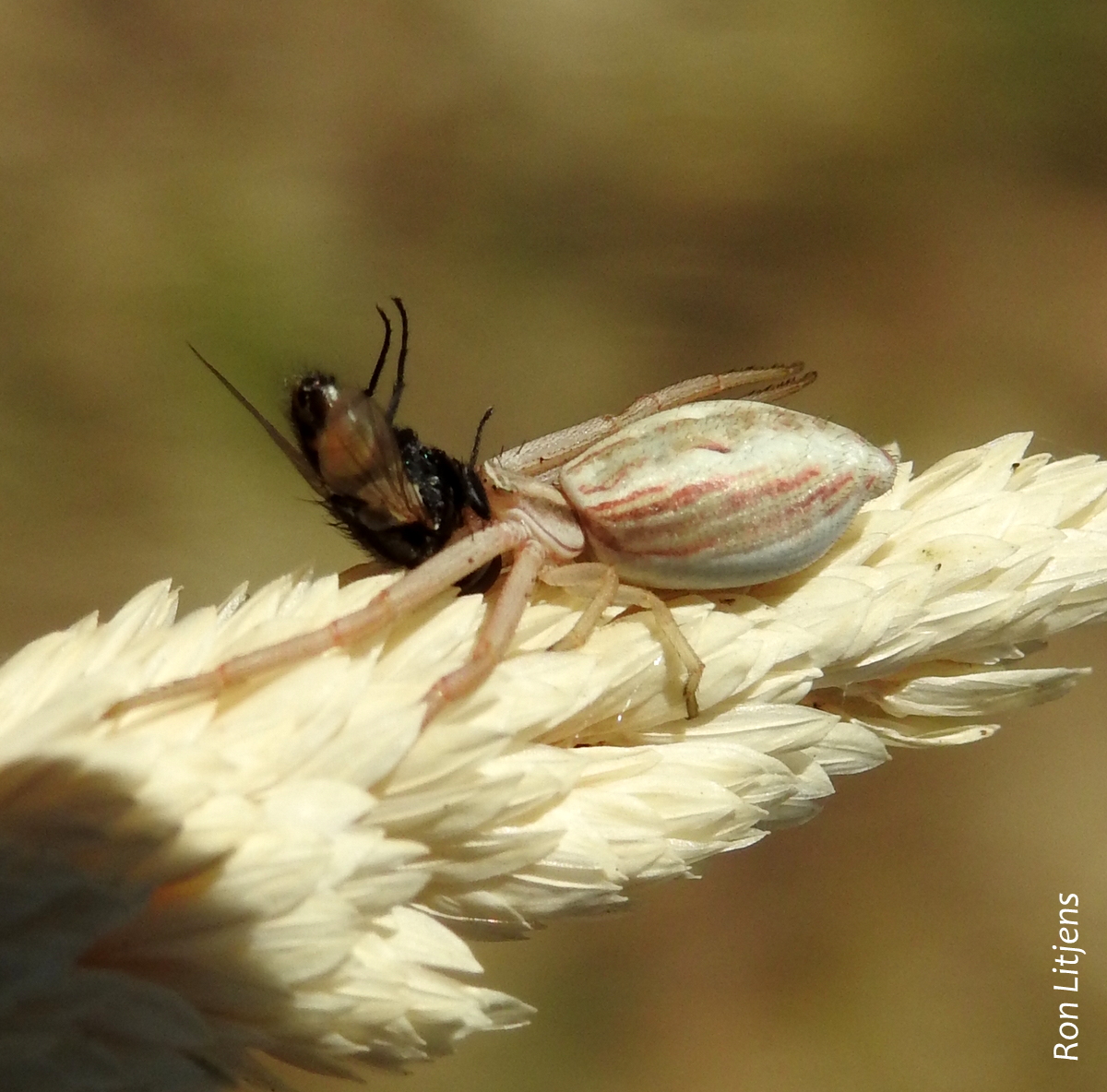
Breakfast. Persistence pays.
When you shouldn’t shave your legs
Insects catch prey by a variety of methods. Some like antlion larvae create traps by constructing funnels in the sand into which ants slide. Others like Scorpion Flies are ambush predators, hanging quietly from a piece of vegetation until an unsuspecting insect ventures too close. For some insects the capture of prey is a far more energetic activity.
Insects of the order Odonata i.e. dragonflies and damselflies (pictured below), and flies such as Robber Flies (pictured far below) catch prey on the wing. When prey flies through their territory they give chase and grasp the prey inflight with their legs. This requires excellent vision (these insects, see pictured, have enormous compound eyes), narrow wings for speedy flight, great flying dexterity and hairy legs!

Dragonflies, for example, can fly at speeds in excess of 50 kph. To stop prey slipping out of their grasp when hit at high speed, insects which aerially hunt have a collection of stiff hairs on their legs and claws as feet so that prey will not slip.

I guess the motto is No waxing or no food.
Here comes another sucker
Insects of the order Hemiptera, those that have sucking mouthparts, feature regularly in Focus on Fauna. These include cicadas, tree-hoppers, psyllids and scale. Well here’s another one.
Pictured below are the nymphs of a planthopper, so called because their defensive reaction is to jump free of danger. Adult planthoppers look like triangular spikes, often green in colour, on the stems of vegetation. In reality planthoppers are camouflaged by the shape and colour and move slowly to avoid detection.
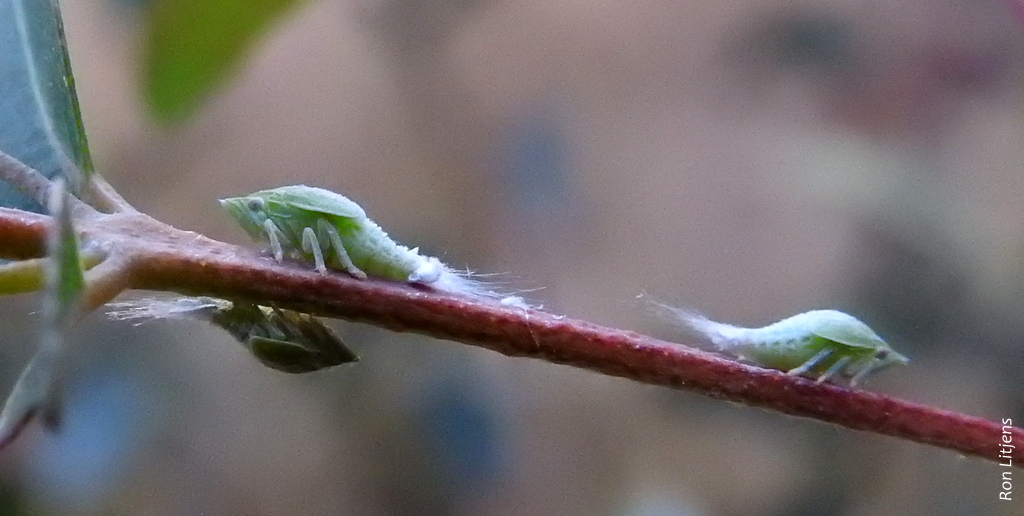
Like all hemipterans the nymphs progress through several moulting stages until they finally become adult. Planthopper nymphs extrude a wax from the abdomen (picture) that aids in concealing them from parasites or predators as the wax filaments can be spread out like a type of umbrella. It is also thought that because the nymphs do not have wings the filaments spread widely can act as a type of parachute if falling.
I had half a mind to call this blog Farting Fibre-optics.
… a snake’s belly
 A grisly and sad sight confronted local farmer Terry while out on his tractor on the Broadford-Flowerdale Road. A Red-bellied Black Snake (Pseudechis porphyriacus) had been run over by a vehicle and the impact had dislodged its stomach content – an Eastern Brown Snake (Pseudonaja textilis). The brown snake was about 3/4 the length of the very fat black which was estimated at just under 1.5 metres long.
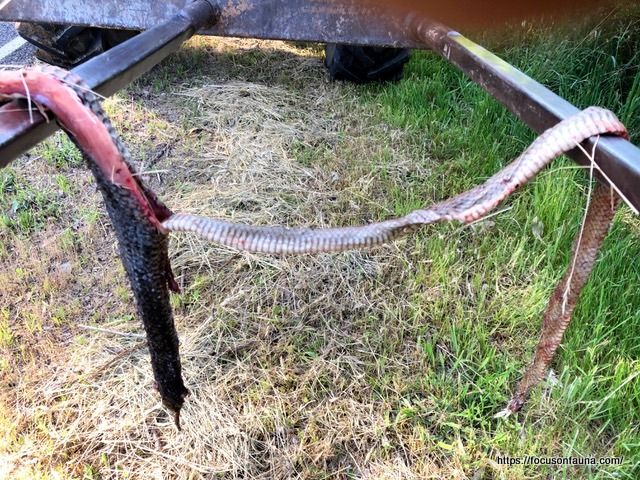
According to the Australian Museum, many Australian snakes eat other snakes as a normal part of their diet. The technical term for this is ophiophagy. True cannibalism – that is the eating of the same species – has also been observed in a number of snakes, including the two involved here. Many years ago we came across an Eastern Brown Snake with the tail end (1/2 a metre or so) of another of the same species trailing from its mouth. The half-coiled predator snake was shaking its head from side to side in an attempt to finish swallowing its victim.
The reverse of Terry’s encounter was experienced by Kay at Strath Creek back in 2014 when she watched, and recorded on video, an Eastern Brown Snake consuming a Red-bellied Black Snake. The dramatic video can be seen on a previous Focus on Fauna post Snake v snake.
There is still much to learn about snake diets, and chance observations like Terry’s, despite an unfortunate outcome, help to fill in the knowledge gaps. Citizen science at work!
It’s raining…beetles
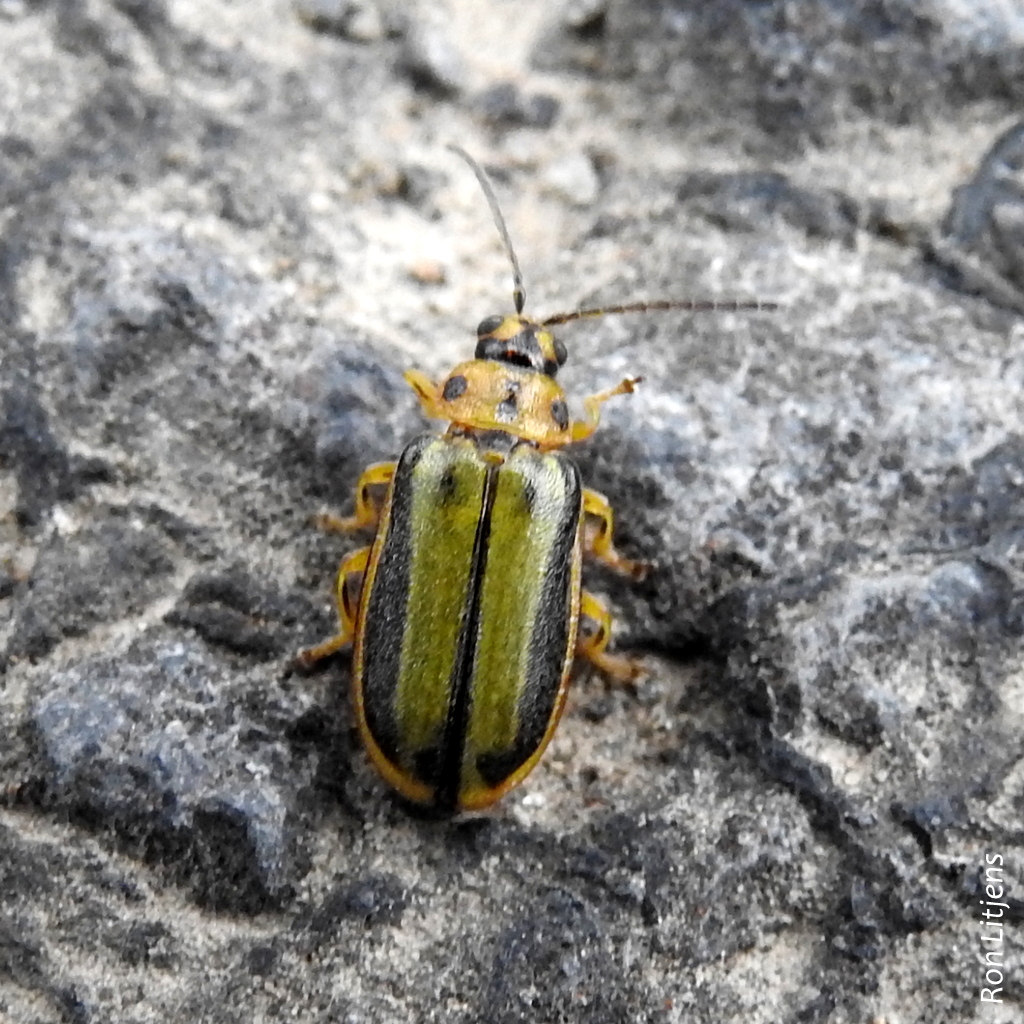 During a recent bout of windy weather I was out walking Mac (the Border Collie) when a violent gust of wind caused a lot of debris to rain down from a tree I was walking under. The tree was an Elm of some sort and the debris was hundreds of beetles, Elm Leaf Beetles (Xanthogaleruca luteola), pictured left.
Originally from Europe these beetles were accidentally introduced to Australia. The adults and their larvae (pictured below) can cause serious damage to Elm trees by skeletonising old and emerging leaves. The result is rarely the death of the tree but the tree can be severely weakened and made vulnerable to diseases such as Dutch Elm disease.
 As with many insect pests introduced into Australia, for example the European Wasp, in their native habitats cold winter temperatures kill off many of the insects thereby controlling the populations. However this does not happen in the milder Australian winters so the number of insects grows unchecked.
Unsurprisingly these beetles are of the same leaf-eating beetle family (Chrysomelidae) as the Eucalyptus Leaf Beetle in the previous blog.
It always amazes me how family members can look so different.




 Focus On Fauna