Whistler v. Triller

Rufous Whistler
In a revegetated gully at the back of our place there is a wealth of bird chatter at present. But the songs of two birds in particular dominate for much of the day, and it sounds like a battle to see which can impress the most. They are the Rufous Whistler and White-winged Triller.
Click on the audio icons below to hear their resounding calls which are well worth a listen.
Rufous Whistler:
White-winged Triller:

White-winged Triller
Both these birds are spring/summer migrants to Victoria, spending the colder months in the warmer climes of northern Australia. The male triller pictured here (it’s elusive – hence the long-distance shot!) is in its pied (black and white) breeding plumage. From March to August it changes its outfit to mainly brown and grey, more closely resembling the female. The male Rufous Whistler retains its impressive plumage throughout the year.
As a songster, the Rufous Whistler probably wins the day, but the White-winged Triller is certainly no slouch in the vocal stakes.
The Box – The Young and the Restless

Grasshopper instar
After the ’09 fires a grove of Yellow Box saplings started growing on our property. Being a mecca for young invertebrates and therefore birds and other creatures I began monitoring the fauna that lived there. Now the saplings are trees and hard to access. So recently I found three Grey Boxes (Eucalyptus microcarpus) that have just started their life. Only knee high they make it easy to check for critters and I can sit down and photograph – a real luxury. Once again I am going to see what lives in these very young trees. I will call this series The Box, after a TV series broadcast when I was young which I was never allowed to watch because of something that they now call Adult Themes.

Gumtree Hopper instar
Many insects mature through a series of stages called instars. As the instars grow they becomes too big for their external skeletons (exoskeletons) and therefore have to moult and form new, bigger ones. This is called incomplete metamorphosis. In most cases the instars look like smaller versions of the adult, just without wings. The wings appear after the final moult.
Spring is the time when insects lay eggs and the young hatch. It is also the time when eucalyptus trees are growing the tender new shoots on which some of these instars feed. A close look at the box trees reveals a veritable nursery of young instars, some of which are pictured. The adult cockroach can be seen HERE. To date each insect has not moved from the plant it was first observed on.
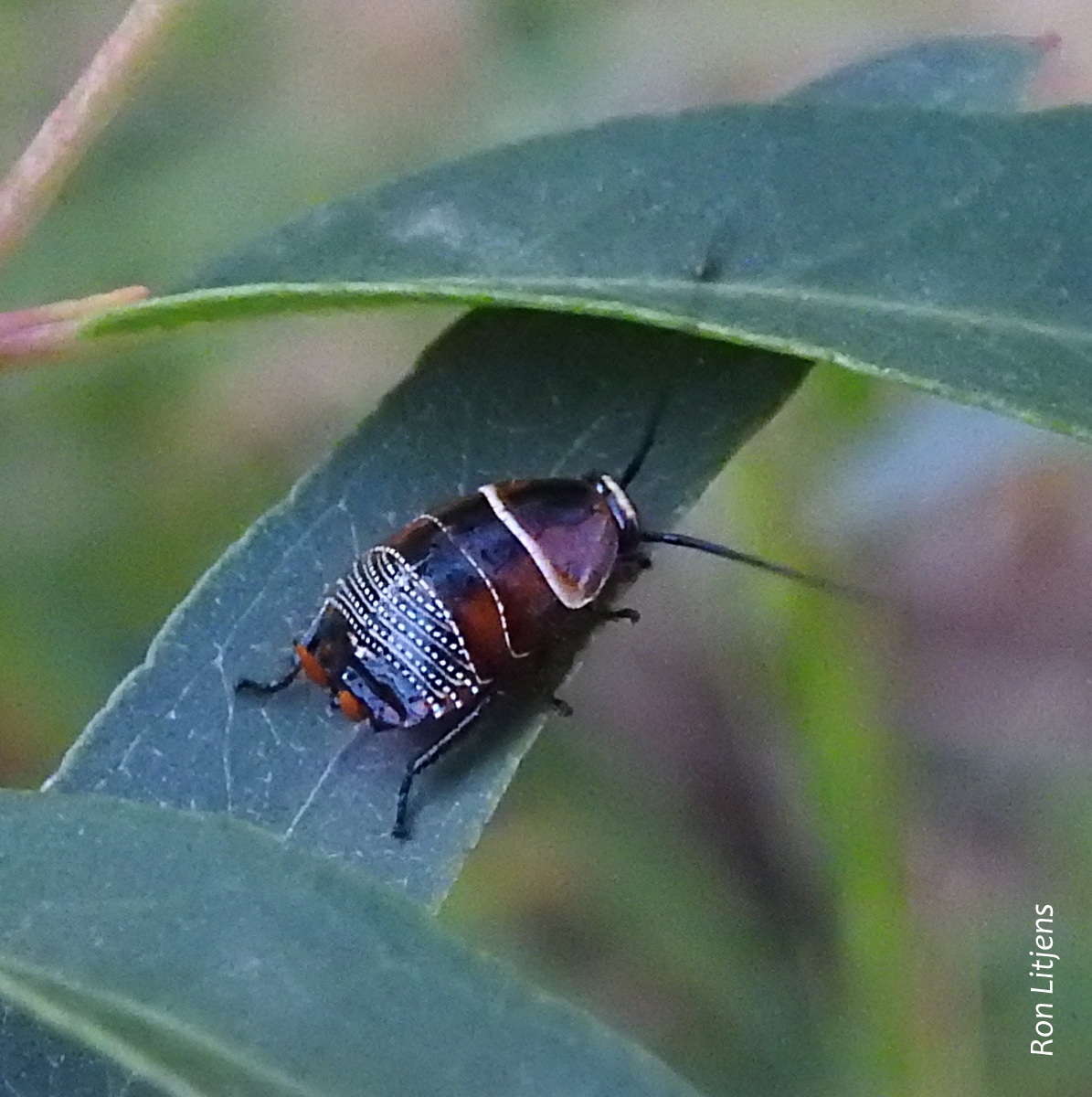
Austral Ellipsidion Cockroach (Ellipsidion australe) instar
Maybe they become restless when they are teenagers.
The diff is in the quiff
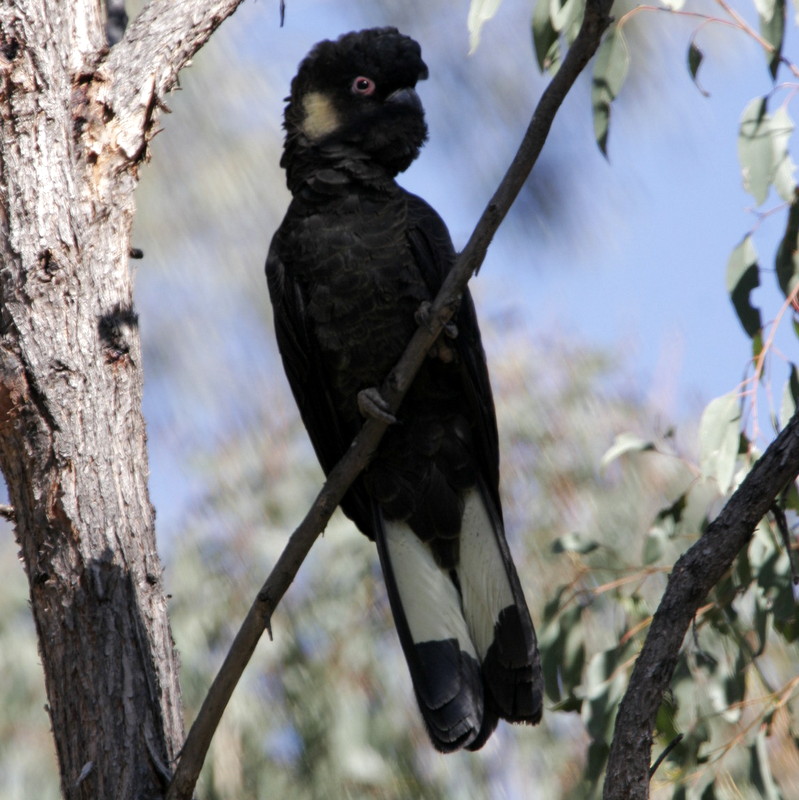 Cockatoos are distinguished from other parrots by having a crest on the top of the head that can be raised, usually when landing or when excited. In some birds, like the Galah, the crest is barely noticeable and in others like the Sulphur-crested Cockatoo it is the distinguishing feature. Cockatoos also lack the feathers with a light diffracting surface which gives other parrots such bright colours, particularly blues and greens.
The Black-Cockatoos, of which there are five species, make up the genus Calyptorhynchus, the scientific name being derived from the Greek kalupto meaning ‘covered’ and rhunkhos meaning ‘bill’, i.e. covered bill. It refers not to the crest but the feathers which hide the lower part of the bill.
The Yellow-tailed Black-Cockatoo (Calyptorhynchus funereus) pictured above has a moderate sized crest. They are distributed along the eastern and south-eastern Australia and are commonly heard in our valley just before rain (click on the call below). A ‘squadron’ of these birds is an impressive sight as they ‘lope’ through the skies.
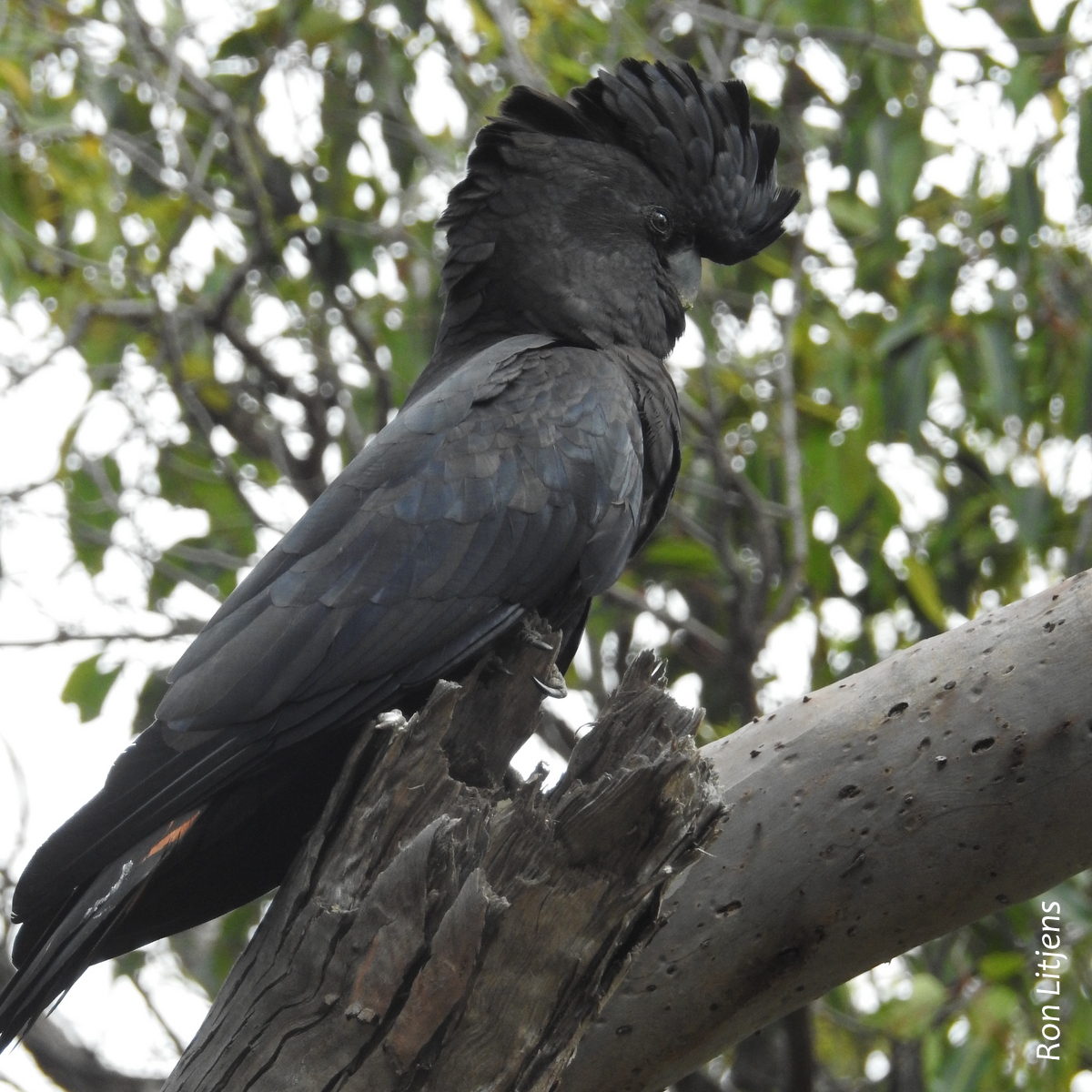
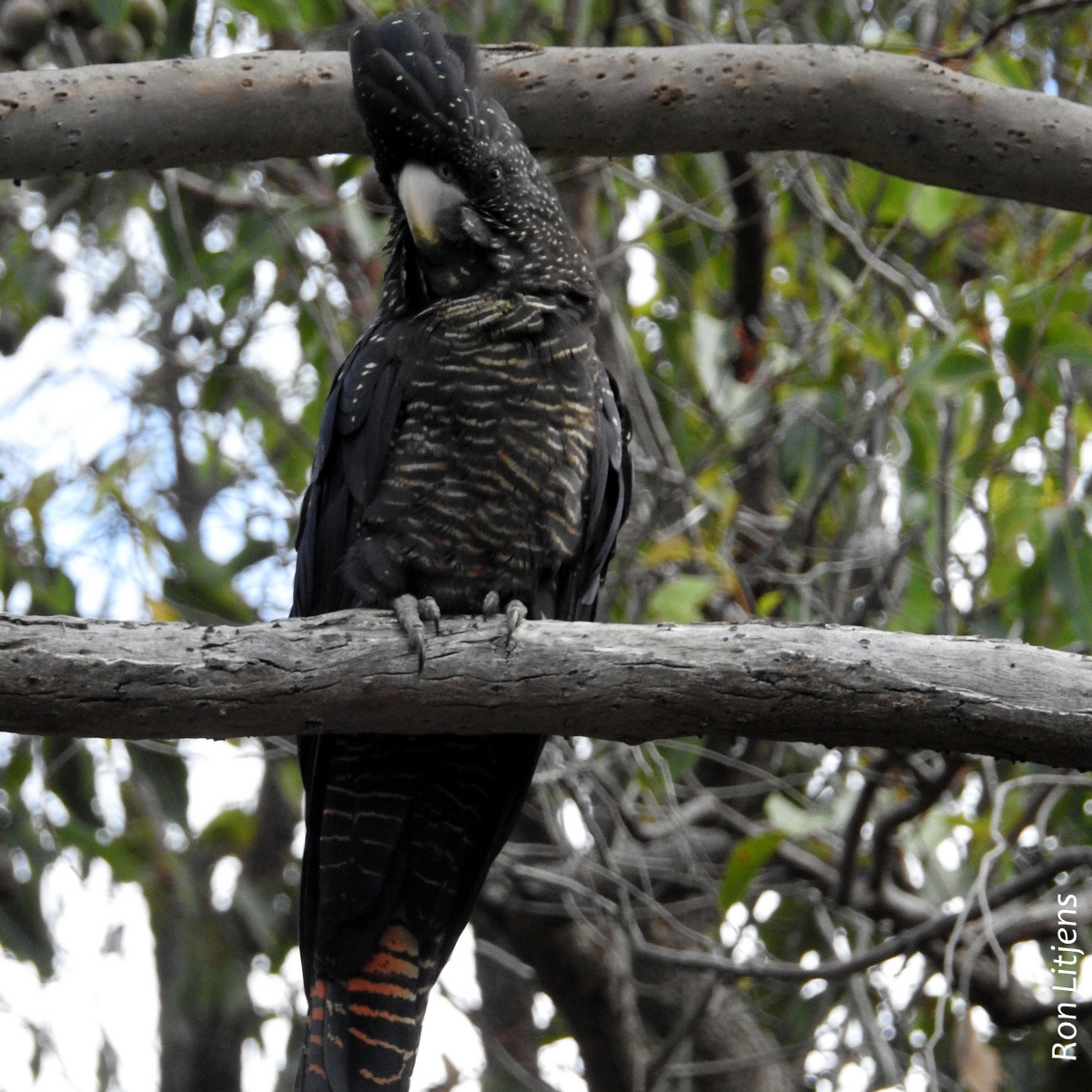 The Red-tailed Black-Cockatoos (Calyptorhynchus banksii) pictured above (male) and right (female) comprise several races distributed throughout Australia. In Victoria they are restricted to the far south-west corner (race graptogyne) where they are considered rare. I came across a pair recently of Red-Tails recently in WA. What impressed me was the size of the crest which can be extended to cover the upper bill as well. What a quiff!
Elvis would be impressed.
It’s all white
The camouflage tactics of the White Crab Spider (Thomisus spectabilis) have been previously documented but it has only been recently that I have seen them in action.
Spring blossoms are a mecca for pollinators of all sorts – bees, wasps, beetles and for amateur photographers like myself it is a time to get up close and personal with them in the hope of getting at least one decent picture. Recently a heavily blossomed Melaleuca was abuzz with pollinators rapidly moving from flower to flower. It was therefore quite strange to see a European Honeybee motionless on one of the blooms.

 Closer examination revealed the bee to be prey to a White Crab Spider (pictured above). These spiders are ambush predators, hiding amid the flowers and then grabbing with powerful front legs any pollinator that ventures too close. The prey is then rendered immobile with venom. In the picture (above) it is easy to see how the spider can easily blend into the background of the flower. Just try to make out the legs!
It’s all white though. These spiders are not harmful to humans.
Out of its usual range
 The discovery of something that you have not seen before is cause for great excitement. Particularly when you are at home and think that you have probably seen all the birds, for example, that there are to be seen in the district. So excitement there was when a reported red, black and white bird (not a Robin) was observed in the uppermost branches of a local Melaleuca. And any unknown bird with striking colouration, i.e. red, is doubly exciting. On colours alone we guessed that it may have been a Mistletoebird. But to be sure we had to call in technology in the form of a camera with a telephoto lens and a bird identification app on our iPads, in our case Pizzey and Knight. We also had to hope the bird was hanging around so that we could get another look at it.
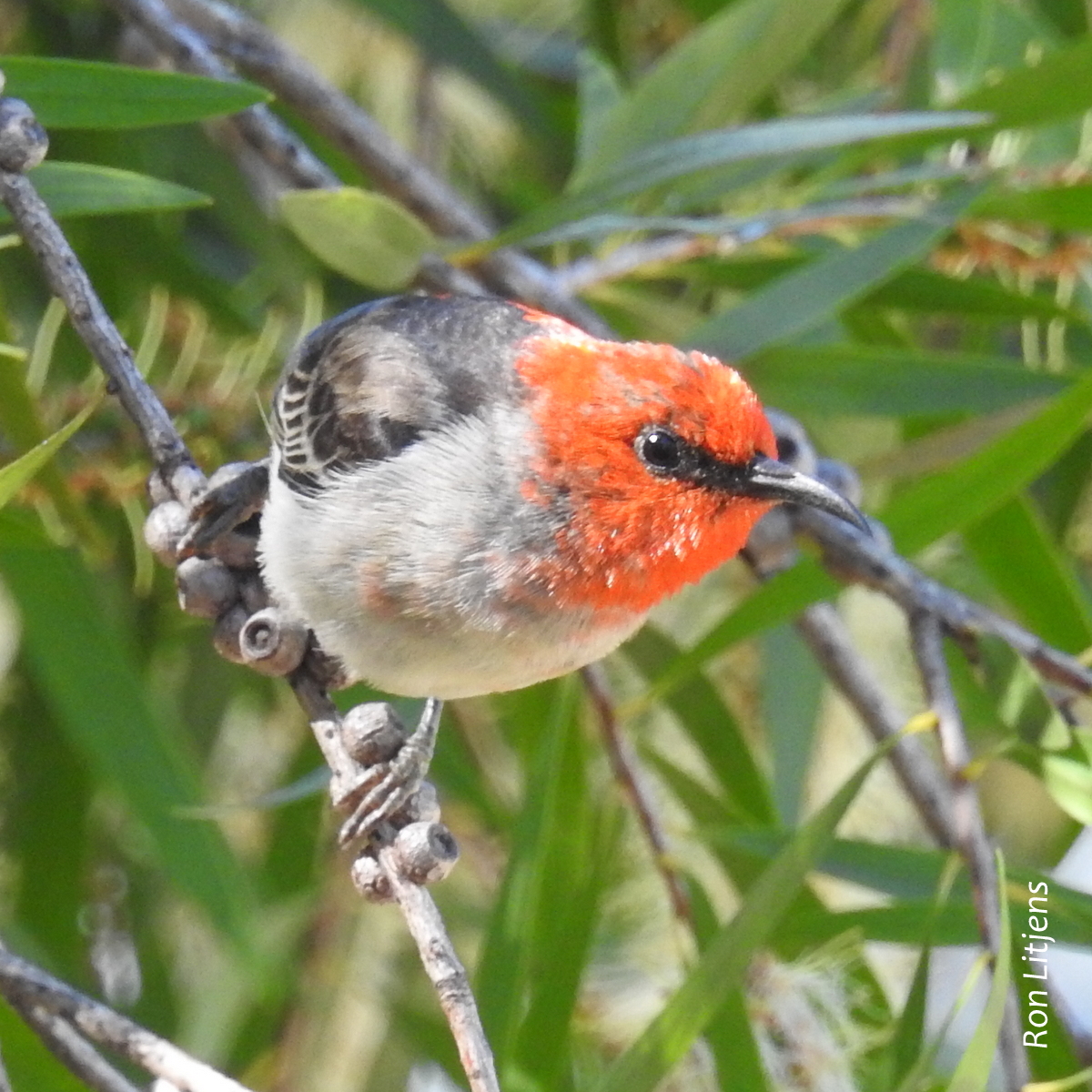 The beak shape (pictured above) pointed us in the Honeyeater direction and the red coloured head narrowed it down to two suspects – the Red-headed Honeyeater, which is distributed along the northern coastline of Australia and unheard of in this area, or the Scarlet Honeyeater, distributed along the eastern seaboard and still uncommon here. Either way it was a bird neither of us had seen before (a ‘lifer’ in twitching terms) and outside its usual range. Geoff (Murrindindi Birdwatchers) and Macwake both confirmed the bird to be a male Scarlet Honeyeater (Myzomela sanguinolenta), a bird Macwake had documented in a blog this time last year.
 The Scarlet Honeyeater is a seasonal migrant spending most of the year along the east coast between Sydney and Cooktown but migrating less commonly south of Sydney during summer. The scientific name is derived from the Greek muzao for suck, meli for honey and the Latin sanguinolentus meaning blood-red, i.e. a blood-red honeysucker, which is entirely appropriate given its food source is mainly nectar.
Adding a bird to the list is great, especially one so striking.
It’s all about hydraulics
The word hydraulics to me evokes pictures of pumps, valves and engineers – anything to do with liquids and water pressure. A little critter that wandered across my outdoor furniture setting recently is powered by hydraulics. You have probably all seen these tiny little spiders (pictured) which, with a mighty leap, suddenly disappear only to reappear many body-lengths away. They are aptly called Jumping Spiders and make up the family Salticidae which, numbering nearly 6000 species, is the largest family of spiders in the world.

Jumping Spiders are distinguished by their leaping motion which they use to hunt prey (usually small insects) or avoid being preyed upon. They do not have large back legs as does a grasshopper. The spring in its step comes from hydraulics, an explosive change in the ‘blood pressure’ in the back pairs of legs which rapidly extends them and sends the spider forward. The front two pairs of legs are used for grabbing prey.
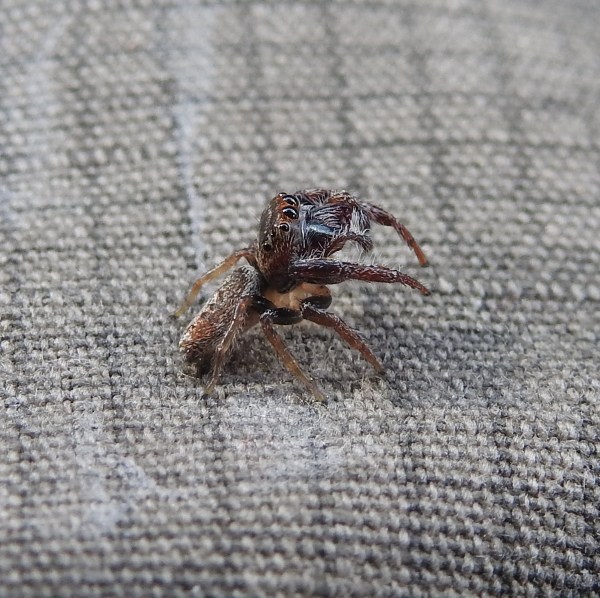 The other obvious feature of jumping spiders is the rectangular shaped head into which four pairs of eyes are set in such a way (see photo above) as to afford the spider a 360 degree field of view. Jumping spiders have extremely good vision in both the visible and ultraviolet parts of the spectrum. Two of the eyes are much larger and face forward. They cannot rotate like the human eyeball. Instead the retina at the back of the eye can swivel to change the field of view. And hydraulics again, the focusing is done by manipulating the liquid in the eye structure to bend the light entering the eye.
Great jumping spiders, Batman!
How sweet it is
Spring is here and with it comes the growth of new sap-rich leaves, particularly on eucalypt trees. This means that it is time for the sap-sucking insects to put in an appearance. Insects of the order Hemiptera make up a diverse range of creatures all distinguished by having sucking mouth-parts. The adult and young insects feed by either sucking the sap from the leaves and stems of plants or sucking the juices out of other insects.
Sap-sucking insects such as psyllids extrude a sugary substance called honeydew which they fashion into ‘houses’ under which they live. These houses are called lerps. Lerps are in turn the primary food source for birds such as pardalotes and bell miners.

Another sap-sucking insect around at the moment is the Gumtree Hopper (pictured above). Gumtree Hoppers also extrude honeydew which ants have found to be an energy-rich food source. If you look at the new growth on gum trees at the moment and you find it covered with ants, chances are the ants are ‘harvesting’ honeydew from the rear end of Gumtree Hoppers. The picture above shows an ant doing exactly that. The ant takes the honeydew back to the colony and stores it for later consumption. In return for this food the ants provide the hoppers with protection from predators and parasites.
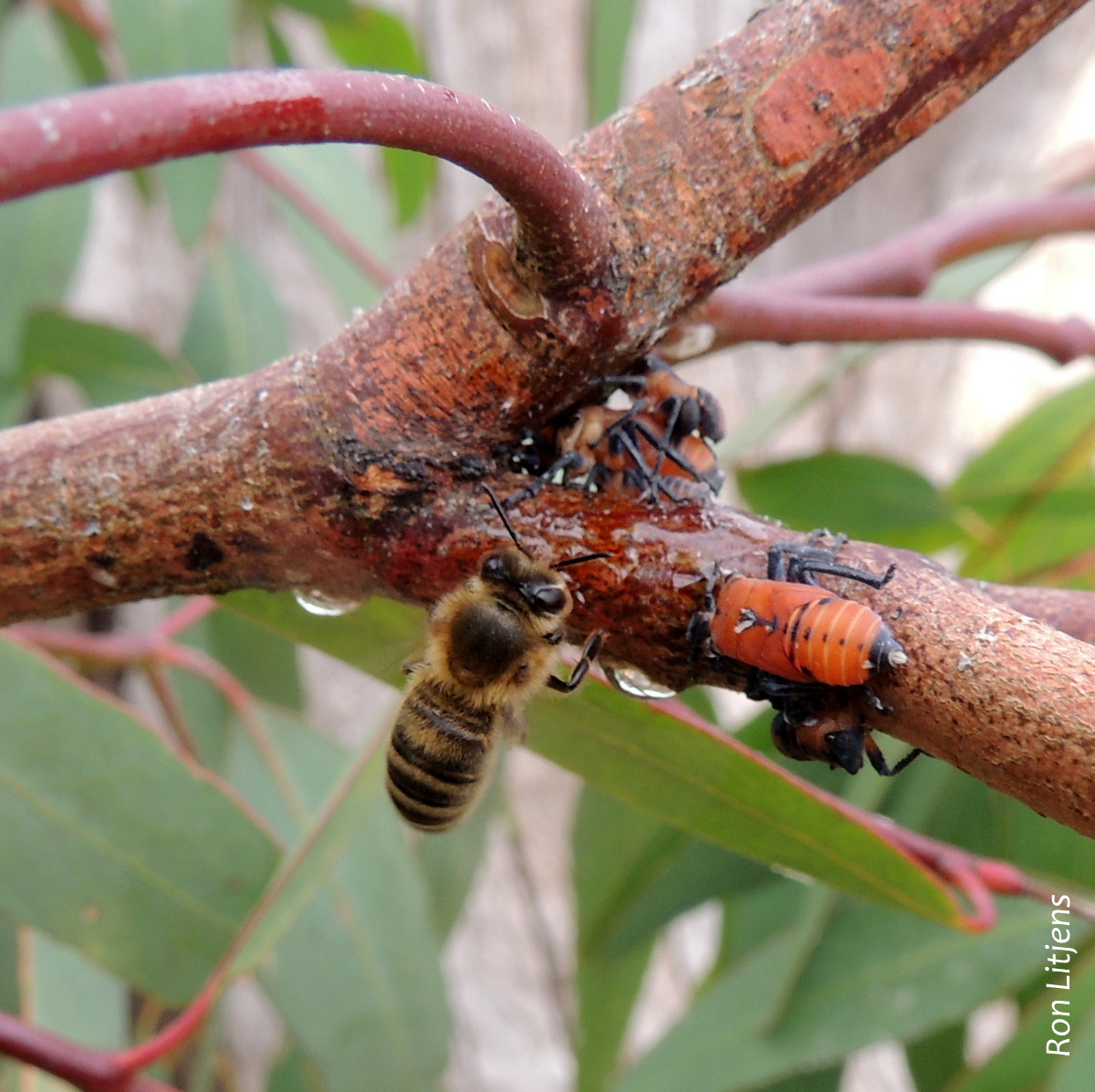 If the ant is not there to collect the liquid it simply drops on the vegetation below (see picture above) to be collected by the ants at a later time. A tree supporting a large number of Gumtree Hoppers and their nymphs can become soaked in honeydew and have the sugary liquid literally dripping from the stems (pictured left). This in turn attracts bees which find the honeydew an attractive alternative to pollen.
How sweet it is.
Natural homes
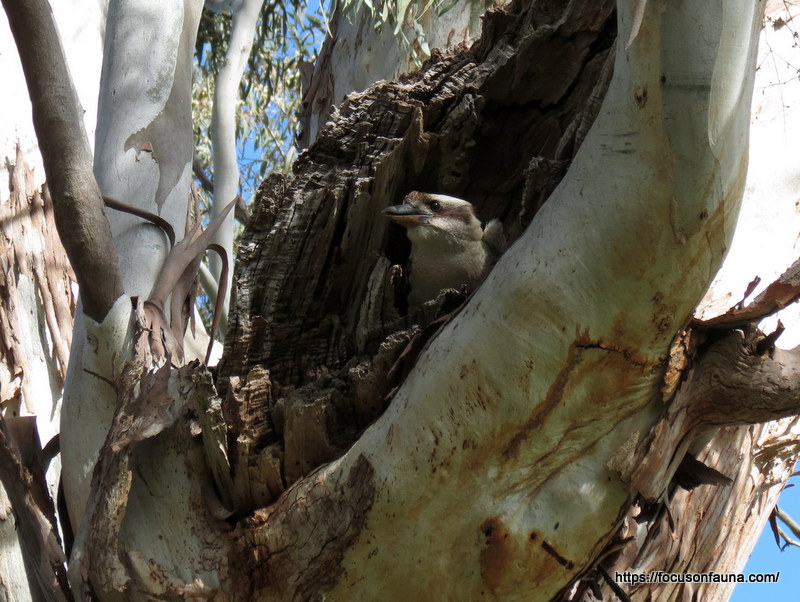
Laughing Kookaburra

Galah
So it is heartening, just lately, to come across birds that have been able to find suitable natural hollows in live old trees still standing around our district. The common feature in the pictures shown here is that the hollows are all in trees (Candlebark and Yellow Box) that are probably well over 100 years old, which is the minimum time it normally takes for useful hollows to develop. Without the equivalent of woodpeckers among our fauna, hollows in Australian trees are formed by fungi and insects, such as termites, and initiated by branch-fall or fire.

Candlebark (Eucalyptus rubida)
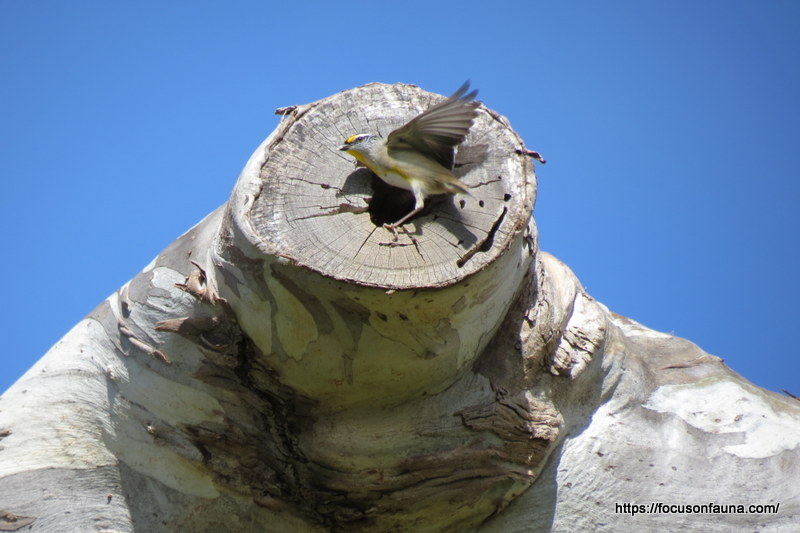
Striated Pardalote
The value of hollows to a great variety of wildlife highlights the importance of preserving and protecting old trees.
After all, surely an individual home crafted by nature is preferable to a box “made out of ticky-tacky which all look much the same”, as Pete Seeger sang!
Ducks and drakes
We spotted this handsome pair of ducks, pictured below, in a Strath Creek paddock this week. The following day there were six in the same area – three pairs that were squabbling and honking a bit, but were too far off to photograph. They are Australian Shelducks, still widely known as Mountain Ducks, although that seems to be a misnomer for a species that is found in lowland pastures and lakes.

Female
But perhaps no more of a misnomer than “shelduck”, which, according to Fraser and Gray’s Australian Bird Names, is from the obsolete English word “sheld” meaning pied. This refers to the European member of the shelduck genus Tadorna, which is primarily black and white. An earlier form of the common name for the genus was “Sheldrake”, which may have ruffled the feathers of a few feminist ducks!

Male
The same source attempts to shed some light on the name Mountain Duck. Apparently the term was used by early colonists of the Swan River and referred to “over the mountains” – the Darling Range presumably? Not sure we’re any the wiser, so perhaps we’ll stick with the official term Shelduck. The Australian part of the current moniker came about because it is the only endemic shelduck in Australia, and the name supersedes the former Chestnut-breasted Shelduck. So many confusing names!!
The shelducks’ distinctive calls can be heard by clicking on the audio bar below. This was recorded locally, and comprises mainly the female’s honks, but the male’s deeper response can be heard faintly in the background.
What’s all this carryin’ on?
 Insects play an important role in maintaining a clean environment and reducing the risk of disease by colonising and consuming carrion. Two important players in this process are carrion beetles and fly larvae and the race between the two for this food source is very competitive.
The strategy of carrion beetles of the sub-family Nicrophorinae is to get to the carcass first. They then attempt to bury the dead body before the flies can lay eggs on it. These beetles feed during the early stages of decomposition – fresh and bloated. Their very short lifecycle means that even if the carcass is fly-blown much of their larval development has happened before the maggots can dominate.
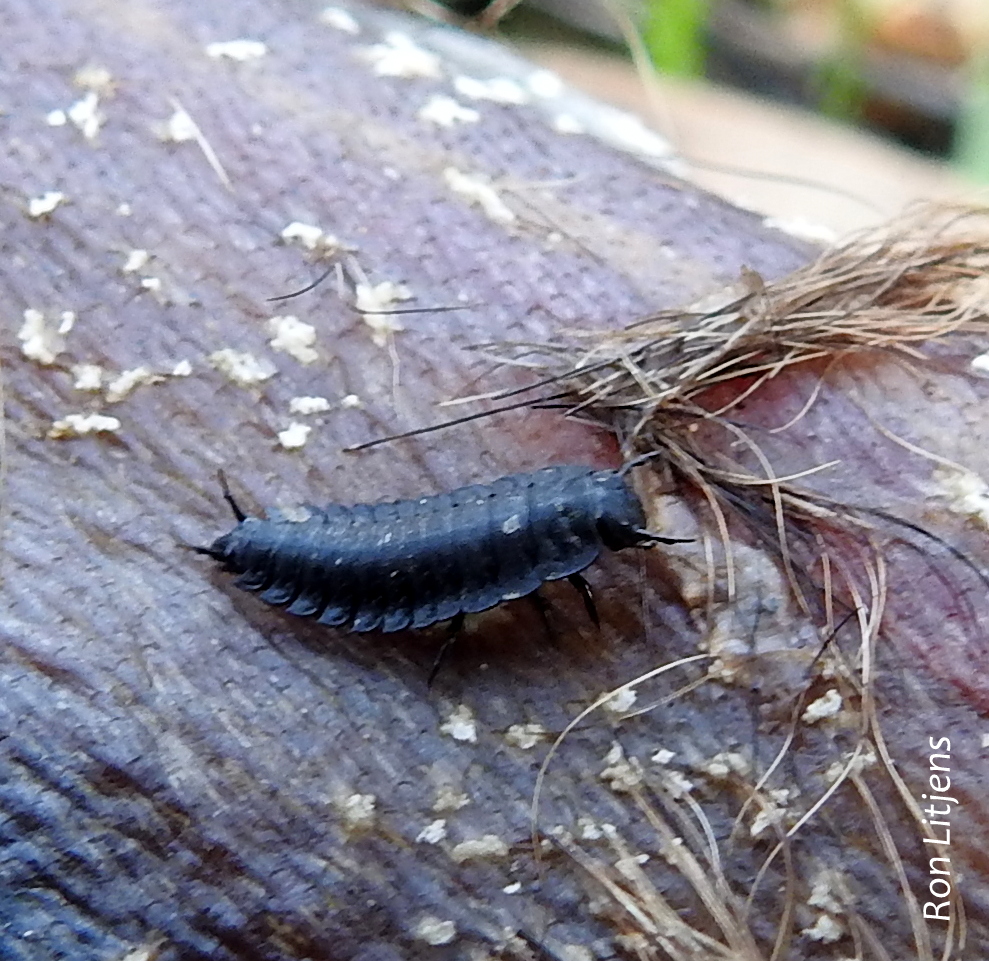 Carrion Beetles of the sub-family Silphinae beetles however have a longer lifecycle. They tend to feed on the later stages of decomposition – decayed and dry, after the maggots have had their fill. At the back of our property are the dry remains of a kangaroo, mainly just the bones and tail. The maggots have long gone. Crawling all over the carcass are the larvae of these carrion beetles (pictured). The Silphinae adults on the other hand also eat the fly maggots themselves.
A good rule when dealing with competitors – if you can’t beat them, eat them.




 Focus On Fauna