What’s in a name?
The robins are back in town. In our district several species of Robins (genus Petroica) are seasonal migrants seeking relief in the alpine areas from the heat in summer only to return to lower and warmer climes in winter. Well they are back for the winter in large flocks.

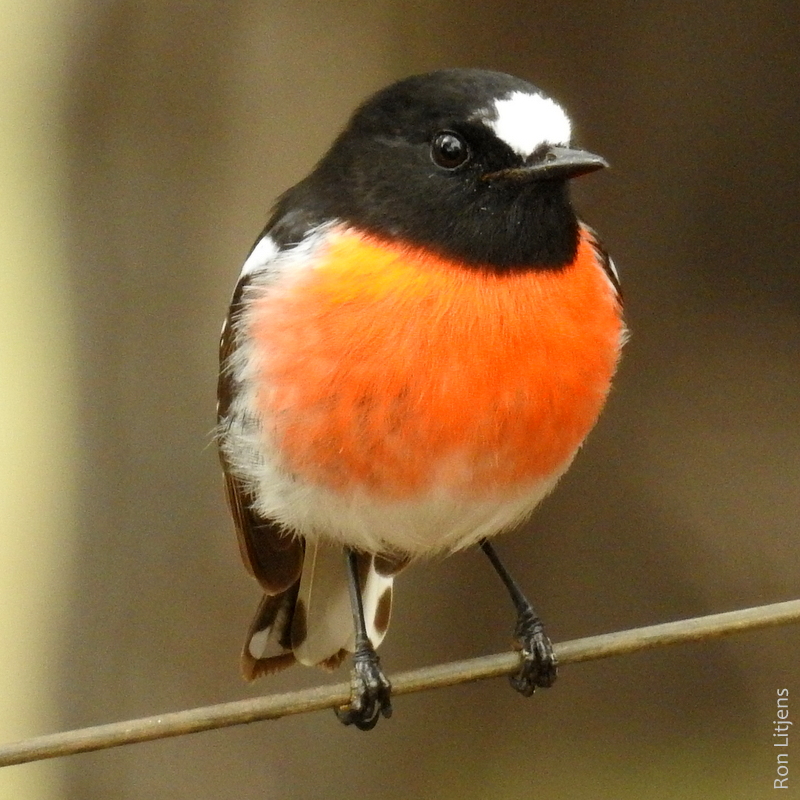
Male Flame Robin
Flame Robins (Petroica phoenicea) (pictured left) and Scarlet Robins (Petroica boodang) (below right and left) have been seen in large mixed groups– or it could have been a flock of each foraging closely together! At a distance or to the untrained eye the species are not easy to tell apart. The males of both species sport a red breast reminding me of the Robin Redbreast I knew from stories as a kid but had never seen. It is only when you see them together that the differences become apparent.

Male Scarlet Robin
Most obviously the Flame Robin has a dark grey head and back whereas that of the Scarlet Robin is black. The breast colour red presents as a variety of hues. The Flame Robin has orange-red markings which start at the throat. The Scarlet Robin colour which starts on the breast can vary between scarlet (right) and orange red (below left). The size of white splash above the beak of the Scarlet Robin is also a bit of a give-away.
Interestingly (and confusingly) the species name for the Flame Robin, phoenicea, is derived from the Latin word phoenicius meaning scarlet.
Not so Scarlet Robin
The aforementioned Robin Redbreast which was a character from my childhood is a British bird of the Chat family. It has brown plumage and a burnt orange breast. The discrepancy between the breast colour and name came about because when the bird was first named, the English language had not yet invented a word for orange. If it had it may have been called Robin Orangebreast.
Hasn’t got the same ring to it!
Nothing succeeds like….
 As has previously been described several times, winter is not a good time to be blogging about native fauna. As many creatures are hibernating or have moved to warmer climes the search for a subject is not as easy as simply stepping outside, as it is in spring. It takes a bit of effort to find anything other than cockies pulling onion grass from the lawn or currawongs harassing hapless smaller birds. I had to resort to turning over timber in the backyard and lo and behold a critter emerged.
Pictured is a Black and White Seed Bug (Dieuches maculicollis). It is a True Bug (hemipteran) i.e. a sucking insect, of the Rhyparochromini tribe – from the Greek rhyparos meaning dirt and chromus meaning coloured. Not very flattering! Worldwide there are 370 species in this tribe of which 30 are in Australia.
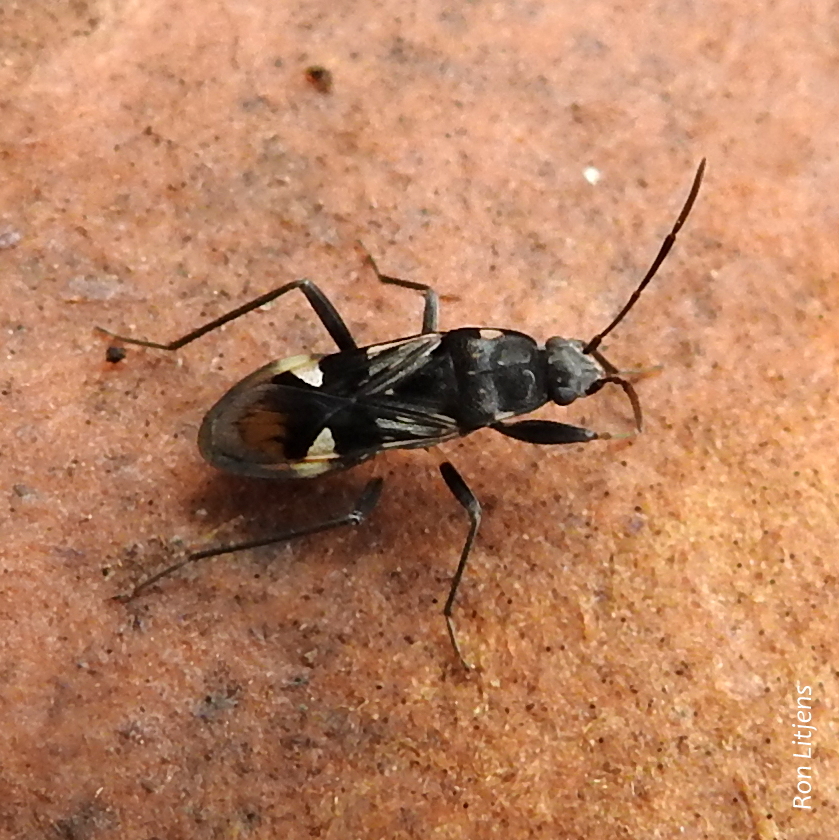 Seed bugs, as the name suggests are generally ground-dwelling seed predators feeding on ripe seed which has fallen from grasses and bushes. They have specially adapted mouthparts for piercing the hard outer seed husk and sucking seed sap.
As the old saying goes, nothing succeeds like a hemipteran from the Rhyparochromini tribe (or a budgie with no beak!).
A cautionary tale for all
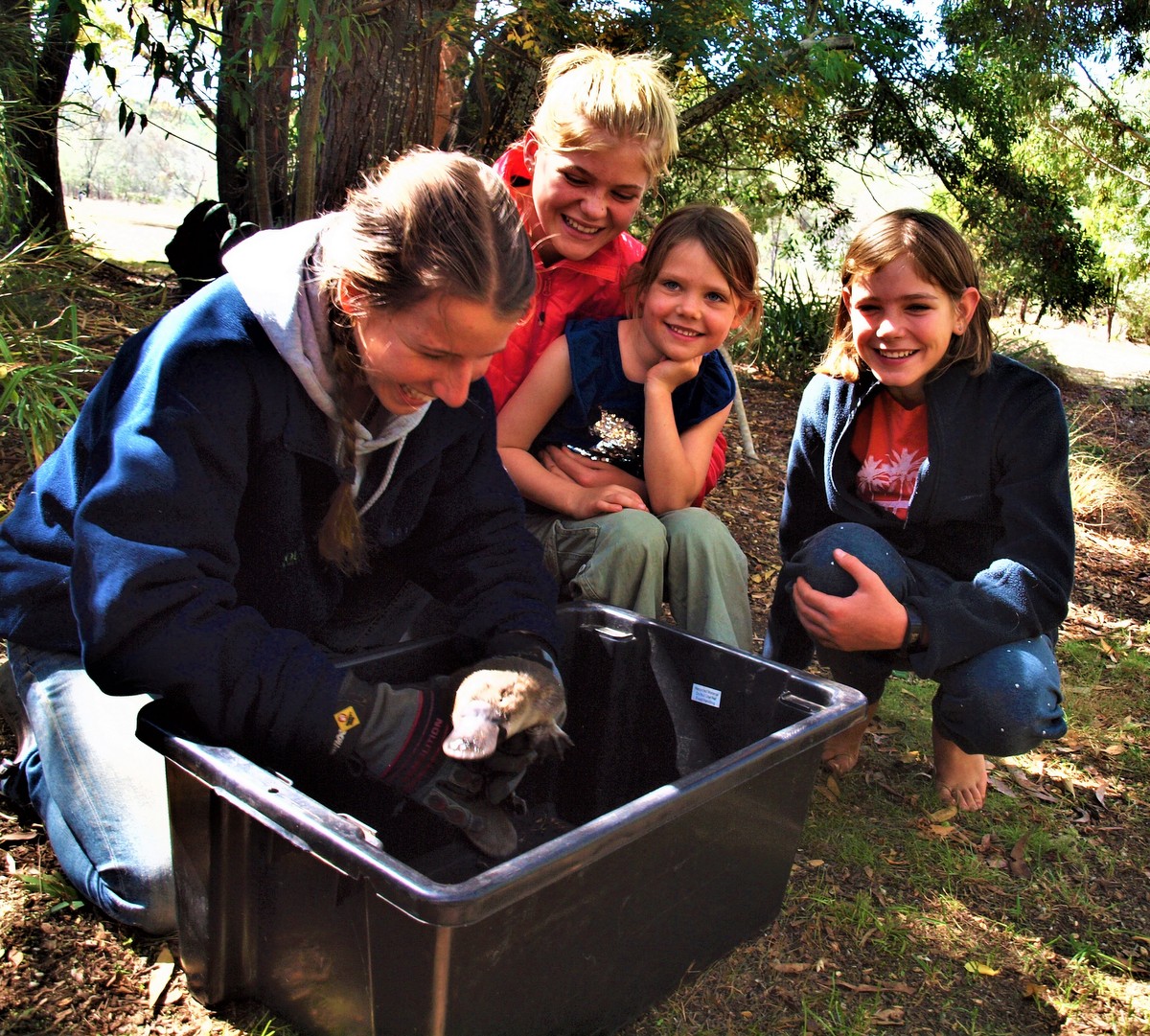
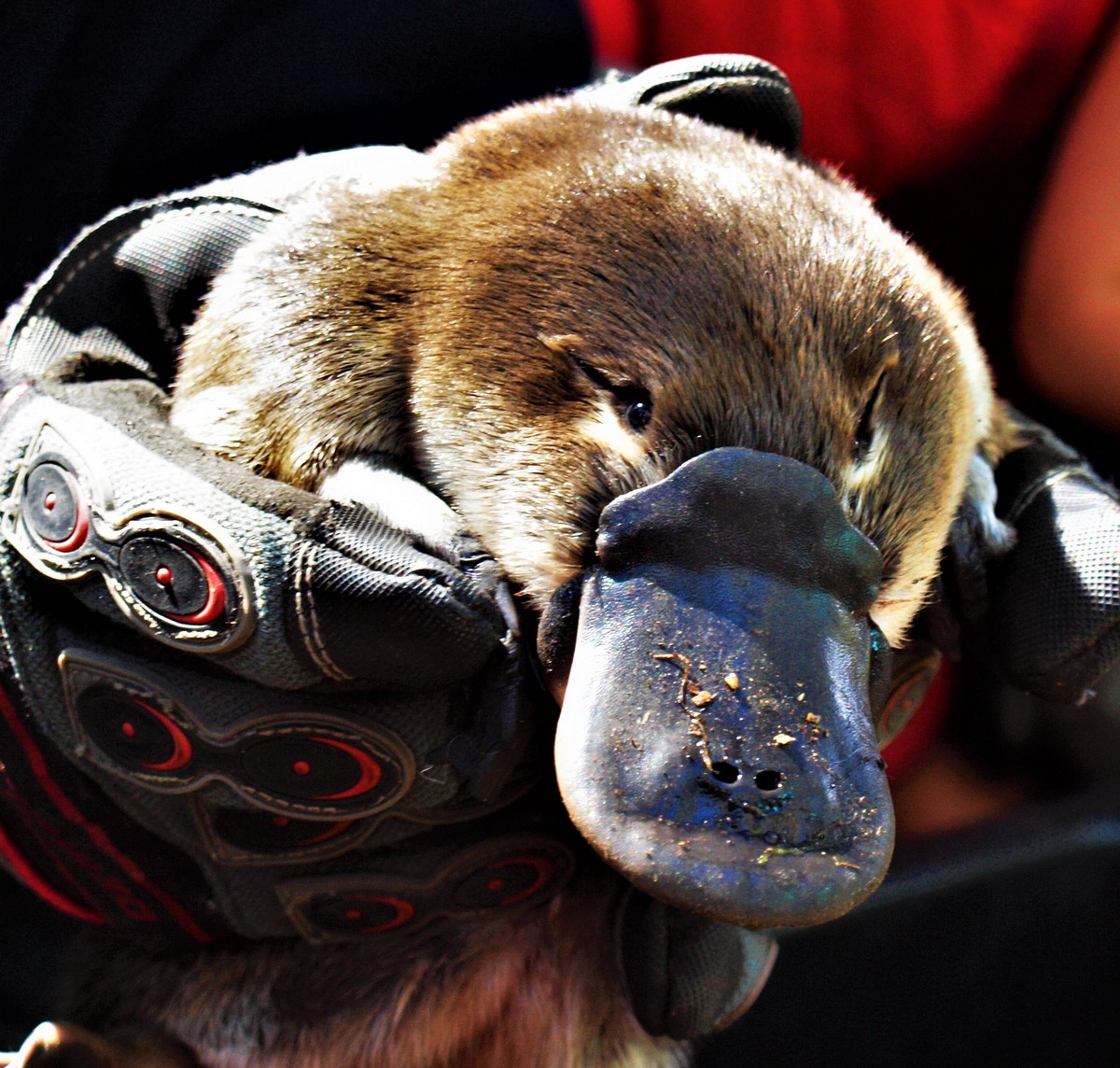 Recently a good friend of mine rang up with an interesting question. Friends of hers had found a Platypus (Ornithorhynchus anatinus) wandering along the side of the road apparently ‘miles away from water’. Knowing my friend to be a keen naturalist they had picked it up, put it in a tub and were bringing it over to her. The question was “what to do now?”
It is probably a question that has plagued many of us at one time or another. I know of many people who, with the best of intentions, have rescued a turtle or frog they had seen on the road and introduced it to their farm dam or local stream. Unfortunately there is no reference I know of that explains the correct thing to do with wandering wildlife.
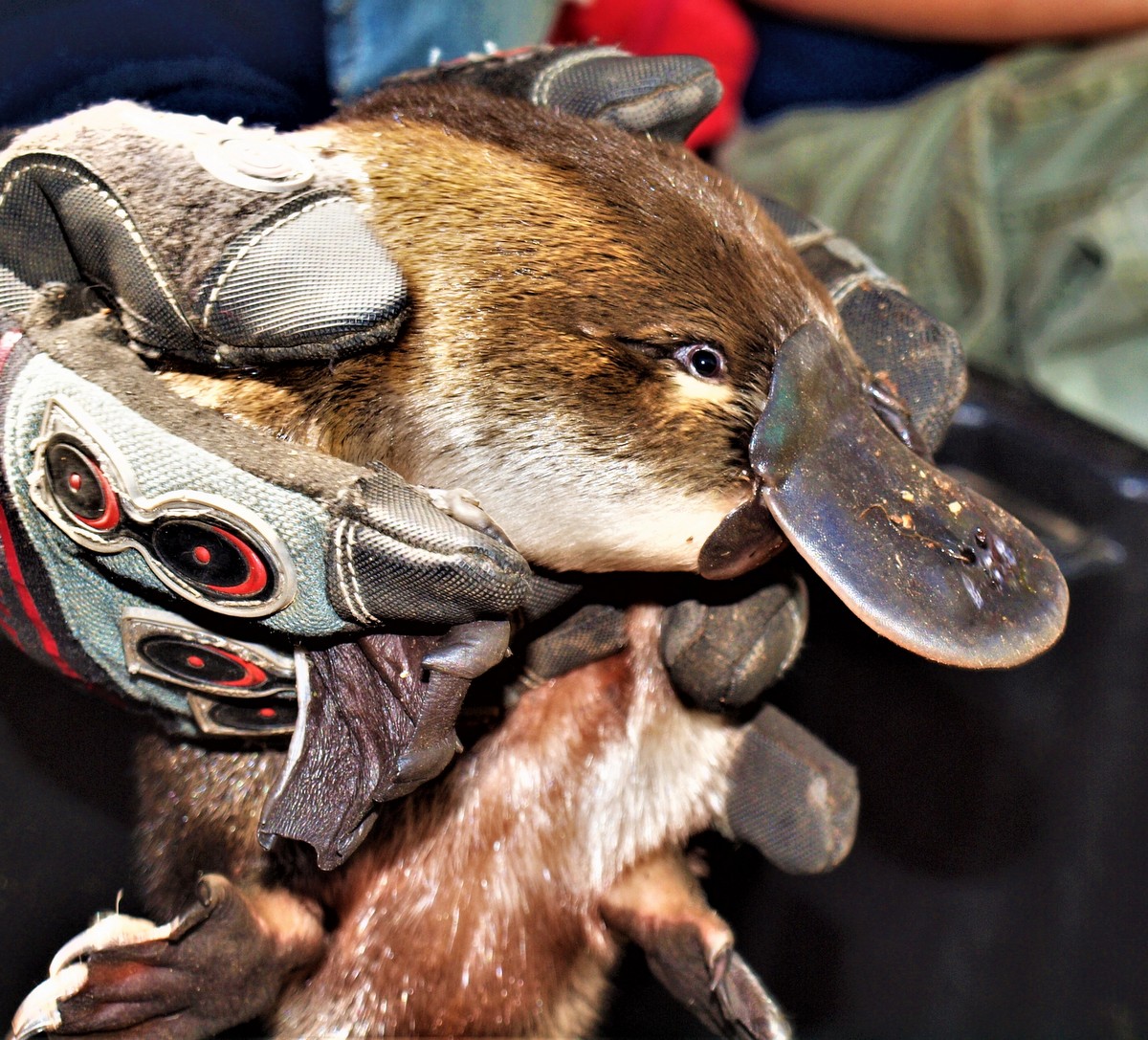 The conclusion that we came to after considerable discussion was that as far as nature is concerned, let it be. Is it the right thing? I hope so. Picking up wildlife and depositing it in another location is fraught with possible dangers for the animal particularly if they are territorial. Moving them from their home locale to another territory can result in conflict with the local animal. It is also dangerous for the ‘rescuer’. In the case of platypus, both the male and female are born with ankle spurs, the male’s delivers venom – not deadly to humans but extremely painful.
 Of course all this is not to say that if you see a turtle wandering across the road you shouldn’t stop and assist its passage safely to the other side. I once stopped the traffic on the Western Highway (in both directions) to ensure an echidna made it safely across the road. The trouble with echidnas is that if you try and take direct action i.e. pick them up, they grip on to the road and don’t move for a long time – much to the annoyance of the waiting B-double driver.
Needless to say the boxed platypus (which in its short time in captivity got a name – Pitri) was taken back to the location it was found and released, seemingly none the worse for its adventure.
And a lucky few got to see a platypus up close and personal.
The word of the week is…pronotum
 Insects have three distinct body parts – the head, thorax and abdomen and in most insects it is easy to tell the difference between them. Insects are also invertebrates meaning they have no internal skeleton but instead have a series of external body plates. These are collectively known as the exoskeleton. The pronotum (word of the week) is the first of these plates which make up the thorax.
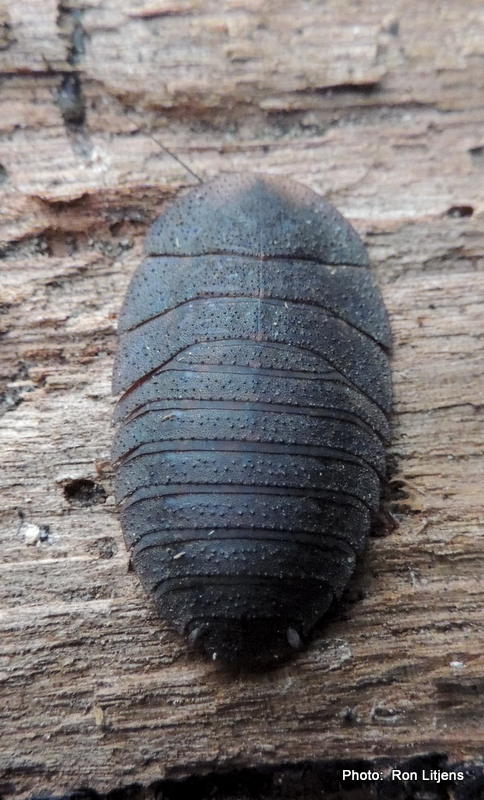
In some insects the pronotum is enlarged. Cockroaches for example have a pronotum which extends to cover the entire head, sort of like a shield. In the photo left, the head of the Bark Cockroach (Laxta granicollis) can just be seen through the translucent pronotum. (Hint: the head is the end with the antennae sticking out).
For treehoppers of the Membracidae family the pronotum is even more impressive. The Acacia Horned Treehopper (Sextius virescens), pictured below, is an example.

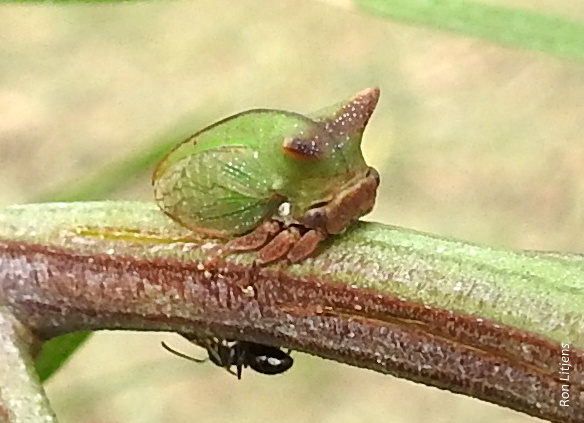 The pronotum extends forwards and up so as to look like horns, hence the name. It gets better than that though. If you look carefully (picture right) the bright green pronotum also extends all the way down the insects back between the wings. For those familiar with the 1979 sci-fi thriller Alien it is not hard to see where the inspiration for the head of the Alien creature may have come from.
For those interested in the attendant ants, treehoppers are Hemipterans, sap-sucking insects which exude a sweet substance called honeydew. The ants collect the honeydew for food and in return protect the treehopper from predators and parasites.
Your challenge now is to use the word pronotum is your everyday conversation without anyone noticing.
Going in to bat?
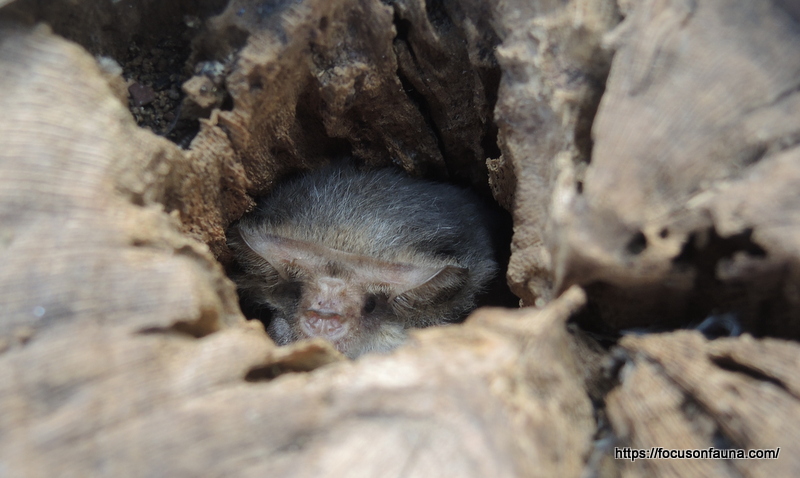 One of our many bird baths in the garden sits on a rotting stump – a remnant of a former Silky Oak tree, Grevillea robusta. We try to clean and refill the bath (pictured below) on a regular basis, and removing it for cleaning has lately revealed that the hollow centre of the stump is providing a great resting spot during the day for what looks like a little Lesser Long-eared Bat, Nyctophilus geoffroyi.

When we checked last week there was also another regular visitor, a Huntsman spider, sitting underneath the earthenware bowl. The spider, in a panic, scurried around the top of the stump then promptly ducked down into the central hollow next to the sleepy bat and disappeared into one of the many cracks in the wood – too fast for our arachnophobic photographer!

Since then the bat is still using the hollow, but the spider is nowhere to be seen. We can but wonder – did it make a convenient meal for the opportunistic bat?!
The natives are going wild

European Honey Bee (Apis mellifera)
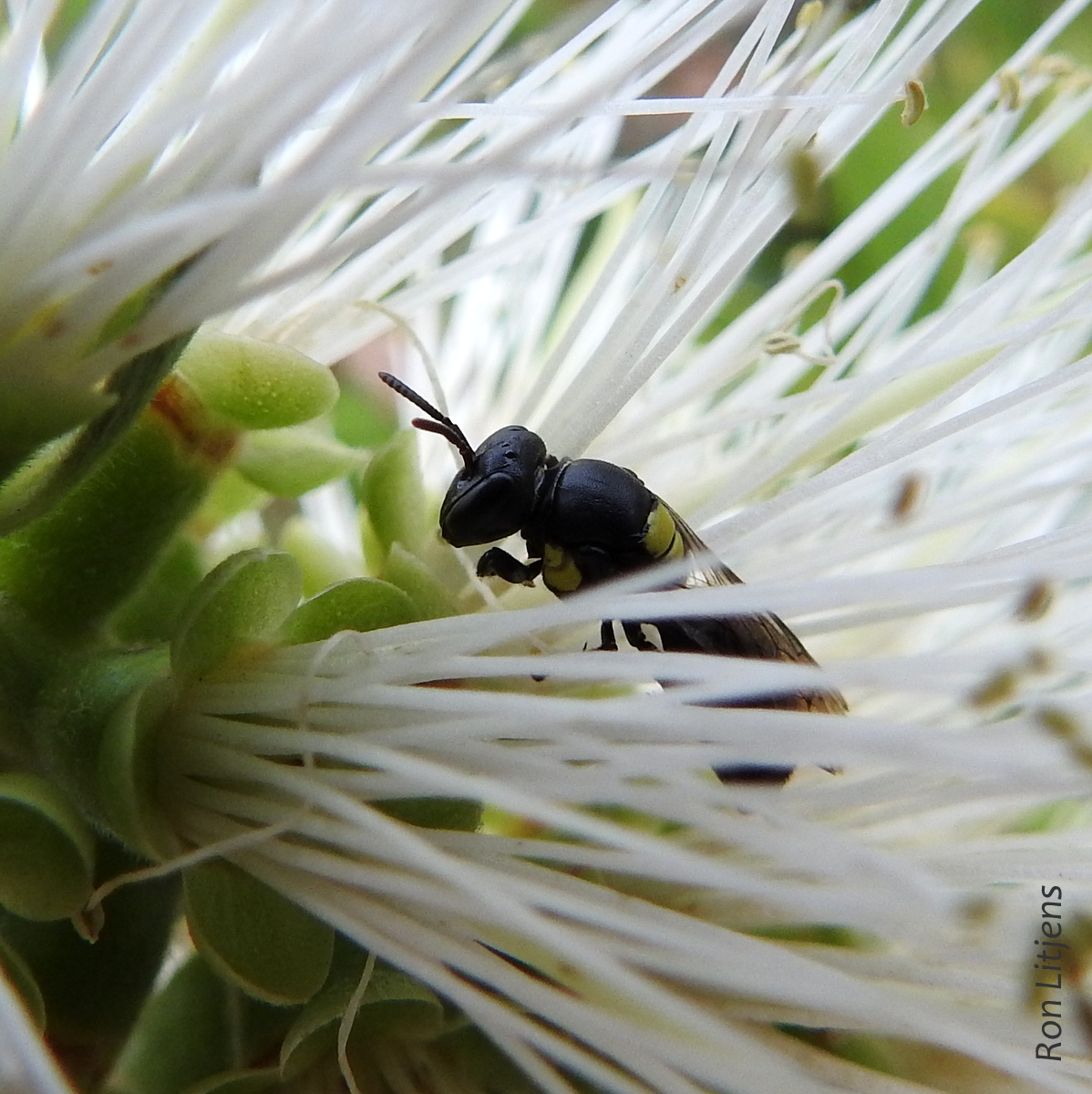
Hylaeus Bee (native)
Wild Pollinator week got away from me. A tour of the local wetlands to celebrate the event yielded no flowers at all, such is the topsy-turvy nature of the seasons in the district at the moment. It was not until I was on a meditation retreat a week later that I had a chance to sit and observe the requisite flower for 10 minutes (how meditative is that!). The flowers were attracting a heap of native bees (see photographs) and though not in the King Parrot Creek valley, all of the bees pictured can be found there.
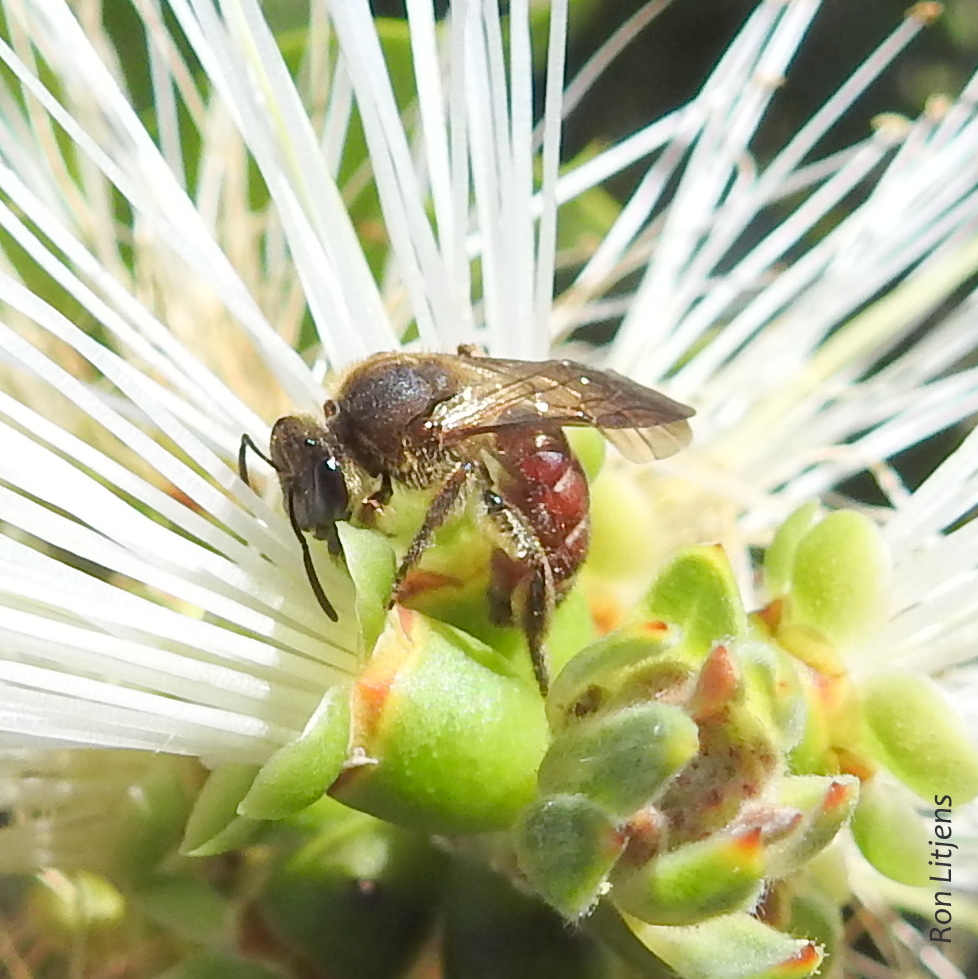
Halictidae Bee (native)
The thing that amazes me the most since participating in these surveys is not the fact that there is a large range of native bees in addition to the Honey Bees pollinating our flowers, but that there are many other species that perform the same task – flies, wasps, beetles, butterflies, moths, birds. This is particularly evident in the spring wild pollinator counts (This year between 11 – 18 November).
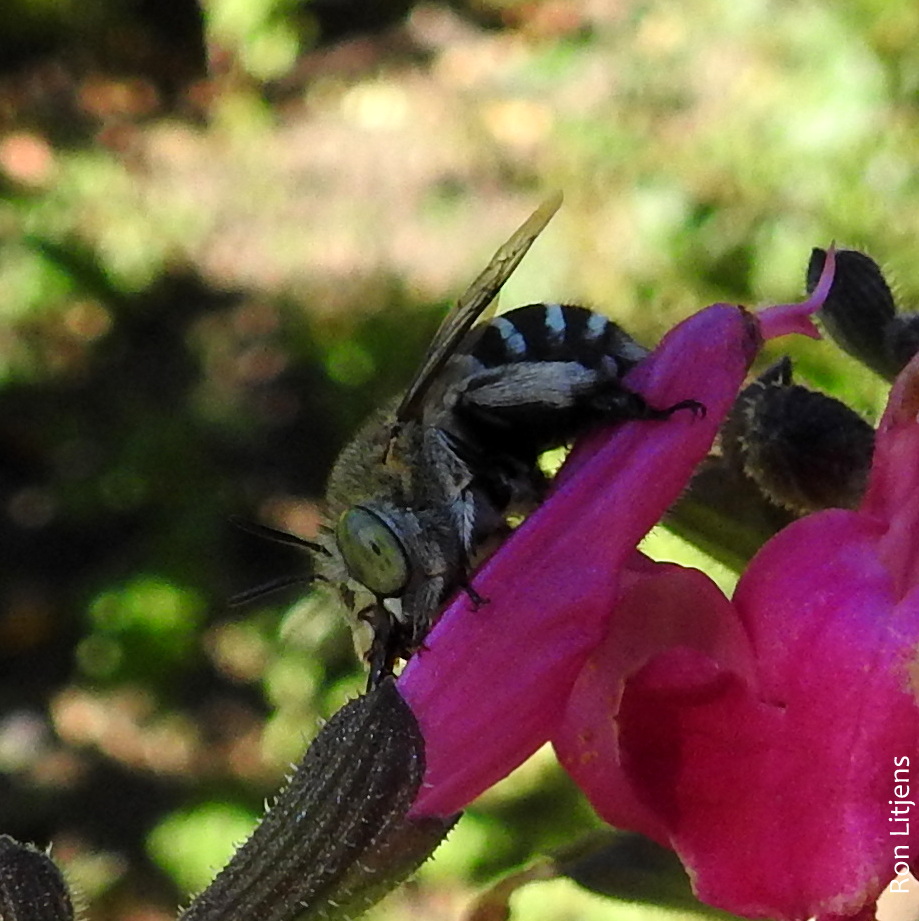
Blue-banded Bee (Amegilla cingulata) native
If you wish to participate by adding your observations later in the year check out the website https://wildpollinatorcount.com/ to find out how you can. And if you feel that distinguishing between a Flower Wasp and a Hover Fly is just outside your area of expertise you can download a helpful field guide to Pollinating Insects at https://karenretra.com/resources/ .
Ten minutes is all you need – but as I found out, sometimes it’s not so easy to get.
I wish I could do that
My childhood was populated with wonderful stories of strange creatures from other places – cormorants with rings around their necks to stop them eating the fish they caught, snakes large enough to crush a man to death and insects that look indistinguishable from sticks. I have subsequently seen all these things – apart from the crushing bit.
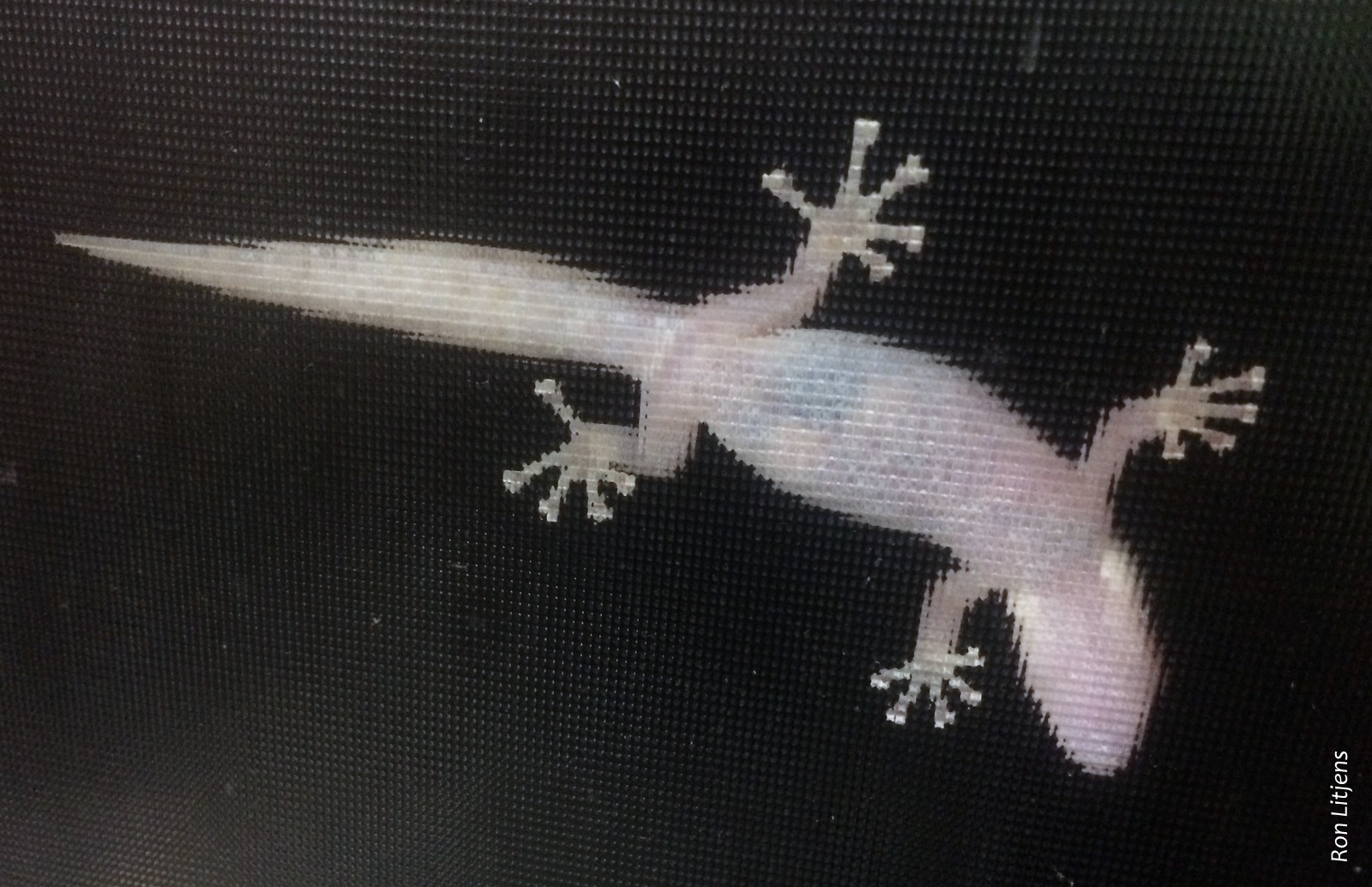 Last night I was reminded of this when the ‘ghost’ of a hunting gecko walked outside on the kitchen window (pictured left). Of course lizards that could walk on vertical glass surfaces were also one of my childhood wonders. A search of the house exterior the next day revealed a Marbled Gecko (Christinus marmoratus), pictured below right, on the brick wall.
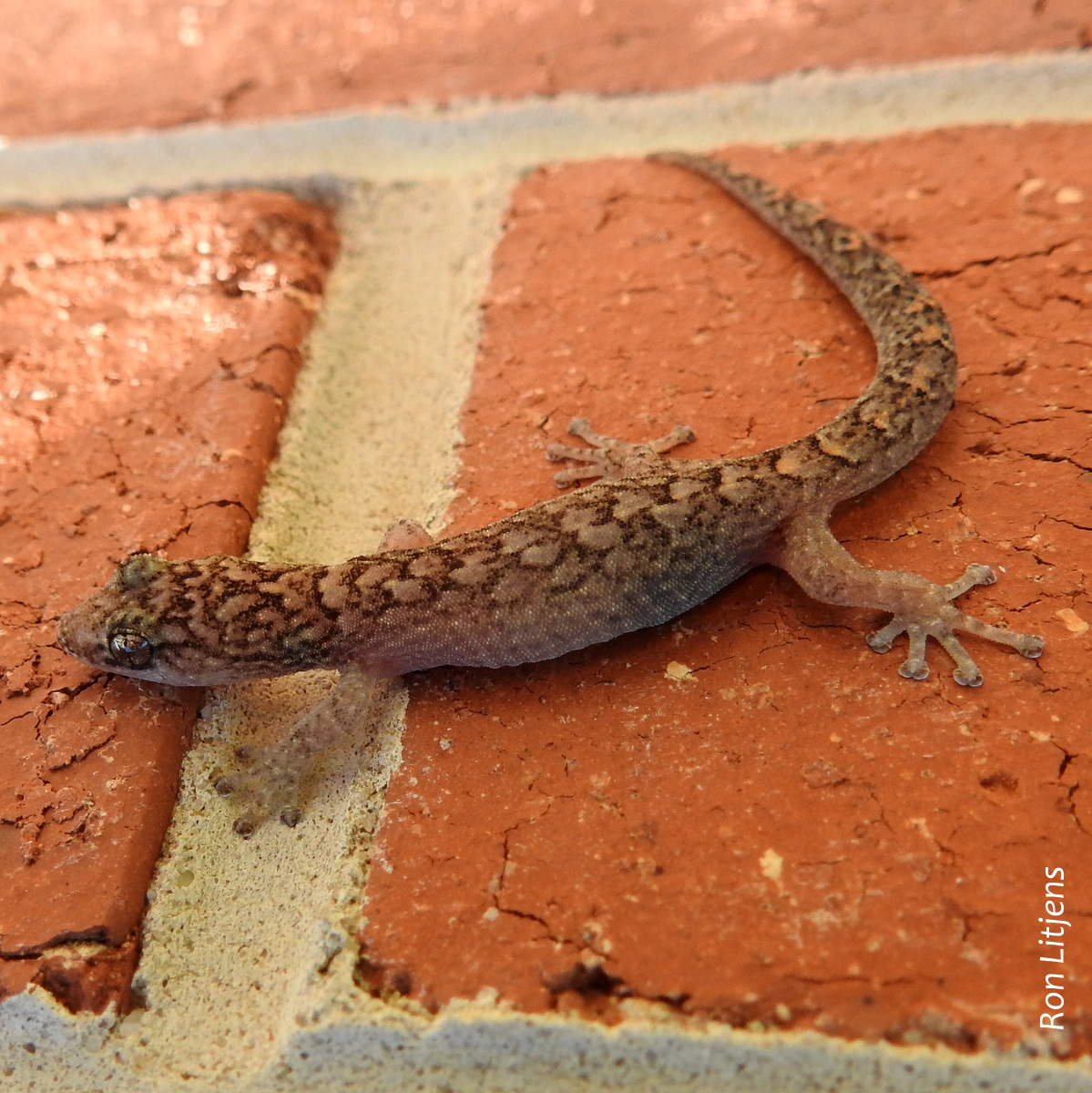 Those who have stayed in tropical climes will be familiar with some of the characteristics of geckos. They are territorial and patrol their patch of the house looking for insects to eat. They also have a very loud chirp or cough which is used for communications. The Marbled Gecko is the most southerly distributed gecko in Australia. Unlike many other geckos it lays hard-shelled rather than soft-shelled eggs.
The ability for geckos to climb on most surfaces is not due to suction cups on their toes as I used to believe. Nor is it due to surface tension. The pads of a gecko’s toes have hair-like outgrowths. Weak intermolecular bonds (van der Waals’ forces) between these structures and the surface molecules allow the gecko to walk vertically on most surfaces.
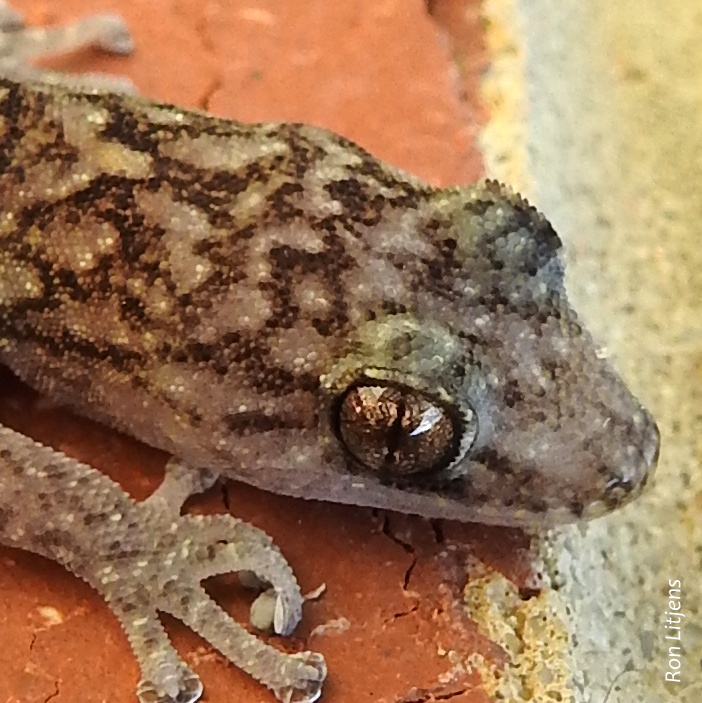 However for me the most amazing feature about these animals is that they have no eyelids. To clean its cornea the gecko simply licks it with its tongue. I wish I could do that.
Focus on Foxes
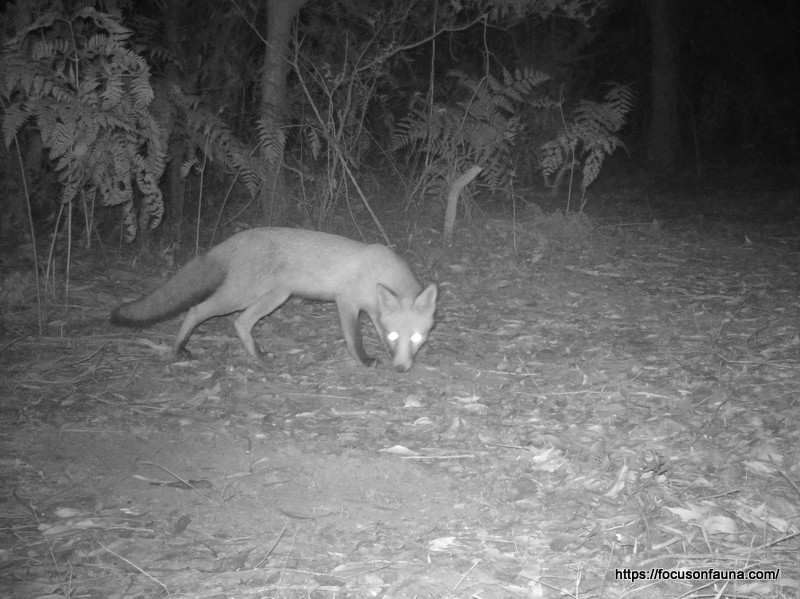
Focus on Fauna is joining with the King Parrot Catchment Fox Control Project (KPCFCP) to hold a forum on foxes this coming Sunday 22nd April at Strath Creek Hall, starting at 10am. A panel of experts will provide an overview of the damage the introduced Red Fox, Vulpes vulpes, causes particularly to native wildlife; report on a fox management research project; and look at various methods of control.
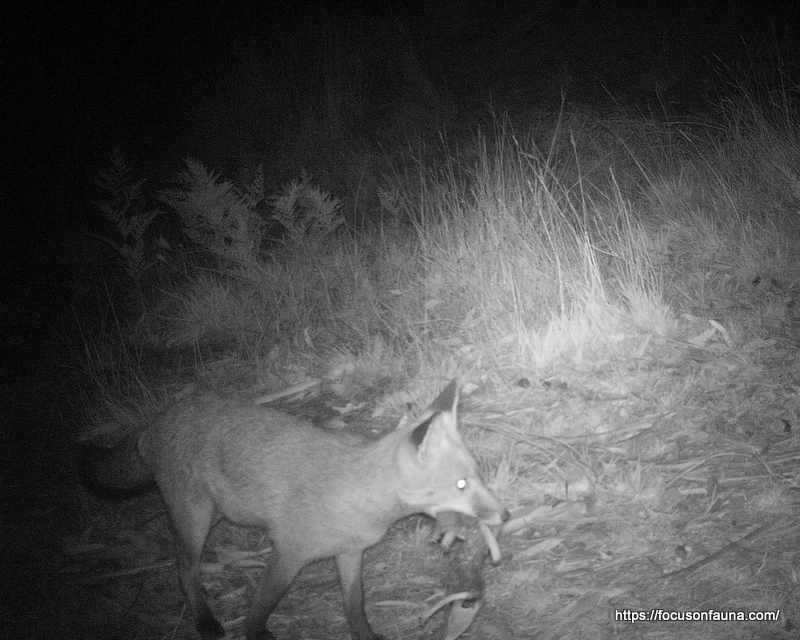
To establish the abundance of foxes in the district, the KPCFCP has been running a program using remote cameras on both private and public land in the King Parrot Creek catchment area. The latest round of monitoring has recorded plenty of foxes as well as a variety of native animals that are vulnerable to predation by foxes.
Click on any of the photos below to view as a slide show.
-

- Brown Quail
-
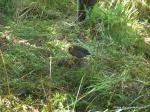
- Lewin’s Rail
-
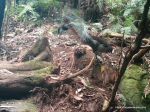
- Superb Lyrebird
-

- White-faced Heron
-

- Long-nosed Bandicoot
-
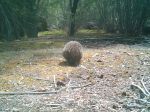
- Short-beaked Echidna
-
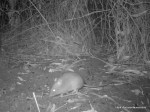
- Bush Rat
-
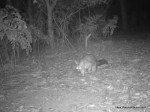
- Common Brushtail Possum
-
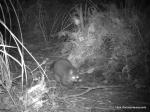
- Mountain Brushtail Possum
-
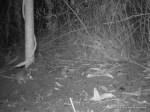
- Agile Antechinus
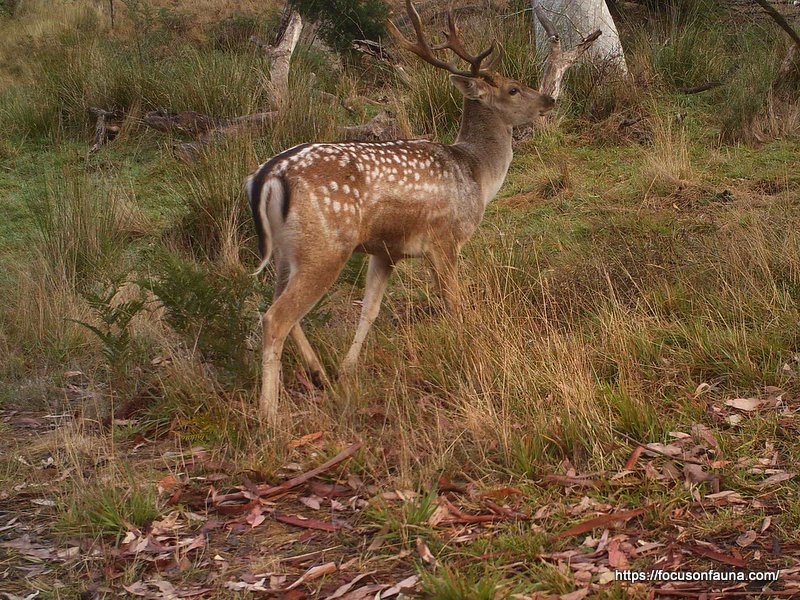
Fallow Deer
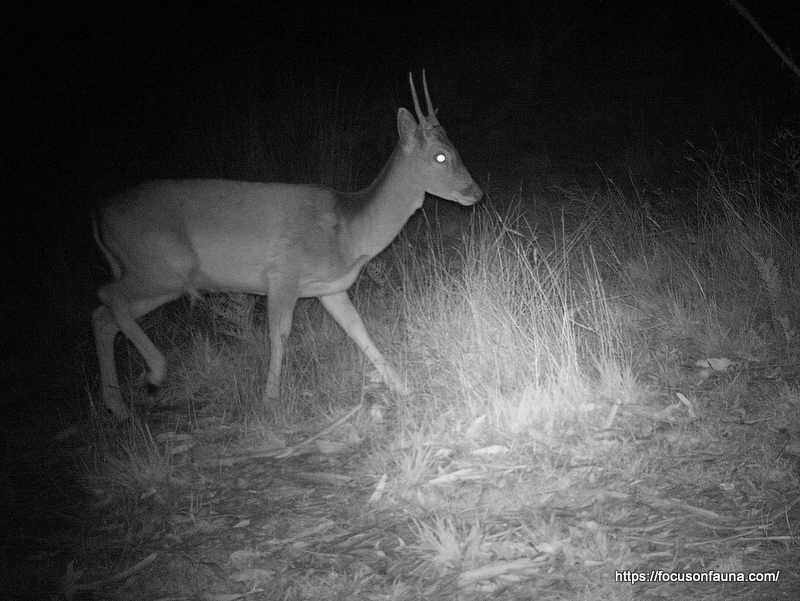
Sambar
The camera monitoring program also shows up other pest species in the environment such as cats, another introduced predator of native wildlife, and deer, which can cause significant damage to native vegetation and fragile ecosystems.
For a snapshot of sightings of foxes and a range of other feral animals go to the FeralScan website.
Not so comedic after all
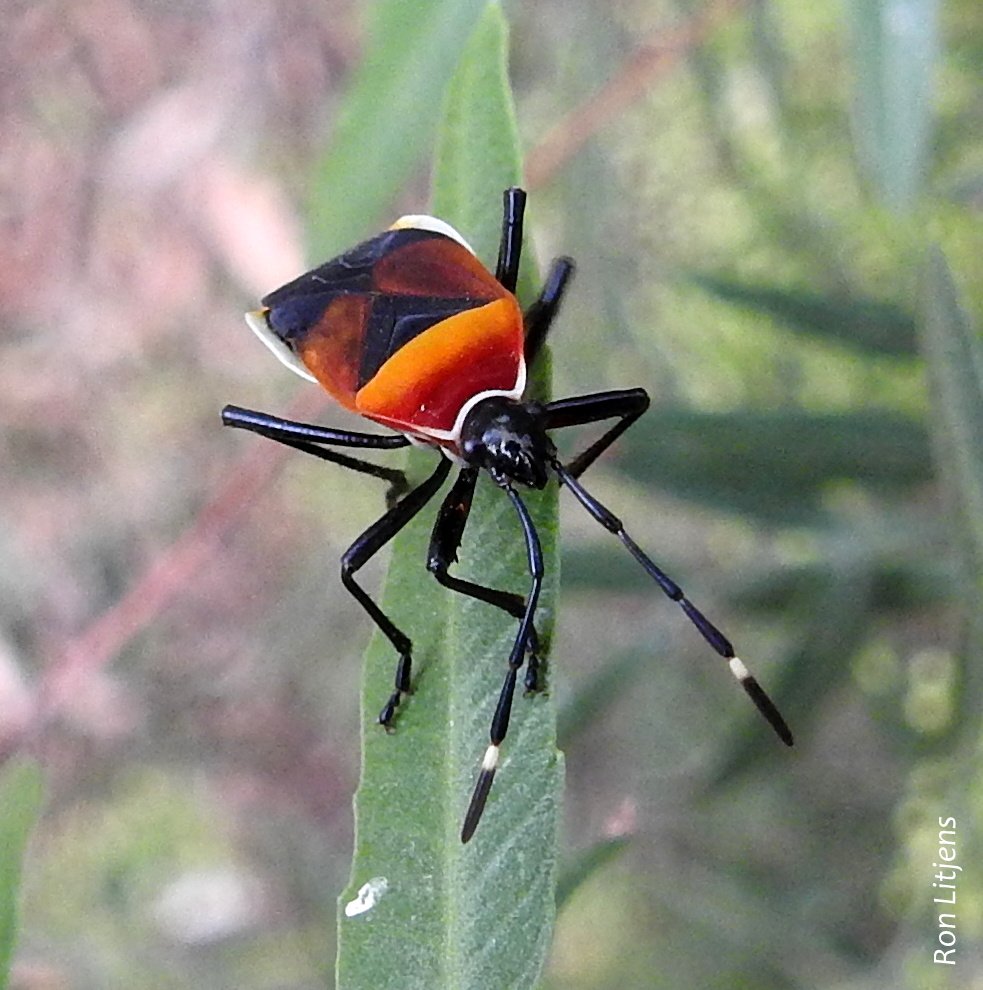 The harlequin is a character from 16th century Italian comedic theatre. Over time it has been portrayed as a dimwitted fool, an intelligent trickster or as a reinterpretation of the devil. Invariably it is dressed in a chequered costume of many colours. It is the chequered colours that give the Australian Harlequin Bug (Dindymus versicolor), pictured, its name. As pretty as they look it is not so funny to have this insect in your garden.
The Australian Harlequin Bug is an hemipteran, that is a sap-sucking insect. Like other hemipterans previously discussed on this blogsite, such as the Southern Green Shield Bug, this bug develops through a series of instar states until the adult emerges. The insect feeds on common orchard weeds such as marshmallow, dock and wire weed but also fruit and vegetable plants as well.
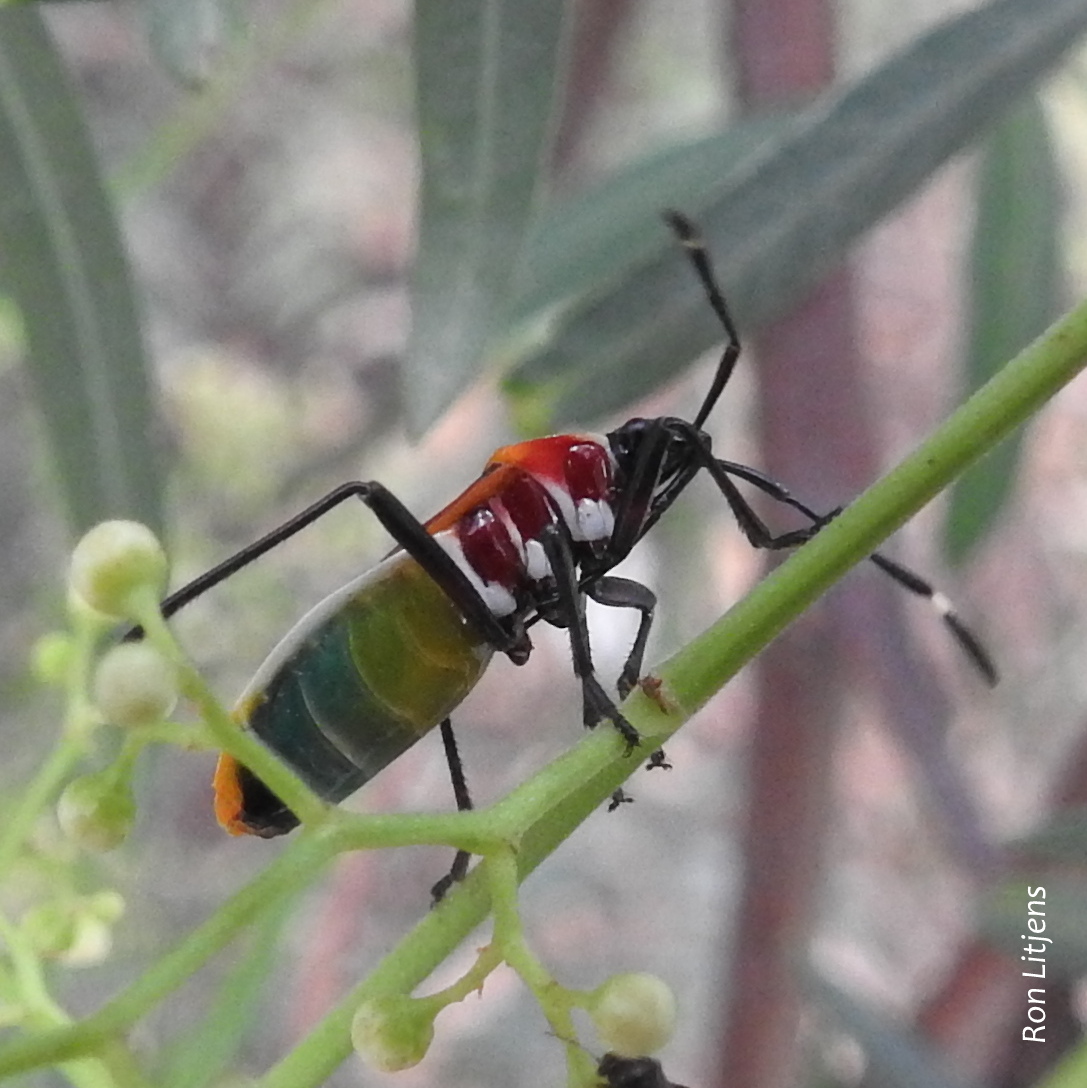 Over winter the adults hide under the bark of trees. Mating occurs in early spring when large numbers of these insects can be seen swarming on trees and fence posts. The eggs are laid by the larger female in leaf litter.
Both the adult and instar bugs use their mouthparts to pierce the outer layer of the plant or fruit and then suck the sap. In fruit this results in a depression in the surface of the fruit and browning underneath. Such is its notoriety that the Harlequin bug is listed as a Australian biodiversity pest on the government Pest and Diseases Image Library (PaDIL).
When confronted with a threat i.e. a camera lens, these bugs will actively hide on the underside of vegetation. Methinks more devil than fool.
Keeping a low profile
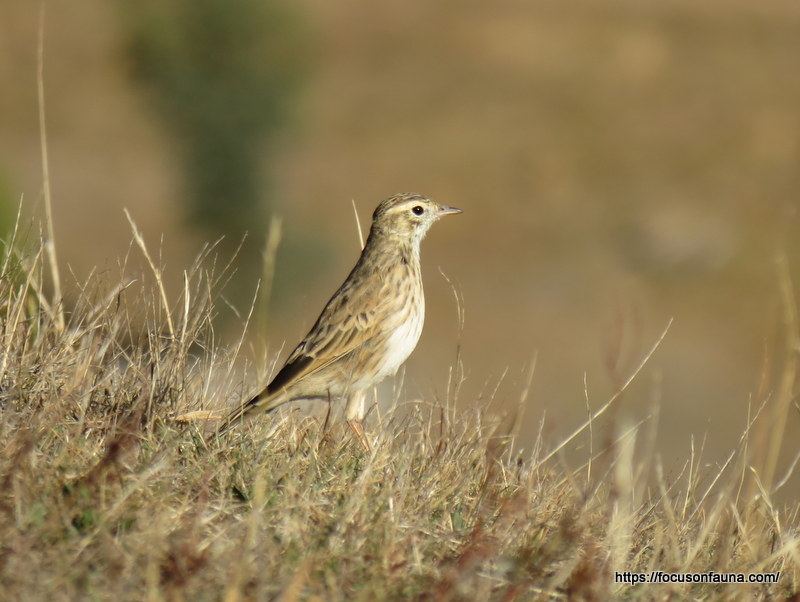
There are certain birds that, although common and widespread, often seem to be overlooked. A couple of these have recently been encountered on our Strath Creek property. The first is the Australasian Pipit, a well camouflaged ground-dweller that darts about in bursts in pastures, grasslands and open woodlands, feeding on insects and occasionally seeds.

It often perches on logs, rocks or fences and wags its tail up and down on landing, but can be quite unobtrusive even in close-cropped paddocks. It feeds, sleeps and nests on the ground so needs to be alert to avoid predators like foxes and raptors.
The pictured bird was one of four we came across on our back hill. They were remarkably unconcerned by our close presence which allowed for some clear photos.
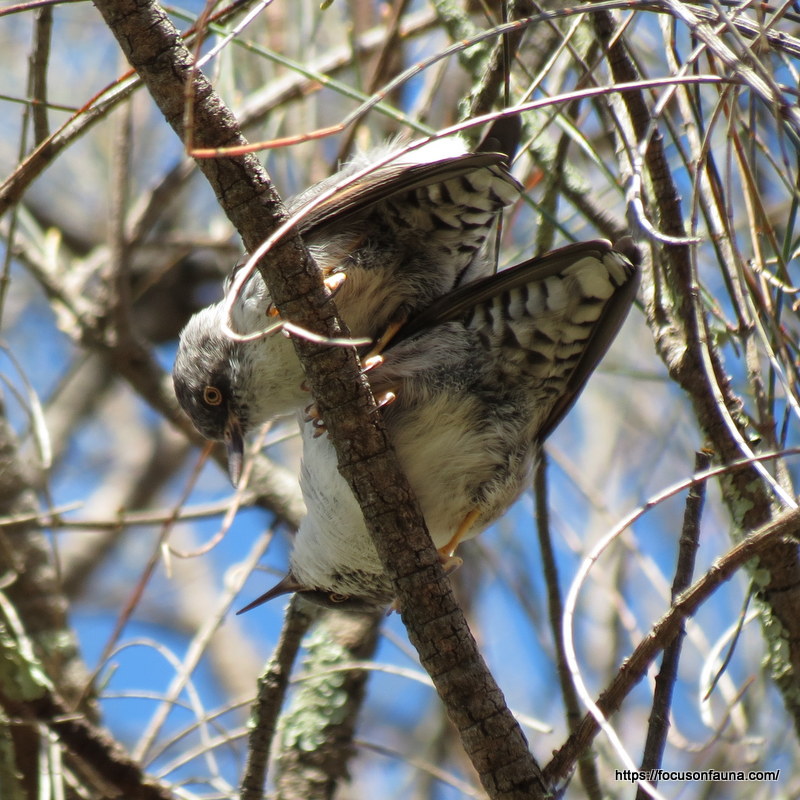
The other species that appeared the other day among a mixed flock of thornbills, Weebills and Grey Fantails, was a small group of Varied Sittellas which included a couple of juvenile birds (see left) that were still being fed by an adult. The sittellas are rather odd little birds, adept at busily foraging among tree branches and head-first down tree trunks. They have sharp slightly upturned bills ideal for prising out grubs, beetles, spiders etc. When feeding they seem to be perpetually on the move, but when they do rest, they often huddle together with a lot of jostling for best position.
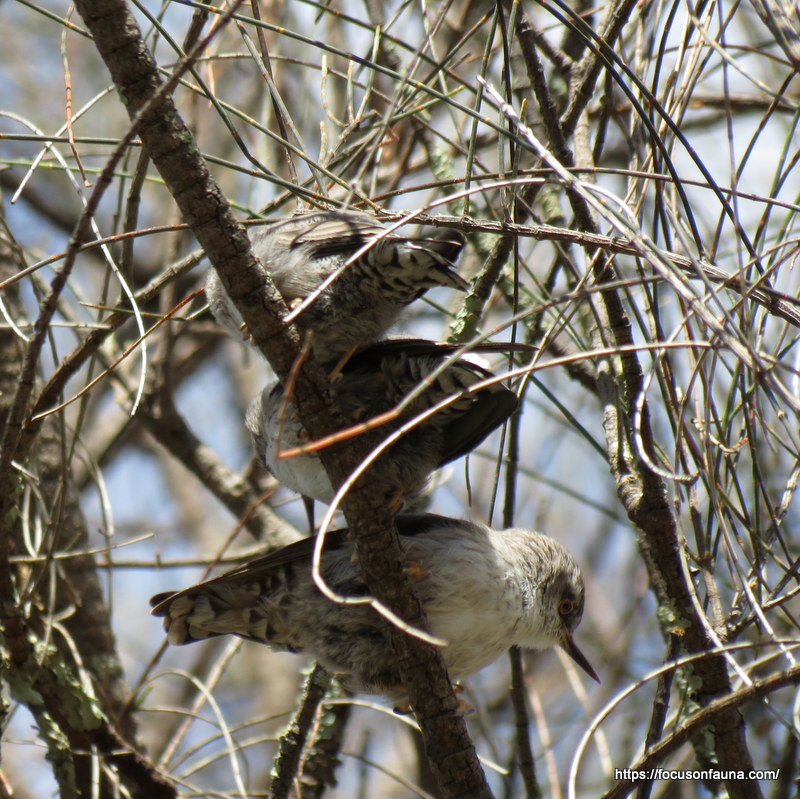
So, perhaps unobtrusive, but it’s always a delight to spot either of these two species!




 Focus On Fauna