Bird Hunters Part 1
There are a few birds which make a living out of hunting other birds. This is distressing to us lovers of birds but on the other hand it is amazing the way they do it. I wish to focus on several groups of bird hunters according to the strategy by which they hunt.
Aerial Strikers
Some birds have incredible flying skills, combining speed and manoeuvrability to grab their bird prey in midair.
Preeminent among the aerial strikers is the Peregrine Falcon (Falco peregrinus). They usually nest on rocky ledges or cliffs. A pair nests on the cliffs at Strath Creek Falls where a large white stain on the cliffs reveals the nesting area. Famously, a pair has nested for many years on a skyscraper in Collins St, Melbourne where a camera streams the activity within the nest.
Peregrines are famous for being the fastest -flying bird in the world, reaching up to 300kmh. Every bird is afraid of them and I have seen a flock of galahs quickly head for the ground to avoid being tackled by a passing Peregrine. Sometimes they fly high and drop on a flying bird but I have also once witnessed a peregrine chase a duck (and ducks seem to fly very fast), effortlessly overtake it and passing underneath, swivel and strike its neck with extended talons. The duck tumbled to the water below and every bird in the vicinity shrieked and quacked and chirped angrily as the falcon swooped several times to finish the kill and obtain its meal. The photo is from Birdlife Australia.

The Australian Hobby (Falco longipennis) is a peregrine mini-me. It looks like a peregrine but smaller and more tawny-coloured; and it hunts like a peregrine but, being smaller, is even more aerobatic and skilful. A friend described watching one chasing a bat at dusk, and bats are incredible flyers (it escaped). The only successful strike I have witnessed was a hobby in Melbourne that picked out a starling from an airborne flock. They appear in our district usually dashing through the air, so hard to photograph unless one catches them perched.

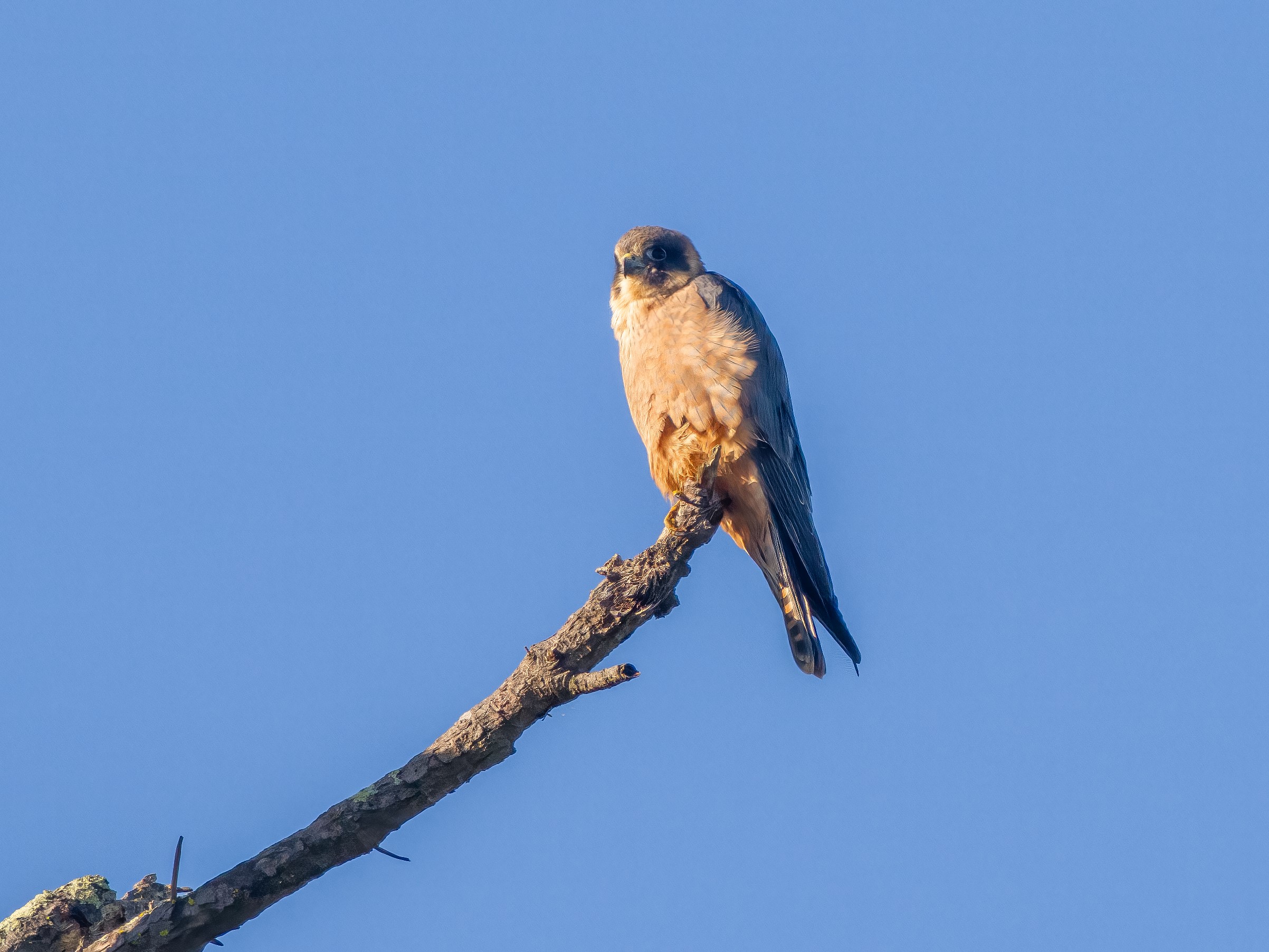
Photos by Christopher Rowney
Almost any raptor will take a bird at times but the falcons with their pointed wings and swift flight are the preeminent aerialists. You have to admire them – but not if you’re a bird taking a pleasant Sunday afternoon flight!
Red-footed Booby
This is a most astonishing find. On the Hubbard’s farm Three Sisters a Wedge-tailed Eagle dropped a strange prey. Upon investigation a large seabird was found with a wingspan over a metre wide and a long tube-nose typical of ocean-dwelling birds. It proved to be a Red-footed Booby (Sula sula).


Boobies are similar to gannets, they fly acrobatically and dive from on high plunging into the water to catch fish. They nest on offshore islands, this species on Christmas Island among other places, often building nests in trees.
The discovery of a Red-footed Booby in Strath Creek is unexpected (of course) and actually quite sad. The species was thought only to live in tropical areas but increasingly it has been found moving further south with records increasing in NSW. This will be linked to warming sea-surface temperatures associated with the strengthening of the East Australian Current under climate change. Some oceanic birds, especially younger birds – this bird is in immature plumage – get lost and driven by storms inland where they perish. The only other records in Victoria of this species are on a beach in East Gippsland (2013) and on a basketball court in Essendon (2019). Some wit said, they must be booby-traps.
Normally birds like this are encountered on “pelagic trips”. This is when a group of birders go far out on a boat, scatter some fish oil and berley and take photos of everything that flies past. This is the only way to observe albatross, storm-petrels, prions, fulmars, shearwaters and boobies. They feed on the wing and are able to drink seawater, excreting the salt out through specialised nostrils on their beak. Collectively they are called ‘tube-noses’.
There are other species of Booby, the Brown, the Masked. In Hawaii, there is a blue-footed booby, but this one is definitely not that. It has red feet.

Finding a seabird like this on a farm 70 kilometres inland is an astonishing discovery, and it may be part of a bigger story – changing waters, changing bird movements, adaptation and adjustment and the ones that get lost along the way.
[Thanks to the experts on the Facebook page Australian Bird ID for help with this identification.]
Additional Note: The Red-footed Booby was placed in the freezer and has now been delivered to the Melbourne Museum (on 21st Feb 2025) who will examine it and archive it.
Quit while you’re a head
The presence of Common Garden Skinks (Lampropholis guichenoti) in the garden (pictured below) is the sign of a healthy ecosystem. As is the appearance of butterflies. And whilst the presence of both may bring a thrill to the heart you know that Mother Nature can be cruel.

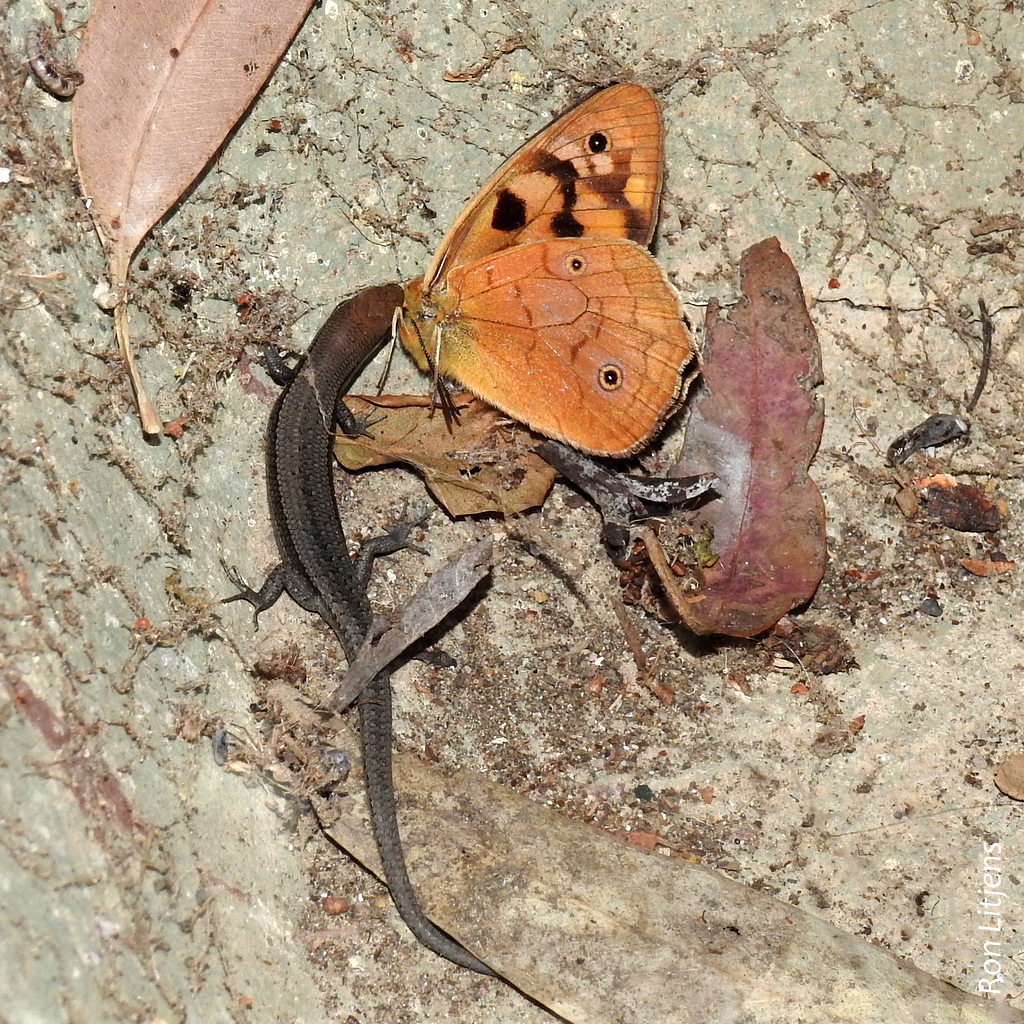
I hadn’t really thought about it but lizards are carnivores, in particular insectivores. They will eat caterpillars, grasshoppers, flies and cockroaches as well as other invertebrates such as worms, slaters and spiders. This was forcefully brought home when I witnessed a mighty struggle between a skink and a Shouldered Brown (Heteronympha penelope) butterfly (pictured left). The spectacle lasted over a minute but in the end the skink managed to bite off the head of the butterfly. Lizard 1, Butterfly 0. Unfortunately my attempt to photograph the scene disturbed the lizard and it disappeared into the garden leaving what I thought was a headless butterfly corpse.

The next day the headless butterfly body was still alive walking and flapping around (pictured right). For many creatures the respiratory system is controlled by the brain and the head contains the respiratory opening. Removing the head results in rapid suffocation. However this is not true for insects. They breathe through holes on the side of their bodies, called spiracles. Respiration and other functions are controlled by brain cells (ganglia) distributed throughout the body. So for a short period of time the butterfly can continue to function.
What about the butterfly? Well, it won’t suffocate but it will probably die of starvation – its mouth was in its head!
Squatting is the easiest
For the humble bee there is a range of accommodation options to house your young. Social bees such as the Western Honey Bee (Apis melifera) are social creatures and build large communal hives that house the queen, drones and worker bees who look after the young. However of the 1700 species of Australian native bees only 11 are social. The rest are solitary.
These bees individually build nests to house their young. The Blue-banded Bee (Amegila sp.) for example builds its nest as a tunnel in the ground (or in the lime mortar of very old building, click HERE to view). Each egg is provisioned with a pollen food store and sealed with a series of sealed cells filling the tunnel. Other species bore holes in wood or in the fleshy stems of plants. It’s a lot of work.
Cuckoo Bees (and a whole range of native wasps) bypass this building effort by laying their eggs in the nests of other bees before the cells are sealed. After the nest is sealed the cuckoo bee larvae hatch and consume the eggs of the original bee and the associated food stores. Though this strategy bypasses the nest building effort it is fraught with danger as laying the eggs in another’s nest can lead to ugly confrontations.
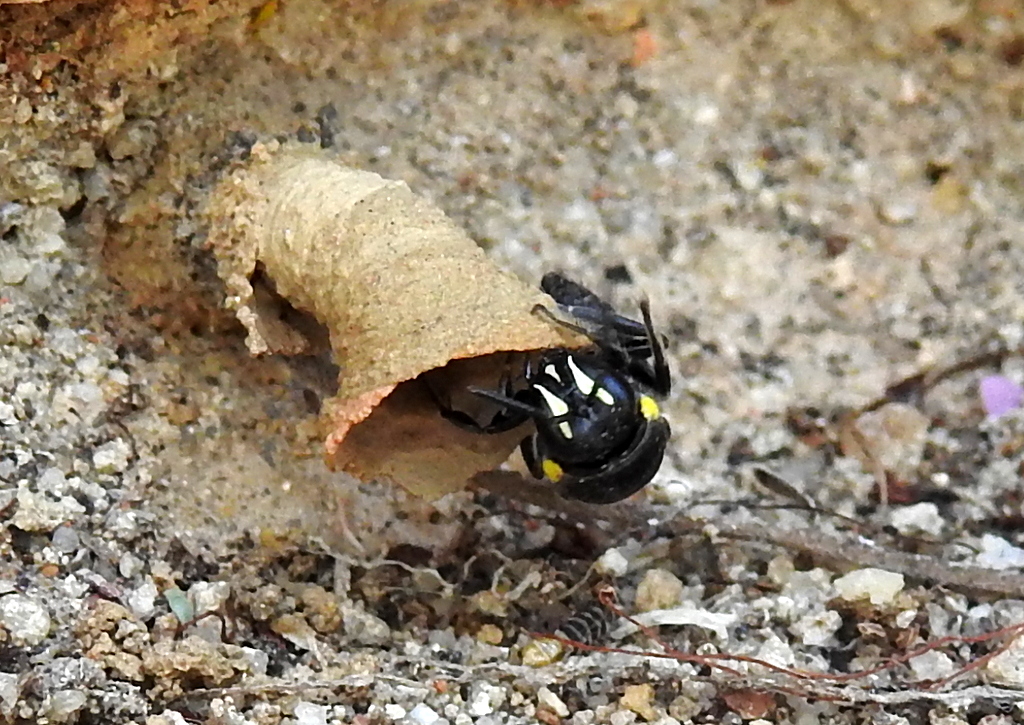
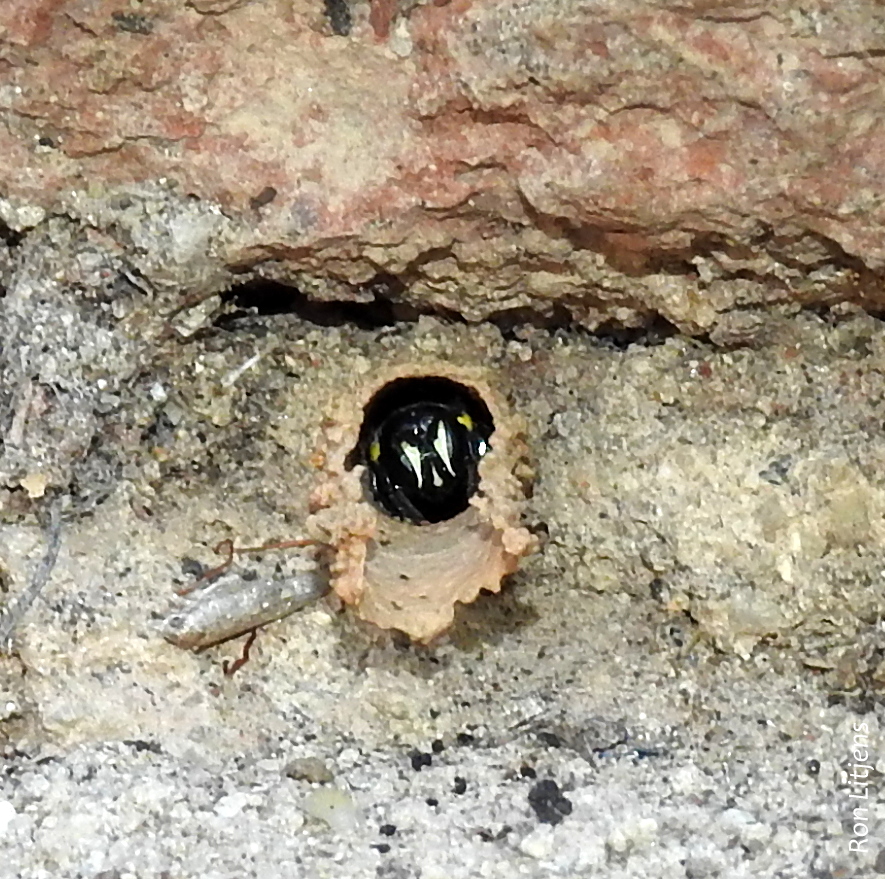
One species of bees has an easier strategy still. The Cloudy Masked Bee (Hylaeus nubilosus) finds an abandoned nest of a potter or mud dauber wasp and moves in. No construction costs, no fighting with the neighbours (or the residents).
Squatting has its advantages.
Fairies in the garden
Sweet Bursaria (Bursaria spinosa) is shrub of the Pittosporaceae family with profuse white flowers. It is my insect-attracting plant of choice at the moment. Above a local grove of Bursaria there was a shimmering of tiny creatures moving so quickly it was difficult to tell what kind of creatures they might be. It was not until one of them settled of a flower that I could see it was a tiny moth – a Fairy Moth (Nemophora sparsella) to be exact (pictured below).
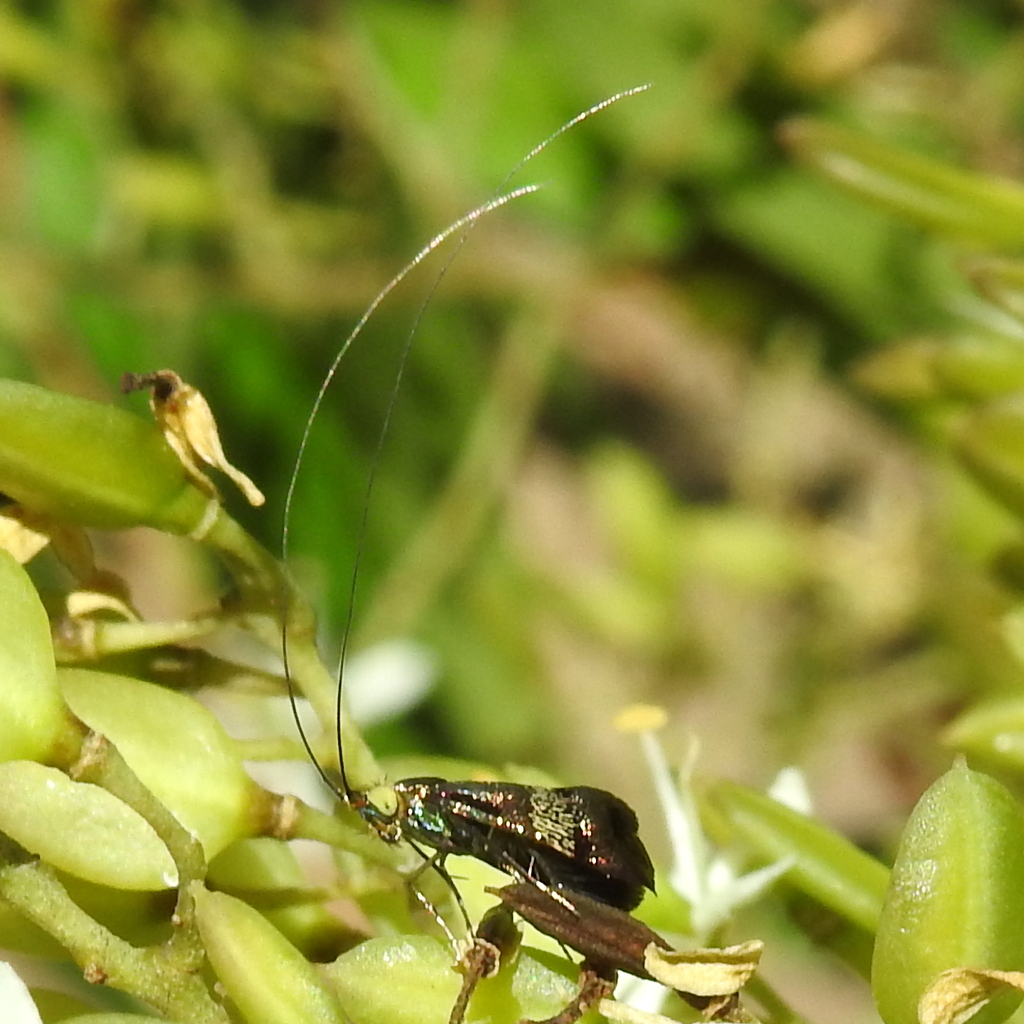
This Fairy Moth is about 10mm long and is distributed along the eastern Australia from Tasmania up to southern Queensland. The forewings are metallic purple in colour with a transverse gold band. The alternative name is Longhorn Fairy Moth because the antennae length in the males is up to 3 times the length of the wings.
So if you see a shimmering in your garden out of the corner of your eye it’s probably a Fairy Moth … or possibly something more magical.
Little Or Yellow
The two equal-smallest birds in Australia are the Weebill and the Yellow Thornbill. In fact, the Yellow Thornbill (Acanthiza nana) used to be called the Little Thornbill as it is fractionally smaller than the other thornbills. And since it has practically nothing else to distinguish it, no stripes or eyebrows or wing-bars, it was called Little and then it was decided the name Yellow was more appropriate. It is yellowish but not as yellow as, say, a Golden Whistler or Yellow Robin; it can appear brownish- or greyish-yellow. The best distinguishing feature is the lack of any distinguishing feature.
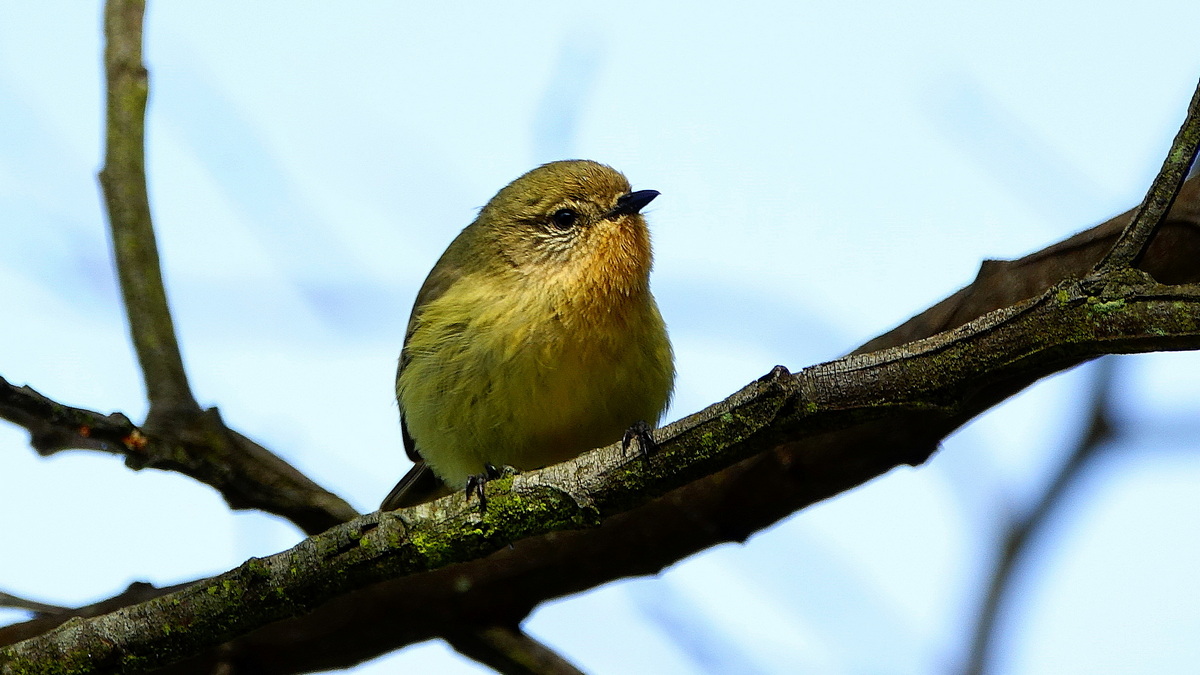
This is a thornbill that is only seen in trees – never on the ground. Furthermore, I recently learned that their preference is for Wattle trees rather than eucalypts. They like the feathery-leaf types, like Black or Silver Wattle.
They are often found in Yea Wetlands (in the wattle trees!) and are possibly common in the area. But they are thornbills after all – small active birds in the canopy – and hard to distinguish at a distance. They are also hard to photograph and I felt very privileged to get these photos when I located a small group that locals said are always around this particular copse of wattles.

Small. Unobtrusive. Plain. No distinguishing features. This is not going to be on anyone’s list of favourite birds but they are ours – endemic to south-eastern Australia. They are unique to this part of the world.
Japanese Visitor
Today’s topic features a bird that is rare in our district, but then it is rare nearly everywhere. The Latham’s Snipe (Gallinago hardwickii) with striking stripes and a long beak flies to Australia from Japan each Summer and feeds along grassy waterways and edges of swamps and lakes.
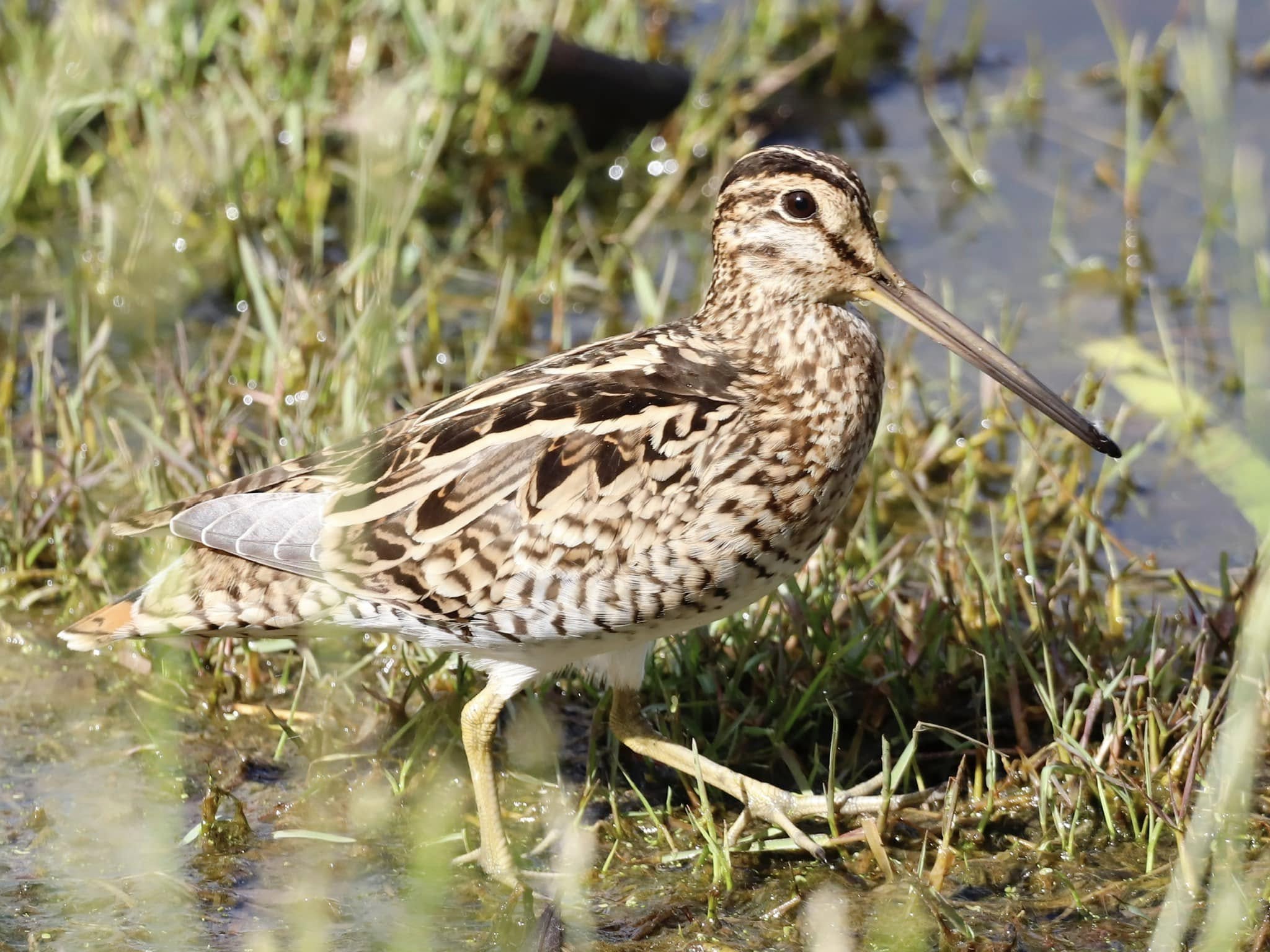
They are a shy and cryptic bird. Usually, they spot you … well before you spot them. Once you get within about 20 metres or so they are off in a zig-zagging whirr. It was considered a great skill to shoot them in the old days before hunting was outlawed. Their eyes are strategically placed to enable them to see up and behind almost as well as ahead.
I saw one up Deepdene Rd in a wetland overflow. That’s typical: a bit of water, a lot of grass, sometimes on mudflats probing the mud with that strong beak. This summer there have been reports of significant numbers of Latham’s Snipe in some wetland areas; it’s a good year for them. So I hope more are found in the district this year.
Latham’s Snipe are non-breeding visitors to Australia, tripping down to the south-east of the continent from their breeding grounds in Japan and Russia. It’s a remarkably long trip, and one female was fitted with a tracking device. She flew three days non-stop from Japan to northern Australia.
The birds leave again to head north in late February/early March, arriving back in their breeding grounds in Japan and far-eastern Russia by April/May. The entire global population, estimated to be somewhere between 25,000 and 100,000 individuals, is thought to visit Australia during our warmer months.
It’s always magical to spot a snipe. There are even rarer ones on our continent – Painted Snipe, Pintail Snipe – but this one (that you are most likely to see) is distinguished and rare enough to be greatly rewarding.
Xmas baubles for free

One of the largest families of beetles is Chrysomelidae or the Leaf Beetles. Both the adult beetles and their larvae are herbivores generally eating the young leaves of specific plants during summer.
Eucalyptus Leaf Beetles, pictured left are sometimes called Tortoise Beetles because they can withdraw their legs under the shell when threatened and are often mistaken for Ladybird Beetles because of their shape. They are highly coloured. The adults feed on eucalyptus leaves leaving tell-tale half-moon shaped indentations in the leaf margin when eating.
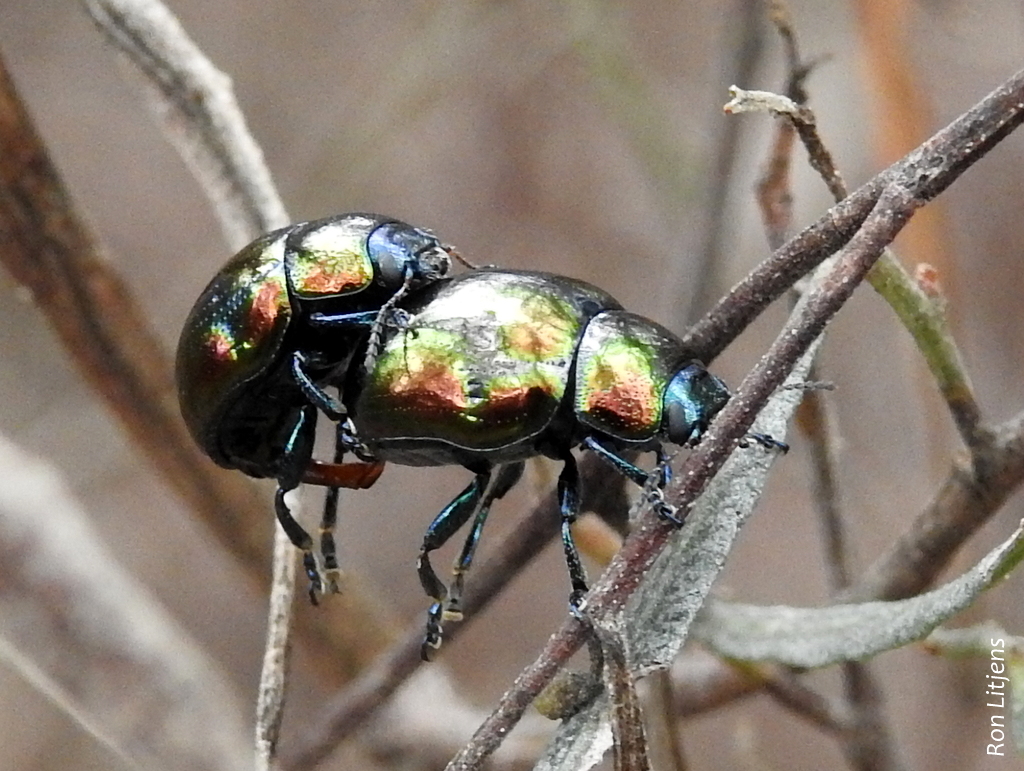

Even more spectacular in appearance are the leaf beetles of the genus Callidemum, (Callidemum hypochalceum pictured above and right). These beetles have a metallic sheen on their carapace, so much so that it was difficult to photograph without getting your reflection in the image. Their plant of choice is Dodonea (Hop-bush).
If your Xmas tree happens to be a Hop-bush, you may be lucky enough to get these baubles for free.
Lock up your larvae
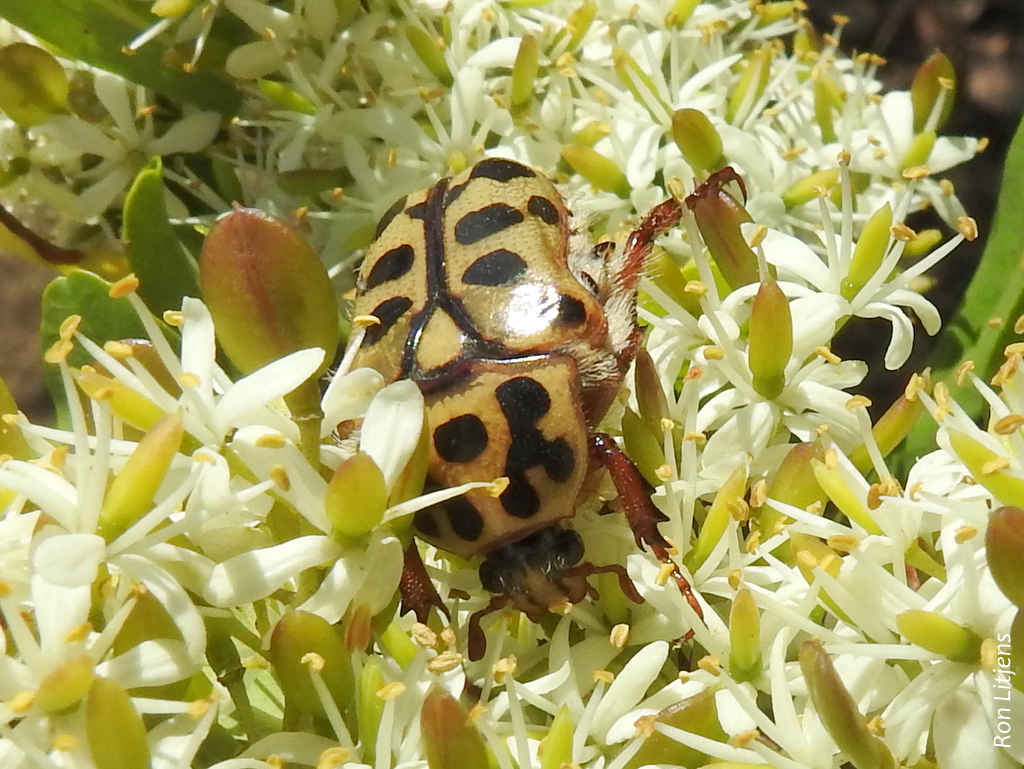
Christmas time is the time of the Scarabs – think Xmas Beetles, Fiddler Beetles and Spotted Flower Chafers (Neorrhina punctata), pictured left. I have childhood memories of there being are lots of them around at Xmas but there don’t seem so many around any more. It is also the time of the year when scarab beetle grubs, those big white grubs that live in the ground get nervous (I am anthropomorphising a bit).
Major predators of scarab grubs are Hairy Flower Wasps. These are largish sized wasps and some, like the Yellow Hairy Flower Wasp (Radumeris radula) pictured below, quite frankly are very hairy. The adult wasps feed on the nectar. After mating the female wasp searches for scarab larvae in the ground. When found the wasp paralyses the scarab grub and lays a single egg on it. When the egg hatches the wasp larva devours the still living but paralysed beetle grub.


Hairy Flower Wasps come in several colours. Black Hairy Flower Wasps (Austroscolia soror) pictured right, typical fly low over piles of mulch or wood chips in the search for grubs.
Scarab grubs can do a lot of damage in agriculture and agroforestry if out of balance. As scary as the wasps look we should encourage these hairy friends to hang around.
Leaden You Know

One of our district’s summer migrants is the Leaden Flycatcher (Myiagra rubecula). Not very common in farmland, Leaden flycatchers like open woodland with lots of eucalypts but little understorey. I can count on finding them at Constitution Hill in Yea, or at the Old Cemetery and in some years they are common in Yea Wetlands. They come to these Southern climes in order to breed.


Leaden flycatchers have a ringing distinctive call – a loud pleasant towhee-towhee; plus like other flycatchers they also make a metallic buzzing and grinding noise.
If you follow the call and track one down, it will be sitting on a branch and it will shiver its tail as it calls, as if it is a great effort.
There are two other possible flycatchers in the district – the Restless Flycatcher (with completely white throat and belly) and the Satin flycatcher which looks very similar to the Leaden but is confined to the tall damp forests of places like Toolangi or King Lake. The names denote the supposed difference in the brightness of the black coloration -Satin being shiny and Leaden being dull.
It might have a more leaden colour than its cousins, but the Leaden flycatcher, personally, I find lifts the leaden heart and quickens the leaden step with its cheery song, shivering tail and smart tuxedo.




 Focus On Fauna