Here’s looking (& looking, & looking) at you, kid
The shriek from downstairs could mean only one of two things. Either I had accidentally mixed the coloureds with the whites (again!) or there was a spider nearby. The subsequent calls for help suggested the latter. And there it was. A 173-centimetre person standing on a chair bailed up by an equally frightened one-centimetre spider.
The spider was a Wolf Spider (Family Lycosidae). Wolf Spiders live in most places on the globe, especially in our downstairs studio. They are agile hunters with excellent eyesight. In fact they have eight eyes in three rows –four small eyes, above which sit two larger eyes with two medium-sized eyes above that (see image). At night Wolf Spiders are easy to locate with a torch. The ‘eye-shine’ (light reflected back from the eyes) on some nights makes our driveway look as if it is scattered with diamonds.
Because I have been threatened with physical violence if I publish a spider photo on this blog by several members of the community I have discreetly embedded the image in a video. If you wish to view a face only a mother (or an optometrist) could love, click on the video below.
At the time of going to press, another of our eight legged, hairy brethren turned up at the Three Sisters. It looked like a Victorian Funnel-web Spider (Hadronyche modesta), a far less poisonous relative of the Sydney Funnel-web Spider. It is lucky that it did not turn up in our studio. There would not have been an intact pane of glass in the valley. Its image has been added to the video clip (which may take a few moments to load).
Summer daze
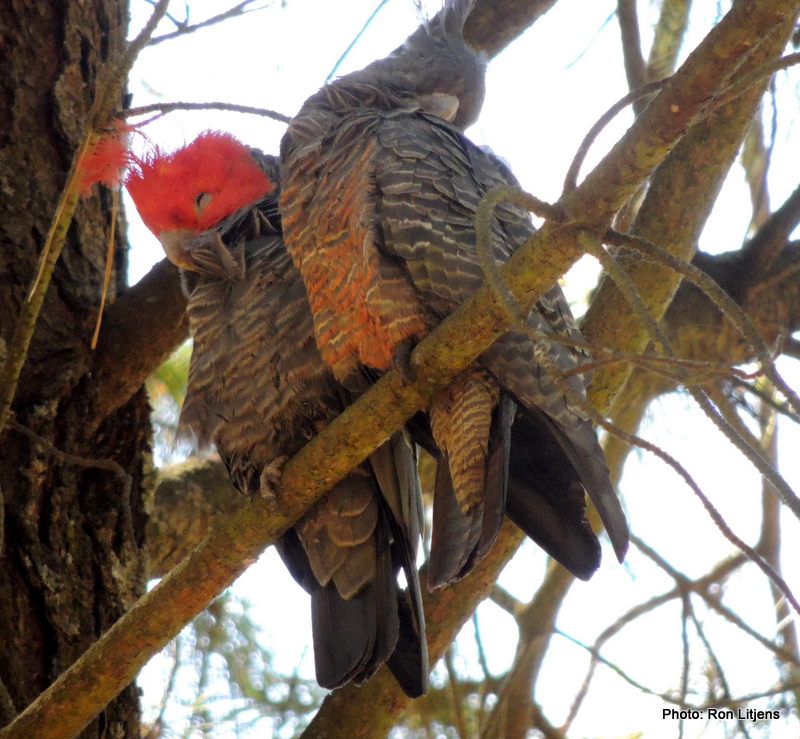
Dig those funky pyjamas
The cicadas are singing, the stomach is full of wattle seeds and there’s a balmy breeze blowing. What is a bird supposed to do in the summer heat? Take a siesta of course. Seen recently was a pair of Gang-gang Cockatoos (Callocephalon fimbriatum) having a snooze in the arvo.
And to think I thought the female (seated right) was a boring grey colour!
Another new arrival !
A couple of weeks ago we noticed our resident Common Wombat (Vombatus ursinus), who regularly wanders around during the day, was looking distinctly bulgy! We are fairly sure this is the same wombat that we photographed in June 2011 (click HERE to see previous post), and on closer inspection it was clear that another new arrival was almost ready to enter the wider world. The pictures tell the story.


Thirsty weather – cont.
Our ground dwelling birds and mammals also appreciate us putting water out for them during this hot weather, as seen in these photos at a bird bath at my Kinglake West property.

Echidna at bird bath
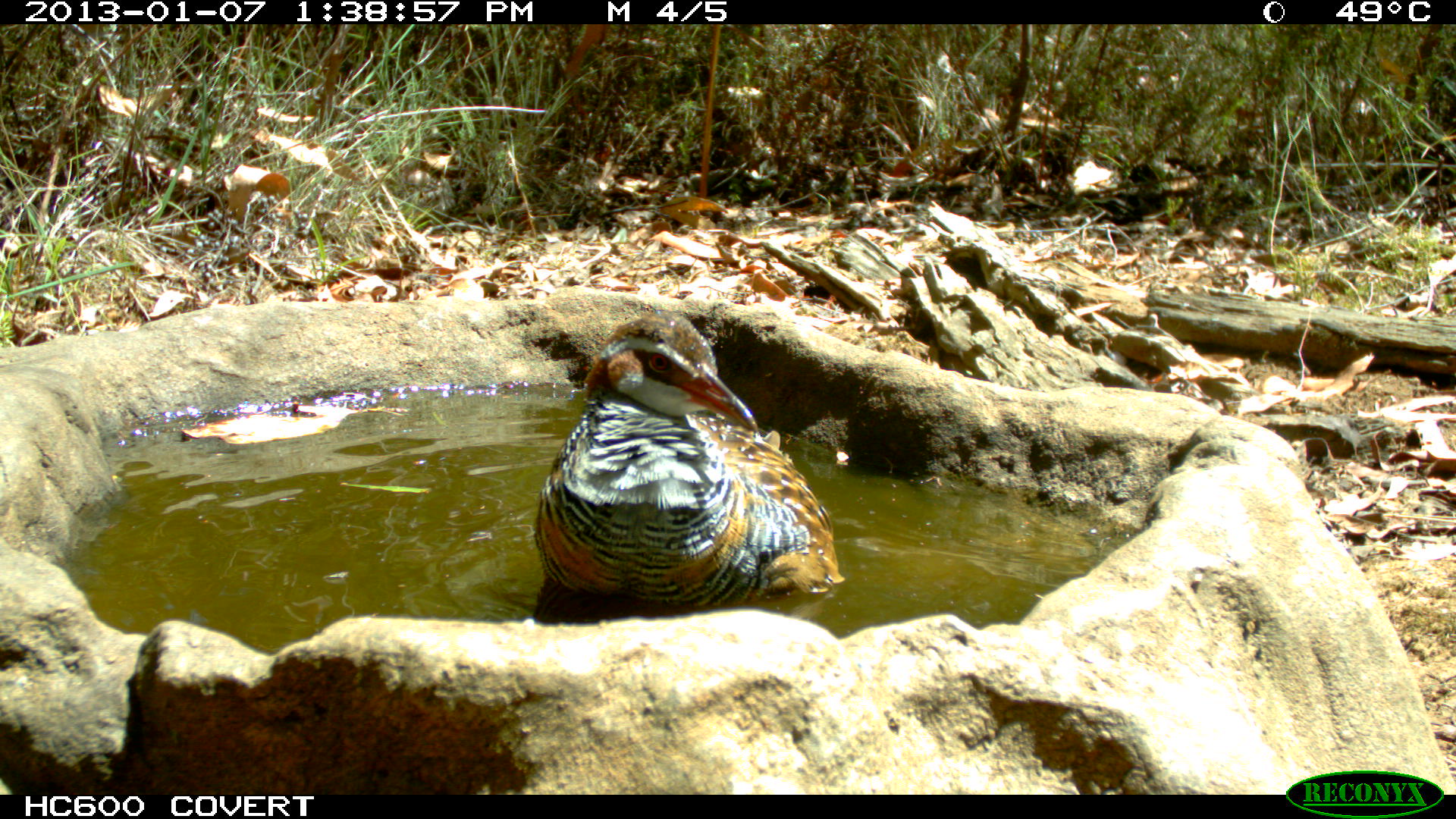
Buff-banded Rail at bird bath
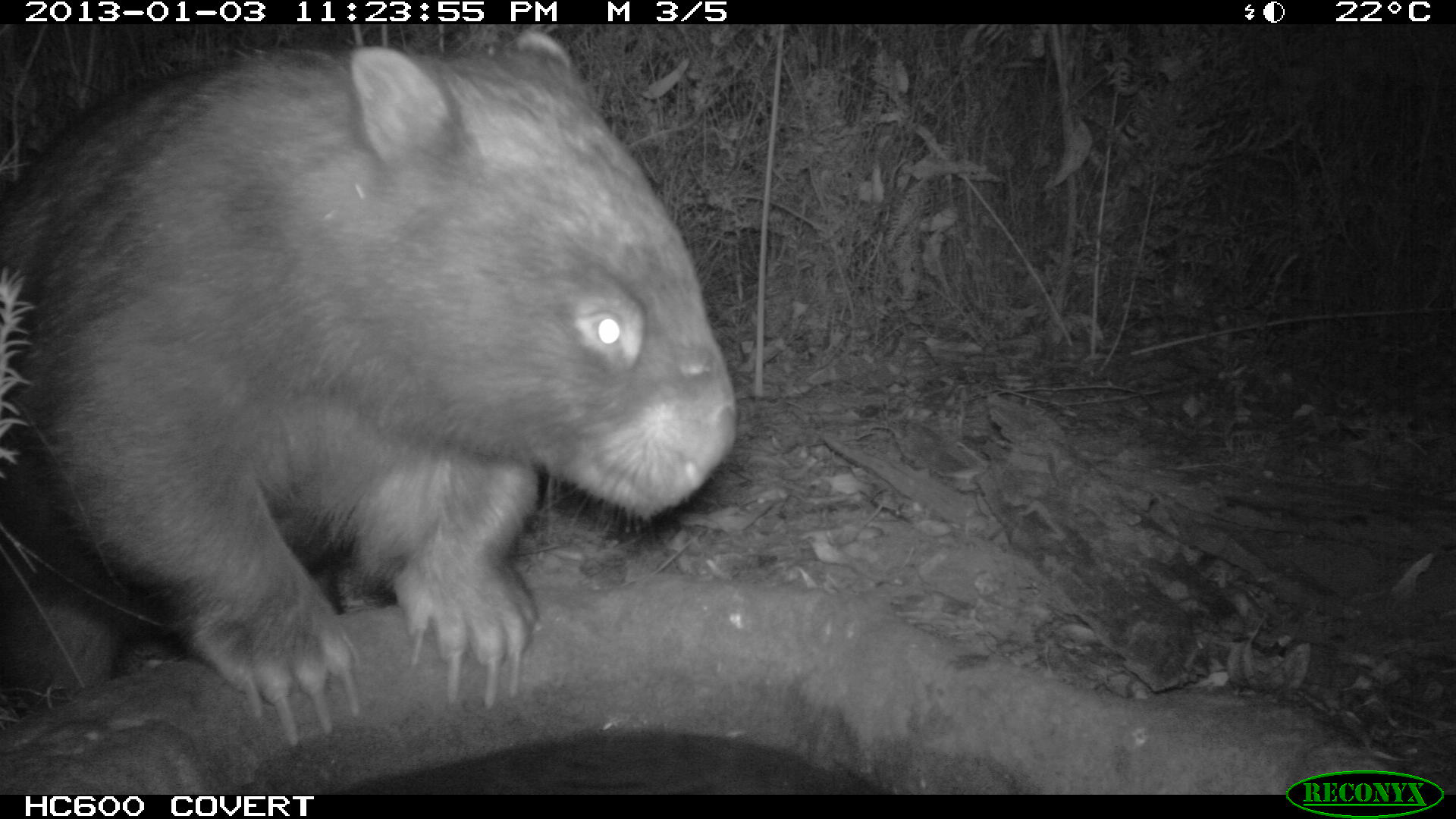
Wombat at bird bath
Chris Cobern
Landcare Coordinator
Upper Goulburn Landcare Network
Robber flies 4, Other species nil

Starters – Beetle Brioche
Following on from a recent post (click HERE to view) describing the gruesome eating habits of Robber flies (family Asilidae) I have noticed many of these creatures flying around laden with their meals.
Robber flies capture their meals while in flight, then pierce their bodies and inject them with saliva. The saliva has the effect of first paralysing the victim then liquefying its insides. This ‘insect thickshake’ is then sucked out.
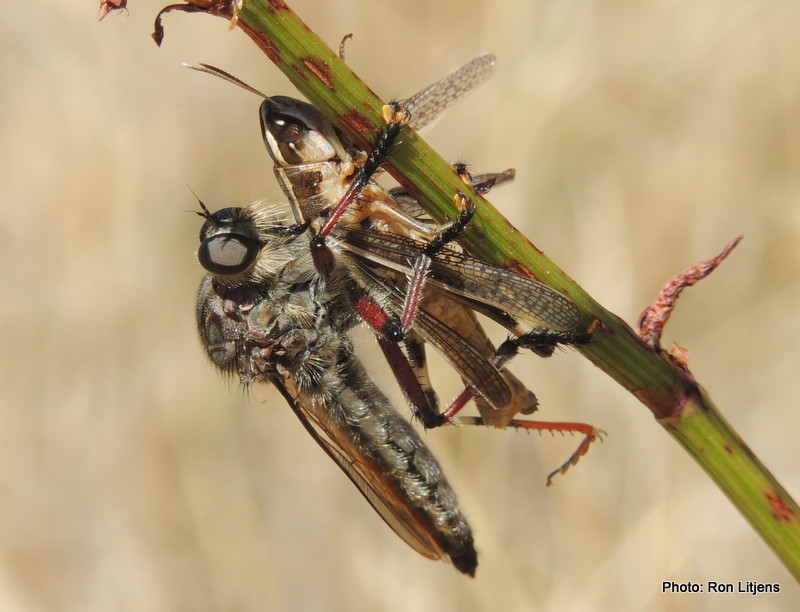
Entree – Grasshopper Gratin
Although hard to get close to when feeding (they are very protective about their dinners) here are a few pictures of robber flies dining out.

Dessert – Cicada Slurpee

Mains – Fly Fricassee
Thirsty weather !
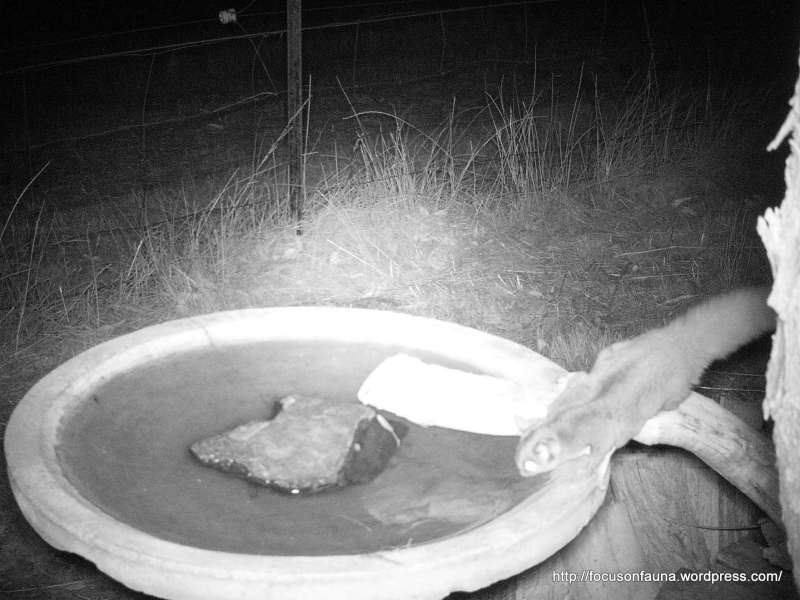 We have heard it said that Sugar Gliders (Petaurus breviceps) get enough moisture from their food supply (invertebrates, acacia gum, eucalypt sap, nectar and pollen) and don’t need to drink. Well, we’ve recently recorded on remote camera a Sugar Glider visiting one of our bird-baths every night for almost two weeks, sometimes twice in a night, and several shots clearly show the glider drinking. With the extreme heat we’ve been experiencing lately that’s probably not surprising, but even after the occasional cooler day the glider still came for a drink.
Another welcome return visitor to the bird-bath is a Brush-tailed Phascogale (Phascogale tapoatafa) which can be seen in the slide show below. Also recorded at the bird-bath were two unidentified bats and a variety of birds including an Olive-backed Oriole (Oriolus sagittatus), a bird often heard in the warmer months but less often seen. To hear its call click on the sound icon below the slide show.
The heron, the tortoise – another Aesop’s fable?
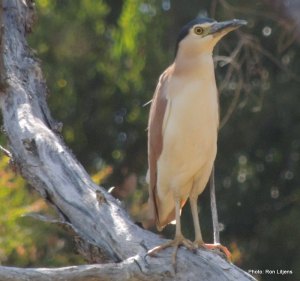
Nature is full of surprises. After nearly a decade of fauna spotting on our property we had concluded that our list of (large) fauna was complete. Then last week two more species visited.
Sitting on the edge of our dam, probably reducing the populations of other fauna like frogs and fish, was a Nankeen Night Heron (Nycticorax calendonius). It’s a bit of a misnomer as it wasn’t night, but the chest was definitely nankeen coloured (nankeen is the name of a pale yellow cotton cloth originally produced in Nanjing, China). Almost undiscernible behind its back are the tips of three white plumes that extend from the back of the head. These indicate the bird is breeding.

The other addition to our list was casually paddling its way around our dam. My guess is that it’s a Common Long-necked Turtle (Chelodina longicolis). I am no expert in identifying these creatures. I do know that examining the sutures on the shell will tell you the species. Even though I asked nicely, this turtle was in no mood to show me its sutures or anything else and quickly disappeared under the water once it was aware of my presence. It was probably doing what we have all been told from a very early age … never talk to strangers (just like our parents tortoise!).
Think pink ?

 This plump little bird is clearly a robin and was displaying typical robin behaviour in Steve and Heather’s garden at Flowerdale the other day – flicking its wings and tail, and darting from a low perch onto prey on the ground. But the question is, what sort of robin? Identifying the species of female and immature ‘red robins’ (genus Petroica) – Scarlet, Red-capped, Flame, Rose and Pink Robins – is never easy, but Steve thinks this is a Pink Robin (Petroica rodinogaster) and we agree, even though it seems well out of its usual forest habitat of shady fern gullies. The key identifying features of the female Pink Robin are: buff rather than white wing markings, no white on tail and a small buff patch above its bill.
Steve and Heather’s shady garden must be to its liking because, on checking his photo records, Steve found he had recorded a similar bird in 2006 (see photo at right), but was unsure of the identification at the time. Now all we need is for the distinctive pink male to turn up! For more information and a photo of the male click HERE to visit the Birdlife Australia’s Birds in Backyards website.
Now showing at a dam near you

1 – Nymph climbing a reed
A recent post described the many cicada exoskeletons that currently adorn our trees and shrubs (click HERE to view). Watching the adult cicadas emerge from the shells is difficult because it generally occurs at night and can happen in trees just about anywhere on your property.
Similarly spectacular shows are now also happening – the emergence of dragonflies and damselflies from their nymph stage. Even though they also happen after dusk, the good news is the events are far easier to find. They occur only in dams within centimetres of the water’s edge on upright reeds and branches.
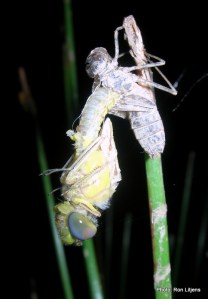
2 – Adult emerges
A previous post (click HERE to view) discussed the mating and subsequent egg laying process of these insects. Once hatched, the nymphs can spend from months to several years under water feeding on mosquito larvae and tadpoles. At maturity the nymph climbs out of the water on a suitable reed or branch. The exoskeleton splits along the back and the adult emerges. Once freed, the adult uses an internal hydraulic system to ‘pump up’ its various body parts to their full size. Over the next few hours the wings and body harden and another dragonfly is ready to take to the air.
So for those of you addicted to the SBS reality show ‘One Born Every Minute’, switch off the telly, put on the wellies and get a real dose of reality. There are hundreds being born every minute … right now, at a dam near you.
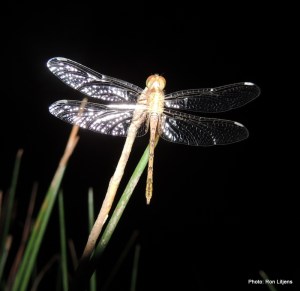
4 – Ready to go

3 – Wings still folded back
Wattlebird wars
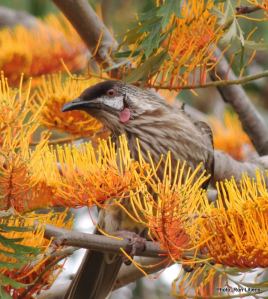
From our bedroom we look out on a Silky Oak (Grevillea robusta). For most of the year it is an unremarkable tree. The birds think so too as they seldom perch in it. However for 5 or 6 weeks at the end of the year this tree comes to life and puts on an amazing yellow–orange floral display. Now it is time for the Wattlebird Wars.
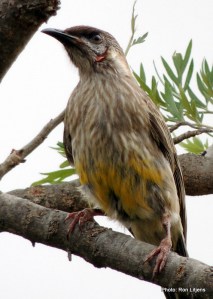
The Red Wattlebird (Anthochaera carunculata), called so because of the striking red wattles that hang from the cheeks, is a loud and aggressive honeyeater. It is very territorial and for most of the year will harass any bird that strays within the vicinity of the various grevillea shrubs on the property. In December the flowering Silky Oak is prized territory and throughout the daylight hours up to a dozen wattlebirds will tirelessly (and noisily) chase each other up, down and around the branches — an avian version of snakes and ladders.
We have noticed a definite territorial pecking order among the other bird species. The Red Wattlebirds trump the smaller Eastern Spinebills and Superb Fairy-wrens and will even drive off the larger Pied Currawongs. The big kid on the block though is the Sulphur-crested Cockatoo (Cacatua galerita). When a group of them decide the Silky Oak flowers need shredding there’s not a Wattlebird in sight.
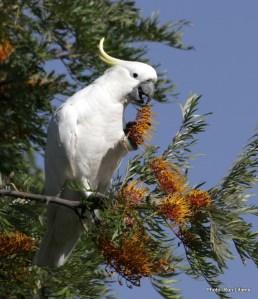
Boss cocky!




 Focus On Fauna