Not everything is web-based

One of the truisms from my childhood is that spiders build webs with which to catch their food. The webs are circular, two-dimensional, vertical and strung up between pieces of vegetation. This of course is correct however things aren’t nearly as clear cut. Not all spiders catch food using webs.
Jumping Spiders such as the Prowling Jumper (Opisthoncus grassator), pictured above left, capture their prey by leaping on it. They use their excellent eyesight to not only detect prey but also to calculate how far they need to jump. They use hydraulic pressure in the legs to propel themselves forward and just in case they miss Jumping Spiders are attached from their start point by a filament of silk.

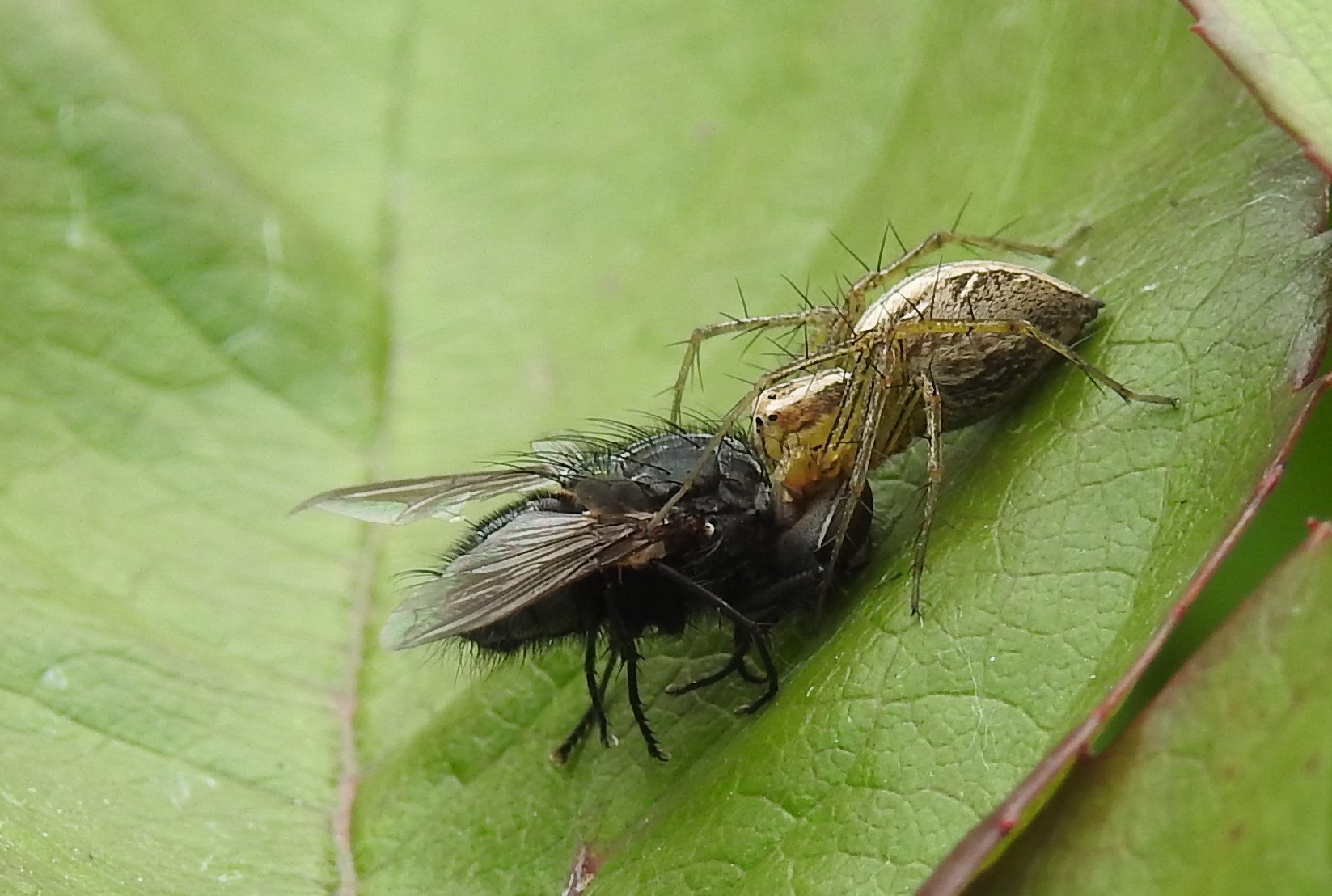
Lynx Spiders, picture above right, on the other hand catch their prey by running it down. The front legs are bristly so as to confine any prey that is captured and prevent the thrashing victim from damaging the spider’s eyes.
Another strategy albeit a lazy one is to hide in flowers and simply ambush the prey as it comes in the feed (pictured above left).
I wonder if spider fast food is defined by how quickly you have to move to get it.
Local knowledge
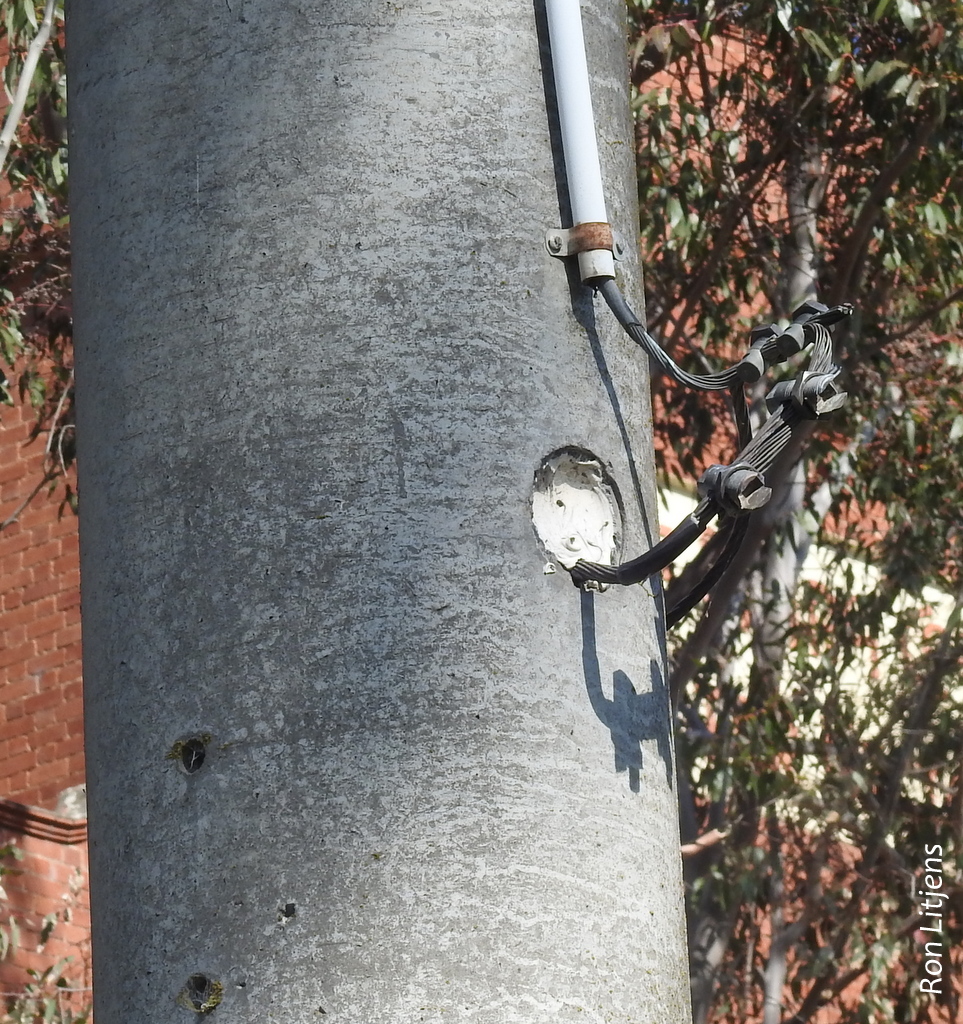
For many years the electricity pole across the street has been home to small birds in Spring where small holes in the concrete pole have provided the entrance to perfect nesting sites. In the past Striated Pardalotes (Pardalotus striatus) were the regular inhabitants but in 2016 the site was taken over by House Sparrows (Passer domesticus) a feral intruder in the area (click HERE to view).
Recently the infrastructure on the pole has received several upgrades as first a high voltage spike and then a severe storm damaged it. Serious maintenance was required to be done. During that maintenance all the holes in the pole were blocked (see photo above) and I despaired at being able to ever see birds using the pole as a nesting site again.
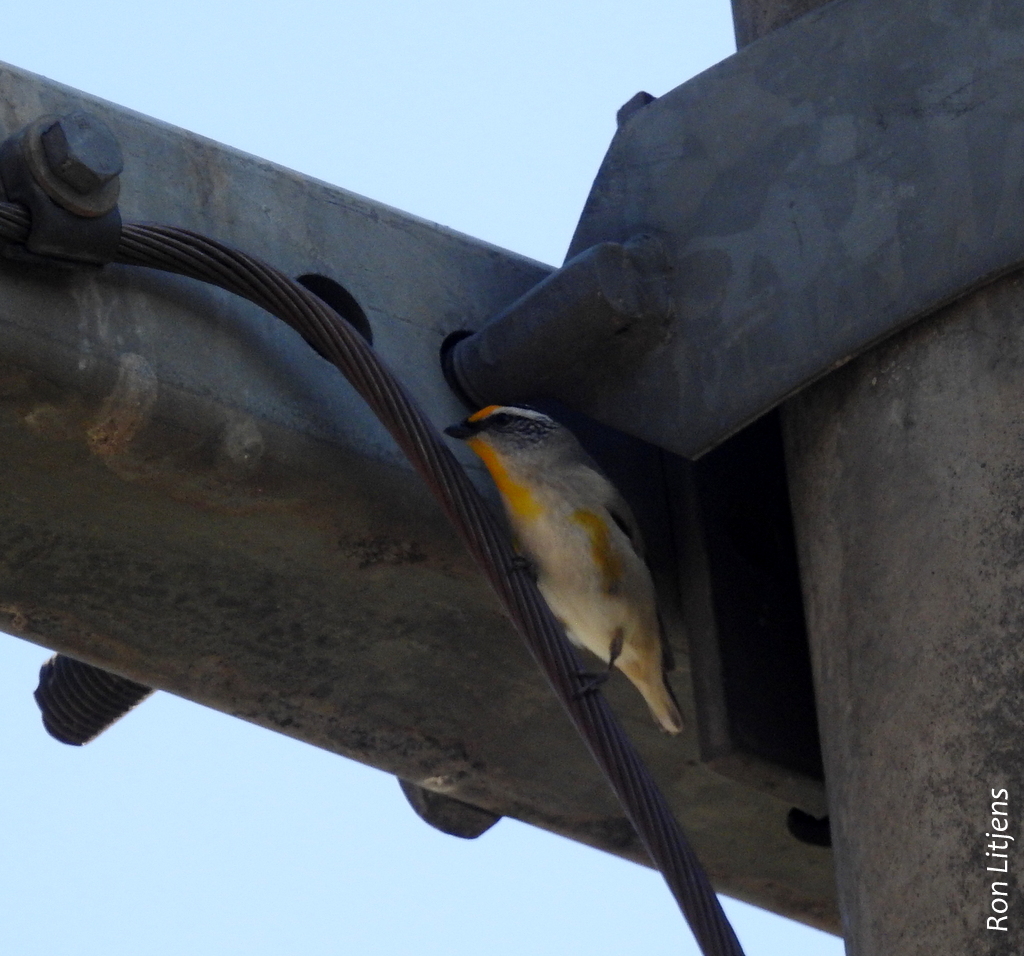
Yesterday the distinctive call of a Striated Pardalote was heard ringing from the very top of the pole. In one of the metal crossbeams, hidden behind a heavy duty earthing wire is a pre-drilled hole in the crossbeam wall and in that opening Striated Pardalotes have started building a nest, pictured right.
The view of the hole from the road is obscured but hopefully later in the season we might get a family photo.
Australia Post

One of the more stunning flowers at this time of year is the red and yellow Running Postman or Scarlet Coral Pea (Kennedia prostrata). Along the rail trail it is generally found in small clumps on the slopes of the railway cuttings but just east of Homewood there is a stretch of about 20 metres of the prostrate shrub twined in amongst the grasses (see left).

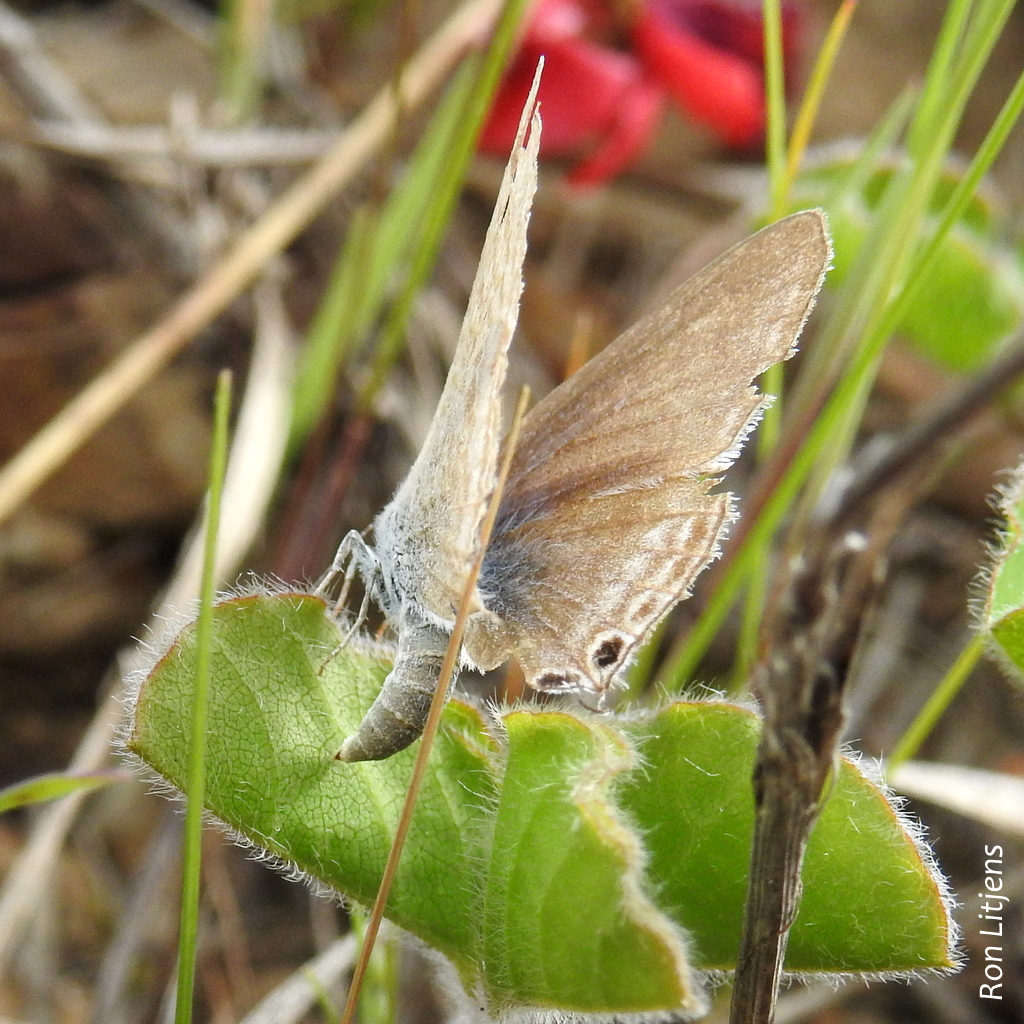
Frequenting the plants was a sole Long-tailed Pea-blue butterfly (Lampides boeticus) pictured above. Its name is derived from the tail-like appendages at the bottom of the hindwings (see photo), the fact that it is a member of the family of butterflies known as ‘Blues’ and that its young feed on the leaves of pea plants such as the Running Postman.
The butterfly spent some time taking nectar from the flowers but more time visiting the leaves, on which closer examination showed it was laying eggs. Pea-blues can have up to three generations in a year.
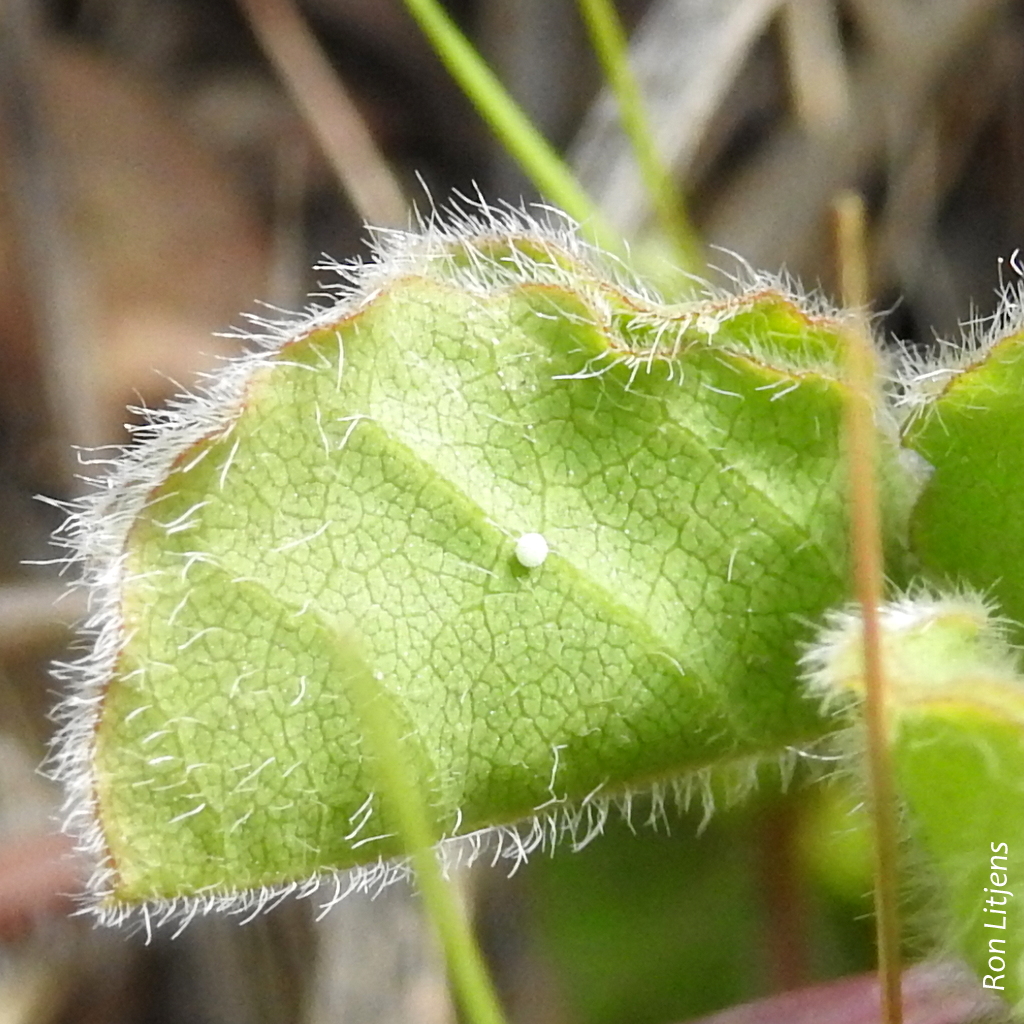
As is the case with some other members of the ‘Blue’ butterfly family, the caterpillars and pupae of the Pea-blue are sometimes associated with attendant ants. When the caterpillars hatch they emit a pheromone to attract ants in the area of the correct species. The ants tend the caterpillars by providing protection from predators and parasites in return for a sweet liquid food that the caterpillars/pupae exude, click HERE for a related blog. It is an amazing symbiotic relationship.
This will now be a regular stop on the rail trail. I want to see if the ants will come. Such anticipation.
Orange is the new green
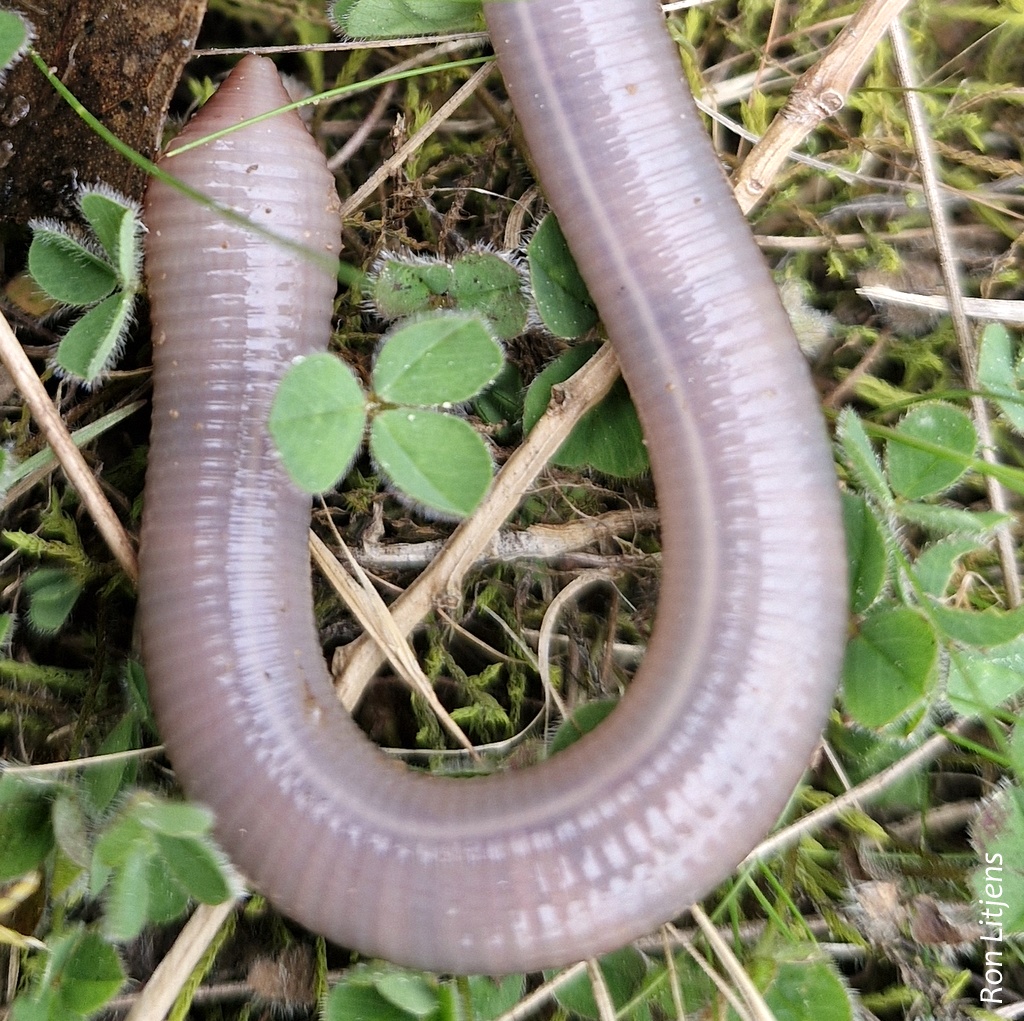
Annelids are a group of animals that include earthworms and leeches. The term derives from the Latin ‘annellus’ meaning ‘little ring’ and if you look at a garden earthworm closely you’ll see that they look like a tube made up of a line of rings attached together (pictured left). What you probably can’t see is that each ring has a number of outward projecting hairs called setae. These help anchor and propel the worm when I moves. Near the front of the worm is a pale, thick glandular section known as the clitellum (pictured below). It develops when the earthworm is sexually mature.
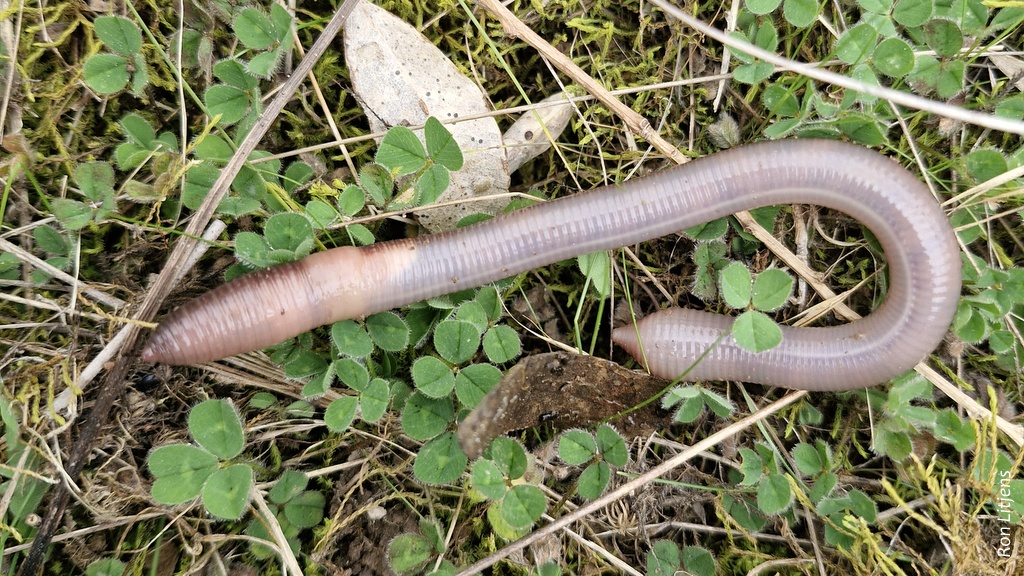
Earthworms are hermaphroditic. Even though each worm contains both male and female sex organs two worms are needed for reproduction. Mating takes place above ground usually at night when two worms wrap around each other and exchange sperm. This sperm is stored for later use. Sometime later after the worms have gone their separate ways reproduction occurs. The clitellum exudes a ring-shaped sac around the worm. As the worm backs out of this sac it injects its eggs and the stored sperm into it. It is in this donut-shaped sac that fertilisation occurs. The offspring grow as young adults with no intermediate stages.
When an earthworm is ready to reproduce the pale clitellum turns a dark orange. Unlike with traffic-lights in earthworms orange means go.
The case for hairy toes
Hairy feet have generally been frowned upon as a physical attribute, unless you live in Hobbit-town. But for some creatures having them is a real asset.

The warm weather has seen the early emergence of some of the reptiles, in particular geckos. It is only early September but they are already prowling about the windows at night hunting unwary insects. The Marbled Gecko (Christinus marmoratus), pictured left, is Australia’s southern-most dwelling gecko and is the species that has staked its territory around my kitchen window. Like all geckos in the Gekkonidae family it uses its tongue to clean the lenses of the eye, has a pre-weakened cleavage points in its tail so that when attacked it doesn’t necessarily have to lose the entire tail and has the amazing ability to walk on walls, ceilings and even vertical glass.
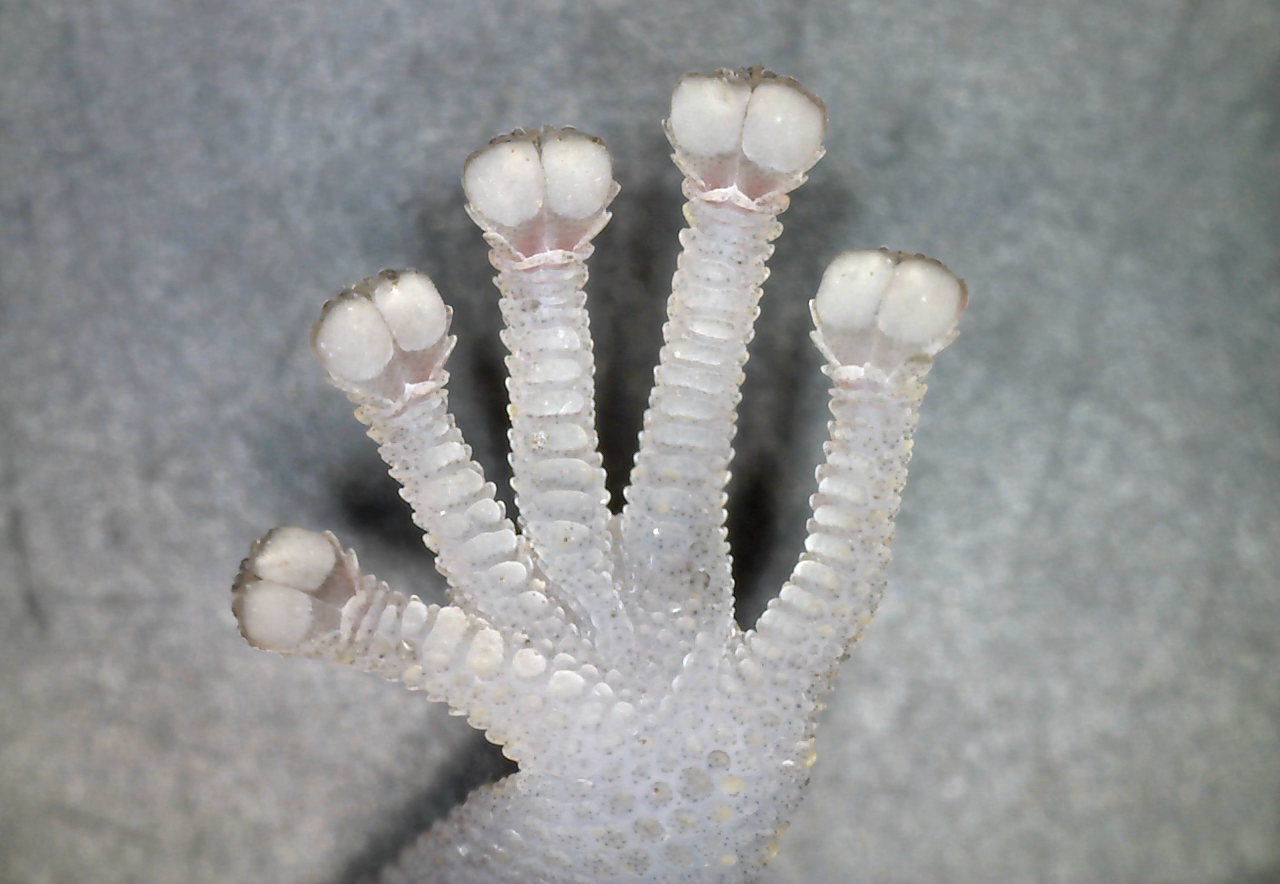
It turns out the geckos ability to walk up windows is not due to suction cups on its toes as I thought as a kid but is due to millions of tiny hair-like structures called setae under each foot. The setae are made of similar materials as our finger nails and are tiny – much tinier than can be observed on the underside of the gecko’s foot pictured right. On each toe between each of the pads is a tiny retractable claw. Each setae has thousands of flat structures on them that further increase the contact surface area between the gecko and the glass. So effective is the arrangement that a gecko’s feet can support well over 100kgs.
So it appears that a way to ‘rock’ hairy feet is to have the hair under the foot.
Open for inspection
Australian has unique fauna in that many of it’s birds and animal use tree hollows for breeding or shelter sometime in their lifecycles. Seventeen percent of bird species, 42% of mammals and 28% of reptiles use tree hollows (Gibbons and Lindenmayer 1997). They include bats, possums, gliders (pictured below left), owls, parrots, ducks and kingfishers.
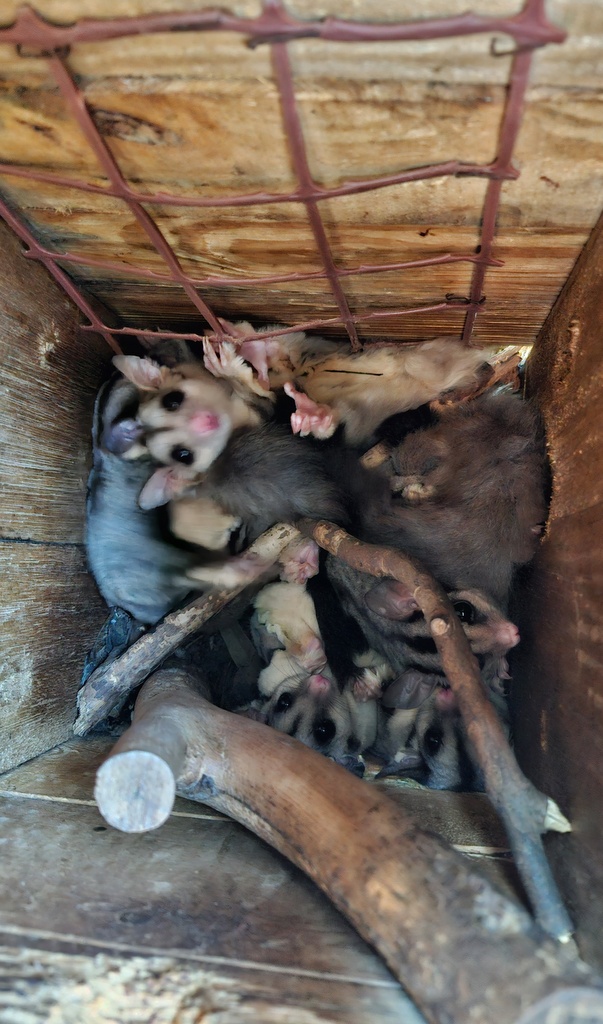
There is however an increasing dearth of tree hollows in our landscape. Depending on the tree species it takes over 100 years to develop a ‘decent’ tree hollow for fauna to live in. Old trees are disappearing due to old age, logging of old growth forests, land clearing for agriculture and housing and bushfire.
Recently several of our neighbouring Landcare groups have embarked on projects to increase the number of usable hollows in their area by installing nest boxes. Earlier this year Yea River Catchment Landcare Group purchased 105 nest boxes using a Habitat For Wildlife grant from the GBCMA. Last week Kinglake Landcare Group launched their Boxes for Birds project, a collaboration with Birdlife Australia’s Yarra to Yea bird conservation effort. They acquired 105 nest boxes using a Victorian Government Landcare grant. The boxes will be distributed across 21 private and public sites.
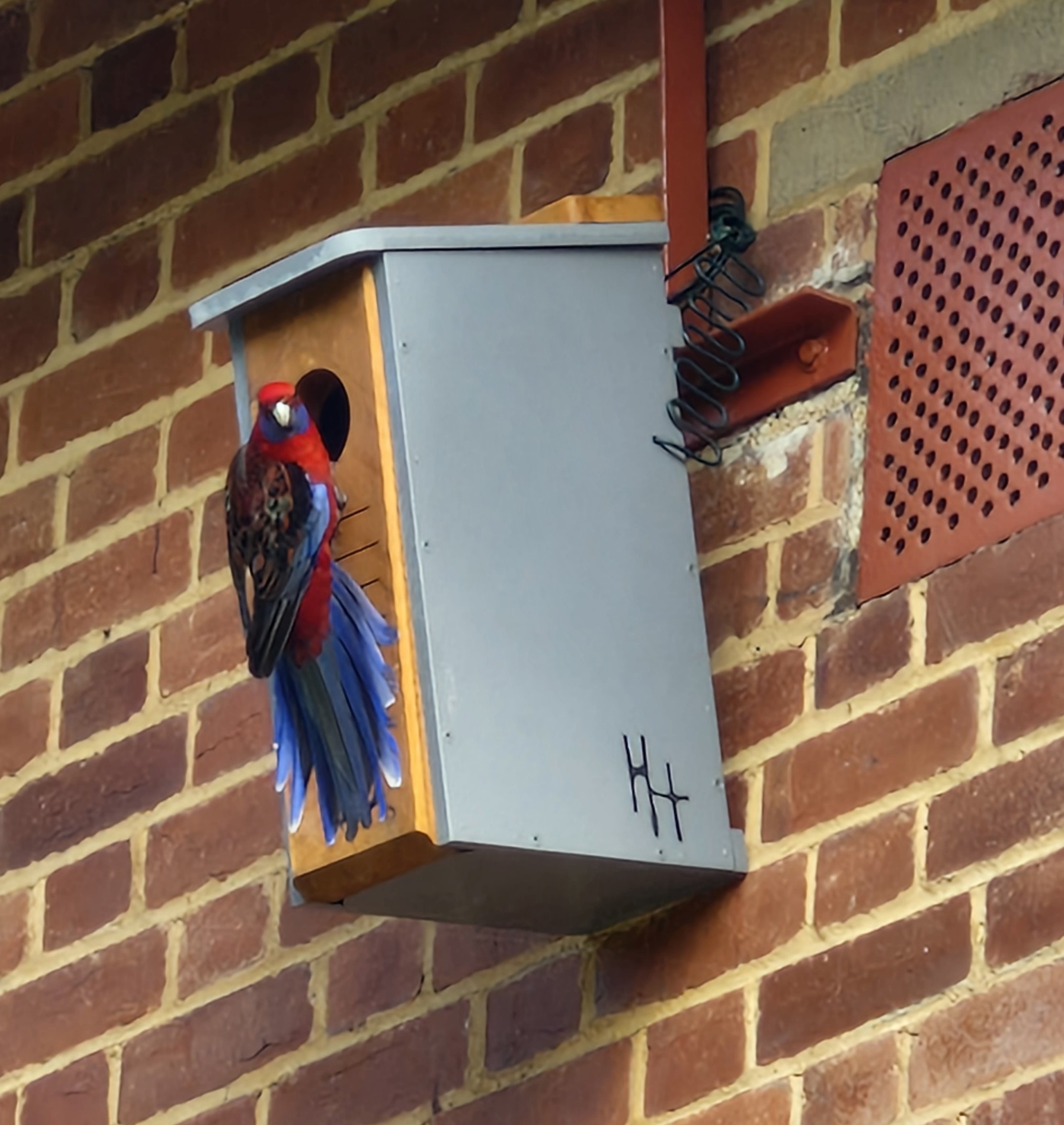
In autumn I installed nest boxes from the Yea River Landcare project and today I observed the first visit (that I know of) of a prospective tenant to one of those boxes (pictured above). Crimson Rosellas (Platycercus elegans) breed between September and January producing 5 – 8 white rounded eggs. They nest in tree hollows and cavities in buildings. The reason the nest box has been placed 7 metres up on the side of my building is to encourage them not the nest in the roof space, again!
Looks like it is working.
Chocolates with a gooey centre
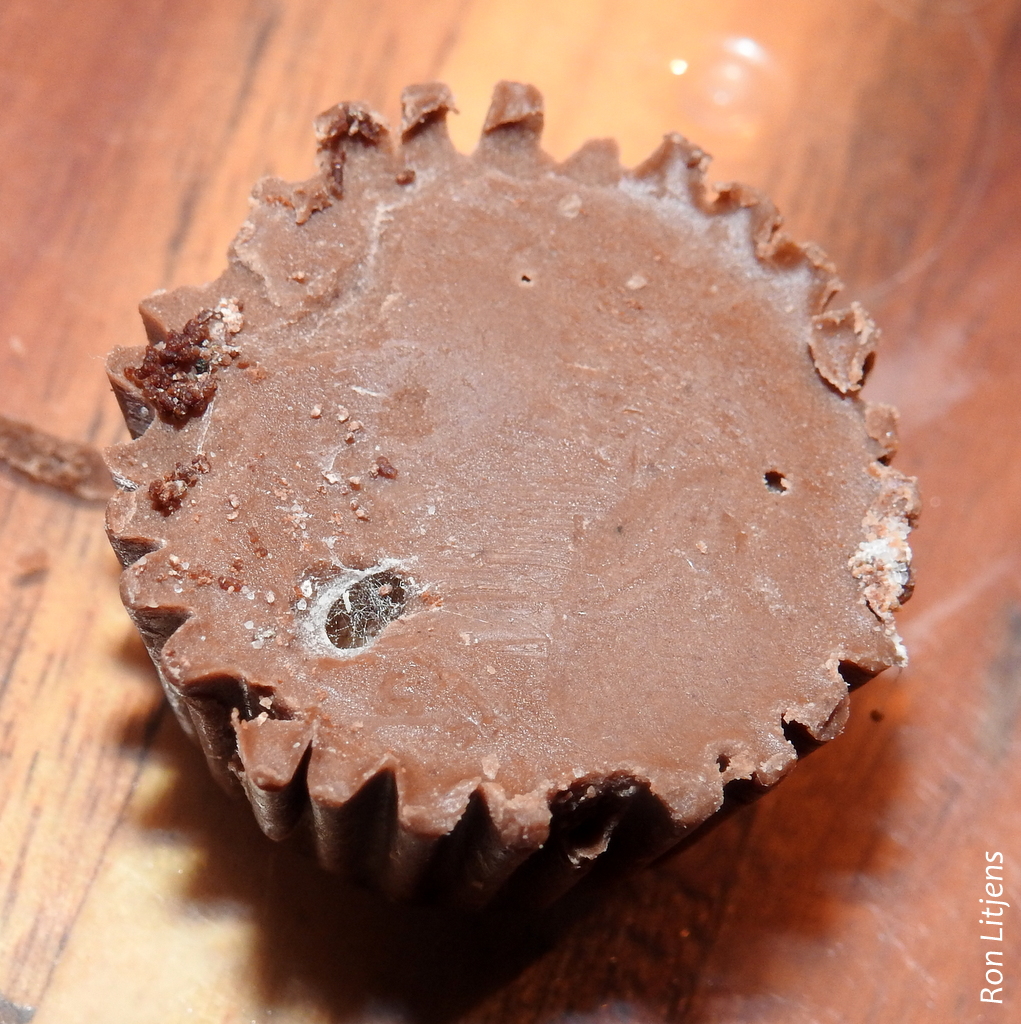
I love chocolates with a gooey centre. Caramello Bears and Turkish Delight immediately come to mind. But I was surprised by a filling I recently found in one of my treats. My latest fave when it comes to chocolates are those that contain a peanut butter centre (the brand name has been withheld for obvious reasons). These chocolates come in a waxed paper cup, individually wrapped in foil and then sealed in a plastic bag.
I noticed when unwrapping the foil of one that the confection had a hole in the top of the chocolate (pictured left) and that the hole appeared to contain a web. After carefully paring back layers of the sweet with a razor blade I came across a burrow in the peanut filling that contained a caterpillar, pictured below right. It emerged soon afterwards appearing none to please by the intrusion, pictured below left. Examination of the rest of the packet revealed that about 10% of the chocs had been similarly infested.

Google Lens identified the caterpillar as a Mediterranean Flour Moth larvae (Ephestia kuehniella) a pest of cereal grains and flour worldwide that has been introduced into Australia. Given that this grub was found in chocolate and not flour I suspect it is the larvae of one of the other moths of the Pyralidae family, all of whom look similar but infest different foodstuffs. To positively identify the culprit the only thing to do is to put the affected chocolates into a container, watch the lifecycle unfold and then identify the adult moth.

That is of course unless someone in the meantime finds the container and eats the contents. Love those gooey centres.
Watch this space.
That’s bad luck
Mayflies are of the order Ephemeroptera from the Greek words ephemeros meaning short-lived and pteron meaning wing. The short-lived refers to the life span of the adult insect. They belong to an old group of insects including dragonflies and damselflies that share the characteristic of not being able to fold their wings down along their backs.
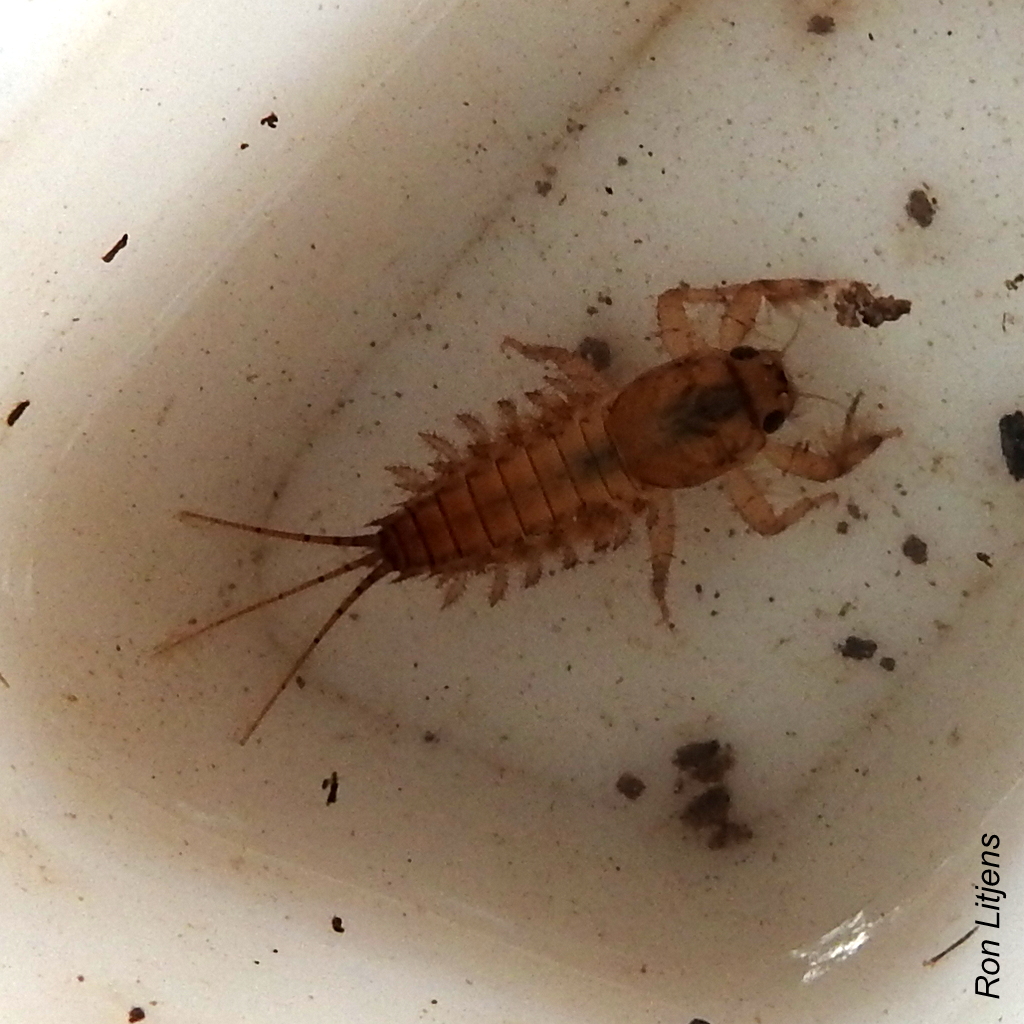
Like dragonflies and damselflies, mayflies spend the majority of their lifecycle as an aquatic nymph (pictured left). The nymph is characterised by having pairs of gills distributed along the abdomen and three tail filaments – a pair of cerci, usually containing sensory organs and a central terminal filament.
The nymphal form lives for years under water. It emerges from the water for the pentultimate moult producing a winged, sexually immature adult. This stage lasts minutes/hours before the final moult produces the sexually mature adult.
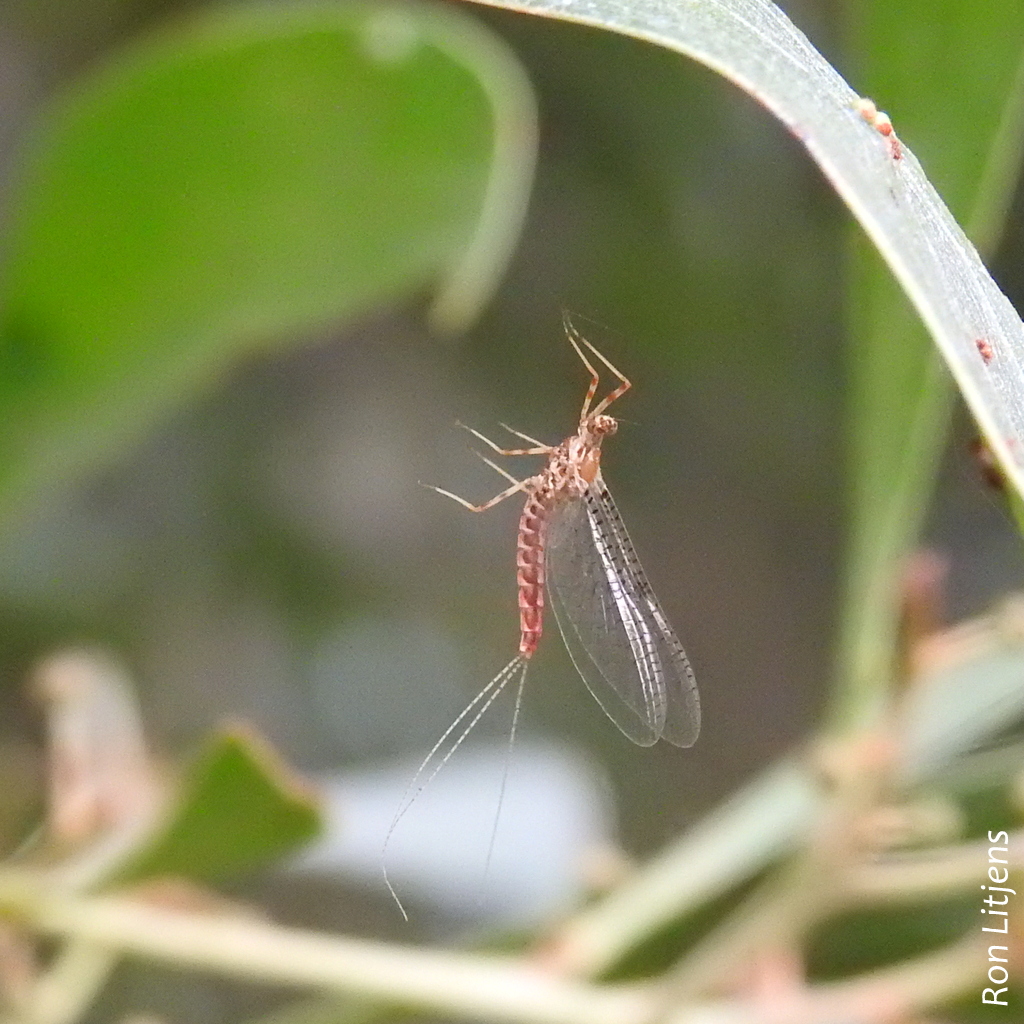
The sole purpose of the adult mayfly is to reproduce so much so that most do not eat and therefore have no mouthparts. The lifespan of the female mayfly is measured in minutes whilst the males may live up to two days. After mating the female mayfly deposits eggs in water and then dies.
With such a short lifespan it’s bad luck if your life is cut even shorter by being trapped in a spider’s web (pictured right).
No animals were hurt writing this blog. The spider had done its job before I got there.
Living alone
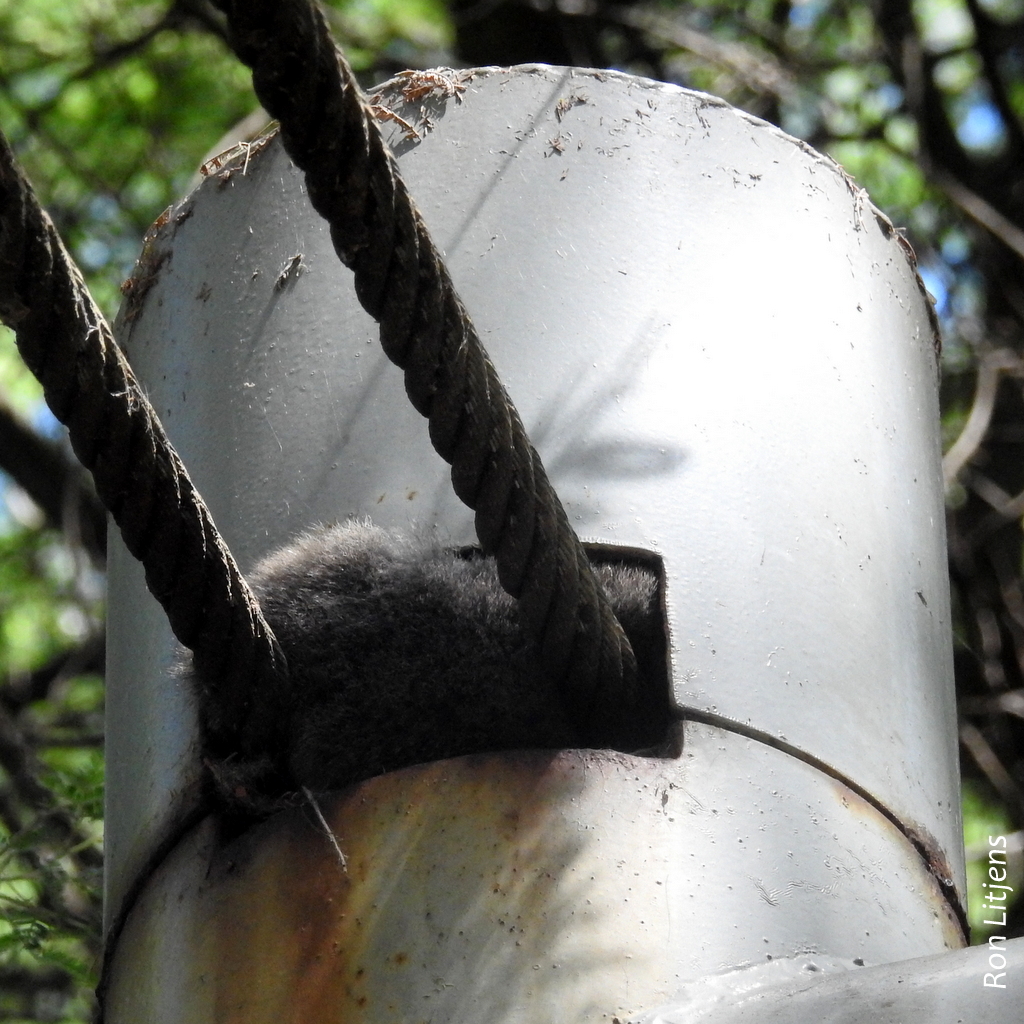
A recent blog described a drey – a bark, leaf and twig construction built by Ring-tailed Possums (Pseudocheirus peregrinus) to live in. ‘Ringies’, as they are affectionately known are gregarious, live in dreys in family groups of a male, several females and their young.
At some point in time the young leave the group to strike out on their own. Until they form a new family group and build their own drey young ringies will inhabit hollows – of any kind. Pictured left is a ringie that has taken up residence in one of the stanchions of a suspension bridge.
Living in a drey is but a pipe dream.
Dining with mates
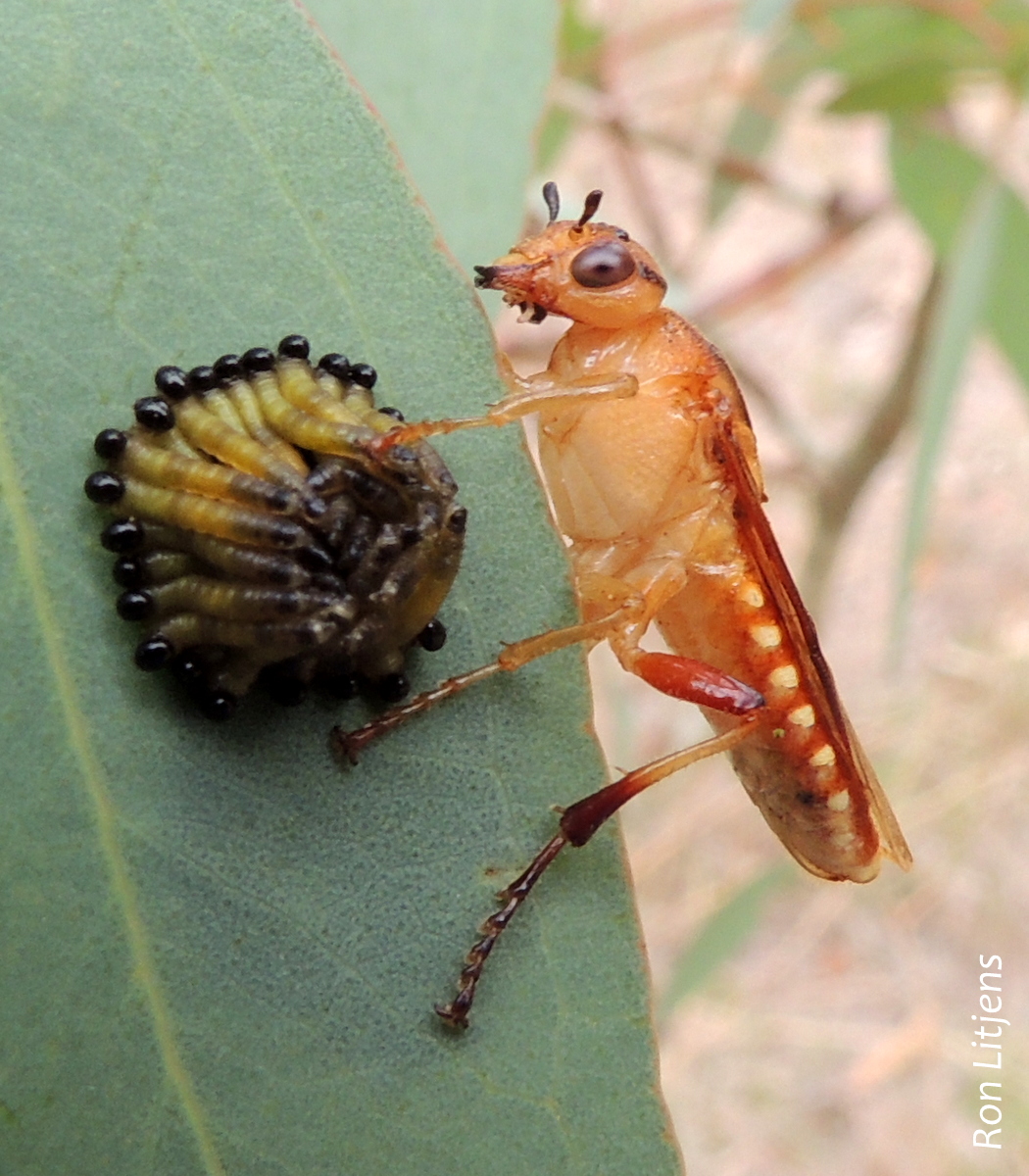
Sawflies have to be one of the least recognised insects, pictured left. They make up the order Hymenoptera along with bees, ants and wasps and are distinguished from the latter three by not having a thin waist between the thorax and the abdomen. From an evolutionary aspect sawflies are the ancestors of all the insects of the order Hymenoptera.
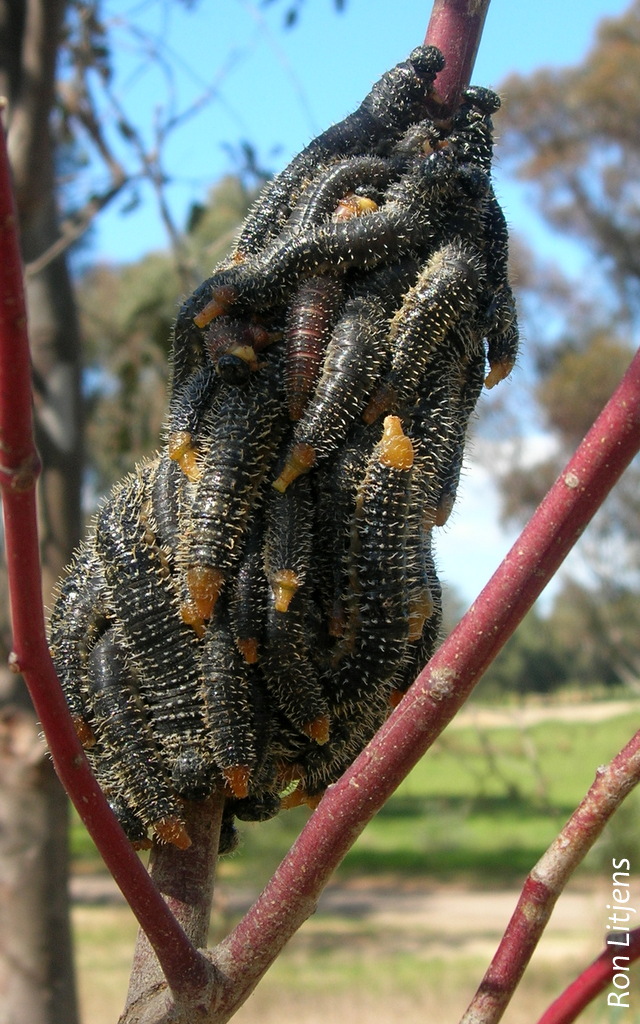
The life of an adult sawfly is short-lived, around about a week. This and the fact that they look very wasp-like means that people either do not see them or recognise them for what they are. People are however familiar with the larvae. As a kid I was equally fascinated and repulsed by what I called spitfires, pictured right. Sawfly larvae are leaf eaters extraordinaire. Certain species of sawfly larvae form large aggregations for protection and sometimes, particularly after storms these masses can get dislodged from trees and fall to the ground where the disturbed spitfire larvae regurgitate an irritant fluid to drive away predators. Sawfly larvae can do enormous damage to trees sometimes stripping entire forests causing stunted tree growth or in the worst case the death of trees.
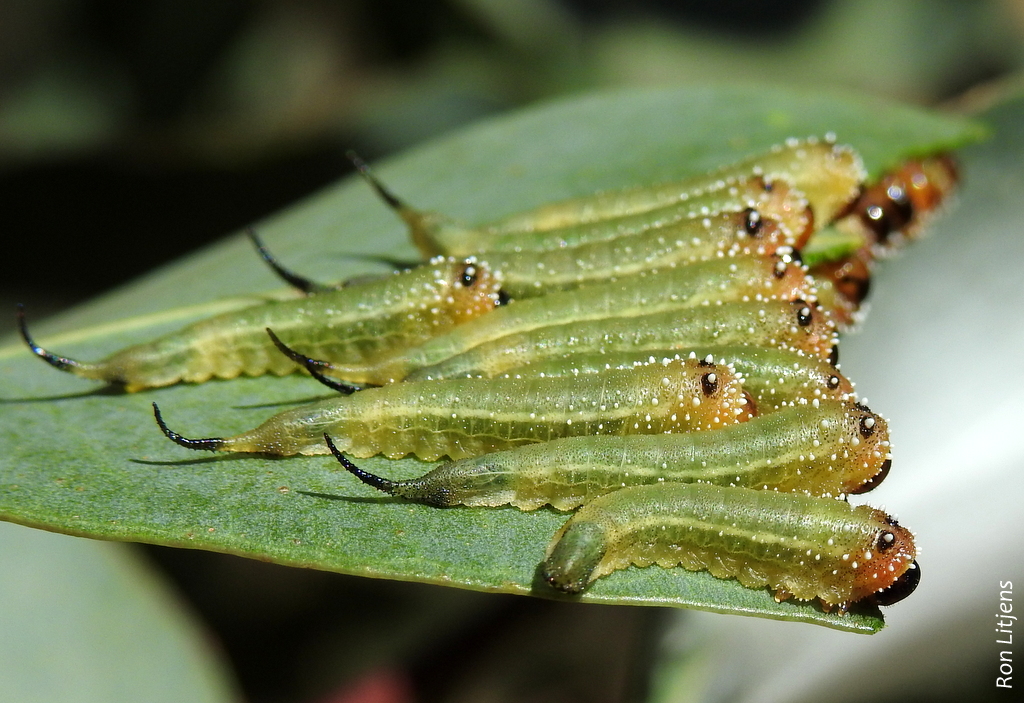
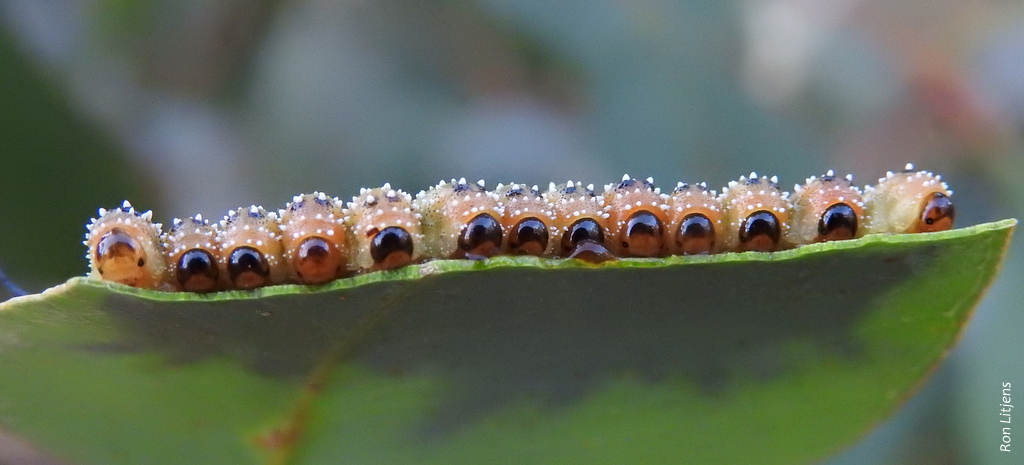
Larvae of the Green Long-tailed Sawfly (Lophyrotoma interrupta) have recently appeared on some of the eucalypt saplings on our property, pictured left. Unlike those pictured above they do not form large aggregations but they do like to eat together. They will line up next to each other on the edge of a leaf a systematically devour it, pictured below.
Pass the salt!



 Focus On Fauna