Woodswallows around
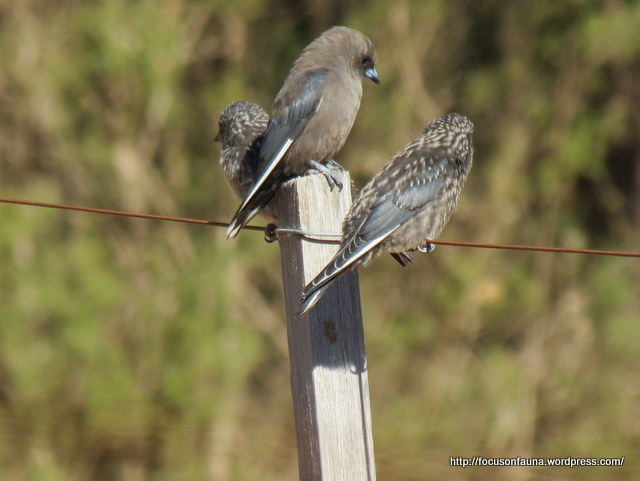
Adult and juvenile Dusky Woodswallows
Dusky Woodswallows have recently arrived back at our place near Strath Creek after a lengthy absence. The flock includes a number of streaked juvenile birds still being fed. They are a joy to watch with their aerobatics and their habit of snuggling up in groups when perching, often preening each other. Like most woodswallows, they are communal and gather together in clusters to roost at night along a branch or in large tree hollows.
The most nomadic of the woodswallows are the White-browed and Masked Woodswallows which may turn up in large numbers, often in mixed flocks – we had 30 or more White-browed Woodswallows lined up along our clothes-line one October day in 2002 – an impressive sight !
The white marking along the outer edge of the wing distinguishes the Dusky Woodswallow from all other woodswallows. Its calls can be heard by clicking on the arrow on the sound bar below.
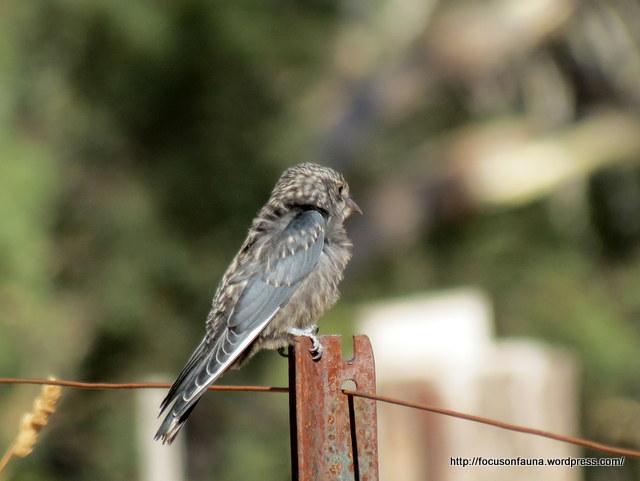
Young Dusky Woodswallow
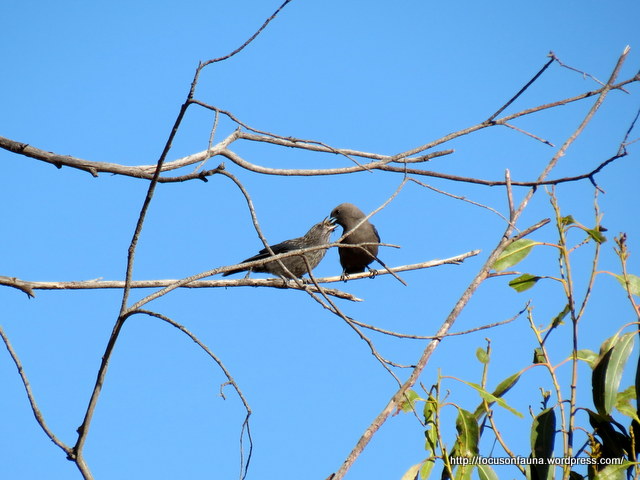
Feeding time

Part of the gang
Insect real estate listings
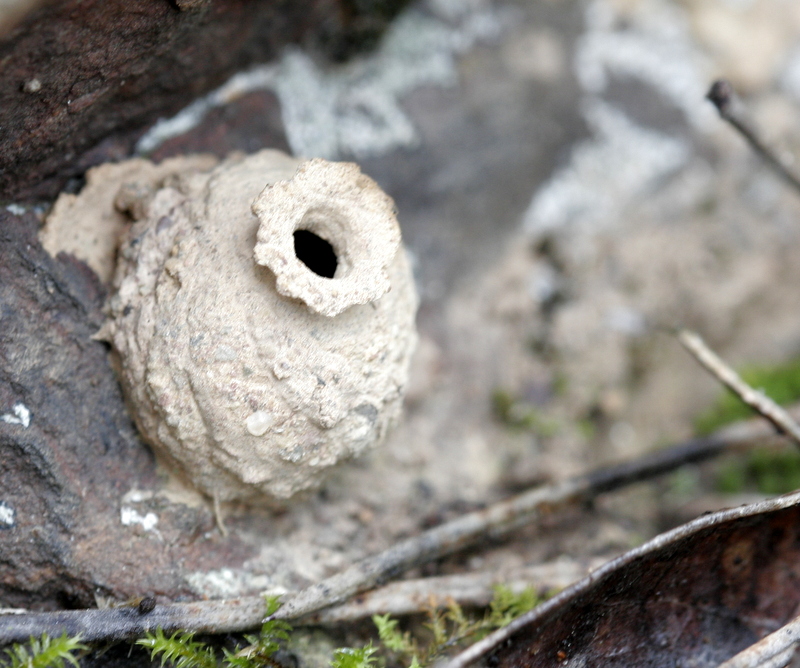
Unique design
Original muddie
You’ll go potty for this original mud-brick dwelling under a sturdy overhang. The owner-builder, a single-parent Potter Wasp (family Vespidae, sub-family Eumeninae), has built this dwelling using local materials, i.e. mud and regurgitated water. The dwelling has only been used as a storage space for paralysed insects and subsequently as an only-child nursery. If you are looking for a distinctive property in a protected location, this one is for you. Go on, you’ve urned it.
.
Timber craftmanship
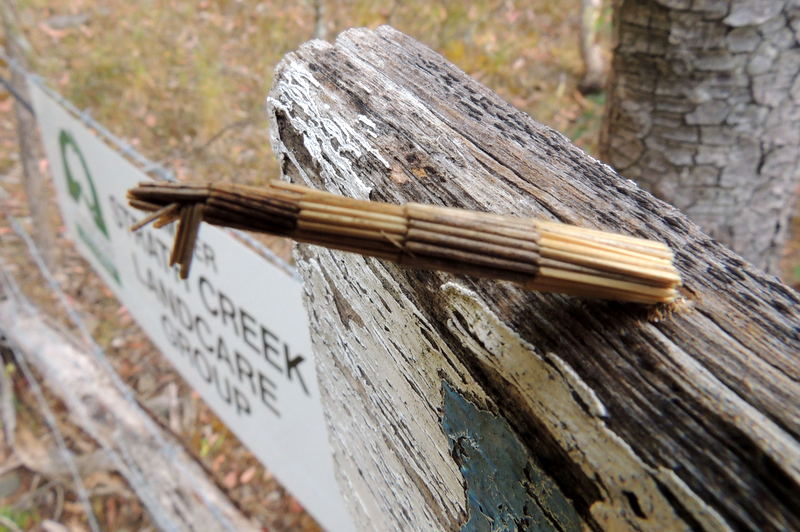
Log cabin in original condition
Attractively situated on a driveway gate-post the residence has commanding 360-degree views over the surrounding area (but no windows). This cosy one-roomed dwelling is the perfect place for a romantic getaway with your larva. Currently tenanted by a member of the Lepidoptera family, this home is expected to become vacant in early spring.
.
Wide entrance hall!
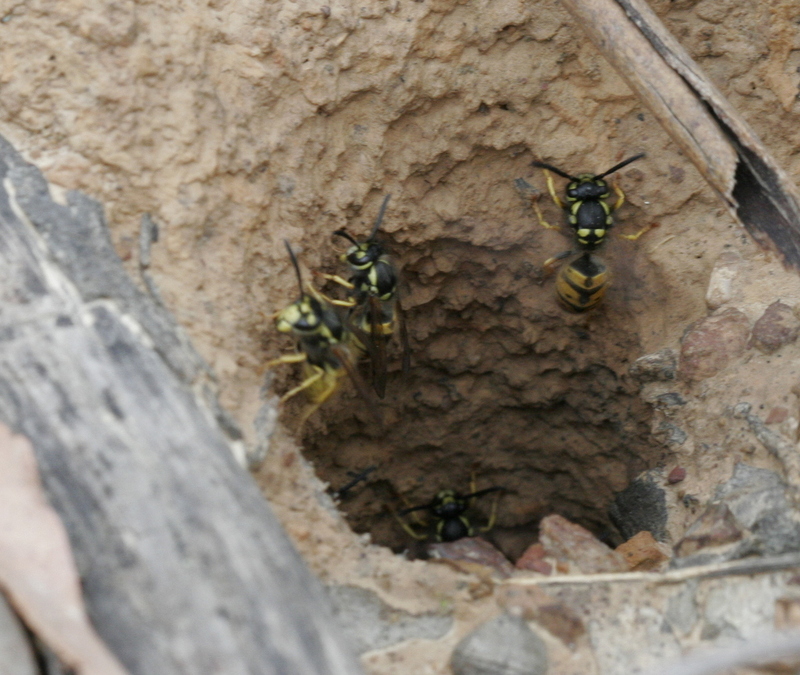
Fit for a queen
Fancy a below-ground pool? This residence has below-ground everything and room to house the entire extended family. Features include saliva and chewed plant fibre wall linings, extra large larder for storing caterpillars and an extended nursery big enough to hold 1000s. Current tenants, the European Wasp (Vespula germanica), are leaving in the winter. And there are no noisy neighbours to worry about either. They have all been eaten.
A sad sight
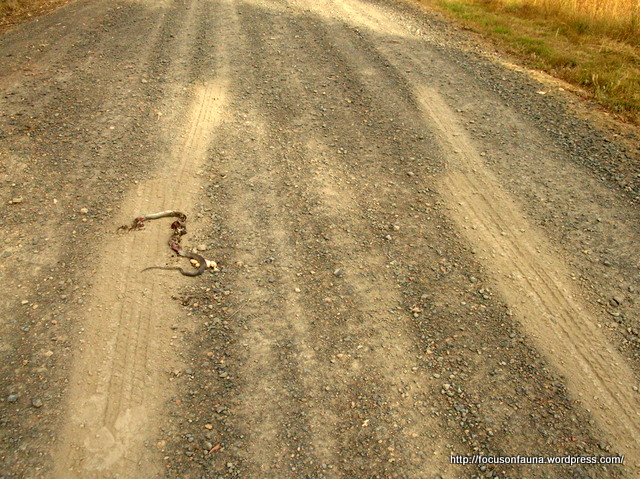 A car skidding to a halt, rapidly reversing and roaring off on the dirt road right outside our place alerted us to the likelihood of a snake being run over. Sure enough, on inspection we found a mangled Common (or Eastern) Brown Snake (Pseudonaja textilis), complete with 8 undamaged eggs. The Common Brown Snake is oviporous and can lay up to 35 eggs with an average clutch of about 15. It got us pondering some questions: are all the eggs formed at once with a single fertilisation, or over a longer period with multiple fertilisations, or can the female snake retain sperm for fertilisation at an appropriate time? – any answers or comments would be appreciated.

If this snake kill was deliberate, it is not only senseless, but also illegal, as snakes are protected under the Wildlife Act – we wonder if the driver is aware of this (or even cares!). But perhaps we should be generous and assume the snake was accidentally run over and the driver reversed to put the injured animal out of its misery.
Here’s looking (& looking, & looking) at you, kid
The shriek from downstairs could mean only one of two things. Either I had accidentally mixed the coloureds with the whites (again!) or there was a spider nearby. The subsequent calls for help suggested the latter. And there it was. A 173-centimetre person standing on a chair bailed up by an equally frightened one-centimetre spider.
The spider was a Wolf Spider (Family Lycosidae). Wolf Spiders live in most places on the globe, especially in our downstairs studio. They are agile hunters with excellent eyesight. In fact they have eight eyes in three rows –four small eyes, above which sit two larger eyes with two medium-sized eyes above that (see image). At night Wolf Spiders are easy to locate with a torch. The ‘eye-shine’ (light reflected back from the eyes) on some nights makes our driveway look as if it is scattered with diamonds.
Because I have been threatened with physical violence if I publish a spider photo on this blog by several members of the community I have discreetly embedded the image in a video. If you wish to view a face only a mother (or an optometrist) could love, click on the video below.
At the time of going to press, another of our eight legged, hairy brethren turned up at the Three Sisters. It looked like a Victorian Funnel-web Spider (Hadronyche modesta), a far less poisonous relative of the Sydney Funnel-web Spider. It is lucky that it did not turn up in our studio. There would not have been an intact pane of glass in the valley. Its image has been added to the video clip (which may take a few moments to load).
Summer daze
Dig those funky pyjamas
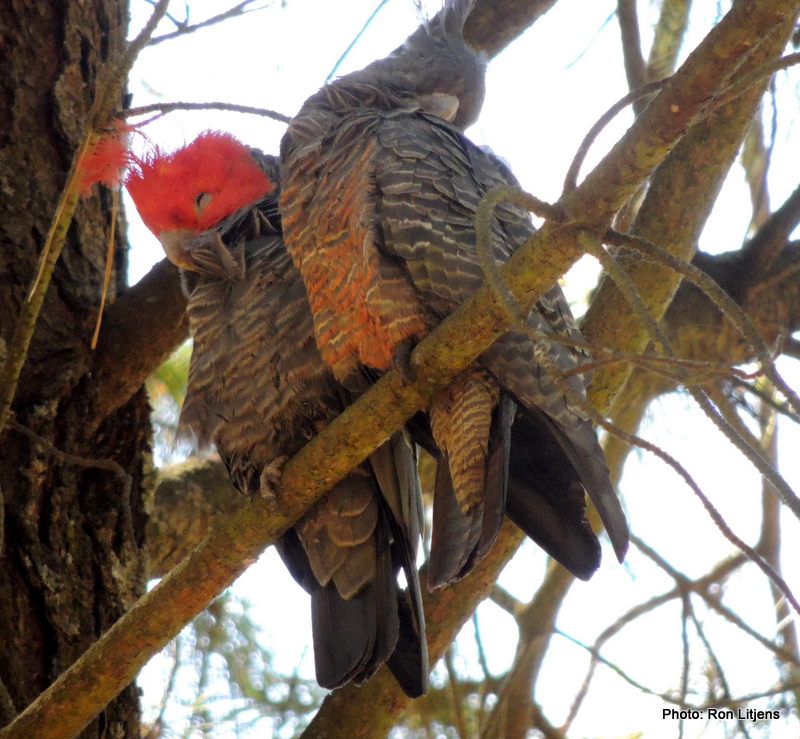
The cicadas are singing, the stomach is full of wattle seeds and there’s a balmy breeze blowing. What is a bird supposed to do in the summer heat? Take a siesta of course. Seen recently was a pair of Gang-gang Cockatoos (Callocephalon fimbriatum) having a snooze in the arvo.
And to think I thought the female (seated right) was a boring grey colour!
Another new arrival !
A couple of weeks ago we noticed our resident Common Wombat (Vombatus ursinus), who regularly wanders around during the day, was looking distinctly bulgy! We are fairly sure this is the same wombat that we photographed in June 2011 (click HERE to see previous post), and on closer inspection it was clear that another new arrival was almost ready to enter the wider world. The pictures tell the story.


Thirsty weather – cont.
Our ground dwelling birds and mammals also appreciate us putting water out for them during this hot weather, as seen in these photos at a bird bath at my Kinglake West property.

Echidna at bird bath
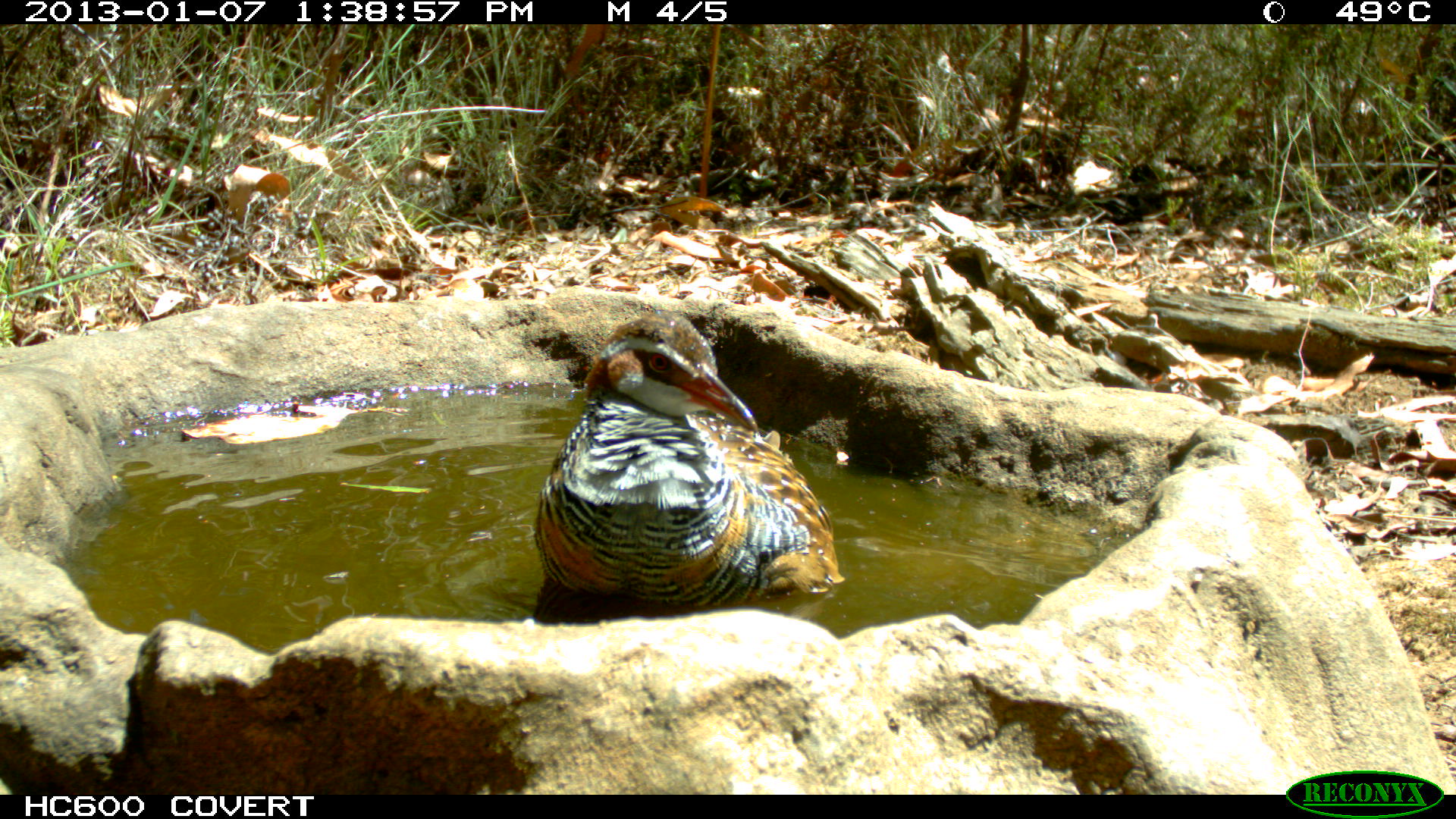
Buff-banded Rail at bird bath
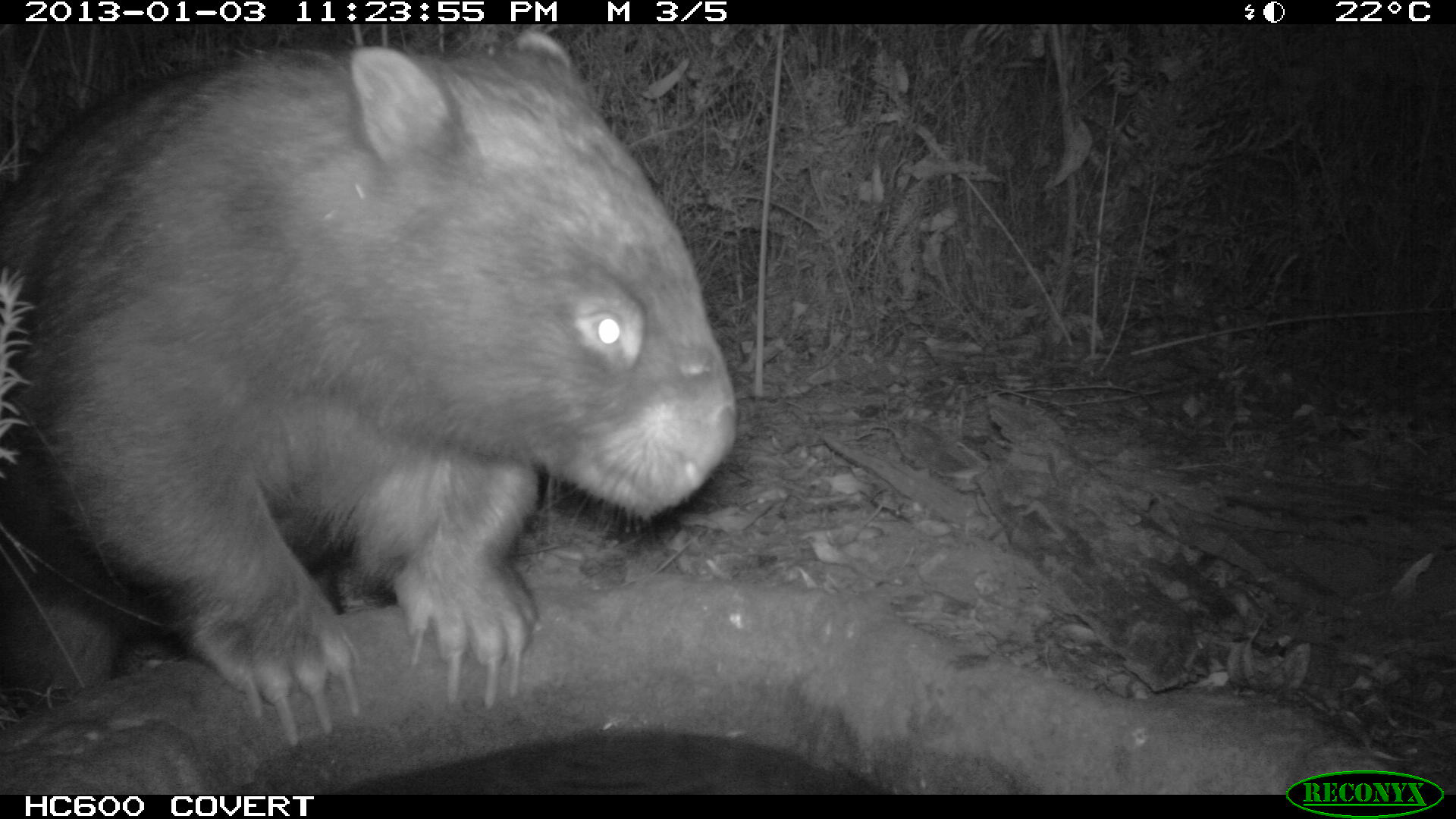
Wombat at bird bath
Chris Cobern
Landcare Coordinator
Upper Goulburn Landcare Network
Robber flies 4, Other species nil

Starters – Beetle Brioche
Following on from a recent post (click HERE to view) describing the gruesome eating habits of Robber flies (family Asilidae) I have noticed many of these creatures flying around laden with their meals.
Robber flies capture their meals while in flight, then pierce their bodies and inject them with saliva. The saliva has the effect of first paralysing the victim then liquefying its insides. This ‘insect thickshake’ is then sucked out.
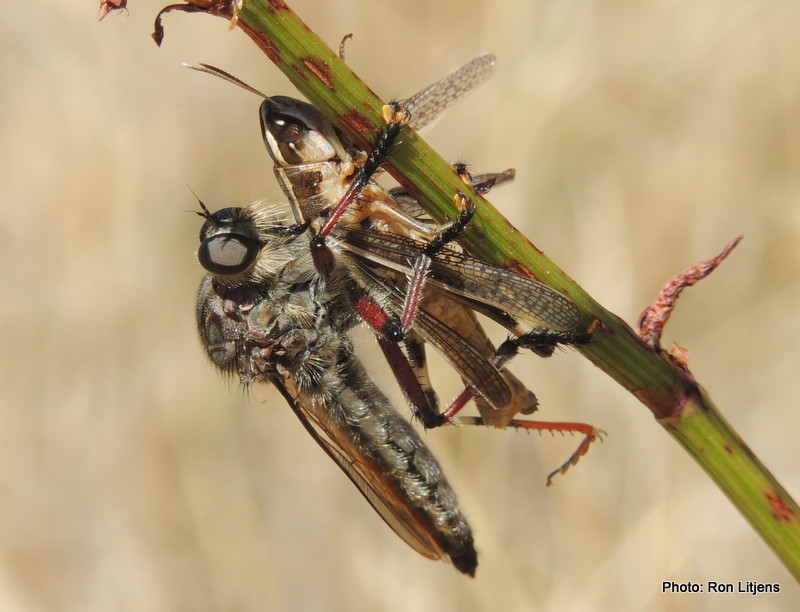
Entree – Grasshopper Gratin
Although hard to get close to when feeding (they are very protective about their dinners) here are a few pictures of robber flies dining out.

Dessert – Cicada Slurpee

Mains – Fly Fricassee
Thirsty weather !
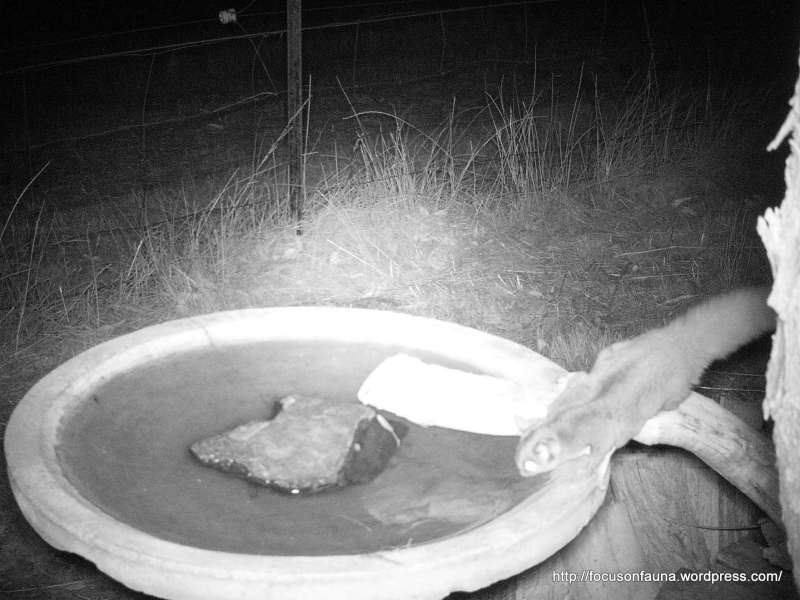 We have heard it said that Sugar Gliders (Petaurus breviceps) get enough moisture from their food supply (invertebrates, acacia gum, eucalypt sap, nectar and pollen) and don’t need to drink. Well, we’ve recently recorded on remote camera a Sugar Glider visiting one of our bird-baths every night for almost two weeks, sometimes twice in a night, and several shots clearly show the glider drinking. With the extreme heat we’ve been experiencing lately that’s probably not surprising, but even after the occasional cooler day the glider still came for a drink.
Another welcome return visitor to the bird-bath is a Brush-tailed Phascogale (Phascogale tapoatafa) which can be seen in the slide show below. Also recorded at the bird-bath were two unidentified bats and a variety of birds including an Olive-backed Oriole (Oriolus sagittatus), a bird often heard in the warmer months but less often seen. To hear its call click on the sound icon below the slide show.
The heron, the tortoise – another Aesop’s fable?
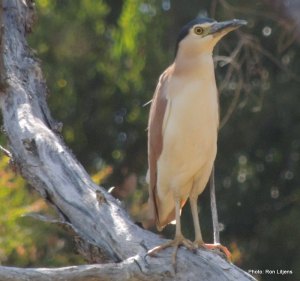
Nature is full of surprises. After nearly a decade of fauna spotting on our property we had concluded that our list of (large) fauna was complete. Then last week two more species visited.
Sitting on the edge of our dam, probably reducing the populations of other fauna like frogs and fish, was a Nankeen Night Heron (Nycticorax calendonius). It’s a bit of a misnomer as it wasn’t night, but the chest was definitely nankeen coloured (nankeen is the name of a pale yellow cotton cloth originally produced in Nanjing, China). Almost undiscernible behind its back are the tips of three white plumes that extend from the back of the head. These indicate the bird is breeding.

The other addition to our list was casually paddling its way around our dam. My guess is that it’s a Common Long-necked Turtle (Chelodina longicolis). I am no expert in identifying these creatures. I do know that examining the sutures on the shell will tell you the species. Even though I asked nicely, this turtle was in no mood to show me its sutures or anything else and quickly disappeared under the water once it was aware of my presence. It was probably doing what we have all been told from a very early age … never talk to strangers (just like our parents tortoise!).




 Focus On Fauna