Birds do it, bees do it…
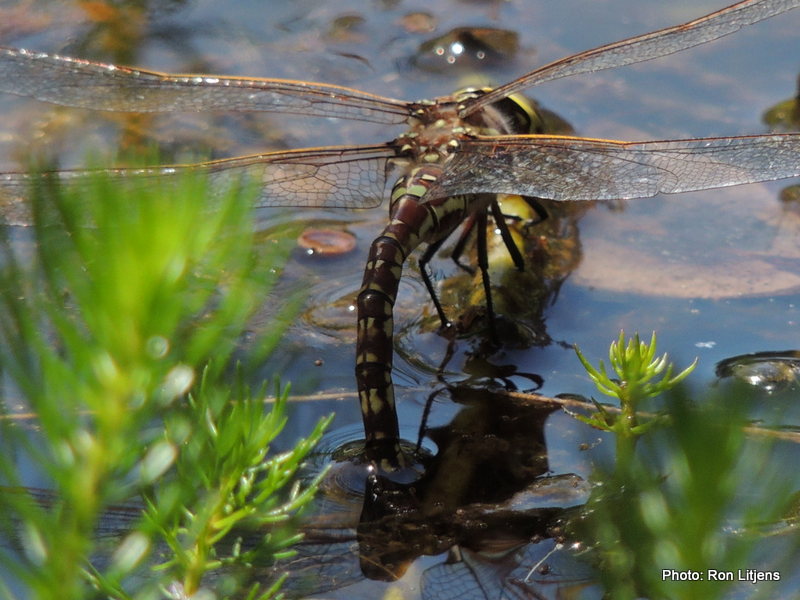
Blue Spotted Hawker dragonfly
Even dragonflies and damselflies do it. At the moment the air-space above our dam is more crowded than over Heathrow. The air is alive with dragonflies and damselflies and mating is the name of the game.
Highly territorial, the males can be seen patrolling their part of the dam driving off intruding males and courting females at the same time. During mating the male grasps the female behind the neck using appendages on the end of his abdomen. The female in turn curls her abdomen under the male to receive the sperm, which fertilises the eggs. The eggs are then laid on submerged plants. Sometimes this is done while the male and female are still in tandem. The hatched nymphs remain underwater where they moult many times before crawling out on a reed and emerging as adults.
Pictured (above) is a female Blue-spotted Hawker (Aeshna brevistyla) dragonfly laying eggs on a submerged plant. Similarly (pictured below) are a blue male and a grey female Wandering Ringtail (Austrolestes leda) damselfly laying eggs ‘in tandem’.
It’s all so dam interesting.
(Species names are advisory only!)

Wandering Ringtail damselflies
Striped Legless Lizard at Strath Creek – yes!
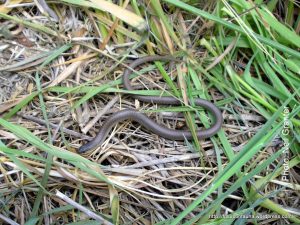
- Legless lizard, but what sort?

In a previous post on the discovery of a rare lizard near Broadford, we mentioned that Kay had turned up a small snake-like lizard earlier this year at her and Neil’s Strath Creek property while planting trees. The lizard squeaked when disturbed, a sure indication it was a species of legless lizard. Following Kay’s discovery, we laid down roof tiles as artificial shelter at the site, which is generally lacking fallen timber and loose surface rocks where lizards can hide. Roof tiles laid in a standardised grid pattern have proved successful as a survey and research tool, but we only had a few tiles laid randomly.
Periodic monitoring of the tiles over the past few months had only turned up an occasional small skink until the other day, when we lifted a tile to reveal a legless lizard, to the delight of Neil and young son William. But which species was it ?
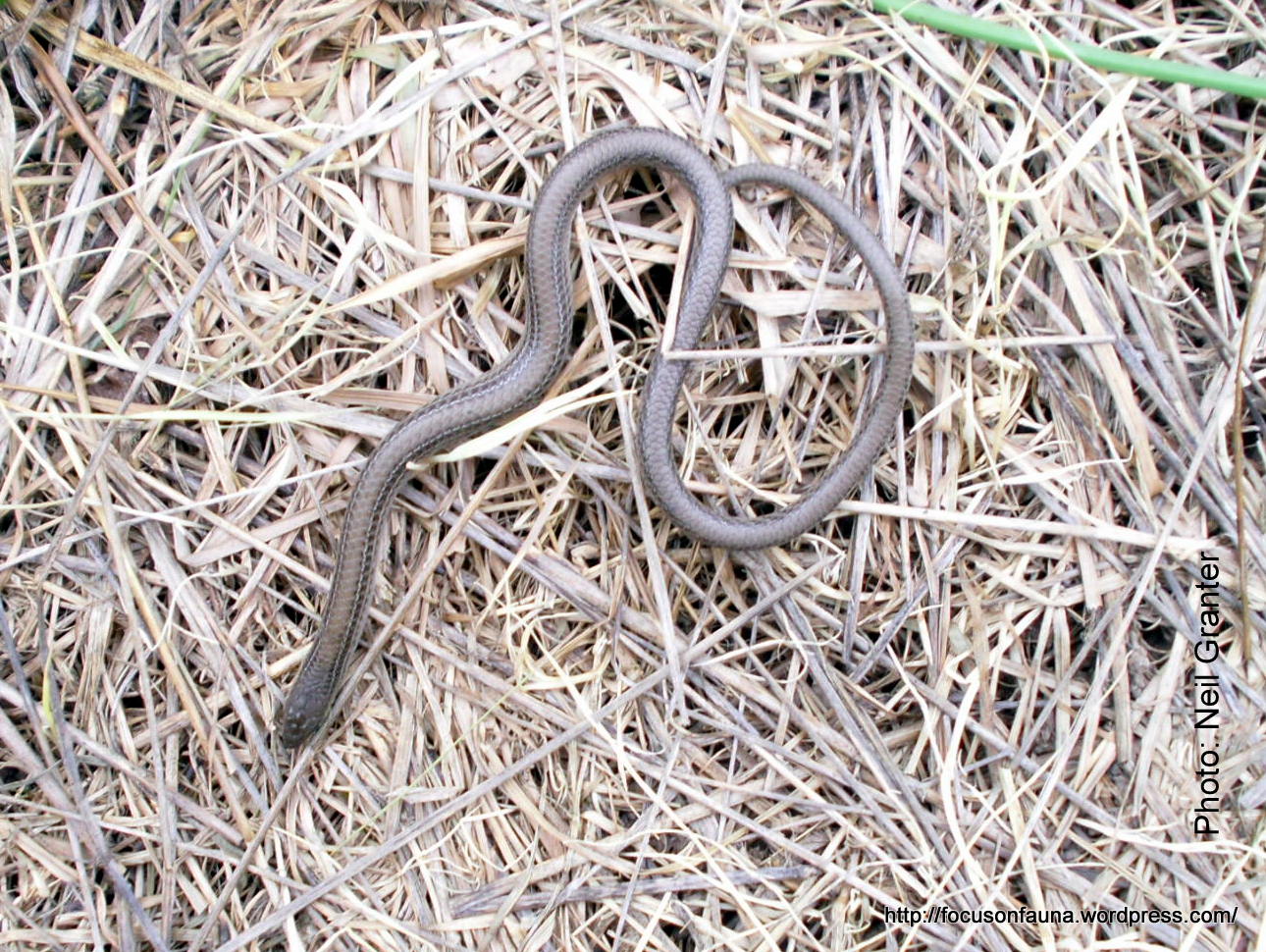
Although there are 35 species of legless lizard found in Australia and Papua New Guinea, in this district there are only two likely candidates: the Striped Legless Lizard (Delma impar), found in native grasslands, and the more common Olive Legless Lizard (Delma inornata) which lacks stripes, is a bit larger than the SLL, and is usually found in woodlands. Identification is made more difficult by the fact that some SLLs have only very faint stripes, and Bertram Lobert, coordinator of the Upper Goulburn Striped Legless Lizard Project, was unable to make a positive id from Neil’s photo above.

- Almost!
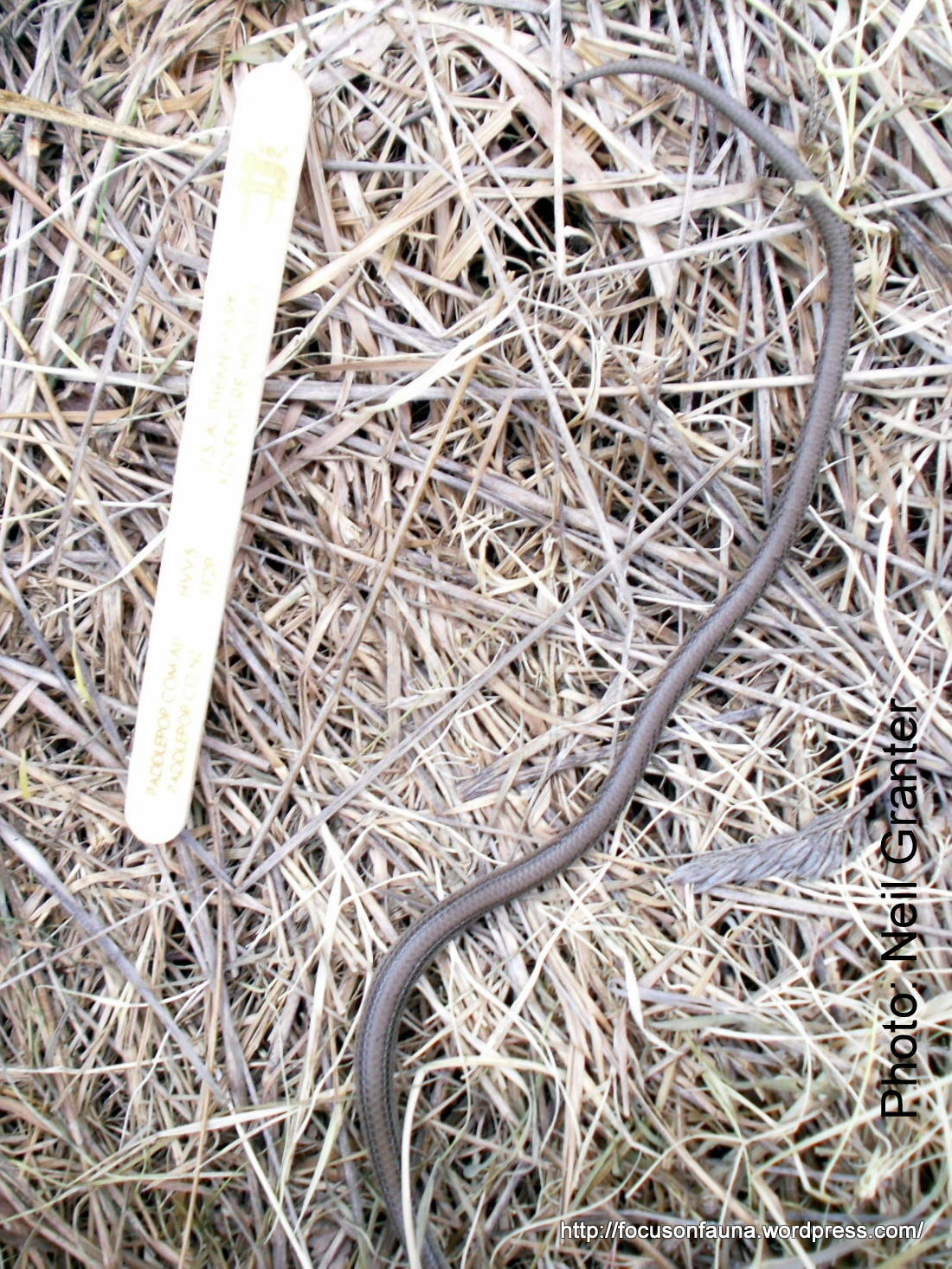
However, a few days later, Neil turned up not one but two legless lizards, one of which darted away, leaving Neil with a headless (as well as legless) lizard in his photo. But the other was clearly striped (see photo below) and was unmistakably a Striped Legless Lizard, as confirmed by Bertram.
So, Kay and Neil (and the kids) can now proudly boast of the first confirmed sighting of the threatened species in Strath Creek. As Kay remarked, ‘It’s lucky I didn’t squash the first one I found!’. And it’s lucky for us she reported it to Focus on Fauna.
If you’d like more information on this threatened species in the catchment, visit Striped Legless Lizards in the Goulburn Broken.

- Bingo! – a clearly striped SLL
Buxton wetland fauna survey
The UGLN fire recovery fauna project has now extended into the Buxton area.
We recently installed our remote sensor cameras at the property of Buxton residents Anthony and Tracy who have a wonderful wetland area on their farm.
The wetland was fenced off a couple of years ago with the assistance of funding provided by the DPI.
The area has regenerated well since the fires and is providing great habitat already to many birds.
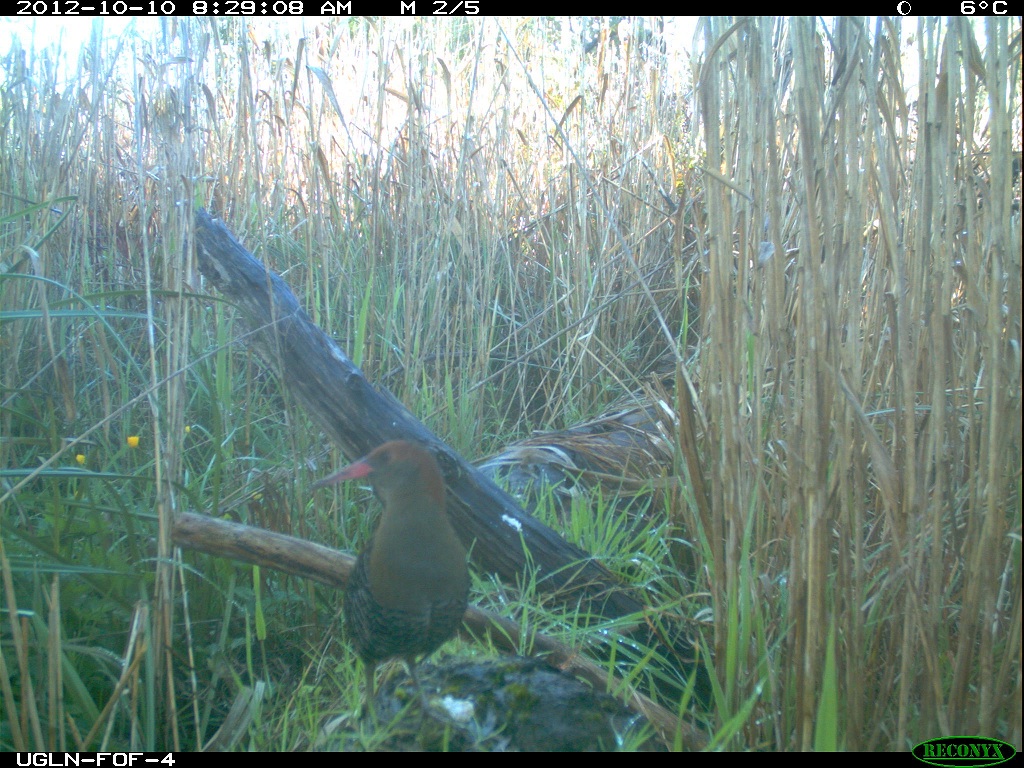
Lewin’s Rail at Buxton
Anthony had recently found a road-kill Long-nosed Bandicoot on the adjacent roadside and I found what appeared to be Long-nosed Bandicoot diggings around the wetland.
Unfortunately we weren’t able to get any photo’s of bandicoots. We were lucky enough however to capture photographs of the threatened Lewin’s Rail (Lewinia pectoralis) and also a pair of the more common Buff-banded Rail (Gallirallus philippensis).
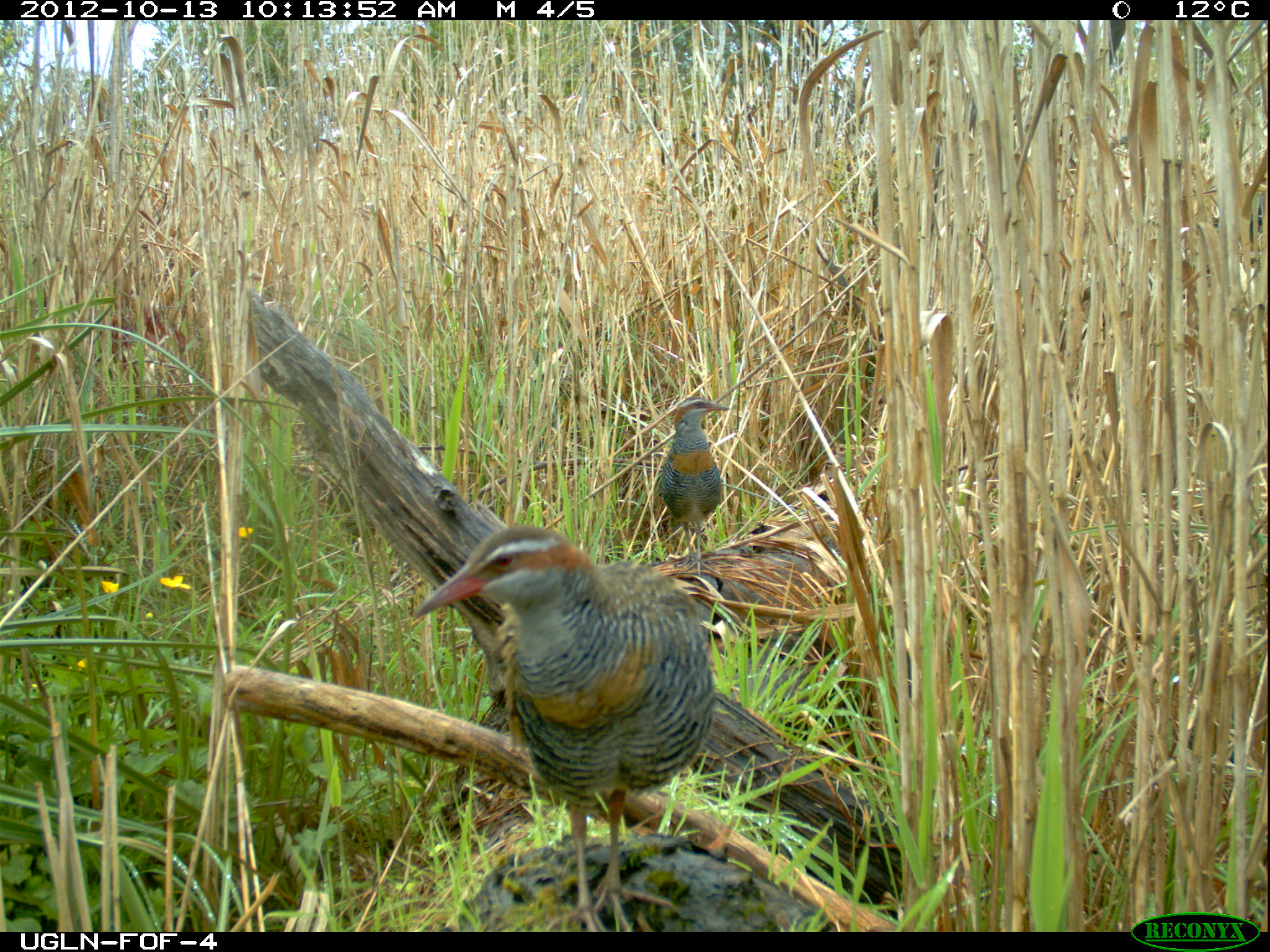
Pair of Buff-banded Rail
As well as many native Bush Rats (Rattus fuscipes) and a wombat. We also installed six nest boxes built by the Kinglake Scouts and Rotary on the surrounding Swamp Gums. The boxes are designed for Sugar Gliders and Brush-tailed Phascogales.
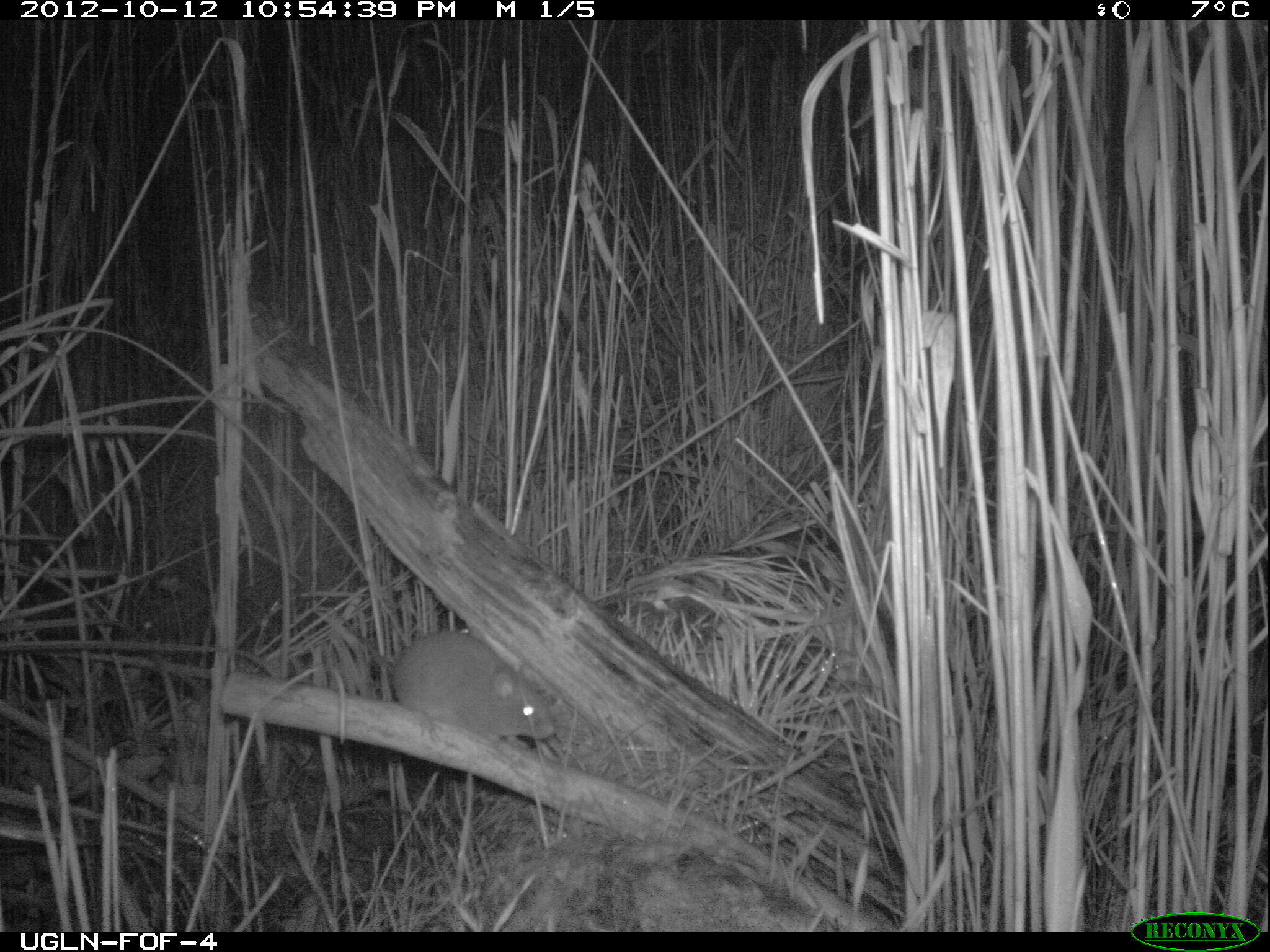
The native Bush Rat
Chris Cobern
Fire Recovery Landcare Coordinator
Upper Goulburn Landcare Network
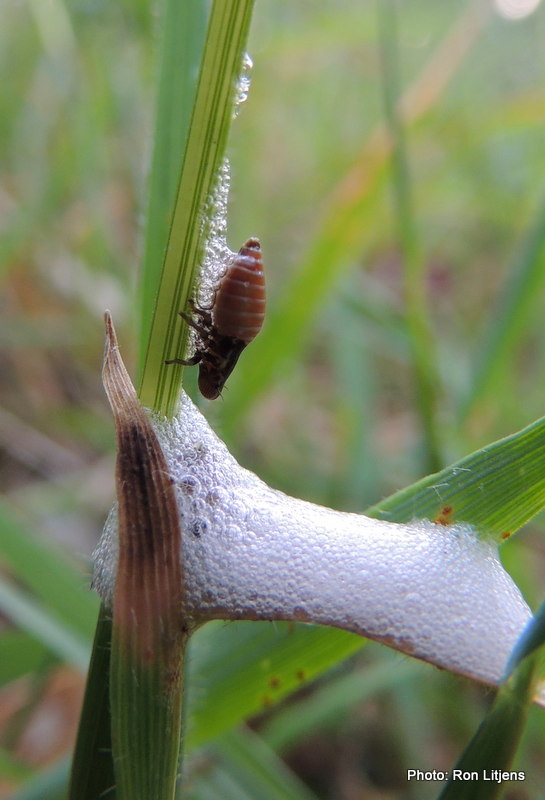
I know what you are thinking …

… but I didn’t do it. The blob of foam pictured hanging from the grass stem hides a spittlebug (Aphrophoridae). Spittlebugs are closely related to leafhoppers and feed by piercing plant walls and sucking out the sap. The foam is excreted by the insect and, mixed with air bubbles, creates a moist environment in which to live, and at the same time provides a place to hide from predators. Pictured is the spittlebug nymph that was hiding in the foam.
Whipbirds at Flowerdale
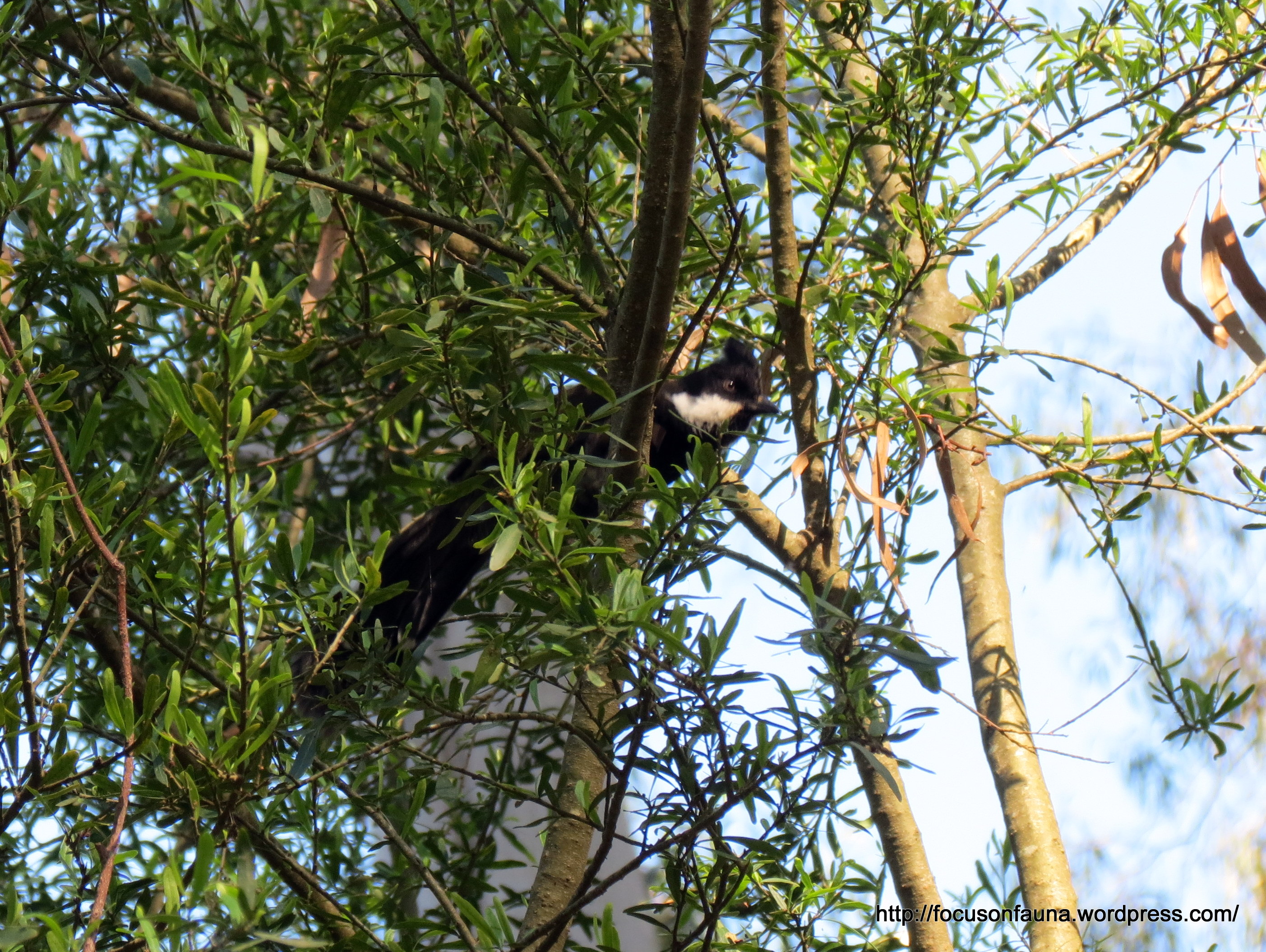
Eastern Whipbird
For some years now, Eastern Whipbirds have been heard regularly in the streamside reserve at Coonans Bridge on the King Parrot Creek at Flowerdale. They are quite shy and elusive, but are also curious, so with patience you may get a glimpse of these distinctive birds, and even a quick snap as we did recently. Its crest, white cheek/throat patch and long tail are features to look for.
The reserve, with its dense undergrowth and abundant leaf litter and fallen branches from the towering Manna Gums, is ideal habitat for the ground-foraging whipbirds. Despite having fire close on both sides, the reserve was fortunately spared in the Black Saturday fires, and quickly became a refuge for surviving wildlife.
The value of this reserve will be enhanced by the establishment of a continuous link to the Mt. Disappointment State Forest through a wide protected vegetation corridor proposed as part of the Strath Creek Biodiversity Project (click for a link to the project website.)
We’ve managed to record several calls of the whipbird. Click on the icon below to hear firstly the male’s resounding whip-crack call, then the male with the female’s immediate response, and lastly the strange clucking and scolding calls that the birds make at times.
More on bandicoots

Long-nosed Bandicoot
After an alarming spate of road-deaths of Long-nosed Bandicoots (Perameles nasuta) earlier this year (click on Look out for bandicoots! to see a previous post), the Murrindindi Shire Council Environment Officer issued an information package to landholders in the area to raise awareness of these native marsupials and to try to reduce clearing of bandicoot habitat. An article was also placed in local publications.
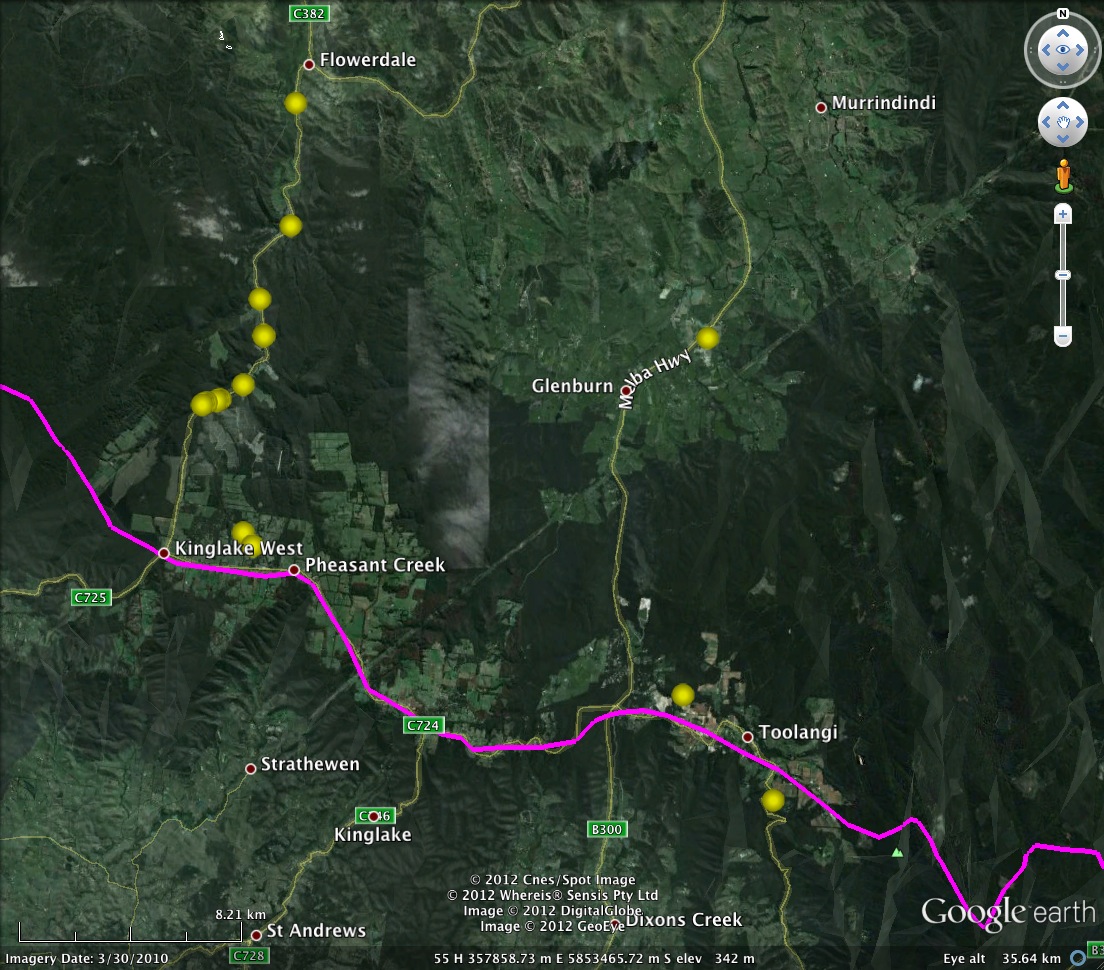
Yellow dots show locations of 15 Long-nosed Bandicoot records from 2011-12 (10 deceased, 5 living), within the UGLN’s Fire Recovery Project area.
Since then, Chris Cobern, the Landcare Fire Recovery Coordinator, has received a number of reports of bandicoot sightings or evidence of their foraging – conical holes dug by the bandicoot’s forelegs and investigated by its long snout. It’s encouraging that these reports cover quite a wide area, from Flowerdale to Kinglake Ranges, Toolangi and Glenburn – click on map for a closer look.
The bandicoots seem to have had a good breeding year. Their numbers can potentially build up rapidly since they have a very short gestation of about 12 days (one of the shortest gestations of any mammal), reach maturity at an early age, and can produce litters in quick succession.
Our remote cameras have recorded this elusive animal at Flowerdale in the video clip shown below.
Chough update
The White-winged Chough chicks featured in the post What’s for dinner? on 6th October left the nest more than a week ago and the three of them are alive and well and keeping at least 7 adults busy feeding and protecting them.

First day out of the nest
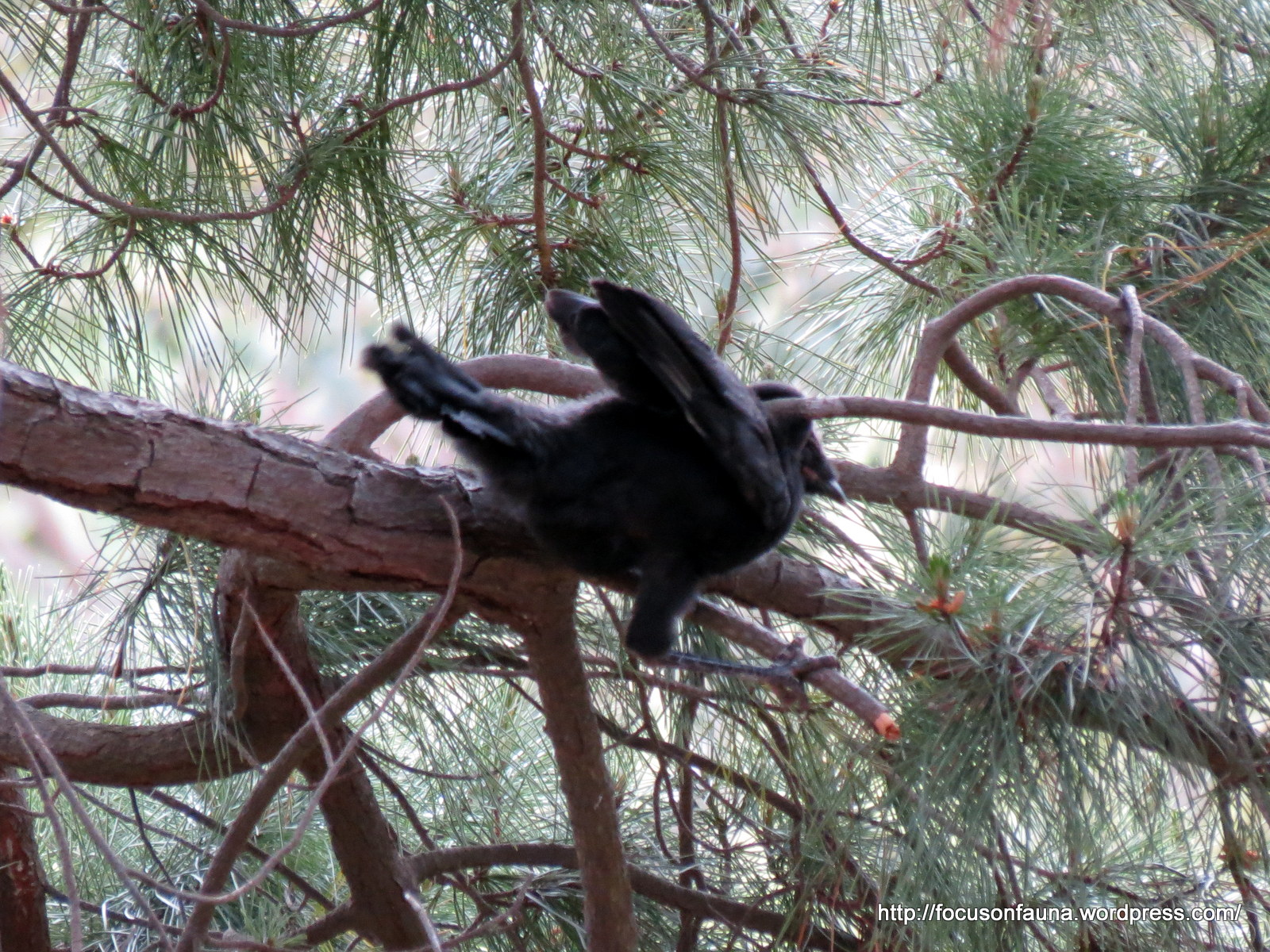
Still a bit clumsy!

Snappy hairstyle!
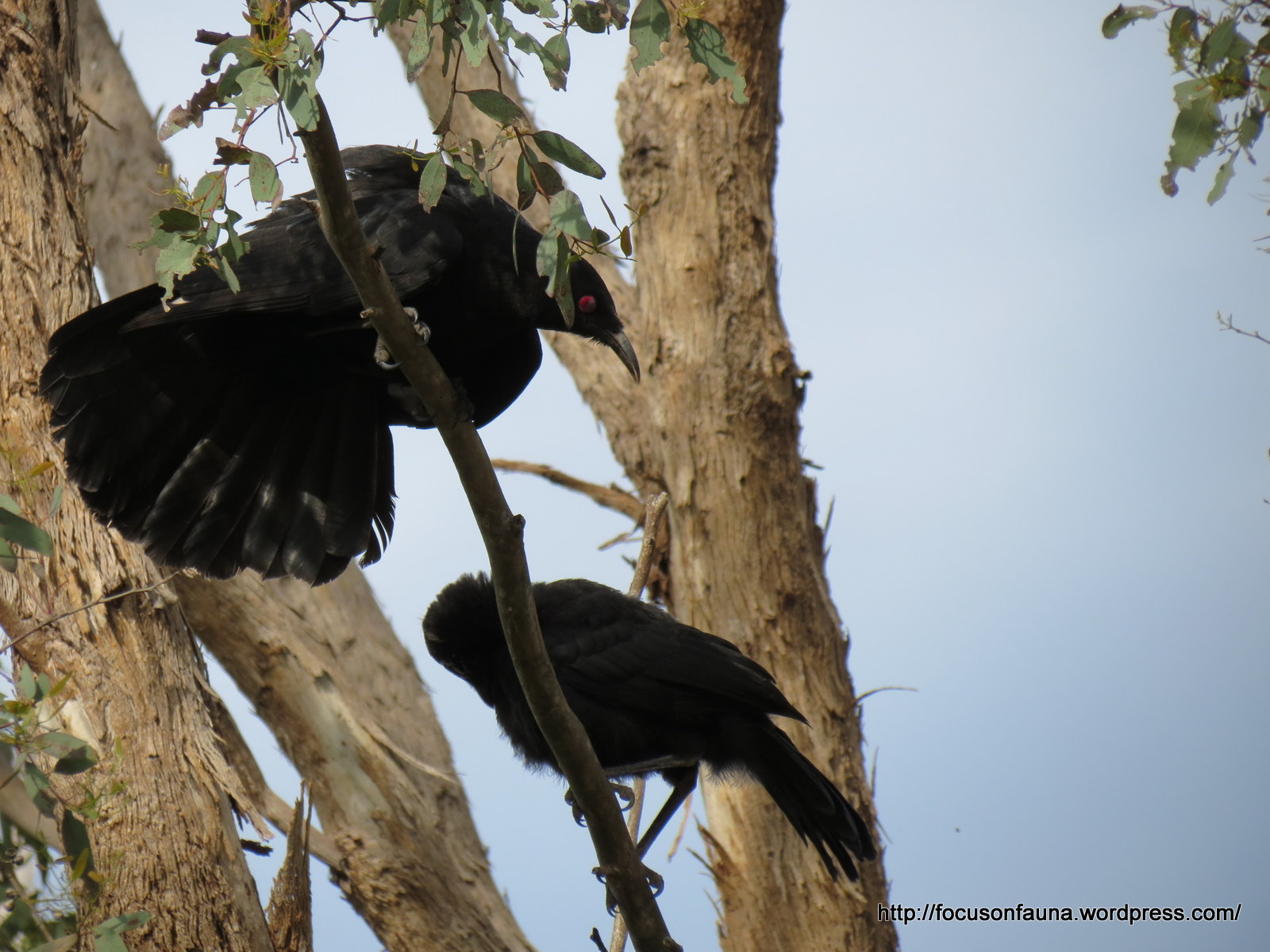
Youngster with protective adult
Bird Week coming up
Next week BirdLife Australia celebrates National Bird Week (click to see details) with the aim of inspiring people to get actively involved in bird conservation. This year the focus is on nesting birds, their requirements and their different nesting styles – an appropriate theme for this time of year.
A few examples from our property are shown here.
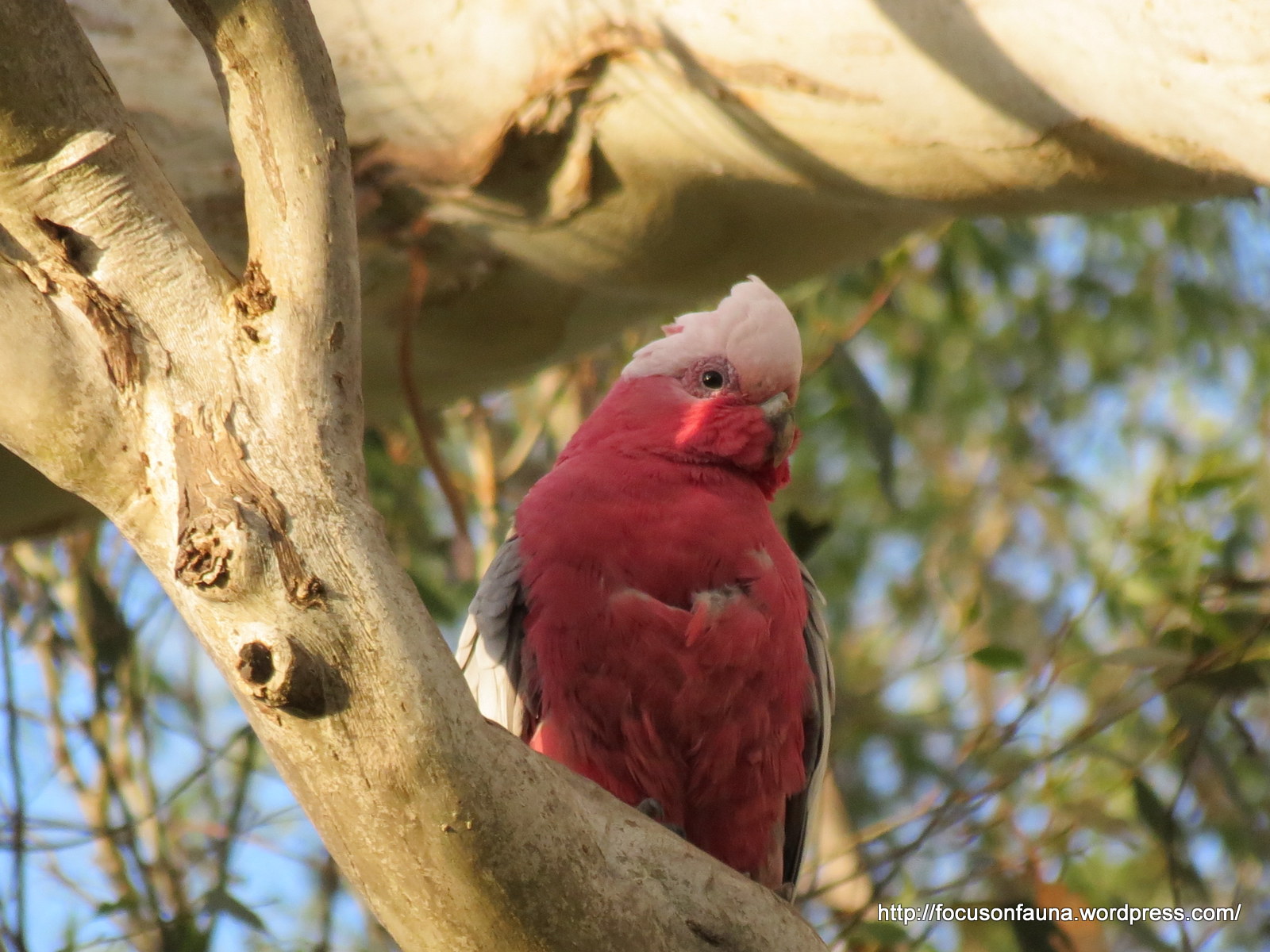
Tree hollows are particularly important for a range of birds, and farm sheds can make a secure weather-proof site for an opportunist!

Galah nesting in Yellow Box tree on roadside
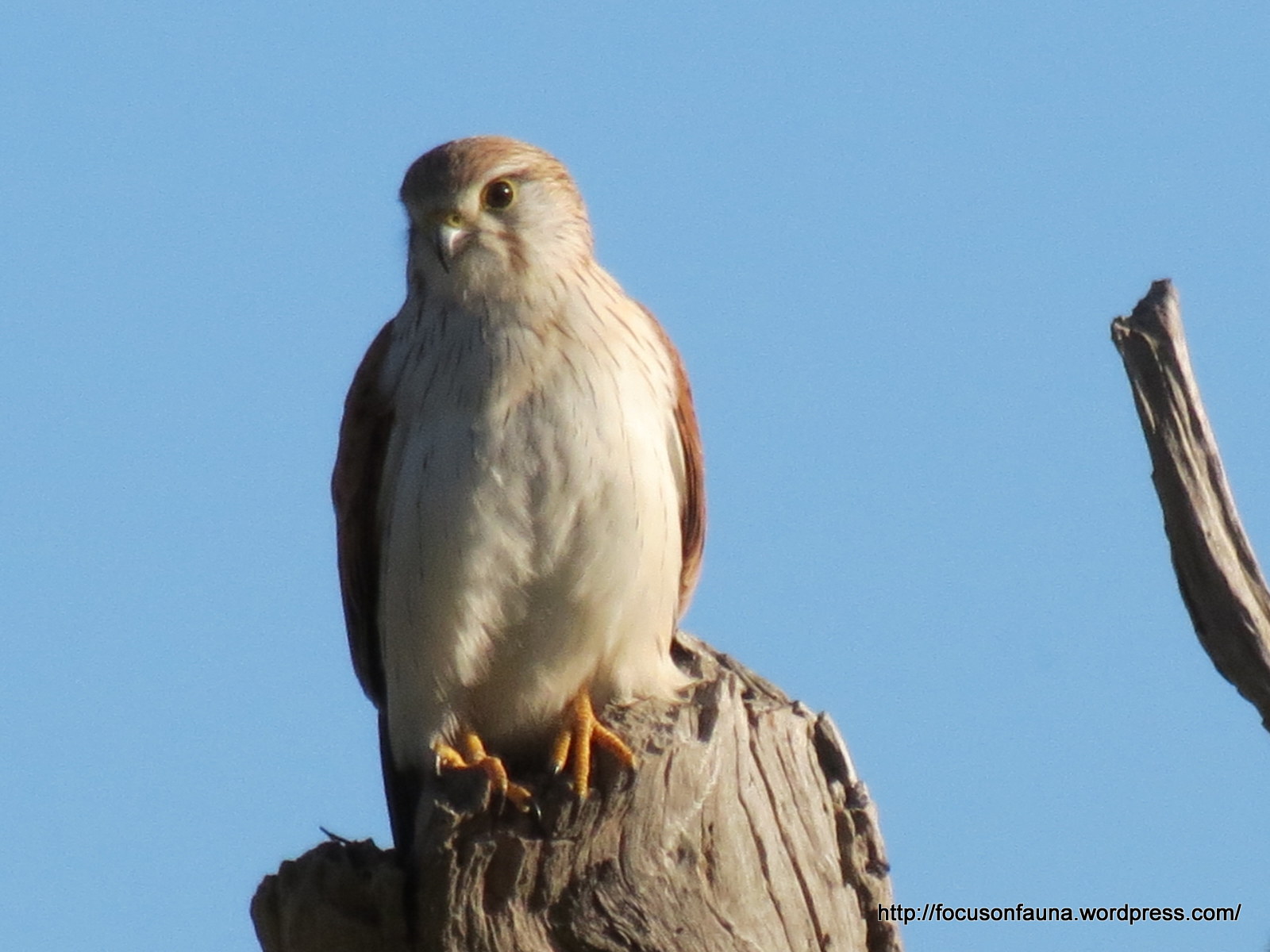
Nankeen Kestrel checking out the suitability of a dead Red Stringybark paddock tree


Grey Shrike-thrush nestled snugly in the corner of the shed

Spring – footy finals, bird’s nests, spitfires!
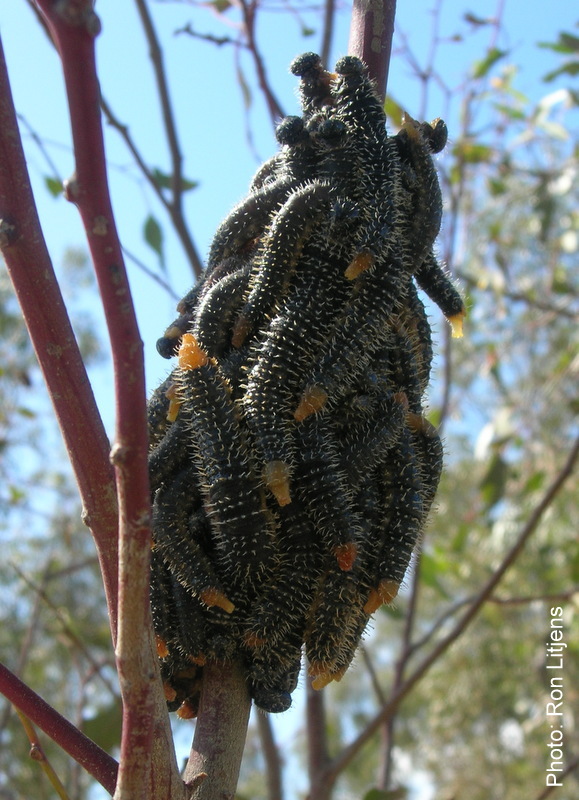
You know spring is in the air when the footy finals have started, the birds are in a nesting frenzy and Spitfires make an appearance. Spitfires are the larvae of Sawflies (Perga sp.) a common but rarely seen relative of the wasp. The term sawfly relates to the saw-shaped egg laying device on the female wasp who lays eggs in eucalyptus leaves. When hatched the larvae congregate in large groups on the branches of trees and feed on the leaves. They store eucalyptus oil in their gut and regurgitate it if disturbed, hence the term spitfire. The larvae burrow into the ground to pupate in summer and the adults emerge in autumn to continue the cycle.
Pictured are the recently seen larvae of the Steel-blue Sawfly (Perga dorsalis).
Flora & Fauna of ‘Hidden Valley’

Sticky Everlasting (Xerochrysum viscosum)
‘Hidden Valley’ (not a proper name) is at the back of the Three Sisters, off Moore’s Rd in Flowerdale and is one of the project sites of the new Strath Creek Biodiversity Project. A short survey, visiting the properties of Hubbard and Watson, was organized to gain some understanding of the flora and fauna of the area.
The morning dawned cool and overcast, but the previous day’s rain had gone. Though six of us set out on the walk, two had other duties and only joined us for the first leg. Four of us then spent about three hours traipsing up and down rather steep slopes recording the plants and animals of the area, with some surprising results. Read more…