No nest-box needed !


We first heard this Striated Pardalote calling somewhere in a large Yellow Box tree in our front garden. Upon investigation, we saw it popping in and out of a hole at the end of a cut branch (see arrow on photo at left).
The Striated Pardalote builds a cup-shaped nest at the end of either a tree hollow or, like the Spotted Pardalote, a burrow in an earth bank.
We have since seen what is probably the male sitting on the branch, and announcing the coming breeding season with its loud chip-chip song, which you can hear by clicking on the icon below. The Striated Pardalote also has a contact call consisting of a soft trill.
Strippers in Flowerdale
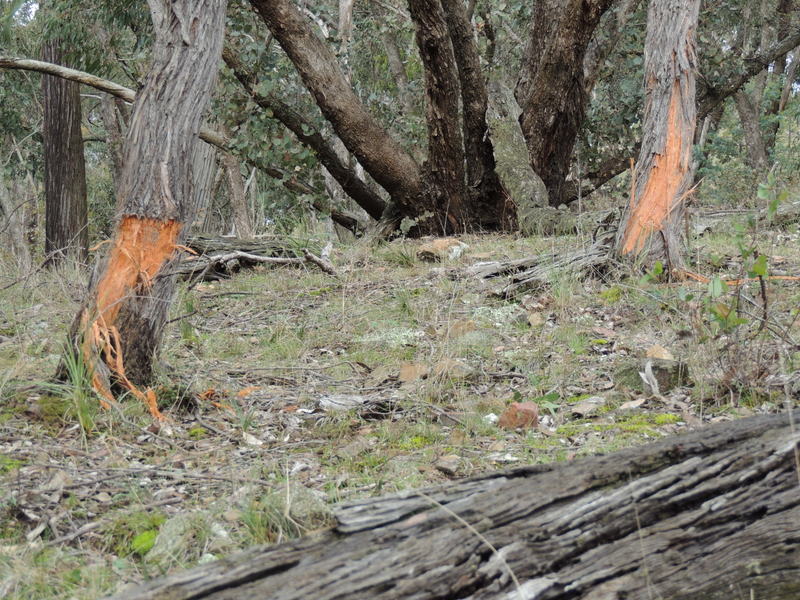 Recently there has been a lot of stripping going on just outside Flowerdale … bark stripping that is. Young trees, particularly Red Stringybarks (Eucalyptus macrorhyncha) are having bark removed from them about a metre off the ground. Remote cameras have failed to capture the culprits. The most likely suspects are Sambar deer (Rusa unicolor), Eastern Grey Kangaroos (Macropus giganteus) or Swamp Wallabies (Wallabia bicolor). All are notorious bark strippers.
The reasons for this behaviour are as varied as the suspects – range marking, adding fibre to the diet in the absence of dry grass, or adding salt and minerals to a meal.
We will now focus a remote camera on the electricity pole on our property. Everyone knows that where there’s stripping, there is bound to be pole dancing.
Have to get a picture of a Swampy doing that!
More reptiles
 We had rather unexciting results recently with a remote camera in a bush remnant on Kay and Neil’s property at Strath Creek , only recording a Black Rat, a wombat and a few kangaroos. However, this Marbled Gecko (Christinus marmoratus), discovered by Neil a few days later, was a nice little surprise.
This small lizard (approx. 70mm long, snout-vent) is quite common across southern Australia and is even seen regularly in suburban Melbourne. It is usually nocturnal and mainly arboreal, but also likes to hang around fallen timber and woodpiles, searching for spiders, insects and other invertebrates.

While sorting through photos sent in by members of the local community, we came across this lovely picture of a Jacky Lizard (Amphibolurus muricatus) sent in by Ron from Flowerdale some time ago.
This well-camouflaged lizard (120mm s-v) is active during the day (but perhaps not too active at this time of year !) and like the gecko, it benefits from leaving fallen timber.
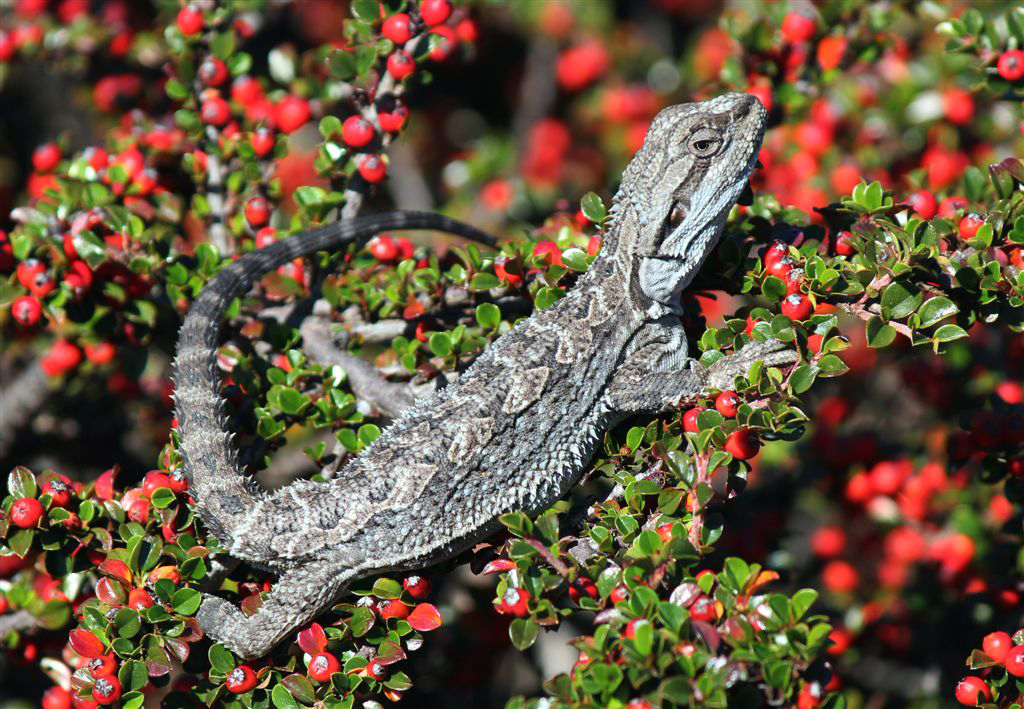
And another reptile picture was just received from Rutherglen. Can anyone confirm that this is also a Jacky Lizard despite the different markings?
There’s my inner tube
 I use old bicycle inner tubes to tie plants against stakes because they provide a flexible support that allows the plant to grow and does little damage to the bark. Also, I have a lot of them. Walking on a slope at Flowerdale on a gloomy, overcast, 7-degree-C August day I noticed an inner tube lying on the ground. In the time it took me to move forward to pick it up, I realised that inner tubes don’t have tread or a pretty red stripe underneath. What I was trying to recover was a Red-bellied Black Snake (Pseudechis porphyriacus). It’s a tough snake to be out ‘sunning’ itself in these conditions. Maybe we should name a subspecies to reflect this ………. P.p. flowerdalii or maybe even P.p.king-gee-ii.
Sugar Glider portrait
Another fantastic photo from Flowerdale for the Focus on Fauna folio! – this one of a Sugar Glider (Petaurus breviceps) from Trent and Vikki who have been keen participants in the FoF project.
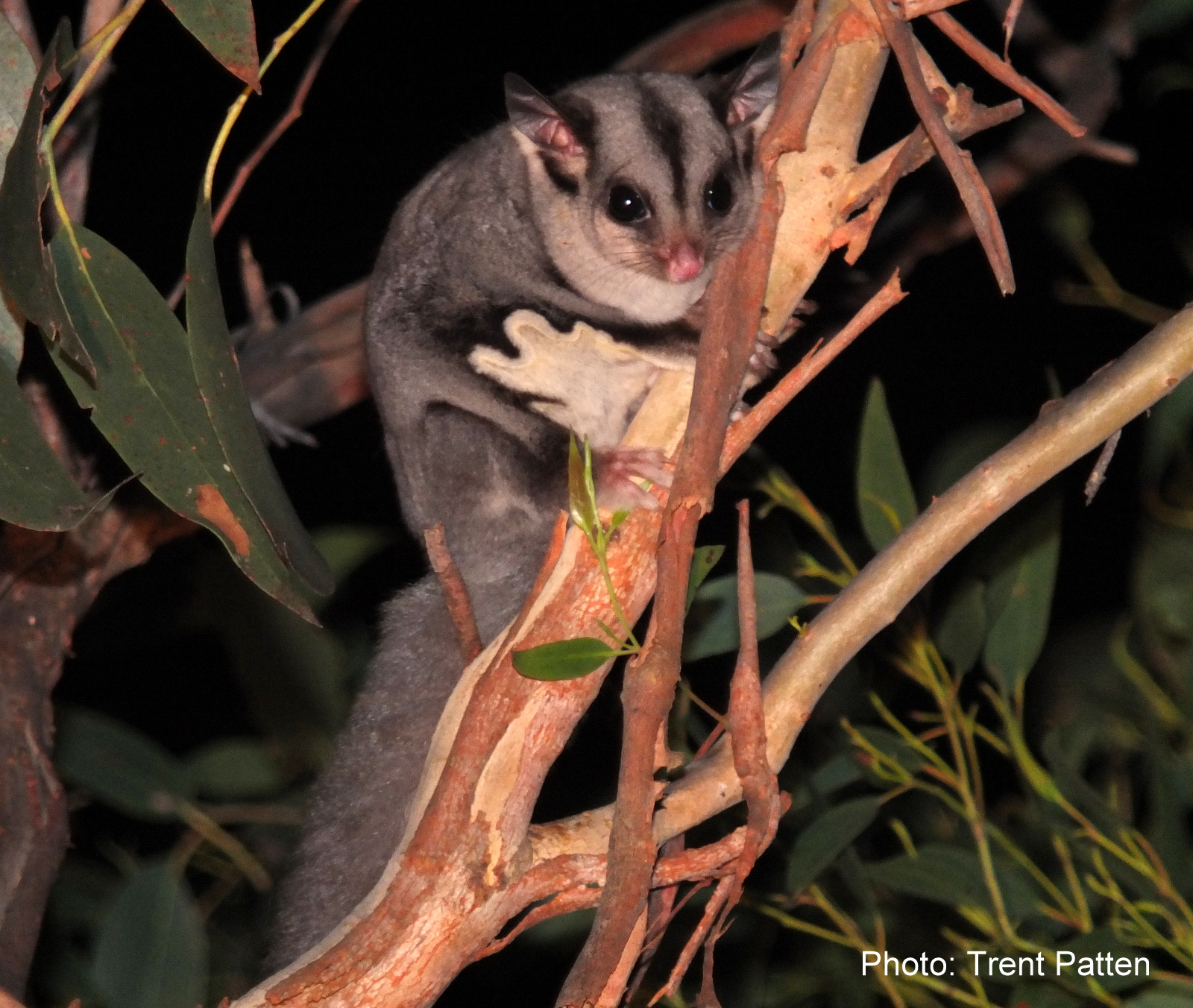
Sugar Glider
Anyone at home?
This nest-box is proving a popular spot for nocturnal mammals. We set up a remote camera because a recent inspection had revealed an apparently active Brush-tailed Phascogale nest inside the box. However, instead of the phascogale, we recorded a Sugar Glider and a Common Ringtail Possum conducting their own inspections. The box was actually designed for phascogales, with a small entrance hole at the back close to the tree-trunk. The hole would be too small for the ringtail possum, who eventually exits stage front, right over the camera !
The video may take a while to load.
Nocturnal echidnas
This Short-beaked Echidna was photographed recently on two separate occasions on a property on the Stony Creek at Kinglake West.
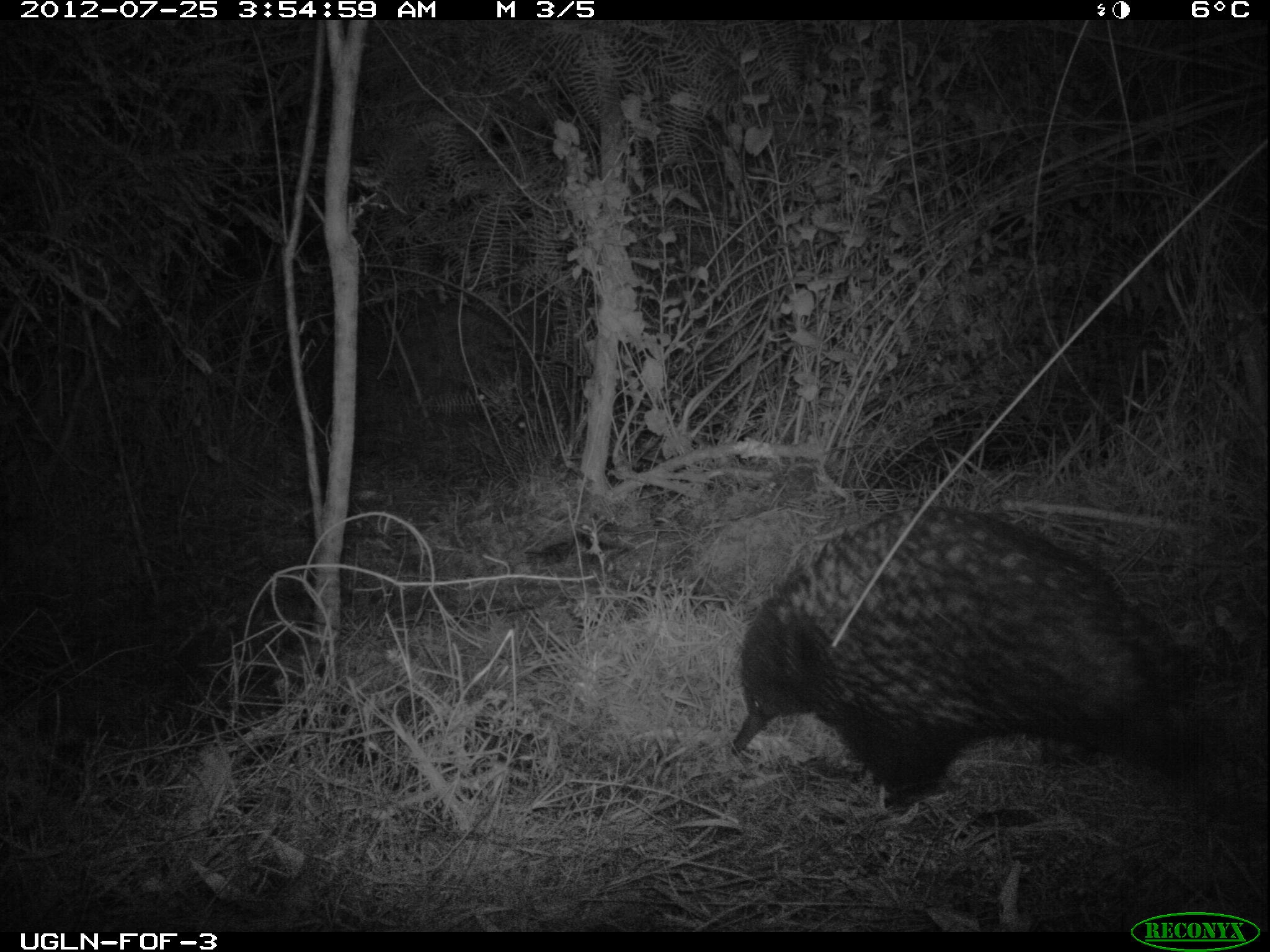
Echidna at night
Most people may be suprised to know that it is not uncommon for echidnas to be active at night especially in warmer weather.
It is however unusual that he’s out wandering at night in the middle of winter as echidnas usually go into deep torpor and hibernation over winter to save energy and reduce metabolism.
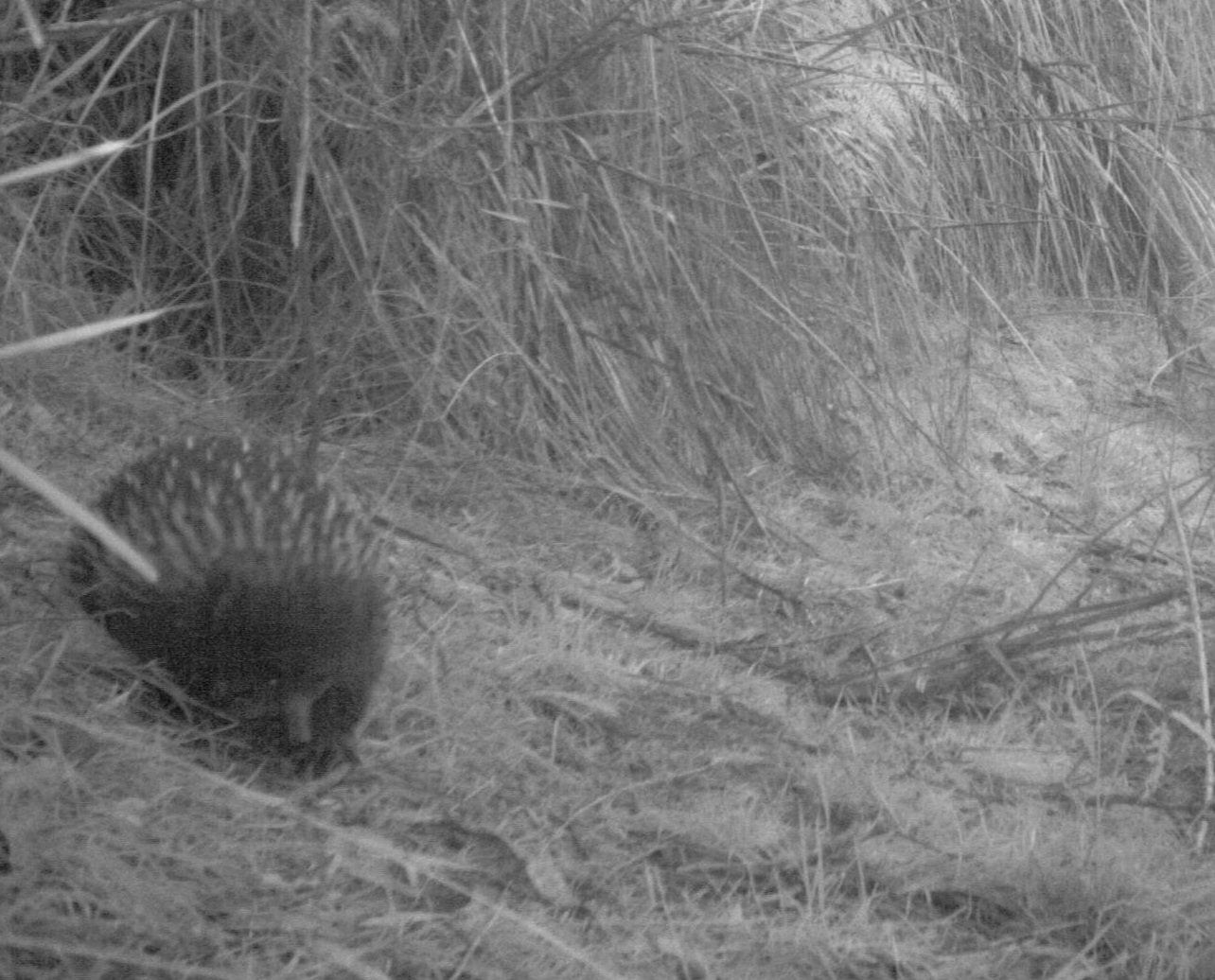
Chris Cobern
More birds of prey
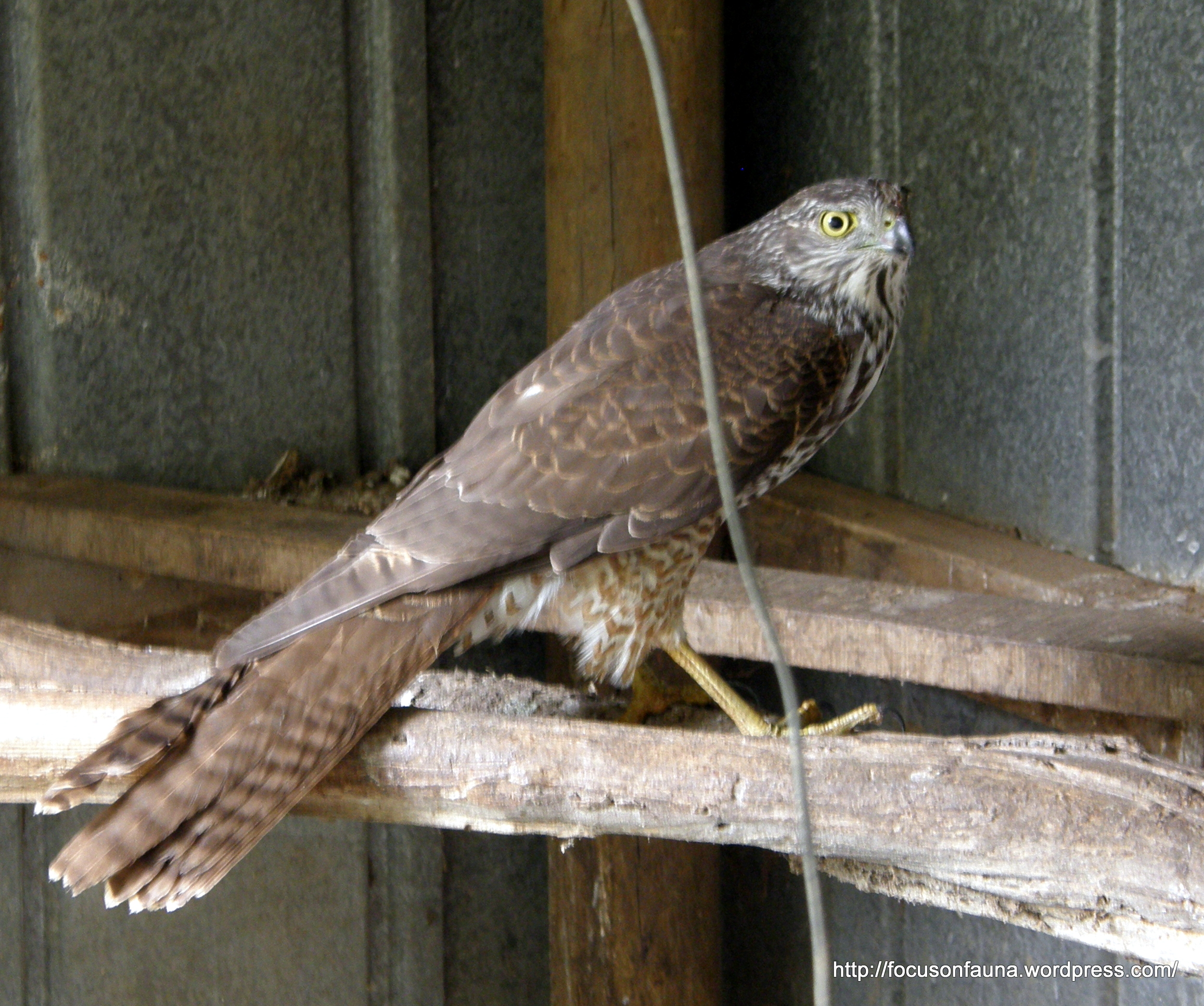
Collared Sparrowhawk – photo by David Johns

Collared Sparrowhawk – photo by David Johns
These photos were forwarded to Chris Cobern earlier this year from a couple in Kinglake West. It was thought to be a Collared Sparrowhawk rather than the similar Brown Goshawk, and an expert at BirdLife Australia has just confirmed that for us – the distinguishing features being the relatively slender body, the lack of a really prominant eyebrow and the greyish plumage rather than brownish on the back.
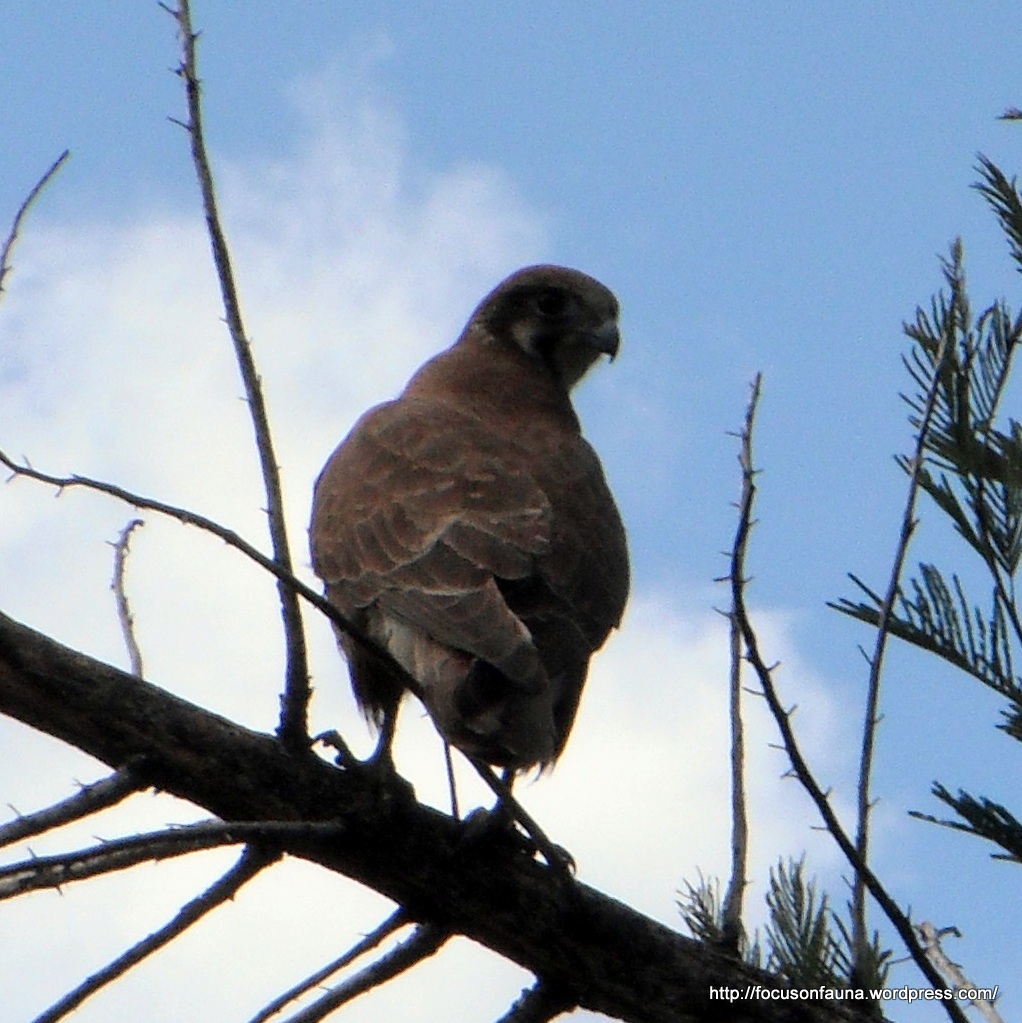
Brown Falcon – photo by Joel King
And here’s another bird of prey photo forwarded by Susan from Strath Creek, a regular poster of comments on this blog. It looks like a Brown Falcon to us, a fairly common sight around the Flowerdale – Strath Creek district, either perched on a fence post or power line, or cackling as it flies overhead.
Any other thoughts on the identification of these birds would be welcome.
For more detailed information on these two raptors, click on the Birds in Backyards website pages for Collared Sparrowhawk and Brown Falcon.
Lunch for Little Eagle!
As a follow-up to the 15th July post “Birds of Prey”, our friends in Rutherglen have sent us a video clip of the Little Eagle with its prey, a cormorant – probably a Little Pied Cormorant. The eagle dropped the cormorant just 25 metres from their house and came back 3 days in succession to briefly feed on it. It stayed longest on the third day before flying off with the remains of its meal, as shown on the video, which may take a few moments to load.
Hillside skink
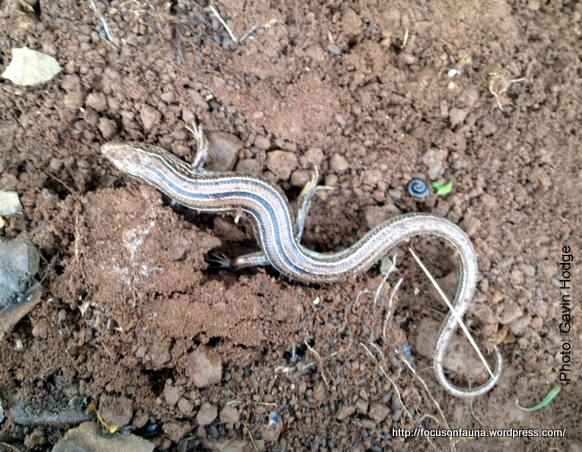 This handsome striped lizard turned up the other day on the steep slopes of Lade Hill just out of Strath Creek. Bertram, our Focus on Fauna reptile consultant, has identified it as a Ctenotus skink, most likely Ctenotus robustus or Large (or Eastern) Striped Skink, which is the most common skink of this genus. However the photo is not clear enough to make a positive identification. Ctenotus is the largest and most diverse lizard genus in Australia, with almost 100 species. Identification to species level is often considered difficult.
The Large Striped Skink is found in a wide variety of habitats throughout eastern and northern Australia. It mainly eats ants, as well as other animal and plant material. It is a relatively large striped skink, with a snout to vent length (SVL) of up to 120mm. SVL, which equates to head and body length, is used to measure lizards, many of which can lose and regrow their tails.




 Focus On Fauna