More Owlet-nightjars
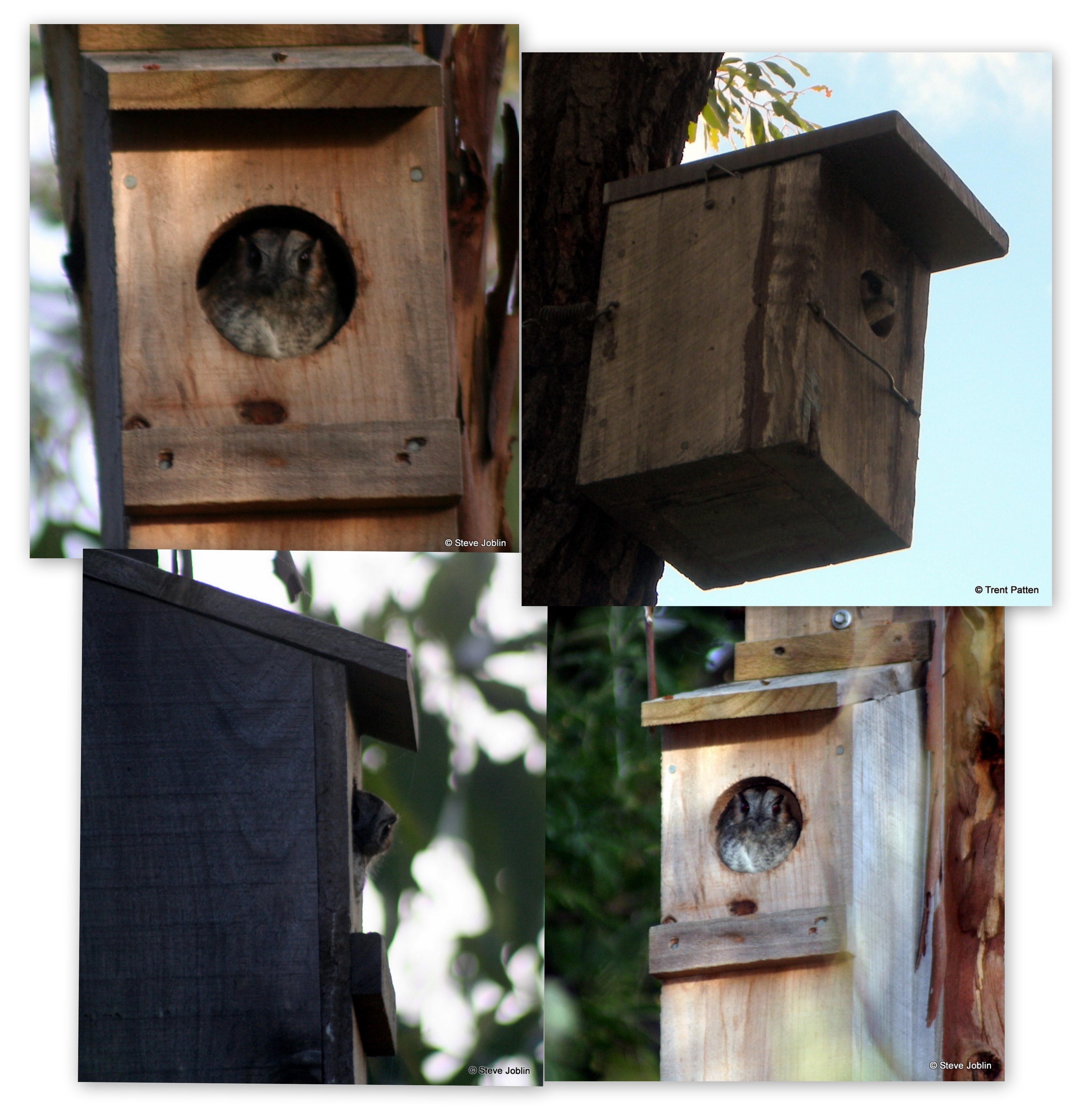 Reports keep coming in of Australian Owlet-nightjars in the Flowerdale/Strath Creek area. These engaging little birds have readily taken to roosting in nestboxes installed since the 2009 fires. Many natural tree hollows were destroyed in the fires, so artificial nesting sites would be much in demand by the many creatures that had previously relied on hollows for shelter. It will be interesting to see if the birds actually use the boxes for nesting in the upcoming breeding season.
These photos were taken at properties in Spring Valley Road, Flowerdale and Upper King Parrot Creek Road, Strath Creek.
Click HERE to see a previous post on an owlet-nightjar at Flowerdale.
For detailed information about the Australian Owlet-nightjar, and to hear its call, click the following link to the Birds Australia Birds in Backyards website.
Mountain Brushtail Possum at Flowerdale
Remote cameras deployed at a Flowerdale property on Whittlesea-Yea Road for a second time, again recorded what looks like a Mountain Brushtail Possum (Trichosurus caninus), otherwise known as Bobuck or Short-eared Brushtail Possum, as seen in the video below, which may take a few moments to load.
Lyrebird at Junction Hill
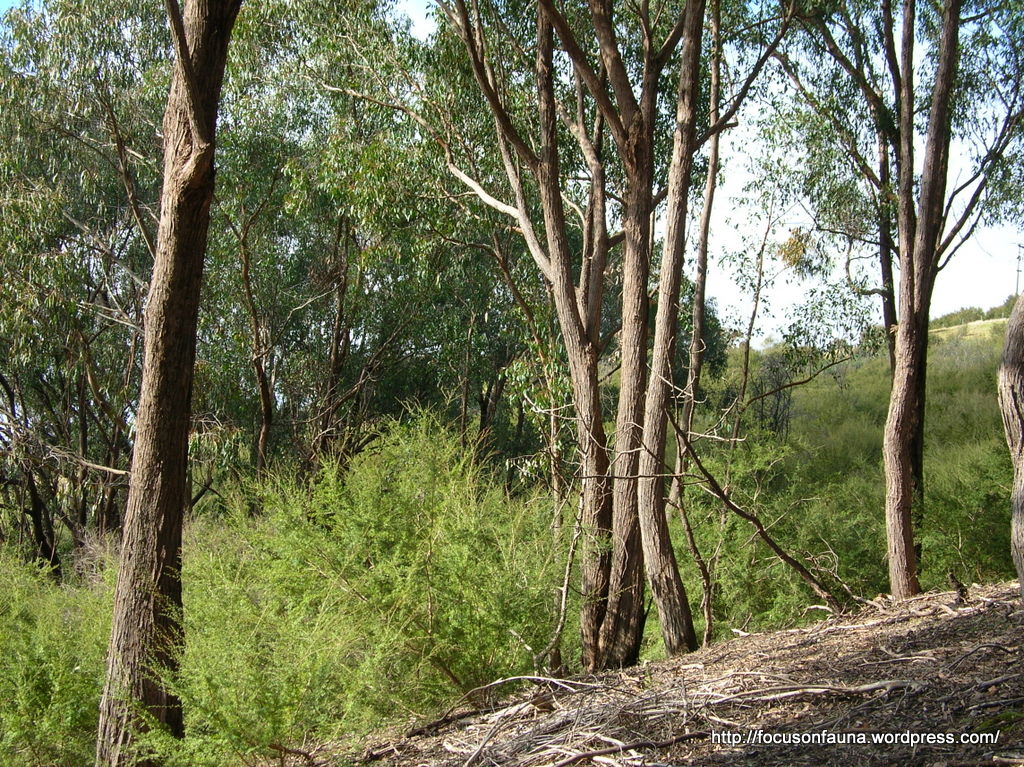
Our cameras, set up on a steep north-facing slope off Upper Ti-tree Road on Junction Hill north-east of Flowerdale, captured images of a Superb Lyrebird (Menura novaehollandiae), as well as a wombat, echidna, wallaby, fox and rabbit. The lyrebird was somewhat of a surprise as the dense vegetation on the slope is dominated by Burgan (Kunzea ericoides), with some Long-leaf Box, Lightwood, Blackwood and Silver Wattle – perhaps not the usual wet forest habitat associated with lyrebirds. However, the ground has a good layer of leaf-litter and the slope leads to a densely vegetated creekline.
The landholder has previously found a display mound, but had never observed the bird itself. There have been several other reports of lyrebirds on Junction Hill in recent times, but it’s unclear if they were there prior to the 2009 fires.
The images may take a few moments to load. See also the previous post Lyrebirds at Kinglake West.
Wombats top the charts
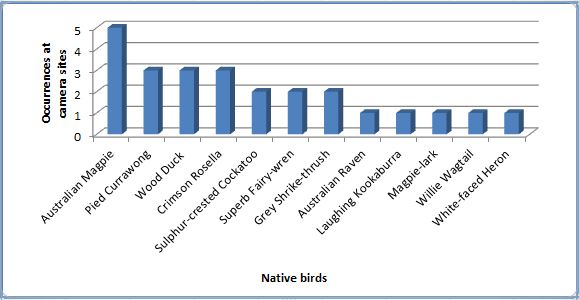
An interim analysis of our camera results to date shows that, not surprisingly, wombats and kangaroos are the most common species recorded. Out of 66 camera deployments on 21 properties, a total of 11 native mammal species and 12 native birds have been recorded. Charts showing the frequency of occurrence of native animals are shown below.

Tree-cam! So that’s how it’s done.
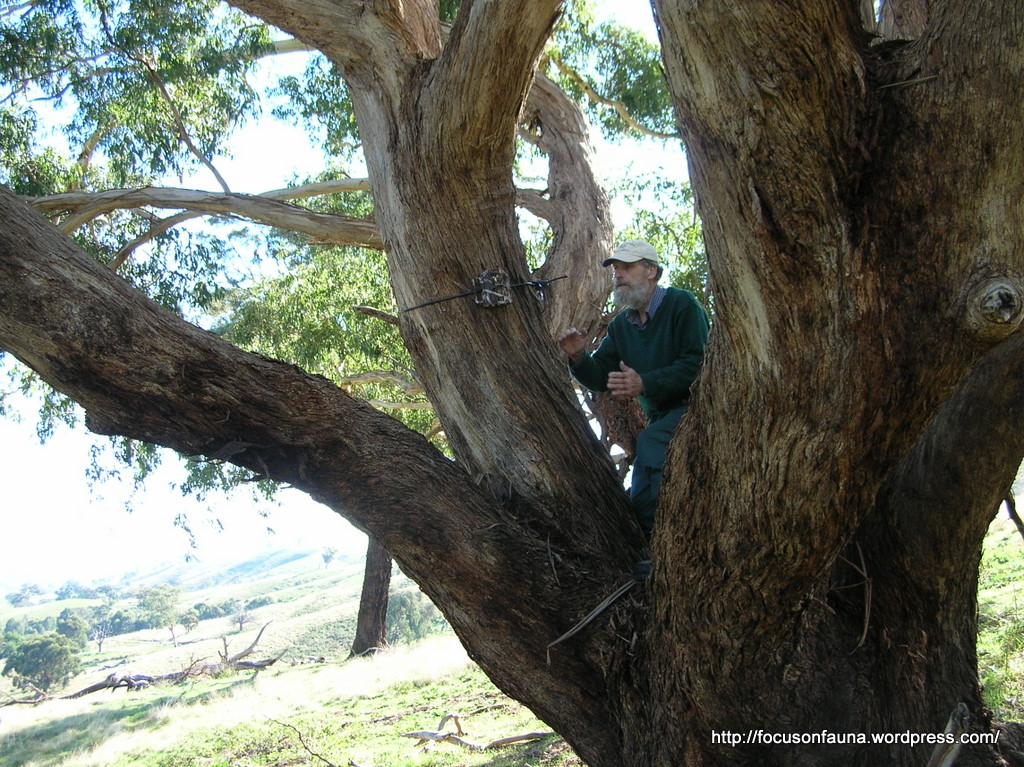
David & remote camera in a very large, old Yellow Box
Over the last half-year Dave has been developing some serious covert surveillance expertise! He’s often sighted either behind trees, or up in them. In this case it’s a very large, spreading Yellow Box (Eucalyptus melliodora).
Getting the remote-images that provide so much of the enjoyment and value of this blog has become more than a pastime for Dave and has required considerable ingenuity. You can see more pictures about how the cameras are set-up and the various other survey techniques used in this project HERE.
And then there were two.
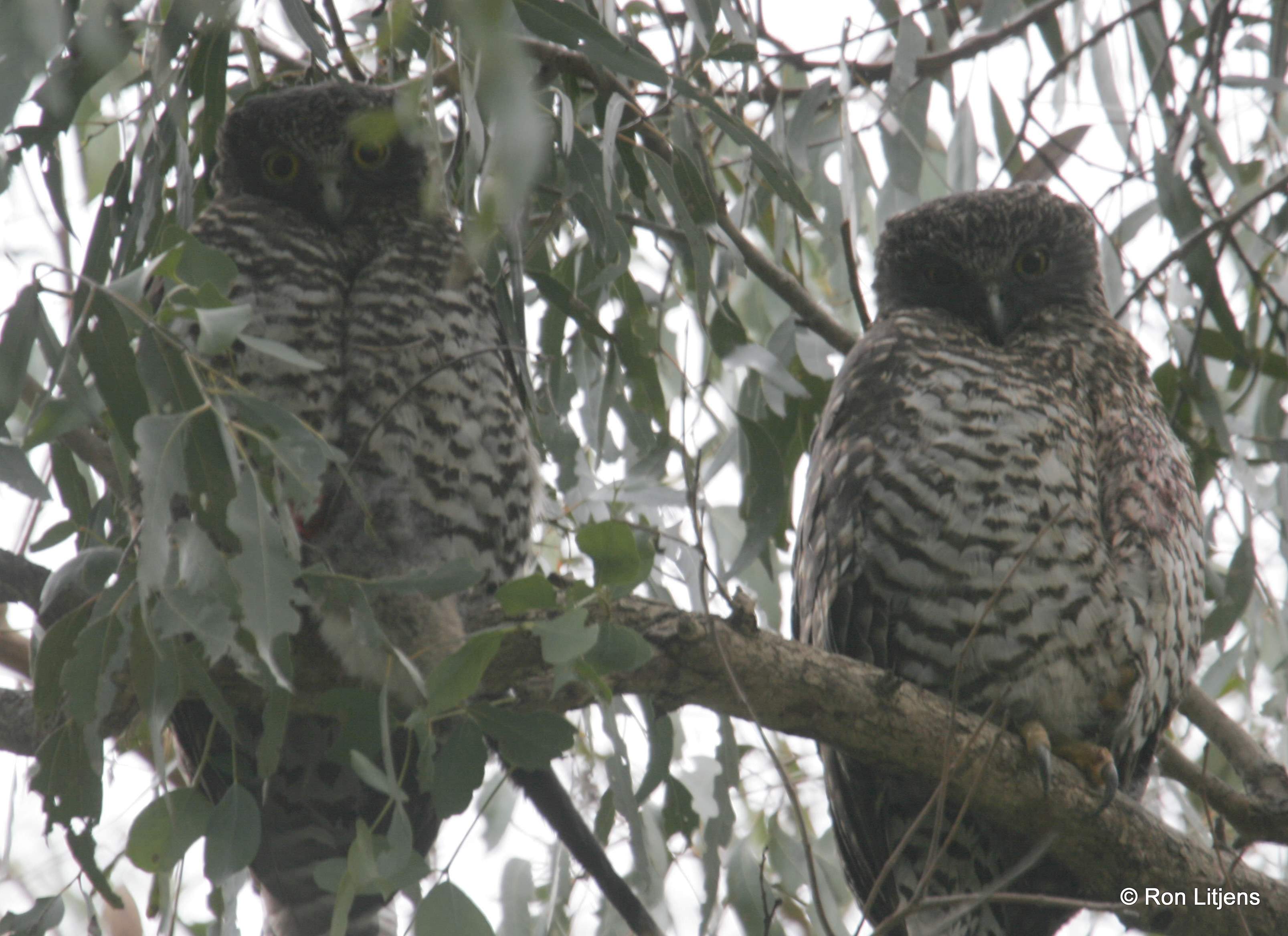 The Powerful Owl in a previous post, Talk about owls …! on March 29, has again been spotted, this time with a mate to share a meal of Ringtail Possum (whose partly eaten remains are visible below the male on the left). The photo was taken in almost the same spot as the previous observation.
The owners of the Flowerdale property have been recording the location of roost trees (identified by “whitewash” and pellets on the ground), and trying, so far in vain, to find a nest site that the owls may be using. Because of the owl’s size, potential nest hollows are limited to large old trees.
Focus on frogs!

Zoologist Mark Cairns from Healesville Sanctuary will be coming to Flowerdale on 5th August to give a presentation, with a particular focus on frogs. Mark may also cover other aspects of his experiences with wildlife.
Click on the flier for more details.

The owl and the swan…
 The owners of a large Strath Creek grazing property were delighted to have a couple of unusual bird visitors this week. This Black Swan spent a day on a dam close to their house before moving on.
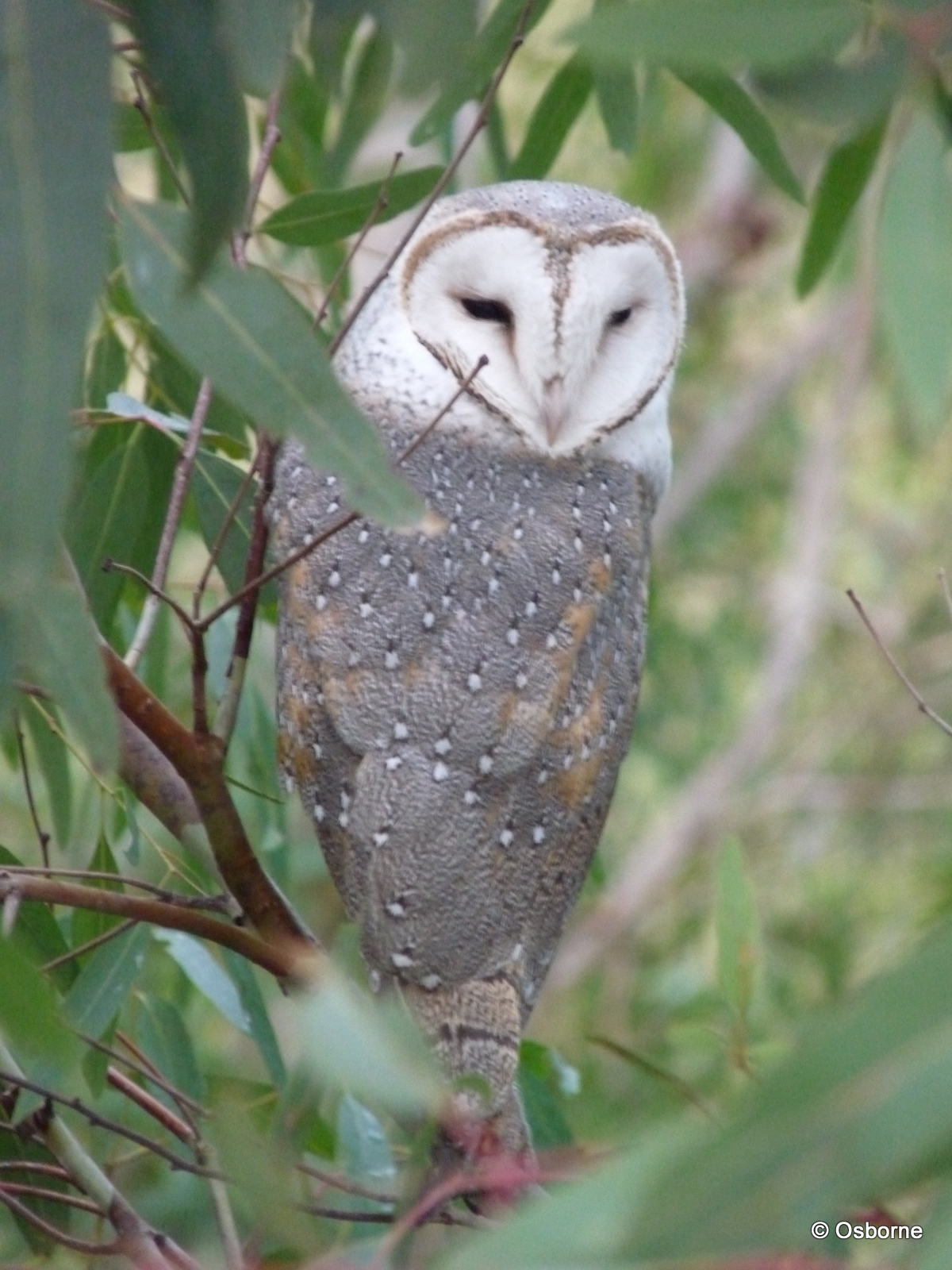
A couple of days later they were able to take this magnificent photo of a Barn Owl perched in a eucalypt tree. With the large numbers of mice around at present, the owl should be having a feast !
Wallabies, wombats and possums near Junction Ridge
Our cameras were recently kept busy at a bush property to the north of Flowerdale, which includes a steep gully known as Devil’s Glen. Above the gully the property consists of Red Box forest and a cleared native grass slope. The cameras recorded hundreds of shots of inquisitive Black Wallabies, Common Wombats and both Common Brushtail and Common Ringtail Possums, as well as a Red Fox.
Bobuck up close at Pheasant Creek
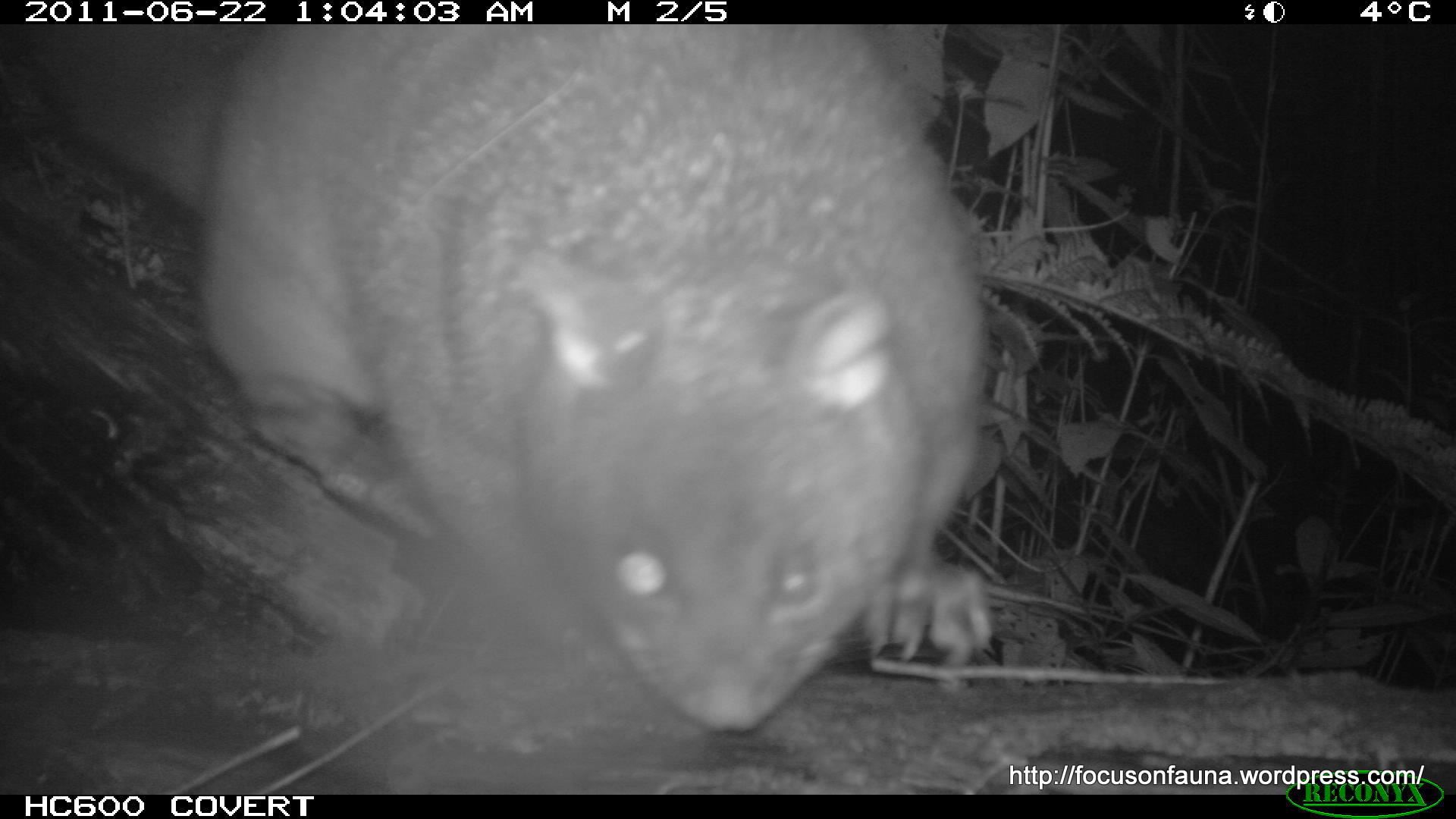 A remote camera trained on a fallen log across a small tributary of Pheasant Creek recorded these shots of a Mountain Brushtail Possum (Trichosurus cunninghami), also known as a Bobuck.
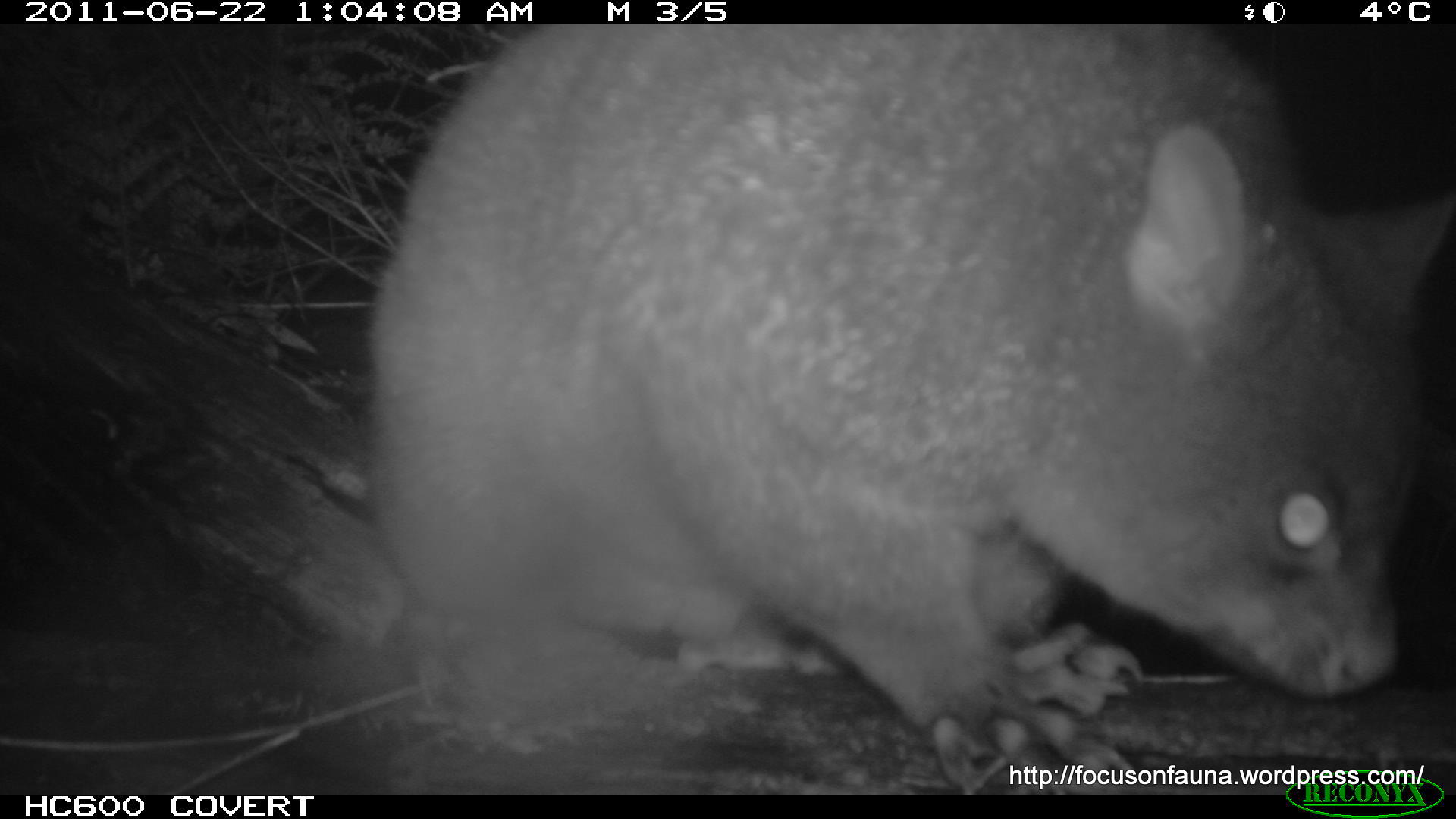 The Bobuck has shorter, more rounded ears than the Common Brushtail Possum (Trichosurus vulpecula), and inhabits wetter forest areas. It prefers gullies and, although arboreal, spends much of its time feeding on the ground. Fungi form a significant part of its diet.



 Focus On Fauna