External support
Human have what is termed an endoskeleton, a bony framework internal to the body that is covered in soft tissue. Many creatures however have an exterior skeleton, an exoskeleton. The advantage of an exoskeleton is that this hard shell forms a rigid structure to support the body and also provides protection for the fragile internal organs. Insects, crustaceans, spiders and crabs all have exoskeletons. Interestingly turtles and tortoises have both an exoskeleton (shell) and an endoskeleton.
The downside of having an exoskeleton is that the rigid shell restricts the size of the growing animal. As the animal grows it needs to moult (a process known as ecdysis) out of its old shell and form a new bigger one. After it has left its old shell the creature is soft and pale in colour and very vulnerable to predation. Over the course of hours the creature pumps itself up with air and the new, larger shell hardens. It may take weeks for the new colour to be fixed. The wings appear at the final moult.
This blog site has pictorially documented several moulting animals – cockroaches, mayflies, dragonflies & cicadas. To add to this list are Gumtree Hoppers (Eurymeloides pulchra), pictured below.
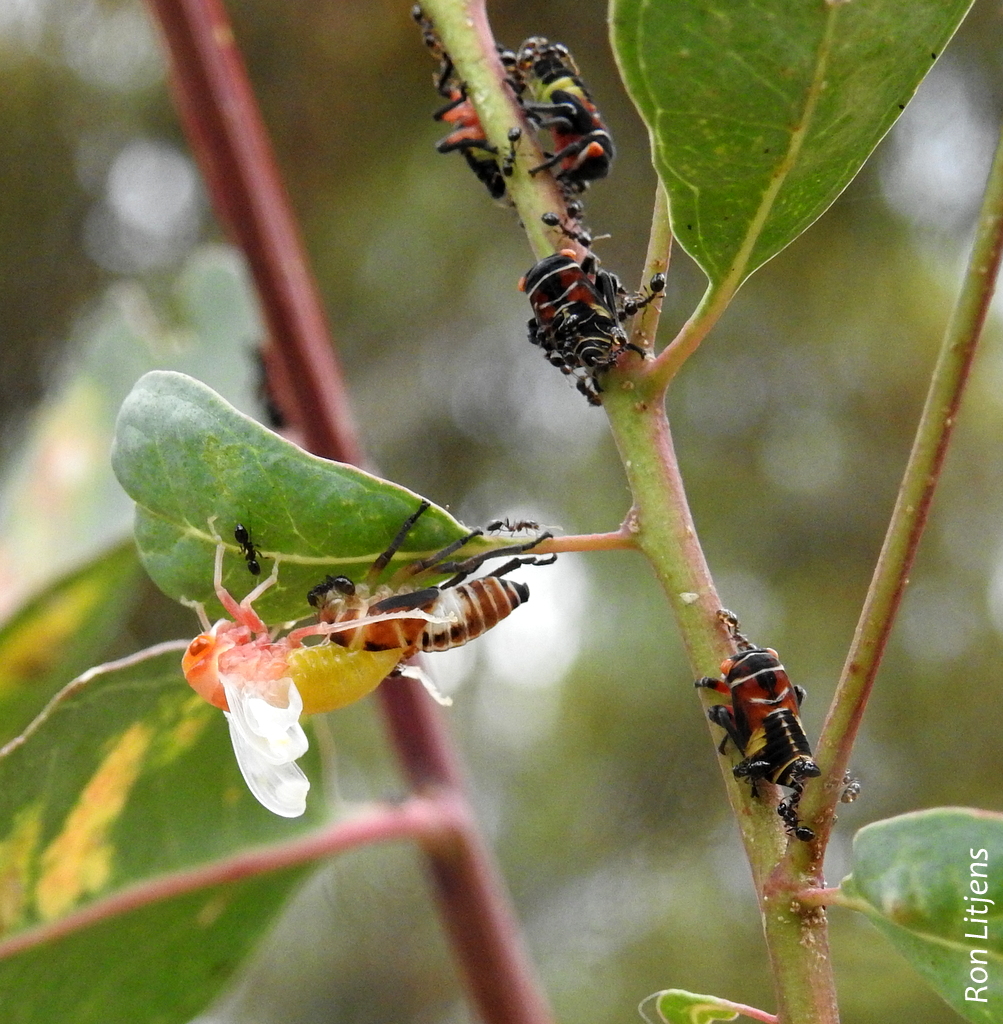
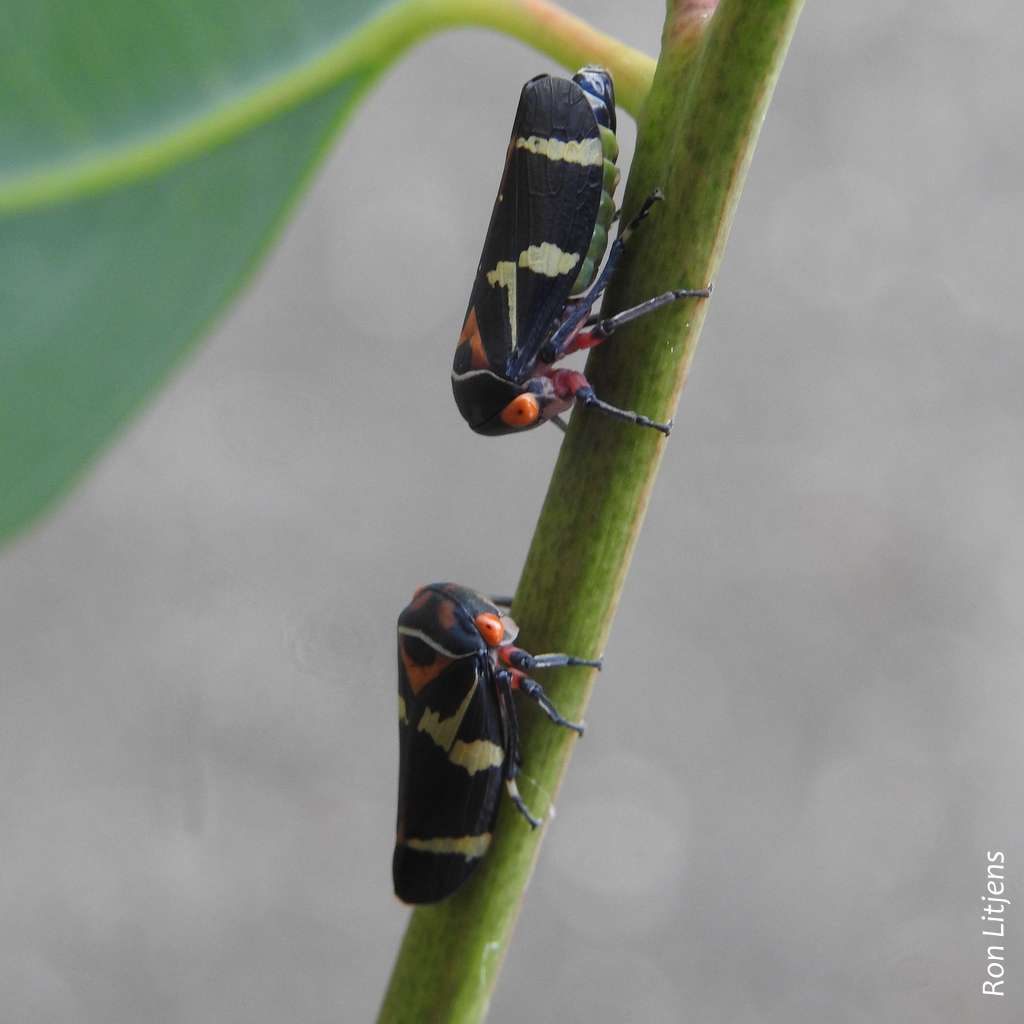
Gumtree hoppers are sap-sucking insects found on eucalypt trees in great numbers during summer. They come in a variety of colours and sizes. As part of their life-cycle Gumtree Hopper nymphs or instars go through a number of moulting steps before a fully formed adult finally emerges. In the photo above the pale winged adult (left) can be seen emerging from the old exoskeleton whilst a number of instars look on.
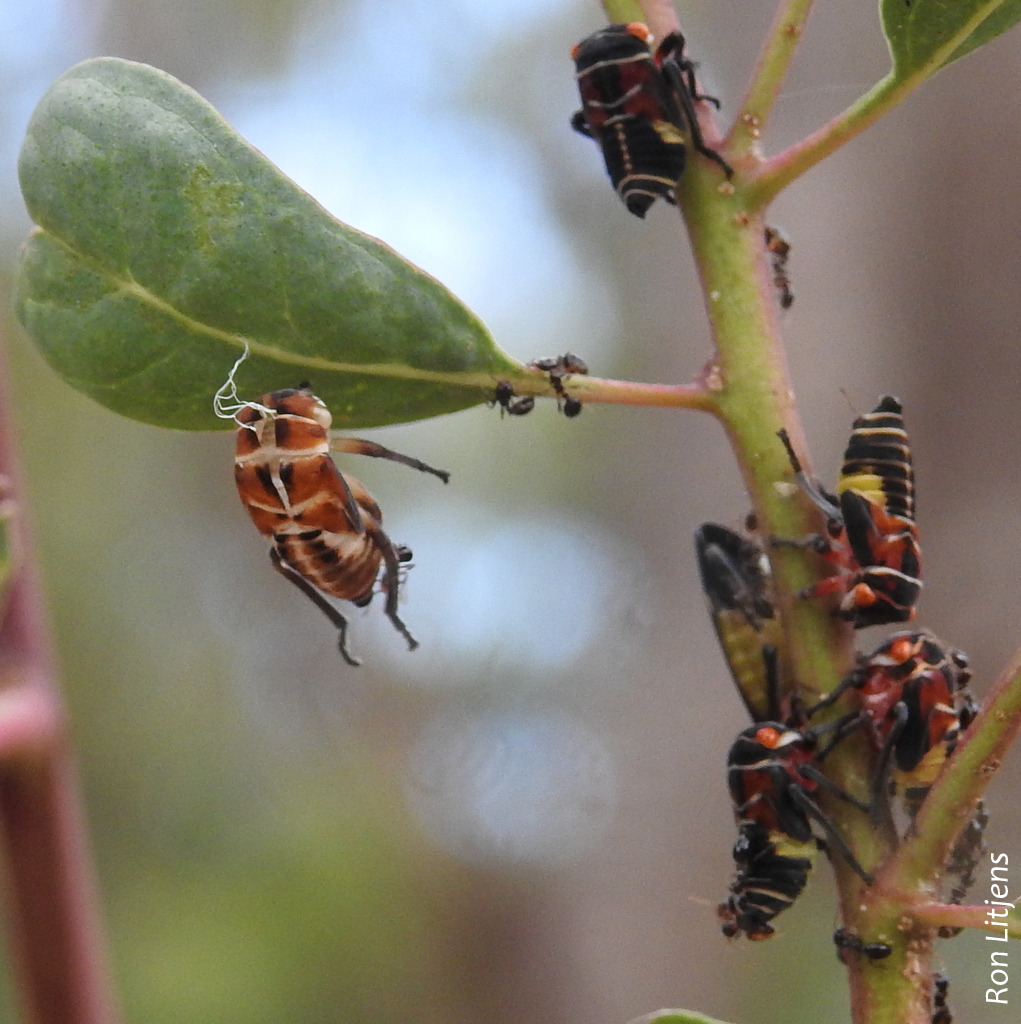
After some time, days or weeks depending on species, the new adult becomes fully coloured (pictured right). All that is left is an empty shell hanging from the branch (pictured below).
Hypothetical
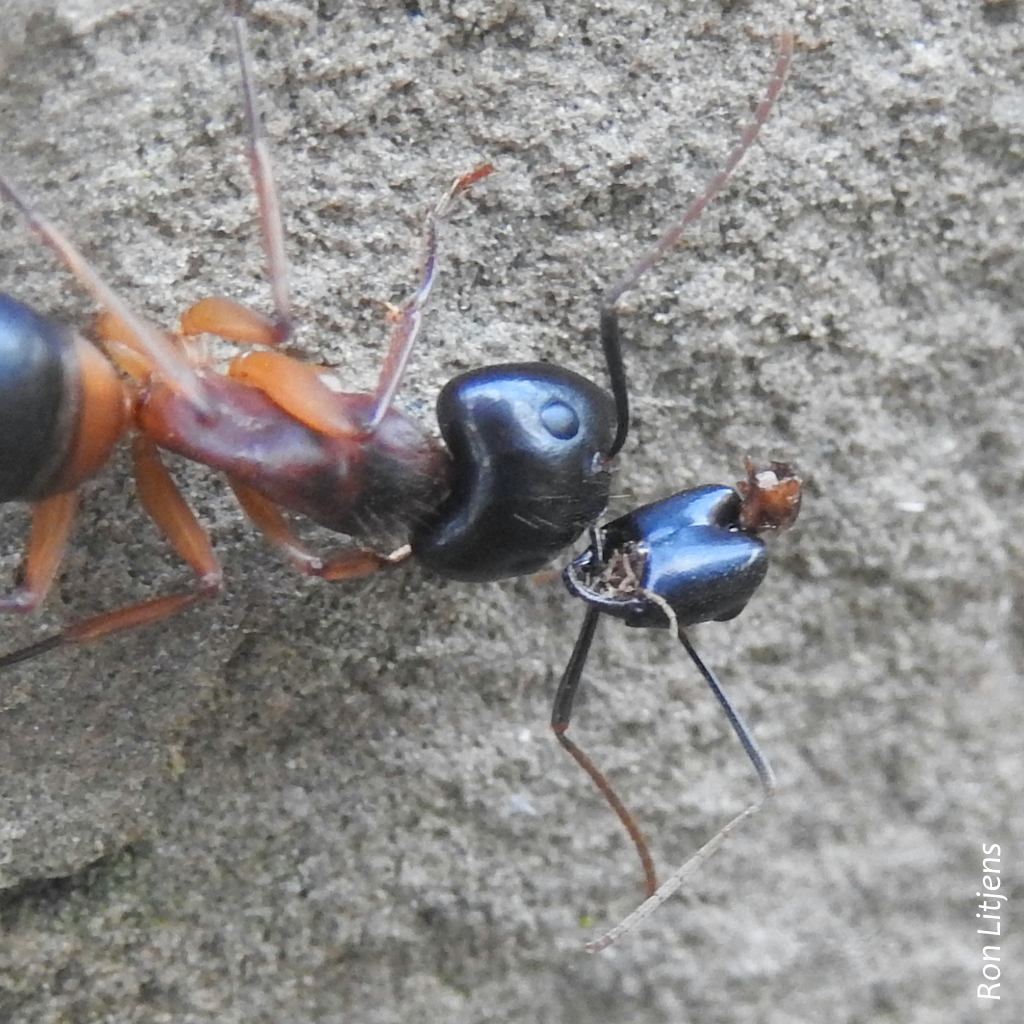
Imagine that you are a Sugar Ant (Camponotus sp.). You have spent your life serving your queen – providing her with food and security. And then imagine one day you are required to defend the nest against raiding Sugar Ants from another nest. You engage in leg to leg combat with the dreaded foe and after a long battle seize the opportunity and bite your opponent’s head off. But in your moment of triumph the enemy latches its jaws onto your antenna (see below). What would you do?
I don’t know. I’m not an ant. You figure it out.
Holiday souvenirs
The title conjures up images of postcards, sea shells and holiday snaps. The souvenir of my recent holiday consists of a plastic vial containing ticks, all extracted from my body.

Ticks are arachnids just like spiders and scorpions and Australia has about 75 species. They are external parasites feeding exclusively on blood. Once on a host a tick will puncture the skin and inject an anaesthetic so the host is unaware of its existence and an anti-coagulant to stop the blood from clotting. It will then consume blood until it has had enough and then drop off.
There are four life stages – egg, larva, nymph and adult with the nymphal stage going through several moulting steps. Each nymph instar requires the ingestion of blood. In this way a tick will have several hosts in its lifetime. Contrary to popular belief a tick cannot leap onto a passing host. A tick will sit on vegetation with its two back pairs of legs. The front pair of legs contain both smell and heat sensors. They are held aloft as the tick searches for a host. When a suitable host brushes past the vegetation on which the tick is sitting it steps on board.
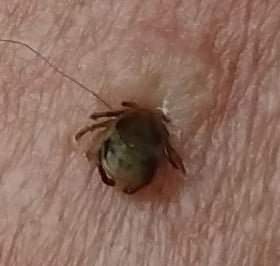
Back to my holiday, I woke up one morning with 5 ticks on my neck and shoulders, pictured right. Ticks can transmit diseases so the recommended treatment for a tick is to kill it and either let it drop off naturally or if you have an experienced medical professional in the vicinity, like I did, get them to remove the tick. It is important to remove all of the tick particularly the head that can cause infection if left in the skin.
I now have a vial of five ticks (including heads). As far as a holiday souvenir goes it does not get a tick of approval.
A family that plays together…

The definition of the word ‘drey’ in the Oxford dictionary is ‘the nest of a squirrel, typically in the form of a mass of twigs in a tree’. In Australia the term is used to describe the communal nest of the Common Ringtail Possum (Pseudocheirus peregrinus), pictured left.
Ringtail possums are distributed along the east coast of Australia and also Tasmania. Unlike Common Brushtail Possums that are solitary creatures preferring tree hollows to sleep in, Ringtails are gregarious in nature and prefer to live in dreys, spherical structures made out of tree branches and sticks and lined with leaves and bark.

The drey is well camouflaged and is usually built in a sheltered place high in a tree (pictured right). It can vary in size from a soccer ball to a metre in diameter. Several individuals including offspring inhabit a drey with family groups inhabiting dreys in close proximity to each other.
The entrance is a small ‘possum-sized’ hole in the side of the structure and if you’re lucky you may just get a glimpse of the inhabitants inside (see below).

Handsome AND beautiful

The Fallen Bark Looper Moth (Gastrophora henricaria) is a moth named for the looping motion its caterpillar makes whilst walking. The caterpillar feeds on eucalypts and Brush Box (Lophostemon confertus). Being of the Geometridae family the caterpillar has three pairs true legs near the head and only two pairs of pro-legs at the other end.
The moth is otherwise known as the Beautiful Leaf Moth. The male moth at rest, pictured left is quite distinctive with a black line across its outer wings. I would call it handsome rather than beautiful! The female is larger in size and lacks the black line, pictured below right.

The surprise comes when the moth is disturbed and shows displays its hind wings that are a striking orange and black in colour, pictured below. The colours probably act as a ‘startle’ signal when disturbed to buy it a bit more time to get away from predators.

Agreed. It’s both handsome and beautiful.
Plumes are in
I love the Spring Racing Carnival in Victoria. I am not interested in the horses but admit I do spend too much time watching the amazing sculptures that women wear on their heads. It’s fascinating. It’s also the time of the year that birds get into the headgear as well.

Breeding plumage is a term used to describe the changes to a males birds’ colour or form that occurs prior to the start of the breeding season. Differences between breeding and non-breeding features can include a change of beak colour and facial skin colour (Great Egret), change in the colour of the head plumage (Australasian Grebe) or the development of erectile ‘aigrette’ plumes over the back and on the chest like the Little Egret (Egretta garzetta), pictured above. Breeding plumage can also include head plumes.
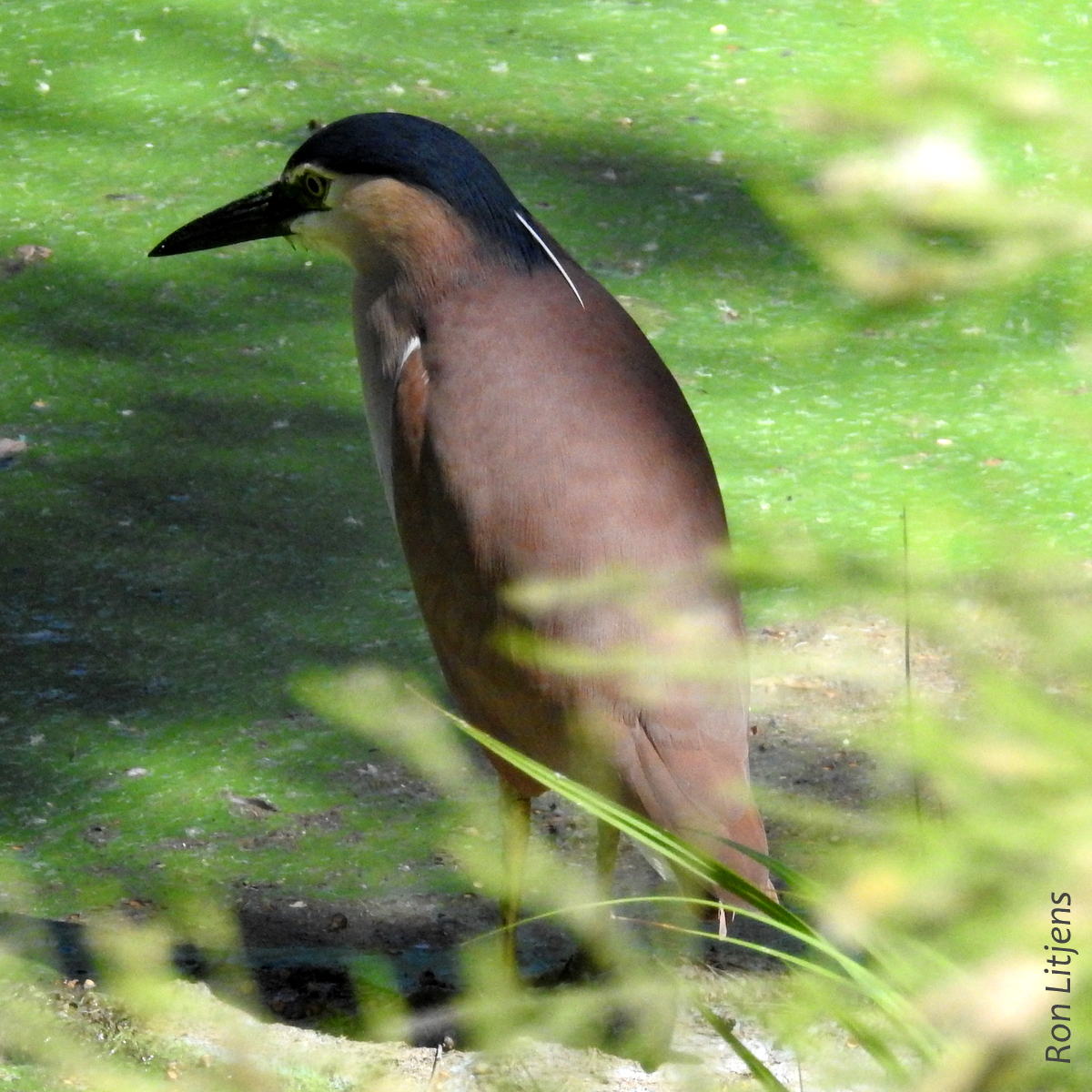
Males birds like the Little Egret and the Nankeen Night Heron (Nycticorax caledonicus), pictured left grow two or three head plumes also known as ribbons prior to breeding season.
Not as flashy as the fascinators at the Melbourne Cup but sometimes less is more.
Keeping it clean
Everyone knows that the main job for adult birds is to keep their chicks fed. It is a never ending job.
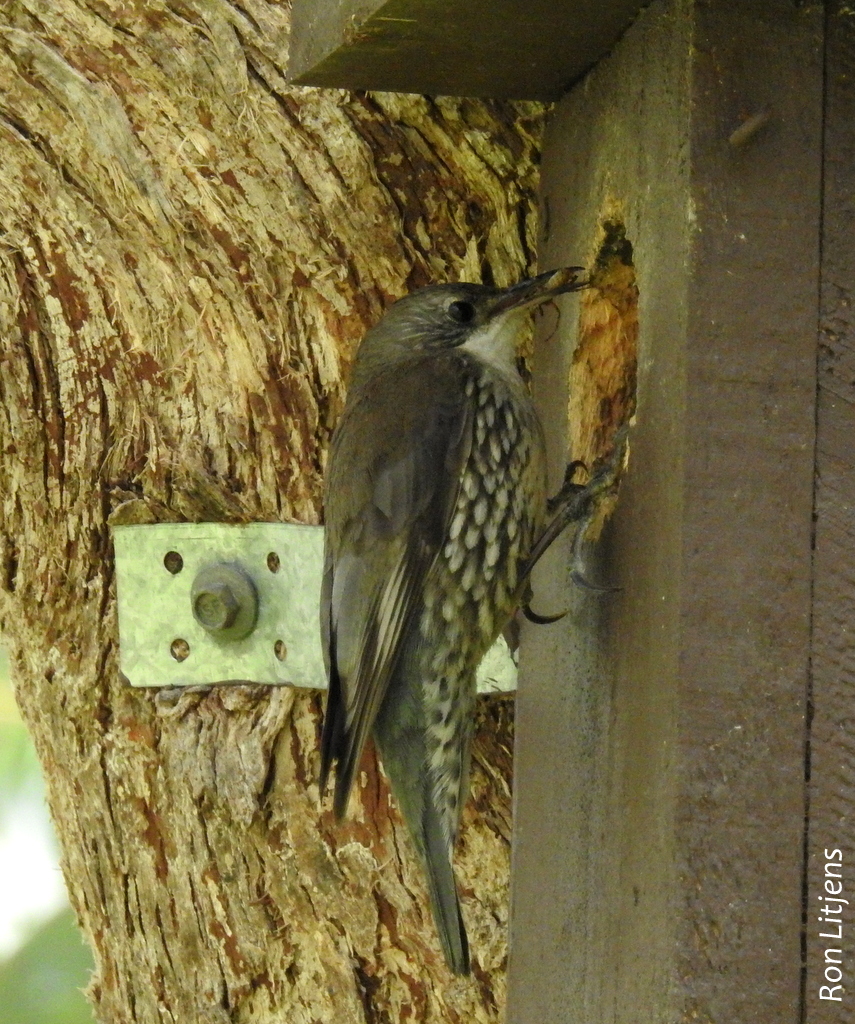
A pair of White-throated Treecreepers (Cormobates leucophaea) has taken up residence in a local nest box. They are a small bird distributed along the east coast of Australia from Cooktown around to Adelaide. Treecreepers are insectivorous and often seen climbing up the trunks of trees looking for insects, mainly ants. At the moment the adults are busy feeding the young. Every one and a half to two minutes the parents leave the nest box only to return to the box bringing food (pictured left).

The other major task confronting adult birds is keeping the nest clean of the waste that the chicks generate. This is particularly true for birds that breed in enclosed nests. The chicks excrete a translucent gelatinous membrane containing all the excrement which the parent picks up and removes from the nest, pictured right. This appears to happen after every second feeding visit.
Of course if you live in an open nest like White-winged Choughs (Corcorax melanorhamphos) adults can save a lot of effort by teaching the young to poo over the side of the nest, pictured below.

Don’t call me Sugar
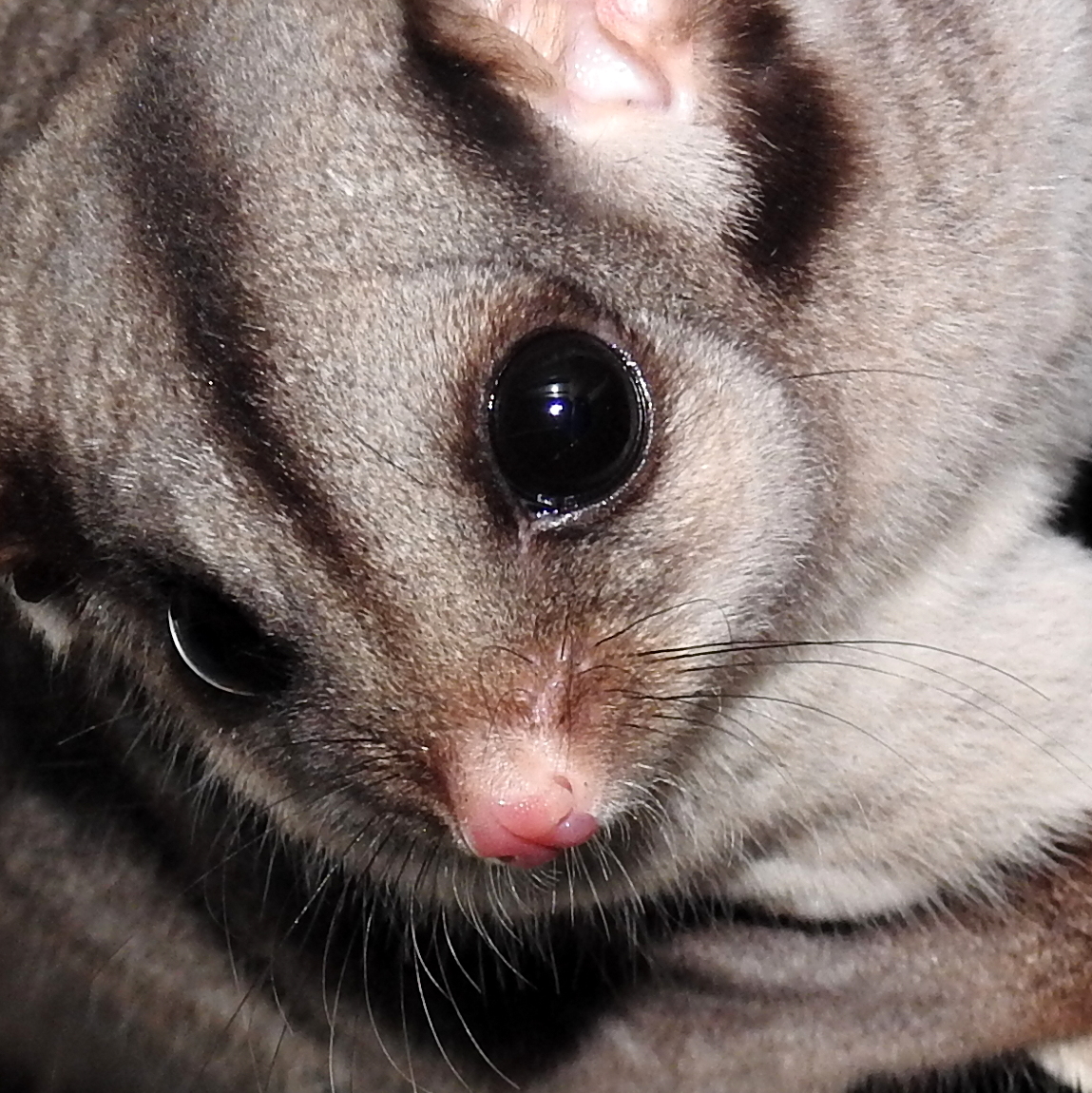
DNA analysis of the animal world is revolutionising how we classify them. Some species are being merged whilst others are being broken down into multiple species. The Sugar Glider (Petaurus breviceps), pictured below, the glider common in our area is a case in point.
Gliders are thought to have originated in New Guinea and crossed into Australia about 10 million years ago when low sea levels resulted in a land bridge between the two land masses. Until recently Sugar Gliders were thought to have been distributed from southern Queensland all the way down the east coast around to South Australia. They were introduced into Tasmania in the early 1830’s.
Recently (2020) however the single Sugar Glider species was divided into three species – Sugar, Savanna and Krefft’s Gliders.
What is now known as a Sugar Glider (P.breviceps) is distributed only in southern Queensland and NSW, east of the Great Dividing Range. The Savanna Glider (P.ariel) distributed across the top of Australia from northern Queensland to northern WA is named after the ecosystem in which it is found.
Lastly and more importantly for us because it is the glider in our locale is the Krefft’s Glider (P.notatus) distributed from Queensland to south eastern SA. The Krefft’s Glider was named after Gerard Krefft, a noted Australian zoologist in the 1800’s who was curator of the Australian Museum for 13 years.
So what we have previously called a Sugar Glider is now more correctly known as a Krefft’s Glider…. same packaging, different name.
Look down
There are 18500 species of butterflies worldwide. Of these Australia has a mere 400-plus. Given that butterflies are primarily tropical and sub-tropical insects, the number of butterfly species down our neck of the woods in the south is down to double digits. The butterfly distribution maps in any Australian butterfly guide will confirm this.
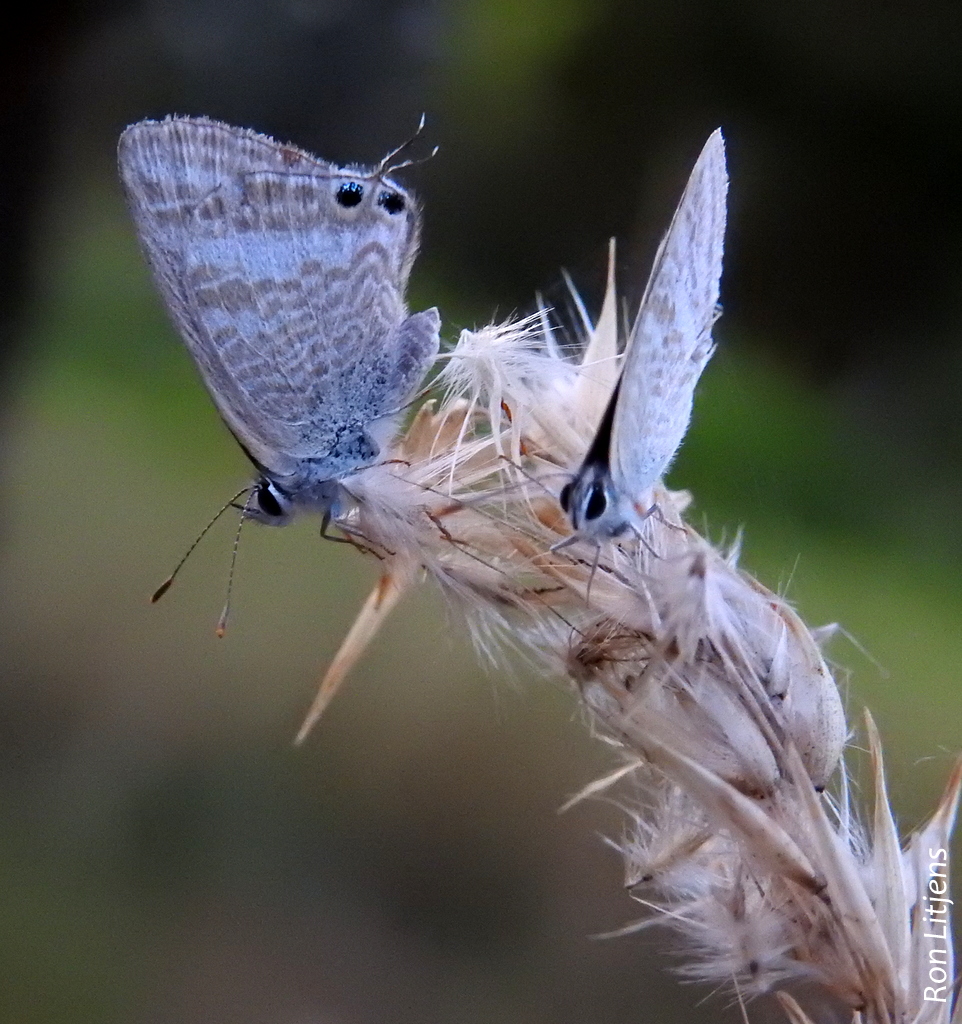
Even so, whilst preparing for a butterfly talk I was shocked at how few butterfly species I had photographed. I had a good collection of photos of butterflies that I considered ‘butterfly-sized’ (4-5cm wingspan) like the Cabbage White or the Common Brown. On reading my butterfly guide I discovered that a lot of butterflies in our area are considerably smaller than this.
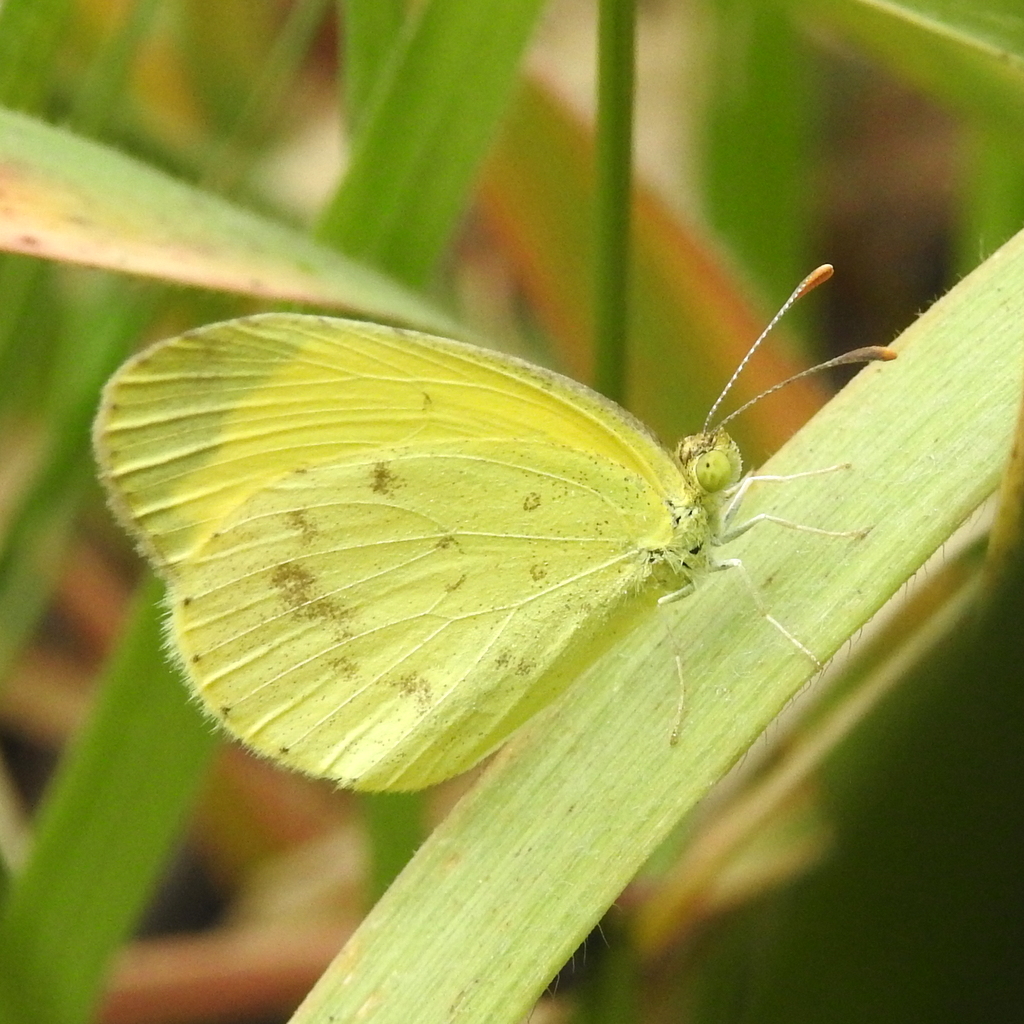
Walking through the Spring long grass at the moment disturbs a lot of creatures – ants, spiders, grasshoppers, flies, day-flying moths, disturbed night-flying moths and butterflies, small ones (2-3 cm wingspan). If you really look they are everywhere. This week alone I have found 5 species that I never consciously had noticed before.
Looking down in the grass at this time of the year is not a bad thing to do anyway.
Hot property
Almost half of Australia’s arboreal mammals and about 20% of our bird species live in tree hollows. Hollows however are at a premium. It takes about 80 years for a tree to develop hollows and a couple of hundred years for those hollows to become big enough to accommodate large fauna. Removal of old growth trees due to logging and agricultural clearing practices makes any remaining hollows hot property in the faunal real estate market.

Sometimes these hollows present short stay accommodation (click HERE to view). The nest box outside our house has had an annual revolving tenancy of White-throated Treecreepers, Ring-tailed Possums and Australian Owlet-nightjars for about ten years. But sometimes the hollows are more permanent homes.

In a local reserve a hollow in an old River Red Gum has been occupied by Brush-tailed Possums (Trichosurus vulpecula) for about five years. In the beginning it housed two possums, pictured left, although in summer the warmth obviously led the animals to let it all hang out. As the possums grew one moved out and the hollow was snugly occupied by a single possum, pictured right.
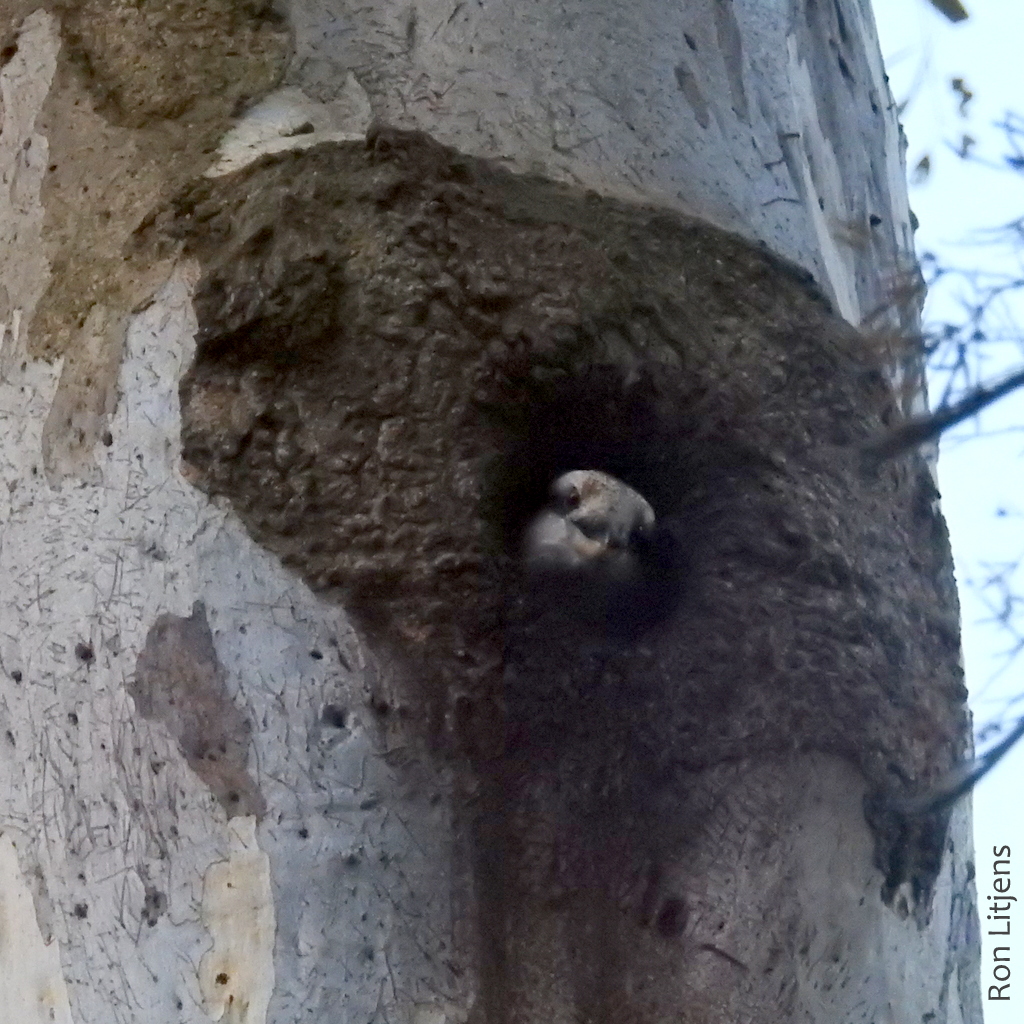
Last week however a Laughing Kookaburra (Dacelo novaeguineae), pictured left, took over the space.
With the shortage of hollows in the area no wonder it is laughing.


 Focus On Fauna