Don’t call me Sugar
DNA analysis of the animal world is revolutionising how we classify them. Some species are being merged whilst others are being broken down into multiple species. The Sugar Glider (Petaurus breviceps), pictured below, the glider common in our area is a case in point.
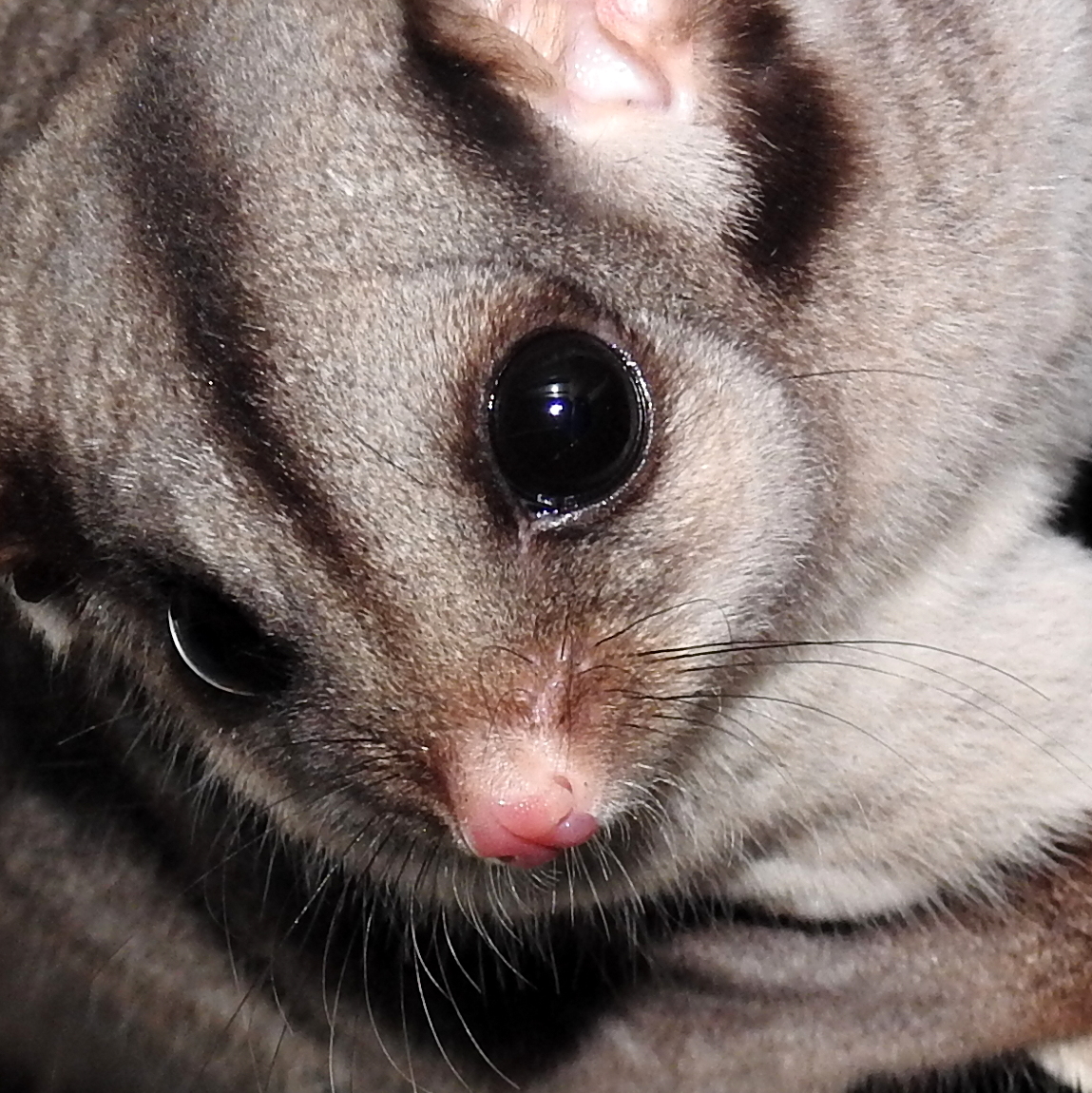
Gliders are thought to have originated in New Guinea and crossed into Australia about 10 million years ago when low sea levels resulted in a land bridge between the two land masses. Until recently Sugar Gliders were thought to have been distributed from southern Queensland all the way down the east coast around to South Australia. They were introduced into Tasmania in the early 1830’s.
Recently (2020) however the single Sugar Glider species was divided into three species – Sugar, Savanna and Krefft’s Gliders.
What is now known as a Sugar Glider (P.breviceps) is distributed only in southern Queensland and NSW, east of the Great Dividing Range. The Savanna Glider (P.ariel) distributed across the top of Australia from northern Queensland to northern WA is named after the ecosystem in which it is found.
Lastly and more importantly for us because it is the glider in our locale is the Krefft’s Glider (P.notatus) distributed from Queensland to south eastern SA. The Krefft’s Glider was named after Gerard Krefft, a noted Australian zoologist in the 1800’s who was curator of the Australian Museum for 13 years.
So what we have previously called a Sugar Glider is now more correctly known as a Krefft’s Glider…. same packaging, different name.
Look down
There are 18500 species of butterflies worldwide. Of these Australia has a mere 400-plus. Given that butterflies are primarily tropical and sub-tropical insects, the number of butterfly species down our neck of the woods in the south is down to double digits. The butterfly distribution maps in any Australian butterfly guide will confirm this.
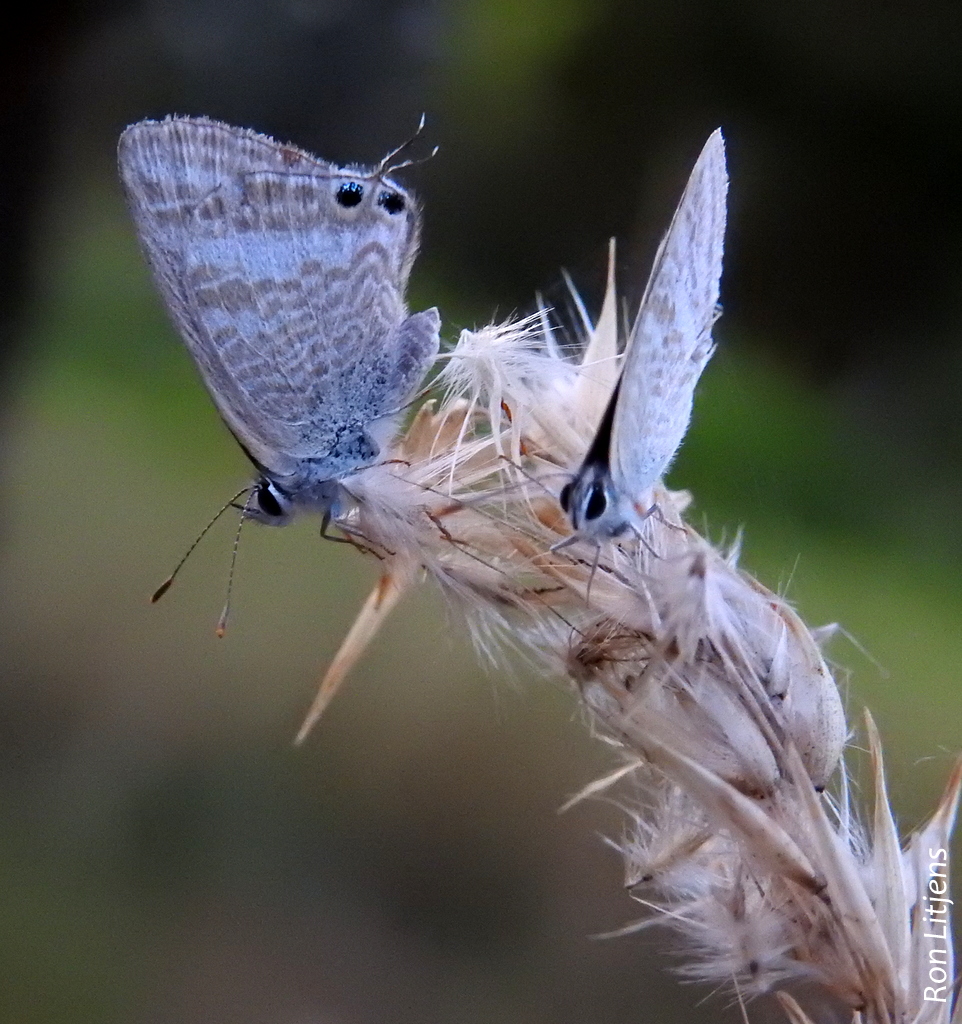
Even so, whilst preparing for a butterfly talk I was shocked at how few butterfly species I had photographed. I had a good collection of photos of butterflies that I considered ‘butterfly-sized’ (4-5cm wingspan) like the Cabbage White or the Common Brown. On reading my butterfly guide I discovered that a lot of butterflies in our area are considerably smaller than this.
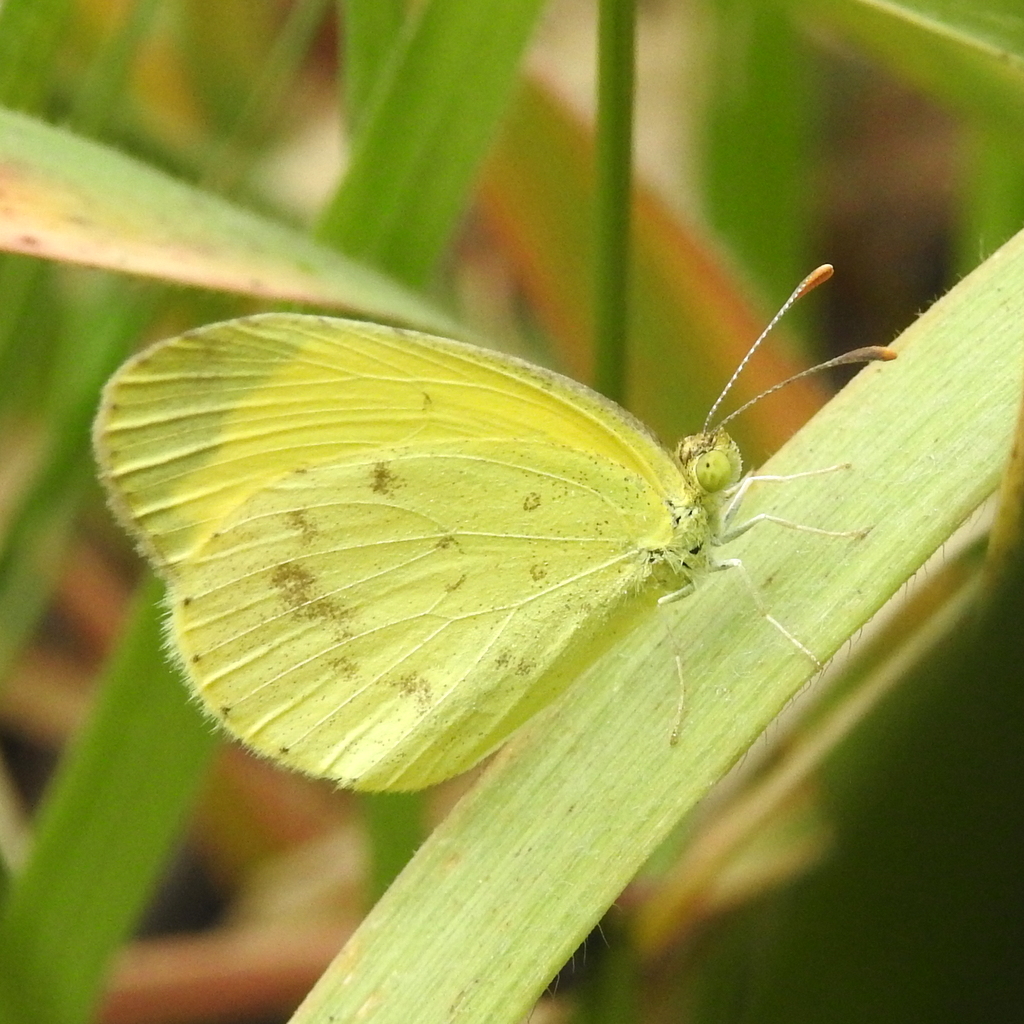
Walking through the Spring long grass at the moment disturbs a lot of creatures – ants, spiders, grasshoppers, flies, day-flying moths, disturbed night-flying moths and butterflies, small ones (2-3 cm wingspan). If you really look they are everywhere. This week alone I have found 5 species that I never consciously had noticed before.
Looking down in the grass at this time of the year is not a bad thing to do anyway.
Hot property
Almost half of Australia’s arboreal mammals and about 20% of our bird species live in tree hollows. Hollows however are at a premium. It takes about 80 years for a tree to develop hollows and a couple of hundred years for those hollows to become big enough to accommodate large fauna. Removal of old growth trees due to logging and agricultural clearing practices makes any remaining hollows hot property in the faunal real estate market.

Sometimes these hollows present short stay accommodation (click HERE to view). The nest box outside our house has had an annual revolving tenancy of White-throated Treecreepers, Ring-tailed Possums and Australian Owlet-nightjars for about ten years. But sometimes the hollows are more permanent homes.

In a local reserve a hollow in an old River Red Gum has been occupied by Brush-tailed Possums (Trichosurus vulpecula) for about five years. In the beginning it housed two possums, pictured left, although in summer the warmth obviously led the animals to let it all hang out. As the possums grew one moved out and the hollow was snugly occupied by a single possum, pictured right.
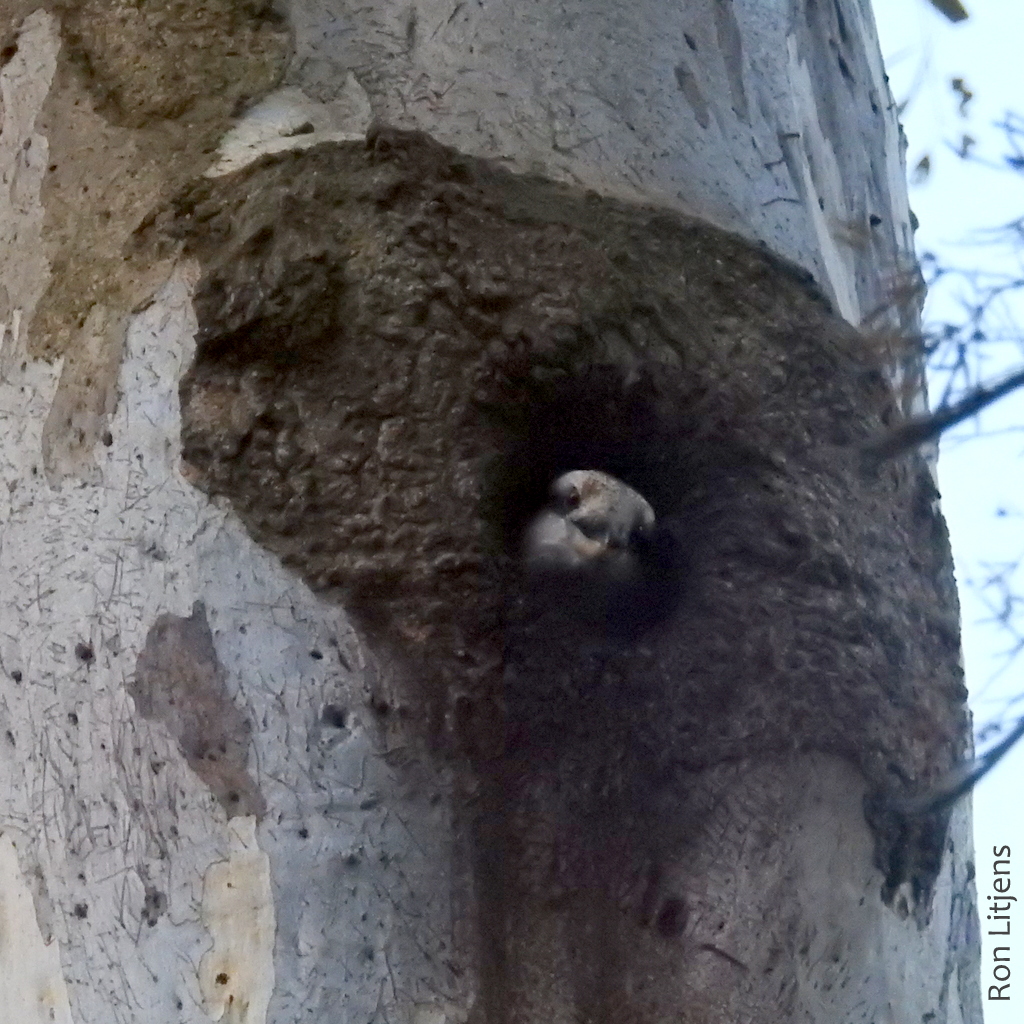
Last week however a Laughing Kookaburra (Dacelo novaeguineae), pictured left, took over the space.
With the shortage of hollows in the area no wonder it is laughing.
Good onya Mum II
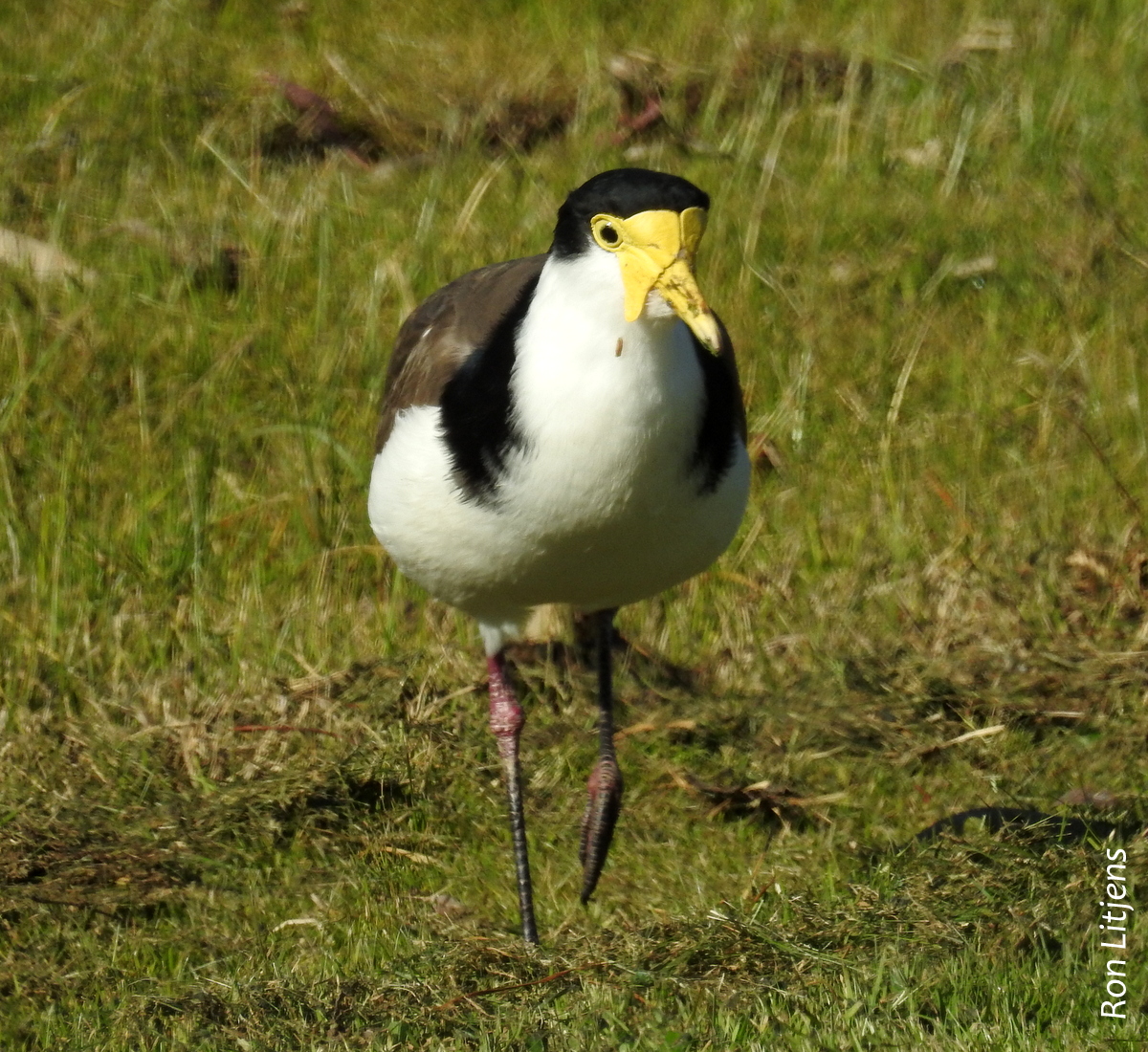
The Masked Lapwing (Vanellus miles) otherwise known as the Clown Bird in this household because of its facial ‘mask’ (pictured left) is a raucous bird around these parts. Because of the unique design and structure of its nest it is a wonder, from an evolutionary stand-point that it is still around.
The Lapwing nest consists of a few sticks dropped on the ground in an apparently random fashion. Into this structure are laid 3 to 4 olive-green eggs which hatch in Spring. The nest is usually located in a clear open space and it’s a wonder they aren’t predated within a few days of laying. The parents aggressively guard the nest calling loudly or try to lead any potential predator away.

Famously eggs have been laid on the local cricket pitch (click HERE) and in the carpark of the recreation reserve, pictured left (there are three eggs laid between the wooden rail and the concrete slab. One of the parents looks on in the background). This season a pair of Lapwings decided to locate their nest in the fully fenced local swimming pool area that will not be opened again until mid-November. Maybe they are not so silly after all!

There appears to be only one chick this season that the parents also aggressively defend. If those tactics don’t work a shrill call from Mum sends the chick disappearing into Mum’s chest feathers (pictured below). Chick? What chick?
Good onya Mum.
Good onya Mum
One of the downsides of Spring is finding either broken birds eggs or bird chicks on the ground. On rare occasions (click HERE for the link) I have been able to successfully place the chicks back in the nest. But if you can’t locate the nest or even if you can but can’t access it what do you do? I try and move the chick from the ground to a tree or bush and then walk away and let nature take its course – hard to do if the chick is chirping loudly and the parents are responding in kind.

On Grand Final day I came across a Red Wattlebird (Anthochaera carunculata) chick, pictured left, sitting on the ground loudly chirping with two equally loud adults sitting above in the tree. The chick was in a fenced-off yard containing a single large eucalypt and a few bushes. No nest was in sight and the bolshie chick was not going to let anyone put it in the bushes. So I let it be.
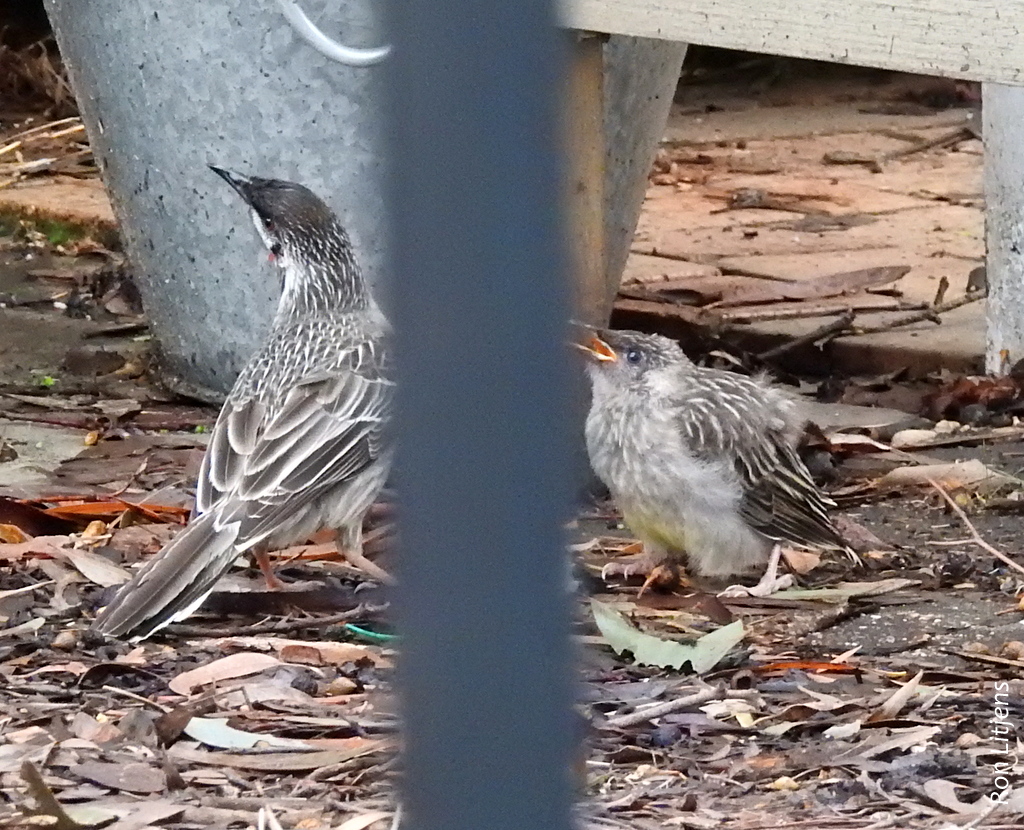
Red Wattlebirds are the largest honeyeater on mainland Australia, its range extending across the south of the continent. They usually build a stick and bark nest in a eucalypt anywhere up to 15 m above the ground. The chicks usually fledge at two to three weeks.
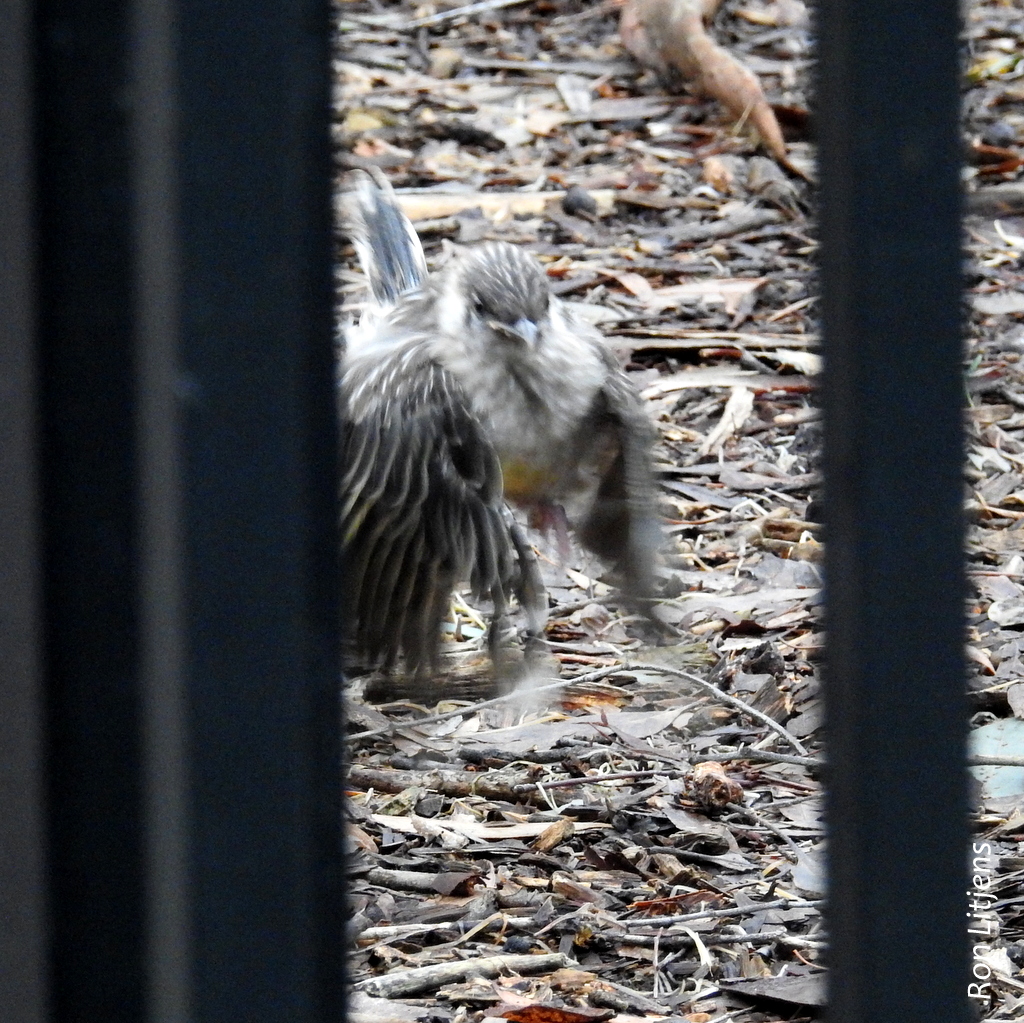
Five days later I walked past the same yard and observed a parent (pictured above right) still feeding the much larger chick on the ground. I was pleasantly surprised to see the parents had stayed around to feed the chick and that a cat had not made a meal of it. On observing me the chick made a pretty good attempt at a take-off (pictured left).
I reckon give it another day or two and it will be able to fly out of harm’s way.
Good onya Mum for sticking around.
Just like a mozzie only fluffy
Australia has over 20,000 species of moths divided into about 90 families. Most of them look, well, moth-like. But if you look carefully as you are walking through the long grass at the moment you may see insects that look like mosquitoes at ground level flying out of your way. They may be mosquitoes but if they are fluffier then they are probably Plume Moths (Stangeia xerodes), pictured below.

Plume moths are of the family PTEROPHORIDAE, from the Greek pteron meaning feather and phoreo meaning to carry. In Australia there are 47 named (and many more unnamed) species. The wings are divided into lobes (usually 2 for the front wings and three for the rear wings) known are plumes because the fringing scales along the lobe margins are long giving the lobes a feathery appearance.
At rest the wings and the body present a ‘T’-shaped formation making the long legs and their spurs obvious.
So put the Mortein away. This is a good ‘un.
Legging it
Butterflies are insects. That means they have three body segments – the head, thorax and abdomen. At a more detailed level the thorax is comprised of three body segments fused together. To each of these is attached a pair of legs. The abdomen is made up of 10 segments. Young butterflies i.e. caterpillars also have a three-segmented thorax and a 10 segment abdomen.

The caterpillar pictured above shows this typical structure. Even though they may seem to have more, caterpillars only have three pairs of legs. As in the adult they are attached to the three thoracic segments near the head (see picture above). What appear to be legs further down the body are known as prolegs. These are hydraulically powered appendages used for gripping plant stems

Butterfly and moth caterpillars have a maximum of 5 pairs of prolegs. They are positioned on segments 3-6 and (always) 10 on the abdomen. The caterpillar pictured above has two pairs of prolegs which are characteristic of moths of the Geometridae family. The Emperor Gum Moth caterpillar (Opodiphthera eucalypti), pictured left has the full complement of five pairs of prolegs.
The number of prolegs is diagnostic for insect type. The larvae of sawflies (e.g. spitfires) have between 12 and 16 prolegs in addition to the 6 true legs. Scorpionfly caterpillars top the list with 18 prolegs.
It’s lucky they don’t have to buy shoes.
Large scale discovery

A recent early spring-clean of my kitchen unearthed the desiccated body of an Imperial Jezebel (Delias harpalyce) butterfly under a shelving unit. Given that these are on the scene during summer my spring-clean was obviously not early enough. It was also an opportunity to have a closer look.
The Imperial Jezebel (pictured left) is one of the more colourful butterflies in the district and is endemic to Australia being distributed along the coast and ranges of NSW and Victoria. The eggs are laid on mistletoe plants with cocoons being formed in early autumn and the adults emerging in the spring.
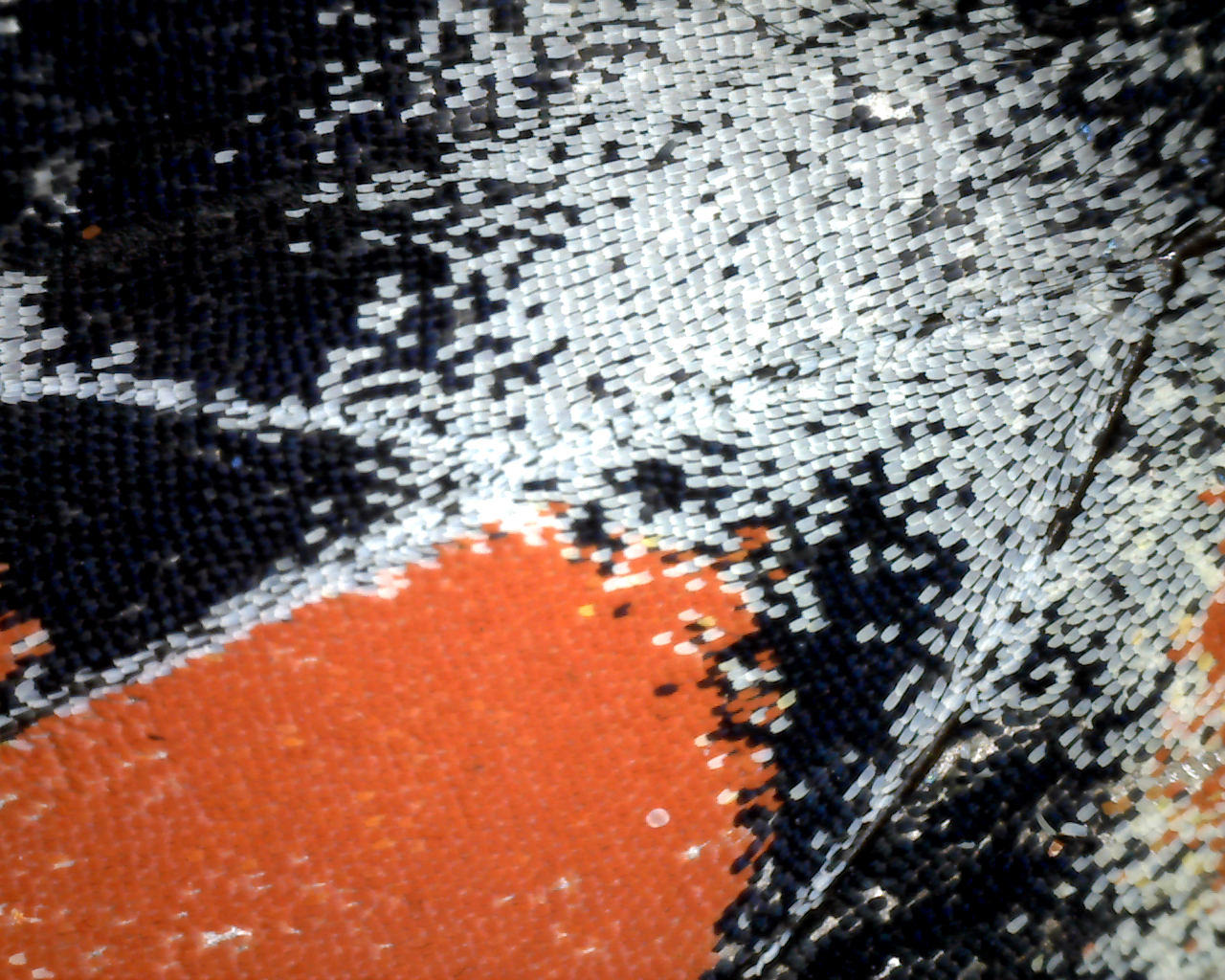
As with all butterflies and moths the wings are flattened membranous sacs covered in scales (pictured right). The scales provide the butterfly with both protection against the elements and thermal regulation. Scales are attached to individual slots on the wing in overlapping transverse rows and are easily detached, particularly useful if caught in a spider’s web! Marginal scales on the wing edges are longer and form a fringing effect (pictured below left). In addition the male butterflies have sex scales that are associated with pheromone producing glands.
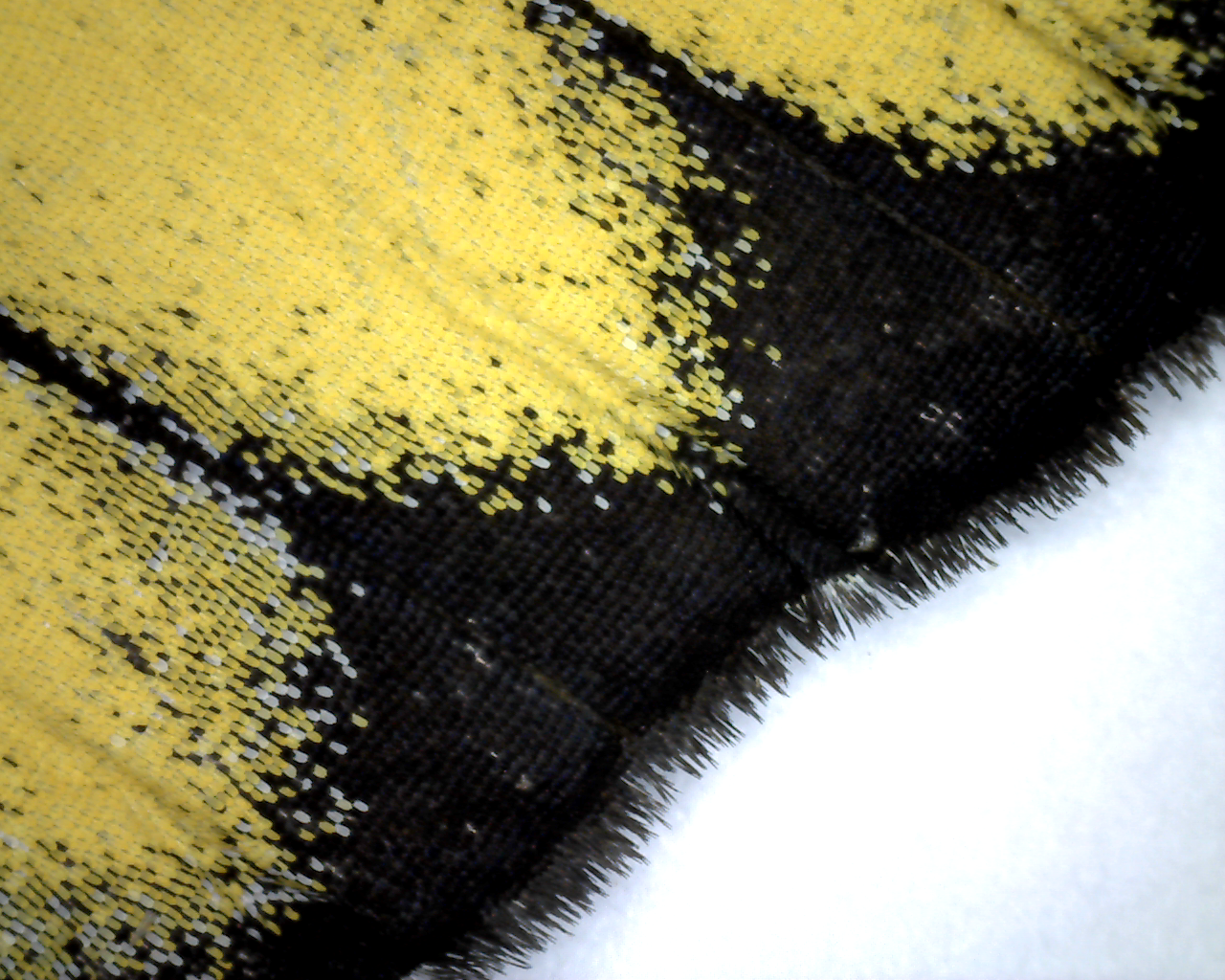
The Imperial Jezebel males and females have different coloured wings. Scale colours are either due to pigmentation in the scale or diffraction of light from minute structures on the scale surface. In addition to colour difference based on gender this butterfly has different colouration due to season, there being a summer form and a spring form.
A wardrobe of a grand scale.
The third eye (lid)
Most creatures have two eye lids. They serve the purposes of a. opening so as to allow vision, b. spreading tears across the cornea so that it remains moist, and c. closing quickly so as to protect the cornea from damage from debris.

Many creatures also have a third eye lid called a nictitating membrane, from the Latin word ‘nictare’ meaning to ‘blink’, that wipes horizontally across the cornea. It serves as a protective layer from dust and debris for creatures such as Blue-tongued Lizards (Tiliqua scincoides) pictured, that live close to the ground. For water creatures such as rakali, the Australian water rat, the membrane is draw across the eye when it is swimming underwater.

The nictitating membrane can be translucent when its main purpose is being a ‘windscreen wiper’ or transparent when its purpose is to protect the cornea from the outside environment such as under water or for animals e.g. Peregrine Falcon that travel at high speed. Birds, fish, reptiles and some mammals have nictitating membranes. In humans the structure in the corner of the eye known as the semilunar fold is a vestige of a nictitating membrane.
I could use some when I’m on my bike!
Just like Mum
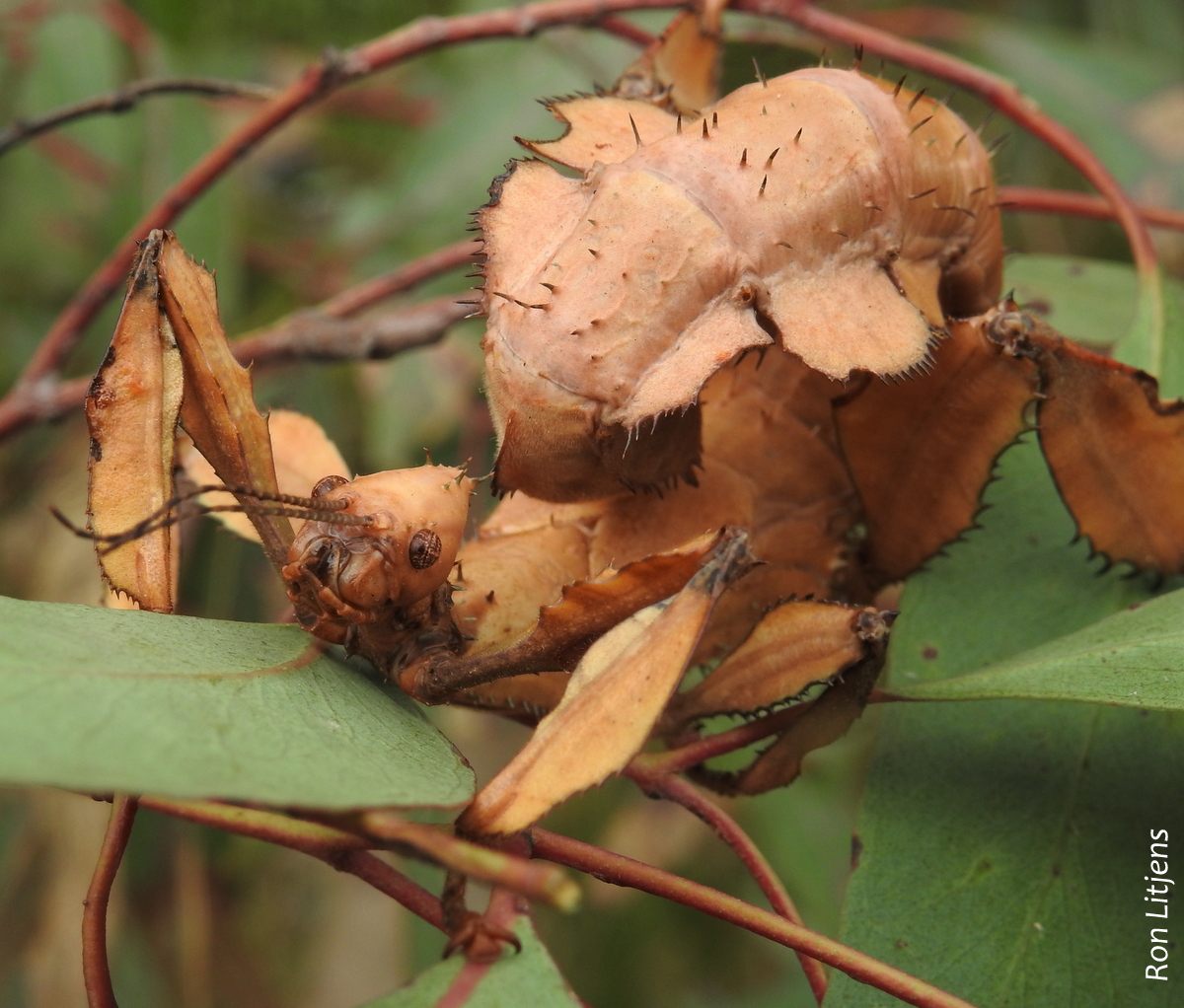
EM keeps Giant Prickly Leaf Insects (Extatosoma tiaratum), pictured left. As pets they are pretty low maintenance. Once every few days you have to change the eucalyptus leaves on which they feed and in return you get just as much effort – very little. These insects are night creatures so when you get up in the morning they may have changed position on the gum foliage but during the day you’d be lucky to see a leg move.
They do however produce lots of droppings and lots of eggs that they unceremoniously drop on the bench. The job in the morning is to separate the eggs (pictured below) from the poo. What started off as three adult animals, one male and two much larger females has now dwindled to a single female. It still produces viable eggs though.

Leaf insects like many stick insects do not necessarily need a male and female parent to produce offspring. They can also reproduce by a process known as parthenogenesis (from the Greek parthenos meaning virgin and genesis meaning origin). An embryo can develop from an unfertilised egg. The offspring produced are female.
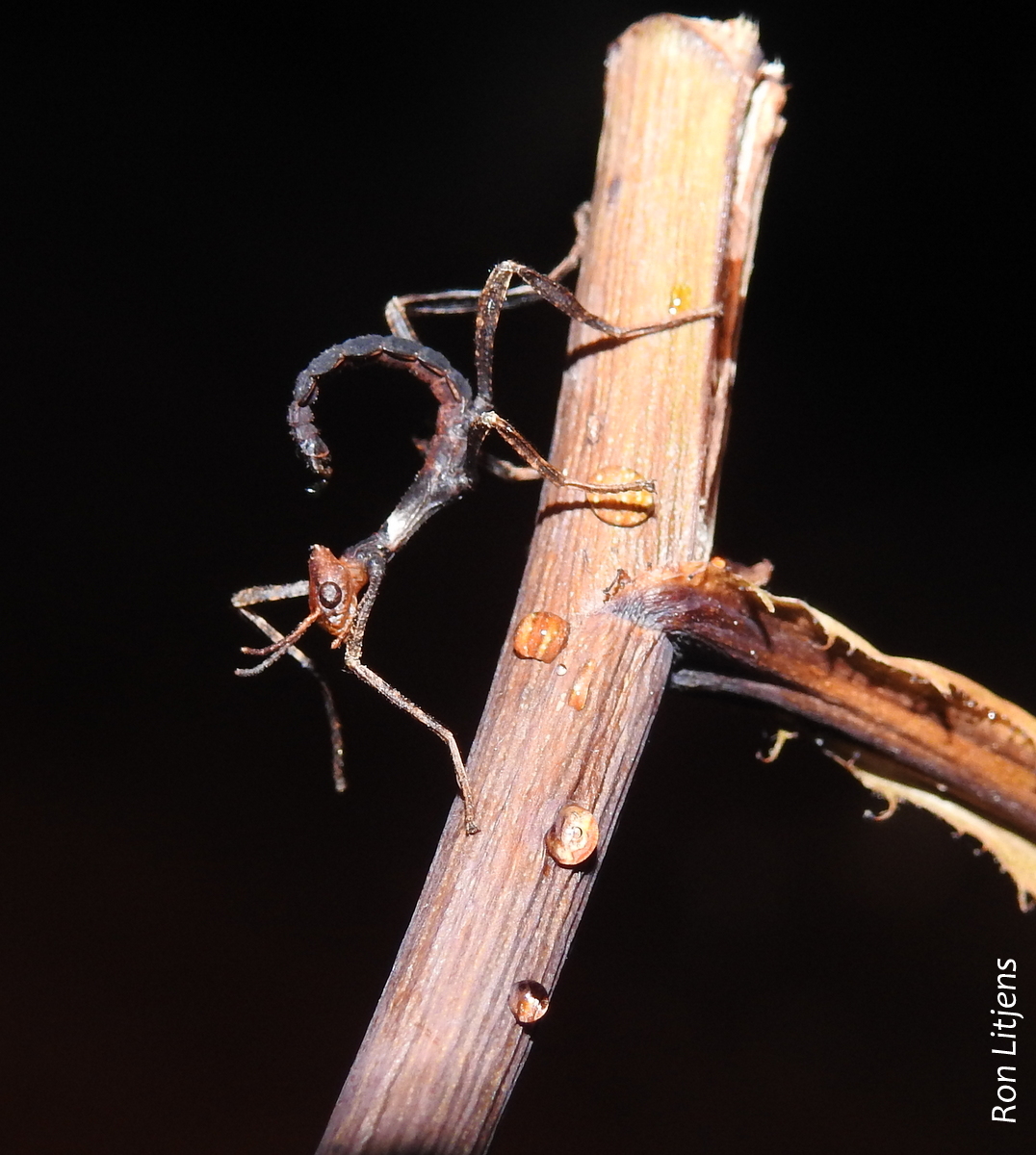
Last week a squeal of delight from EM heralded the arrival of the first offspring (pictured left). Given its parthenogenetic origin it is safe to say that it looks (or will look) just like Mum although measuring a mere 5mm in length it has a long way to go to match Mum’s 14cm size.
Looks like collecting gum leaves is on the agenda for quite a while yet.