Having a spring in your…tail
On a faunal scale much smaller than dogs and cats, even smaller than mosquitos are six-legged creatures known as Springtails. Even though they have six legs they are not insects because they have internal mouthparts. Insects have external ones. Springtails feed on a variety of foods though most are vegetarians. They are commonly found in leaf litter where they breakdown vegetable matter into nutrients for the soil. They are called springtails because under their bodies is curled a ‘tail’ known as a furcula. When disturbed the furcula explosively hits the ground propelling the creature forward.

There are many different types of Springtails. Last week I came across the broken top of a white-gilled mushroom lying upside down on the ground. After picking it up a rush of red springtails emerged from the gills (pictured above). These are springtails of the order Poduromorpha characterised by an oval shaped plump body, short legs and two noticeable antennae. Red Springtails feed on the spores of fungi. If you look careful at the gills of most mushrooms you will find springtails though not all of them will be red.
Technically these springtails are neither vegetarians or fungivores but are more correctly classed as sporivores – another word for your vocabulary!
Barry, Hiccup and Sticky*
When I was growing up in the city the choice of pet was limited to a dog or cat. These days the choices for young folk seem limitless especially if you grow up in a rural area. Take my young friend E.M. as an example. In the past 12 months his range of pets has been quite diverse.
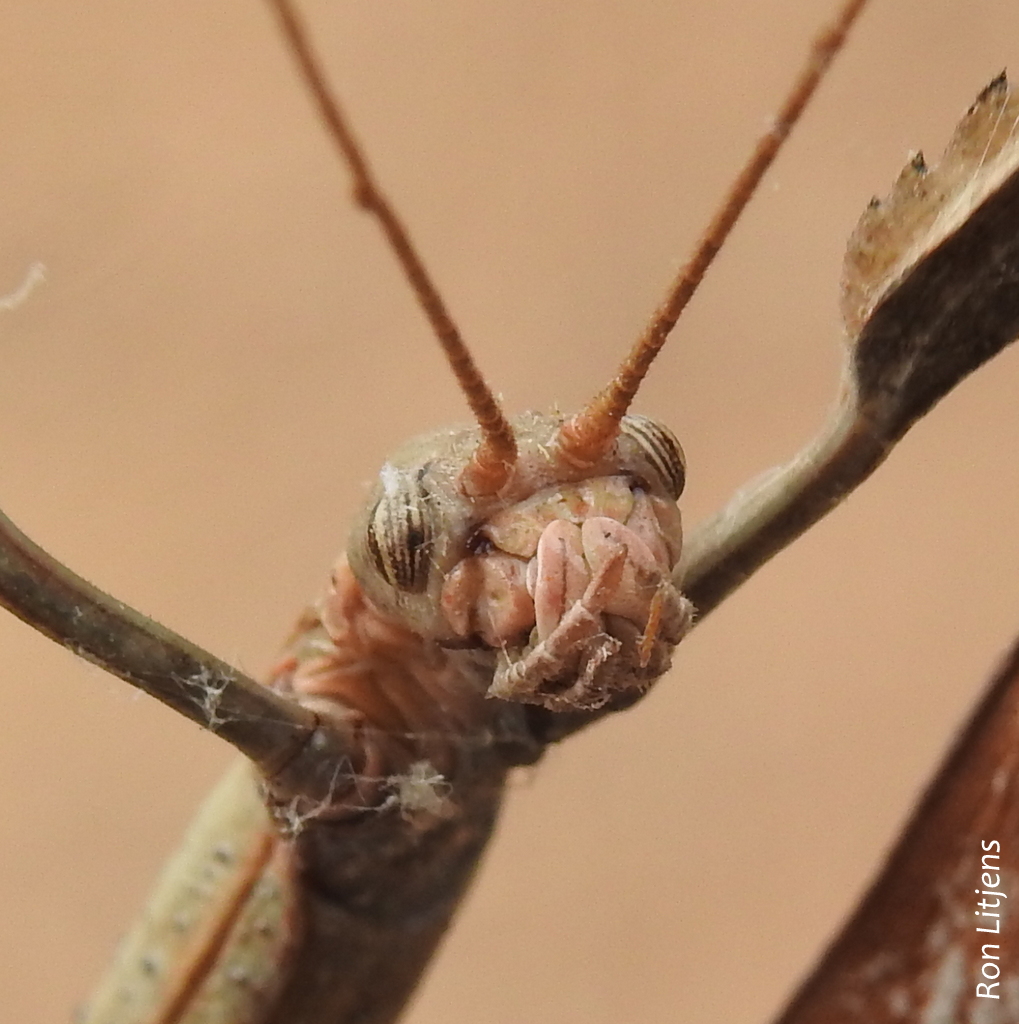
In July of last year EM introduced me to Barry, his pet stick insect, pictured left (a face only a mother could love!). Stick insects are not that uncommon it is just that firstly they are very hard to see given their camouflage and secondly the larger adults are nocturnal due to the sensitivity of their eyes to light. Barry was not caged in anyway but hung around the same area each day and didn’t seem to mind being handled. After a while he (or she) wandered off to do other stick insect things.

Barry (named after the Tiger in Dr Doolittle?) has soon replaced by Hiccup, a very young Eastern Grey Kangaroo (Macropus giganteus) joey (pictured right) found abandoned in the bush. Hiccup required 4 hourly feeds of marsupial formula milk. Watching him tumble head first into any pouch-looking bag was worth all the late nights and early mornings. As Hiccup got larger it was positively dangerous to have the pet launch themselves at you so Hiccup went to an establishment that rehabilitated young roos.

Which brings us to the current pets of choice – four Giant Prickly Leaf Insects (Extatosoma tiaratum) pictured left, purchased from a private vendor. Like stick insects they are nocturnal and by day remain camouflaged not by looking like a stick as in stick insects but by resembling leaves. These insects are indigenous to Australia but are found naturally in the warmer climes up north.
I think I still prefer the good ol’ days. For all the exoticness of the aforementioned pets you can’t simply put a lead on them and take them for a walk.
* names still to be decided.
Export opportunity
Trying to find fauna to feature in this blog during winter is quite difficult. The only animals that can be relied upon to be around during this time are Eastern Grey Kangaroos (Macropus giganteus) that are always up for a family portrait (see below) and unfortunately, Sambar Deer (Rusa unicolor).

When I moved into the area nearly two decades ago one never saw deer. They were happily inhabiting more remote places like the Mt Disappointment State Forest. But since the ’09 bushfires when that forest got totally burnt out, Sambar Deer, as well as other species of deer such as Red Deer and Fallow Deer have found good foraging in the valleys and haven’t left.

Sambar Deer are the largest of the feral deer in Australia with the males tipping the scales at 300kg. In my experience they are extremely elusive unlike the kangaroos they share the area with. Very often the only indication that the deer are around, apart from footprints and the ubiquitous tree rubbings is the explosive warning sound they make (called pooking) when you get near. These deer graze on a wide variety of vegetation, so much so that they are listed as a biodiversity threat in Victoria.
Originating in India, China and south-east Asia Sambar Deer were first introduced into Australia in the 1860’s nearby at Mount Sugarloaf in what is now known as Kinglake National Park. In their home ranges overseas they are classed as Endangered due in particular to loss of habitat. So here’s the export opportunity for a budding entrepreneur. Why not export a feral pest from Australia back to where it came from (and remove it from the Endangered list at the same time) and set up the export operation in Kinglake.
There’s something ‘full circle’ about that idea.
Now is the Winter of the Spinebill
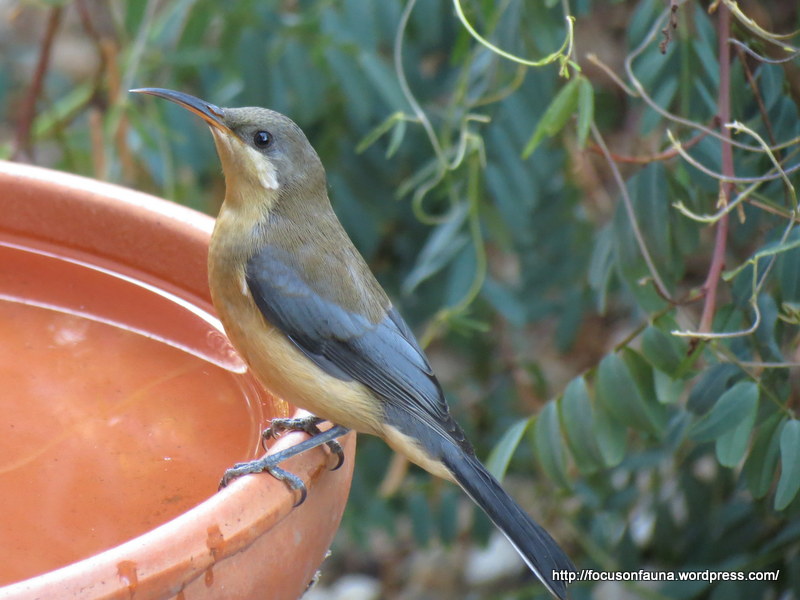
One of the daintiest, prettiest birds in the garden is the Eastern Spinebill (Acanthorynchus tenuirostris). It is a member of the Honeyeater family and one that, unusually, is more likely to be found in Winter in our district than the warmer months. Like currawongs and robins, they tend to move from higher altitudes and wetter forests out through the valleys, gardens and farmland in the cooler months.

Australia is the home of honeyeaters; they are not found in Asia, Europe or America, only Australia and surrounding islands. This is because our trees produce more nectar than those of other places. We have forests of trees that burst into masses of flowers producing rich honey-like nectar. And these trees – especially Eucalypts and Melaleucas – depend on birds for their pollination. Bird-pollinated plants are exceedingly rare in the rest of the world; they are dominant here. And honeyeaters aggressively and noisily defend their patch when trees are in blossom.
The Eastern Spinebill is a specialist feeder on heaths which have tubular flowers, and therefore has the longest, thinnest beak of any honeyeater. The Latin name means ‘spine bill thin beak’. As they probe the flowers for nectar (and the Pink Heath is flowering now) they get daubed with pollen which they pass on to the next flower. You can see pollen on the base of the bird’s beak in the photo. Their loud piping call reminds me of Winter as it echoes through the Yea fog on cold days.
They love to visit native gardens and it is a good thing they do so in Winter, because come Springtime they would be in competition with big bossypants like Red Wattlebirds and New Holland Honeyeaters. When you’re small, dainty and pretty you don’t pick fights with the tough guys.
They’re all around

The Rakali (Hydromys chrysogaster) formerly known as the White-tailed Water Rat is more common than many may think. It is their primarily nocturnal nature and inherent shyness that make them less seen than other fauna. Those who have participated in the Strath Creek Landcare Group’s or Yea Wetlands’ Platypus & Rakali Count will know that sightings of this large rat are more common than the ‘sexier’ platypus.
The natural range of the rakali covers most of eastern Australia (excluding the desert regions) and the south west corner of W.A. They live near permanent bodies of water, both fresh water and salt where they feed on crustaceans such as yabbies, fish, frogs, reptiles and birds eggs. They are also efficient scavengers and are known to come into urban areas in search of food.

In the Yea Wetlands at the moment there is a rakali that seems to ignore all the rules by hunting through the billabongs during daylight hours (pictured above left). An even more startling sighting has been this rakali (pictured above) that regularly frequents a bird feeder in the backyard of a house on High Street.
I have always had a philosophical objection to feeding birds but if a bird feeder attracts rakalis…..
Looking his best
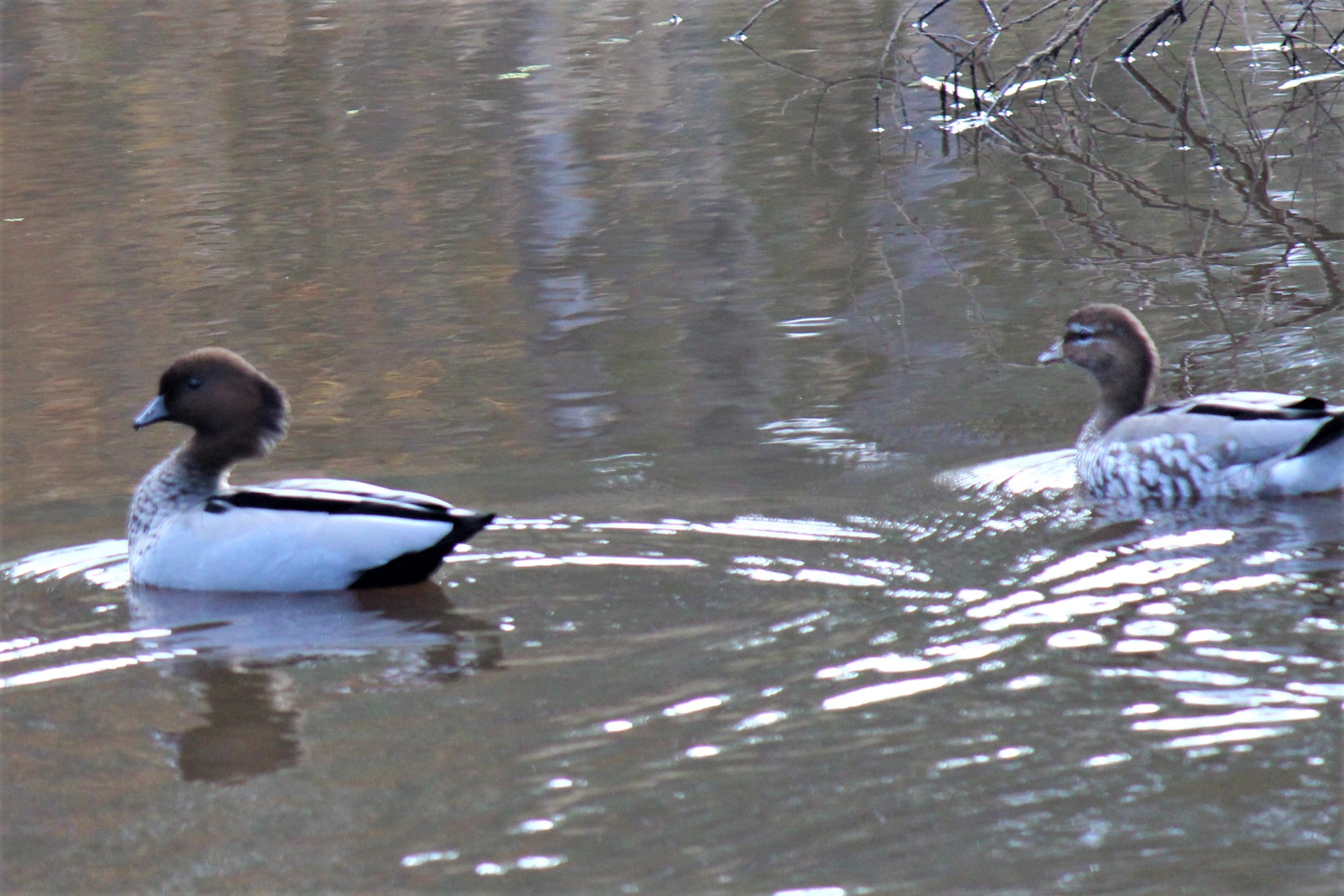
It stands to reason that the time in the great cycle of life to look your best is during the courtship phase. So it is no surprise that male Wood Ducks (Chenonetta jubata) are at their resplendent best in mid-Winter. Wood ducks are one of the earliest-breeding birds, producing large clutches of very cute ducklings ready to leave the nest the first week of Spring. So this is the time to spruce up and impress the ladies.

I have a photo of a wood duck family taken last November, when the male is looking decidedly plain. His bright colours have faded, he has lines around his eyes, the kids are out of control, the mate is nagging for more food – that’s when one loses interest in keeping up appearances.

You can see why this species was once known as ‘Maned Goose’. Their bill is more like a goose’s beak rather than a duck-bill, and the male can extend a small but impressive mane.
Wood ducks breed in tree hollows, often quite a few metres high in a tree. I asked an experienced birder once how they got the ducklings out of the nest-hollow onto the ground, which clearly happens well before they can fly. “They just push them out – they weigh only a few grams and can’t hurt themselves, they flutter down like dry leaves.”
Sometimes the number of ducklings in a family group is incredible. Local photographer Robert Gardiner sent me this incredible photo:

It is probable that like some other ducks, older wiser females get custody of the young from younger parents in a sort of day-care or creche. But that’s a bit of a mystery to ponder for another day.
The surprise to me was seeing how bright the plumage of the males looked today, in the middle of Winter. Fairywren males don’t even turn blue until the start of Spring. It seems that male Wood Ducks are better at planning; they like to get an early start.
The quick and the dead
There are some things in the bush that I never get to see properly because they are gone in an instant. At the top of that list are any species of bird with the name ‘quail’ in it – quail, quail-thrush, button-quail, etc. These birds are usually seed eating ground-dwellers that live and nest in long grass. When walking through the bush I often here the whoosh of these ‘quailey-things’ as they burst from the cover of grass only to disappear back into the grass metres away. I never really get to get a good look…unless they turn up dead.
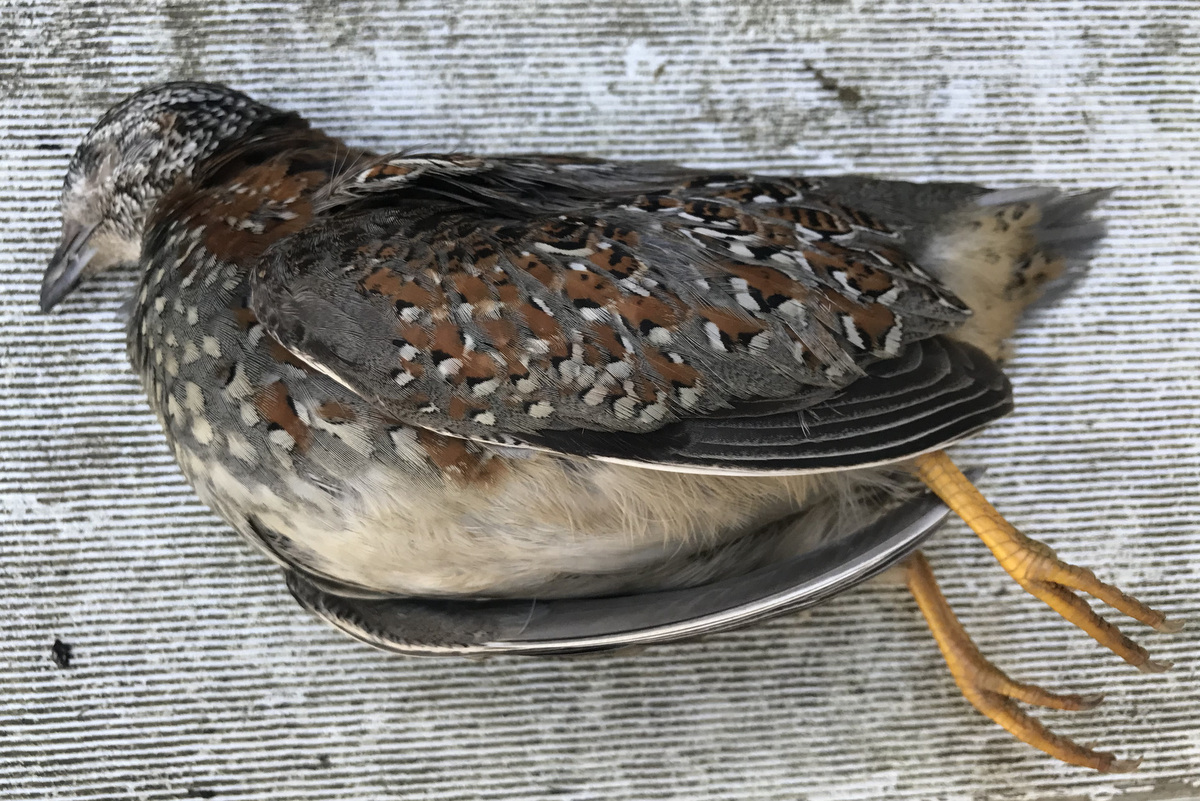
Pictured above is one such creature that turned up dead under my verandah (probably after hitting a window) last week. It is a Painted Button-quail (Turnix varius), a species I have never seen here before. Species of Button-quail are named after their striking markings e.g. Red-backed, Chestnut-backed , Buff-breasted, etc. The Painted Button-quail is named for the detailed markings on the wings. The scientific name is derived from the Latin coturnix meaning quail (hence not quite a quail) and varius meaning variegated, referring to the many colours.
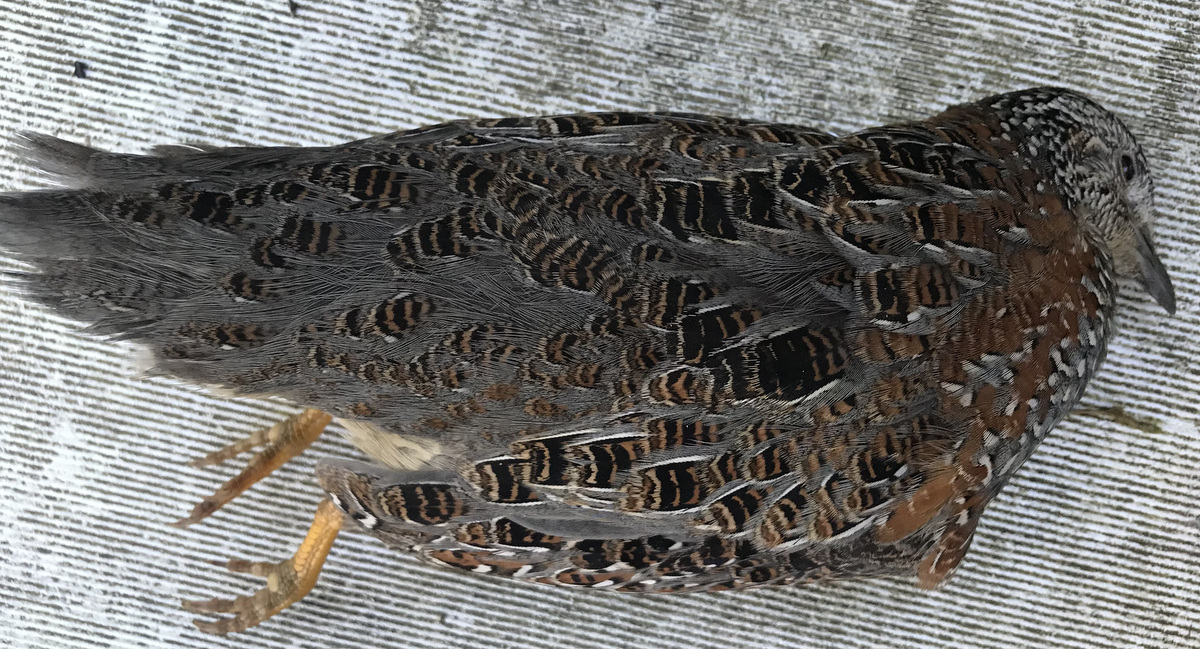
Button-quail look like but are not related to quail. They differ from quail in that they are missing a hind-toe and crop. Unlike many bird species the female button-quail is larger and more brightly coloured than the male. The nest is a depression in the ground at the base of a rock or tree and lined with grass. It is built by both sexes although it is the male that looks after the eggs, during which time the female will mate with another male.
Who’d have thought. Such risqué behaviour in the backyard.
The enemy within

Last week after two years and six postponed dates the Spider presentation finally happened. The talk contained many examples of spiders as predators: building webs, ambushing prey. But spiders don’t always get things their own way. They are an integral part of the food chain which means they are often ‘the hunted’. One of the photos shown (pictured left) taken by JB from Limestone shows the insides of a mud wasp nest that had been accidently knocked off a wall. The nest contained several paralysed spiders placed there by the adult wasp. On these spiders eggs had been laid with the intent that when the wasp larvae hatch the spiders would provide fresh food. On one of the spiders you can even see a wasp larva.

I thought that was as gruesome as the night would get until in a discussion after the talk with another JB (from Killingworth) photos and a video were revealed showing a Redback Spider (Latrodectus hasseltii) walking on a carpet (pictured right). When squashed the spider erupted into a ball of writhing worms (pictured below). Alien eat your heart out!

The worms are endoparasitic Mermithid Worms. The worms enter the spider directly or through what the spider eats and they proceed to feed on the internals of the spider without killing it. The spider becomes more and more debilitated until the worms burst out of the body and the spider dies. Because in the final stage of the worms’ lives they are aquatic, before the spider dies the worms induce thirst in the host so that the spider will head towards water. That is probably where the hapless arachnid was going on its trip across the carpet.
I’m not going to upload the video but no sci-fi movie comes close to what happens in nature.
Koalas beware
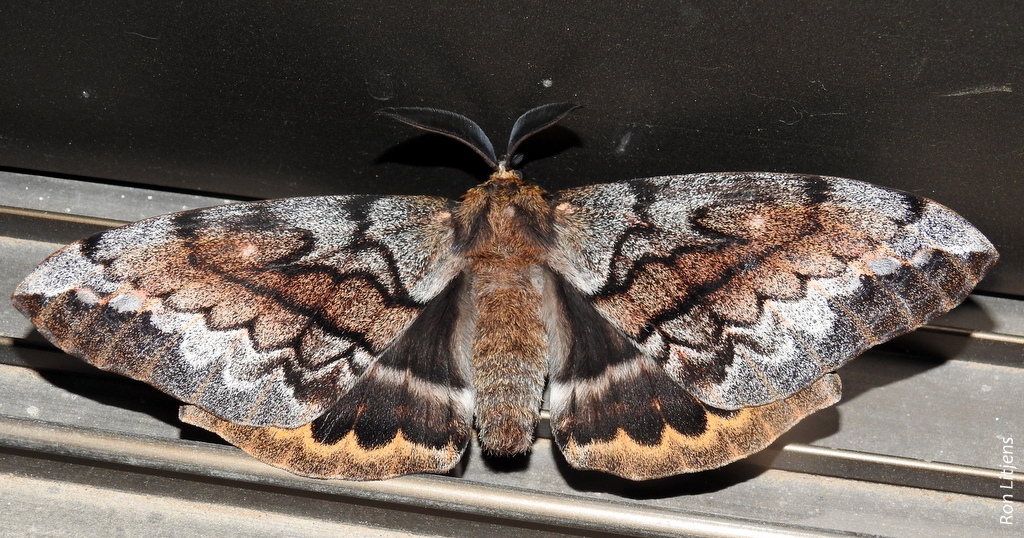
It seems that this is the season for large moths to appear. The recent rains have caused the Rain Moths to appear in abundance. Another moth that appears in the April/May timeframe is pictured left – a White-stemmed Gum Moth (Chelepteryx collesi). The smaller male moth is pictured. These moths, found in eastern Australia are big with the female wingspan typically being about 16cm across.
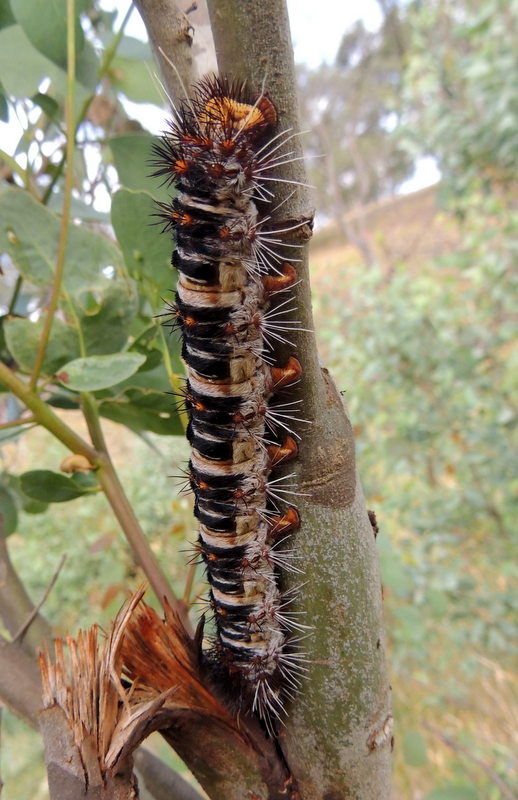
But it is the caterpillar that is fascinating. The caterpillar of the White-stemmed Gum Moth (pictured right) is one of the largest in Australia, up to 12cm long. It feeds on the leaves of various eucalypts and paperbarks. The body is covered in very sharp dark red barbed spines (pictured below) that are strong enough to pierce human skin. When touched they break off and embed themselves in the skin causing pain and localized swelling. The spines are difficult to remove.
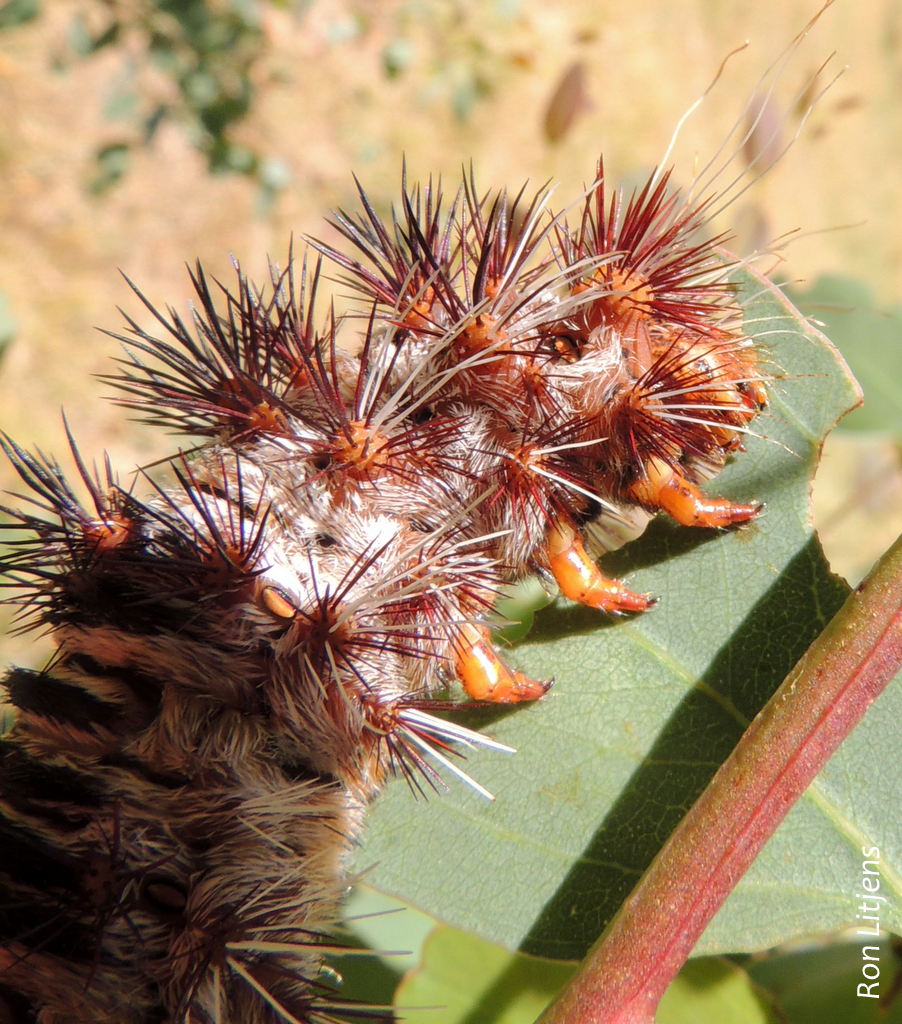
Before pupating the caterpillar spins a double-walled silk cocoon attached to the side of a tree or in the crevice of bark. It pushes its spines through the cocoon casing to deter predators from disturbing it whilst pupating.
Who’d want to be a koala with these things in your tree.
Biffo at the Blue-banded B&B
Many blogs have been devoted to observations of the life and death struggles occurring at the Blue-banded B&B, an eight metre high wall of a local historic building where Blue-banded Bees (BBB’s) build nests in summer.
BBB’s are solitary bees in that they do not form a collective hive. Instead they tunnel individually into friable materials such as the lime mortar of old buildings and create a cell in which they lay an egg and then stock it with food for when the larva hatches. Whilst the bee is out foraging for this food parasitoid insects such as Cuckoo Bees and Gasteruptiid Wasps enter the cell and lay their own eggs. The BBB’s appeared to be oblivious to these goings-on. This year however I have noticed the BBB’s fighting back.


Cuckoo bees are very obvious about their intent. They will sit on the wall outside a BBB tunnel and wait. When the BBB leaves it enters the tunnel to lay its egg. Sometimes the BBB returns earlier than expected. Pictured above is a BBB (Amegilla sp.) hovering outside its tunnel after having found a Neon Cuckoo Bee (Thyreus nitidulus) about to leave. After about twenty seconds of stand-off the BBB appeared to attack the cuckoo bee (pictured right). All that can really be seen is a melee of antennae and legs but the two fell to the ground and continued the biffo there. They soon separated and flew their different ways.
Blue-banded Bee 1, Invaders 0 – although I think the damage had already been done.




 Focus On Fauna