Lifecycle in five pictures
The Dotted Paropsine Leaf Beetle (Paropsis atomaria), pictured below, is one of many species of Eucalyptus Beetle feeding on our gum trees at the moment. Atomaria refers to the speckled colours on the wing cases.
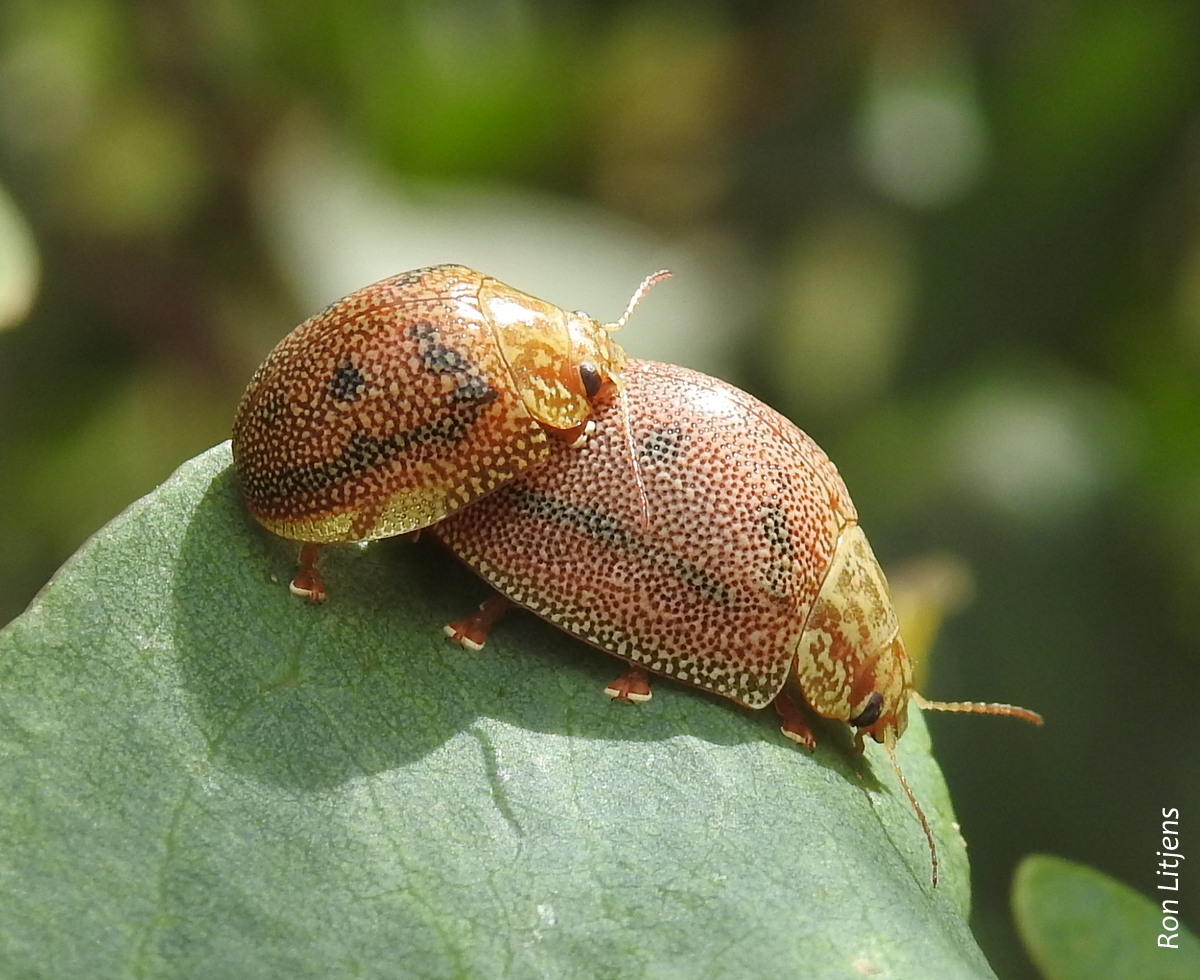
After mating tubular eggs are laid in a cluster around a gum twig by the female beetle. The larvae when hatched are yellow with a black head and tail and covered in small black dots.
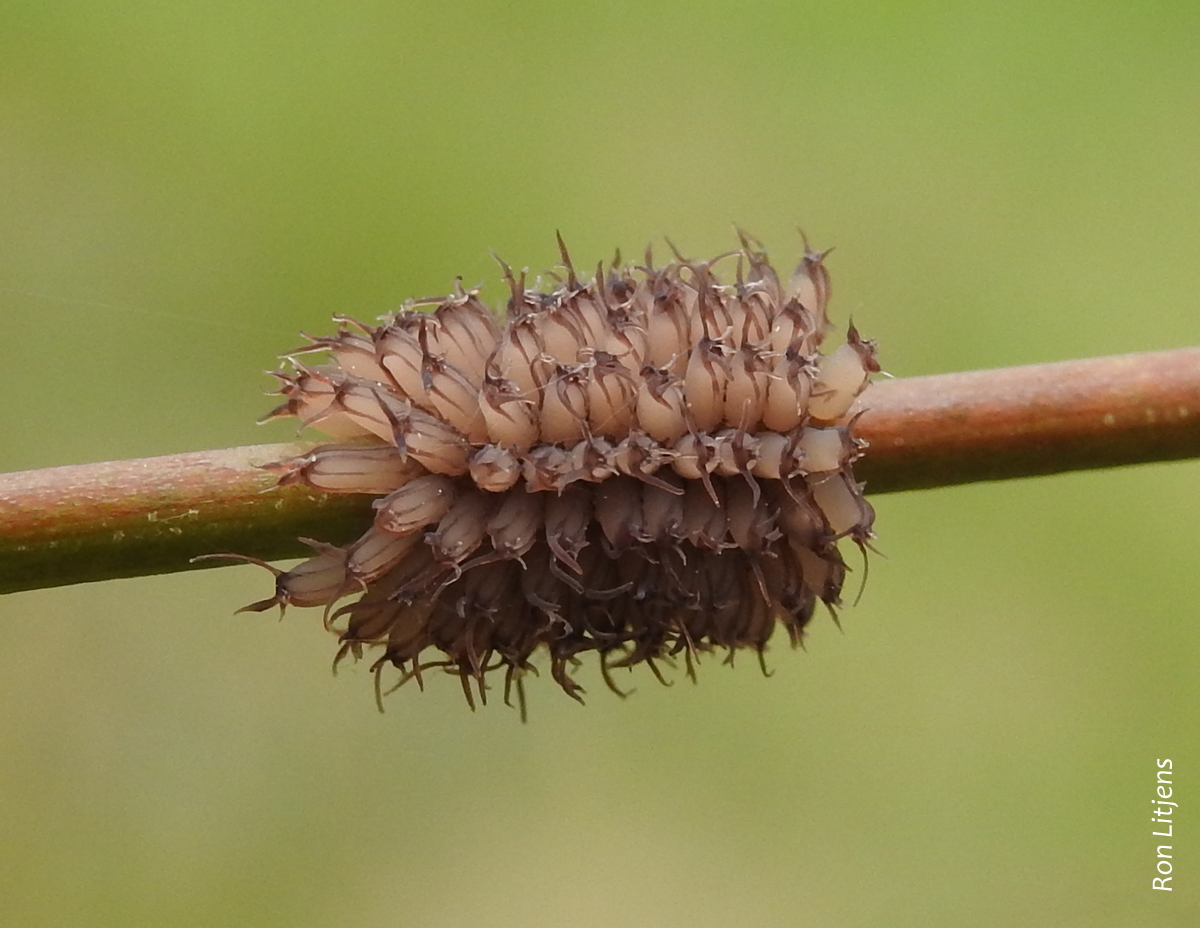
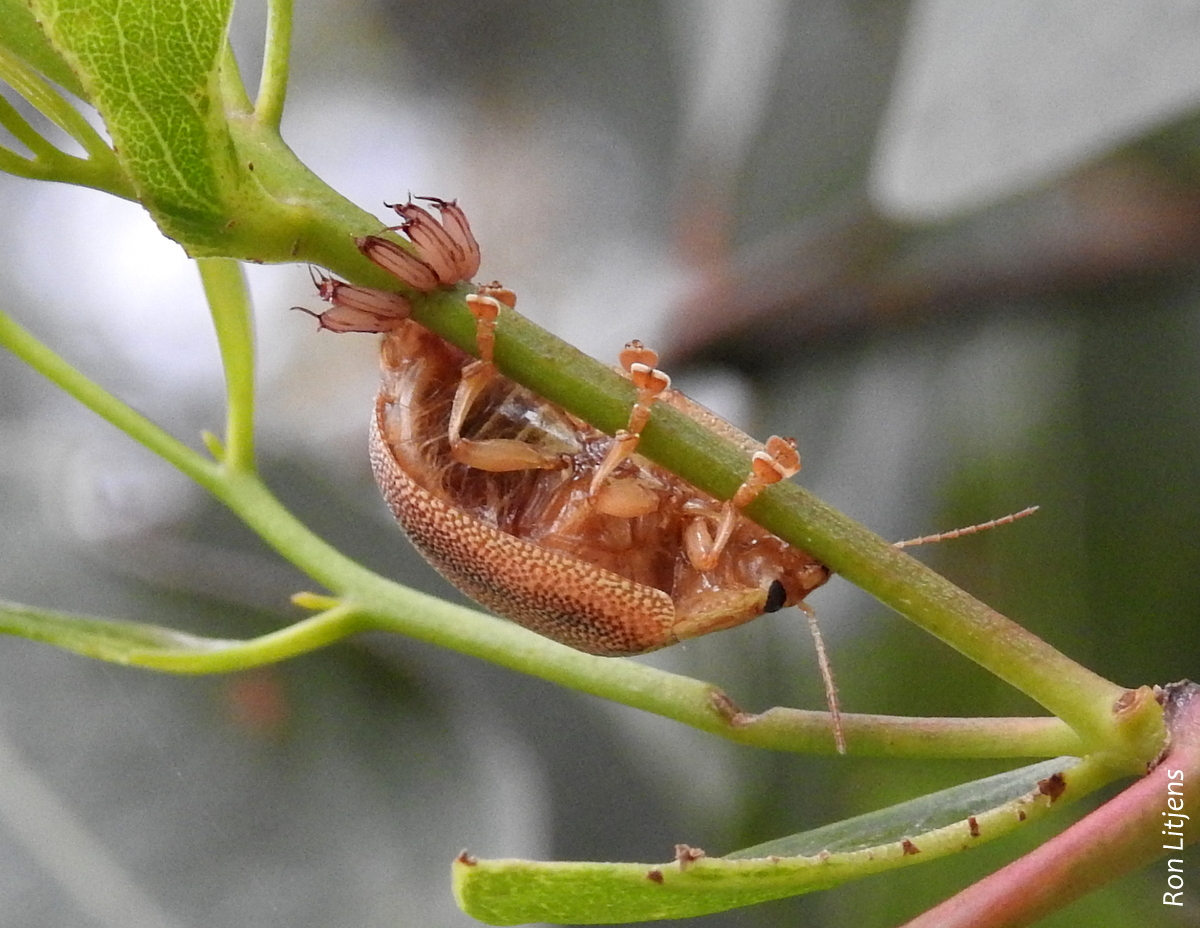
Both the adult and larval forms are herbaceous. The larvae form groups that entirely devour young gum leaves. They pupate in the ground and emerge as adults, which feed on more mature leaves, creating semi-circular shapes in the leaf margins.
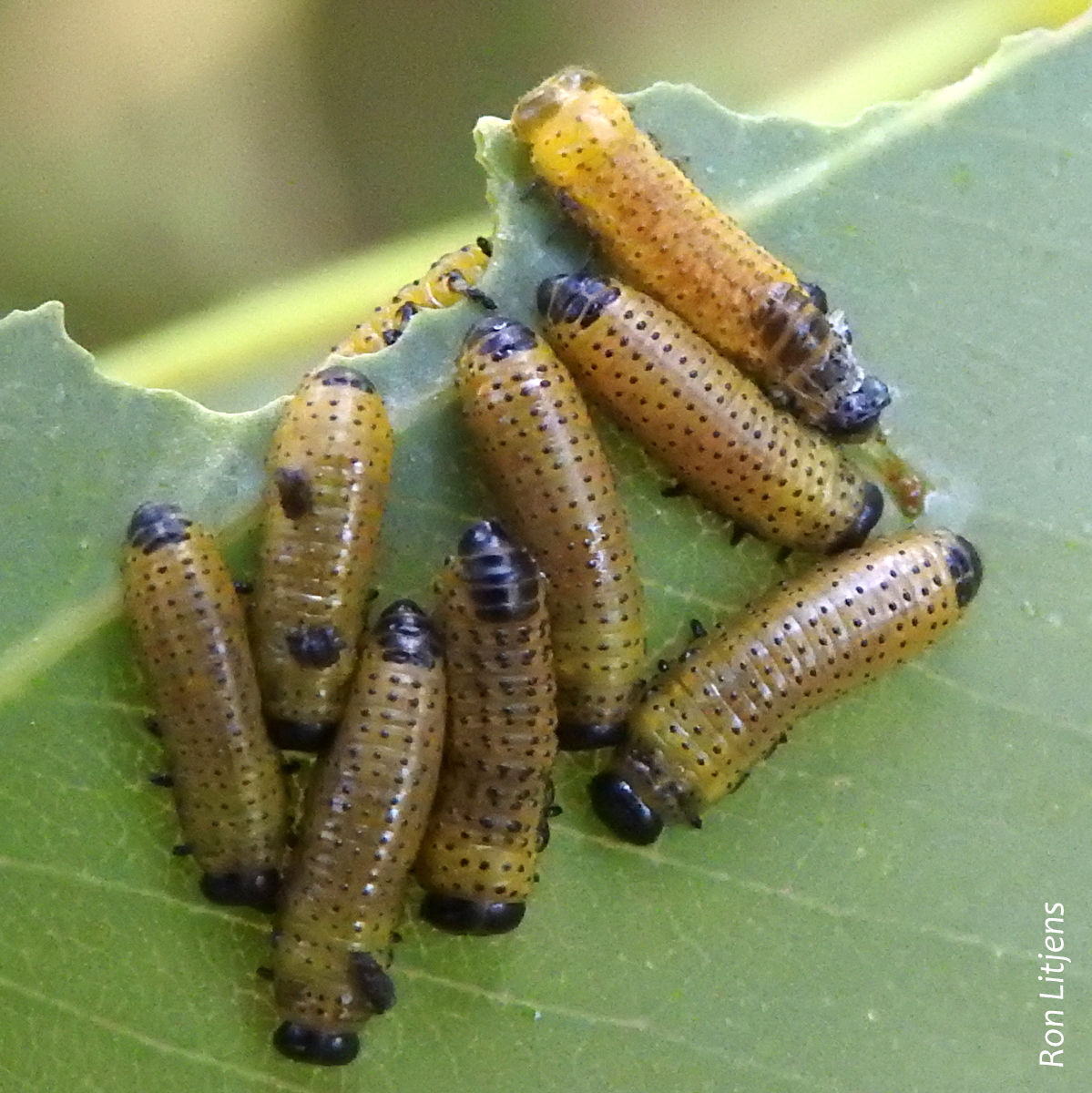
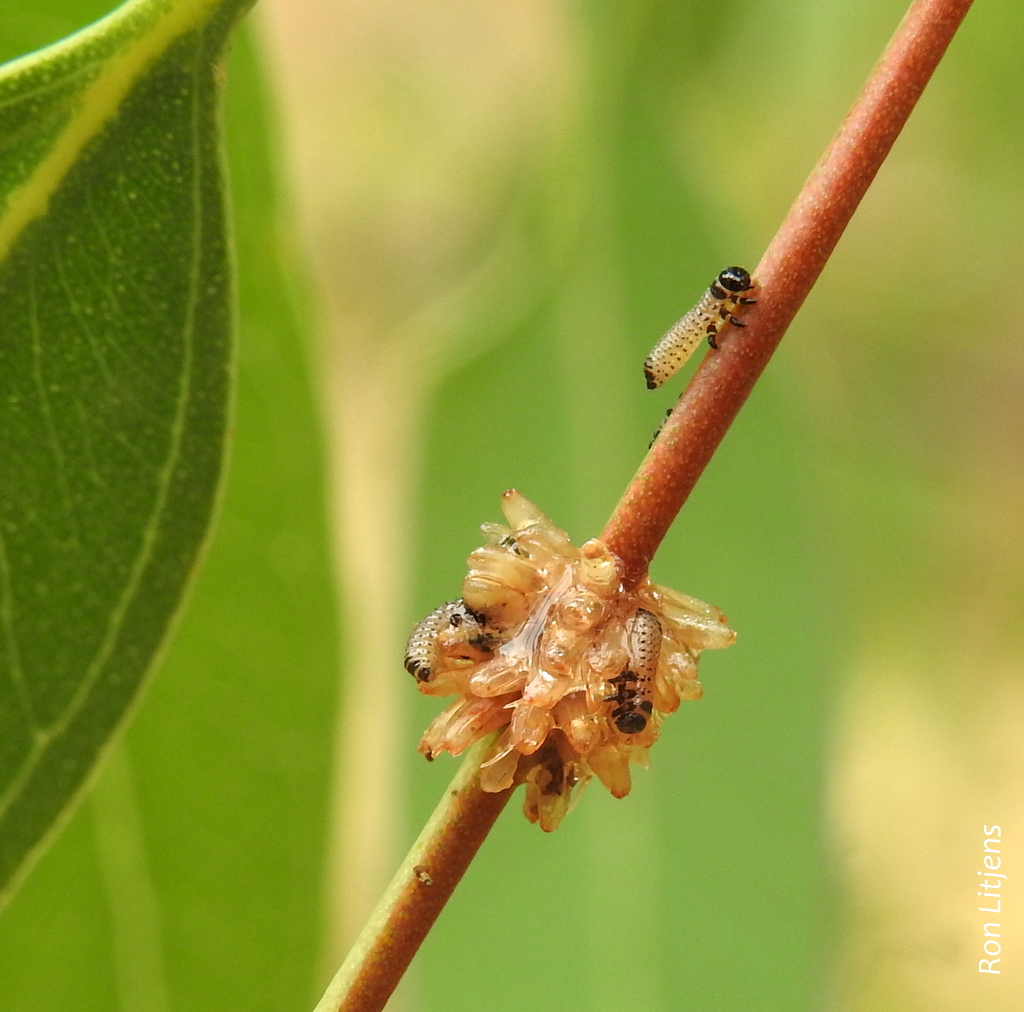
The many species of Leaf Beetle come in a range of colours. At this time of the year they provide welcome mobile tree decorations – unless you are a tree grower!
Koel Calling
A few people contacted me this week about a strange bird-call ringing constantly from various places in Yea.
The call is an Eastern Koel Eudynamis orientalis– a type of large cuckoo. The male is black, the female is mottled brown. During the breeding season the male calls loudly and incessantly, day and night, so to hear this bird call while it visited Yea was not difficult. In Queensland they are sometimes called the Brainfever Bird because they don’t let up and people can’t sleep.
And visit Yea it did. They spend Winter in New Guinea or Indonesia where they are mostly silent and migrate to Australia for breeding, usually confining their visit to Queensland and northern NSW. Lately, individuals have been turning up in Victoria at various places – Benalla, Mallacoota, Melbourne Botanical Gardens. A few years ago I saw one at Melbourne Cemetery. This is the first time one has been recorded in Yea. It doesn’t seem to have stayed very long.
Koels are a large cuckoo and look to lay their egg in open nests of birds such as magpie larks and wattlebirds. I think this one caused no harm because no female was with it. It was just a lonely male crying out to the Universe in the hope of getting a response.
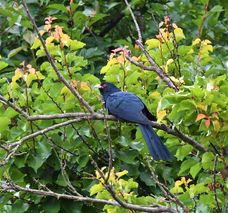
Photo by facebooker Robert Anderson
who stopped in Yea to use the toilets.
Beware of the pointy ends
Eastern Long-necked Turtles (Chelodina longicollis), alternatively known as Snake-necked Turtles are one of 23 species of turtles in Australia (we don’t have any Australian tortoises). During the hot summer months these turtles bury themselves in the mud of dried up water bodies but heavy rain triggers them to migrate over land to find new food sources. Given our current weather it is no surprise then that recently turtles have been on the move – lots of them.
Long-necked turtles can be found in slow moving or still water bodies. A quick trip along the Goulburn River at the moment where a many billabongs have be filled by the recent flooding will reveal many turtles either floating on the surface or sunning themselves on nearby logs (see photo below).
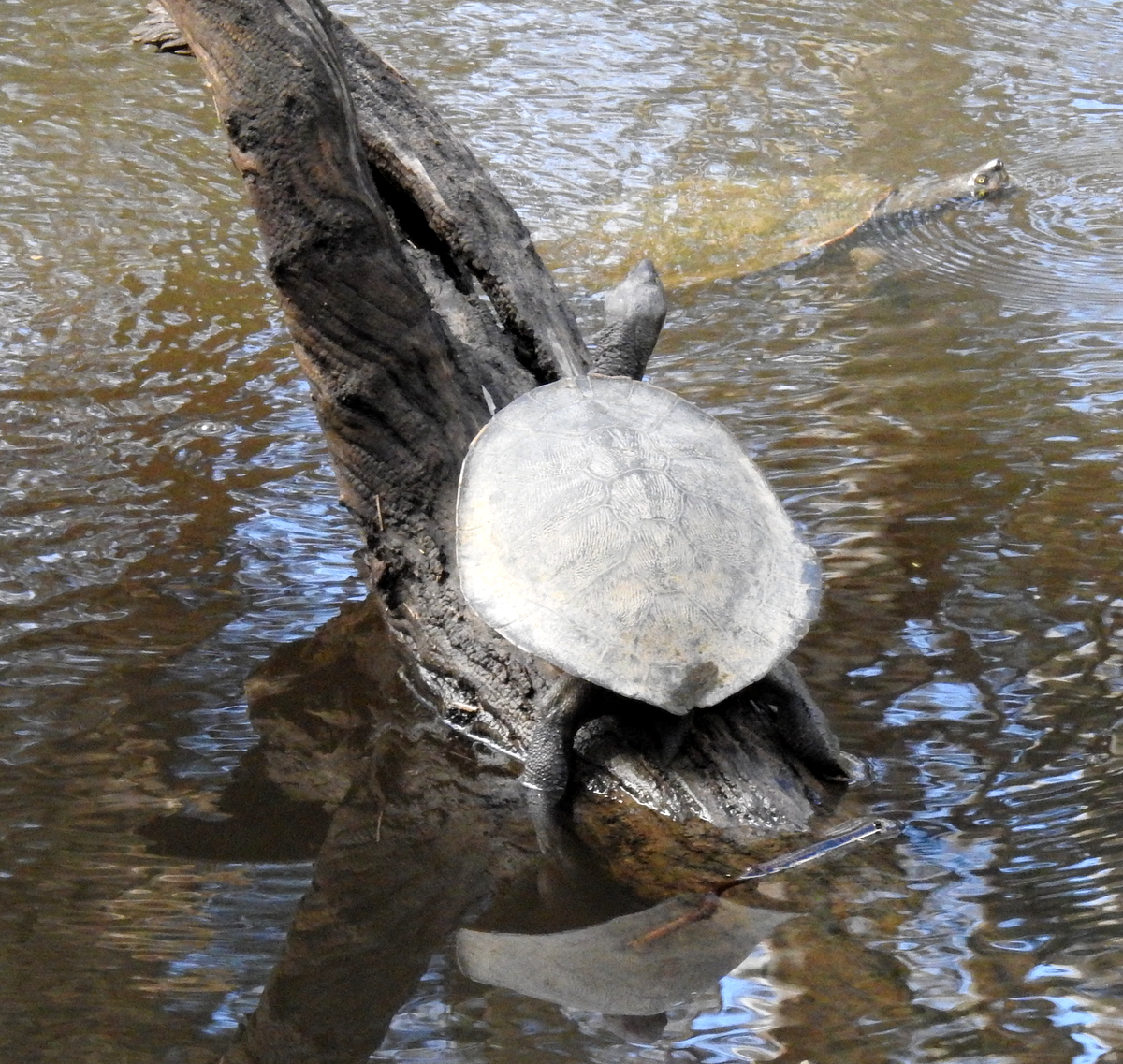
The turtle’s life is not all sun and swimming. In their moves to greener pasture they are often killed crossing roads as they are very slow moving and their colour makes them hard for drivers to see. ‘Helping’ a turtle cross the road is fraught with dangers for the uninitiated. Turtles are carnivorous eating fish, frogs, tadpoles and yabbies using there sharp claws to capture and then tear apart the prey and even though humans are not in their diet they can deliver a painful nip if picked up incorrectly.
If annoyed long-necks can also emit an offensive spray from the anus so when picking up a turtle, orientation is everything. Beware of the pointy ends!
When customs don’t translate
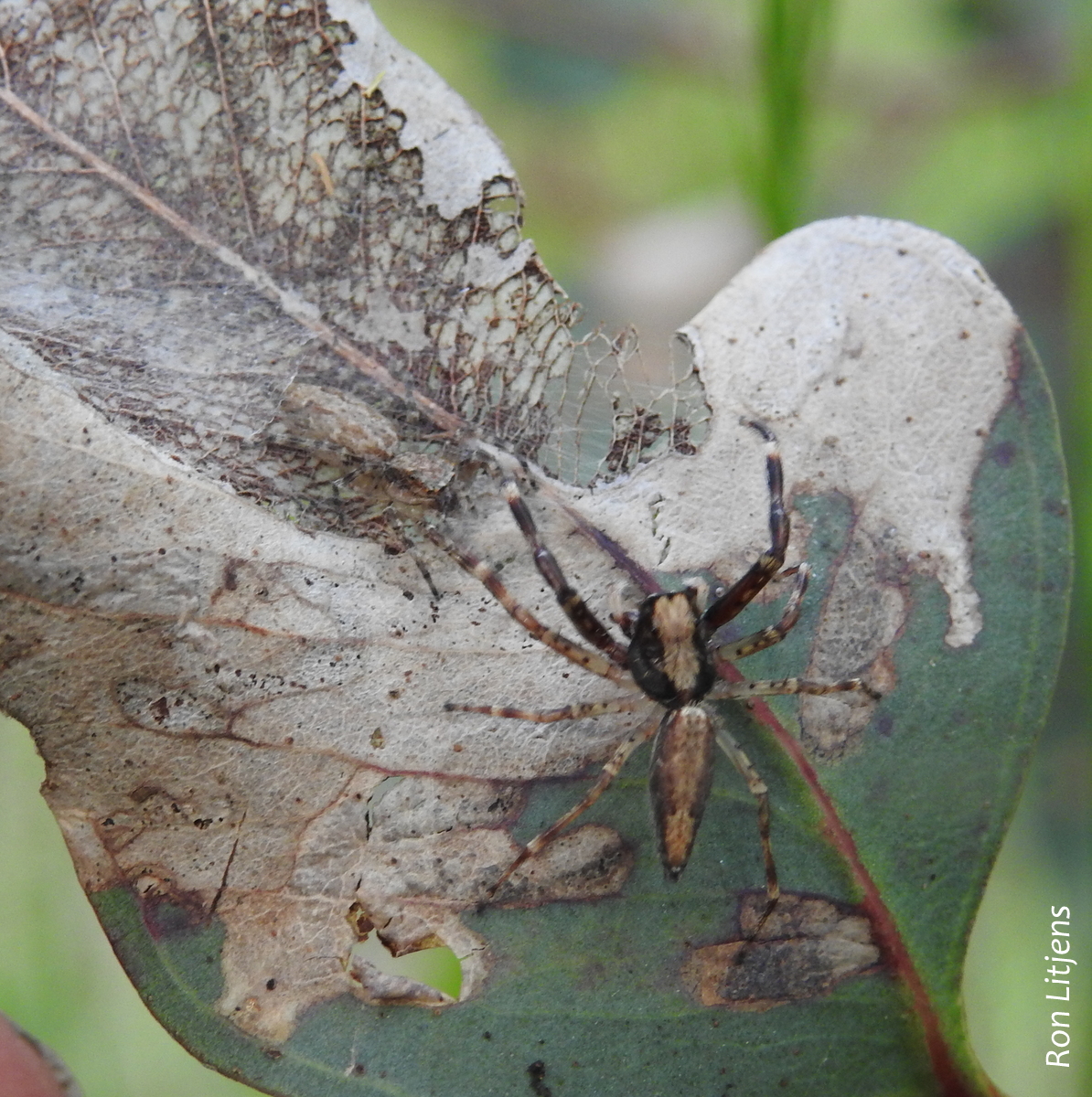
The mating rituals of spiders are quite complex. For web-based spiders such as Orb-weavers it consists of the male spider tapping the web and seeing what response it gets from the female in the centre. For creatures such as Jumping Spiders it is trickier. With its front pair of legs the male spider has to reach over the front of the female and tap it gently on the ‘head’ to see if a favourable response is forthcoming. Sometimes it has to do this a number of times. This is fraught with risk for the male spider. One false move or misinterpretation of the response could mean the male spider becomes dinner.
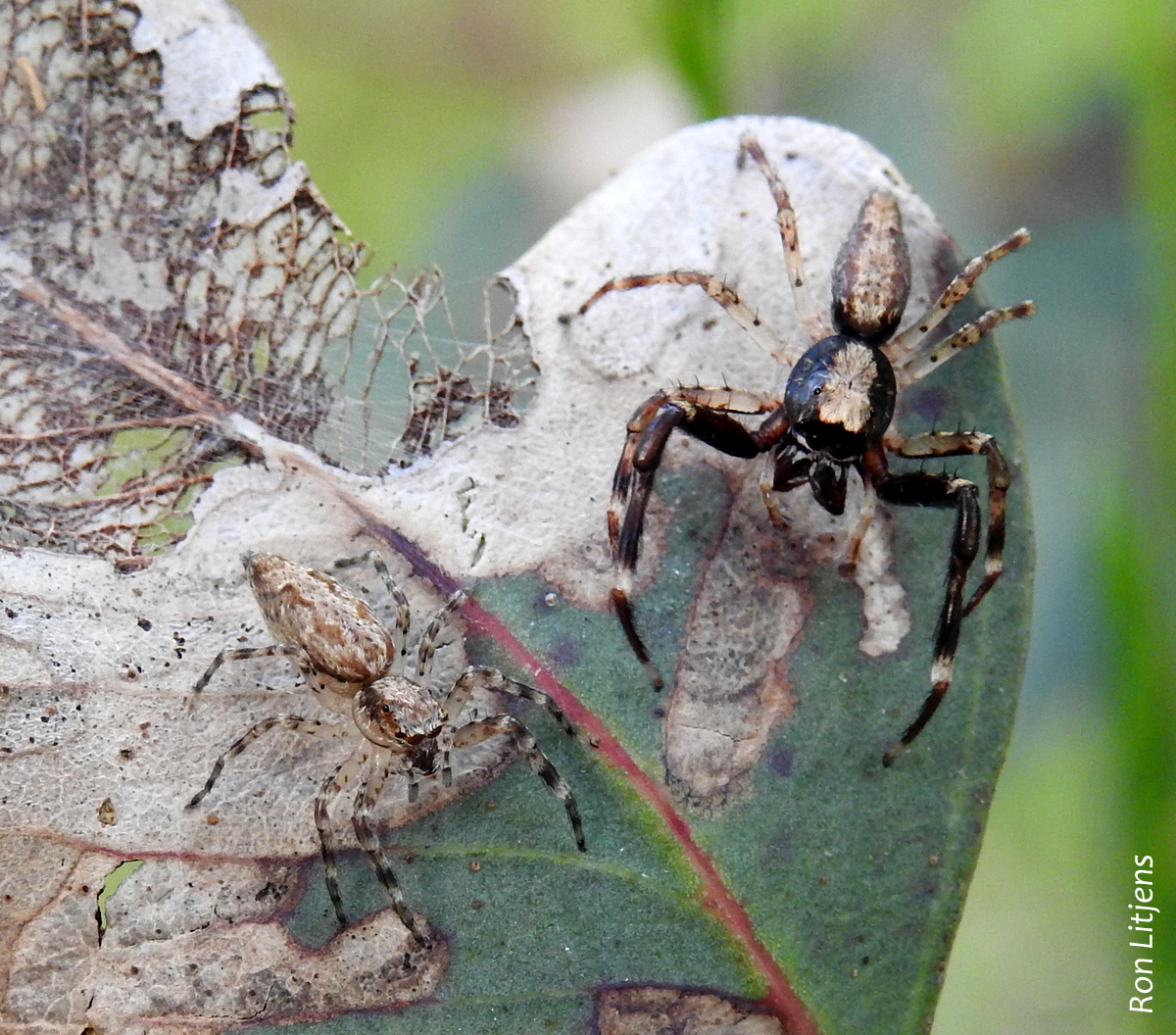
I was fortunate enough this week to witness such a display between two Threatening Jumping Spiders (Helpis minitabanda). Pictured above is the male spider (right) tapping on the web that the female was sitting under. It took a number of minutes before the female spider came out. What followed was a series of ‘body-taps’ where the male moved in, tapped and then quickly retreated (pictured right) to assess the reaction to his advances. Unfortunately both spiders got annoyed with my watching and jumped away, hopefully to mate in privacy.
After taking a leaf out of the male spider’s ‘How to romance those of the opposite sex’ book I have subsequently found that female humans, particularly complete strangers, respond badly to someone reaching out and tapping them on the head.
P.S. The mating rituals of spiders and other arachnid facts will be the topic of a Strath Creek Landcare Group presentation after the AGM on November 27.
Stark Raven
I don’t mind the wily white-eyed Australian Raven (Taungurung name: Waa or Waang). Too smart to be hit by a car, and a bird that knows and relishes its place in the great landscape of life, ravens are succeeding in urban areas and benefiting from human changes to land use. A pair of Australian Ravens (Corvus coronoides) has successfully nested atop a tall tree in Cummins Lagoon in Yea Wetlands these last three years. In Taungurung culture, each person belonged either to the moiety of Bunjil, the Wedge-tail, or Waang the Raven.
I take some pleasure in the wailing call of the Australian Raven as it wings its way homeward across the valley, because while common here, they generally are not found in Melbourne – Yea, Healesville and just into the Yarra valley and then it is all Little Ravens. We get Little Ravens in our district also. Each Australian capital city features one dominant corvid: the Australian Raven in Sydney, Canberra, Brisbane and Perth. Adelaide and Melbourne feature the Little Raven; Hobart has the Forest Raven – the only corvid in Tasmania. Northern parts of Australia also have two species of Crow, but there are no crows in Victoria. (Crows lack the large hackle feathers on the throat)
| Australian Raven (Corvus coronoides) | Little Raven (Corvus mellori) |
| 50-54cm | 48-52cm |
| Black, with long throat hackles and white eye | Black, with short throat hackles and white eye |
| Call: Arrk, arrrk, aaaaaargh (dying away) Calls holding head horizontal when perched | Call: Ock, ock, ock Shuffles wings with head up as it calls |
| Usually single or in pairs, sedentary | Often in flocks, sometimes up to 100, nomadic |
| Eats carrion, injured animals, insects, urban waste | Spiders, cicadas, crickets, caterpillars, maggots, urban waste |
| Benefit: cleans up dead things and rubbish | Benefit: helps control flies and insects, cleans up waste |
| Problem: merciless to injured lambs | Problem: None really |
You will notice that ravens do not eat grain. American crows on the other hand invade newly-planted fields prompting the invention of the ‘Scare-crow’. Aussies need a ‘Scare-corella’.
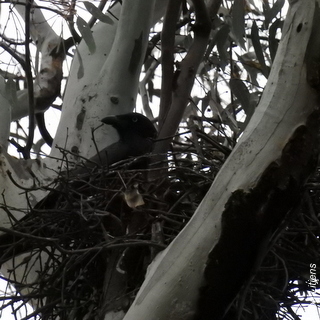
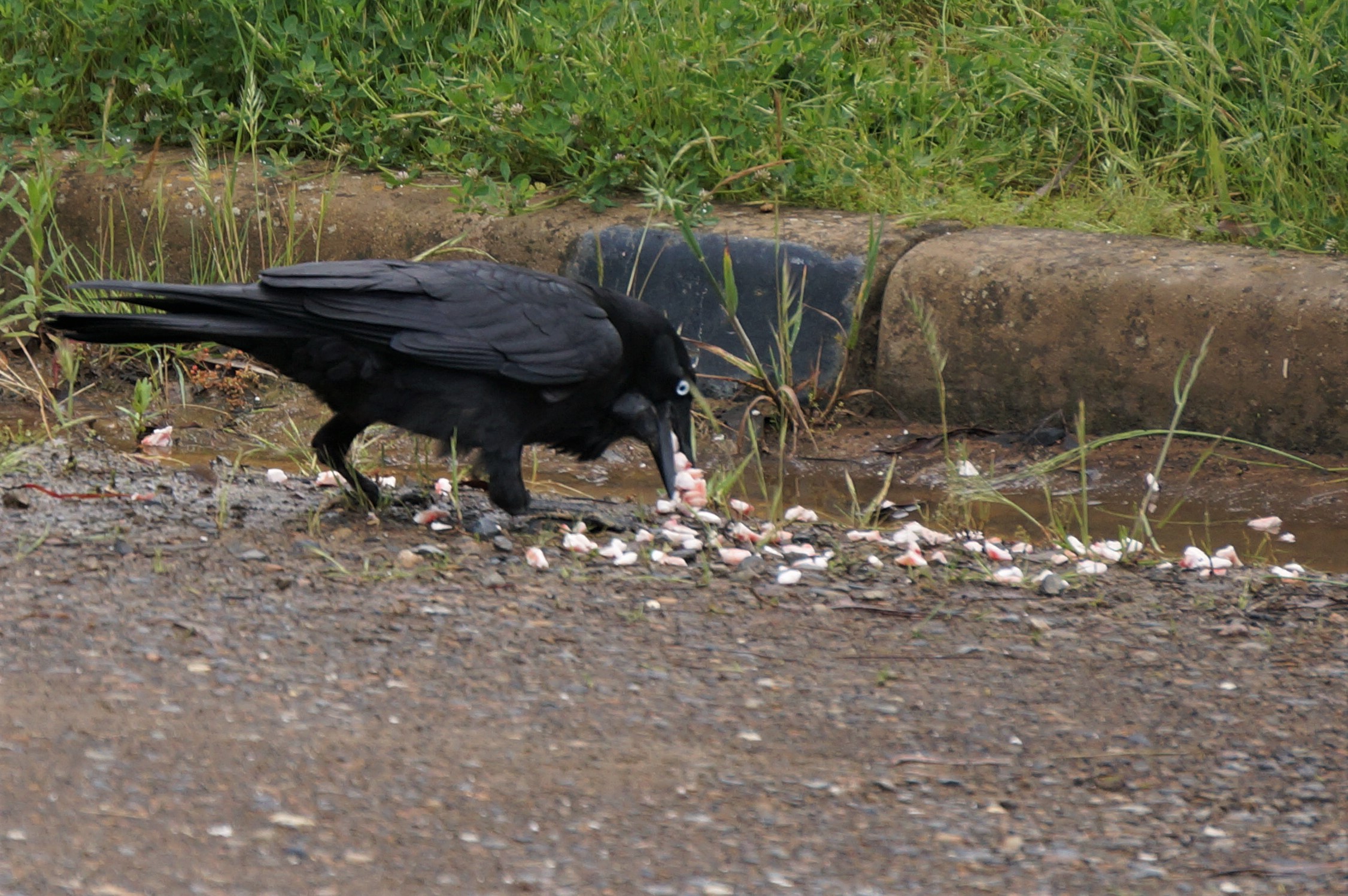
Ravens were traditionally hated by farmers but intensive research has shown that killing healthy lambs is rare. However, the Australian Raven (not the Little) may hover menacingly around a newborn lamb and will eat the afterbirth, the newborn’s faeces (which are apparently high in protein – yes, but not for me, thanks) and any still-born or sick lamb.
For a long time, the birding world thought there was only one species of raven in Southern Australia, but in the 1960s, a great birder named Ian Rowley worked out there were two. It happened like this: he could so imitate the call of the raven that wild ravens would come quite close when he called. One day he and a co-worker approached a tree with two ravens in it and the call was made. The birds in the tree showed no interest whatsoever but some other ravens from a distant tree flew over. They reasoned that there were two species and each had a distinctive call. Later DNA studies confirmed the observation.
Similarly, I noticed that my children never came when I called them by the wrong name. Come to think of it, they seldom came when I called them by the right name.
Sugar sugar Ant
I have this party trick that I like to show off with to amuse the children. When I see a teeming nest of either meat ants or sugar ants, I place my hand on the ground amongst them and let them run all over it. For the little-known surprising fact is that those two types of ants do not sting. They might nip a little but it’s barely discernible; they have no poison to inject into you. The trick is to be confident about the ID before you try this at home, because there are certainly bullants out there who would give that intruding hand an almighty painful sting!
This nest of sugar ants ( Campanotus species) pictured lives under my house and is mainly nocturnal. They only came streaming out in the middle of the day because I pulled a weed that was growing near their nest entrance which must have caused them much alarm. They ran all over my hand and you can see the jaws, but they pose no threat. I believe they are the Banded Sugar Ant (Campranotus consobrinus), the commonest sugar ant in south-east Australia.
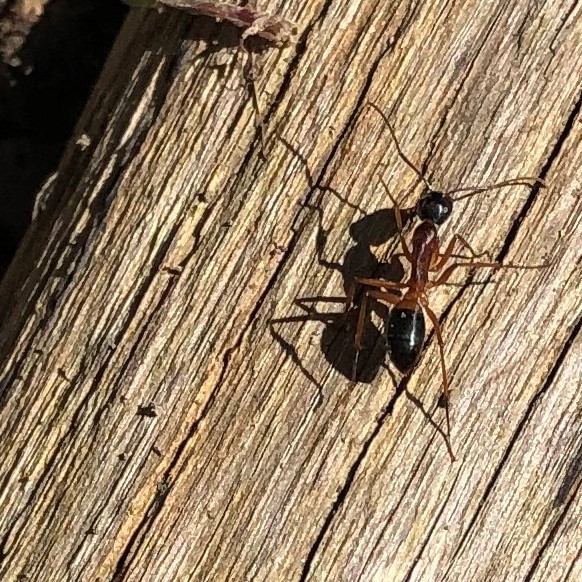
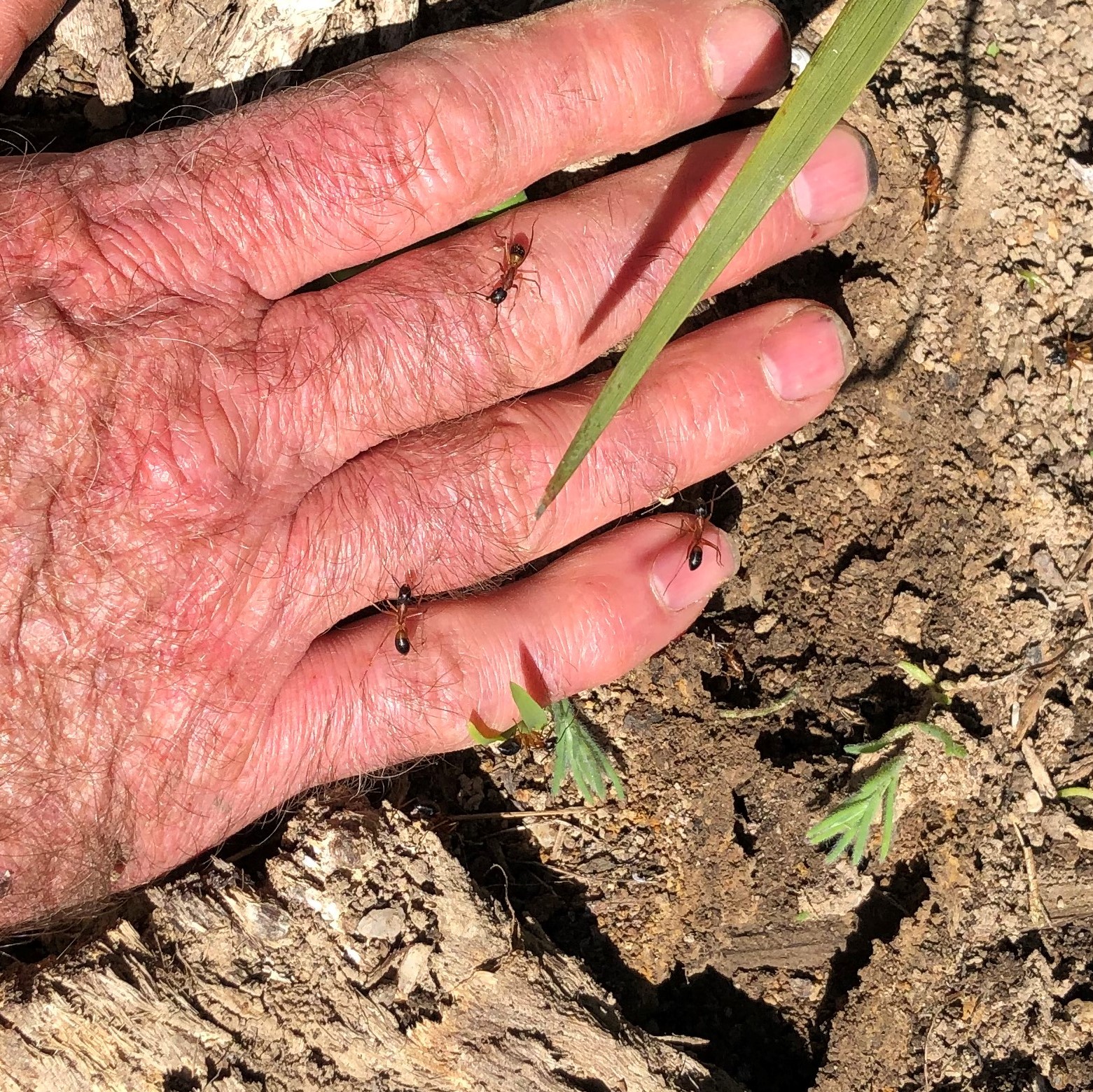

Sugar ants are orange with a black head and a black abdomen. Their nest is quite different to the teeming mound with multiple holes that characterises the meat ant (Iridomyrmex purpureus), They usually nest under a rock or under a log sometimes with multiple holes leading into the breeding chamber. The ones at my place seem to mound up around the entrance when rain is coming. My hand is close to the entrance in the middle photo but the disturbed ground (from weeding!) makes it hard to discern.
How does the nest get established? On some balmy hot summer night, a stream of queens will come swirling out of the nest taking to the air and so will many males. These ‘flying ants’ (properly called alates) are a wonder to watch on a warm evening, turning up on fly screens, window sills, around lights, in swimming pools., When all goes well, a male and female grasp each other mid-air, bite off each other’s wings and where they tumble down to the earth is where the new nest will be built. The wings flutter away in the wind.
I like ants and I hate ant poison. These are energetic and helpful rubbish cleaners around my garden. They eat all kinds of things including other insects but get their name from their love of sugar – they harvest honeydew from aphids and other sap-suckers – all part of the marvelous web of life.
I hope you appreciate ants, their amazing colonial lives, selfless work, role differentiation and adaptability. You might even like to give them a hand.
Cuckoos like Clockwork
It’s true in Europe and true in Australia – when Springtime rolls around, the call of cuckoos can be heard ringing through the woods. As to which cuckoo turns up, there does seem to be variation. This year I have come across Fantail cuckoo and Shining Bronze-cuckoo; sometimes we also find Pallid cuckoo and Horsfield’s Bronze-cuckoo.
Why are they so predictable? Their survival depends upon turning up when other birds are nesting. The female cuckoo must lay its egg in the nest of another bird if it is going to successfully reproduce. It would do no good rocking up a month late – it must be here when its host bird is nesting.
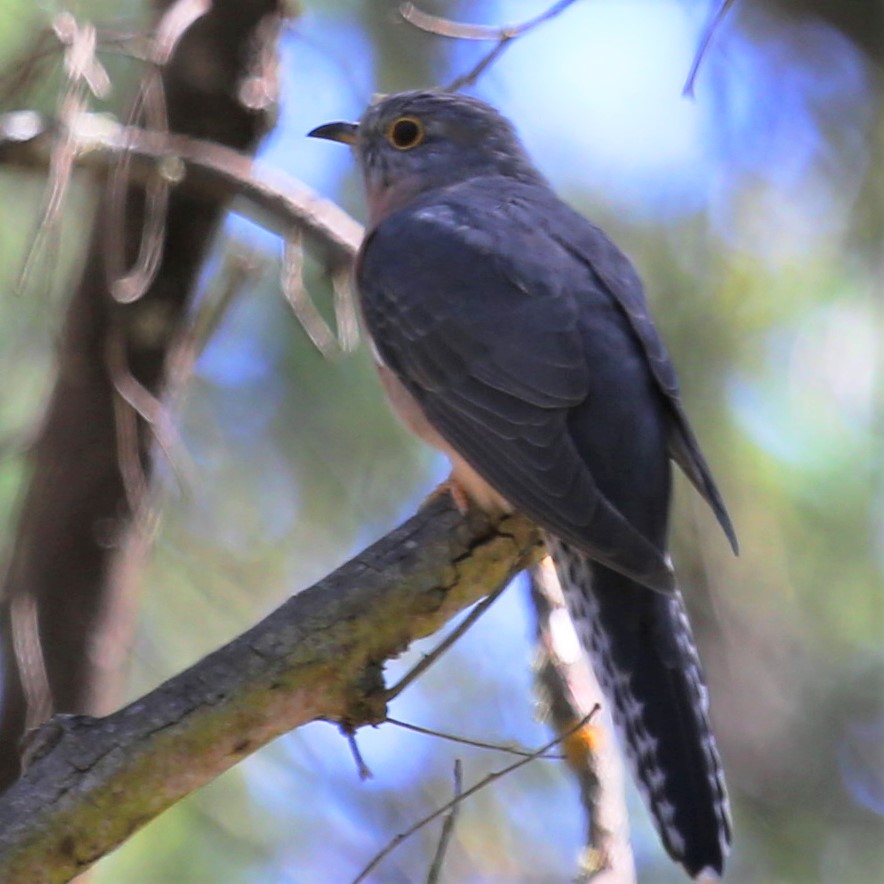
Cuckoo calls are loud but cuckoos are hard to see. Some say their call is ventriloquial – you cannot locate where it is coming from. Others swear they are not real – a spirit bird that lives in the leaves but is invisible. Wordsworth wrote a poem about it: …O cuckoo! Shall I call thee Bird/Or but a wandering Voice?
Thrice welcome, darling of the Spring!
Even yet thou art to me
No bird, but an invisible thing,
A voice, a mystery;
The same whom in my school-boy days
I listened to; that Cry
Which made me look a thousand ways
In bush, and tree, and sky.
To seek thee did I often rove
Through woods and on the green;
And thou wert still a hope, a love;
Still longed for, never seen.
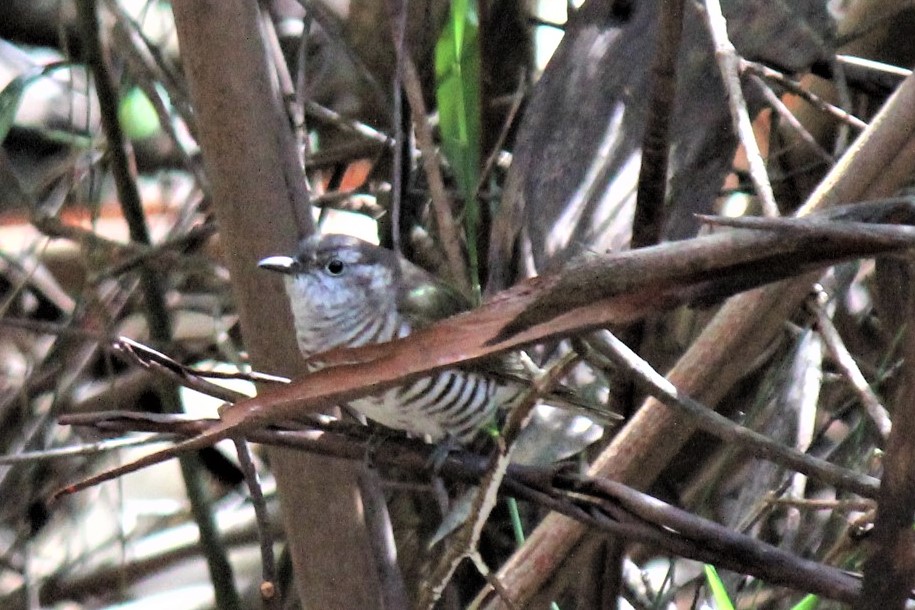
And his experience is true to my own but occasionally I get lucky. Here is the Shining Bronze-cuckoo (Chalcites lucidus) which I have heard far more often than I’ve seen.
Ten years on, the same punch line
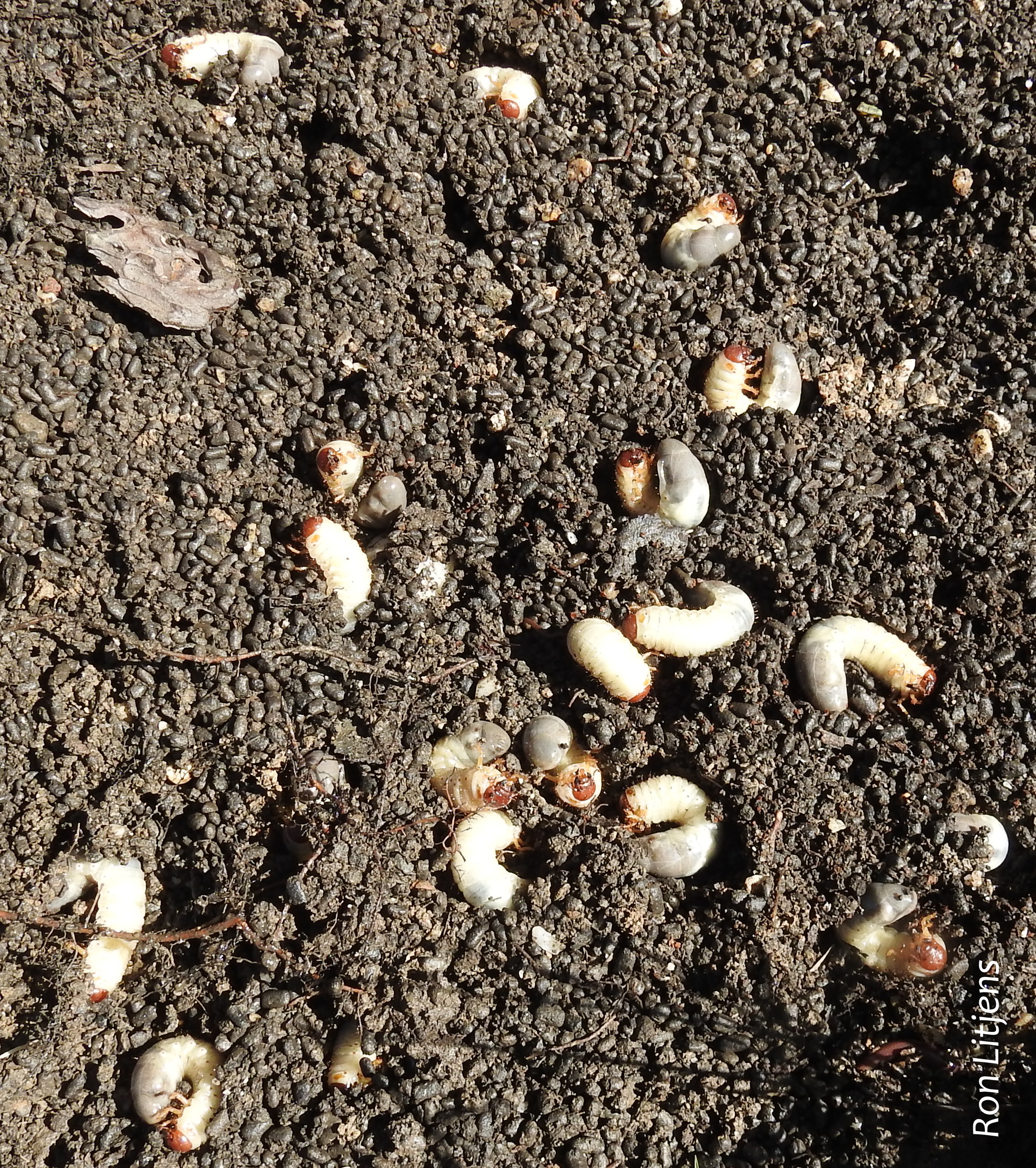
It was ten years ago that I wrote my first story for Focus on Fauna. It was about a Longhorn Beetle larva I found whilst chopping wood. I was reminded of this when I overturned a pine round recently and found a nursery of Scarab Beetle grubs buried underneath (see photo left). As a kid in both cases I would have called these insect finds Witchetty Grubs after the mythical (at the time) bush food I had heard about at school.
True witchetty grubs are in fact the caterpillars of the Cossid Moth (Endoxyla leucomochla) found in the Northern Territory that eats the roots of the Witchetty Bush (Acacia kempeana). To be fair the term witchetty grub is often used for any such grubs if they are used for food. Australia-wide there are close to a hundred named Cossid Moths. Most of them have caterpillars that are wood borers.

Last week whilst tidying up the woodpile I came across a striking pink caterpillar, pictured right – you guessed it, a Cossid moth caterpillar. Though not a true Witchetty Grub it is a close cousin.
Still tastes like chicken though.
So they say.
Ten years on, the same punch line.
Frog ID
It has been a wonderful experience to learn the calls of local frogs. I’ve been late coming to this bank of information and I’ve been surprised that it is not that difficult. The FrogID app on my phone is a doorway into this wonderful world. It lists the frogs you may find in an area and each one is given a handful of photos, a full description and a handful of sound recordings. What is even more amazing, is that when a frog is calling in the wild, I push a button to record the call, submit it and in a week or two, get an email telling me what frog is in my recording. The work of Australia’s most enthusiastic frogger Jodi Rowley from Australia University seems to be driving this fantastic resource.
Reading through the archive of this Focus on Fauna blog, there are many references to the Plains Brown Tree Frog (Litoria paraewingi) now called Victorian Tree Frog. It has been pointed out that a. it is very difficult to distinguish from the Brown Tree Frog (Litoria ewingii) and b. that the two do not live in the same area and it is hard to tell which one lives in our area – the distribution maps meet around here somewhere.
So I picked up this fellow struggling through wet grass and wondered which one it might be. Is it L. ewingi or L. paraewingi?
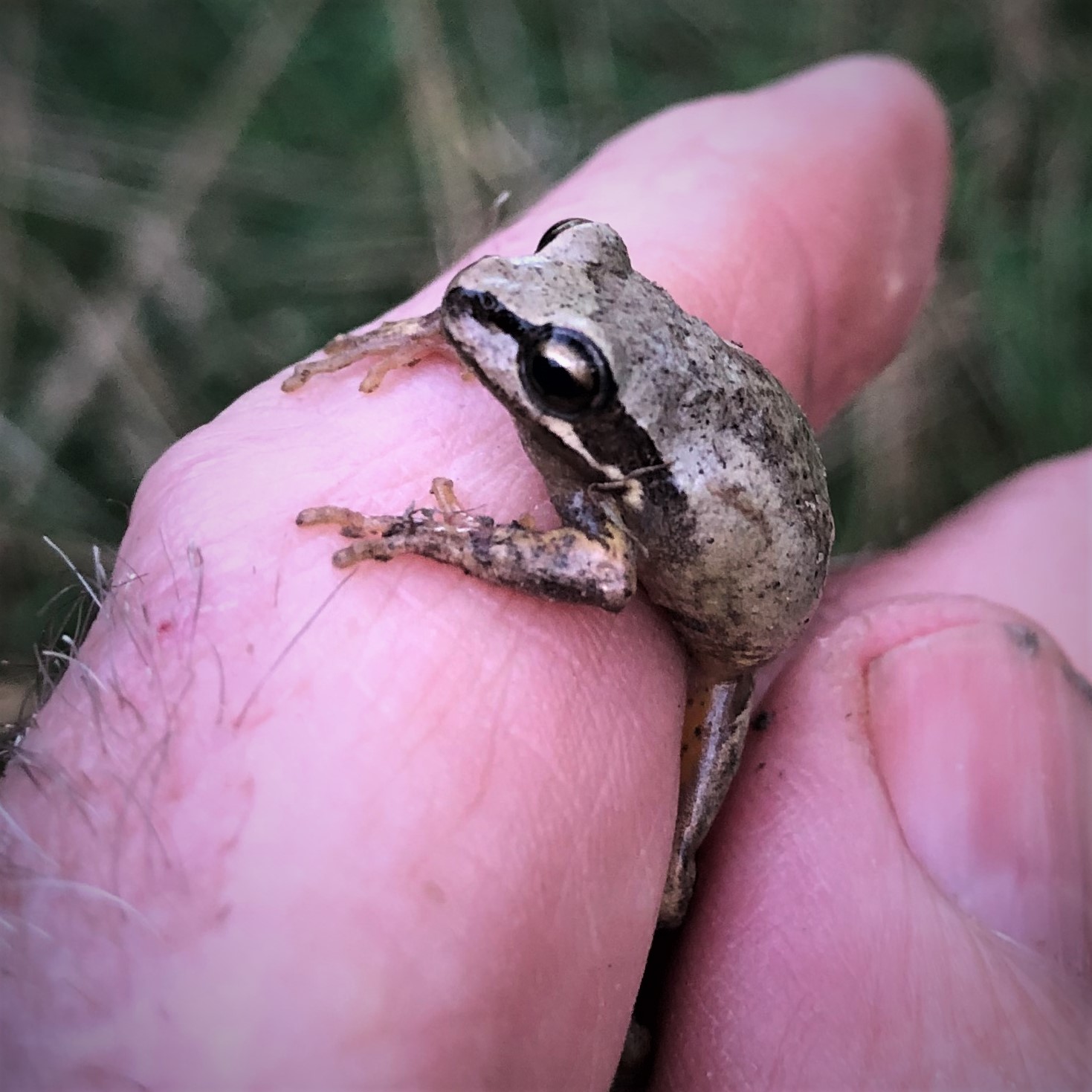
The museum site says you cannot distinguish between the two species on appearance; they are both variable and have the same markings. They can be greenish, brown, cream, tan, or grey and the markings can be bold or faint. They both boast a black stripe from snout to shoulder with a smart white outline below, but it can be faint. The way you tell them apart is by the call; though both can be described as creee-cree-cree, – one (L. ewingii)is quicker and shorter than the other (L. paraewingi).
I can confidently declare it is a Victorian Tree Frog (Litoria paraewingi) – formerly the Plains Brown T.F.
My reasons are that it looks very much like one of the photos on the app and is very small – L. paraewingi tends to be smaller. But the main reason is that I have sent off several recordings to Jodi Rowley of tree frogs calling in the area and they all came back as L. paraewingi, Victorian Tree Frog. Since the two species do not co-exist in the one area, any small tree frog we find is sure to be that.
Don’t thank me, thank Jodi.
Family truths exposed
Traveling around the district on my daily cycle ride gives me the opportunity to photograph some amazing fauna but sometimes one comes across a tragic sight (pictured below left), a wombat with mange. Mange is caused by the parasitic mite Sarcoptes scabiei. The female mite burrows under the skin of the host and lays eggs. When the eggs hatch it causes extreme discomfort. In humans this is called scabies.

Parasitic mites were thought to have been introduced to Australia from Europe on the livestock of the first settlers. In addition to wombats mange is known to affect wallabies, koalas, ring-tailed possums and bandicoots. Wombats seem to be the most affected because their burrows provide good conditions (cool and humid) for the survival of the mite if it doesn’t have a host. In addition wombats with overlapping territories are known to share burrows making mite transfer between animals easy.
Successive generations of mites cause thickening of the skin and hair loss in the host. Excessive scratching by the animal then results in open wounds and the possibility of secondary infection (see photo above). In severe cases mange can cause the death of the animal. Unfortunately there is no method to eliminate these mites in the wild although individual animals can be treated with chemicals such as moxydectin.
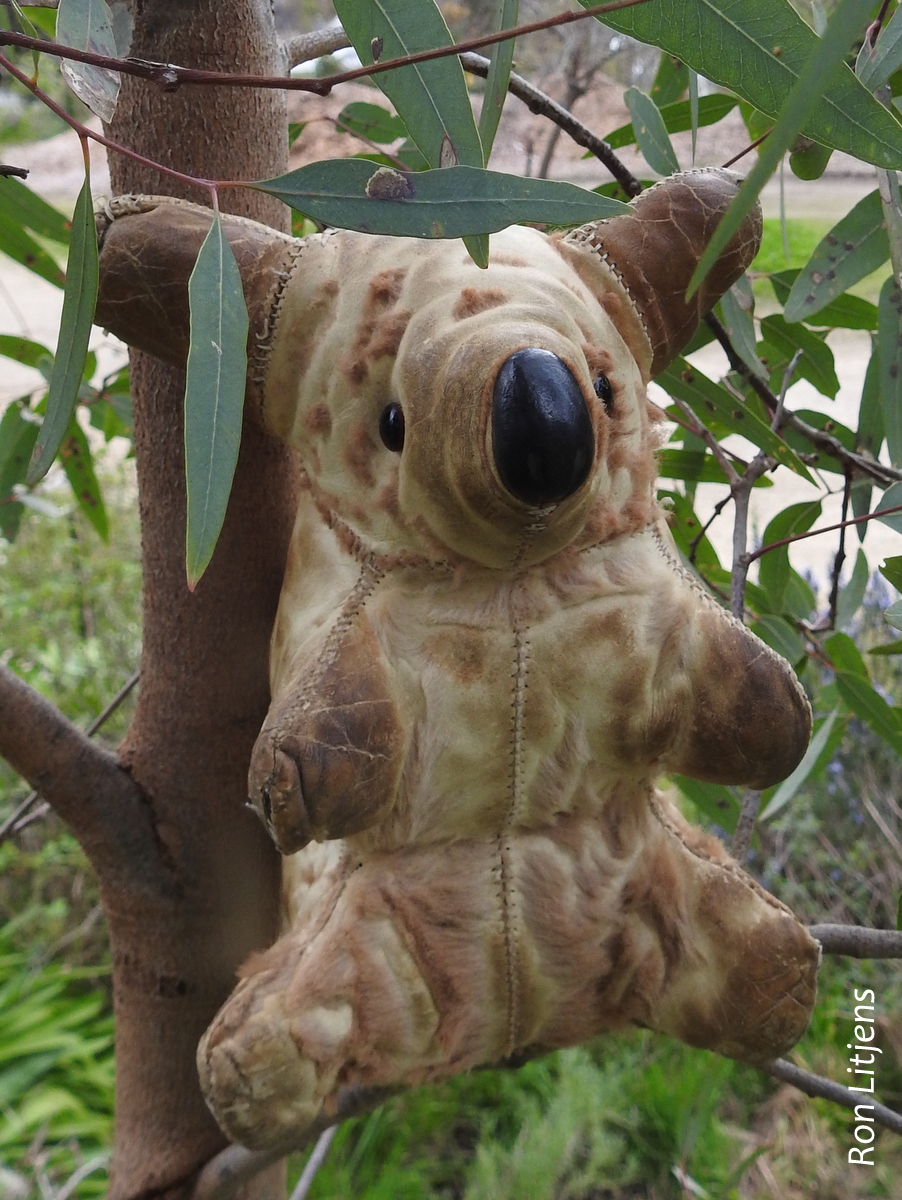
Not to trivialise the mitey problem that mange creates in the wombat community, when I was a child I had (like most kids) an inseparable toy. Mine was a koala called Ted (I was not known for my originality), pictured right. My mum always told me that Ted was in the state he was in because I’d ‘loved all the fur off him’. I now suspect that Ted had mange. Another family myth exploded!