They’re all around

The Rakali (Hydromys chrysogaster) formerly known as the White-tailed Water Rat is more common than many may think. It is their primarily nocturnal nature and inherent shyness that make them less seen than other fauna. Those who have participated in the Strath Creek Landcare Group’s or Yea Wetlands’ Platypus & Rakali Count will know that sightings of this large rat are more common than the ‘sexier’ platypus.
The natural range of the rakali covers most of eastern Australia (excluding the desert regions) and the south west corner of W.A. They live near permanent bodies of water, both fresh water and salt where they feed on crustaceans such as yabbies, fish, frogs, reptiles and birds eggs. They are also efficient scavengers and are known to come into urban areas in search of food.

In the Yea Wetlands at the moment there is a rakali that seems to ignore all the rules by hunting through the billabongs during daylight hours (pictured above left). An even more startling sighting has been this rakali (pictured above) that regularly frequents a bird feeder in the backyard of a house on High Street.
I have always had a philosophical objection to feeding birds but if a bird feeder attracts rakalis…..
Looking his best
It stands to reason that the time in the great cycle of life to look your best is during the courtship phase. So it is no surprise that male Wood Ducks (Chenonetta jubata) are at their resplendent best in mid-Winter. Wood ducks are one of the earliest-breeding birds, producing large clutches of very cute ducklings ready to leave the nest the first week of Spring. So this is the time to spruce up and impress the ladies.

I have a photo of a wood duck family taken last November, when the male is looking decidedly plain. His bright colours have faded, he has lines around his eyes, the kids are out of control, the mate is nagging for more food – that’s when one loses interest in keeping up appearances.

You can see why this species was once known as ‘Maned Goose’. Their bill is more like a goose’s beak rather than a duck-bill, and the male can extend a small but impressive mane.
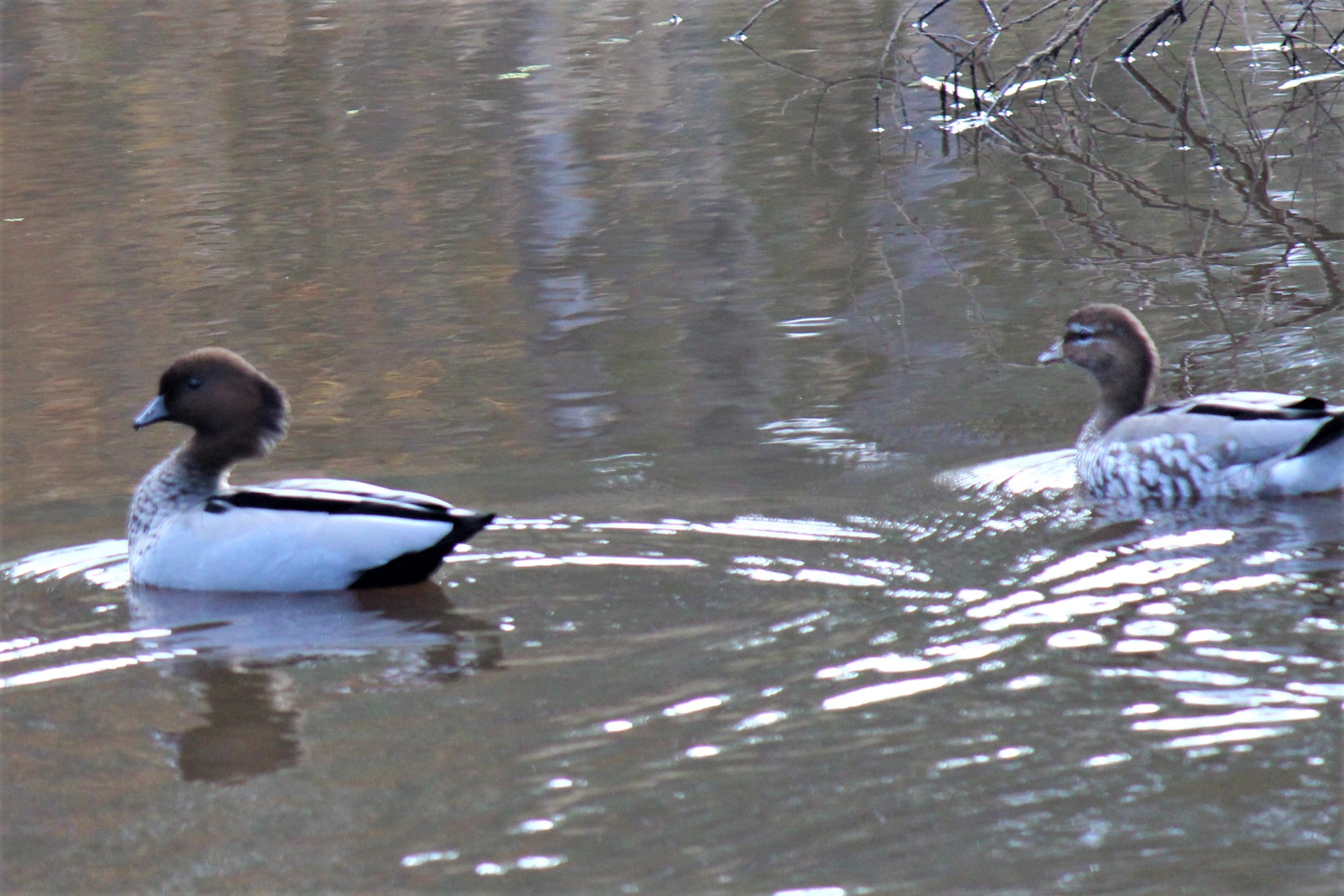
Wood ducks breed in tree hollows, often quite a few metres high in a tree. I asked an experienced birder once how they got the ducklings out of the nest-hollow onto the ground, which clearly happens well before they can fly. “They just push them out – they weigh only a few grams and can’t hurt themselves, they flutter down like dry leaves.”
Sometimes the number of ducklings in a family group is incredible. Local photographer Robert Gardiner sent me this incredible photo:

It is probable that like some other ducks, older wiser females get custody of the young from younger parents in a sort of day-care or creche. But that’s a bit of a mystery to ponder for another day.
The surprise to me was seeing how bright the plumage of the males looked today, in the middle of Winter. Fairywren males don’t even turn blue until the start of Spring. It seems that male Wood Ducks are better at planning; they like to get an early start.
The quick and the dead
There are some things in the bush that I never get to see properly because they are gone in an instant. At the top of that list are any species of bird with the name ‘quail’ in it – quail, quail-thrush, button-quail, etc. These birds are usually seed eating ground-dwellers that live and nest in long grass. When walking through the bush I often here the whoosh of these ‘quailey-things’ as they burst from the cover of grass only to disappear back into the grass metres away. I never really get to get a good look…unless they turn up dead.
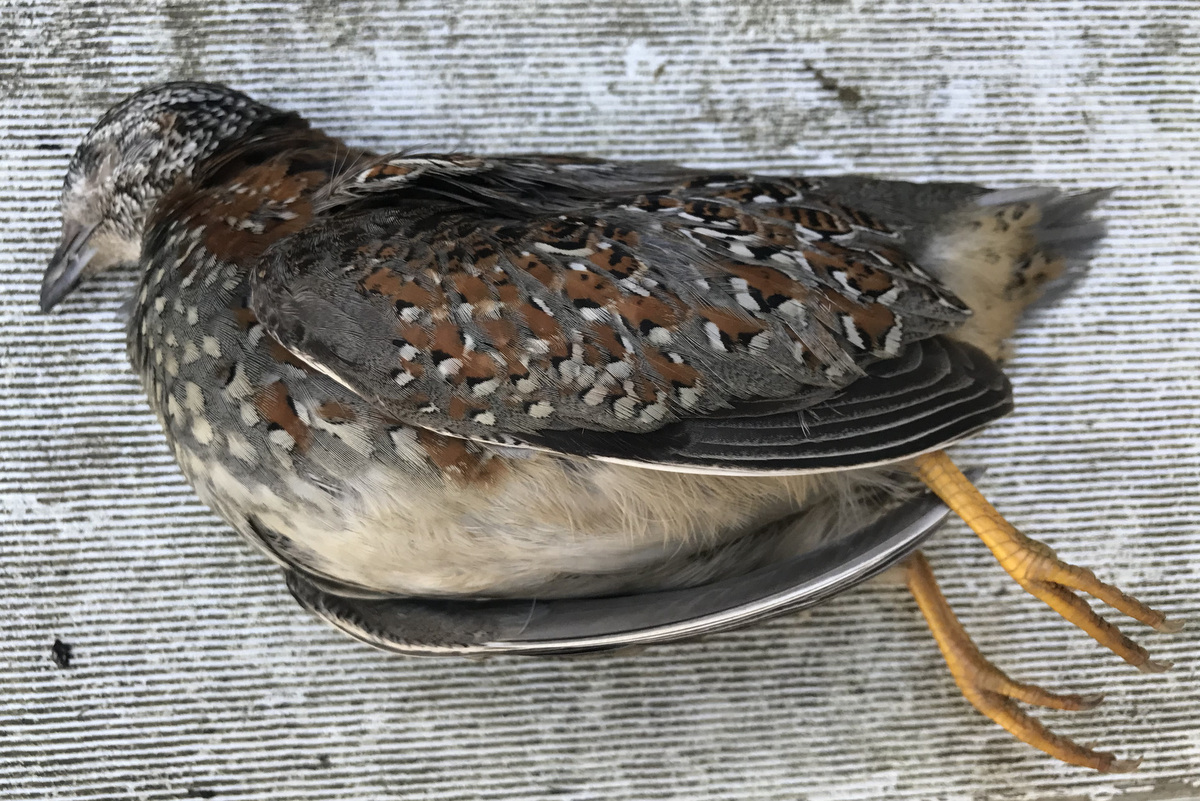
Pictured above is one such creature that turned up dead under my verandah (probably after hitting a window) last week. It is a Painted Button-quail (Turnix varius), a species I have never seen here before. Species of Button-quail are named after their striking markings e.g. Red-backed, Chestnut-backed , Buff-breasted, etc. The Painted Button-quail is named for the detailed markings on the wings. The scientific name is derived from the Latin coturnix meaning quail (hence not quite a quail) and varius meaning variegated, referring to the many colours.
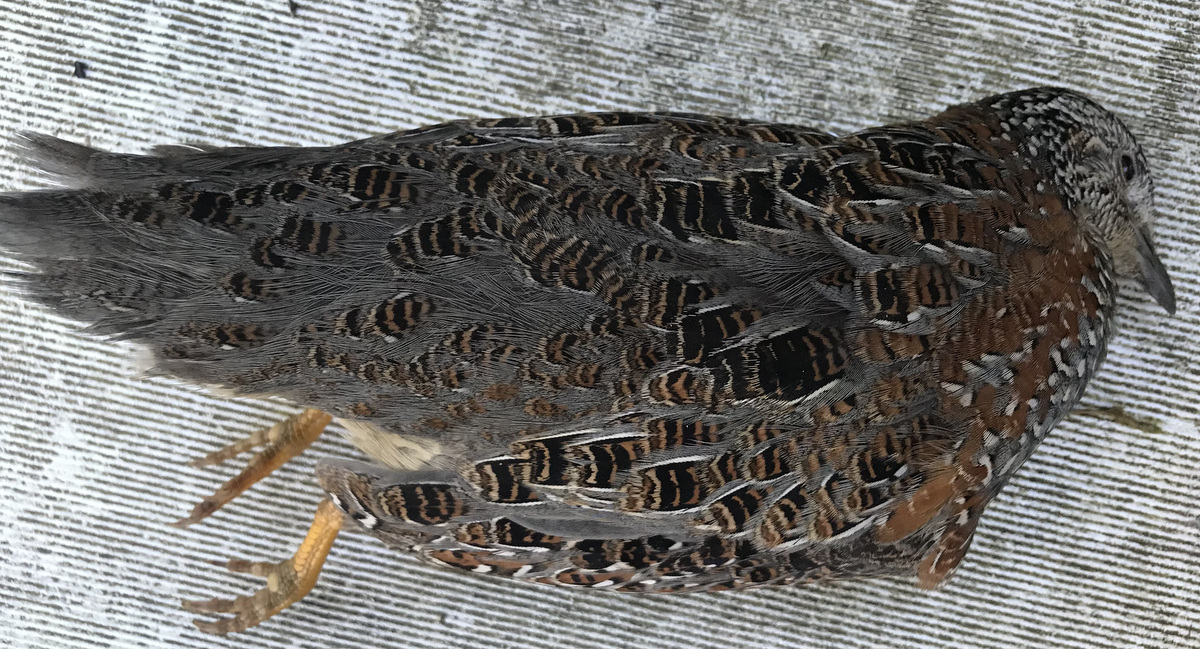
Button-quail look like but are not related to quail. They differ from quail in that they are missing a hind-toe and crop. Unlike many bird species the female button-quail is larger and more brightly coloured than the male. The nest is a depression in the ground at the base of a rock or tree and lined with grass. It is built by both sexes although it is the male that looks after the eggs, during which time the female will mate with another male.
Who’d have thought. Such risqué behaviour in the backyard.
Flocking Time
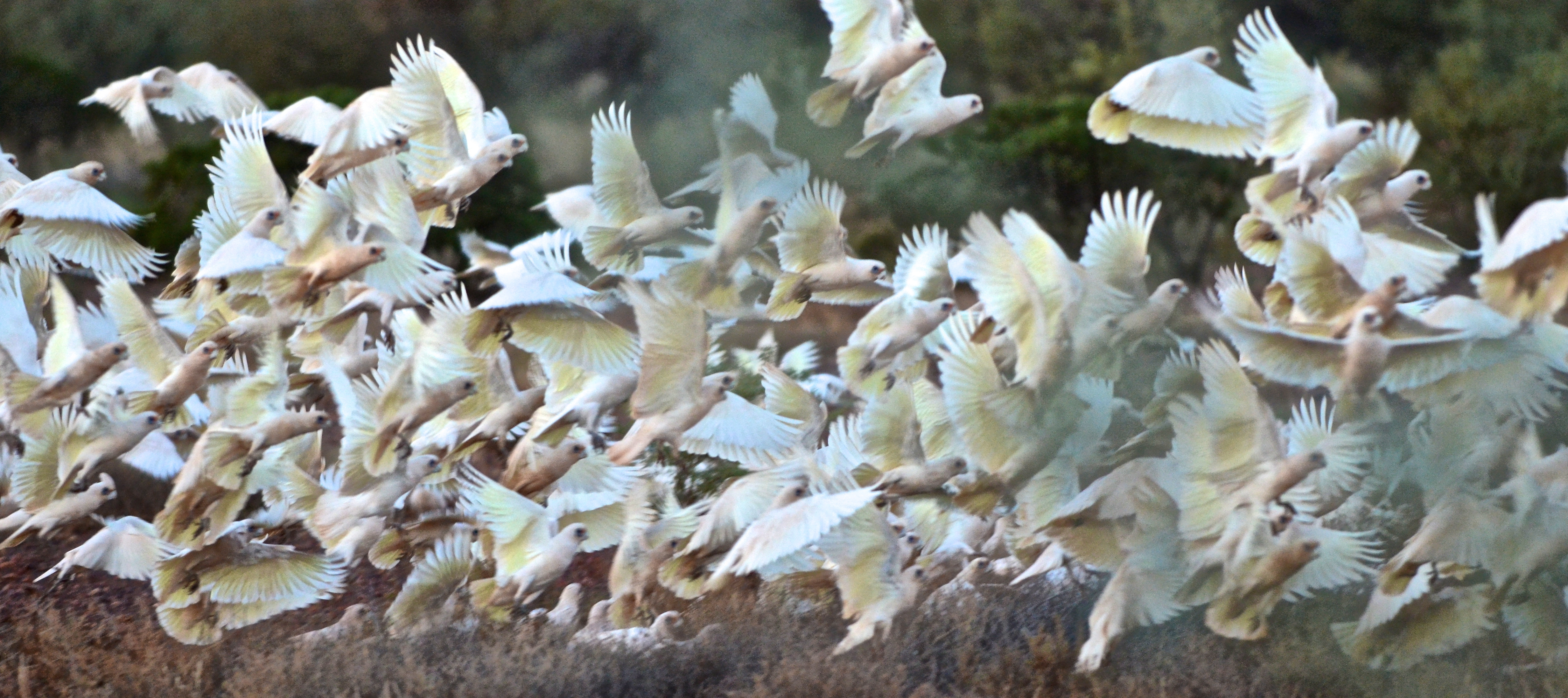
In the bird world, Autumn is flocking time. Many kinds of birds congregate in flocks in Autumn whereas in Spring and Summer, they are more likely found in pairs or families. It’s now early Winter but there are super-sized flocks still going around.
There is a massive flock of Long-billed Corellas (Cacatua tenuirostris) which roosts at the Yea Wetlands. They turn up towards dusk and the noise is deafening. A friend who had seen a similar flock thought they must nest in vast colonies somewhere, but I was able to point out that flocking is an Autumn-Winter thing. Mating pairs reunite and disperse in Springtime – they are monogamous and mate for life. Then in Summer the parents with their squeaking, demanding young ones hang around in family groups. The whole flock does not breed each year; I think I read that only about 80% breed each year, otherwise there would not be enough nest holes in trees.
This is the time to see murmurations of flocking Starlings (.Sturnus vulgaris). I saw a flock of 25 Straw-necked Ibis (Threskiornis spinikollis), and a feeding flock on a field of Little Ravens (Corvus mellori). Pied Currawongs (Strepera graculina) have built into loose flocks as their numbers in the lowland areas are augmented in the cooler months by altitudinal migration. Even White-winged Choughs (Corcorax melanorhamphos) which are usually in large family groups of 20 or so will form a super flock as I saw one day in Koondrook, consisting of hundreds of birds in a single well-treed paddock.
How does a flock of birds know how to swirl and turn and move together? In Australia, the most legendary flock behaviour is that of Budgerigars (Melopsittacus undulatus) whose large flocks are apparently incredible to watch, turning the sky black, with deafening cries and wonderful acrobatics. I have heard anecdotes that when a flock swoops into perch, there are accidents – broken wings, injuries – but in the main we see incredible coordinated movement when birds are in a flock.
How a flock works is a good life lesson:
1. The whole flock needs to know to head in the same general direction
2. Each bird is responsible to keep reasonably close to the neighbouring birds – don’t get isolated
3. At the same time, each bird is responsible not to crowd their neighbour and become a liability, a cause of interference and crashing.
When these 3 rules are followed, the whole group can respond to the skill and imagination of one another, they can navigate crises together (predators such as falcons), they can benefit from shared knowledge of the landscape, they can get where they are going faster and safer.
I hope you can see, I think all these things apply to human communities and groups. Think about it: shared goals, not too close and not too far, watching out for each other, responding to each other.
Flocking is a good way to live. Join a group and follow these rules.
The toll of the Bell Miner

Everyone used to love the tinkling call of the Bell Miner (Manorina melanophrys), known colloquially as ‘bell birds’. Then word got out about studies that showed they could be a problem in the landscape and they became dreaded more than prized.

Photo: Robert Gardiner
Bell Miners live in fairly large colonies and nest, feed and play in the one area, which they patrol thoroughly, chasing out any pardalote or honeyeater that chances into their territory. And that is the problem: their elimination of the other birds allows certain pests and parasites of eucalypt trees to get a free pass, causing trees within a Bell Miner colonial area to suffer from ‘dieback’ because the predators of the leaf-eaters are kept out. It is called BMAD (Bell Miner Associated Dieback). For instance, lerps are a favourite food of Bell Miners but they never predate the psyllid which produces the lerp, so the psyllids proliferate and cause widespread leaf browning because the pardalotes and Shriketits that might eat them are unable to enter.
When I first came to Yea in 2012, a busy Bell Miner colony around Cummins Lagoon in Yea Wetlands was a guaranteed presence on every visit, yet people told me they had only arrived there after the 2009 fires. It was a perfect site for a Bell Miner colony – they like to be near water and have large trees to patrol. But suddenly, one day, the colony disappeared.
It was about 5 years ago, and they did not move far. They can be heard now, tinkling beautifully down at the Caravan Park where Miller St joins the Melba Highway. It is a distance of only 800m perhaps but since then I have never heard a Bell Miner in Yea Wetlands.
I know of several other stream-side colonies in the district; there is no shortage of these aggressive birds, although they remain confined to their colonial territory. Interestingly, the colonies I have observed in the district have not caused the alleged tree damage for which they have been maligned. The suggestion has been offered that where there is a healthy understorey, it is harder for the miners to keep everyone else out.
So I don’t regret the existence of Bell Miner colonies in our district. Their unforgettable bell-like notes toll clear and beautiful across the landscape. We would be depleted if their story was un-tolled.
The enemy within

Last week after two years and six postponed dates the Spider presentation finally happened. The talk contained many examples of spiders as predators: building webs, ambushing prey. But spiders don’t always get things their own way. They are an integral part of the food chain which means they are often ‘the hunted’. One of the photos shown (pictured left) taken by JB from Limestone shows the insides of a mud wasp nest that had been accidently knocked off a wall. The nest contained several paralysed spiders placed there by the adult wasp. On these spiders eggs had been laid with the intent that when the wasp larvae hatch the spiders would provide fresh food. On one of the spiders you can even see a wasp larva.

I thought that was as gruesome as the night would get until in a discussion after the talk with another JB (from Killingworth) photos and a video were revealed showing a Redback Spider (Latrodectus hasseltii) walking on a carpet (pictured right). When squashed the spider erupted into a ball of writhing worms (pictured below). Alien eat your heart out!

The worms are endoparasitic Mermithid Worms. The worms enter the spider directly or through what the spider eats and they proceed to feed on the internals of the spider without killing it. The spider becomes more and more debilitated until the worms burst out of the body and the spider dies. Because in the final stage of the worms’ lives they are aquatic, before the spider dies the worms induce thirst in the host so that the spider will head towards water. That is probably where the hapless arachnid was going on its trip across the carpet.
I’m not going to upload the video but no sci-fi movie comes close to what happens in nature.
Koalas beware
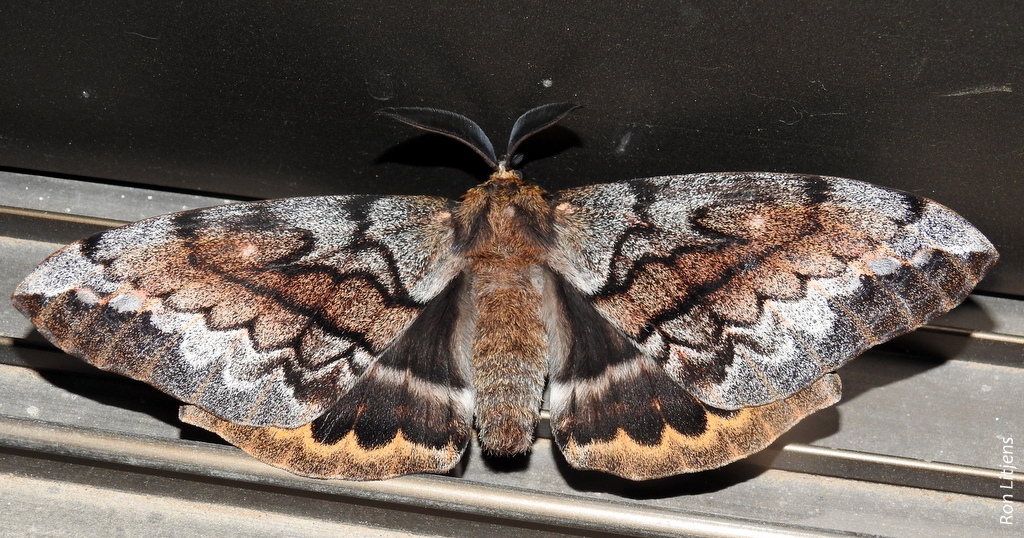
It seems that this is the season for large moths to appear. The recent rains have caused the Rain Moths to appear in abundance. Another moth that appears in the April/May timeframe is pictured left – a White-stemmed Gum Moth (Chelepteryx collesi). The smaller male moth is pictured. These moths, found in eastern Australia are big with the female wingspan typically being about 16cm across.
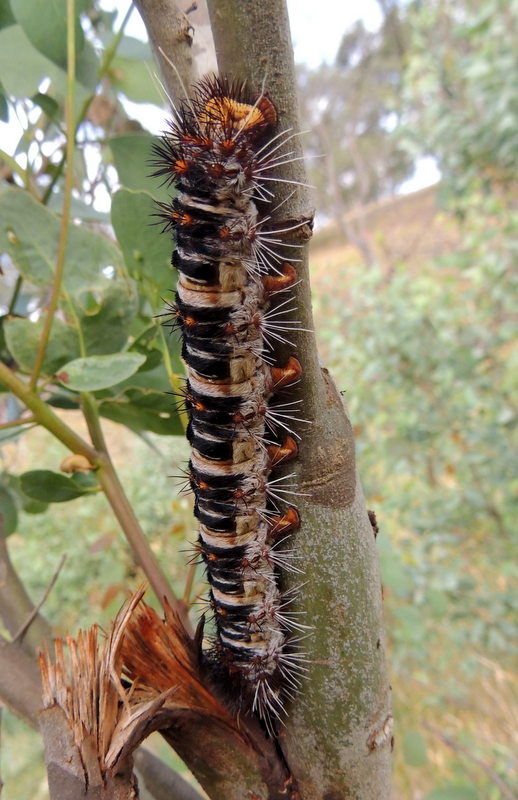
But it is the caterpillar that is fascinating. The caterpillar of the White-stemmed Gum Moth (pictured right) is one of the largest in Australia, up to 12cm long. It feeds on the leaves of various eucalypts and paperbarks. The body is covered in very sharp dark red barbed spines (pictured below) that are strong enough to pierce human skin. When touched they break off and embed themselves in the skin causing pain and localized swelling. The spines are difficult to remove.
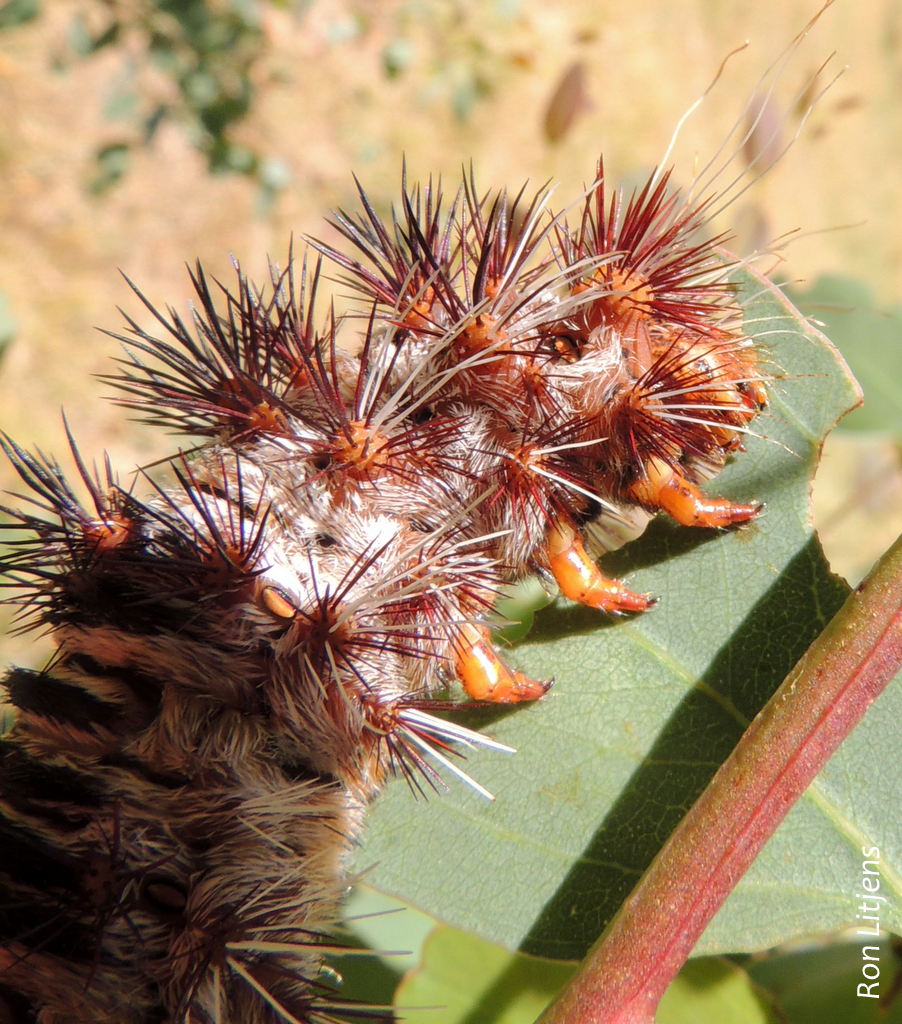
Before pupating the caterpillar spins a double-walled silk cocoon attached to the side of a tree or in the crevice of bark. It pushes its spines through the cocoon casing to deter predators from disturbing it whilst pupating.
Who’d want to be a koala with these things in your tree.
It’s umbrella time.

This is the time of the year when you will find brown pupa cases lying on the ground (pictured left). They belong to Rain Moths or Waikerie (Abantiades atripalpis). The caterpillars of the Rain Moth live in tunnels underground. They are herbivores feeding on the roots of various acacias and eucalypts particularly the River Red Gum (E. camaldulenis). Their common name is bardi grub, although this name is more correctly attributed to the grubs of the Longicorn Beetle family. The caterpillars pupate underground and move to the surface when the adults are about to emerge. The adults fly off leaving the empty pupa cases sticking out of the ground. This usually happens in Autumn before rain, hence the name. In some areas all the adults emerge on a single night within hours of each other.
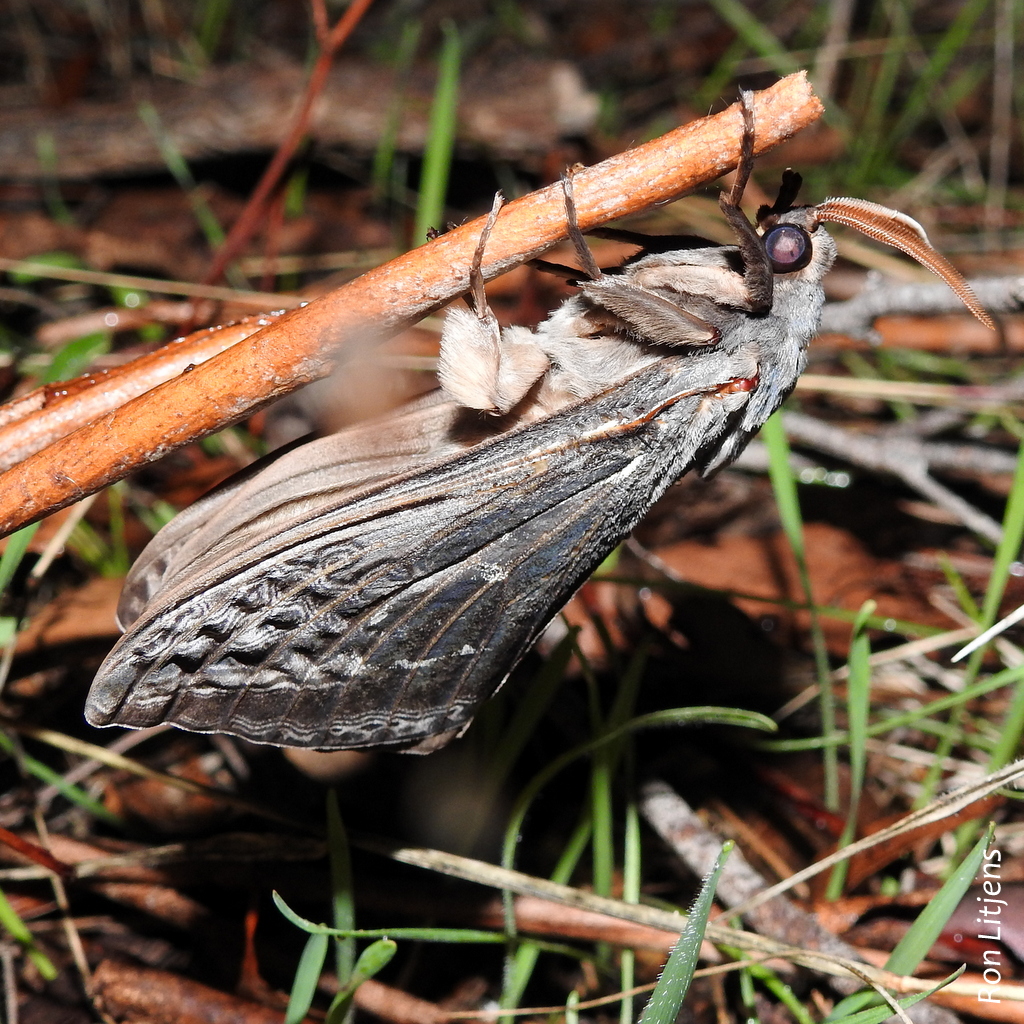
Rain Moths are distributed across the southern part of Australia near eucalyptus woodlands. The reference in the title to the umbrella is not due to the rain. The Book of Insect Records from the University of Florida records the Rain Moth as having the highest fecundity (ability to produce offspring) of any non-social insect in the world with a single adult egg count of over 40000 eggs. After mating the eggs are distributed whilst in flight.
Umbrella time indeed!
A Flat Chat
I know people who freak out at the mention of cockroaches. I am disappointed to see that a google search for cockroaches turns up dozens of ‘Pest Control’ sites. Admittedly the cockroaches in our houses – usually the introduced American Cockroach or German Cockroach are garbage collectors and live in the detritus.
When you find a delicate flat fascinating cockroach hiding in the wood pile, however, you have something to wonder at. I haven’t been able to identify this one, but I think it is a type of Bark Cockroach (family Blaberidae) which specialise in being super flat with nothing protruding so they can slip around between a tree and its bark. They are more like a trilobite than those household pesty cockroaches.


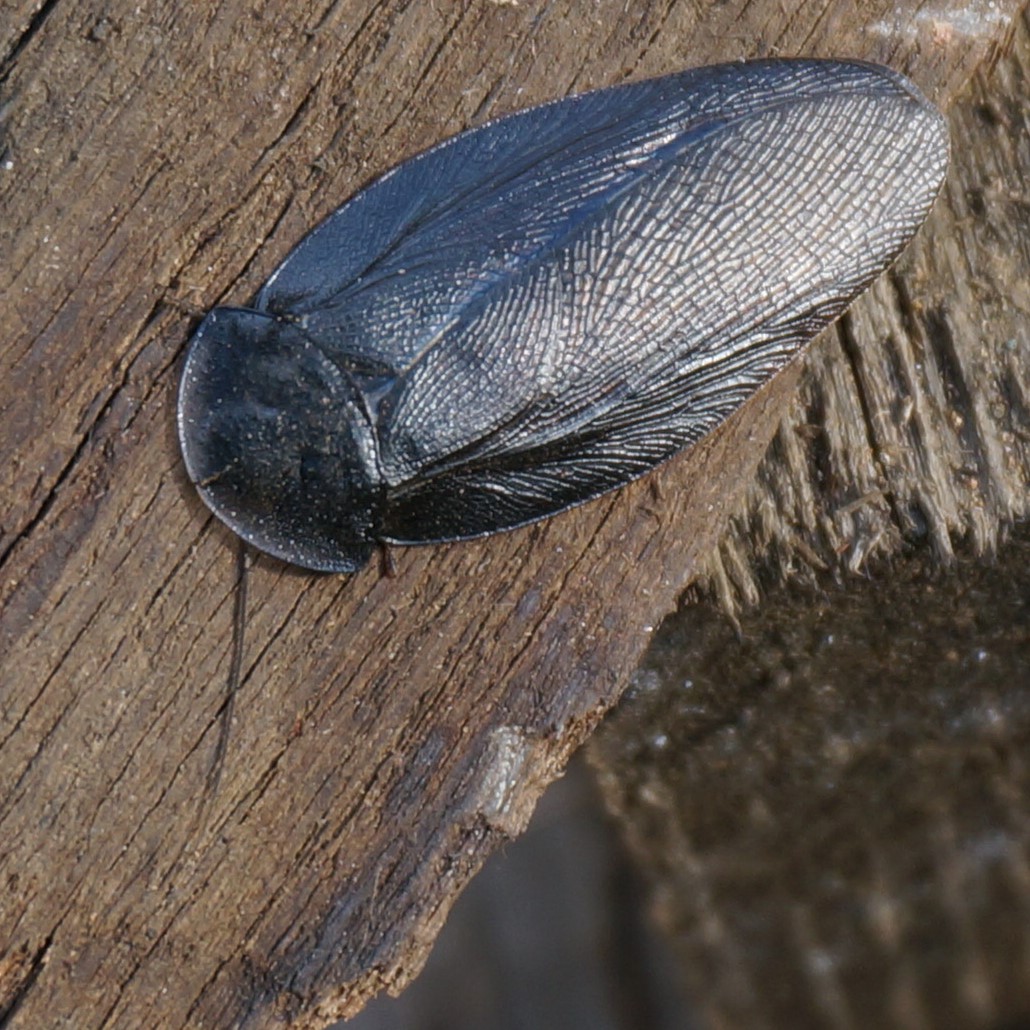
The Pattern: look at the beautiful swirly, shiny, intricate design. One writer suggested that the patterns on the back of cockroaches influenced aboriginal art.
The Versatility: in some of the photos, legs and feelers are protruding. When I touched a feeler, it withdrew it out of view. In some photos, no leg or feeler of any kind is visible. When it is rather inelegantly tipped over, the typical six legs and two feelers of an insect are clearly all there; in normal life they keep them well-hidden.
Capacity to Eat Wood: Cockroaches of this type, and wood-dwelling cockroaches in general, can digest rotting wood because their gut harbours the same bacteria that enable termites to digest cellulose.
In the world of cockroaches, this one is flatly fascinating.
Update: The inaturalist website identifies it as Bark Cockroach Laxta granicollis. It is a male because it has wings and the female of this species is wingless.
Opportunist nesters
There is a very productive tree in the Yea Wetlands that hosts nests each season: the big tree growing on the island in Cummins Lagoon at the end near the carpark. Over the last few years, a pair of Australian Ravens refurbish their large pile of sticks and raise another family, while on a slightly lower branch, a pair of White-faced Herons lay eggs and raise chicks. This picture from a previous blog shows the location of the heron’s nest.

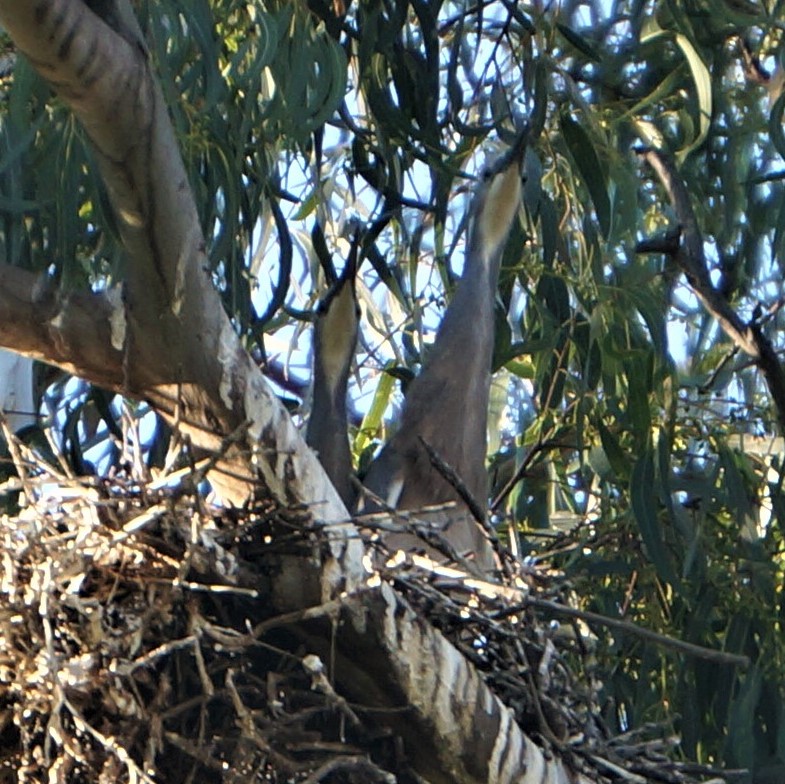
Australian birds are opportunists. Their breeding patterns are not totally predictable, depending on the season. It has been a wonderful year for water-birds and wetlands with the high Summer rainfall of a La Nina period. So the White-faced Herons were not content with raising chicks in their usual Spring time-slot, they started a second brood in December. Now they have two chicks from the second breeding currently staring down at the people who pass below.
They often have this strange stiff pose, perhaps a form of cryptic freezing, like a Frogmouth. The position of their eyes on the side of the head means they can see below as well as above.
Bad times will surely come again, so good on the ol’ Herons for breeding up while the going is good.