Magnificent moth
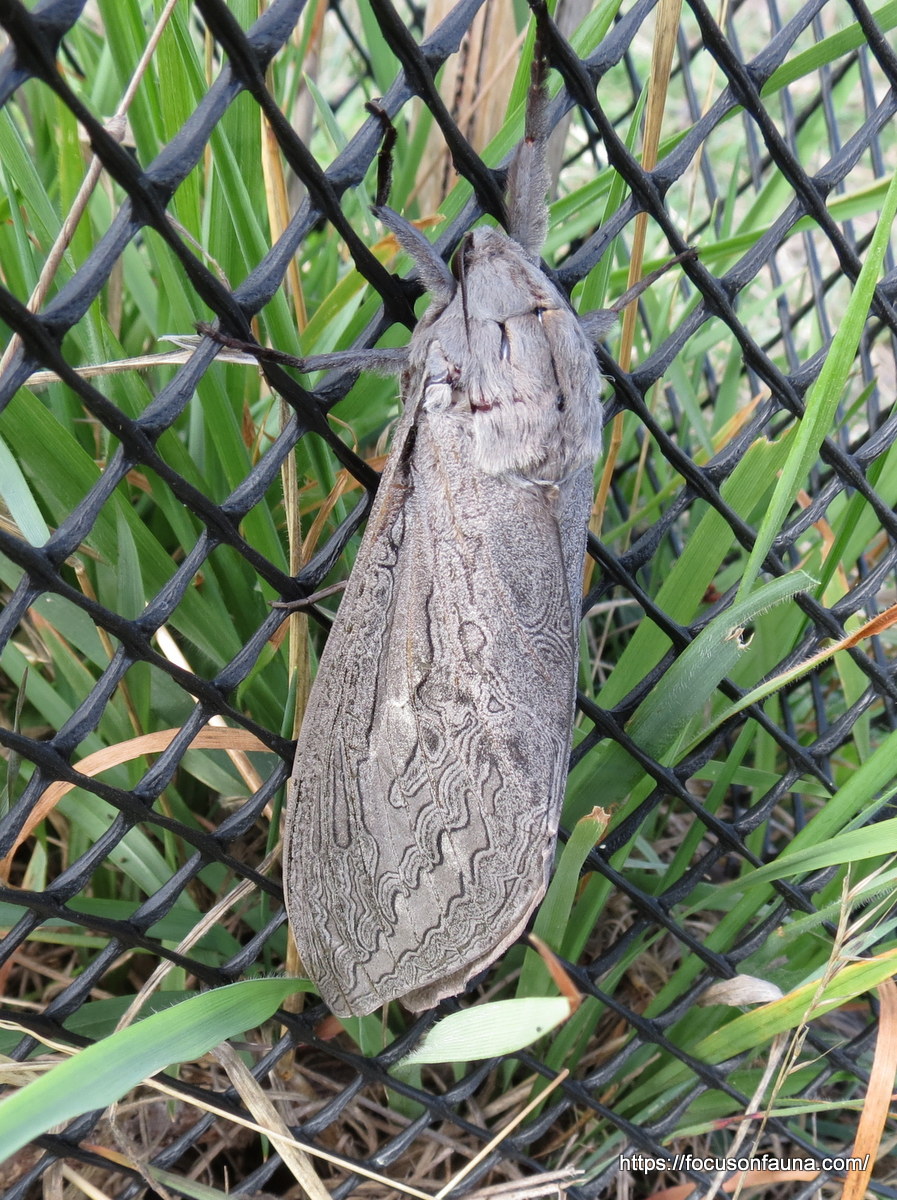 While checking for deer damage to our revegetation plantings, we came across this large and strikingly patterned moth clinging to a tree guard. Our moth guru Peter Marriott, author/joint author of the wonderful series of books Moths of Victoria, kindly identified it as a female Magnificent Ghost Moth, Abantiades magnificus.
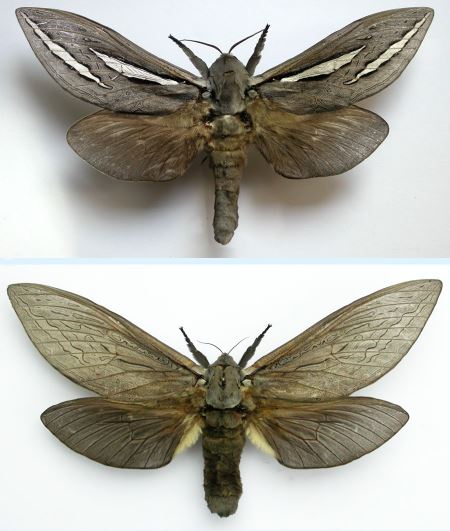
The Ghost Moth family, Hepialidae, includes some of the largest moths in Victoria, with females of one genus reaching up to 25 cm wingspan – the moth pictured at left would be about 16 cm across and the male a bit smaller at about 12 cm. The Ghost Moths are also known as Swift Moths or Rain Moths, as they often emerge from their pupal stage in the ground after rain. The larvae are commonly called Bardi grubs.
The Magnificent Ghost Moth pictured at right shows the male above and the female below. These images were reproduced with permission from Moths of Victoria (Part 6 Ghost Moth – Hepialidae and Allies) by Axel Kallies with Peter Marriott and Marilyn Hewish, published by the Entomological Society of Victoria 2015.
This was apparently the first sighting of this species in our area and the distribution map has now been altered slightly to include Strath Creek.
Sleek snake
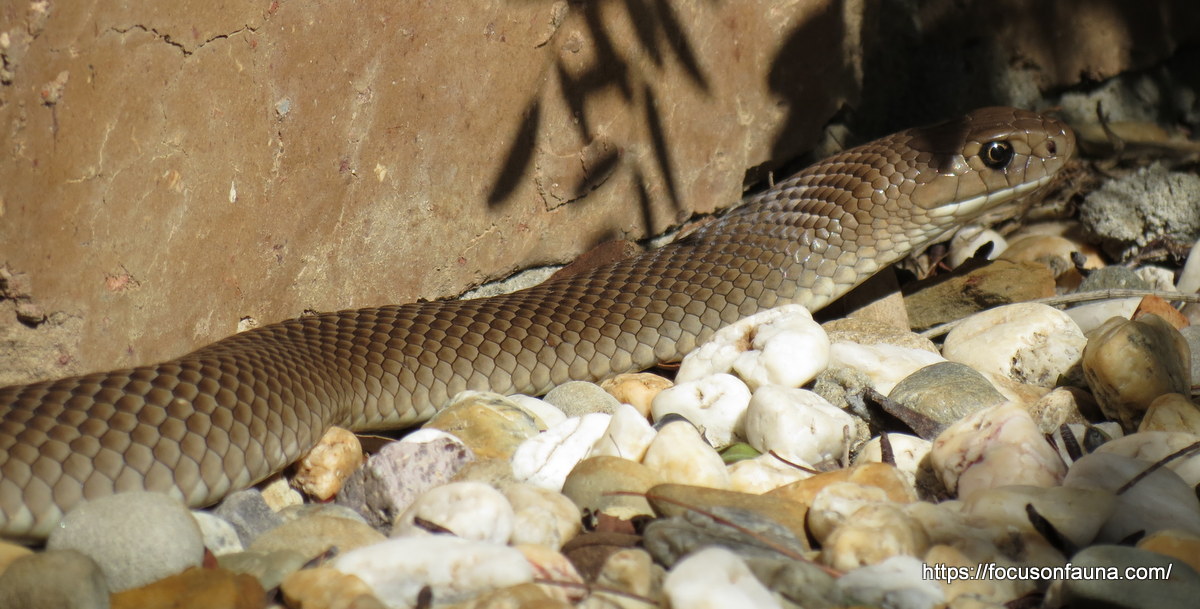
The sleek snake pictured here was sunning itself beside our chimney the other day. It’s an Eastern Brown Snake, Pseudonaja textilis, but from the photo you could perhaps be excused, from a quick glance, for thinking it was another snake occurring naturally in Victoria: the White-lipped Snake, Drysdalia coronoides. That is until you knew the length of the snake, which was at least 1.5 metres, about 3 times the maximum length of the White-lipped.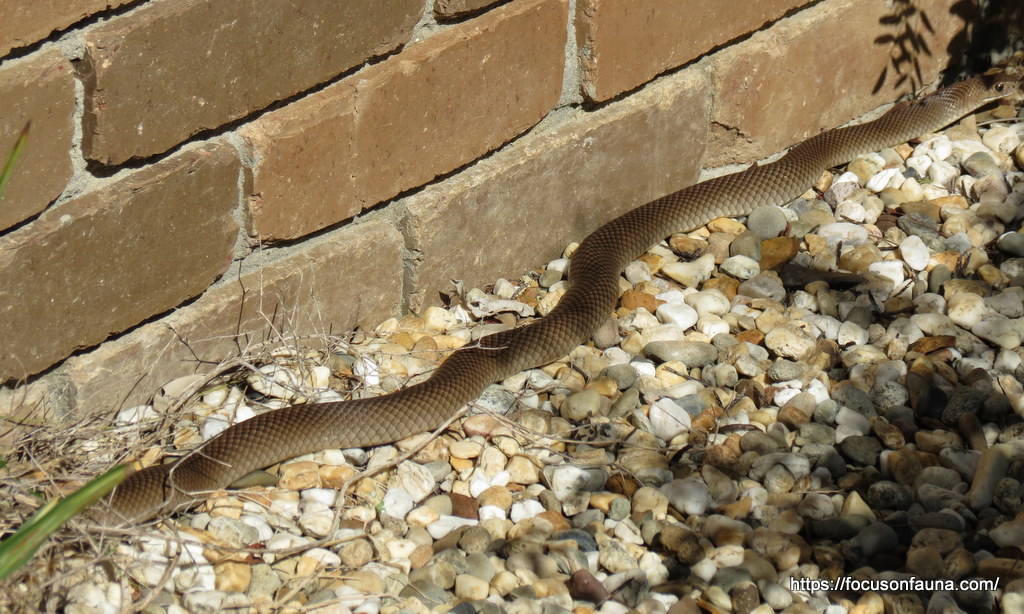
And while you might tread rather casually around a White-lipped Snake which, although venomous, is not considered dangerous, you certainly would be a lot more circumspect around this Eastern Brown, which is not only dangerously venomous but lightning fast and quick to retaliate when provoked.
The lesson being, don’t provoke any snakes – just appreciate their sleek beauty from a safe distance (and be thankful for a camera’s zoom lens)!
Friendly falcon
We have been enjoying watching our resident Brown Falcon, Falco berigora, hunting at the back of our property where it remains quite unperturbed even under close observation.
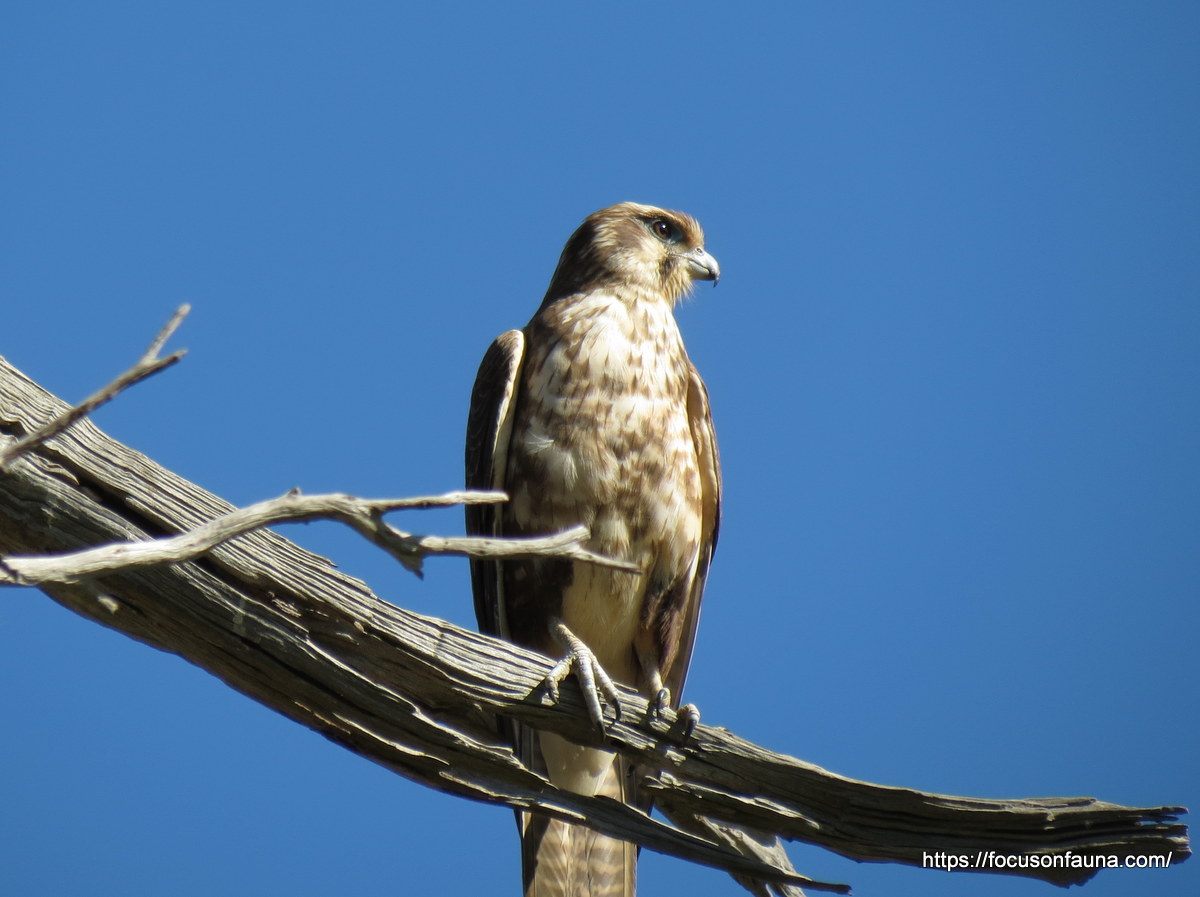
The Brown Falcon is not a typical falcon in its methods of flying and feeding. Its flight is rather slow and heavy and it is often seen perched in the open on a fence post or dead tree branch. It is capable of hovering, somewhat clumsily, but its most common hunting method is to scan the ground from its perch and glide down quietly onto its prey, which it grabs in its talons. We have also watched one running and hopping around comically on the ground, chasing grasshoppers. Unlike some other falcons, it is less likely to pursue birds in the air, although it is certainly capable of it.
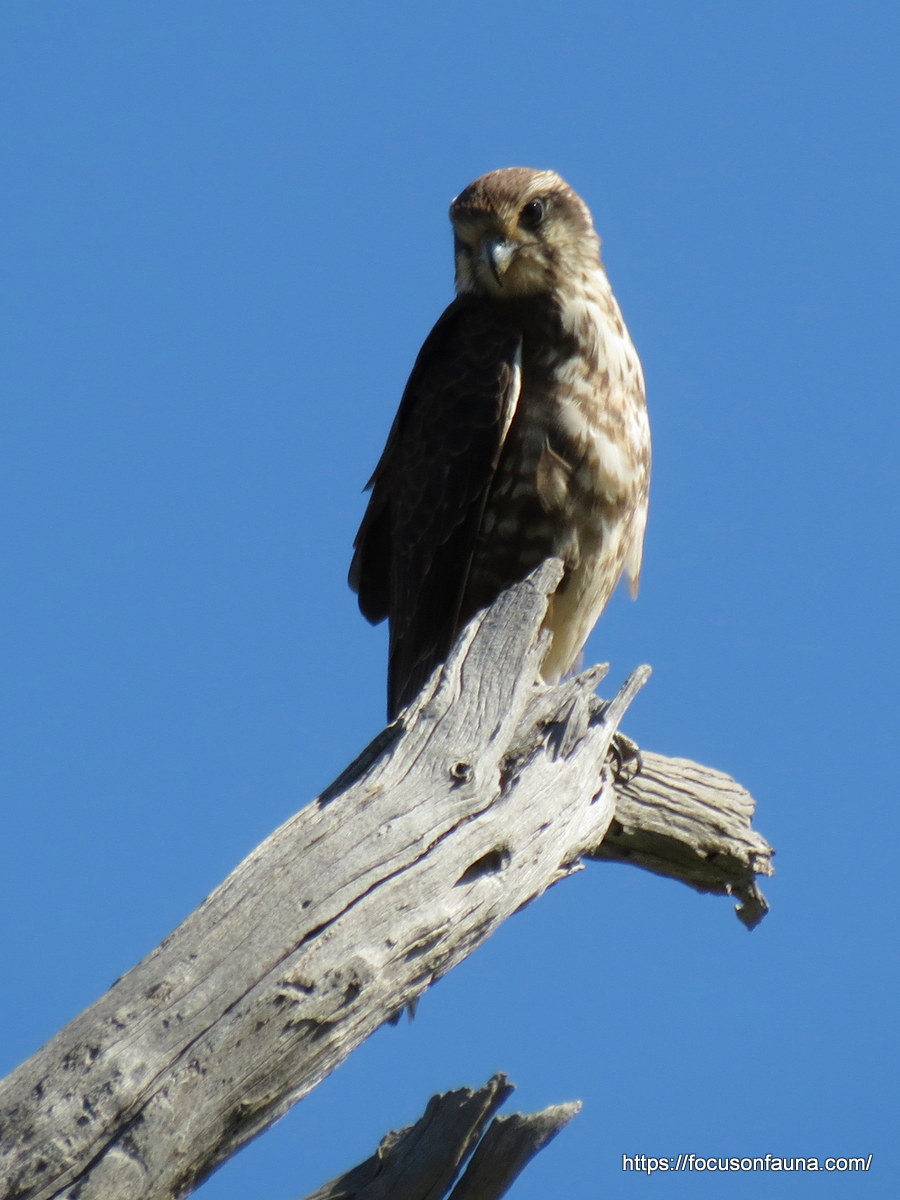
One of the most common and widespread of Australia’s raptors, the Brown Falcon is not always immediately identifiable due to its highly variable plumage, from a uniform dusky dark brown through mostly rufous, to brown above with whitish underparts, like the one pictured. The consistent giveaway for identifying this species is the facial markings, with a dark “tear drop” stripe below its eye and another dark patch on its pale cheek. It also helps to know that this is one of the noisiest raptors, with a characteristic cackling call in flight.

Not only is our falcon entertaining and quite tame, it is also performing a service by keeping some pests in check, hopefully including the occasional small rabbit!
Palp facts
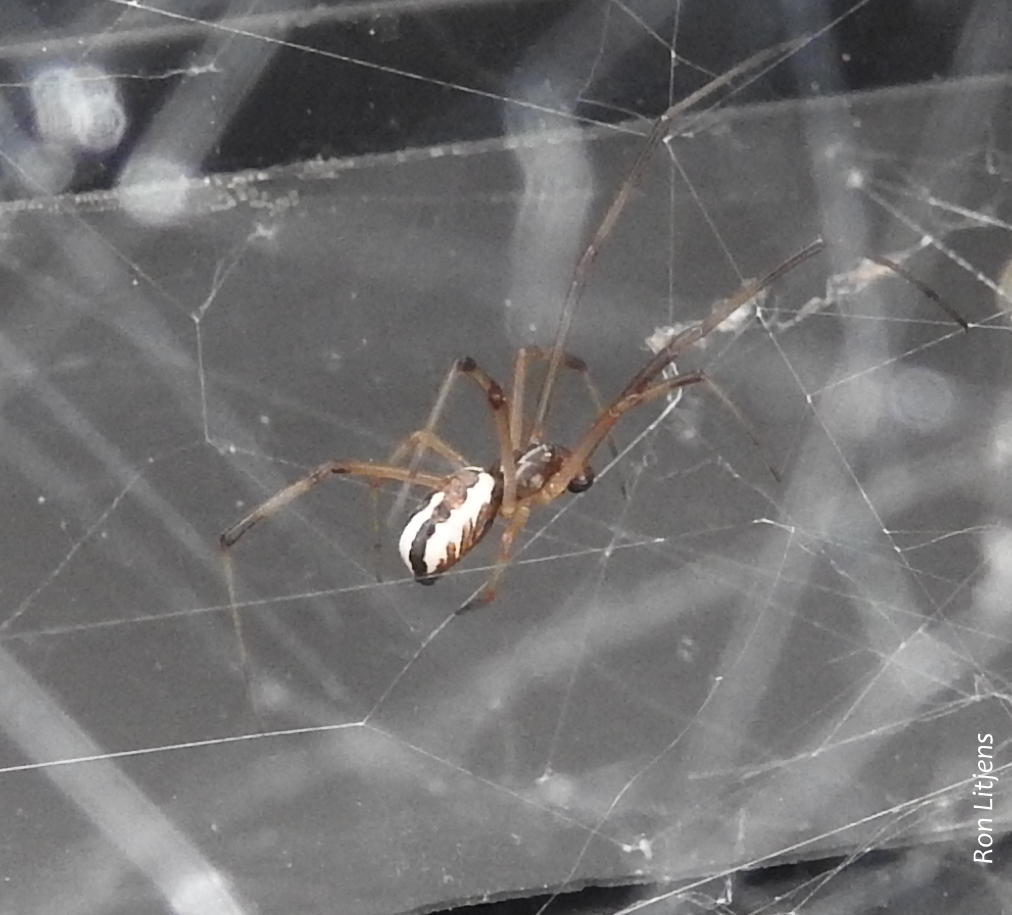
Male Redback Spider
Spiders are remarkable creatures particularly the way they reproduce. In male spiders there is no internal connection between where the sperm is produced and the organ which delivers it to the female, the palp. Palps are two hairy appendages (they look like small legs) that protrude from the front of the spider. Among other things the palp acts as a siphon to collect the sperm from the male abdomen (or from a silk sac into which the sperm is deposited), and as a device to deposit that sperm into one or both female spermathecae (sperm storage containers), where the sperm can remain viable for up to two years.
I was reminded of this when I got a call last week from Michelle at Yea High School wanting to know whether I wanted to come over and photograph some Redback Spiders (Latrodectus hasseltii) outside a science block window. The sperm transferring process sounds pretty straight forward until you look at the size discrepancy between male and female redbacks (see photo below). The standard image of a black spider with a red hourglass marking is that of the female spider. Male redbacks (pictured above left) look entirely different and are way smaller.
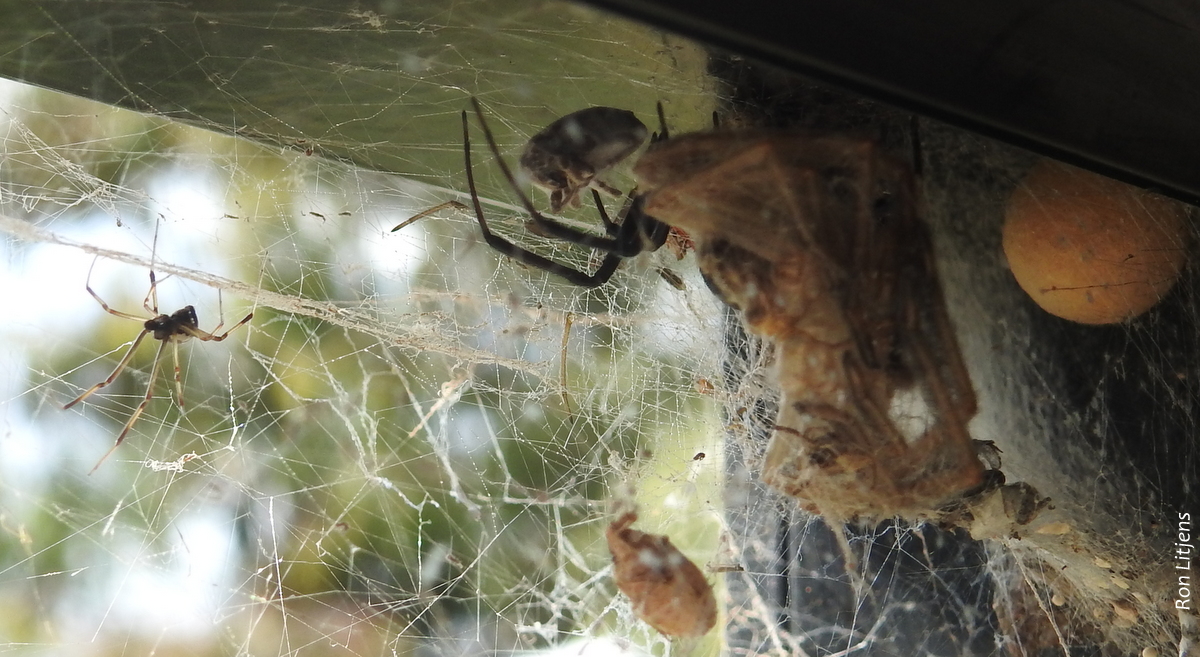
Male (left), hidden female’s legs (top centre), egg sac (top right)
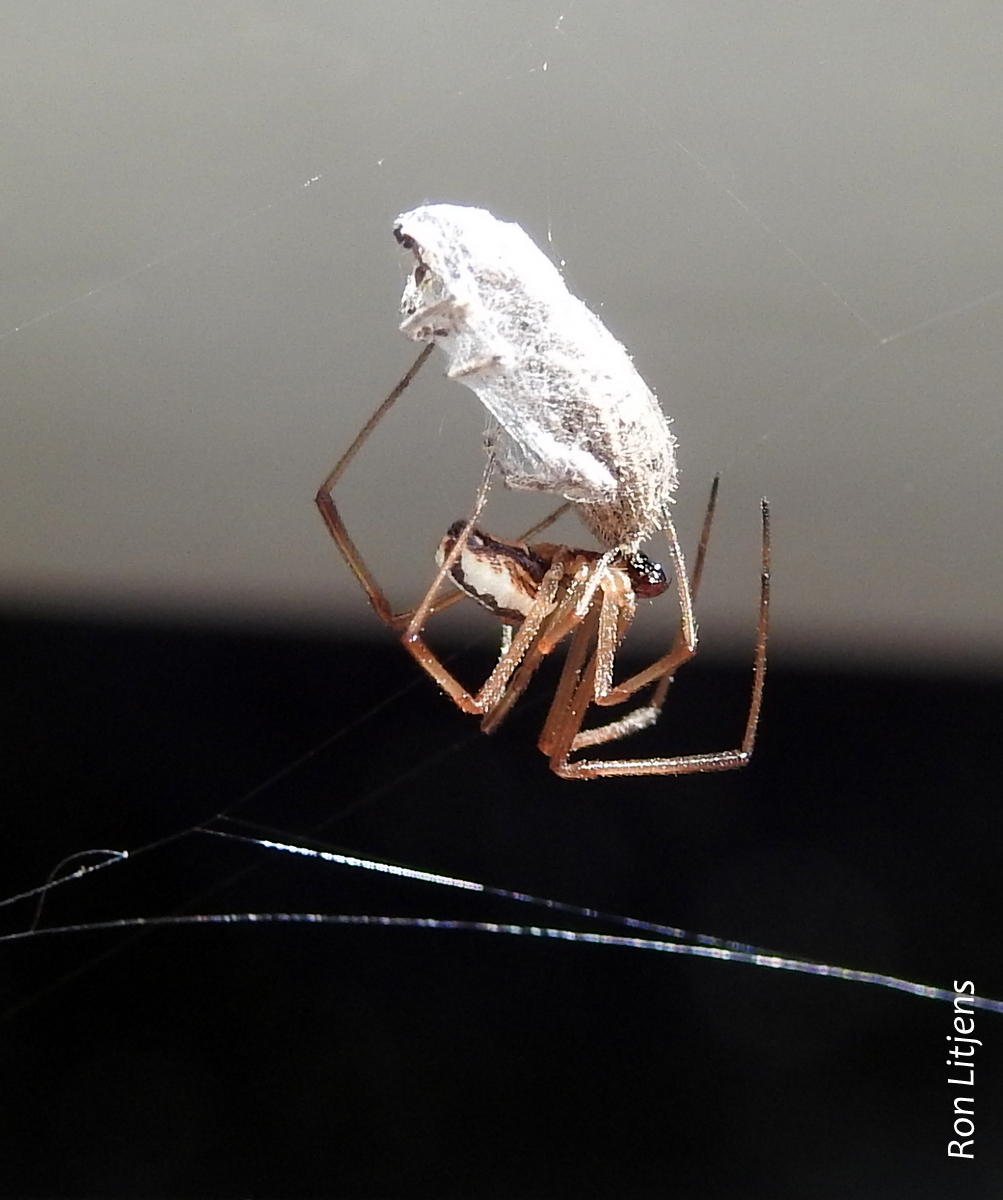
Male wrapping up prey
It sounds incredible but it’s not palp fiction.
It is busy in ant world
I am not a rock roller. When looking for invertebrates in the landscape I am reluctant to turn over logs or rocks to find things to photograph. Even if I gently put the rock back where I found it I feel that I am destroying something’s home, let alone the fact that the revealed critters could be squashed. I was therefore a little distressed when moving a load of bricks to find I had disturbed an ant colony, even more so when it was the ‘nursery’.
Uncovering an ant nursery creates a flurry of activity. Ant eggs, larvae and pupae required specific temperature and humidity conditions to develop properly. If those conditions are compromised i.e. someone moving the bricks, the young are quickly moved to an area with the correct conditions.
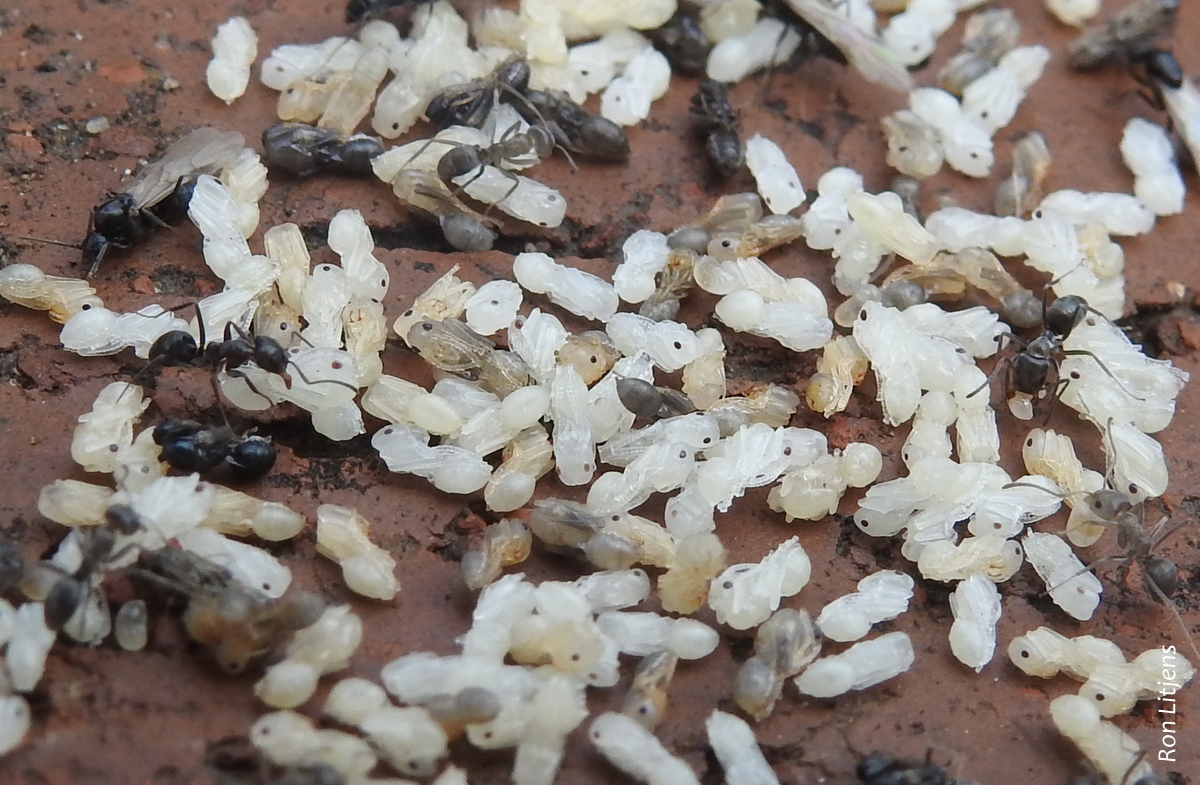

Eggs, larvae and pupae
The initial role of a worker ant is to look after the young by providing food or transport. As workers mature the tasks change to more energetic jobs like digging and clearing the nest. In the ‘twilight’ of their lives worker ants are given the more hazardous jobs like defending the colony or foraging for food. If they get killed – well, they were old anyway!
I’m glad our local IGA is a safe place to shop.
The lost and lonely
 Twitchers (fanatical birdwatchers) lead a life of quiet desperation, always on the look-out for a ‘lifer’ – a bird species they have never seen before. This explains the phenomenon late last year when hundreds of bird-watchers flocked (pardon the pun) to the Werribee Treatment Plant after the reported sighting of a single Paradise Duck (a species rarely if ever seen in Australia) bobbing among the thousands of birds down there. Sometimes however that special bird comes to you.
.
 Susan who lives just west of Yea last week reported a Magpie Goose (Anseranas semipalmata) on her property and wanted to know if it was unusual in this area. This bird is neither a magpie nor a goose. The binomial name is derived from the Latin anser meaning goose, anas meaning duck, semi meaning half and palmatus meaning webbed – a half-webbed goose-duck, half-webbed referring to its feet.
Today Magpie Geese inhabit wetlands of northern Australia and southern New Guinea where they feed on water-based and land-based plant matter. Their range once extended this far south but due to systematic destruction of wetland habitas for agricultural purposes the bird has long disappeared from this landscape. Attempts have been made to re-introduce populations of Magpie Geese in the south – at Bool Lagoon near Narracorte, S.A. and in the Serendip Wetlands near Lara. The sighted bird could be a member of one of those populations, though still far from home.
So to answer the question, these days the appearance of a Magpie Goose around here is highly unusual. As Geoff our local bird guru said ‘it looks lost and lonely’. It was only around for a day. On the bright side, it may have been scoping out new territory for its mates – Yea Wetlands maybe?
C’arn the blues

A ‘blue’ on Purple Loosestrife
A recent blog described the Hesperiidae family of small butterflies, commonly known as Skippers. They are a relatively unknown group of small, generally orange/brown butterflies. Another relatively unknown family of butterflies is Lycaenidae, the Blues and Coppers, also called the Gossamer-Winged Butterflies. They are the second largest group of butterflies comprising about 30% of known butterfly species. The majority of Lycaenids in Australia exist in tropical areas. There are less than a dozen species in Tasmania. Most commonly around here this family is represented by small blue/grey butterflies which are frequenting flowers at the moment (pictured left).
.
.
.
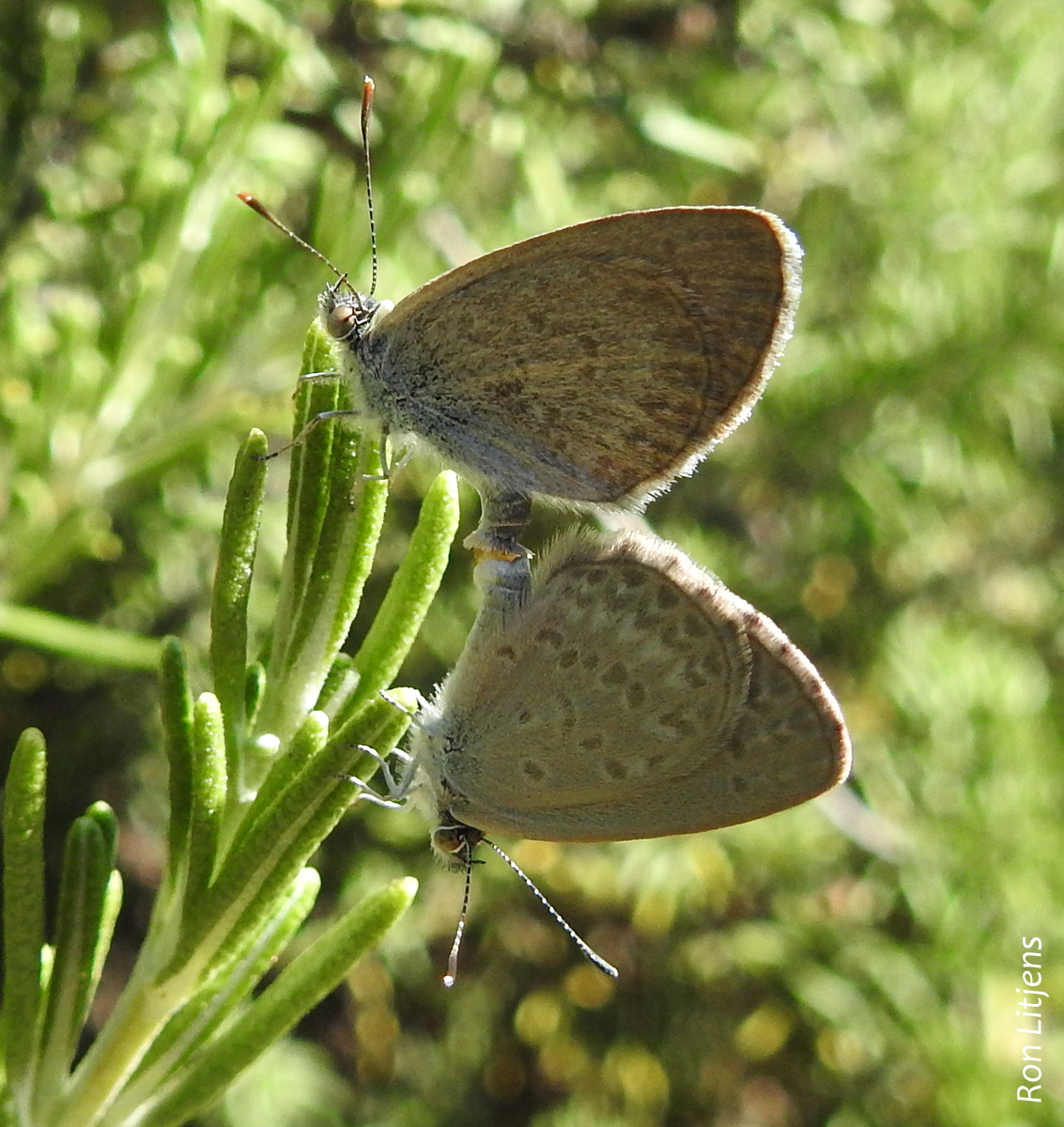
Common Grass-blues (Zizina labradus) mating
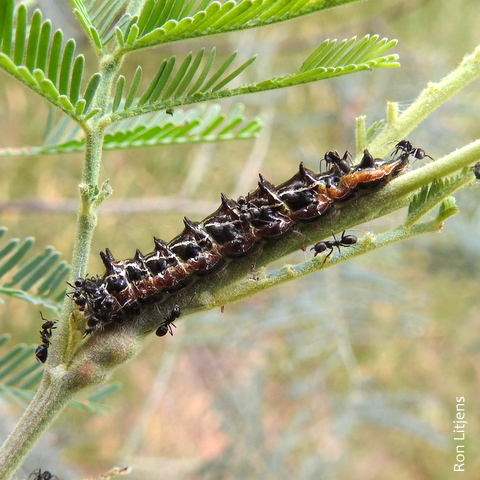
Ants tending an Imperial Hairstreak caterpillar
The distributions of species are highly localised reflecting the spread of particular plants that the larvae feed on and the relationship many species have with specific ants. Many butterflies of the Lycaenidae family have a beneficial relationship with ants (click HERE to read the previous blog about the Imperial Hairstreak). The caterpillars and pupae have a gland which releases honeydew, a sugar-rich substance secreted by a number of insects including hemipterans such as psyllids and gumtree hoppers. The ants harvest this honeydew and in return offer the caterpillars protection from predators and parasites. In some species the caterpillars enter the ants nest to pupate and the emerging adult has to find its way to the surface.
Even though larger butterflies are more easily seen, a careful look at your flowering plants at the moment will give you ‘the blues’, in a nice way.
Flight of the feather-horneds
For two weeks of the year, the last week in February and the first week in March (give or take depending on the season) the Feather-horned Beetles (Rhipicera sp.) take flight and the air is filled with these large, slow-flying insects (pictured below). The male sports large feather-like antennae which it uses to detect a mating pheromone emitted by the female beetle. The female beetle has simple rod-like antennae.
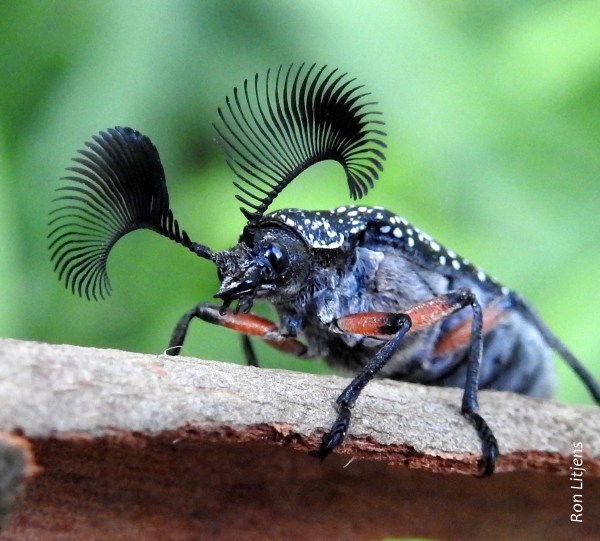
Little is known about these insects so to repeat a previous blog it is thought the larvae of this beetle are parasitic on the larvae of cicadas. The white patches on the exoskeleton are actually tufts of hairs. I think it is a case of a picture speaks a thousand words!
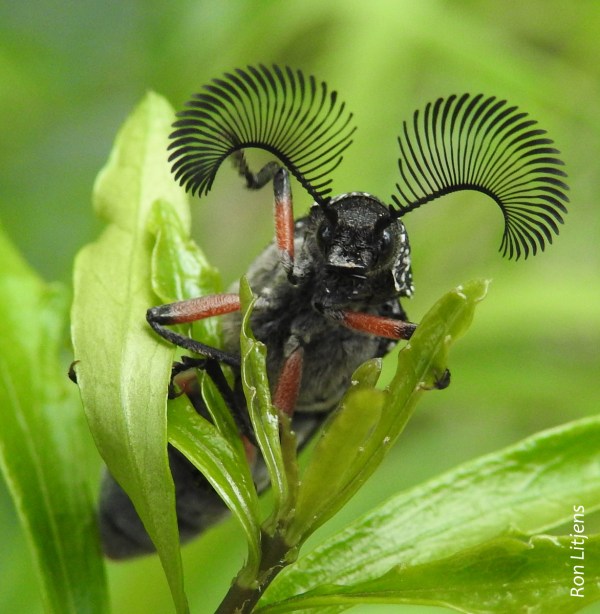
My challenge this year is to take a picture of the female beetle. Not as impressive in the antennae department but a key part of the story.
More tales from the Swamp Gum
Following on from reporting about the tiny critters inhabiting the leaves and flowers of a local Swamp Gum (Eucalyptus ovata), the insects I was actually searching for also turned up – Flower Wasps. Regular readers of this blog probably think I obsess about Flower Wasps and they are probably right. They are my favourite insect.
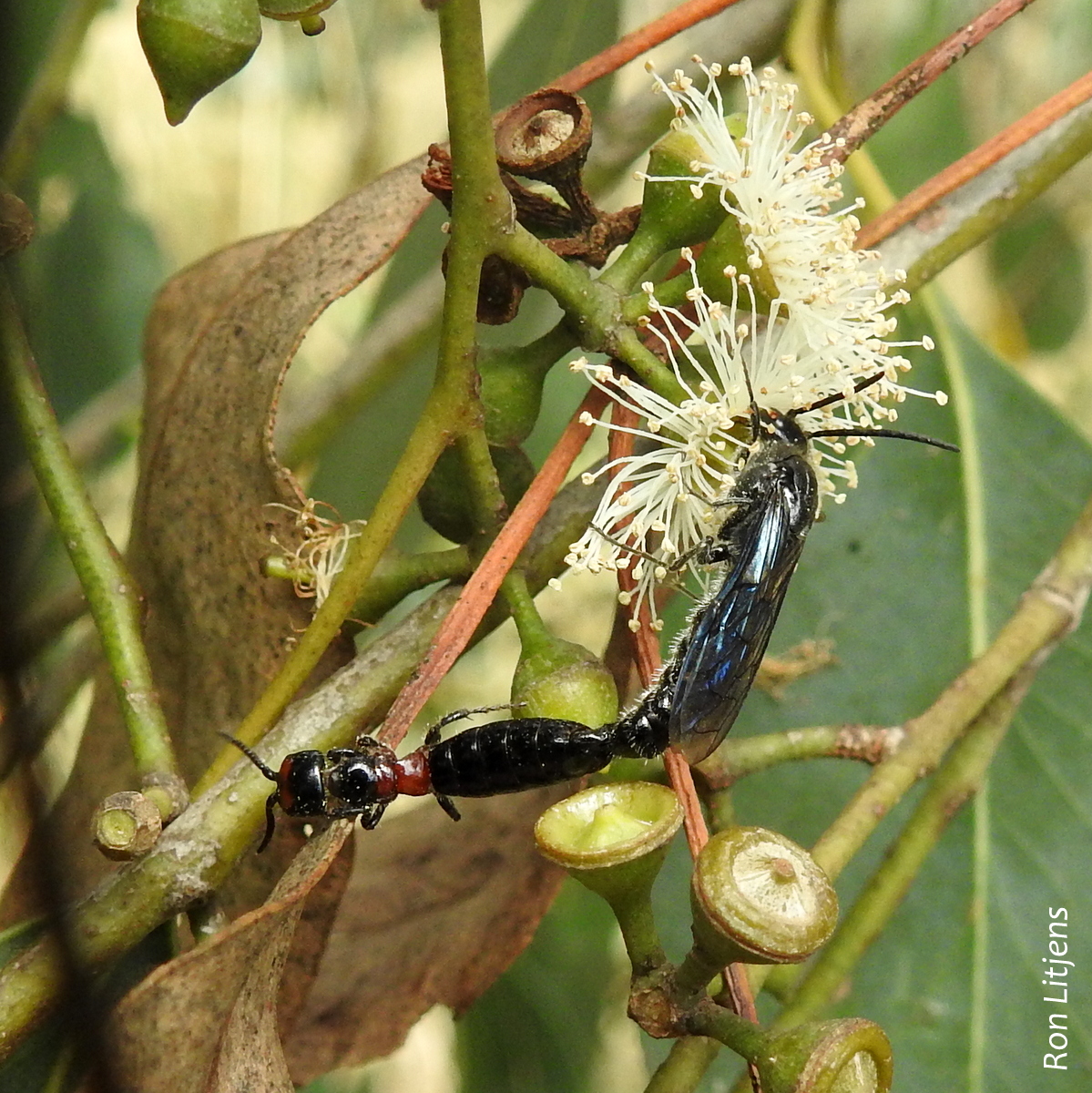
As mentioned in many! previous blogs there is sexual dimorphism in Flower Wasps. The male wasp is winged and is much larger than the female wasp. The female wasp does not have wings so to get to the nectar rich flowers at the top of a tree such as a Swamp Gum it has to entice a male to mate with her. During and after that act the male wasp flies to the higher branches to feed on the nectar and the female wasp hangs on for the ride to also feed. It is one thing to read about and know this but it is truly magic to watch it in action. The local Swamp Gum being bent over offers that opportunity as the flowers are near ground level. Pictured below is a male (winged) and female wasp feeding (and mating) at the flowers. After feeding, the female wasp drops to the ground where it searches for beetle larvae on which to lay its eggs.
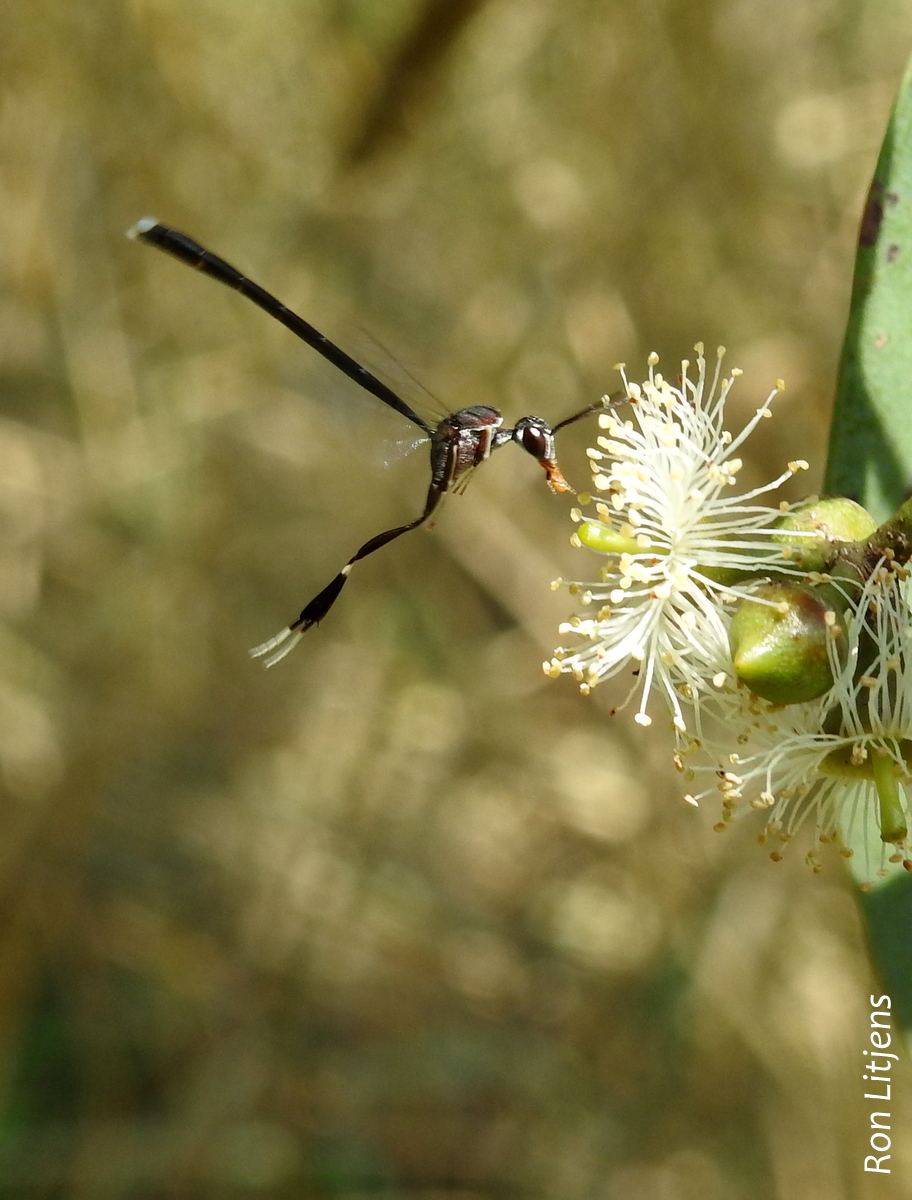
The vast majority of adult wasps are nectar feeders (and therefore pollinators). Another species turning up to feed at the Swamp Gum is also a regular to this blog, a Gasteruptiid Wasp. Pictured below is a male Gasteruptiid feeding. The female is recognisable by having a white tipped ovipositor about half the length of its body in size. Female wasps lay their eggs in the nests of Blue-banded Bees. They are a regular at the Blue-banded B&B.
This Swamp Gum could be a source from many stories to come – unless the heavy downpour last night washed out all the flowers. Stay tuned.
All creatures small and smaller
Very often we don’t spend the time to stop and smell the roses…or in this case smell the honey. Many eucalypts are flowering at the moment and you can be forgiven for not noticing given the flowers are pale yellow and high up in the trees. Locally there is a Swamp Gum (Eucalyptus ovata) with its crown bent over so that the flowers are at ground level. The heady scent of honey is attracting all sorts of critters, in particular wasps. So I have been staking out the tree to try and photograph some wasps for an upcoming talk.
 Whilst sitting and waiting I noticed all manner of small insects also attracted to the rich nectar source. These I would not have noticed (you can get some idea of their size by comparing what they are sitting on) unless I had stopped and watched. Pictured left and below is an Ant Fly (Family Sepsidae), so called because they usually gather in large groups and from a distance look exactly like ants. The adults are nectar feeders. The one pictured is ‘bubbling’, the practice of evaporating all the water out of the nectar so that it can consume more of ‘the good stuff’. These flies are usually found around manure where they lay their eggs. The larvae are efficient composters of it.

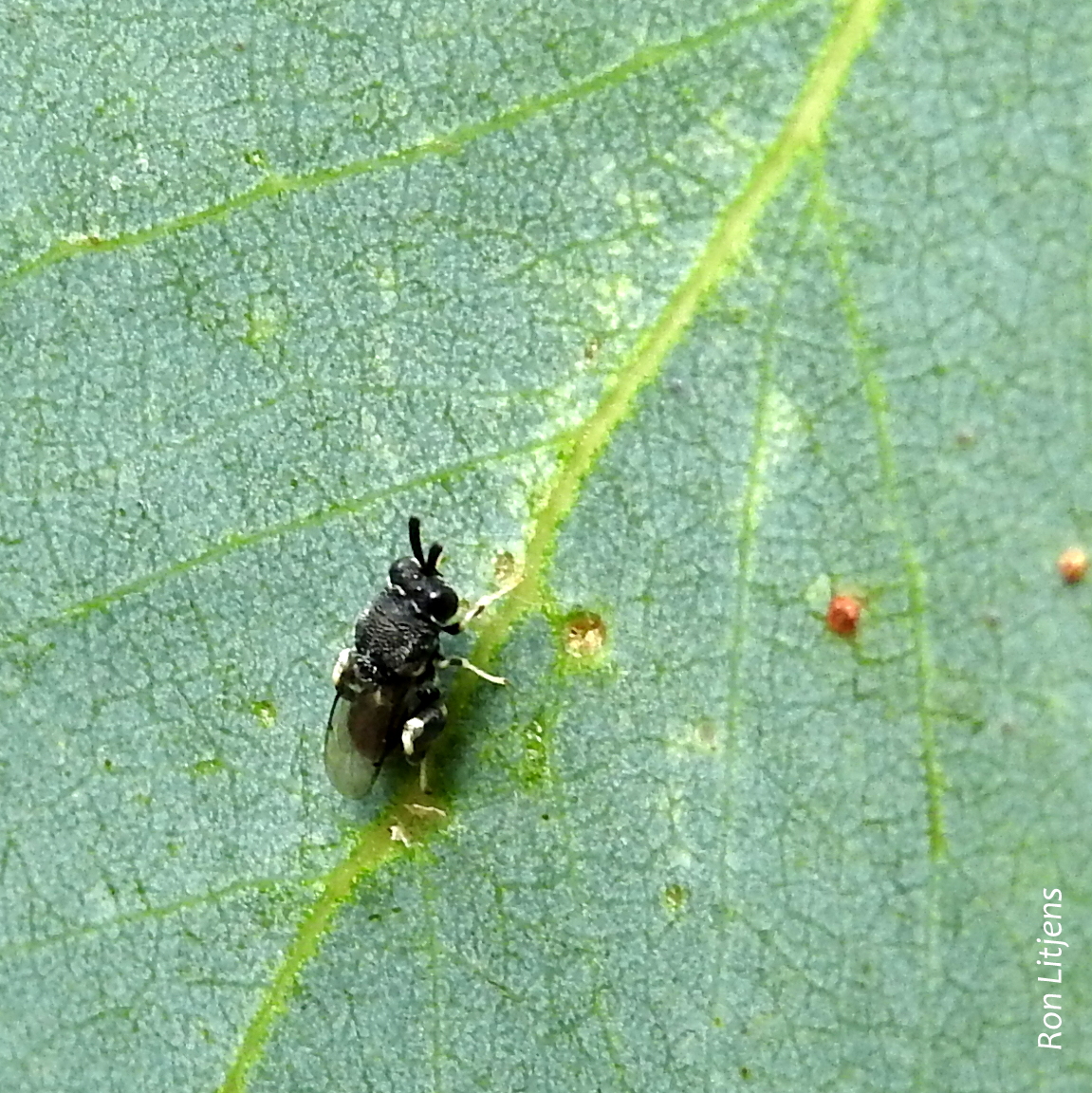 Smaller still was this Chalcid Wasp pictured (right) on a eucalypt leaf. Again the adults are nectar feeders. Most species from this family of wasps are parasitoid – they lay their eggs on a live but paralysed host i.e. they are parasitic but resulting in the host’s death. Some species though are termed hyperparasitoid (now focus) they lay their eggs on the eggs of wasps that lay their eggs on a host. Small in size…large in confusion.
I wonder what the term is for a wasp that lays its eggs on the eggs of a Chalcid Wasp?
More Swamp Gum tales to follow!




 Focus On Fauna