What’s all this carryin’ on?
 Insects play an important role in maintaining a clean environment and reducing the risk of disease by colonising and consuming carrion. Two important players in this process are carrion beetles and fly larvae and the race between the two for this food source is very competitive.
The strategy of carrion beetles of the sub-family Nicrophorinae is to get to the carcass first. They then attempt to bury the dead body before the flies can lay eggs on it. These beetles feed during the early stages of decomposition – fresh and bloated. Their very short lifecycle means that even if the carcass is fly-blown much of their larval development has happened before the maggots can dominate.
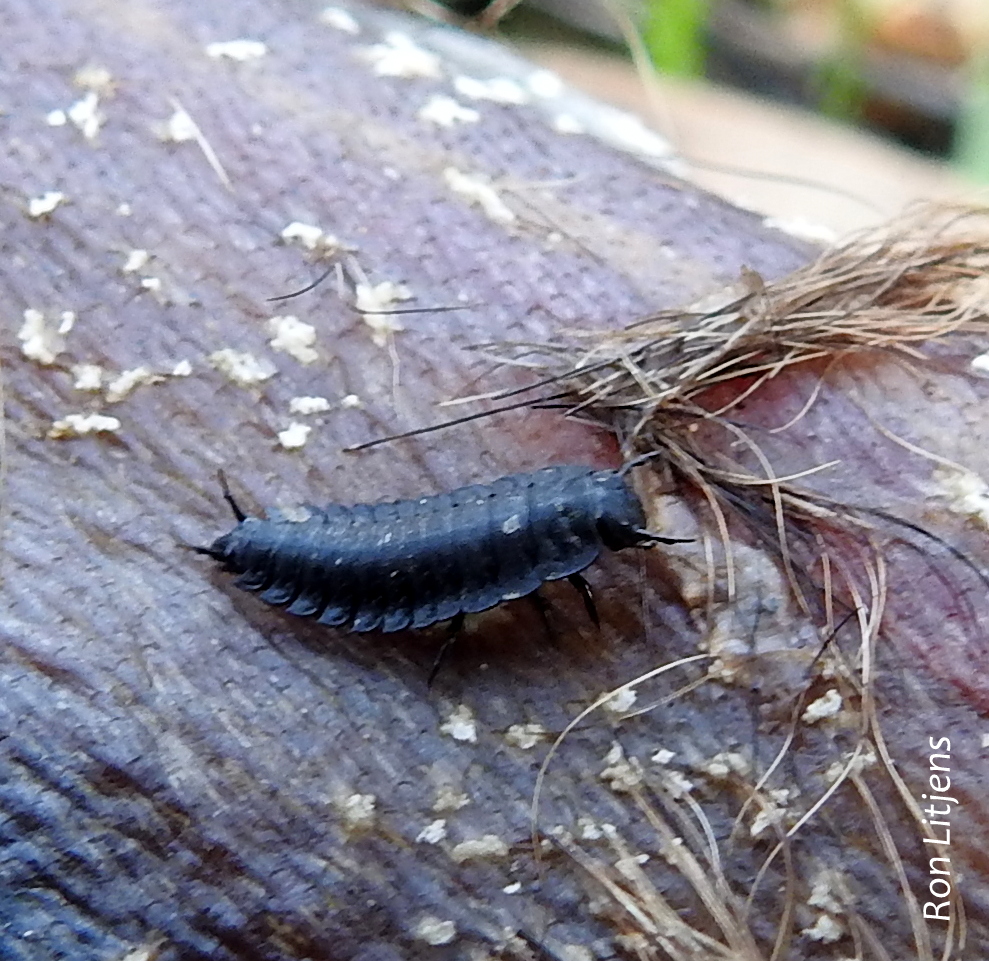 Carrion Beetles of the sub-family Silphinae beetles however have a longer lifecycle. They tend to feed on the later stages of decomposition – decayed and dry, after the maggots have had their fill. At the back of our property are the dry remains of a kangaroo, mainly just the bones and tail. The maggots have long gone. Crawling all over the carcass are the larvae of these carrion beetles (pictured). The Silphinae adults on the other hand also eat the fly maggots themselves.
A good rule when dealing with competitors – if you can’t beat them, eat them.
There’s a whole new world out there
 Frogs have never been my forte. The variations in the colour and texture within a species can make identification difficult. And I never get to see them. Even the stealthiest approach to a dam turns the deafening frog chorus to silence. However with my new technique of using eye-shine to locate the critters at night I am coming across them all the time. This is particularly true after rain when they all seem to come out and sit on the driveway and are undisturbed by my approach.
The Pobblebonk or Eastern Banjo Frog (Limnodynastes dumerilii), pictured left, is easy to identify. The call, a loud “bonk’, is distinctive as is the pale stripe from below the eye to the top of the front leg.
 A recent ‘find’ for me was a Spotted Marsh Frog (Limnodynastes tasmaniensis), pictured right, distinguished by the yellow stripe down the middle of the back (and the spots of course). I had never seen one before and I rushed back to the house with the photo only to find that they are distributed over most of Victoria and are very common. Still it’s good to find something I’ve not previously seen.
The identification that has still got me guessing is the frog pictured below. The pads on the toes identify it as a tree frog and distribution-wise either a Plains Brown Tree Frog or a Southern Brown Tree Frog. Because of the  dark stripe from the nose through the eye to the arm I’m guessing the former. The difference in call is the frequency of the ‘cree cree cree’, not very helpful.
Rest assured I will be out at night when the next rain falls. There’s a whole new world of things to discover.
You are not alone
 I have recently purchased a new LED head torch which is so bright I reckon it could scorch the fur off a koala at 1000 paces. Walking at night I can now locate arboreal mammals at a great distance by their reflective eye-shine.
 In the eyeball there are structures that detect light called photoreceptors. In some animals there is a reflective layer situated behind these photoreceptors called a tapetum lucidum. Once light has passed through the receptors, this layer reflects the light back through the receptors therefore making ‘double use’ of the available light. This is particularly useful for nocturnal animals to make the best use of the low light levels. This reflected light gives rise to what is commonly known as ‘eye-shine’, light reflected from animal eyes at night.

When spotlighting at night, particularly with a head torch, the location of arboreal mammals high up in trees can easily be detected by the eye-shine. I have found that frogs can also be found by their eye-shine (though it is much smaller). After a recent rain shower Pobblebonk frogs (Limnodynastes dumerilii ) on the driveway (pictured above right) or tree frogs floating in the dam (pictured left) could be easily located. In fact sitting on the edge of the dam I could see pinpoints of reflected light throughout the reeds, even though the frogs were quiet in my presence.
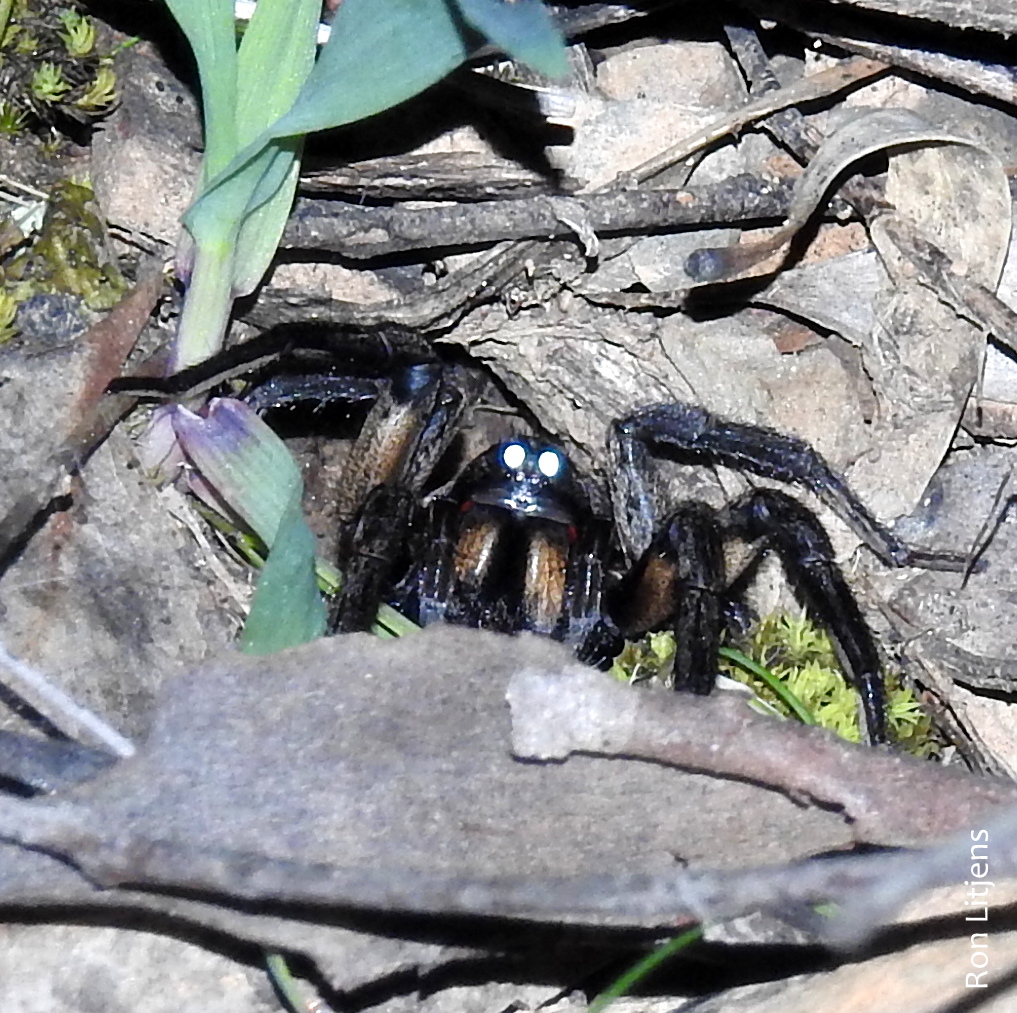 But what stunned me the most walking back to the house was the hundreds of reflected points of light as I passed by the cutting on the drive. Closer examination showed that the rock wall was riddled with tiny holes not obvious during the day. Sitting in these holes were Wolf Spiders (family Lycosidae). I don’t know if their eye-shine is from the same mechanism but once I got my eye in these spiders were everywhere on the ground through the bush, even floating on the surface of the dam.
So get a head torch and look for yourself. If you see nothing it does not mean that there is nothing there. They just may not be looking at you.
A cool customer
 This Black (or Swamp) Wallaby, Wallabia bicolor was browsing on the side of Moores Road, Flowerdale, the other day, at the junction with Broadford-Flowerdale Road, and was quite unperturbed by the cars whizzing by. That can be a problem if it suddenly decides the grass is greener on the other side of the road, and a number of wallabies have been killed by cars adjacent to Coonans Reserve which is a haven for these delightful creatures.
Wallabies in the bush are usually quite shy, bounding off noisily when confronted, and it is odd that some local wallabies seem oblivious to human proximity. Perhaps familiarity with cars breeds contempt. This particular wallaby did eventually hop off to the “cover” of long grass, but still seemed content to have its photo taken.

Unlike kangaroos, wallabies are generally solitary, but can be found in groups at prime feeding sites – for instance six were reported recently at the back of the Three Sisters property in Flowerdale. And like kangaroos, the males can indulge in quite hectic fights, which reminded us of an amazing video recorded by Rick and Claire at their property on the north side of the Yea Spur. It was posted on this blog in 2011 and can be viewed HERE.
Maybe the notch in our wallaby’s ear is the result of a similar fight?
Which is your favourite parrot?
 Parrots are an order of birds characterised by a strong curved beak, an upright stance and strong legs. In Australia they include cockatoos, rosellas, budgies, corellas and lorikeets. They can be highly endearing. Generally they are brightly coloured and no one can help being amused by a flock of corellas swinging around on powerlines by their beaks or the jaunty crest atop a cockatoo.
HOWEVER… living in Flowerdale I am reminded of the (pre-bushfire) cedar house in the district that was covered in chicken wire to prevent the Sulphur-crested Cockatoos (Cacatua galerita) from ‘eating’ the entire house. At our place on Junction Hill the rubber seals on our windows and car windscreens have been destroyed by the same creatures.
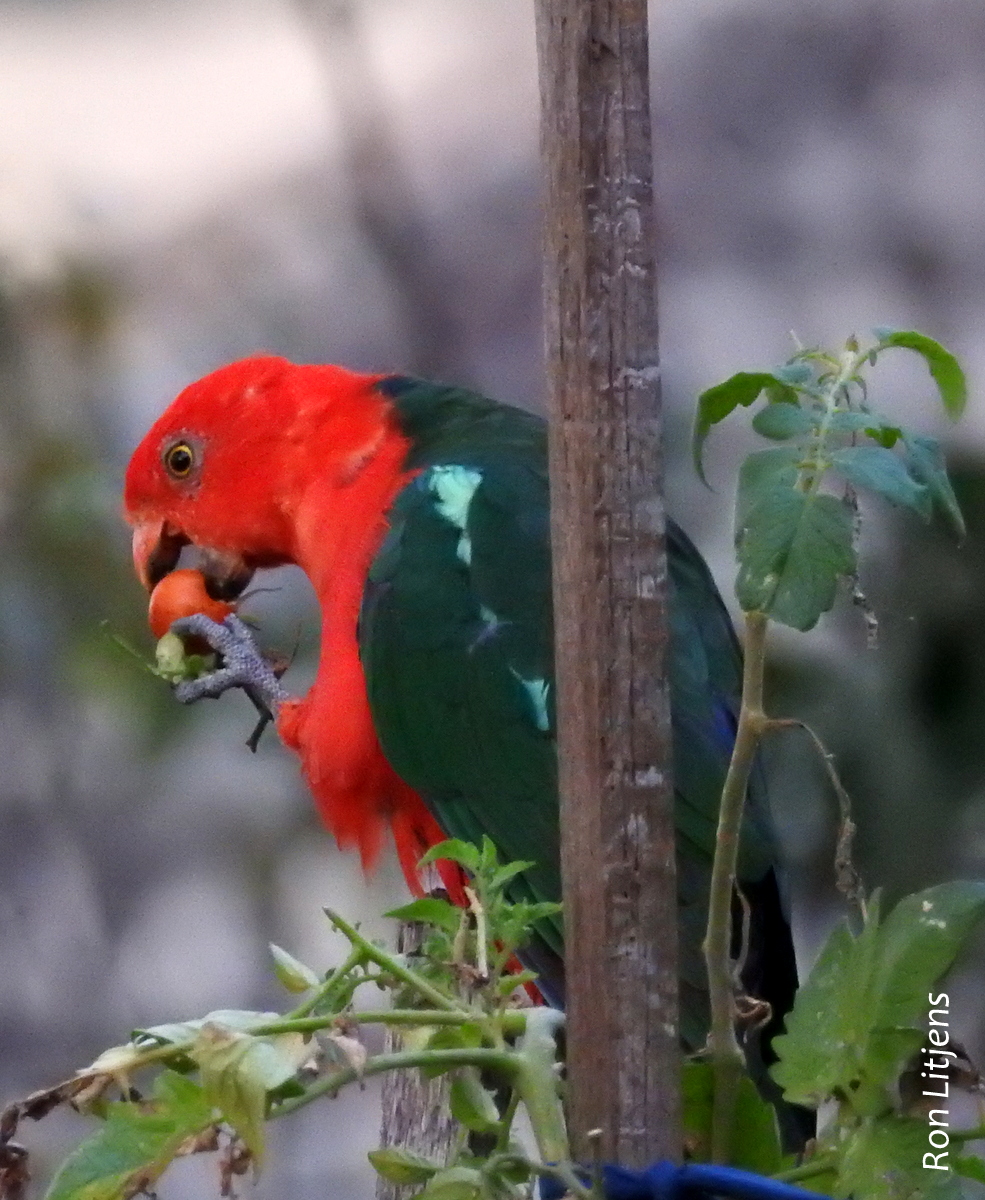
 Australian King-Parrots (Alisterus scapularis) are common along the eponymous creek in the district. As stunning as they are to look at, watching them snip off the seedling heads in our vegie patch as they did last Spring and then later raid the fruit of those plants which survived (pictured above left) takes the gloss off their presence.
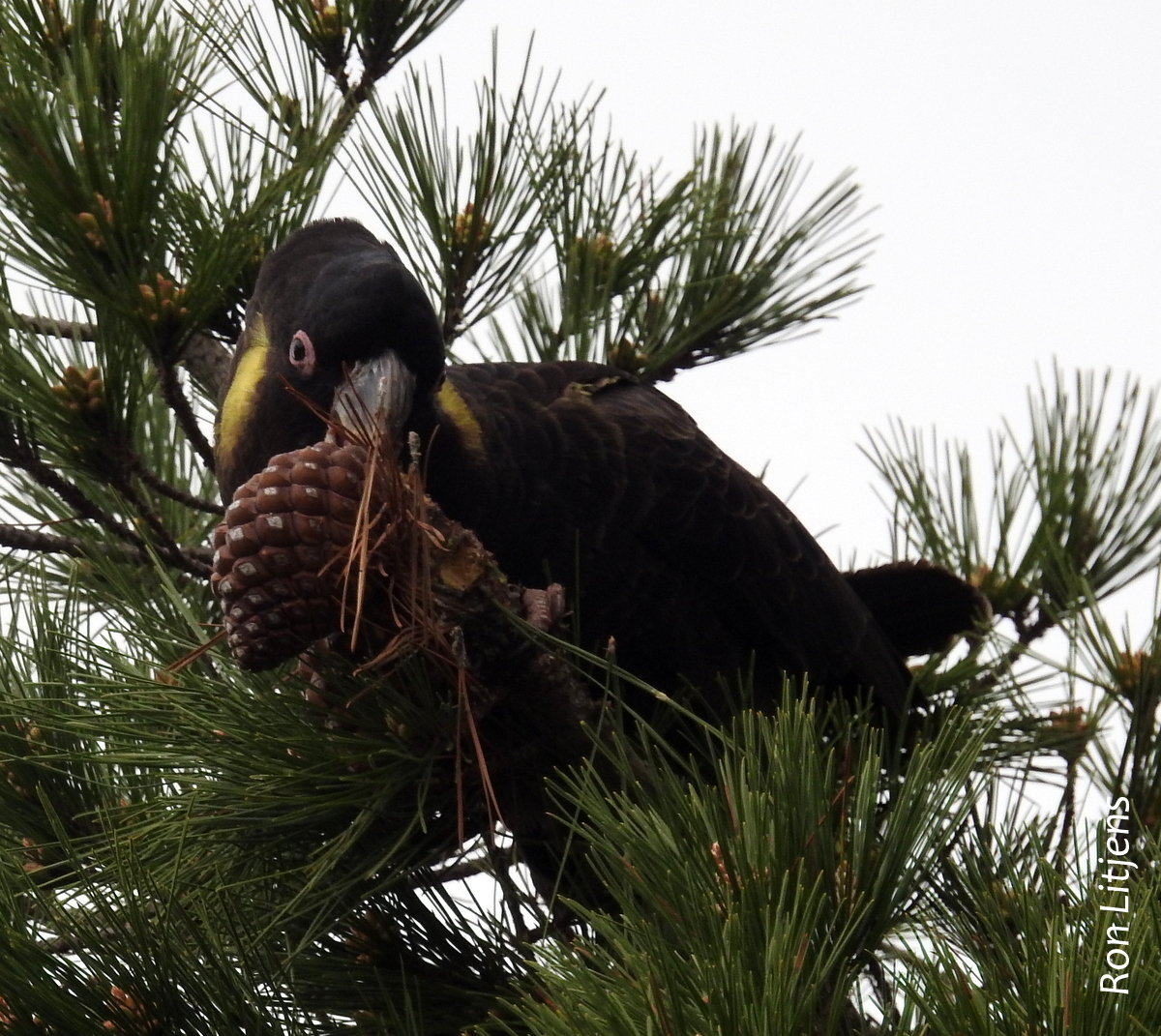
Most recently Yellow-tailed Black Cockatoos (Calyptorhynchus funereus) have been around. Luckily their eerie cries warn you of their presence especially high in pine trees. With strong beaks they snip off the unripe cones (pictured right), take a few bites and then drop them to the ground from a great height. 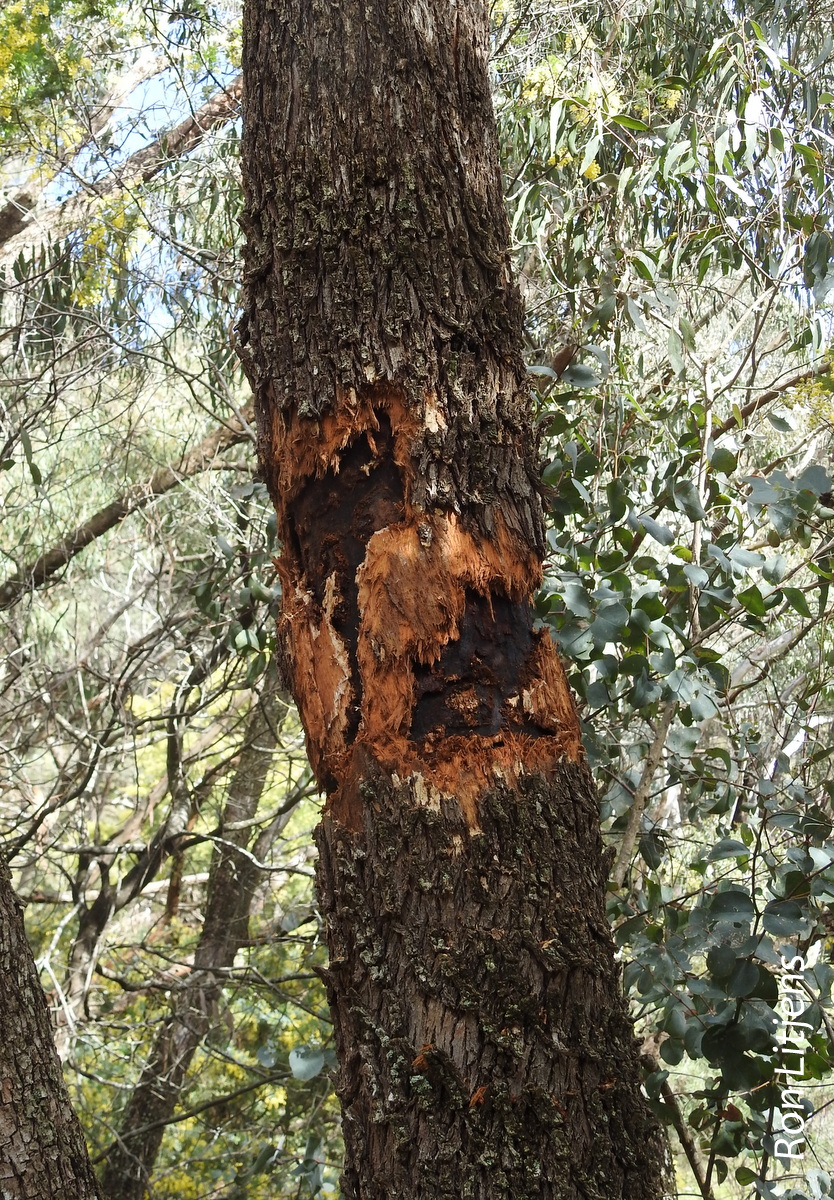 For the unwary these can do a bit of damage if the cones land on your head. A large part of their diet consists of insect larvae living under the bark of trees. In the quest for this food they can effectively ring-bark a tree, pictured left.
In the end I guess they are all doing what parrots do. Do I have a favourite? Not really. I regard them all equally. That’s parity.
Indeed quite parroty.
Tales from the woodpile #8
Winter is the season in which tales from the woodpile abound – who in their right mind would be rummaging through a woodpile in summer! This time the woodpile is not mine but Ken’s from Whanregarwen.

The ‘Huntsman-looking’ spider is a Ground or Flat Spider (Hemicloea sp.). They live in leaf litter (or woodpiles) and hunt at night. Eggs are laid in large circular white disc sacs and are guarded by the female spider until they hatch. Ground Spiders are carnivorous and eat insects and other arthropods which they run down and attack with their large fangs (those glossy black things in the photo). The venom is not dangerous to humans.
Like most species which have appeared in the woodpile series, these spiders are broad and flat so that they can access the cracks and crevices in wood. They are almost two-dimensional – much like some of the characters in the news these days.
For the spermologers
The many diggings on the property at the moment indicate that echidnas (Tachyglossus aculeatus) are currently out and about. They are usually seen roaming across the landscape as individual animals and are rarely seen in a group, which for those spermologers (collectors of trivia) amongst us is called a parade.
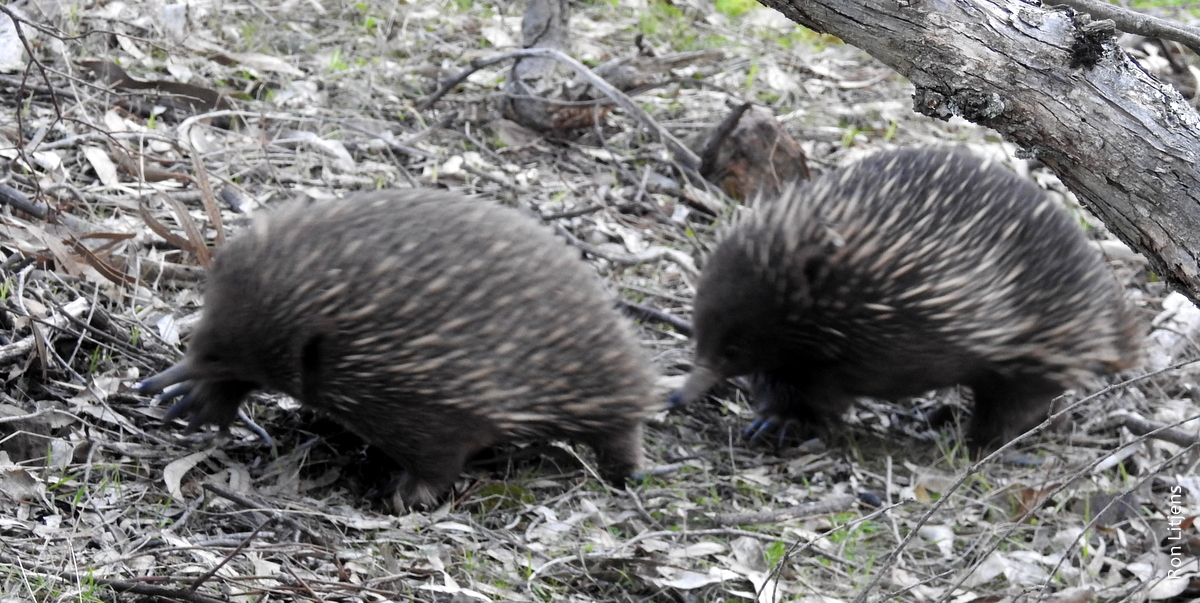 The best chance to see a parade of echidnas is during breeding season, between June and September, i.e. now. The beginning of the courtship process involves male echidnas following in a line (nose to tail) behind a female echidna in what is known as an echidna train. The train can be many male animals long and can last for days before the female stops and the male at the head of the train (usually by this stage the fittest male) gets to mate. Male echidnas have been known to participate in several trains during a season.
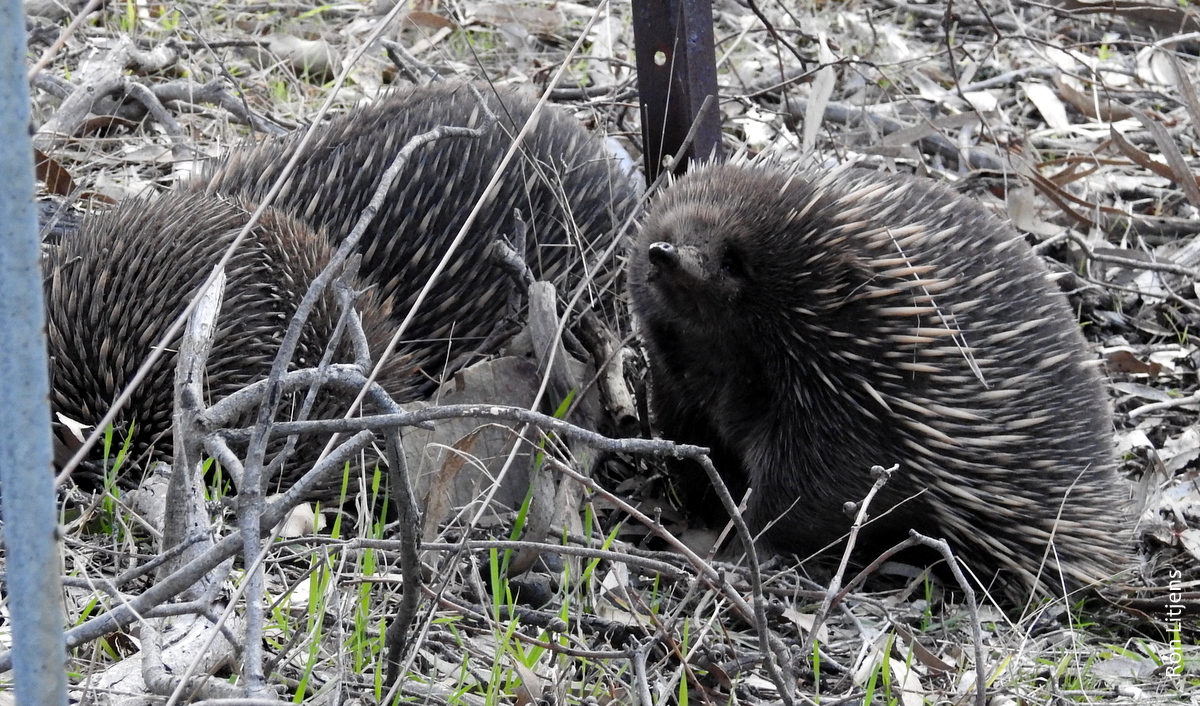
I had known about these trains for many years but had never seen one. And so it was when walking last week I spied on the far slope (actually Mac, the Border Collie X spied it first) an echidna train. It was only three animals long but a train none the less. By the time I got there (Mac having arrived on the scene much earlier) the train had been derailed and in its place were three echidnas digging their way to Lajes das Flores , Azores (the exact opposite side of the earth from Strath Creek – another one for the spermologers!)
We (Mac and I) waited behind a tree until dark to see if the train would reform but to no avail –such is the state of the train system in Victoria.
Not dead but not moving either
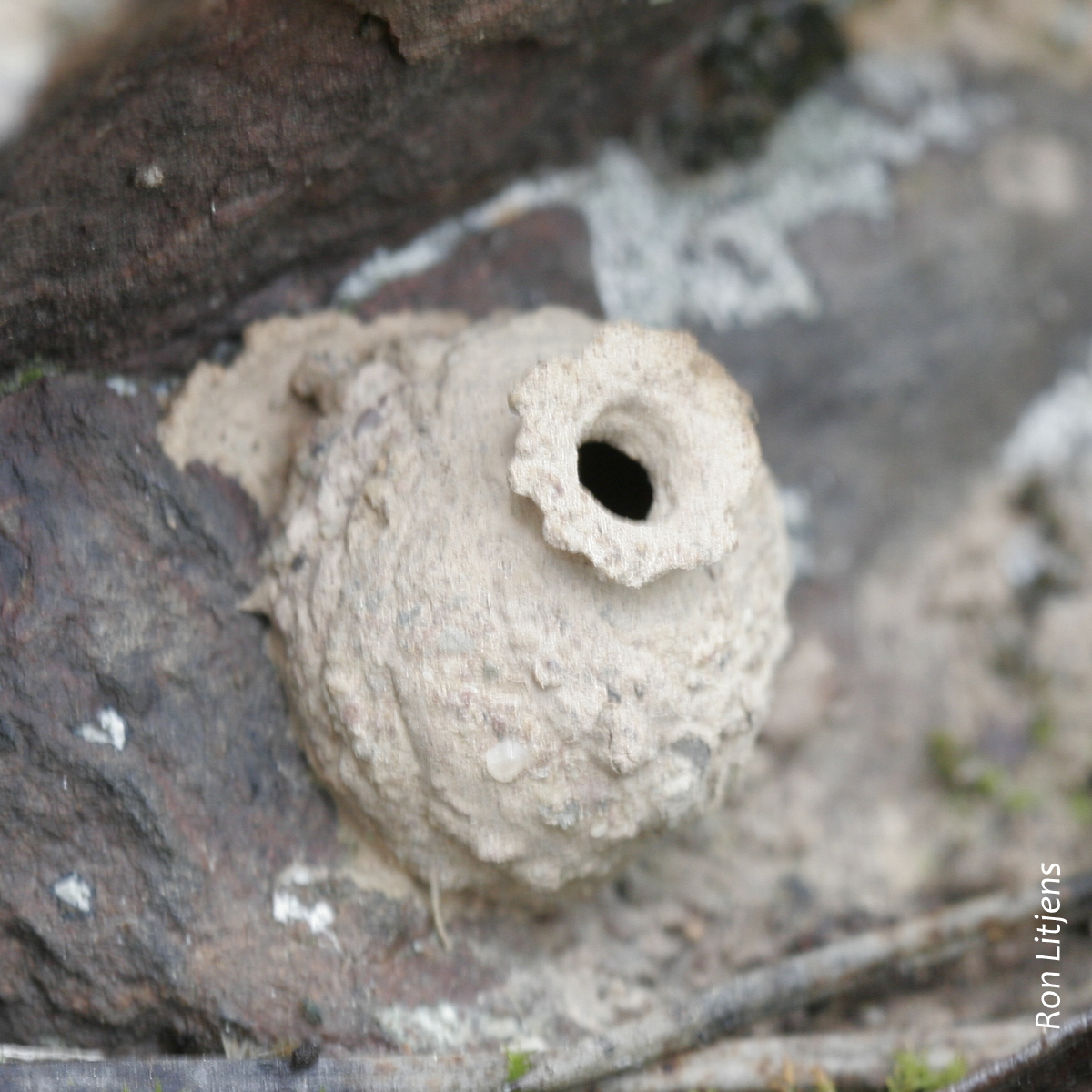
Over the years Judy from Limestone has contributed several interesting photos to this blogsite and as previously noted they all involve dead things. Her latest contribution is a photograph (below) of the inside of a wasp’s mud nest which had accidentally been knocked off a wall. This time the creatures inside are not dead, but they are not moving either.

Potter Wasp nest
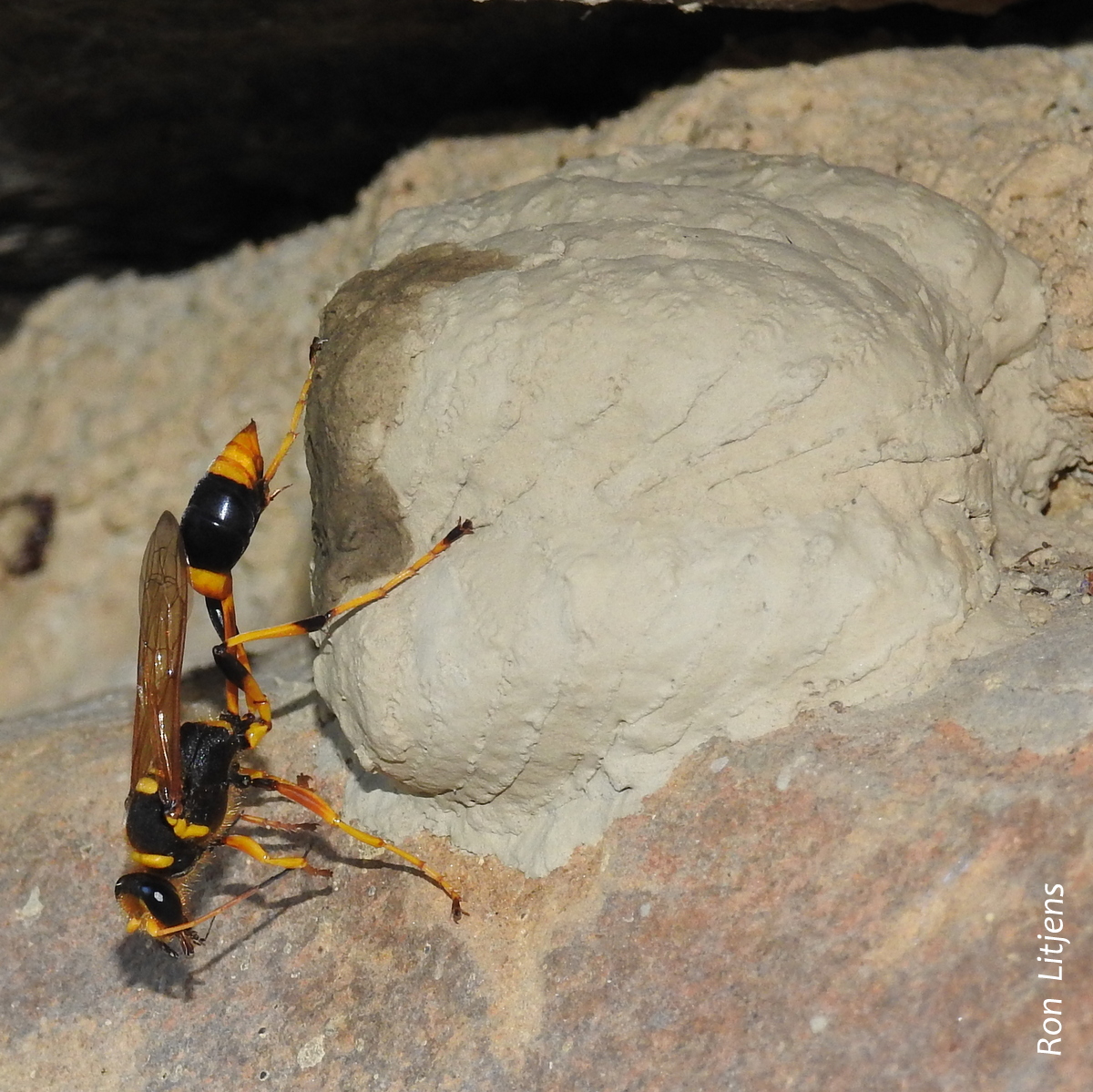
Wasps from the Sphecidae and Crabronidae families build mud nests in a variety of shapes and sizes. Potter Wasps for example build urn-shaped structures (see photo right). Common Mud-daubers (Sceliphron laetum) build many chambered cylindrical nests (below left).
Mud-dauber nest
These nests act as breeding chambers for the young. After the nest is constructed (but before it is sealed) the female wasp hunts for spiders or caterpillars on which the young will feed. These they sting and paralyse and then

Potter Wasp carrying a caterpillar
carry them back to the nest where they are placed in the mud chambers (pictured right). A single egg is then laid on the immobile host and the chamber is sealed. When the wasp larvae hatch they feed on the fresh still living but immobile host.
The dislodged nest pictured above clearly shows a collection of spiders which have been deposited in the mud chambers. In the chamber on the right a wasp larvae can be seen feeding on the green spider.
Gruesome as it is, the nest looks more jewel box than burial chamber.
Flowerdale phascogale
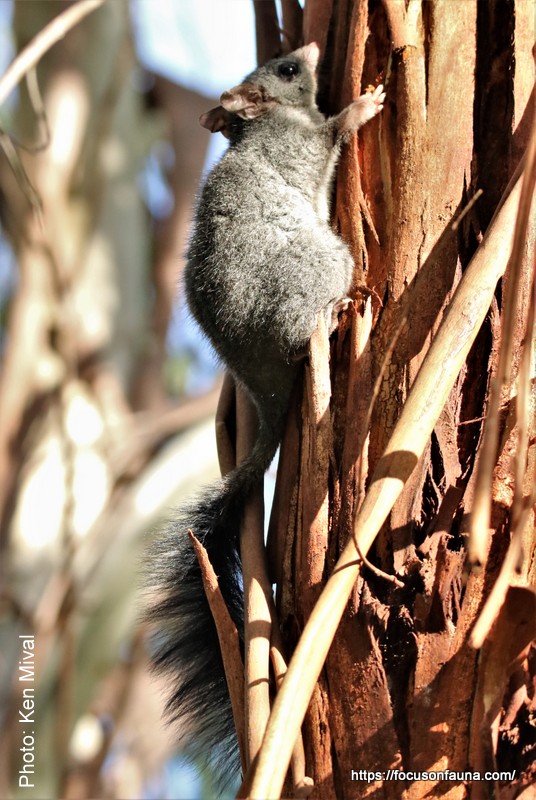
The Brush-tailed Phascogale is a little-known native carnivorous marsupial that captured the imagination of many in the local community when remote cameras set up during the Focus on Fauna survey project in 2011/12 revealed its presence at several locations in the Flowerdale – Strath Creek area. That indicated that this threatened species was most likely recovering well after the Black Saturday fires, and several sightings since then, many in nest boxes, have confirmed this.
The delightful photos shown here were taken recently by Ken in Flowerdale. What is unusual is that the phascogale was out during the day, since it is predominantly a nocturnal hunter, feeding mainly on arthropods, but occasionally supplementing its diet with small vertebrates and even nectar.
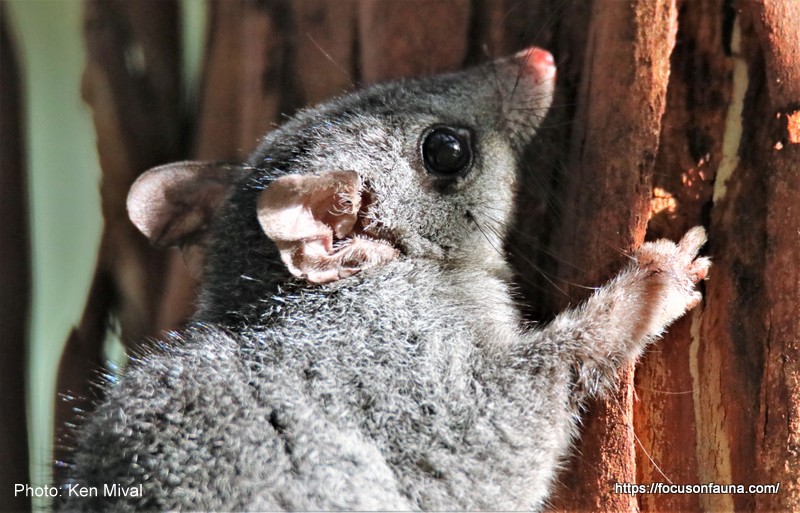
Phascogales are highly susceptible to predation by foxes and cats, as well as native goannas and owls. It is hoped that a significant reduction in fox numbers under the current King Parrot Catchment Fox Control Project, in which Ken is a participant, will greatly improve the survival chances of this little critter.
Standing out from the mob
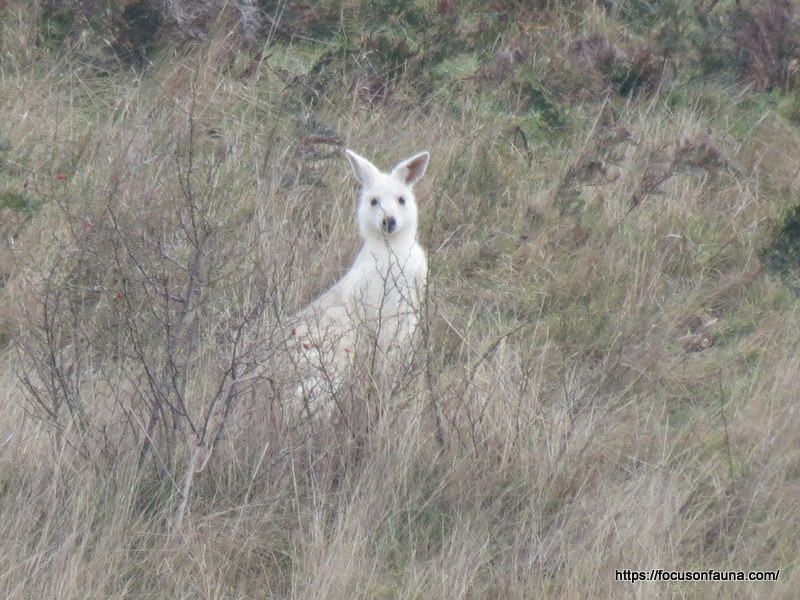 Following a tip-off and receipt of some grainy mobile phone photos, we decided to investigate reports of an all-white Eastern Grey Kangaroo on a large grazing property in the Flowerdale/Strath Creek area. With the help of the property owner’s son, after a couple of tries we were able to get close enough for some long-range photos. The roo seemed in all other respects normal and well-accepted by the rest of the mob, but of course stood out from a long distance away, presumably making it more vulnerable to predation.
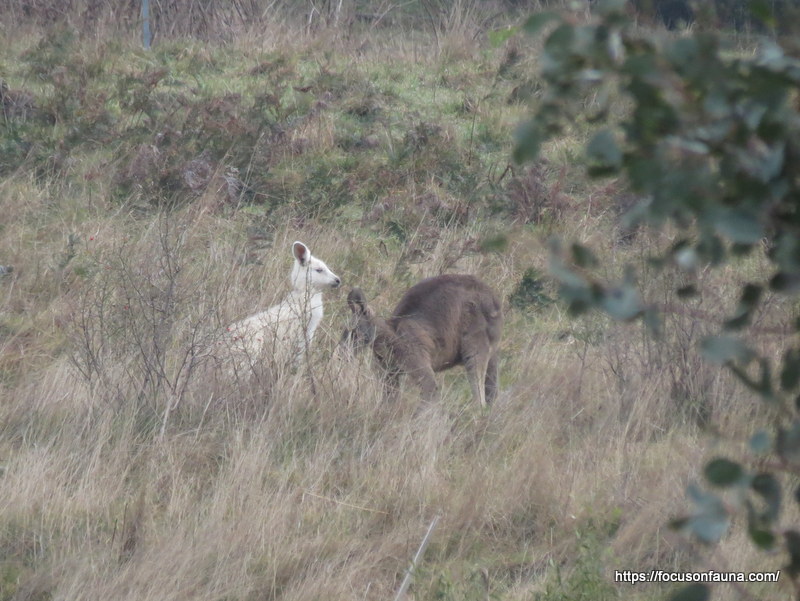
A white kangaroo is quite a rarity – an estimate by the Australian Zoo is 1 in 10,000 – but there are several reports on the internet of sightings in Victoria in recent years. We came across one interesting article on a white kangaroo in an urban environment. It was a paper titled “The White Kangaroo” by Simon Watharow presented at the Australian Wildlife Rehabilitation Conference in 2016. Many Strath Creek residents will remember Simon from a wonderful presentation on snakes he gave at the Landcare AGM some years ago. In his paper Simon gives an explanation of the difference between the genetic anomalies leucism and albinism. He also suggests that one of the main threats to his kangaroo might be from humans keen to have a rare skin on their floor – which is why we’ve been vague about the location of this kangaroo.
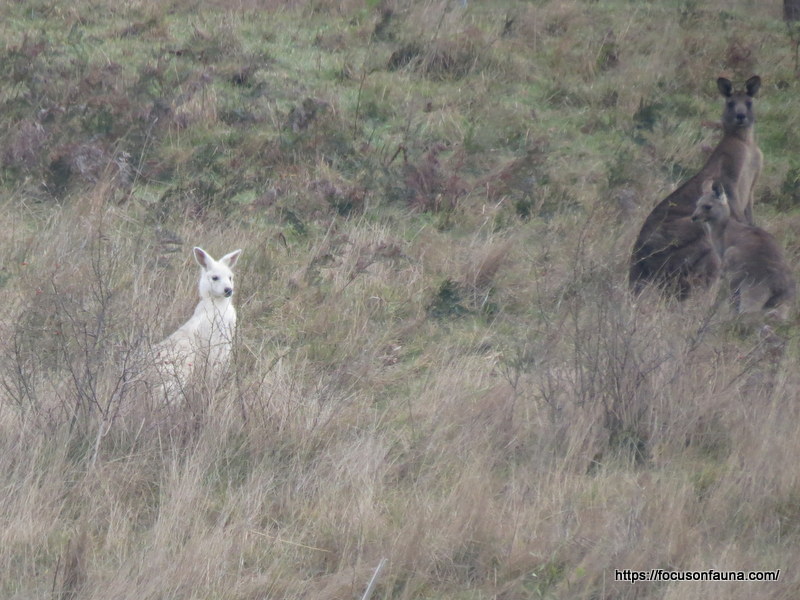
We have read reports of both pale grey and brown joeys as offspring of a pure white mother, and it will be interesting to see if this one, which we think is a female, produces a joey and what colour it will be?