‘You look more beautiful when you’re angry’…
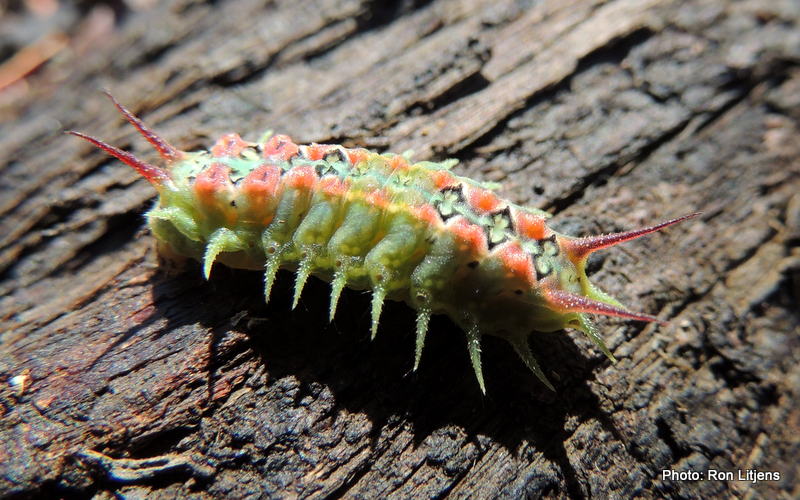
Beautiful
… is a great line used in Hollywood movies. It never fails to disarm a tense situation between feuding parties. Personally when I have used the line it has had quite the opposite effect. The statement is true, though, for a number of caterpillars of the Limacodidae family.
A recent post (click HERE to view) highlighted some of the amazingly intricate caterpillars cruising our district. After a recent storm I noticed many Four Spotted Cup Moth caterpillars (Doratifera quadriguttata) (from

More beautiful
the Latin quadri = four, gutta = spot) munching on eucalyptus leaves at ground level. They no doubt were knocked off their aerial cafeterias by the strong winds. The picture above shows the caterpillar when it is undisturbed. If however the caterpillar feels threatened, four knobs swell on its back and from these, red spikes protrude (pictured right). Other species of the Doratifera genus have up to eight of these knobs. The spikes are tubular structures containing irritant chemicals. Brushing against the spikes breaks them, releasing the chemicals which can cause skin irritations and rashes.

Look, no legs
It just proves what I have learned. It doesn’t matter how beautiful something is, if it’s angry, don’t touch.
P.S. The legs of this caterpillar are almost non-existent (see picture left) and they use their under-bodies to move, much the way a slug does.
Wonderful wedgies
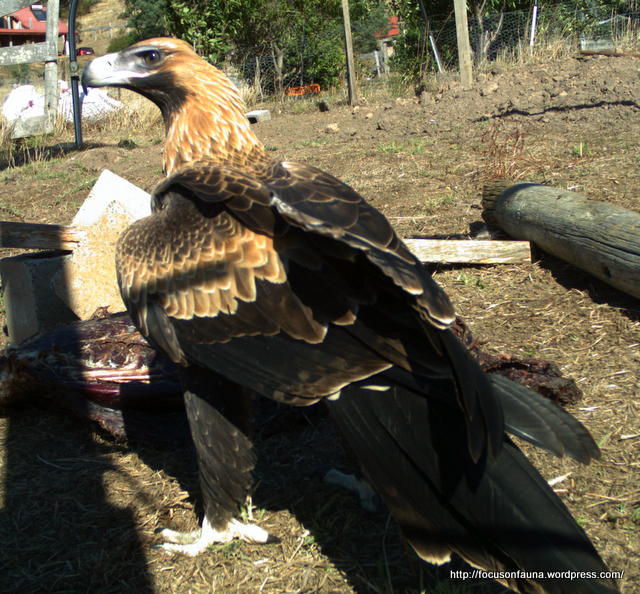 Wedge-tailed Eagles (Aquila audax) are a familiar sight around Trent and Vikki’s Flowerdale property at the base of the Three Sisters hills. Recently some close encounters have provided Trent with some good photographic opportunities, but have been to the detriment of their small flock of hens !
The eagle shown at left is an immature bird with its golden brown nape. The birds become darker with age, and those over about five years old appear almost black, with just some russet colouring on the nape and across the wings.
Trent has discovered two nests in the neighbouring patch of forest on ‘Three Sisters’, which is protected under a Trust for Nature covenant. This area was extensively burnt in the Black Saturday fires, but is now densely vegetated with young regrowth. Wedgies often have several nests in their territory, and choose one for breeding each season. The extraordinary nest in the right-hand image was photographed on ‘Three Sisters’ in 2007. At about 3m deep it must have been built up over many years. Unfortunately it was later destroyed in a wind-storm. Click on the images for a better look.
-

- In full flight
-

- Perched – mind that barbed wire!
-

- Current nest
-

- Old nest, now destroyed
Trent’s keen interest in wildlife and photography led him to set up remote motion-sensor cameras around the carcass of a roadkill Sambar. The resulting photos in the slide-show below include close-ups of a young eagle feeding on the carcass. Carrion can form a significant part of the diet of wedge-tailed eagles. In the past they were erroneously thought to be responsible for the deaths of large numbers of sheep and lambs, and bounties were paid for their destruction. The statistics are shocking: in one year in Queensland 10,000 bounties were paid, and betwen 1927 and 1968 in Western Australia a further 150,000 were paid (source: Reader’s Digest Complete Book of Australian Birds). Fortunately (but perhaps not for Trent’s chooks!) the magnificent Wedge-tailed Eagle is now protected in all states.
Wedgies are mostly silent, but at times they have a surprisingly high-pitched call for such a large bird. Click on the arrowhead on the sound bar below to hear a sample of the call.
The ups and downs of twitching
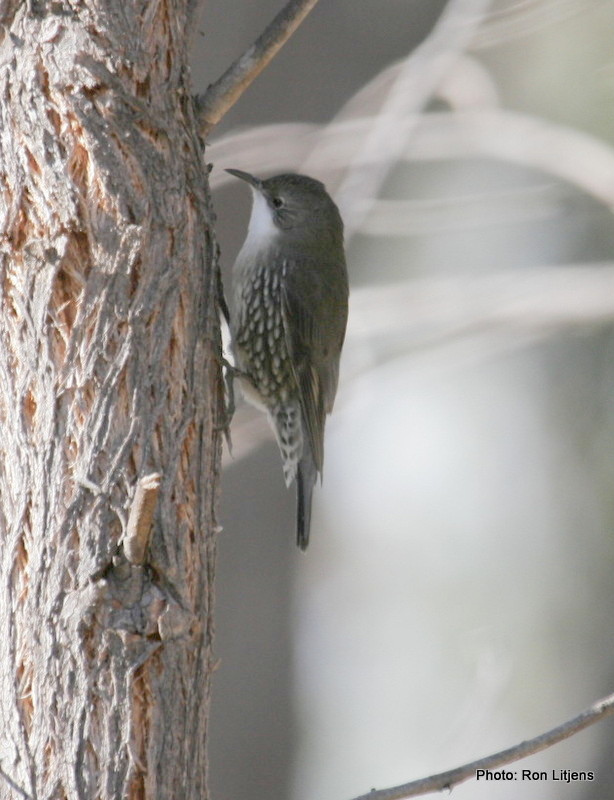
White-throated Treecreeper
Our property, and probably yours, is inhabited by ‘the tribe’. This is what we call the group of birds that, as a wave, traverse the slopes several times a day. You can hear them coming and if you position yourself in the right spot and sit very still, the tribe will engulf you with a cacophony of different birdcalls.
In the past we have identified members of the tribe by colour and form – for example the robins have coloured breasts, the finches gaudy eyebrows and the fantails and wrens distinctive tails, and by behaviour – the treecreepers move up tree trunks. All the other birds we had consigned to the ‘LBJ’ (little brown job) category.

Varied Sittella
However in recent times, as we have attempted to tick more birds off our list, we have become more discriminating of the LBJs. I was reminded of a ‘rule-of-thumb’ a knowledgeable twitcher called Laurie once taught me – watch the birds on the tree trunks. White-throated Treecreepers (Cormobates leucophaea) hop up the tree trunk, and Sittellas hop down the tree trunk. So with these words in mind, last week as I watched the tribe go past one of the LBJs did indeed hop down the tree trunk – a Varied Sittella (Daphoenositta chrysoptera). Not a great photo, but another bird ticked off the list and out of LBJ obscurity.
Dam right !

An ideal dam at Flowerdale
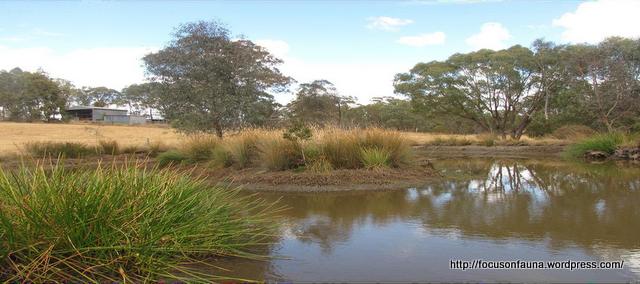
A wildlife wetland near Strath Creek
Last Saturday the Strath Creek Landcare Group, assisted by the Upper Goulburn Landcare Network, hosted a field day at our Strath Creek property that focused on improving the habitat value of farm dams. Twenty people – local landholders and some from the neighbouring Yea River catchment – heard environmental consultant Peter Mitchell explain what is meant by biodiversity in relation to farm dams, and the benefits of, and various means of achieving, improved biodiversity.
After a stroll around our farm dam and the adjacent specially-developed wildlife wetland, Danielle Beischer from the Waterwatch program talked about water quality and the role of Waterwatch – she even recruited a couple of volunteers for monitoring the King Parrot Creek. Danielle had on display water sample trays with an amazing array of aquatic macro-invertebrates obtained from our dam (see the slide show below for just a few of them). With magnifying glasses and identification sheets provided, the group was kept fascinated by these little creatures that indicate a healthy dam, and which attract a wide range of water-birds and other wildlife.
You know what it’s like…
It’s 36 degrees in the shade.
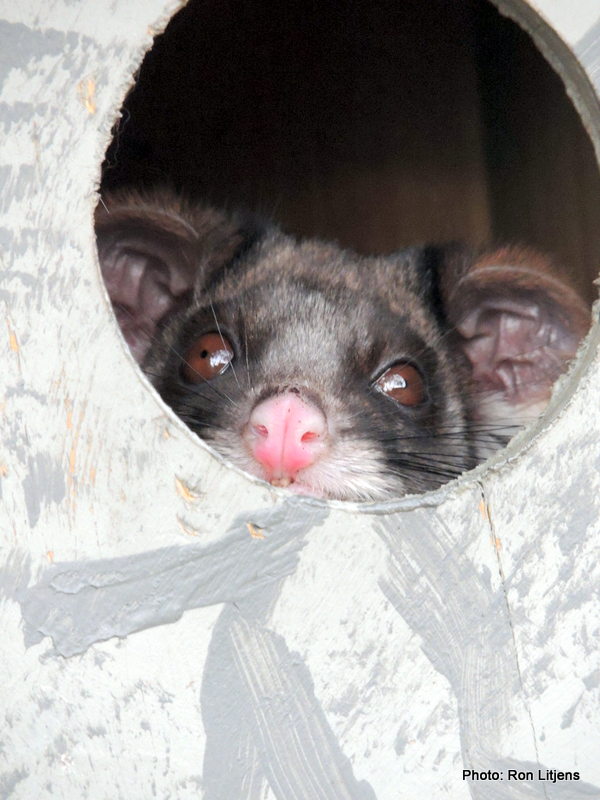
Just waiting for the cool change
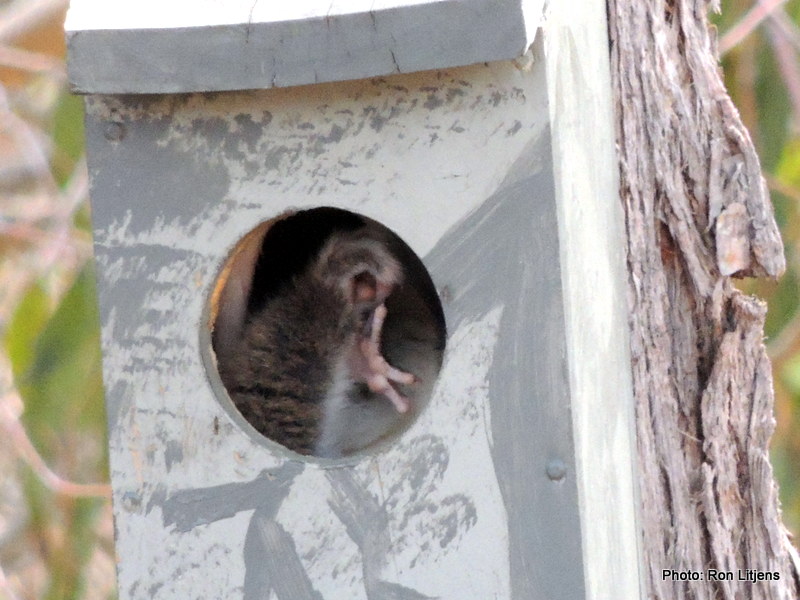
Trying to sleep in the afternoon…..
.
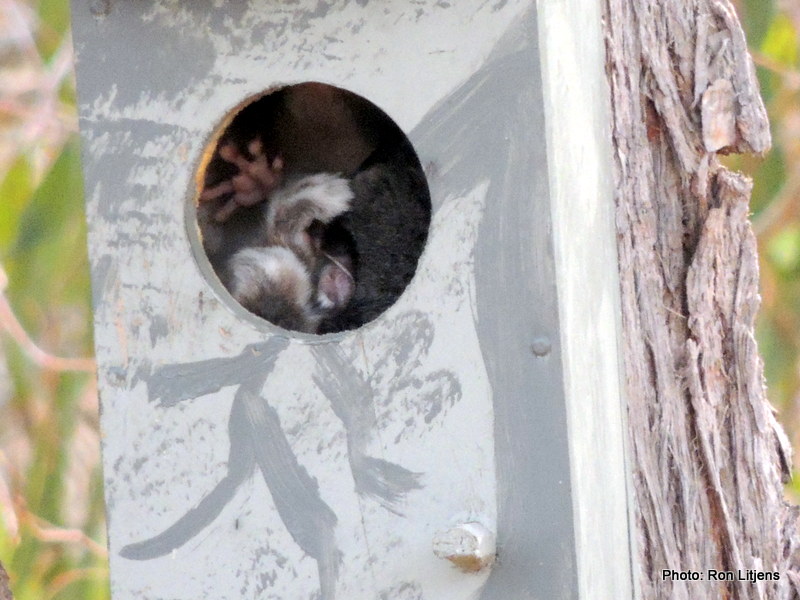
Tossing…..
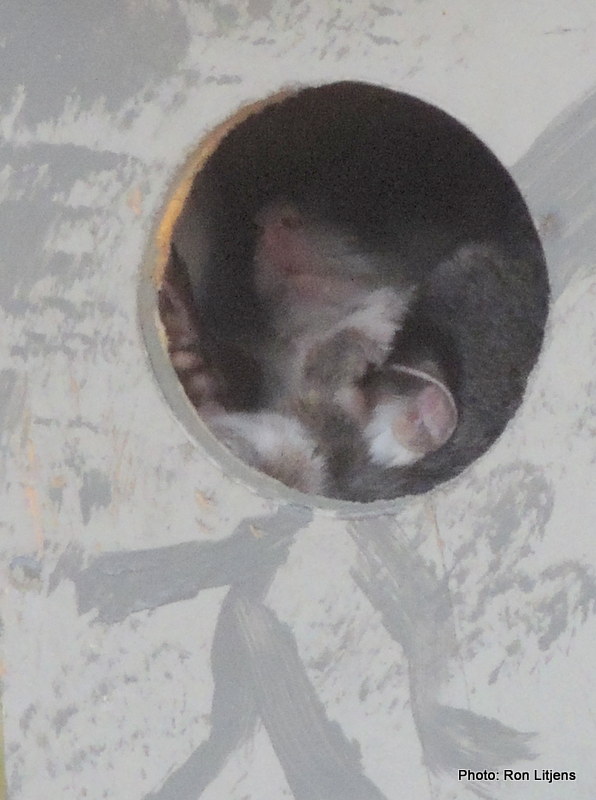
and turning…
.
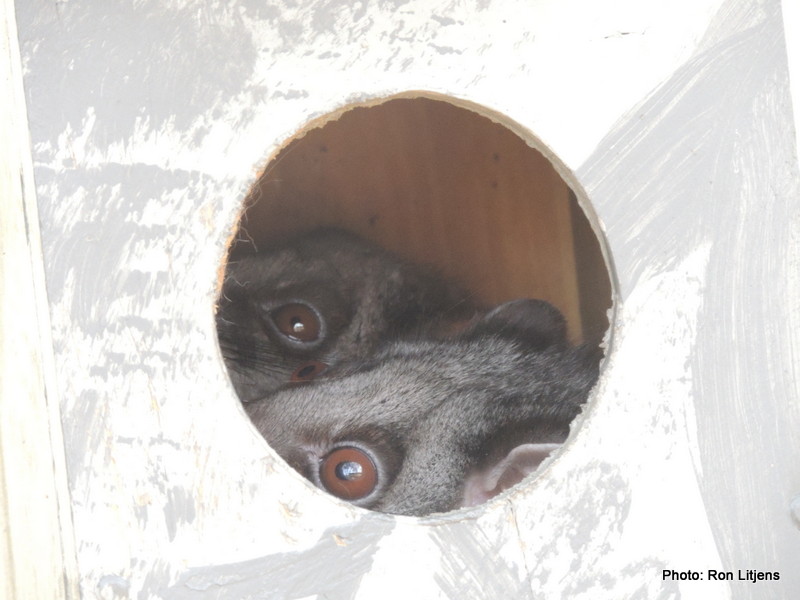
I think we’re right. Just lie still, close your eyes and go to sleep
Mum, why aren’t the birds scared?
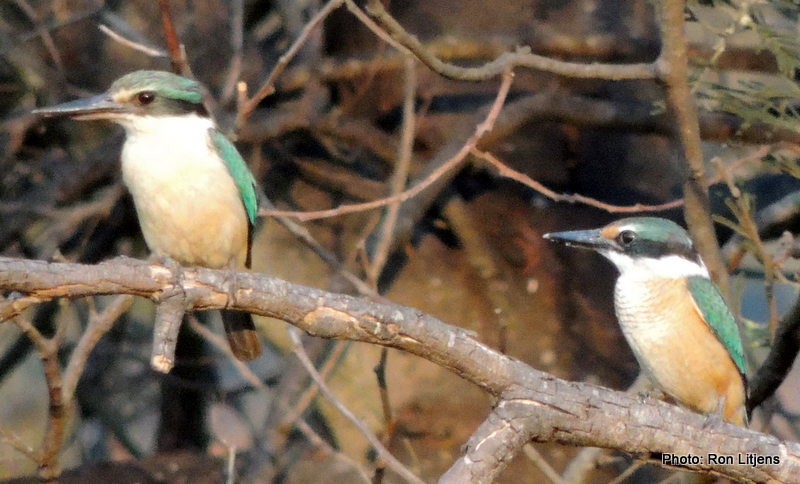
Sacred Kingfisher
I distinctly remember asking my mother this question when I was young while we were feeding the ibis at Healesville sanctuary. The sign said ‘Sacred Ibis’ (I know, dyslexic at such a young age – that’s why I date an editor). But they didn’t look scared to me. In fact I remember having to protect my lunch from them all afternoon.
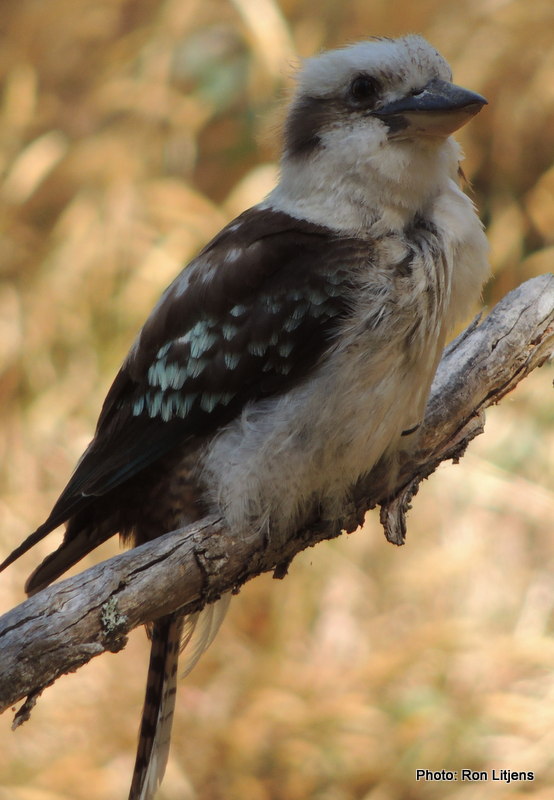
Cousin kookaburra
I was reminded of this when walking to my assigned platypus-watching position in Coonans Reserve at the recent King Parrot Creek Environment Group outing. Not too far from me, searching the ground for dinner, were two peacock-green, none-too-scared Sacred Kingfishers (Todiramphus sanctus). In the same family as the Laughing Kookaburras (Dacelo novaeguineae), these kingfishers inhabit creek margins, feeding on aquatic life from the creek as well as insects and small reptiles. The male, female and juveniles look very similar. The bird on the left (pictured above) was feeding the other at the time.

Wakey, wakey
Searching using thermal imaging we later found (and woke) a kingfisher (pictured left) sleeping on a low-hanging branch. It didn’t seem too scared either.
Successful platypus and rakali survey
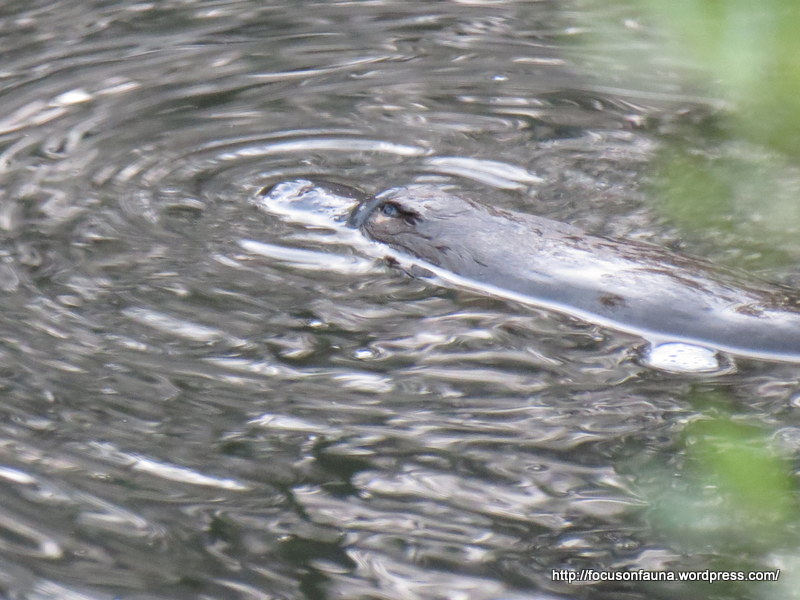
Kate and Laurie’s platypus at “Callandoon”
Last Friday evening the Strath Creek Landcare Group, the recently-formed King Parrot Creek Environment Group and Focus on Fauna joined forces to survey sections of the King Parrot Creek for the Australian Platypus Conservancy (click to visit the APC website). The procedures and protocols of the APC’s Group Watch program were followed as we surveyed for an hour just before dusk at seven sites along two sections of the creek – in Coonans Bridge Reserve at Flowerdale and near Burslems Bridge at Strath Creek. Group Watch aims to get a snapshot of the number of Platypus (Ornithorhynchus anatinus) and Rakali or Water Rat (Hydromys chrysogaster) in a particular area by having volunteer groups periodically monitor a waterway using standardised methods.
Officially we recorded four platypus and one rakali , which was a great thrill for all participants. In fact, it was probably five platypus, as Ron had sightings upstream and downstream of him with no platypus passing him.
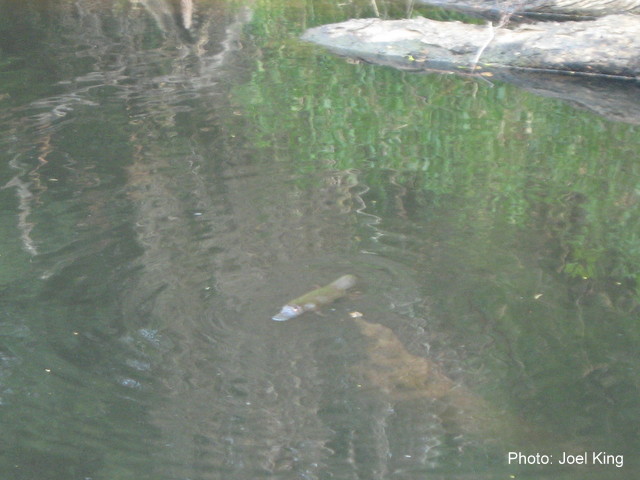
Joel and Sue’s platypus in Coonans Bridge Reserve
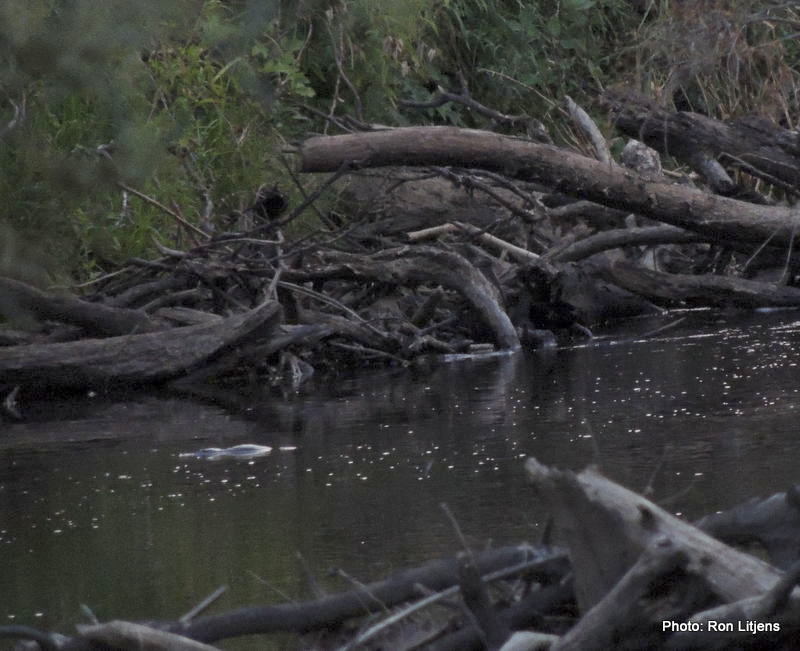
Ron’s platypus at Coonans Bridge

Typical tell-tale bubbles
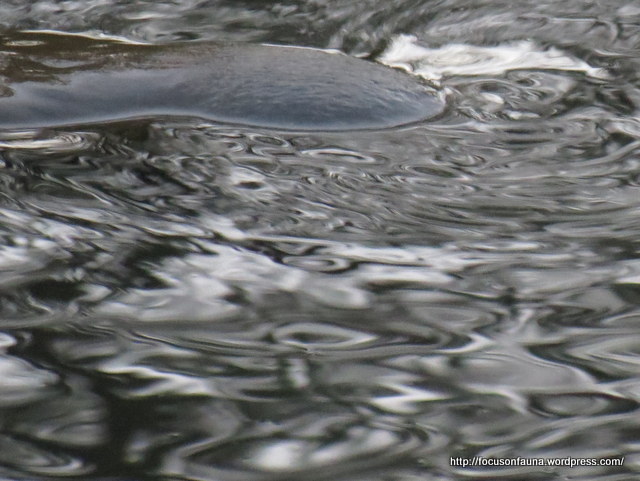
Time to dive!
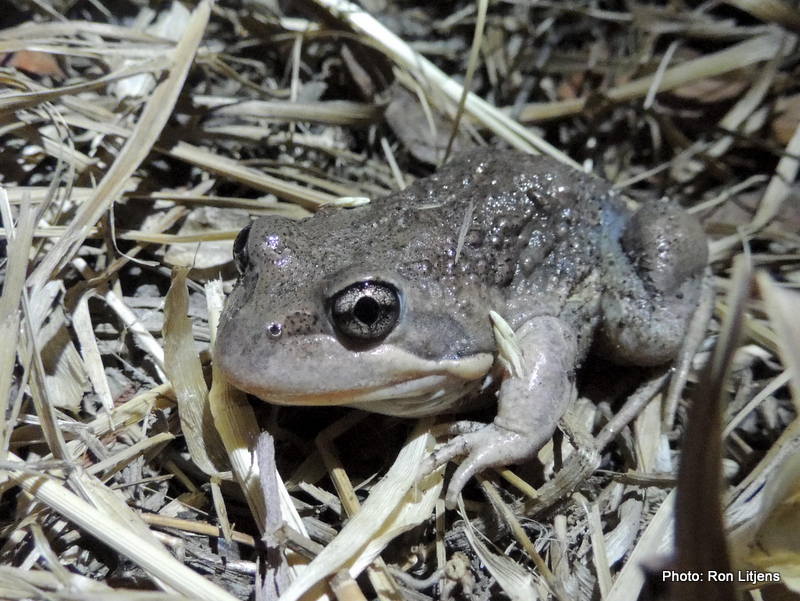 The survey was followed by refreshments after which several other keen locals joined us in a KPCEG-sponsored spotlight walk led by Trent with his impressive array of technical equipment, including a thermal-imaging camera and parabolic microphones. The kids involved were especially good at finding a range of birds, possums and frogs such as this Pobblebonk (Limnodynastes dumerilii). Click HERE to view a report on the KPCEG website, and stay tuned for Ronlit’s next post on this blog about birds encountered during the survey and spotlight walk.
The beauty is in the detail

Emperor Gum Moth caterpillar
Adult butterflies and moths have to be the prima-donnas of the insect world. Their gaudy, sometimes iridescent wings combined with their graceful flight inspire comparisons of grace and beauty. But spare a thought for the young butterflies – the caterpillars. Fat, sometimes hairy and almost always maligned for destroying vegetation, what appear to be gross creatures, when examined in detail, are just as beautiful as the later adult.
Take the Emperor Gum Moth caterpillar (Opodiphthera eucalypti) for example. This caterpillar feeds on eucalyptus leaves but will eat leaves of introduced species such as Silver Birch (Betula pendula), Liquidambar (Liquidambar styraciflua) and Peppercorn Tree (Schinus molle). Upon hatching, the caterpillar is black but changes its colour several times before pupating, then emerging as a moth. In its final stage, from a distance, the caterpillar looks like a distended lime green slug, but closer examination reveals a creature covered with magnificent orange and yellow turrets topped with blue and purple spines.

Orchard Swallowtail caterpillar
Also pictured for your wonderment are the Orchard (or Citrus) Swallowtail Butterfly caterpillar (Papilio aegeus) feeding on a Mexican Orange Blossom (Choisya ternata) and the Chlenais Moth caterpillar (Chlenias banksiaria).
So next time you find a caterpillar munching away on your choice plants and shrubs, have a close look at it and admire the detail – before you squash it.

Chlenais Moth caterpillar
Beetles etc.
 Creepy-crawlies are usually the domain of Ronlit on this blog, but we recently received a couple of interesting photos of invertebrates sent in by Flowerdale residents that we thought were worth showing. The swirling pattern of Heather and Steve’s tablecloth provides an elegant background for this colourfully patterned Fiddler Beetle (Eupoecila australasiae) shown at left. Fiddler Beetles feed on nectar and are strong fliers. Their larvae feed on rotting wood and vegetation.
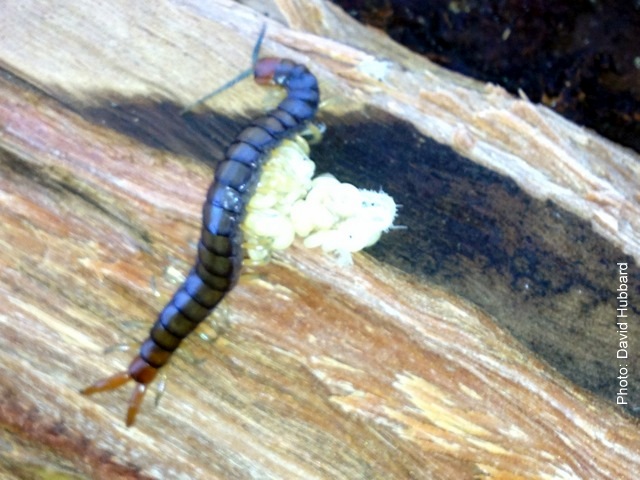
And Dave H’s (unfortunately poor quality) image at right shows a centipede clutching and dragging its egg mass. This centipede belongs to the Order Scolopendramorpha. Centipedes of this order are quite protective parents, guarding and cleaning their egg mass, but apparently this care is not repaid in some species, as the offspring end up eating their mother ! (Ref.: Wikipedia)
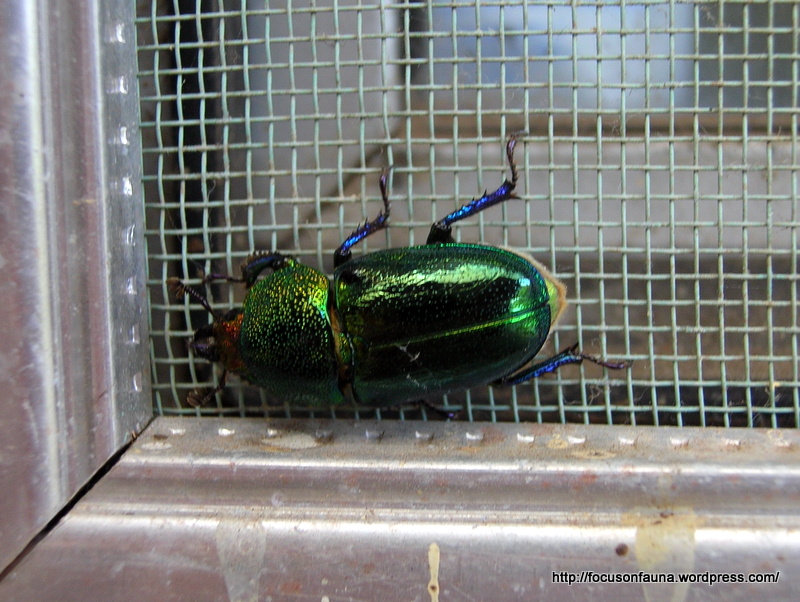
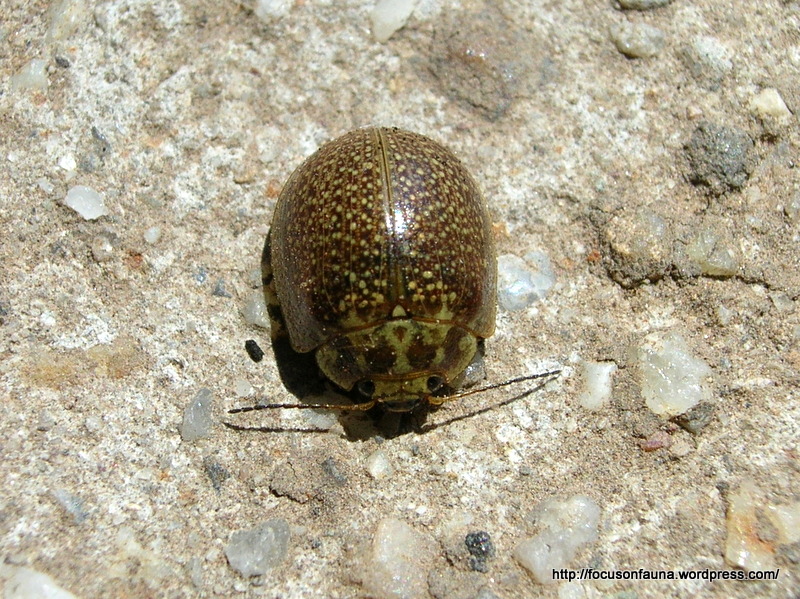
Below are a couple more beetles we have come across – both leaf-eaters. Ronlit has identified the one at left as a green scarab beetle (Diphucephela sp.) which can swarm over trees and strip large amounts of foliage. The one on the right appears to be a leaf (or tortoise) beetle of the Family Chrysomelidae, probably Paropsis sp., that lays those little clumps of eggs you often see encircling the young stems of eucalypt foliage and which hatch into gregarious and voracious little leaf-eating larvae.
A six pack of legs with wings
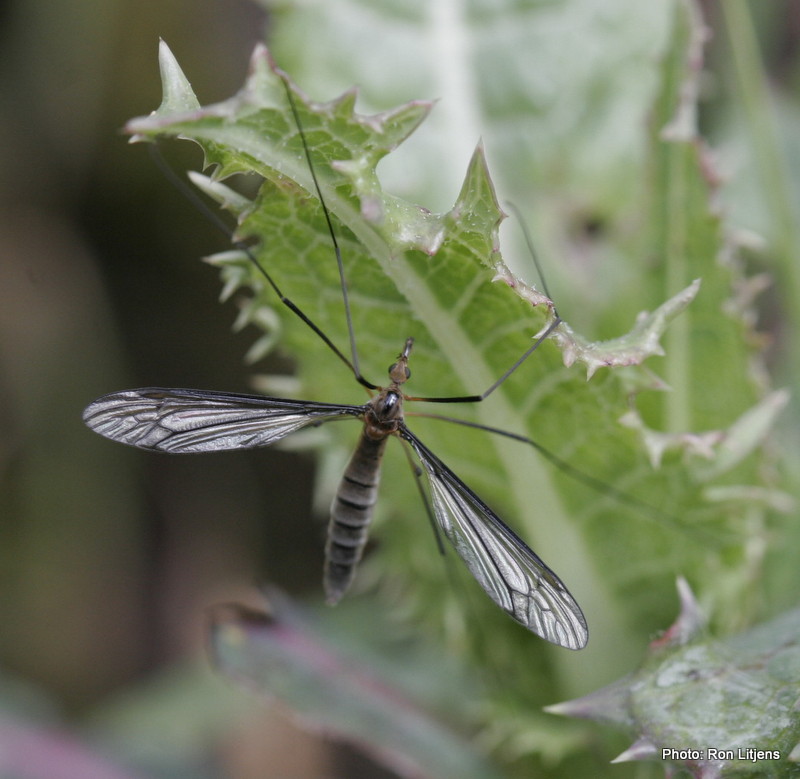 Here are two harmless critters that make themselves known during summer but unfortunately (for them) get mistaken for mosquitos. Crane flies are of the order Diptera (from the Greek, di = two, ptera = wings). Like all true flies they only have one pair of wings. Most insects have two pairs of wings, but in Diptera, the second pair has evolved into halteres. In the photo (left), the halteres look like small clubbed antennae that sit just behind the wings. Their purpose is to stabilise the insect in flight, making it more manoeuvrable. Crane flies (family Tipulidae) feed on nectar, if they feed at all. Most adult crane flies exist only to mate.

Scorpion flies (Harpobittacus sp.)
The other mosquito look-alike is the scorpion fly. Scorpion flies are of the order Mecoptera (from the Greek, meco = long, ptera = wings). Having two pairs of wings they therefore are not true flies. They are so-named because the abdomen on the male curves upward like that of a scorpion. Scorpion flies feed on plants and nectar. During mating the males tempt the females by offering them insect treats. While the female is distracted by eating, mating occurs. The photo (right) shows the male clinging to an Australian Buttercup (Ranunculus lappaceus) while the female (lower) eats during mating.
I’d like to chat longer but I’m taking my partner out to lunch.