Ibis exposed
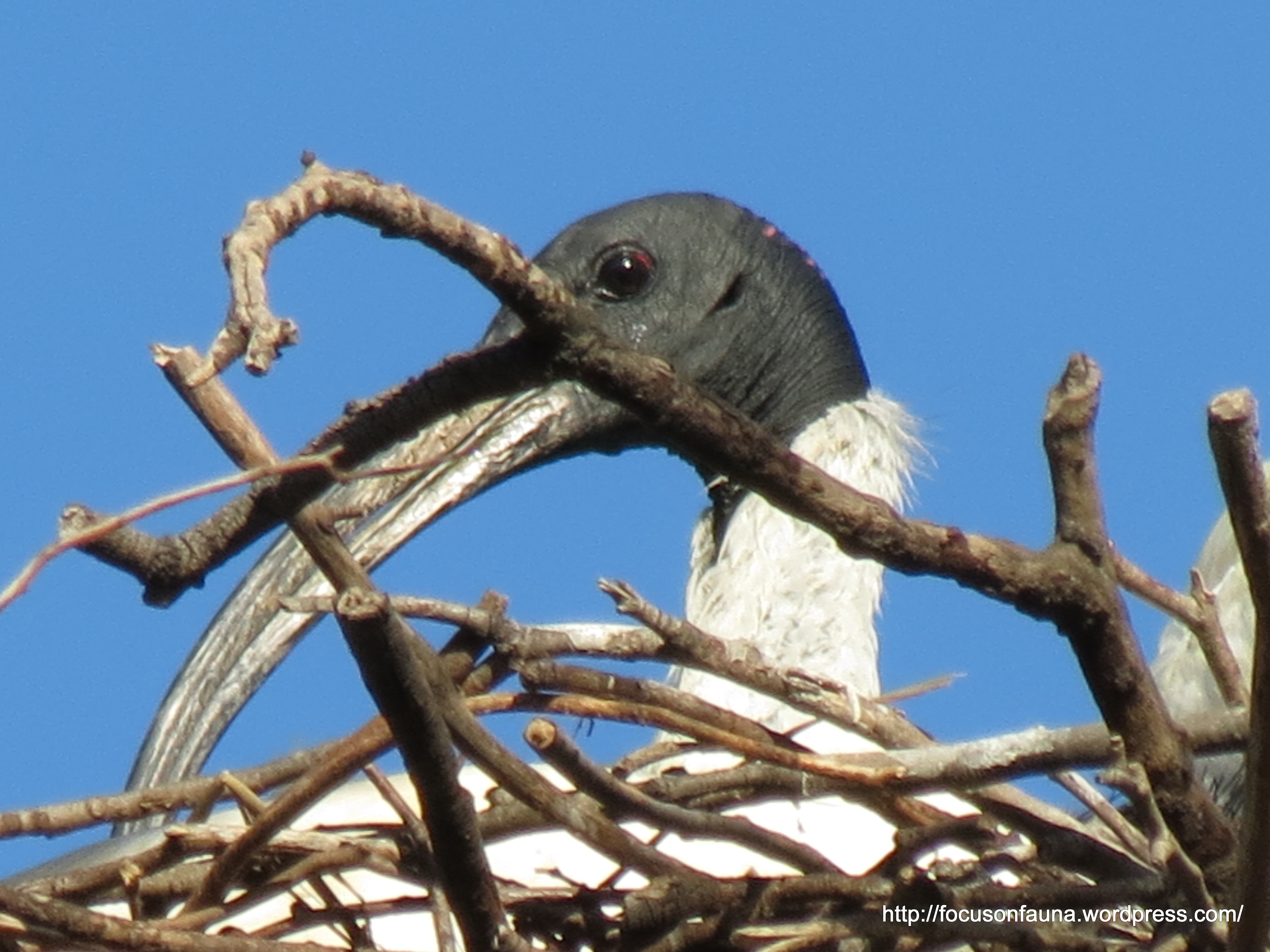 The other day, we noticed a large nest high in a sparsely foliaged Swamp Gum right beside the Broadford-Flowerdale Road, west of Strath Creek, in the intermittently-flowing Queen Parrot Creek. It turned out to be an Australian White Ibis nest, with 2 adults and a pesky youngster, apparently close to fledging.
What is unusual is that these ibises commonly nest in colonies, sometimes with the Straw-necked Ibis, whereas this nest was isolated. Also it is probably more usual for them to nest lower to the ground in secluded cover with a more reliable water-body nearby.
The chick was certainly insistent in its calling, as can be heard by clicking on the icon below.
Nest-box update
Just a brief update on the 14th August post Anyone at home? – our remote camera eventually did record a Tuan (aka Brush-tailed Phascogale) near the nest-box, but unfortunately did not capture it entering or leaving the box.
This adult phascogale has to be a female since all the adult males would have died abruptly from stress-related disease shortly after mating in May/June. We are reluctant to inspect the nest-box at this time, for fear of her abandoning the nest. So the questions remain: is this really her nursery nest site, does she have young in the pouch (there may be up to 8) or are they already at the stage of being left at the nest at night? The gestation is about 30 days and the newborn are permanently attached to the teats for about 7 weeks.
We’ll keep you informed if we get any further pictures, especially of young.
September 6 – the start of hostilities
Where’s that bicycle?
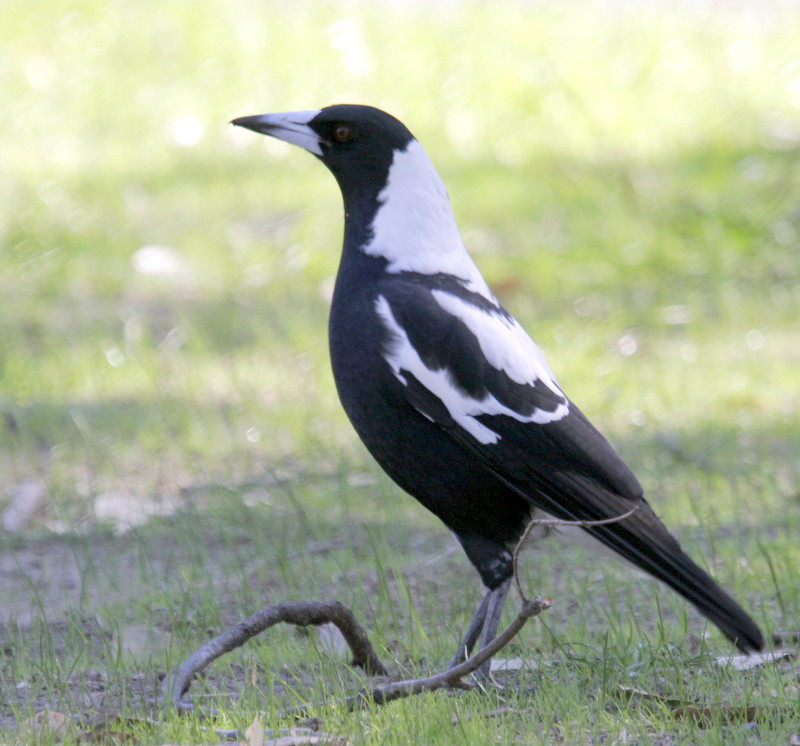
Today marked the start of hostilities in the annual assault on yours truly by the Australian Magpie (Gymnorhina tibicen). For the past two weeks I have peacefully ridden my bicycle to the General Store to pick up the mail without incident. However today the magpies fired the first salvos – initially attacking on the bicycle path at Moore’s Reserve, then outside the Primary School and then finally at the bottom of Old Spring Valley Road.
I was surprised everything was quiet along ‘Divebomb Alley’, a notorious stretch of magpie heaven along Spring Valley Road. But the signs are ominous. Trouble (for me) is brewing. For the past month about twenty black and white marauders have been gathering, regularly carousing in the paddocks along the road. Sharpening their beaks.
I still bear the scars from last year when a magpie took a piece out of my ear on Melbourne Road in Yea. This year I have put in my order to Santa: Kevlar body armour, a full-faced helmet and a beach umbrella for the bike. However I suspect the Christmas delivery timeframe may be too late.
Nobel Prize in the offing
 Call me crazy but I think I have discovered a solution to the global reliance on fossil fuels.
Coming back from a holiday in North NSW we found a nest built into the engine compartment of our Holden Astra which we had left parked at the house for two weeks. Popular opinion suggests, since the nest was so neat and tidy, the owner builder was a Rat (Rattus sp.) as opposed to the wished for Ring-tailed Possum (Pseudocheirus peregrinus).
All I have to do now is figure a way to entice a large population of the critters to live there and then harness them to the drive-shaft.
From small ideas big things grow. Stockholm here I come.
No nest-box needed !


We first heard this Striated Pardalote calling somewhere in a large Yellow Box tree in our front garden. Upon investigation, we saw it popping in and out of a hole at the end of a cut branch (see arrow on photo at left).
The Striated Pardalote builds a cup-shaped nest at the end of either a tree hollow or, like the Spotted Pardalote, a burrow in an earth bank.
We have since seen what is probably the male sitting on the branch, and announcing the coming breeding season with its loud chip-chip song, which you can hear by clicking on the icon below. The Striated Pardalote also has a contact call consisting of a soft trill.
More reptiles
 We had rather unexciting results recently with a remote camera in a bush remnant on Kay and Neil’s property at Strath Creek , only recording a Black Rat, a wombat and a few kangaroos. However, this Marbled Gecko (Christinus marmoratus), discovered by Neil a few days later, was a nice little surprise.
This small lizard (approx. 70mm long, snout-vent) is quite common across southern Australia and is even seen regularly in suburban Melbourne. It is usually nocturnal and mainly arboreal, but also likes to hang around fallen timber and woodpiles, searching for spiders, insects and other invertebrates.

While sorting through photos sent in by members of the local community, we came across this lovely picture of a Jacky Lizard (Amphibolurus muricatus) sent in by Ron from Flowerdale some time ago.
This well-camouflaged lizard (120mm s-v) is active during the day (but perhaps not too active at this time of year !) and like the gecko, it benefits from leaving fallen timber.
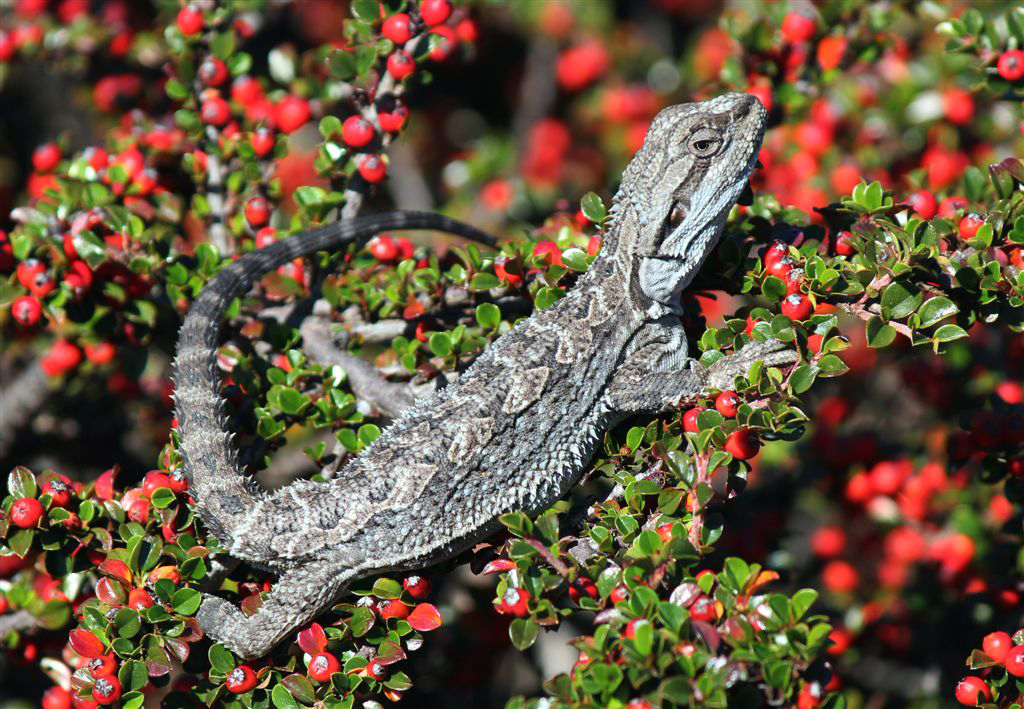
And another reptile picture was just received from Rutherglen. Can anyone confirm that this is also a Jacky Lizard despite the different markings?
There’s my inner tube
 I use old bicycle inner tubes to tie plants against stakes because they provide a flexible support that allows the plant to grow and does little damage to the bark. Also, I have a lot of them. Walking on a slope at Flowerdale on a gloomy, overcast, 7-degree-C August day I noticed an inner tube lying on the ground. In the time it took me to move forward to pick it up, I realised that inner tubes don’t have tread or a pretty red stripe underneath. What I was trying to recover was a Red-bellied Black Snake (Pseudechis porphyriacus). It’s a tough snake to be out ‘sunning’ itself in these conditions. Maybe we should name a subspecies to reflect this ………. P.p. flowerdalii or maybe even P.p.king-gee-ii.
Sugar Glider portrait
Another fantastic photo from Flowerdale for the Focus on Fauna folio! – this one of a Sugar Glider (Petaurus breviceps) from Trent and Vikki who have been keen participants in the FoF project.
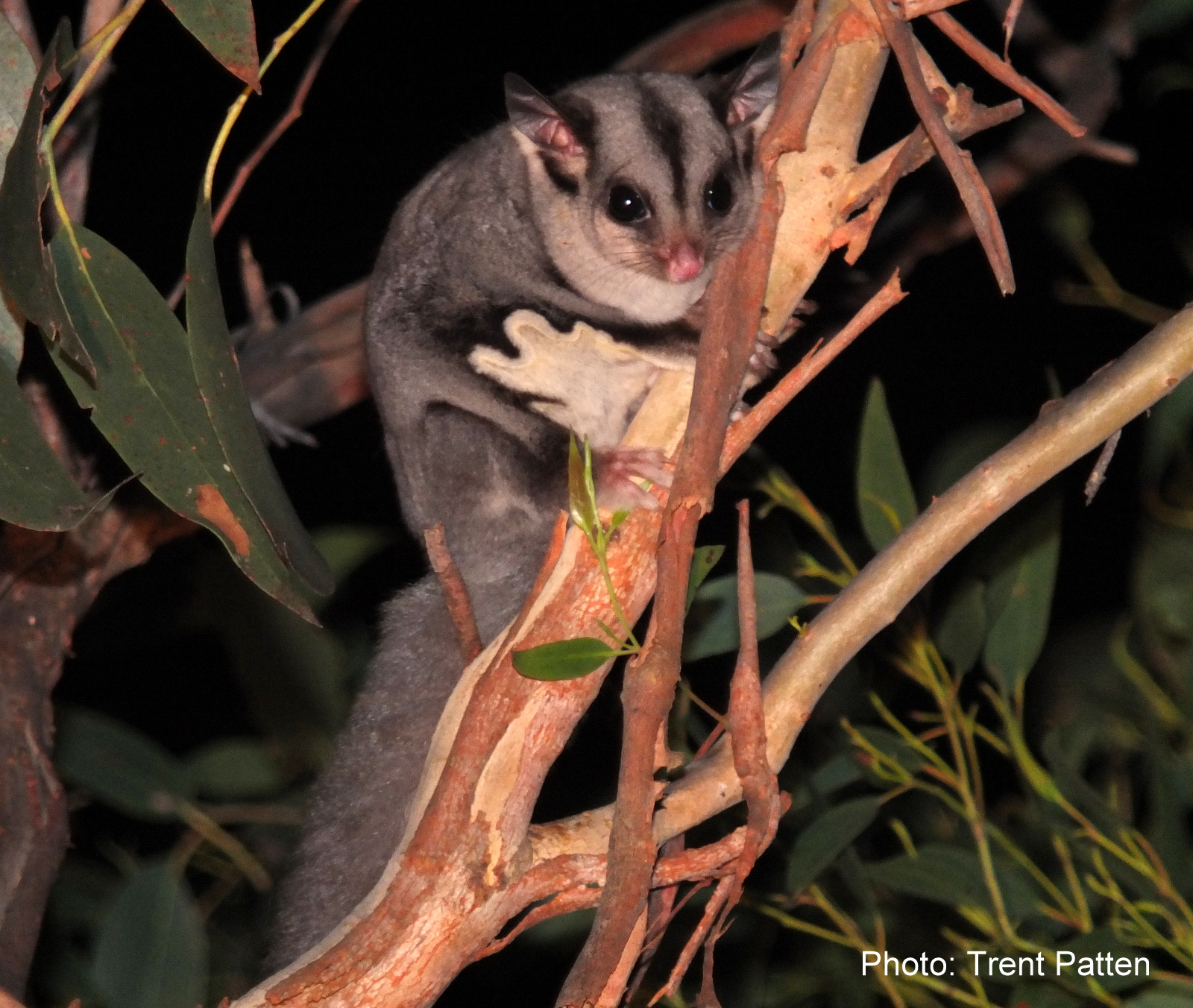
Sugar Glider
Anyone at home?
This nest-box is proving a popular spot for nocturnal mammals. We set up a remote camera because a recent inspection had revealed an apparently active Brush-tailed Phascogale nest inside the box. However, instead of the phascogale, we recorded a Sugar Glider and a Common Ringtail Possum conducting their own inspections. The box was actually designed for phascogales, with a small entrance hole at the back close to the tree-trunk. The hole would be too small for the ringtail possum, who eventually exits stage front, right over the camera !
The video may take a while to load.
Nocturnal echidnas
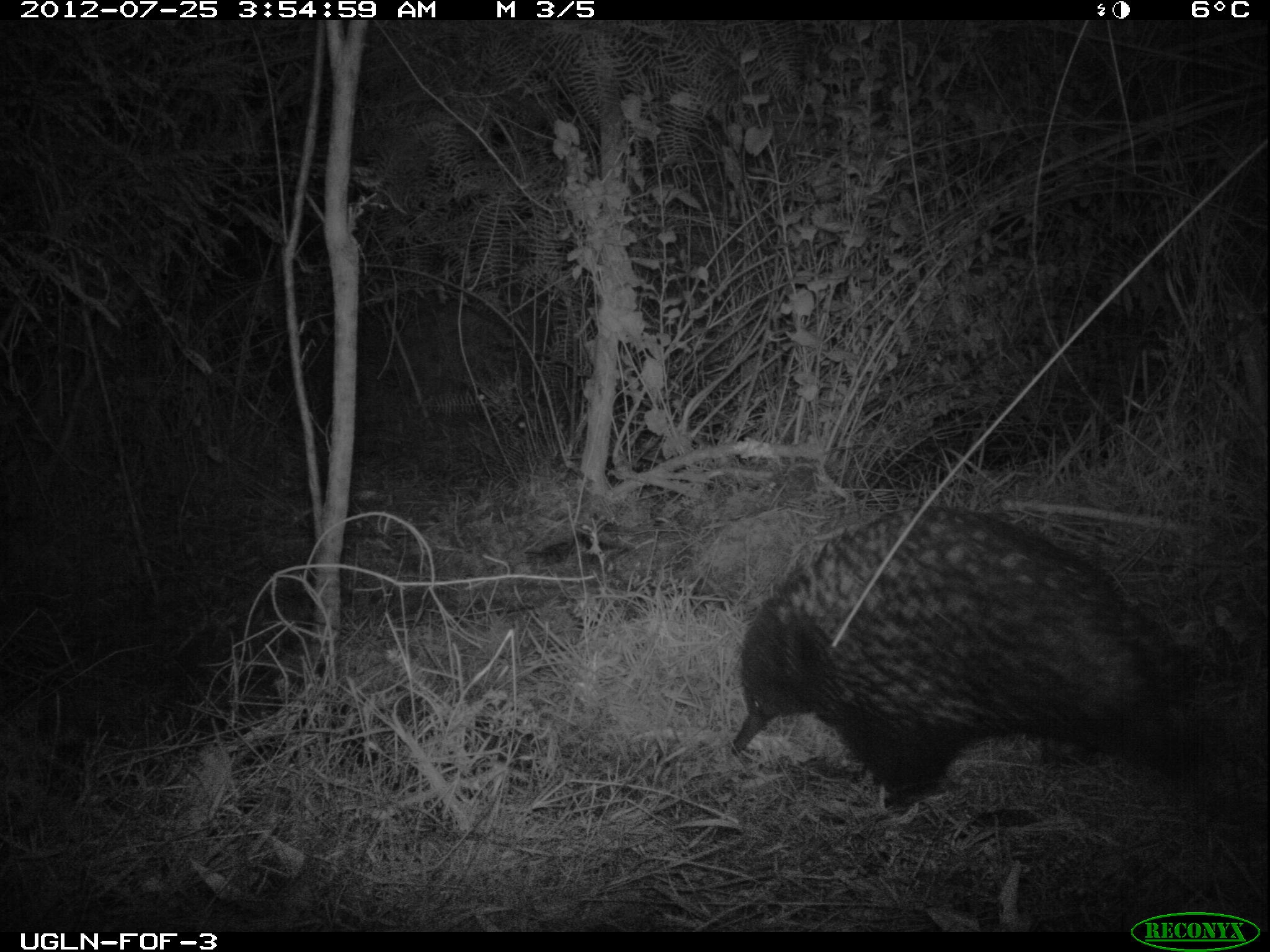
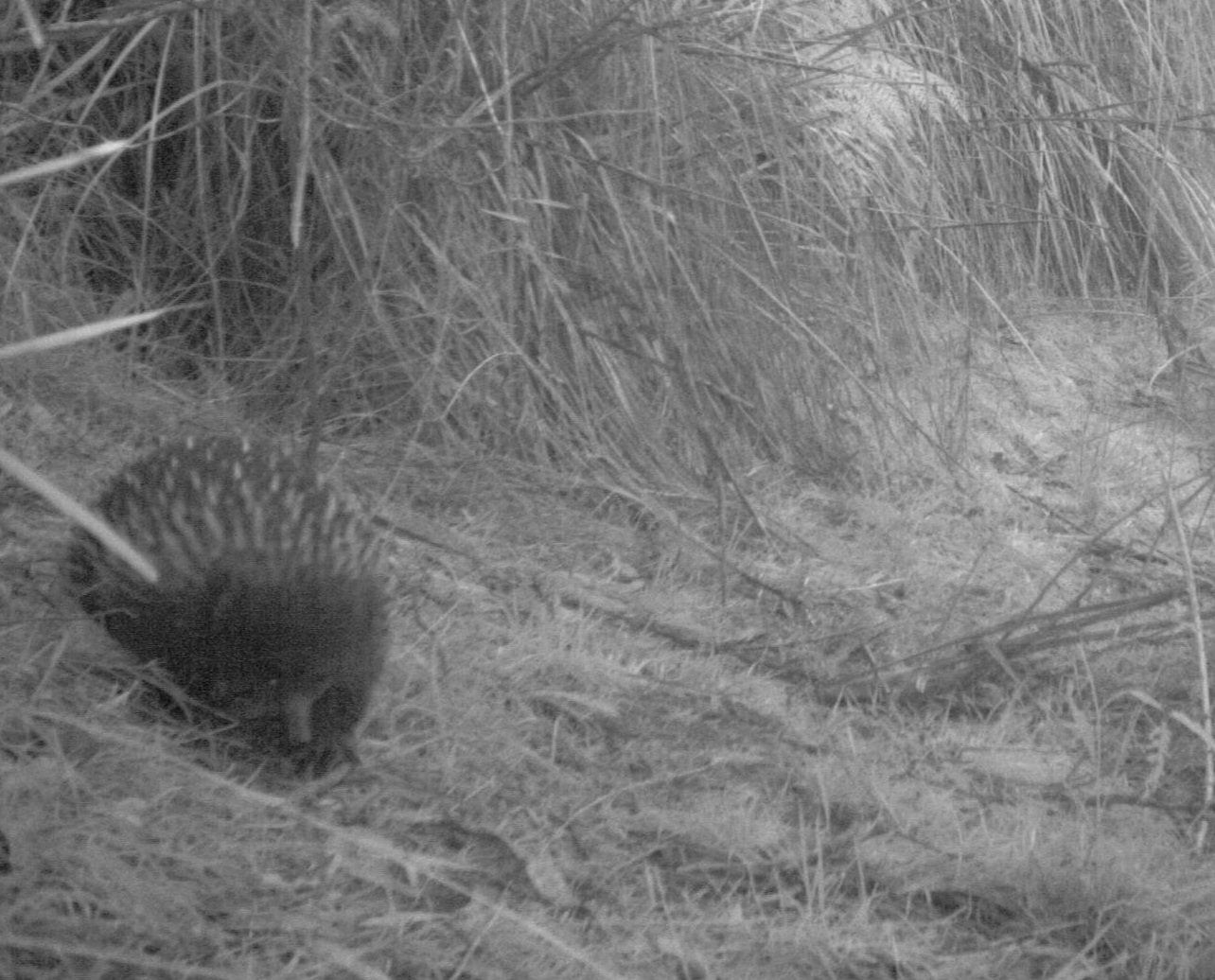
This Short-beaked Echidna was photographed recently on two separate occasions on a property on the Stony Creek at Kinglake West.
Echidna at night
Most people may be suprised to know that it is not uncommon for echidnas to be active at night especially in warmer weather.
It is however unusual that he’s out wandering at night in the middle of winter as echidnas usually go into deep torpor and hibernation over winter to save energy and reduce metabolism.
Chris Cobern




 Focus On Fauna