Rakes and Crails
Crakes and rails are small, skulking birds that hang out in reed-beds and are hard to find. They should be in any location that has a muddy edge on shallow water with lots of reeds to shelter in. Like this Spotted Crake I observed in a wetland in Barham NSW.
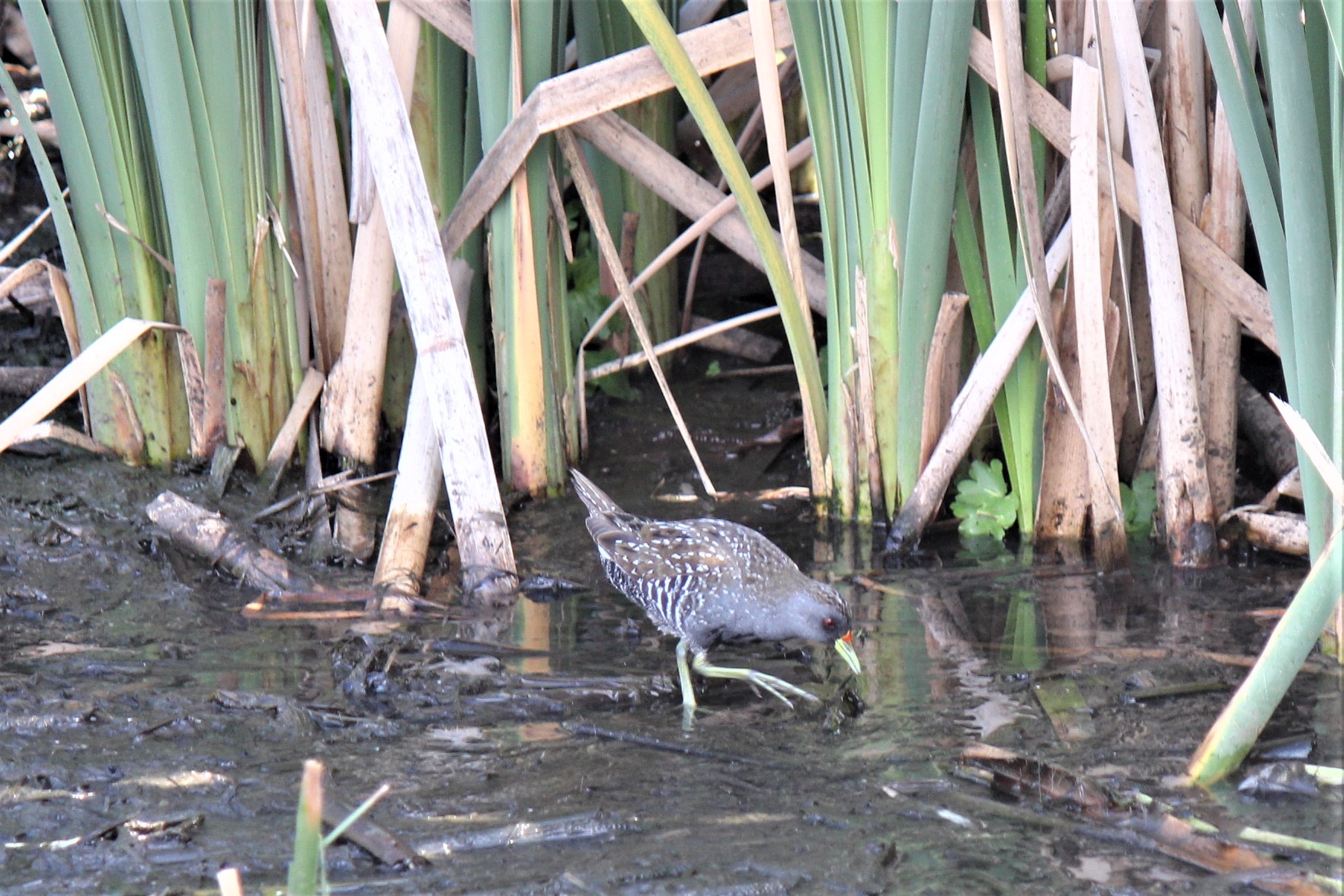
Water bodies that have steep sides and no mudflats or reedbeds are not likely habitats, even though many people think lakes like that are more picturesque. Yea Wetlands has some suitable areas at times, and I was quite excited to see that someone had recorded sighting a Lewin’s Rail in March this year on eBird.org, complete with a photograph of the bird partially hidden by reeds. (You can check the records and photographs here.) Rails are twice as large as crakes which are tiny, sparrow-sized waders.
Next time I was down in the area, I could see nothing in the reed bed but I did hear a persistent call which I thought was the Lewin’s Rail. I got out my phone and recorded it.
When I played this back a couple of times, to my absolute delight, the bird responded then came to the edge of the river and I got some good views of it among the reeds. Alas, I had no camera.
Why are these birds called ‘rails’? According to the etymology dictionary, it is from an old French word “raler“, meaning ‘to rattle’ and reflects their calls. (Just as crake comes from the old Norse kraka because it croaks like a crow.) Based on the recording I made, I would not object to anglicising the name and calling it a Lewin’s Rattler.
New Kid in Town

Twice now I have detected this new bird in my backyard, giving an animated and loud vocal display. It is a Crescent Honeyeater (Phylidonyris pyrrhopterus). Maree found them on Junction Hill in this post in 2019. Never recorded in Yea before. The first time in late August, it attracted the local bullyboys and was driven out by two Red Wattlebirds with cheering on by some spinebills and fairywrens. Today it was back unimpeded, calling loudly on a cold sunny morning from the top of a bush. Both times it has been a single male bird (the female has more muted colours all round).
Guess he’s no longer the New Kid in Town.
Better than a dog!
The Huntsman Spider is one of the largest and quickest spiders in Australia. Some people may be disappointed to know that there are in fact many species of Huntsman Spider.
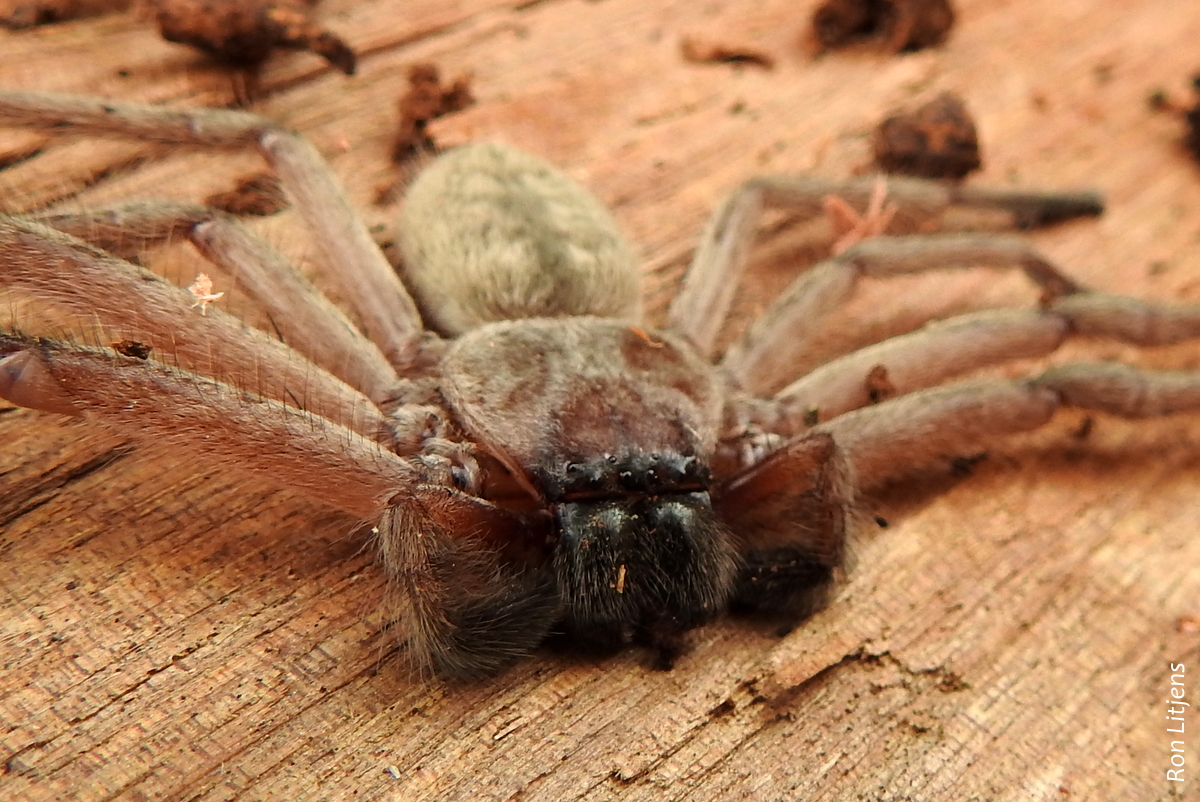
One of the most common, pictured left, is the Social Huntsman (Delena cancerides), the latter word derived from the Greek for ‘crab-like’, a description of the sideways walk it sometimes displays. This spider is very flat allowing it in nature to live under the bark of trees, often in groups of up to 300. In the house it can neatly slip into any crevice.
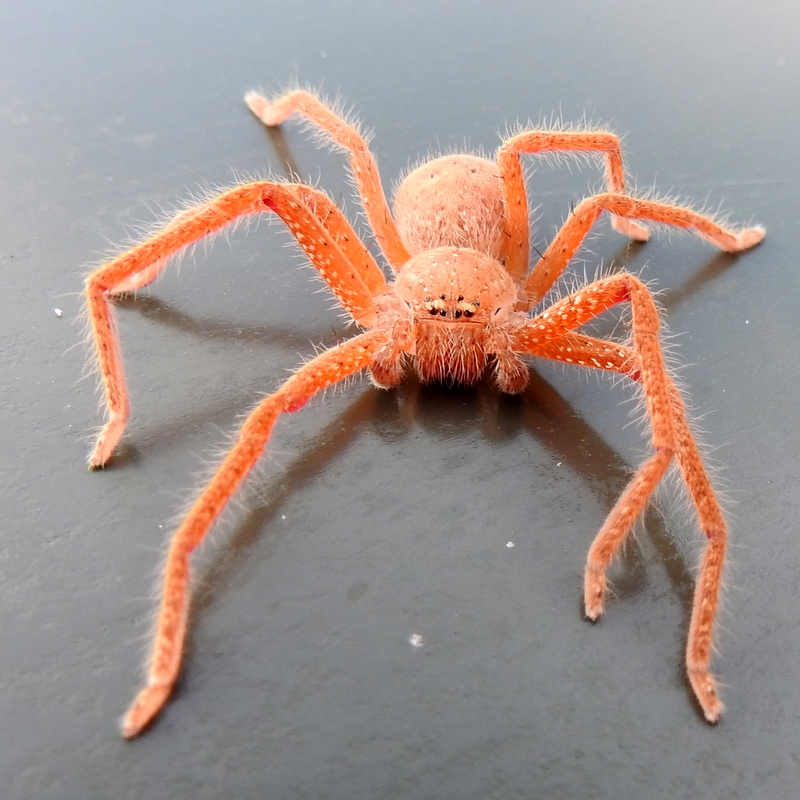
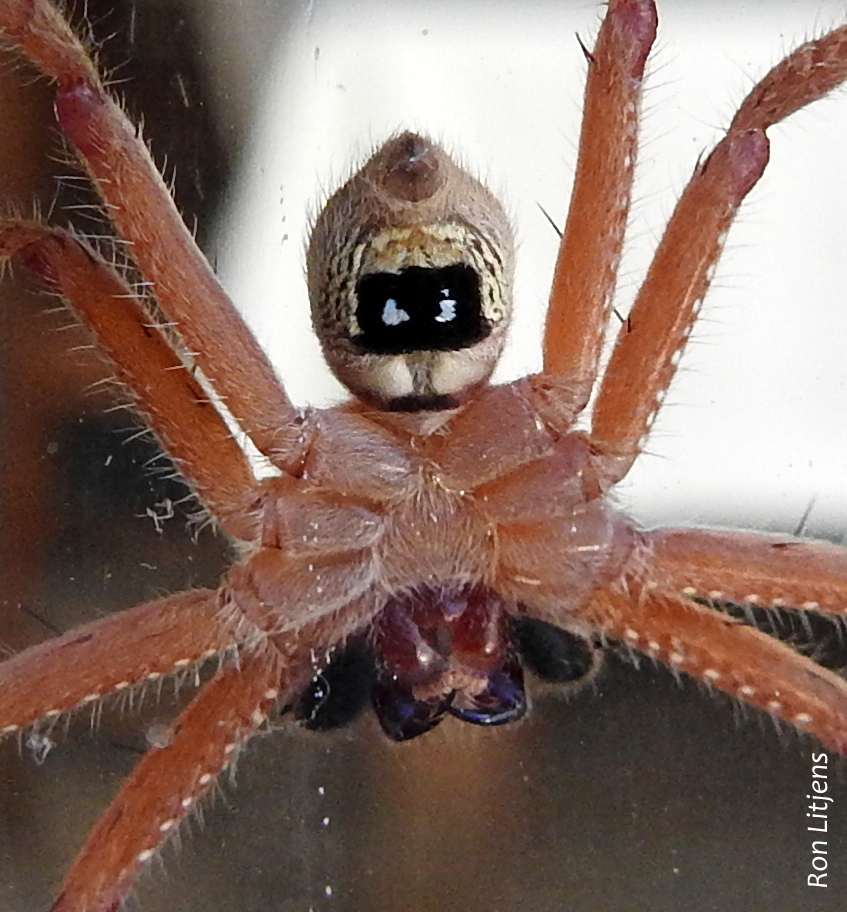
The Badge Huntsman (Neosparassus diana) is smaller but thicker than its Social counterpart. The young are born green but as they mature become brown to orange in colour (pictured right). The name is derived from the distinctive ‘badge’ marking on the underside of the abdomen (pictured below), easily seen if you can ‘coax’ the spider to walk on glass. The marking is displayed aggressively to deter possible predators, a feature known as aposematic colouration.
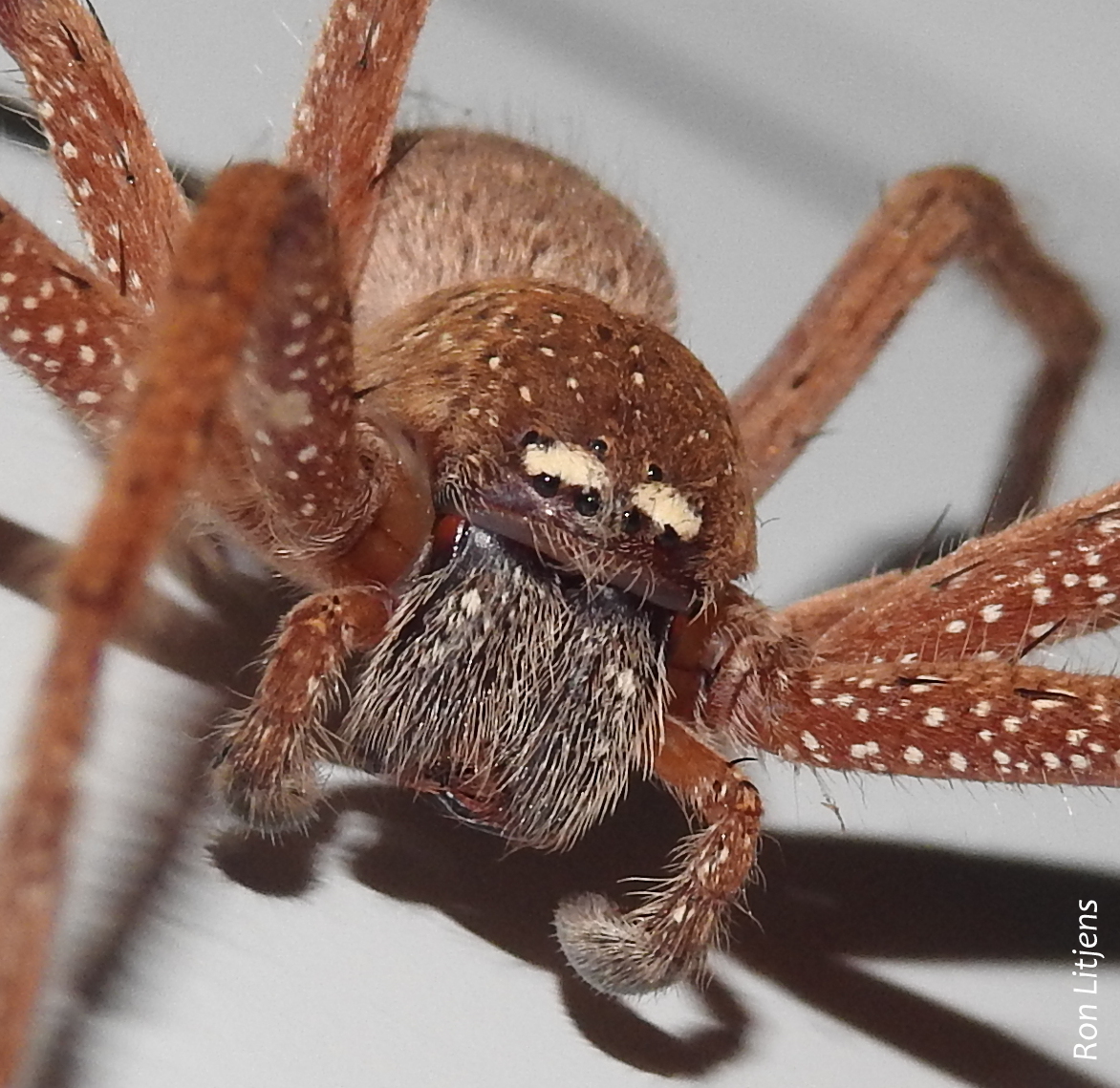
Like all Huntsmans, Badge Huntsmans have two rows of four evenly spaced eyes, the two outer eyes on the lowest row being the largest. The Badge Huntsman is distinguished by a patch of white hairs between the two rows that look like eyebrows (pictured below).
This is the time of the year when female Badge Huntsmans are out looking for mates, subsequently laying eggs in a silken cocoon held in a nest of grass held loosely together by silk threads.
At the moment I share my kitchen with a Badge Huntsman. Smaller than a dog it looks after its own feeding requirements and since it hasn’t shown me ‘the badge’ I am assuming it is happy with the arrangement. In covid times, a welcome companion.
Let the dogfights begin
As the weather warms up the airspace above your local dam will again become the scene for dogfights between competing dragonflies. The largest family of dragonflies, Libellulidae, contains members with descriptive names such as Skimmers and Perchers. Perchers are brightly coloured and as the name suggests spend much of their time ‘perched’ on a reed or stick overlooking their territory.
The Wandering Percher (Diplacodes bipunctata), is one of the commonest dragonflies in Australia and is distributed across the mainland (not Tasmania), New Zealand and Papua New Guinea. They perch on objects emerging from the water and if disturbed will fly off and briefly hover before settling again. Young dragonflies are yellow in colour but mature to be red (male) or orangey/brown (female, pictured below).

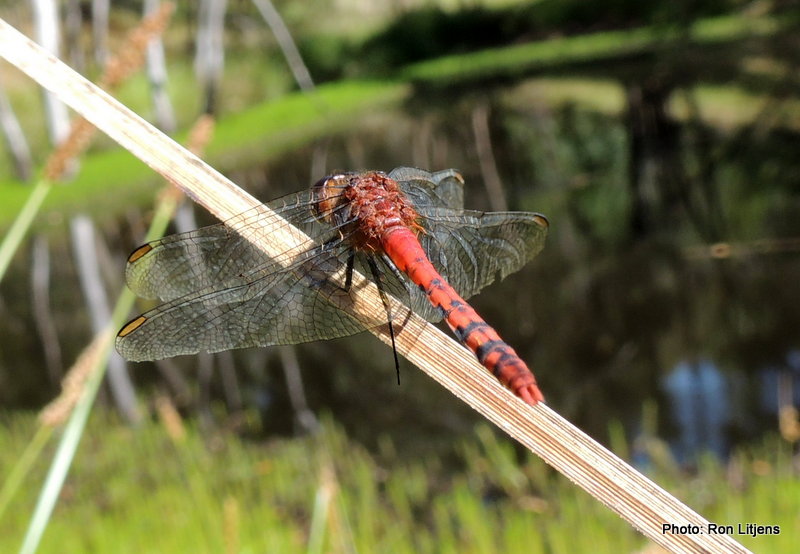
The Black-faced Percher (Diplacodes melanopsis), pictured right, can be found perched near still or sluggishly moving water. Even more colourful, the Scarlet Percher (Diplacodes haematodes) has a bright red abdomen with no markings.
Male dragonflies are highly territorial. They will aggressively drive off other dragonflies and other insects that intrude into their airspace. For perchers in particular there is fierce competition for the best place to sit, used for sunning themselves and overseeing productive feeding areas. There is also competition, particularly near water for areas with the correct plant species and substrates for the female to lay eggs on, although perchers tend to lay eggs by dropping them from the air.
Watching the high-speed antics of dragonflies on a dam is a wonderful way to spend a warm afternoon. If you don’t have any of these colourful creatures around your patch of water I believe you can rent them. The process is called Hire Perchers.
And the Winner is…
There’s been a ruthless ecological tussle happening before our eyes. A well-established species has been trying to hold on with the influx of a sassy new arrival. They occupy the same niche, build similar nests, forage for similar food. This town’s too small for both to flourish.
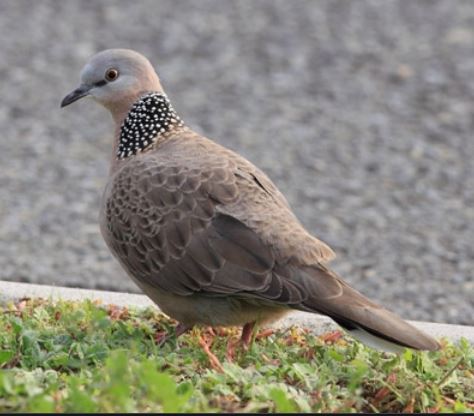
The Spotted Dove was introduced to Australia in the 1860s and flourished in urban environments. Its origin is in China and India. I think it was introduced because it is good to eat, but we stopped eating wild pigeons a long time ago. It has dominated the ground-foraging, seed-eating pigeon role probably displacing the Bronzewings. They have been a useful disperser of seed and an important prey species for Goshawks and Falcons. Their nest is a flimsy platform in a bushy mid-level tree.
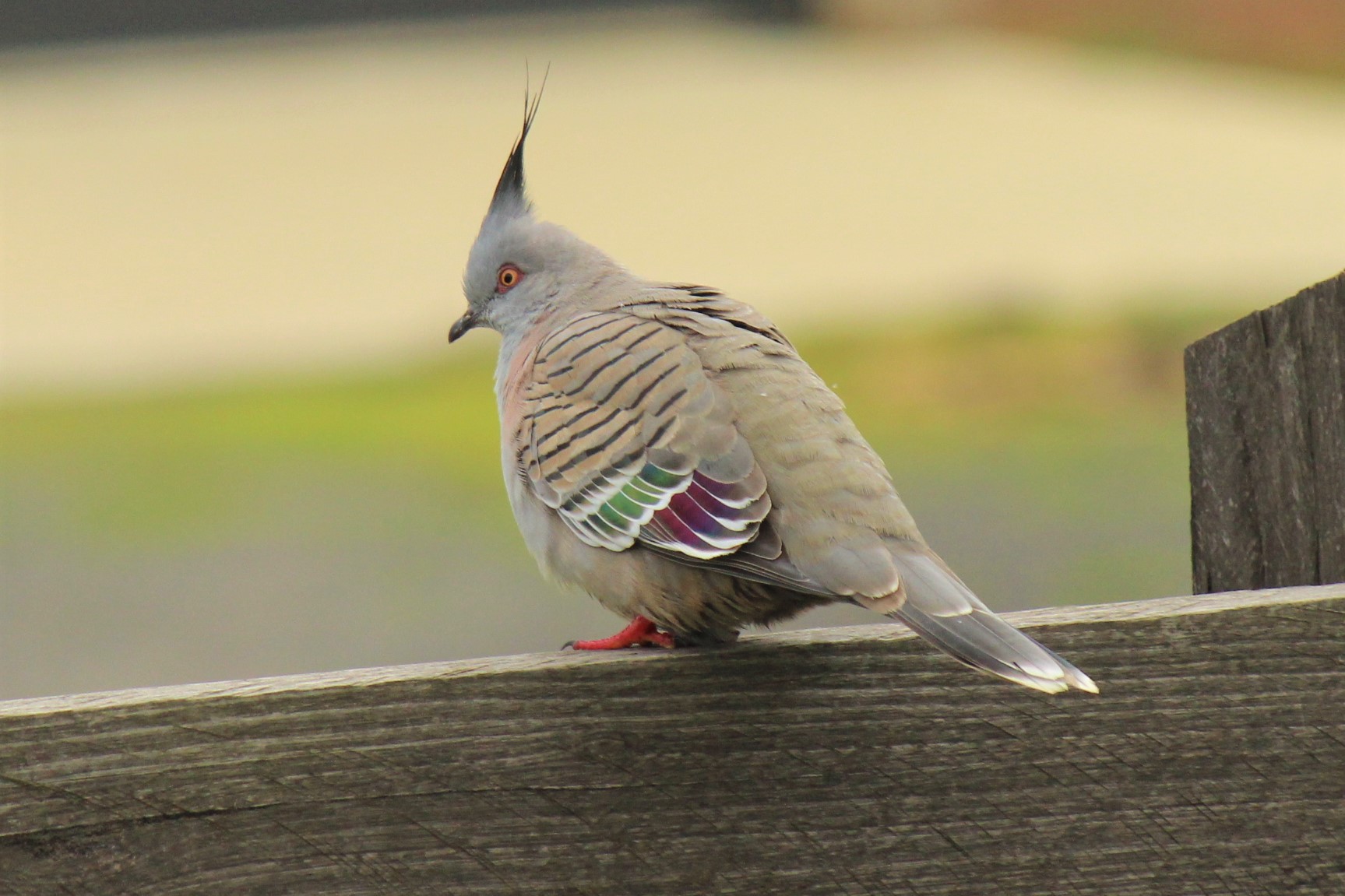
Enter the New Kid in Town. Once only found in arid inland Australia, the Crested Pigeon has begun to multiply and spread rapidly. It is one of a handful of native birds that have flourished in our farms and cities. They have gradually extended their range in all directions and are now increasing in number even in Melbourne.
I noticed them becoming more common around my home. I saw the Spotted Doves nesting last year in a bushy paperbark tree. But they were outnumbered whenever they were foraging. There was no aggression, no pecking or nest-destroying. But somehow the Crested Pigeon has won. The Spotted Dove has gone. This year, I cannot find one in the district.
Confucius says…

‘If something is not eating your plants your garden is not part of the ecosystem’. With Spring nigh, expect critters particular young insects to be hatched and hungry. And your treasured vegie garden will not be the only target.
If you look carefully at new gum leaves at the moment you will find ‘flotillas’ of caterpillars of the Gum-leaf Skeletoniser Moth (Uraba lugens). An adult moth will lay between 100 and 200 eggs, twice a year. The resulting caterpillars (see picture left) eat only the surface layer of a leaf on both sides before moving on to the next leaf, leaving the gum-leaf veins – hence the name.
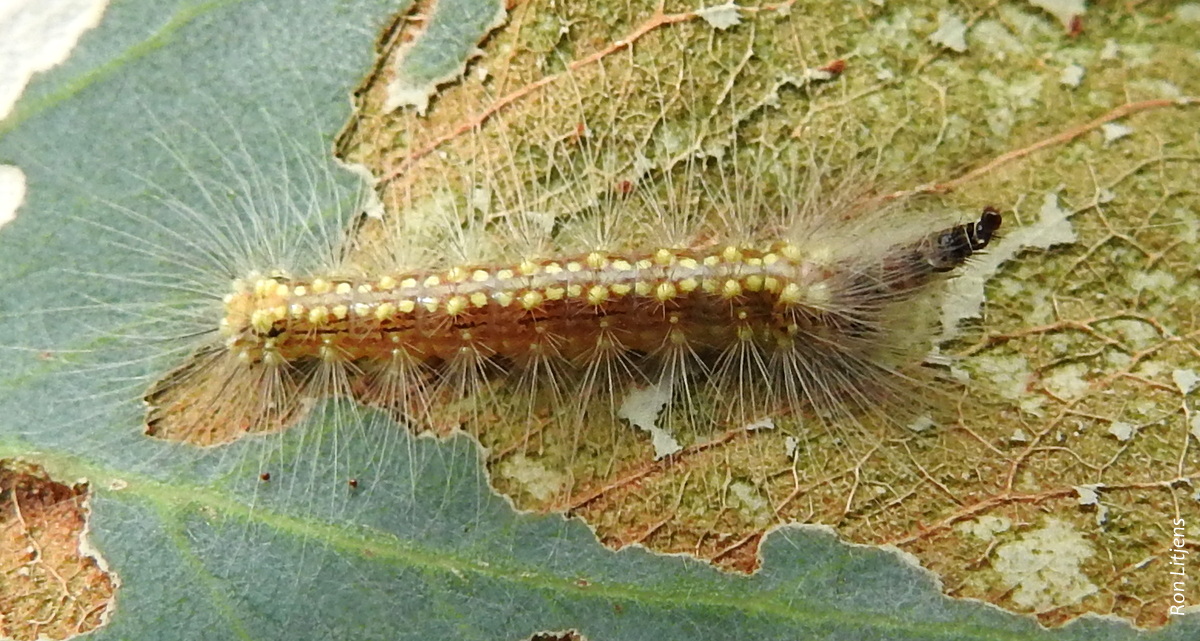
Apart from what they do to leaves the caterpillars are easy to identify because when they moult the head capsule of the exoskeleton remains attached to the body. With successive moultings the structure becomes larger and more distinctive (pictured above).
Despite what Confucius says, those in the timber industry regard these caterpillars as pests. Thinking about it I am not sure that Confucius did say that but he could have.
Don’t swat that mozzie!
Through open doors mozzies will zoom in
Attracted by odour of human
Whether O, A or B
She drinks blood like tea
It helps produce eggs, I’m assumin’
I have mixed feelings about mosquitoes. I know they are vectors of some terrible diseases and responsible for about 700,000 deaths a year. I know they are very irritating when they sneak in to bite my ankle in the dark.
But that’s not all mosquitoes – not even a majority. As a group, mosquitoes are primarily sap feeders. Both male (they’re the ones with feathery antenna and no biting mechanism) and female mosquitoes land on grass stems or leaves and suck sap.
In their favour, they provide a bulk snack food for bats – though one moth provides more nourishment than many mozzies. They are believed to help pollinate some plants, though Australian evidence is not definite on this point. They are certainly eaten, both in the larval and adult stages, by many wetlands creatures. Dr Cameron Webb of Sydney Uni says they have been unable to find any plant or animal completely dependent on mosquitoes but they are a sign of a flourishing wetland ecology.
The female only needs one feed of blood in order to be fertile.
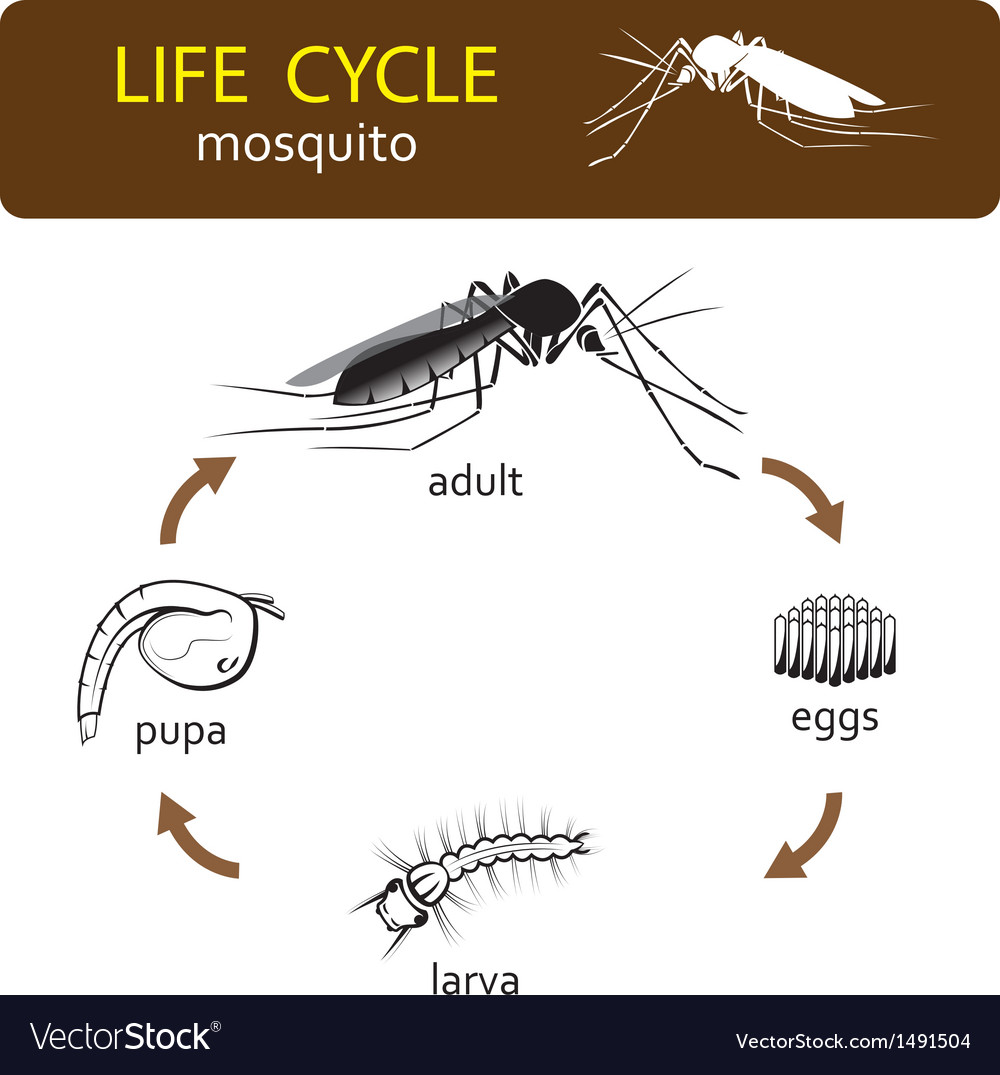
The eggs are laid on water (typically, not always) where they hatch into a ‘wriggler’. They go through a few growth phases as they eat algae and microbes in the water. The pupal stage is less active. They are the bigger ones in the photo. They are curled up like a comma and swim down to the bottom if movement is detected above.
Without leaving the water, the adult emerges from the pupa supported on the meniscus of the water. It flies away and mating often happens within a few hours. The males fly together in complex dances in a swarm, and the female bustles into the middle looking for a mate. It’s like a night-club!
She needs the blood for the extra protein to form eggs. It’s unfortunate for us that in obtaining that tiny few drops of blood, they leave a great itch and sometimes leave viruses like the Ross River fever virus or Murray River Encephalitis, or much worse things in tropical areas.
Mosquitoes are consequently very hard to live with but I doubt whether our ecosystems could exist without them.


.
.
I used to scoop the wrigglers out of this backyard pond with a sieve, but for now I’m letting them live. They might attract more frogs, bats, dragonflies, and birds.
I don’t want those bad disease-bearing mosquitoes to give all mosquitoes a bad name. I’m going to give these guys one more chance.
Introducing geoffleslie
Even though this post is published by ‘ronlit‘ it is the first post of a new member of the team ‘geoffleslie‘ (no prizes for guessing what his actual name is!). Geoffleslie is a keen amateur naturalist and leader of the Murrindindi Birdwatchers, a group of twitchers and photographers that (pre-covid at least) did a monthly trek to some part of the district to check on the bird species there. So it is no surprise that the first post is about …. birds. Read on…
When I was out with an old birdwatcher in the Yea district some years ago, a couple of corellas flew over. “Little Corellas”, he said. “How do you know they are not Long-billed Corellas?”, I asked. “The common one around here is the Little. The other one is a feral that’s just moved in.”

That was not my experience. I had only been in the area a short time and I thought the two species were equally common. I have photos of both in the same tree. The Little Corella (Cacatua sanguinea), pictured left, has a crest and no visible red on its front. The Long-billed Corella (C. tenuirostris), pictured below, has a less-noticeable crest, a long upper mandible for a beak and looks like its throat has been cut with a red gash easily visible when it is perched. The calls are different, too. The Little corella always sounds sad, a plaintive one-note call; the Long-billed has a quavering curr-ur-rup. Both can be deafening when flocks go past.

Some birds decline when people move in. Some birds thrive. The Long-billed Corella is one of the latter. They used to be confined to a small part of Western Victoria – now they’ve spread up and down the East Coast with populations in Cairns and Townsville, even Perth. One reason for their success is the spread of Onion grass (Romula rosea), a widespread weed whose bulbs are dug up by that long bill, providing food in Winter. Meanwhile, the Little Corella is doing well also, now common in more parks and farmlands than previously, even in Melbourne where I never saw them as a child.
So my old friend was right that Long-billed Corellas are feral recent arrivals. But that doesn’t mean they’re less common. They’re trying to take over the place!
All about gliders

The Sugar Glider (Petaurus breviceps) is a species of small possum found in our area. It is closely related to the less common Squirrel Glider (Petaurus norfolcensis) that is found on the other side of the Strathbogie Ranges.
Both gliders have membranes of skin extending from the front to the hind legs. This membrane when stretched out enables the animal to glide long distances (up to 50m). They do this to avoid predators and to move between food sources without having to be on the ground. They feed on insects, pollen, nectar and the sap from trees particularly wattles.

The two species are difficult to tell apart. The Squirrel Glider is slightly larger with a longer, pointier face and a tail that is as wide as the body at the base. As they are active, nocturnal creatures these distinctions don’t help very much when trying to identify them in the field but watching them glide is truly a sight to behold.
The gliders have similar markings (see photos) and are ‘countershaded’ for camouflage. When an object is lit from above the upper surface appears lighter and the undersurface (in shadow) appears darker. This makes the object very obvious. Animals such as gliders are countershaded i.e. have distinctly lighter underparts to counteract this and afford a level of camouflage (Thayer’s Law).

.
This of course does not apply to Hang Gliders (pictured left) that are diurnal creatures, often seen flying above the hills on the Three Sisters property.
Raising the bar
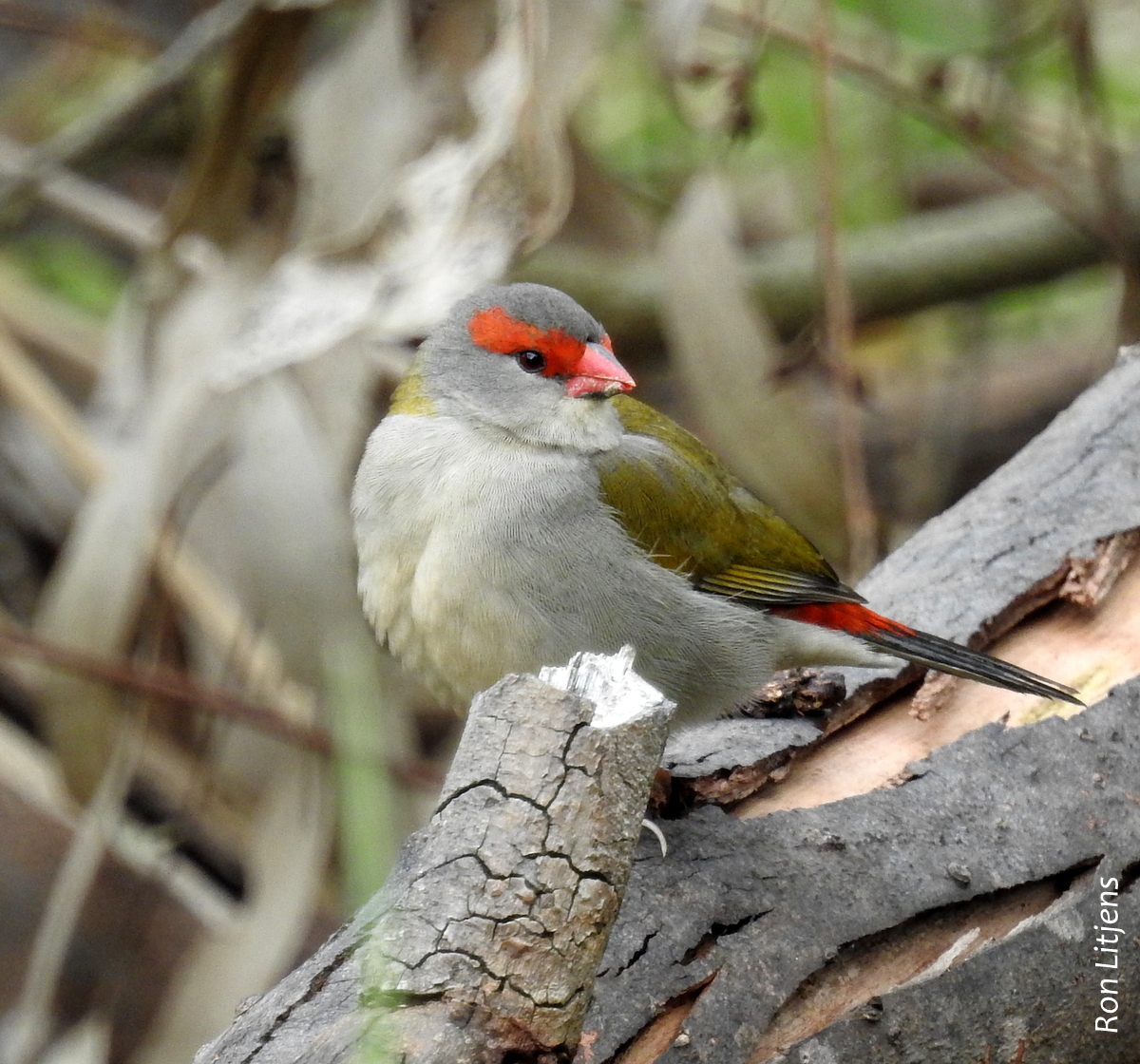
Red-browed Finches (Neochmia temporalis) are small birds easily recognisable by the red streak above the eye and the bright red rump displayed when flying. The scientific name meaning ‘new bird with temples’ is derived from the Greek words ‘neokhmos’ meaning new and ‘temporalis’ meaning to do with the temples i.e. forehead.
These finches are seed-eaters and are often found on the ground where forests meet open pasture. They forage in flocks of up to 20 birds and often with other groups of social birds such as Superb Fairy-wrens. Red-browed Finches are ‘weaver finches’ constructing in dense shrubs large communal woven domed nests made out of grass that have a side entrance.


The male courts the female finch by holding a piece of grass in its beak and then dancing to and from the female. I recently observed the same behaviour with a male holding a feather in its beak (pictured above/right, unfortunately with only an iPhone). I am not sure if it was trying to impress a female or was just collecting nest-building material.
If it was the former, it had just raised the bar.