Searching for the Greeblies
A neighbour of mine has a farm dam. It has no fringing vegetation and therefore there is no place to hide for the hunted…and for that matter the hunter. Every year a pair of Australasian Grebes (Tachybaptus novaehollandiae) build a floating nest in the middle of the dam and successfully rear chicks. This year was no different.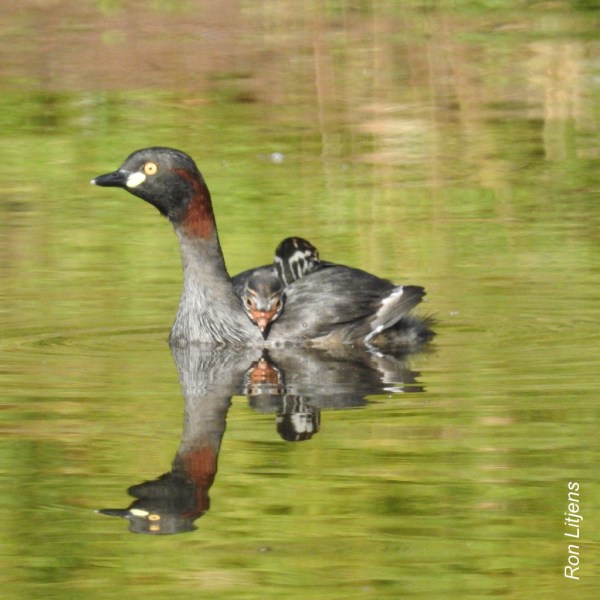
Recently the call came through that the eggs had hatched. The approach to the dam is tricky if you don’t want to alert the subject. One has to walk up the dam wall and peer over the top. On doing so I saw two incredibly small chicks splashing around on the dam. All it took was one squawk from the parent and the chicks disappeared. It took a while to find them but both chicks had hidden under the wings of the floating adult bird (see photos).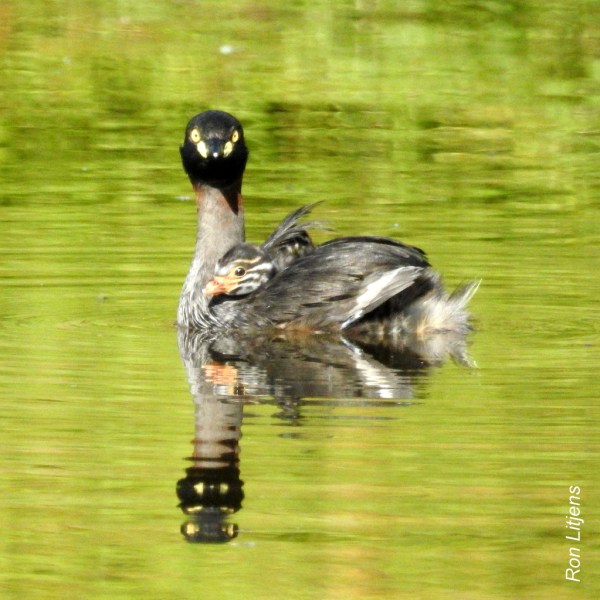
Australasian Grebes are widespread throughout Australia. Still, shallow fresh water provides the ideal habitat. The scientific name Tachybaptus is derived from two Greek words tachys meaning fast and bapto meaning to dip in water i.e. fast-dipper. This perfectly describes the bird’s response when startled of diving under the water rather than flying away. If the young are under the wing when this happens they go for the dive as well.
I am not sure that Greeblies is the official name for young Grebes but it seems to fit.
Bubbling
At the moment Flowering Gums are swarming with insect pollinators. The greatest in number are the Honey Bee (genus Apis) but if you look carefully there are many smaller insects also buzzing around. Many of these are Australian native bees.
There are over 1600 species of native bee. Unlike honey bees which live in large colonies, many of the native bees are solitary. The female bee constructs a burrow either in wood or the earth. A single egg is laid in a cell which is then sealed. This process is repeated until the burrow is filled.
The egg is laid on a mound of pollen and nectar which acts as the food source when the egg hatches. Different native bees collect this pollen in different ways. Some collect it on combs on their legs whilst others collect it on the hairs on their abdomens. Certain types of native bee swallow the pollen and nectar. To concentrate this food source they undertake ‘bubbling’ – regurgitating the liquid mixture into a bubble to evaporate off the water (see photo below).
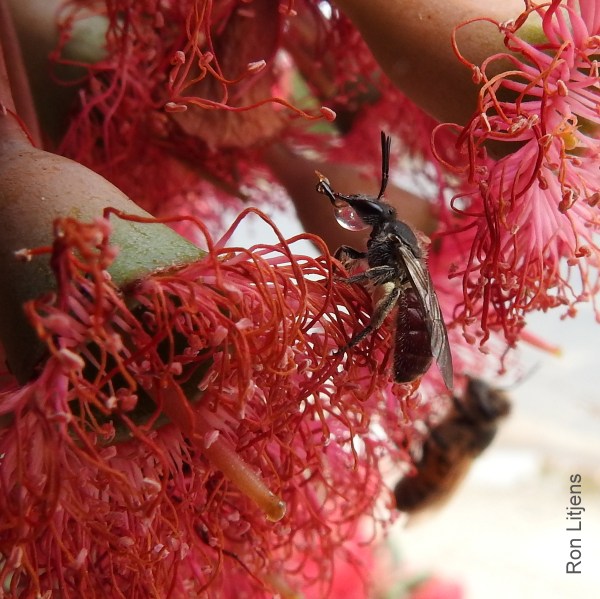
It is a great opportunity to observe native bees because they remain stationary to do this, and they are usually such flighty critters.
I wonder if I could employ the bubbling technique at an all-you-can-eat smorgasbord restaurant?
It’s a wrap
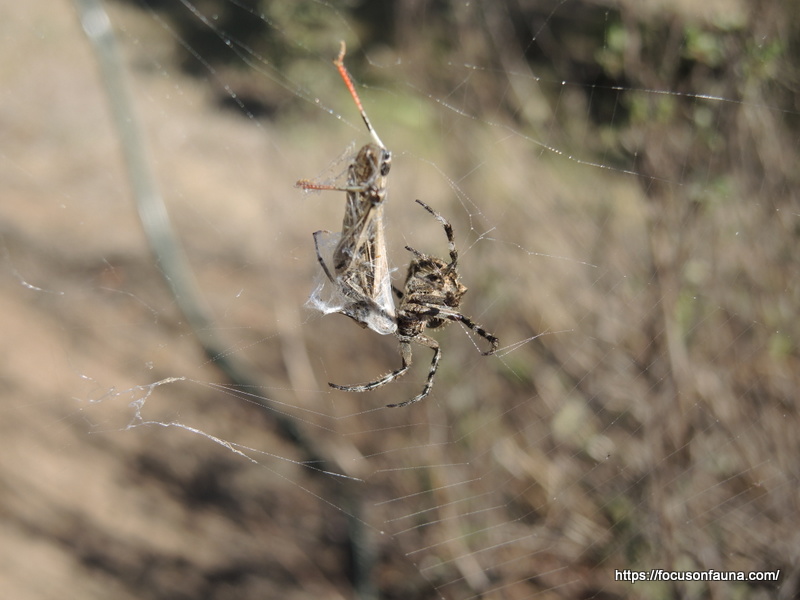
All wrapped up

Spider and package on (wilted) oregano
A few minutes later it had transferred the package to the edge of its web, on a stalk of oregano, where it rested with its legs drawn under its body and stayed there all through the heat of the day. Although predominately nocturnal hunters, these spiders are clearly not going to knock back the chance of a good daytime meal.

European Wasp stealing the spider’s meal
At another web, we thought the spider had achieved a double whammy with a grasshopper and a European Wasp (Vespula germanica), apparently both caught together in the web. Closer inspection revealed that the wasp was not trapped but was in fact feasting on the grasshopper right under the nose of the spider, so to speak!

Giant Green Slantface caught
A third web nearby had ensnared a different grasshopper with the amazing name of Giant Green Slantface (Acrida conica), an insect we had come across previously. So although maybe not making a big dent in the grasshopper population, the spiders are certainly being well-fed.
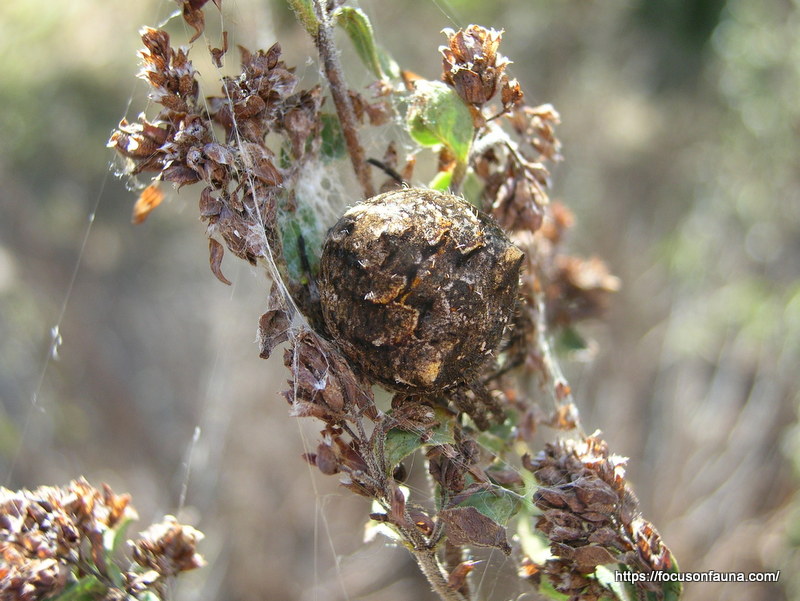
Garden Orb-weaving Spider resting
Click on any of the photos for a better look.
I won’t tell if you don’t
 Last week I was handed a large leaf of silverbeet. This is not so strange in a town where bartering back yard produce is the norm. However on the underside of the leaf was a striking group of insect eggs (picture left). The obvious question asked was What are they? and the predictable response from me was I don’t know. I have a pretty good track record of identifying adult insects (Mr Google et al. help a lot). But I am less than successful with the identification of eggs, where the keywords are pretty and orange.

So I devised a devious plan. I would photograph the eggs under a microscope, hatch the caterpillars, feed them until they pupated and wait for the adults to emerge and then identify them – just like I used to do when I was a kid. The devious plan however, failed. The eggs hatched before my plan could (hatch that is). And what emerged were not caterpillars but larvae of an insect from the order Hemiptera (pictured right).
Hemipteran insects have sucking mouthparts which they use to extract the sap from leaves. They usually grow by ‘moulting’ through a series of larval states known as instars until they finally emerge as the adult. The trouble with my devious plan was that, whereas caterpillars can be fed leaves cut from the plant, I suspect these instars needed to feed on live leaves to get the sap.
 This resulted in devious plan #2. To ensure the young insects got a good food supply I had to find a nearby source of spinach – my wife’s prized vegetable garden. Under the cover of nightfall I carefully deposited the wilted spinach leaf and all the young into the middle of a healthy spinach plant in the aforementioned garden. After all how much sap could they suck? I have since checked the spinach and there is no evidence of the deed. I am hoping the young insects have found their way in life.
I won’t tell if you don’t.
Occupied
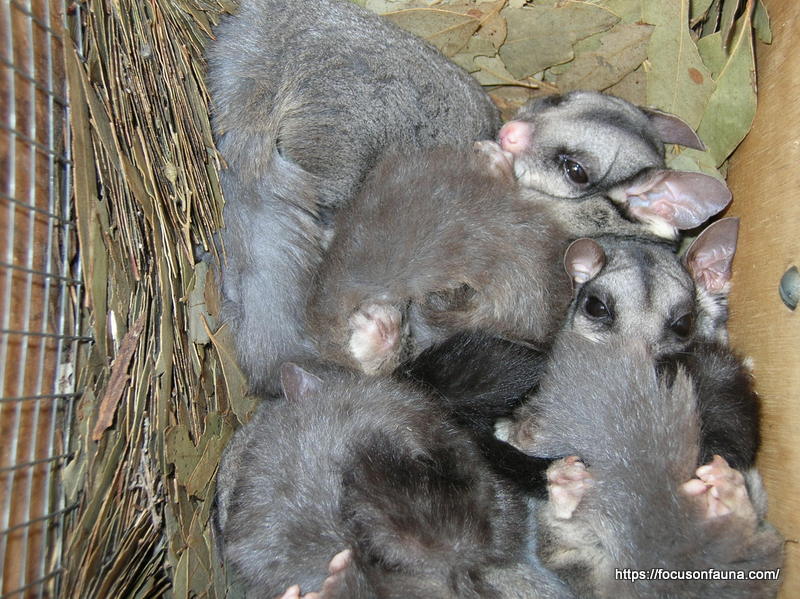 No matter how many times we check nest-boxes installed around the district, it still comes as a thrill to find a box with a furry or feathered tenant inside. There have been many previous posts on this blog about nest-box occupants and such posts are invariably well received – cute photos of curled-up critters no doubt help.
So we thought it was worth posting another photo of a huddle of Sugar Gliders (Petaurus breviceps) found in the nest-box on our property the other day – one of two boxes occupied by gliders, with two more containing an abandoned egg, egg-shells and stray feathers, probably from Crimson Rosellas.


We also checked some of the boxes installed after the 2009 fires by the Flowerdale Work Engine in Coonans Reserve. Using the Landcare nest-box camera we discovered Sugar Gliders in two boxes, but the photo images were poor. A surprise was in store at another box designed for parrots when a creature, suspected to be a Common Ringtail Possum (Pseudocheirus peregrinus), decided to grab the camera probe. After a brief tug-of-war, accompanied by some angry hissing (by the possum, not us!) we decided to abandon the idea of getting a photo.
Urban myth confirmed
As a kid I lived in fear of getting out of the car after a trip to the country. Everyone knew the story of the unfortunate driver who accidentally drove over a snake on the road, the snake then wrapping itself around the differential only to drop on to the ground when the car stopped and biting the unfortunate person as they stepped out of the car.
As I have grown older I have also grown wiser also. I believed this to be an urban (or rural) myth. Until recently.
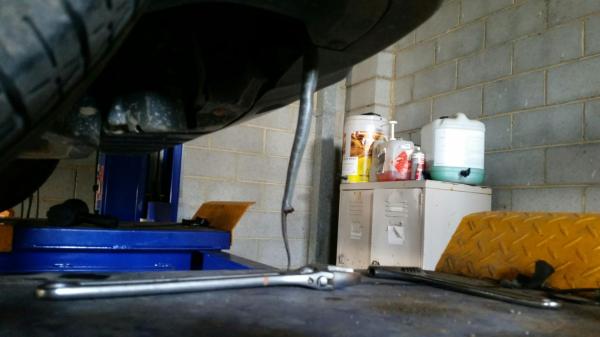 Last week a neighbour of mine was having trouble with the electrics of her car. She took it to the local mechanic. As the car was raised on the hoist a long cylindrical form draped down (see photo above). It was not the fan belt. It was the body of a dead Tiger Snake (Notechis scutatus) – although they did not know it was dead at the time. After much discussion and prodding it was determined that the snake was in fact deceased. Further investigation showed that the snake had worked its way into the headlight bracket where it had obviously got stuck (pictured below). One can only assume it was searching for food or warmth at the time (and then felt light-headed!).
 In fairness to the myth, this probably did not happen whilst the car was moving.
So it is proof – if you find a snake under the bonnet of your car it could be an Australian Tiger Snake.
Of course if you find one on top of the bonnet it is most likely to be a German Vindscreen Viper.
Nature won’t be denied
Senecios are a species of daisy found world-wide and are one of the major understorey plants on our bush block. Locally it is known as ‘fireweed’ and as evidenced after the 2009 fires swept through our place it is one of the first colonising groups after a fire.
When we first purchased our block, as wannabe conservationists, we decided that one of our goals was to remove by hand, as far as practically possible, all weeds from the 29 acres of bush. Ivy, cotoneaster, blackberry and thistles were quickly put to the sword. For reasons now lost in the mists of time we incorrectly identified the senecios, particularly Senecio quadridentatus (Cotton Fireweed) as weeds and proceeded to remove them with much gusto. Luckily Mother Nature would not be denied and the next season the Cotton Fireweed was back in the same abundance (by which time we had learned what the plant was and left it alone).

 And lucky that was. Cotton Fireweed is the food source of a beautiful and particularly hairy caterpillar of the moth unsurprisingly known as the Senecio Moth (Nyctemera amicus), pictured above. As the name suggests the larvae feed on various species of senecio. This moth is one of the insects captured pictorially by naturalists on the First Fleet. The adult insect (pictured left) is also known as the Tiger Moth because of the orange and black striped body, (not seen in the photo).
Luckily there are still fireweeds on the block for it to enjoy.
Cooling off
 With temperatures soaring, our little band of Striated Thornbills regularly find respite in a couple of our bird baths with a drink and a bathe. So they will be likely candidates to be recorded in the Australian Bird Feeding and Watering Study which kicks off today. This is a citizen science project that runs for four weeks twice a year and aims to assess the impacts of providing food and water on bird ecology and diversity. It also looks at the hygiene aspects of bird baths and feeders, and aims to deveop guidelines for people who feed birds to do so with minimum risk to the birds.
 Anybody can get involved – simply sign up on the website, follow the set-up directions from there and then spend 20 minutes watching for birds at your bird bath/feeder.
Another way of getting involved with birds locally this week is to join the Murrindindi Birders’ Morning Walk with the Birds at the Yea Wetlands on Thursday 2nd February, starting at 7.30am. Meet from 7am onwards at the Y Water Discovery Centre with your binoculars and/or camera for a guided walk through the wetlands, hoping to see a range of birds and maybe even a Platypus or Rakali. A light breakfast will be provided by the Wetlands Committee following the walk. You are asked to email wetlands.yea@gmail.com if you plan to attend.
When the outside comes in
I live in the bush primarily because of the close proximity of nature OUTSIDE my house. Occasionally however the borders are breached and wildlife invades the inside space. Every winter we expect house mice (not native) to try and find a warm and dry spot to live inside the building. The microbats that inhabit the roof space infrequently are seen fitting around our living room only to disappear in the crack between the wall and the door frame.
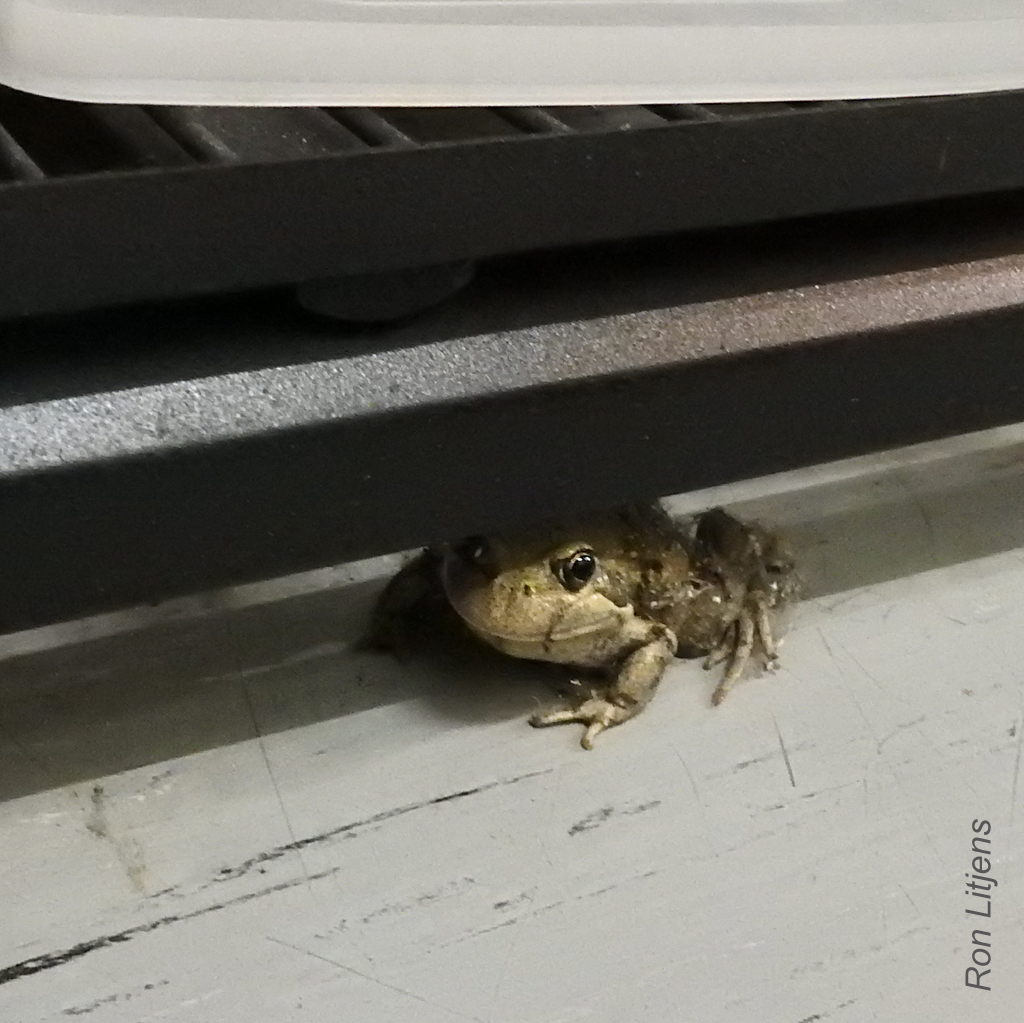 I was however surprised this week when confronted by an Eastern Banjo Frog or Pobblebonk Frog (Limnodynastes dumerilii), pictured left, peering from beneath the kitchen shelving. Embarrassingly, sticking to its body (pictured below) was an accumulation of dust, lint and fluff (must have brought it in from outside!).
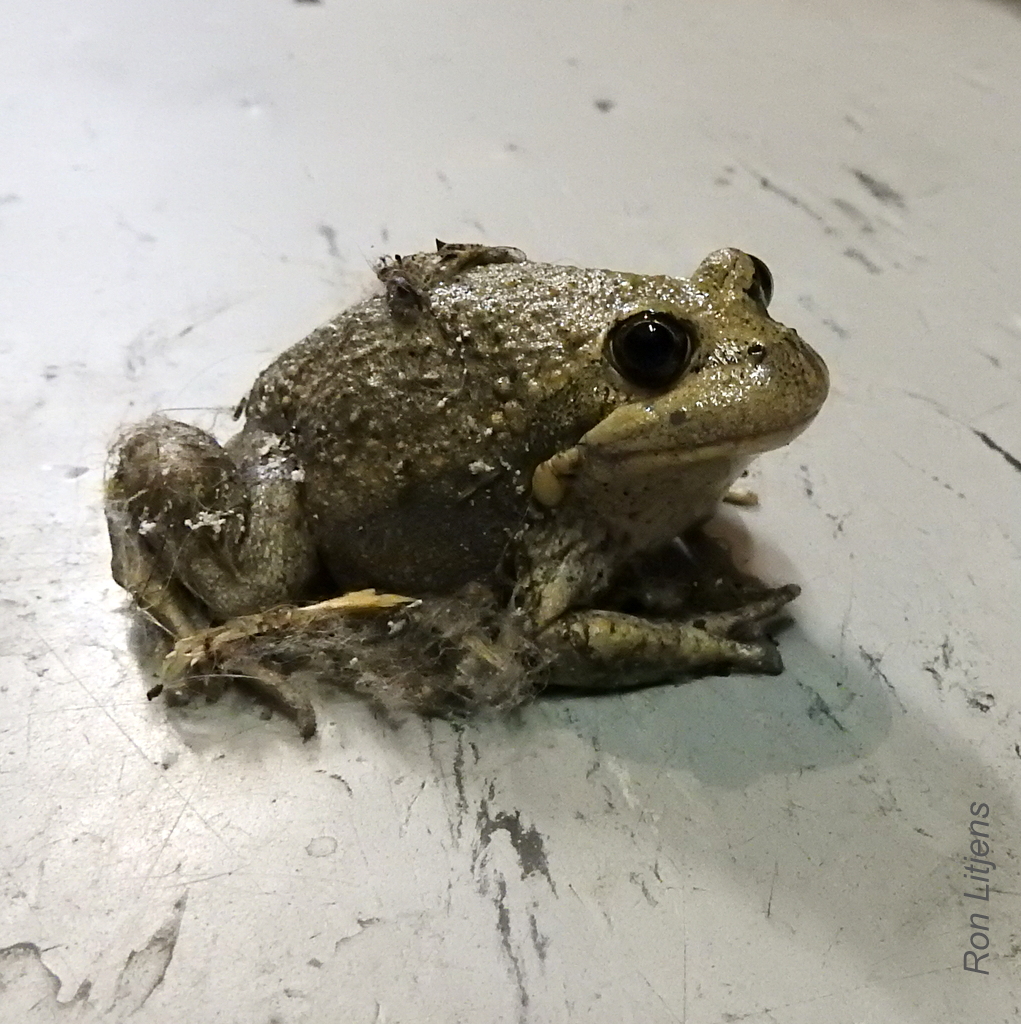 Pobblebonks are burrowing frogs that spend a lot of time underground. In dry seasons or during hot days they will dig themselves a shelter and then come out after it has rained. The call, said to resemble a banjo string being plucked is quite distinctive but the frog, which can call even if it is underground, is rarely seen. Most people come across pobblebonks when they unearth them whilst digging in the garden.
Don’t be concerned if you happen to dig up a frog. They will soon dig themselves underground again. More concerning is if you dig up half a frog.
Thirst quenching
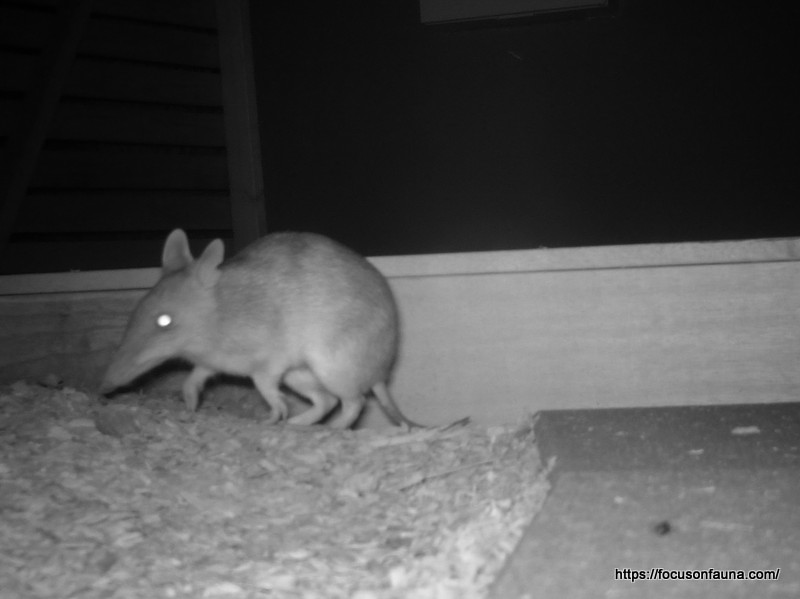 Upper Goulburn Landcare Network coordinator Chris Cobern is in the enviable position of having Long-nosed Bandicoots (Perameles nasuta) visiting his Kinglake West property. The one pictured at left was captured on remote camera coming out from under Chris’s decking, possibly from a nest, a few weeks ago. Last week the same bandicoot, identified by a notch in its left ear, was recorded on video. Another bandicoot without ear damage visited Chris’s garden the same night and is shown drinking from a pond in a delightful short video clip on YouTube – click HERE to view.
There have been a number of sightings of Long-nosed Bandicoots in the Flowerdale, Kinglake, Glenburn region in recent years, following an unfortunate spate of road-kill bandicoots on the Whittlesea-Yea Road, mostly in 2012. Apart from being recorded on remote cameras, the presence of these endearing little creatures can be identified by the conical holes that they dig in search of invertebrates, fungi and tubers.
Chris will be kept busy topping up his pond in this hot weather, considering all the wildlife – echidnas, wombats, snakes and birds as well as the bandicoots – that he has had using the pond.